Marketing teams face an impossible equation: create more content across more channels while maintaining quality and brand consistency. The pressure is relentless—your blog needs weekly posts, social platforms demand daily updates, email sequences require constant refreshing, and paid campaigns need endless variations for testing.
AI writing agents offer a solution, but only when deployed strategically. Unlike basic AI tools that generate generic text, writing agents are specialized systems designed to handle specific content tasks—from SEO blog posts to email sequences to social copy. Think of them as your content team's specialized contractors rather than general assistants.
The difference between marketers who struggle with AI and those who thrive comes down to implementation strategy. Those who treat AI agents as magic buttons that instantly solve content problems quickly hit walls around quality, consistency, and strategic alignment. Those who approach them as powerful tools requiring thoughtful integration see transformative results.
This guide covers seven proven approaches to integrating AI writing agents into your marketing workflow, helping you scale content production without sacrificing the strategic thinking that drives results. These strategies build on each other, creating a comprehensive system that amplifies your marketing expertise rather than replacing it.
1. Deploy Specialized Agents for Each Content Type
The Challenge It Solves
Generic AI tools produce generic content. When you ask a general-purpose AI to write everything from blog posts to LinkedIn updates to email campaigns, you get output that lacks the nuance each format requires. Blog posts need depth and SEO structure. Social posts need punchy hooks and platform-specific formatting. Email sequences need persuasive flow and clear CTAs.
Using one tool for all content types creates a lowest-common-denominator problem where nothing quite hits the mark for its intended channel.
The Strategy Explained
Specialized AI writing agents are configured specifically for distinct content formats. A blog agent understands article structure, heading hierarchy, internal linking, and SEO requirements. An email agent knows subject line best practices, preview text optimization, and conversion-focused body copy. A social agent grasps platform character limits, hashtag strategies, and engagement patterns.
This specialization comes from training data, system prompts, and configuration settings tailored to each format's unique requirements. The result is content that feels native to its platform rather than adapted from a generic template.
Many modern AI content platforms now offer multiple specialized agents working together. Systems with 13 or more specialized agents can handle everything from listicles to how-to guides to comparison articles, each optimized for its specific format and purpose.
Implementation Steps
1. Audit your content needs and identify the top five content types you produce most frequently—typically blog posts, email campaigns, social updates, landing pages, and ad copy.
2. Match each content type to a specialized agent or tool configured for that format, ensuring the agent understands format-specific best practices and optimization requirements.
3. Create separate workflows for each content type rather than forcing all formats through a single process, allowing each agent to operate within its area of expertise.
Pro Tips
Start with your highest-volume content type first. If you publish blog content weekly but only send monthly email campaigns, deploy and refine your blog agent before moving to email. This focused approach helps you build expertise with one agent before expanding to others, creating a stronger foundation for your entire AI content system.
2. Build Brand Voice Training Into Your Agent Workflow
The Challenge It Solves
Brand consistency disappears when AI-generated content sounds generic or shifts tone unpredictably. Your audience recognizes your brand through distinctive voice patterns—the words you use, the way you structure sentences, the personality that comes through. When AI content doesn't match your established voice, it creates cognitive dissonance that erodes trust.
Without systematic voice training, each piece of AI content becomes a gamble. Sometimes it sounds like you, sometimes it doesn't, and you waste time rewriting instead of scaling.
The Strategy Explained
Brand voice training transforms AI agents from generic content generators into extensions of your marketing team. This process involves creating comprehensive voice documentation that captures not just what you say, but how you say it. Your voice guidelines should include tone descriptors, vocabulary preferences, sentence structure patterns, and examples of both on-brand and off-brand content.
The training process goes beyond uploading a few sample articles. It requires systematic calibration where you feed agents your best-performing content, provide feedback on initial outputs, and refine configurations until the agent consistently produces content that sounds authentically like your brand.
Think of it like onboarding a new copywriter. You wouldn't hand them a single style guide and expect perfect brand alignment. You'd provide examples, give feedback, and iterate until they internalize your voice. AI agents require the same thoughtful training process.
Implementation Steps
1. Document your brand voice by analyzing your top-performing content and identifying specific patterns in tone, vocabulary, sentence structure, and personality that define your unique voice.
2. Create a brand voice reference library containing 10-15 examples of your best content across different formats, annotated with notes explaining why each piece exemplifies your voice.
3. Run calibration tests where you generate content on familiar topics, compare outputs against your reference library, and adjust agent configurations based on gaps between AI output and your established voice.
Pro Tips
Include negative examples in your training. Show the agent content that's off-brand and explain why it doesn't work for you. This contrast helps agents understand the boundaries of your voice more clearly than positive examples alone. Your voice isn't just what you do—it's also what you specifically avoid.
3. Create Human-AI Collaboration Checkpoints
The Challenge It Solves
Two extremes plague AI content workflows. Some teams review every word AI generates, creating bottlenecks that eliminate efficiency gains. Others publish AI content with minimal oversight, producing volume at the expense of strategic alignment and quality. Neither approach leverages the true power of human-AI collaboration.
The real opportunity lies in identifying where human expertise adds maximum value and focusing your time there while letting AI handle execution.
The Strategy Explained
Strategic checkpoints place human review at the points where expertise matters most. These aren't arbitrary review gates—they're carefully designed intervention points where marketers add strategic thinking, industry expertise, and creative judgment that AI can't replicate.
Effective checkpoints typically occur at three stages. First, during brief creation, where humans define strategy, angle, and key messages. Second, at the outline review stage, where marketers verify structure and flow before full content generation. Third, at the final review, where humans check for strategic alignment, add proprietary insights, and ensure the content serves business objectives.
Between these checkpoints, AI agents handle the heavy lifting of research, drafting, formatting, and optimization. This division of labor amplifies human expertise rather than replacing it. Teams using AI content platforms versus manual writing often see significant time savings when checkpoints are properly designed.
Implementation Steps
1. Map your content creation process and identify the three to five points where strategic decisions happen—typically brief development, structural planning, insight integration, and final quality assurance.
2. Define specific criteria for each checkpoint, establishing clear standards for what passes review and what requires revision, ensuring consistency across team members.
3. Create checkpoint templates that guide reviewers to focus on high-value elements like strategic alignment, competitive differentiation, and proprietary insights rather than line-by-line editing.
Pro Tips
Time-box your checkpoint reviews. Give yourself 10 minutes for outline review and 15 minutes for final review. These constraints force you to focus on strategic elements rather than falling into the trap of rewriting perfectly functional sentences. Your goal is guidance and validation, not perfection.
4. Implement SEO and GEO Optimization From the Start
The Challenge It Solves
Retrofitting SEO optimization into finished content wastes time and compromises results. When you generate content first and optimize later, you end up awkwardly inserting keywords, restructuring sections, and adding elements that should have been integral to the content from the beginning. The result feels forced and performs poorly.
Meanwhile, generative engine optimization (GEO) introduces new complexity. AI models like ChatGPT, Claude, and Perplexity increasingly influence how audiences discover brands and information, but most content creation workflows ignore this emerging channel entirely.
The Strategy Explained
Modern AI writing agents can integrate both SEO and GEO requirements directly into the content generation process. This means keyword targeting, semantic relevance, heading structure, and internal linking happen during creation rather than as afterthoughts. The content emerges optimized rather than requiring optimization.
For SEO, this includes proper heading hierarchy, natural keyword integration, semantic keyword coverage, and internal linking opportunities identified during drafting. For GEO, it means structuring content to answer the types of questions AI models use when generating responses, using clear definitions, authoritative statements, and factual precision that AI systems can confidently cite.
The integration of SEO and GEO optimization transforms content from generic information into strategic assets designed to perform across both traditional search and AI-powered discovery channels. Using an AI content writing platform for SEO ensures these optimizations happen automatically during the creation process.
Implementation Steps
1. Configure your AI writing agents to accept SEO parameters as inputs, including target keywords, semantic variations, internal linking opportunities, and heading structure requirements before content generation begins.
2. Build GEO best practices into your content briefs by including clear definitions, authoritative statements, and structured information that AI models can easily parse and reference when generating responses.
3. Establish indexing automation that submits new content to search engines immediately after publishing using tools like IndexNow, reducing the time between publication and discovery from days to hours.
Pro Tips
Don't just optimize for keywords—optimize for the questions your audience asks AI models. When someone prompts ChatGPT or Claude with a question in your domain, your content should provide the clear, authoritative information these models need to mention your brand. Structure content with this use case in mind from the first draft.
5. Establish Content Briefs That Guide Agent Output
The Challenge It Solves
Vague inputs produce vague outputs. When you prompt an AI agent with "write a blog post about email marketing," you get generic content that requires extensive revision. The agent lacks context about your audience, positioning, competitive angle, and strategic objectives. You end up spending more time fixing the output than you would have spent creating a proper brief.
The quality of AI-generated content correlates directly with the quality of the brief that guides it. Yet many marketers skip this crucial step, treating AI as a shortcut rather than a tool that amplifies good inputs.
The Strategy Explained
Standardized content briefs provide AI agents with the context they need to generate strategic, on-target content. A comprehensive brief includes target audience details, content objective, key messages, competitive differentiation, SEO requirements, internal linking opportunities, tone and voice guidelines, and specific examples or data points to include.
The brief serves as the strategic layer that transforms generic AI capabilities into targeted marketing assets. It's where you inject the strategic thinking, market knowledge, and positioning that differentiate your content from competitors. The AI agent then executes against this strategic foundation.
Effective briefs balance specificity with flexibility. They provide clear direction without over-constraining the agent's ability to generate natural, engaging content. Think of the brief as a creative brief for a human writer—detailed enough to guide but open enough to allow for creative execution. Many AI writing tools for content teams now include built-in brief templates to streamline this process.
Implementation Steps
1. Create a standardized brief template that captures essential context including target keyword, audience persona, content angle, key points to cover, competitive differentiation, and tone requirements.
2. Build a brief library for recurring content types, creating reusable templates for common scenarios like product comparison posts, how-to guides, industry trend analyses, and thought leadership pieces.
3. Train your team to invest 15-20 minutes in brief development before content generation, ensuring every piece starts with clear strategic direction rather than vague prompts.
Pro Tips
Include competitive context in your briefs. Tell the agent what angle competitors are taking and how you want to differentiate. This simple addition transforms generic industry content into strategically positioned pieces that carve out unique space in the market. Your brief should answer: "Why would someone read this instead of the 50 other articles on this topic?"
6. Automate the Publishing Pipeline
The Challenge It Solves
Content that sits in Google Docs waiting for manual publishing delivers zero value. Many marketing teams generate content efficiently with AI agents, then create bottlenecks in the publishing process. Content waits for CMS uploads, formatting, image insertion, internal linking, and manual submission to search engines. Days or weeks pass between content completion and publication.
This publishing lag undermines the speed advantage AI agents provide. You're producing content faster but not getting it in front of audiences faster, which means you're not actually accelerating results.
The Strategy Explained
Publishing automation connects content creation directly to distribution, eliminating manual steps between generation and live publication. Modern workflows can automatically format content for your CMS, upload it to your website, configure SEO settings, add internal links, and submit the new URL to search engines for indexing.
The automation extends beyond basic publishing. Tools with IndexNow integration automatically notify search engines like Google and Bing about new content, dramatically reducing discovery time. An automated SEO content writing platform handles these technical details so your team can focus on strategy.
This end-to-end automation transforms content production from a multi-day process with multiple handoffs into a streamlined workflow where approved content goes live within hours, not days.
Implementation Steps
1. Evaluate your CMS capabilities and identify automation opportunities, looking for platforms that support API-based publishing, automatic formatting, and programmatic SEO configuration.
2. Implement IndexNow integration to automatically notify search engines when new content publishes, reducing the time between publication and indexing from days to hours.
3. Create automated workflows that handle formatting, internal linking, and metadata configuration during the publishing process rather than as separate manual tasks.
Pro Tips
Build a final human checkpoint into your automated pipeline. Set content to auto-publish 24 hours after approval rather than immediately. This gives you a safety window to catch any issues while still maintaining speed. You get the efficiency of automation with a reasonable safety net.
7. Track Performance and Iterate Agent Configurations
The Challenge It Solves
Set-it-and-forget-it approaches to AI agents lead to stagnation. Your initial agent configurations reflect your best understanding at implementation, but they won't remain optimal as your content strategy evolves, audience preferences shift, and search algorithms change. Without systematic performance tracking and iteration, your AI content system gradually loses effectiveness.
Many marketers treat AI agent configuration as a one-time setup task rather than an ongoing optimization process, missing opportunities to continuously improve output quality and performance.
The Strategy Explained
Performance-driven iteration creates feedback loops between content results and agent configuration. This means systematically tracking how AI-generated content performs across key metrics—organic traffic, engagement, conversions, time on page, and AI visibility—then using that data to refine agent settings, prompts, and workflows.
The iteration process identifies patterns in what works. Perhaps your AI-generated listicles consistently outperform how-to guides. Maybe content with specific structural elements drives more engagement. Or certain topic angles generate more backlinks and shares. These insights inform configuration adjustments that amplify what's working.
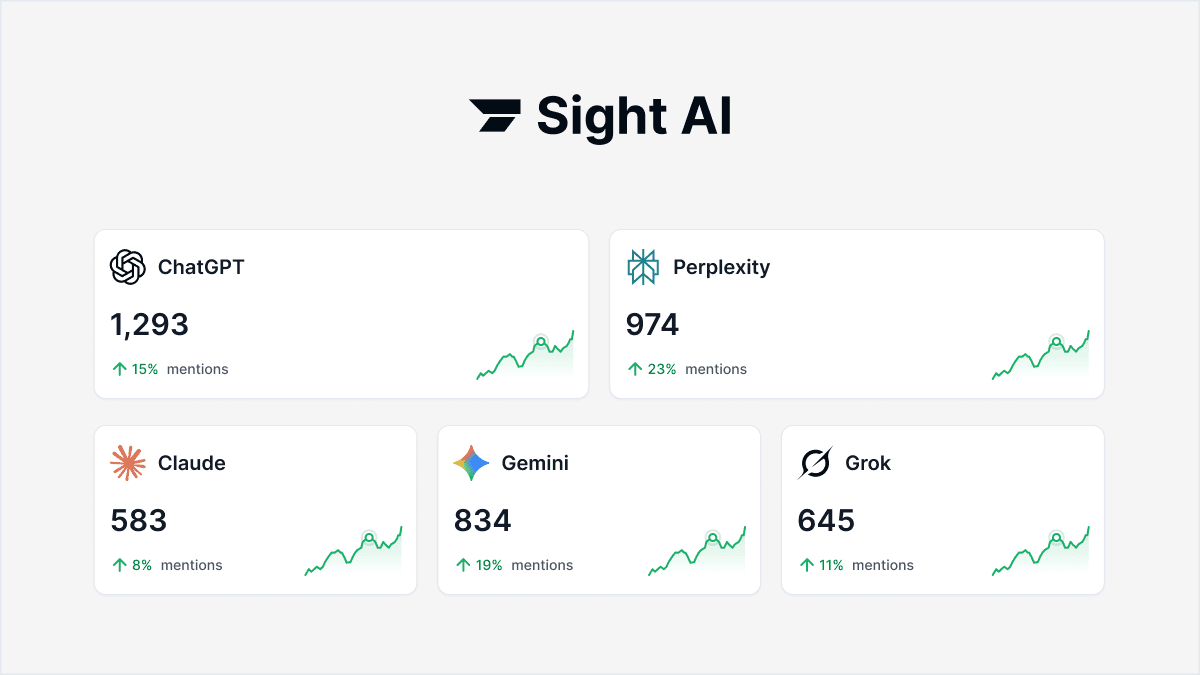
Advanced marketers also track AI visibility—monitoring how often AI models like ChatGPT, Claude, and Perplexity mention their brand or content. This emerging metric reveals whether your content strategy successfully positions you for discovery through AI-powered search and recommendation systems. Teams focused on AI writing tools for SEO should incorporate these visibility metrics into their regular reporting.
Implementation Steps
1. Establish baseline metrics for AI-generated content across traffic, engagement, conversion, and AI visibility, creating clear benchmarks for measuring improvement over time.
2. Conduct monthly performance reviews analyzing which content types, topics, and structural approaches deliver the strongest results, looking for patterns that inform agent optimization.
3. Create an iteration schedule where you test configuration changes systematically, adjusting one variable at a time to isolate what drives performance improvements.
Pro Tips
Don't just track traditional SEO metrics. Monitor how AI models reference your content and brand. Start tracking your AI visibility today to understand where your brand appears across ChatGPT, Claude, Perplexity, and other AI platforms. This visibility data reveals content gaps and opportunities that traditional analytics miss, helping you optimize for both search engines and AI models simultaneously.
Putting It All Together
Implementation follows a logical sequence that builds capability progressively. Start with strategy one—deploying specialized agents for your highest-volume content types. Get comfortable with how different agents handle different formats before expanding to additional content types.
Once you have specialized agents operational, layer in brand voice training and human collaboration checkpoints. These elements ensure your scaled content maintains quality and strategic alignment. Don't rush this foundation. Marketers who skip proper voice training and checkpoint design end up with volume without value.
With your foundation solid, focus on SEO and GEO optimization integrated into the content generation process. Configure agents to produce search-optimized content from the beginning rather than retrofitting optimization later. Then standardize your brief templates to consistently provide agents with the strategic context they need.
Automate your publishing pipeline once your content quality is reliable. There's no point in publishing faster if you're publishing mediocre content. But once your content consistently meets standards, automation accelerates time-to-value dramatically.
Finally, build performance tracking loops that drive continuous improvement. Your AI content system should get better over time as you learn what works and refine configurations accordingly.
Marketers who treat AI writing agents as strategic tools rather than magic buttons consistently outperform those chasing shortcuts. The goal isn't replacing marketing expertise—it's amplifying it through intelligent automation that handles execution while you focus on strategy, positioning, and the creative thinking that differentiates your brand.
The difference between AI content that drives results and AI content that wastes resources comes down to implementation strategy. These seven approaches create a comprehensive system that scales content production without sacrificing the strategic thinking that actually moves business metrics.
Stop guessing how AI models like ChatGPT and Claude talk about your brand. Get visibility into every mention, track content opportunities, and automate your path to organic traffic growth. Start tracking your AI visibility today and see exactly where your brand appears across top AI platforms.