The SEO landscape has fundamentally shifted. Search engines now reward comprehensive, authoritative content that genuinely answers user queries—and AI models are increasingly citing these in-depth resources when users ask questions.
For marketers and founders chasing organic traffic, the challenge isn't just creating more content; it's creating the right kind of content at scale.
Long form AI content writers have emerged as the solution, but only when deployed strategically. This guide breaks down seven battle-tested strategies for leveraging AI-powered content tools to build SEO dominance while ensuring your brand gets mentioned across both traditional search and AI platforms.
Each strategy addresses a specific challenge you're likely facing and provides clear implementation steps you can execute immediately.
1. Architect Topic Clusters Before Generation
The Challenge It Solves
Most content teams treat AI writing as a one-off solution: "Write me an article about X." This approach creates isolated content islands that fail to establish topical authority. Search engines look for interconnected content ecosystems that demonstrate comprehensive expertise in a subject area.
Without a strategic framework, you end up with random articles that compete against each other instead of reinforcing your authority. Your content lacks the architectural foundation that signals to search engines you're a definitive resource.
The Strategy Explained
Topic cluster architecture means planning your content ecosystem before generating a single article. You identify a core pillar topic, then map out 8-12 supporting subtopics that comprehensively cover the subject area.
Think of it like building a house. Your pillar page is the foundation—a comprehensive guide to your main topic. Your cluster content represents the rooms—each exploring a specific aspect in depth. The internal links between them create the structural support that holds everything together.
When you use long form AI content writers within this framework, every piece you generate strengthens your topical authority rather than diluting it. You're building a content fortress, not scattering random outposts.
Implementation Steps
1. Identify your core pillar topic by analyzing search volume, business relevance, and competitive gaps in your market.
2. Map 8-12 supporting subtopics using keyword research tools, competitor analysis, and "People Also Ask" sections from search results.
3. Create a content brief template that includes cluster context, internal linking requirements, and topical keywords for each piece.
4. Generate your pillar content first using your AI writer, ensuring it comprehensively covers the main topic and includes placeholders for cluster links.
5. Produce cluster content systematically, with each piece linking back to the pillar and cross-linking to related cluster articles.
Pro Tips
Start with smaller clusters of 5-6 articles to test your approach before scaling. Document your cluster architecture in a spreadsheet with planned keywords, target word counts, and linking strategy. This becomes your content roadmap and ensures consistency as you scale production with AI tools.
2. Train AI on Brand Voice and Context
The Challenge It Solves
Generic AI-generated content sounds exactly like what it is: robotic, impersonal, and indistinguishable from thousands of other articles. When every marketer uses the same AI tools with default settings, you get commodity content that fails to differentiate your brand or engage readers.
Your audience can spot generic AI writing immediately. It lacks the industry-specific terminology, unique perspective, and authentic voice that builds trust and authority.
The Strategy Explained
Training your AI content writer means feeding it context about your brand voice, industry terminology, target audience, and content standards before generation begins. Advanced AI writing platforms allow you to create custom instructions, upload brand guidelines, and provide example content that demonstrates your preferred style.
This transforms your AI from a generic writing assistant into a specialized tool that understands your market, speaks your language, and maintains consistency across all generated content. You're essentially creating a custom AI writing agent trained specifically for your business.
The difference is immediately noticeable. Instead of surface-level explanations using common phrases, you get content that demonstrates genuine industry knowledge and speaks directly to your audience's specific pain points.
Implementation Steps
1. Document your brand voice guidelines including tone preferences, words to avoid, and preferred terminology for your industry.
2. Compile 3-5 examples of your best-performing content that exemplifies your ideal voice and depth of expertise.
3. Create a custom instruction set for your AI writer that includes audience descriptions, industry context, and specific content requirements.
4. Test your customized AI by generating sample content and comparing it against your brand standards before full-scale production.
5. Continuously refine your AI training by identifying patterns in content that requires heavy editing and updating your instructions accordingly.
Pro Tips
Create separate AI training profiles for different content types—blog posts need different instructions than case studies or technical guides. Include examples of common industry mistakes to avoid, helping your AI steer clear of oversimplified explanations that damage credibility.
3. Optimize for SEO and AI Citations
The Challenge It Solves
Traditional SEO optimization focuses exclusively on ranking in search engine results pages. But AI platforms like ChatGPT, Claude, and Perplexity have created an entirely new visibility channel—and they cite content differently than traditional search algorithms rank it.
You might rank well in Google but never get mentioned when users ask AI models about your topic. Or worse, your competitors get cited while your content remains invisible to this growing traffic source.
The Strategy Explained
Dual optimization means structuring your long form content to perform in both traditional search rankings and AI platform citations. This approach, sometimes called GEO (Generative Engine Optimization), requires specific formatting and content patterns that AI models prefer when selecting sources to cite.
AI platforms tend to cite content with clear definitions, authoritative statements, well-structured headings, and direct answers to common questions. They favor content that demonstrates expertise through specific examples and avoids vague generalizations.
The beautiful part? These same elements improve traditional SEO performance. You're not choosing between optimization approaches—you're amplifying both simultaneously.
Implementation Steps
1. Structure your content with descriptive H2 and H3 headings that directly answer questions your audience asks.
2. Include clear definitions and authoritative statements early in each section, making it easy for AI models to extract quotable information.
3. Add "What is" and "How to" sections that provide direct, comprehensive answers to common queries in your topic area.
4. Incorporate specific examples, data points, and actionable steps rather than abstract concepts or vague advice.
5. Use schema markup and structured data to help both search engines and AI platforms understand your content's purpose and authority.
Pro Tips
Front-load your most important information in the first 300 words of each section. AI models often prioritize content from the beginning of sections when selecting citations. Test how AI platforms currently cite your topic by asking them directly, then analyze the content patterns they prefer.
4. Layer Human Expertise Into Drafts
The Challenge It Solves
Publishing AI-generated content without human enhancement creates a critical vulnerability: your content lacks the original insights, unique data, and expert opinions that differentiate authoritative resources from commodity articles.
Search engines and AI platforms both prioritize content that demonstrates genuine expertise and original thinking. Pure AI output, no matter how well-written, cannot provide the first-hand experience, proprietary data, or nuanced opinions that establish true thought leadership.
The Strategy Explained
Think of AI-generated drafts as your content foundation, not your finished product. The AI handles research compilation, structure, and initial drafting—the time-consuming groundwork. Your human expertise layer adds the elements AI cannot create: original insights from your experience, proprietary data from your business, contrarian viewpoints that challenge conventional wisdom, and specific examples from your work with clients or customers.
This hybrid approach gives you the efficiency of AI writing with the authenticity and authority that only human expertise provides. You're not choosing between speed and quality—you're combining both.
The content that performs best in both traditional search and AI citations consistently demonstrates this human-AI collaboration. It moves quickly through foundational information (AI's strength) while diving deep into unique perspectives and real-world applications (human expertise).
Implementation Steps
1. Generate your initial draft with AI, focusing on comprehensive coverage of the topic and solid structural foundation.
2. Identify 3-5 sections where you can inject original insights, proprietary data, or unique perspectives from your experience.
3. Add specific case examples from your work, replacing generic scenarios with real situations and outcomes you've observed.
4. Include contrarian viewpoints or nuanced takes that challenge common assumptions in your industry.
5. Incorporate proprietary data, original research, or exclusive information that competitors cannot replicate.
Pro Tips
Create a standard "expertise injection" checklist for your editing process. Ask yourself: What do I know about this topic that AI cannot? What mistakes do I see companies making? What surprising results have I observed? These questions uncover the unique value only you can add.
5. Build Internal Linking Into Generation
The Challenge It Solves
Most content teams treat internal linking as an afterthought—something to add during final editing or, worse, to retrofit months after publication. This reactive approach creates weak content ecosystems with missed linking opportunities and inconsistent link distribution across your site.
Internal links are fundamental to SEO performance. They distribute page authority, improve crawlability, and help search engines understand your content relationships. When you add them as an afterthought, you lose the strategic advantage of a well-planned linking architecture.
The Strategy Explained
Strategic internal linking means planning your link structure before content generation and instructing your AI writer to incorporate contextual links naturally within the content. You identify relevant existing content, determine optimal anchor text, and specify linking requirements in your content briefs.
Advanced AI content platforms can reference your existing content library and suggest contextual linking opportunities during generation. This ensures every new piece strengthens your overall site architecture rather than existing in isolation.
The result is a tightly interconnected content ecosystem where every article reinforces others, distributes authority strategically, and guides readers through logical content journeys that match their research process.
Implementation Steps
1. Audit your existing content to identify high-authority pages and content gaps before generating new articles.
2. Create a linking strategy document that specifies which existing articles should receive links from new content.
3. Include internal linking requirements directly in your AI content briefs with specific URLs and suggested anchor text.
4. Instruct your AI writer to incorporate 5-10 contextual internal links naturally throughout each long form article.
5. Review generated content to ensure links flow naturally and provide genuine value to readers navigating your content.
Pro Tips
Maintain a spreadsheet of your content library with target keywords and URLs for easy reference during content generation. Prioritize linking to conversion-focused pages and pillar content that benefits most from additional authority. Avoid forcing links—only include them where they genuinely help readers explore related concepts.
6. Accelerate Indexing for Faster Traffic
The Challenge It Solves
You've generated excellent long form content optimized for both SEO and AI citations. But there's a critical gap between publishing and performance: the time it takes for search engines to discover, crawl, and index your new content.
Traditional indexing relies on search engines eventually finding your new pages through sitemap crawls or following links. This passive approach can take days or weeks, delaying your traffic growth and giving competitors time to publish similar content that gets indexed first.
The Strategy Explained
Automated indexing acceleration uses protocols like IndexNow to notify search engines immediately when you publish new content. Instead of waiting for search engines to discover your pages, you proactively push updates the moment content goes live.
This approach dramatically reduces the time between publishing and ranking. Your content enters search results faster, begins accumulating engagement signals sooner, and captures traffic opportunities before competitors can respond.
When combined with automated sitemap updates, you create a publishing workflow that maximizes the speed advantage of AI content generation. You're not just creating content faster—you're getting it indexed and ranking faster too.
Implementation Steps
1. Implement IndexNow protocol on your website to enable instant notification to supported search engines when content publishes.
2. Configure automated sitemap updates that regenerate and submit your XML sitemap immediately after new content goes live.
3. Set up automated pinging to Google Search Console and Bing Webmaster Tools for new page submissions.
4. Create a publishing checklist that includes indexing verification steps to confirm search engines received your notifications.
5. Monitor indexing speed through search console tools to identify and resolve any technical barriers slowing discovery.
Pro Tips
Don't rely solely on automated indexing—continue building internal links and promoting new content through social channels to create multiple discovery paths. Monitor your indexing success rate and investigate pages that don't get indexed quickly, as they may have technical issues preventing crawling.
7. Measure Beyond Traditional Rankings
The Challenge It Solves
Traditional SEO measurement focuses exclusively on keyword rankings, organic traffic, and backlink metrics. But when AI platforms like ChatGPT and Claude start citing your content, those citations don't appear in your Google Analytics or rank tracking tools.
You might be earning significant visibility and brand mentions across AI platforms without any awareness of it. Or worse, you might be investing heavily in content that ranks well in traditional search but gets completely ignored by AI models when users ask relevant questions.
The Strategy Explained
Comprehensive content measurement means tracking both traditional SEO metrics and AI visibility indicators. This dual-measurement approach reveals the complete picture of your content's performance across all channels where your audience discovers information.
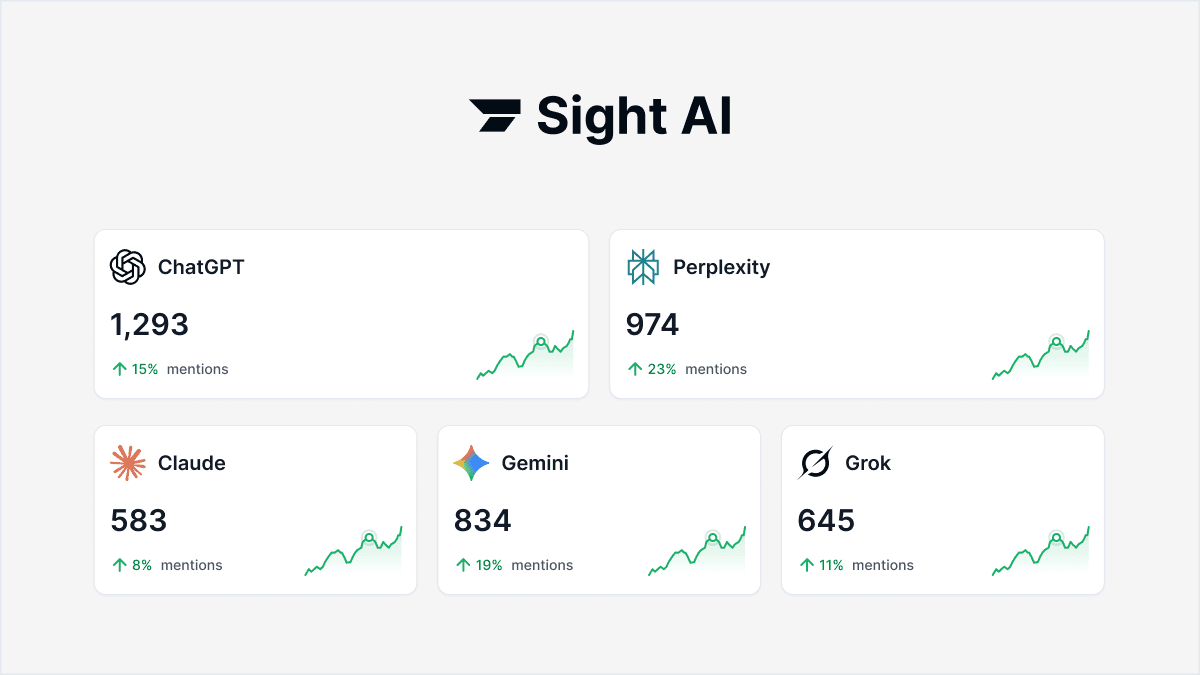
AI visibility tracking monitors how frequently your brand, content, or expertise gets mentioned when users query AI platforms about topics in your domain. It measures citation frequency, sentiment of mentions, and the specific prompts that trigger your content as a source.
This expanded measurement framework helps you identify which content performs best in AI citations versus traditional search, allowing you to optimize your strategy for maximum visibility across both channels.
Implementation Steps
1. Establish baseline measurements for traditional SEO metrics including rankings, organic traffic, and engagement rates for your content.
2. Implement AI visibility tracking to monitor how often your brand gets mentioned across major AI platforms when users ask relevant questions.
3. Create a dashboard that combines traditional SEO metrics with AI citation frequency and sentiment analysis.
4. Analyze patterns in content that performs well in AI citations versus traditional search to identify optimization opportunities.
5. Set up regular reporting that tracks both metric categories, allowing you to measure the full impact of your content strategy.
Pro Tips
Test your content's AI visibility by directly asking ChatGPT, Claude, and Perplexity questions your target audience would ask. Document which of your articles get cited and in what context. Use these insights to optimize future content for better AI platform visibility while maintaining strong traditional SEO performance.
Putting It All Together
Implementing these seven strategies transforms long form AI content writing from a volume play into a precision growth engine.
Start with topic cluster architecture—it's the foundation everything else builds upon. Without strategic planning, you're just creating more content, not building topical authority that compounds over time.
Then progressively layer in brand voice training, dual SEO and AI optimization, and human expertise injection. These elements differentiate your content from the flood of generic AI-generated articles saturating search results.
As your content library grows, automated indexing and comprehensive measurement become critical for maintaining momentum. You need to know what's working across both traditional search and AI platforms so you can double down on winning approaches.
The marketers and founders seeing the strongest results aren't just using AI to write faster. They're using it to write smarter, creating content that ranks in traditional search while earning citations from AI platforms.
Here's your implementation priority: audit your current content strategy against these seven strategies and identify your biggest gap. That's where you start. If you lack topic cluster architecture, begin there. If your content sounds generic, focus on brand voice training. If you're not tracking AI visibility, you're flying blind in an increasingly important channel.
Stop guessing how AI models like ChatGPT and Claude talk about your brand—get visibility into every mention, track content opportunities, and automate your path to organic traffic growth. Start tracking your AI visibility today and see exactly where your brand appears across top AI platforms.
The content landscape has changed fundamentally. Your measurement and optimization strategy needs to evolve with it.