The landscape of SEO content creation has fundamentally shifted. Manual keyword research, outline creation, and content optimization now compete against AI-powered systems that can execute these tasks in parallel with specialized agents. For marketers and founders focused on organic traffic growth, understanding how to leverage multi-agent SEO content generators isn't optional—it's the new baseline for competitive content operations.
Think of traditional content creation as a relay race where one runner completes their leg before passing the baton. Agent-based systems? They're more like a synchronized swim team, where multiple specialists work in parallel, each handling their expertise simultaneously. The difference in output speed and consistency isn't incremental—it's transformational.
This guide breaks down seven battle-tested strategies for maximizing output quality and efficiency when working with agent-based content systems. Whether you're scaling content for a startup or managing agency-level production, these approaches will help you generate SEO-optimized articles that both rank and resonate with AI search platforms.
1. Architect Your Agent Workflow Before You Generate
The Challenge It Solves
Many teams jump into agent-based content generation without mapping the handoff chain between specialized agents. The result? Redundant research phases, conflicting style choices, and content that reads like it was written by committee—because it was. Without clear workflow architecture, agents duplicate effort and create inconsistencies that human editors must manually reconcile.
The Strategy Explained
Design your sequential handoff chain before generating a single word. Map which agent handles research, which builds the outline, which drafts sections, and which optimizes for search. Define the specific outputs each agent produces and the inputs the next agent receives. This prevents the research agent from also attempting to write, or the drafting agent from re-researching topics already covered.
Industry best practices suggest treating agent workflows like software pipelines. Each stage has defined inputs, processes, and outputs. The research agent delivers a structured knowledge base. The outline agent receives that base and produces a hierarchical content structure. The drafting agent takes that structure and generates prose. The optimization agent refines that prose for search visibility.
Implementation Steps
1. Document your current content creation process and identify discrete phases (research, planning, drafting, optimization, publishing).
2. Assign one specialized agent to each phase with clear input/output specifications—what data format does it receive, what format does it produce?
3. Create handoff protocols that define exactly what information passes between agents (structured data, not raw text dumps).
4. Test your workflow with a single article before scaling to identify bottlenecks and redundancies in the agent chain.
Pro Tips
Start with a three-agent minimum: research, draft, optimize. You can always add specialized agents for fact-checking or formatting later. Document your workflow visually—a flowchart reveals gaps that written descriptions miss. Many organizations find that the planning phase takes longer than expected, but it pays dividends when you're generating dozens of articles weekly.
2. Feed Agents with Structured Keyword Intelligence
The Challenge It Solves
Raw keyword lists create shallow content. When you hand an agent a spreadsheet of keywords without context, it treats them as checkboxes to tick rather than semantic concepts to explore. The output hits keyword density targets but misses topical depth. Readers recognize this immediately—the content feels like it was optimized for robots, not humans.
The Strategy Explained
Provide semantic keyword clusters with intent mapping rather than flat keyword lists. Group related terms by topic and user intent. For example, cluster "seo content generator," "ai content tools," and "automated seo writing" under the broader topic of content automation tools, then tag the cluster with informational intent. This gives agents contextual understanding of how keywords relate to each other and what the searcher actually wants.
Semantic clustering helps agents understand that "best seo tools" and "top content generators" represent the same user need expressed differently. When agents receive this structured intelligence, they naturally weave related terms into content where they make contextual sense, rather than forcing keyword placement.
Implementation Steps
1. Use keyword research tools to identify your primary target keyword and pull related terms, then manually group them into 3-5 thematic clusters.
2. Tag each cluster with search intent (informational, commercial, navigational, transactional) to guide content angle and structure.
3. Create a structured input format for your research agent that includes the primary keyword, semantic cluster, intent tag, and any required subtopics.
4. Test with two articles targeting similar keywords—one with raw keywords, one with structured clusters—and compare the topical depth and natural keyword integration.
Pro Tips
Don't overthink the clustering process. Three to five related terms per cluster is plenty. Your research agent can expand from there. Include negative keywords—terms to avoid—when feeding agents. This prevents content drift into tangential topics that dilute SEO focus. Think of structured keyword intelligence as giving your agents a map instead of a list of destinations.
3. Train Specialized Agents for Different Content Phases
The Challenge It Solves
Generalist agents try to be everything—researcher, writer, editor, optimizer. The result is mediocre performance across all phases. A single agent optimizing for keyword density while maintaining narrative flow while fact-checking while structuring for readability creates cognitive overload. The output reflects these competing priorities with inconsistent quality.
The Strategy Explained
Deploy purpose-built agents for research, outlining, drafting, and optimization rather than relying on generalist approaches. Each agent has a narrow, well-defined job. Your research agent excels at finding relevant sources and extracting key information. Your outline agent structures arguments logically. Your drafting agent focuses purely on clear, engaging prose. Your optimization agent refines for search visibility without compromising readability.
This specialization mirrors how professional content teams operate. You wouldn't ask your SEO specialist to also handle graphic design. The same principle applies to agents—specialization produces better outcomes than generalization. Many organizations find that specialized agents also make troubleshooting easier. When output quality drops, you can identify which agent needs refinement rather than debugging a monolithic system.
Implementation Steps
1. Identify your core content phases and create a dedicated agent for each—at minimum, you need research, drafting, and optimization agents.
2. Write specific instructions for each agent that focus exclusively on their phase's objectives without trying to cover other phases.
3. Configure your research agent to output structured data (key points, sources, statistics), not prose—this prevents it from trying to write the article.
4. Set up your drafting agent to receive that structured data and focus solely on clear writing, leaving keyword optimization to the next agent in the chain.
Pro Tips
Start with three core agents before expanding. Adding a fourth agent for fact-checking or a fifth for formatting can come later. Give each agent explicit anti-instructions—tell your drafting agent NOT to worry about keyword density, tell your optimization agent NOT to rewrite entire paragraphs. This prevents scope creep where agents try to do each other's jobs.
4. Implement Quality Gates Between Agent Handoffs
The Challenge It Solves
Automated handoffs between agents create a compounding error problem. If your research agent delivers incomplete data, your outline agent builds on that weak foundation, and your drafting agent amplifies the gaps. By the time you review the final output, you're debugging issues that originated three stages earlier. Without checkpoints, errors cascade through your entire content pipeline.
The Strategy Explained
Set up automated and human checkpoints between agent stages to catch redundancy and maintain content quality. After each agent completes its phase, implement a quality gate that validates output before passing it to the next agent. Some gates can be automated—checking that the research agent provided at least five relevant sources, or verifying that the outline includes all required H2 sections. Others require human judgment—confirming that the research actually supports the article angle, or ensuring the outline flows logically.
Think of quality gates as circuit breakers. They stop bad output from propagating through your system. A two-minute review between agent handoffs prevents twenty minutes of editing later. Industry best practices suggest implementing automated gates first for objective criteria, then adding human review for subjective quality factors.
Implementation Steps
1. Define objective quality criteria for each agent's output—minimum word count, required sections, source quantity, keyword inclusion—that can be checked automatically.
2. Build automated validation checks that pause the workflow if an agent's output doesn't meet baseline criteria before it reaches the next agent.
3. Schedule human review points at critical handoffs—particularly after research (to validate relevance) and after drafting (to confirm quality before optimization).
4. Create a feedback loop where quality gate failures trigger agent instruction refinement so the same errors don't repeat across future articles.
Pro Tips
Don't gate every single handoff initially—that creates bottlenecks. Focus on the two most critical transitions in your workflow. For most teams, that's after research (to catch bad inputs early) and after drafting (to prevent optimizing poor content). Keep a log of quality gate failures to identify patterns. If your research agent consistently fails source validation, that's a signal to refine its instructions rather than manually fixing each article.
5. Optimize for AI Search Visibility, Not Just Traditional SEO
The Challenge It Solves
Traditional SEO tactics—keyword density, meta descriptions, header optimization—target traditional search engines. But AI models like ChatGPT, Claude, and Perplexity consume and cite content differently. They prioritize clear, authoritative information that directly answers queries. Content optimized purely for Google's algorithm may never get mentioned by AI search platforms, missing a rapidly growing traffic channel.
The Strategy Explained
Structure content for citation by AI models like ChatGPT and Perplexity alongside traditional search ranking factors. This means writing with clarity and directness that AI models can easily parse and quote. Use clear topic sentences that state your main point upfront. Include specific, quotable statements that AI models can extract. Structure information hierarchically so AI can understand the relationship between concepts. Avoid marketing fluff that dilutes your core message.
AI models tend to cite content that provides clear, factual information without requiring interpretation. When an AI model searches its training data or real-time sources for an answer, it looks for content that directly addresses the query with minimal ambiguity. This is why listicles and how-to guides perform well in AI citations—they present information in discrete, extractable chunks.
Implementation Steps
1. Add an optimization agent specifically trained to enhance AI citability—this agent focuses on clarity, directness, and extractable statements rather than traditional keyword density.
2. Structure each section with a clear topic sentence that could stand alone as a quotable statement, followed by supporting detail that elaborates without contradicting.
3. Include specific, actionable information rather than vague generalizations—AI models prefer concrete steps and defined concepts over abstract marketing language.
4. Test your content by asking AI models direct questions related to your topic and see if they cite or reference similar structures to what you've created.
Pro Tips
The best content ranks in both traditional search and gets cited by AI models—you don't have to choose one or the other. Focus on information density. Every paragraph should convey something specific and useful. Cut promotional language that doesn't add information value. AI models skip it, and readers skim past it anyway. When in doubt, write like you're explaining the concept to a smart colleague who needs the straight facts.
6. Automate Publishing and Indexing for Faster Discovery
The Challenge It Solves
Content sitting in drafts doesn't drive traffic. Manual publishing workflows create bottlenecks where SEO-optimized articles wait days or weeks for publication. Even after publishing, traditional indexing relies on search engines discovering your content through crawling—a process that can take days or weeks. This delay means your content ages before it ever has a chance to rank.
The Strategy Explained
Connect agent output to auto-publish workflows and IndexNow integration for rapid search engine discovery. Once your optimization agent completes its work, trigger an automated publishing sequence that posts the content to your CMS, updates your sitemap, and submits the URL directly to search engines via IndexNow. This protocol, supported by Microsoft Bing and other search engines, enables near-instant URL submission for faster indexing.
Content velocity—the speed at which quality content is published—has become a competitive factor for keyword coverage. When you can move from keyword research to published, indexed content in hours instead of weeks, you can respond to trending topics and capture emerging search opportunities before competitors. Automation removes the manual bottleneck that slows most content operations.
Implementation Steps
1. Configure your CMS to accept automated publishing from your agent workflow—most modern platforms offer API access or webhook integration for this purpose.
2. Set up IndexNow integration to automatically submit new URLs to supporting search engines immediately after publication for faster discovery.
3. Automate sitemap updates so new content appears in your XML sitemap without manual intervention, ensuring crawlers find it during their next site visit.
4. Create a final quality gate before auto-publishing triggers—this ensures only content that passes your standards goes live without human review.
Pro Tips
Start with semi-automated publishing where agents prepare content and queue it for one-click approval rather than full automation. This builds confidence in your quality gates before removing human oversight entirely. Monitor your indexing speed after implementing IndexNow—you should see new URLs appearing in search results within hours instead of days. If you don't, troubleshoot your integration. Remember that faster publishing means nothing if content quality suffers, so maintain those quality gates even as you accelerate the pipeline.
7. Track Performance and Iterate Agent Instructions
The Challenge It Solves
Static agent configurations produce static results. If your agents generate content using the same instructions month after month, they can't adapt to algorithm changes, shifting search intent, or evolving content standards. Without feedback loops, you're flying blind—you don't know which agent configurations produce top-performing content and which need refinement.
The Strategy Explained
Build feedback loops between content analytics and agent configurations for continuous improvement. Track which articles rank well, drive traffic, and get cited by AI models. Analyze what those high-performers have in common—structure, depth, keyword usage, formatting. Feed those insights back into your agent instructions. If articles with more H3 subheadings consistently outperform, update your outline agent to include more granular structure. If shorter paragraphs correlate with lower bounce rates, refine your drafting agent accordingly.
This creates a self-improving system where your agents get better at generating high-performing content over time. Many organizations find that the performance gap between manually written and agent-generated content narrows significantly once they implement systematic iteration based on real performance data.
Implementation Steps
1. Define your key performance metrics for content success—organic traffic, ranking position, time on page, AI citations—and set up tracking for all agent-generated articles.
2. Review performance data monthly to identify patterns in your top-performing content—look for structural, stylistic, or formatting commonalities.
3. Update agent instructions based on these patterns—if your best articles average 2,500 words, adjust your drafting agent's target length accordingly.
4. A/B test agent instruction changes by running two versions in parallel and comparing performance before rolling out changes across all agents.
Pro Tips
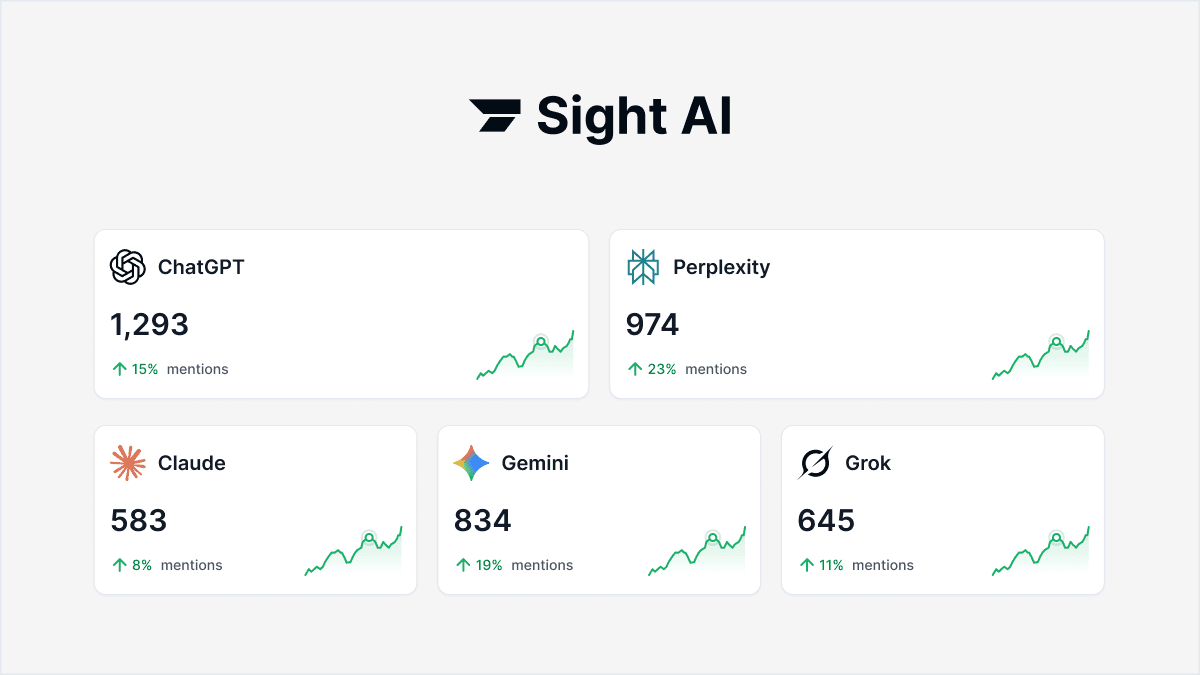
Don't change too many variables at once. If you update three agent instructions simultaneously and performance improves, you won't know which change drove the improvement. Make incremental adjustments and measure their impact. Keep a changelog of agent instruction updates tied to performance data—this creates institutional knowledge about what works. Consider tracking AI visibility specifically if you're optimizing for AI search citations. Platforms exist that monitor how AI models like ChatGPT and Claude reference your content, giving you direct feedback on your AI optimization efforts.
Putting It All Together: Your Agent-Powered Content Engine
Building an effective agent-based content system isn't about implementing all seven strategies simultaneously. Start with workflow architecture—map your agent chain before generating a single article. This foundation prevents the redundancy and quality issues that plague unstructured implementations.
Next, focus on agent specialization and quality gates. Deploy purpose-built agents for research, drafting, and optimization, with checkpoints between each phase. These three elements—workflow architecture, specialized agents, and quality gates—form the core of a reliable content engine.
Once your core system produces consistent quality, layer in the optimization strategies. Feed agents structured keyword intelligence instead of raw lists. Optimize for AI search visibility alongside traditional SEO. Automate publishing and indexing to accelerate time-to-traffic. Finally, implement performance tracking and iteration to create a self-improving system.
The implementation priority matters. Many teams try to automate publishing first, then struggle with quality issues because they skipped the foundational steps. Start with 2-3 specialized agents before expanding. Master the handoffs between research, drafting, and optimization before adding agents for fact-checking, formatting, or other specialized tasks.
Remember that agent-based content generation is a system, not a magic button. The quality of your output depends on the quality of your workflow design, your agent instructions, and your feedback loops. Invest time in the architecture phase, and you'll spend less time fixing output quality issues later.
The content landscape has shifted toward AI-powered systems that can research, write, and optimize in parallel. The question isn't whether to adopt agent-based generation—it's how quickly you can implement it effectively while maintaining the quality standards your audience expects.
Stop guessing how AI models like ChatGPT and Claude talk about your brand—get visibility into every mention, track content opportunities, and automate your path to organic traffic growth. Start tracking your AI visibility today and see exactly where your brand appears across top AI platforms.