The shift from manual content creation to automated workflows represents one of the most significant productivity gains available to modern marketing teams. Yet many organizations struggle to move beyond basic AI writing tools, leaving autopilot capabilities underutilized or misconfigured.
This guide explores battle-tested strategies for implementing AI content generators with autopilot functionality—transforming sporadic content efforts into consistent, scalable publishing operations. Whether you're a founder looking to maintain blog momentum without dedicated writers, or an agency managing content across multiple clients, these approaches will help you build systems that produce quality content while you focus on strategy and growth.
1. Build a Content Blueprint Before Enabling Autopilot
The Challenge It Solves
Jumping straight into autopilot mode without proper planning creates a common problem: content that's technically correct but strategically unfocused. Teams often end up with articles that miss their brand voice, overlap in topics, or fail to address their audience's actual needs. The result is a publishing calendar full of content that doesn't move business metrics.
Without a blueprint, your AI content generator lacks the context to make intelligent decisions about what to create next. You're essentially asking it to guess what matters to your business—and guessing rarely produces content that converts.
The Strategy Explained
Think of your content blueprint as the instruction manual your autopilot system references before generating anything. This document should include your topic clusters organized by customer journey stage, detailed brand voice guidelines with specific examples, target keyword lists with search intent mapped out, and quality parameters that define what "good" looks like for your brand.
The blueprint becomes your single source of truth. When your AI content generator enters autopilot mode, it pulls from this framework to make decisions about topic selection, tone, structure, and optimization targets. This upfront investment typically takes 4-6 hours but saves countless hours of content revision later.
Your blueprint should also define content types and their specific purposes. A how-to guide serves different goals than a comparison article, and your autopilot system needs to understand these distinctions to maintain strategic coherence across your publishing calendar.
Implementation Steps
1. Map your customer journey and identify the questions prospects ask at each stage, organizing these into 5-8 core topic clusters that align with your business objectives.
2. Document your brand voice with specific examples from existing content you love, including phrases you use frequently, terminology to avoid, and the level of technical depth appropriate for your audience.
3. Create quality checklists for each content type you'll produce, defining minimum word counts, required section types, linking requirements, and optimization standards that every piece must meet.
4. Build a keyword repository organized by priority, search intent, and topic cluster, giving your autopilot system a clear pool to draw from when generating new content.
Pro Tips
Start with a blueprint for just one content type rather than trying to document everything at once. Master autopilot for comparison articles, then expand to guides, then to listicles. This iterative approach lets you refine your blueprint based on actual output quality rather than theoretical planning.
2. Configure Multi-Agent Workflows for Specialized Tasks
The Challenge It Solves
Single-prompt content generation produces mediocre results because one AI model can't simultaneously excel at research, writing, SEO optimization, and brand alignment. When you ask a single agent to handle everything, you get content that's average across all dimensions—acceptable but never exceptional.
This limitation becomes particularly apparent when you need content that ranks well in search, gets mentioned by AI models, and maintains your unique brand voice. No single prompt can juggle all these requirements effectively, leading to content that requires extensive manual revision.
The Strategy Explained
Multi-agent workflows break content creation into specialized phases, with different AI agents handling specific tasks they're optimized for. One agent might focus on research and outline creation, another on drafting engaging introductions, a third on technical accuracy, and a fourth on SEO and GEO optimization.
The key is treating content generation with AI agents like an assembly line where each station adds its specialized value. Your research agent analyzes top-ranking content and identifies gaps. Your writing agent transforms that research into compelling narratives. Your optimization agent ensures the final piece meets technical requirements for both search engines and AI models.
Advanced AI content generators now offer 13 or more specialized agents that can work in sequence, each contributing its expertise to the final output. This approach produces content that's simultaneously well-researched, engaging, and optimized—qualities that rarely coexist in single-prompt generation.
Implementation Steps
1. Identify the distinct phases in your content creation process and assign specialized agents to each, such as research agents for competitive analysis, structure agents for outline creation, and voice agents for brand alignment.
2. Define clear handoff points between agents, specifying what information each agent receives from the previous step and what it must deliver to the next agent in the workflow.
3. Test your multi-agent workflow on a single article type first, comparing output quality against single-prompt generation to validate the improvement before scaling across all content types.
4. Document the optimal agent sequence for each content type in your blueprint, creating standardized workflows that autopilot mode can execute consistently without requiring manual configuration each time.
Pro Tips
Pay special attention to your optimization agent's configuration. This agent should understand both traditional SEO requirements and how to structure content for AI visibility—ensuring your articles get mentioned when prospects ask ChatGPT or Claude about solutions in your space.
3. Implement Smart Scheduling with Traffic Pattern Alignment
The Challenge It Solves
Publishing content at random times wastes the immediate traffic opportunity that comes from fresh content. Search engines and AI models both prioritize recently published material, but this advantage disappears if you publish when your audience isn't actively searching or when indexing delays keep your content invisible for days.
Many teams set autopilot to publish at convenient times for their internal schedule rather than optimal times for their audience. This misalignment means your content enters the discovery ecosystem at the worst possible moment, requiring weeks to gain traction instead of days.
The Strategy Explained
Smart scheduling aligns your autopilot publishing calendar with three critical factors: your audience's peak activity periods, search engine crawl patterns, and AI model training cycles. This synchronization ensures your content appears exactly when prospects are most likely to discover and engage with it.
The strategy extends beyond just picking the right time of day. It includes integrating with tools like IndexNow that immediately notify search engines about new content, dramatically reducing the time between publication and indexing. When your content gets indexed within hours instead of days, it captures traffic opportunities that slower competitors miss entirely.
Consider also the compounding effect of consistent publishing at optimal times. When search engines observe your regular publishing pattern, they increase crawl frequency to your site, creating a virtuous cycle where your new content gets discovered and indexed even faster over time.
Implementation Steps
1. Analyze your site analytics to identify when your audience is most active, looking specifically at the hours when engagement rates are highest rather than just raw traffic volume.
2. Configure your autopilot system to publish during these peak windows, spacing content releases to avoid overwhelming your audience while maintaining consistent momentum.
3. Integrate IndexNow or similar instant indexing tools with your content management system, ensuring every autopilot-generated article triggers immediate notification to search engines upon publication.
4. Set up automated sitemap updates that regenerate whenever new content publishes, giving search engines an always-current map of your site's content structure.
Pro Tips
Don't publish everything at the exact same time each day. Vary your schedule within your optimal window to appear more natural to search algorithms while still capturing peak audience attention. A Tuesday-Thursday publishing rhythm often performs better than Monday-Wednesday-Friday because it avoids the Monday information overload many professionals experience.
4. Design Feedback Loops That Improve Output Quality
The Challenge It Solves
Autopilot systems without feedback mechanisms produce static output quality—never getting better, but often getting worse as they drift from your evolving brand voice and audience needs. You end up with a content engine that worked well initially but gradually becomes less effective as market conditions and audience expectations shift.
The problem compounds over time. Without systematic quality monitoring, you don't notice the gradual decline until you've published dozens of underperforming articles. By then, you've wasted significant resources and potentially damaged your brand's authority in your space.
The Strategy Explained
Effective feedback loops create a continuous improvement cycle where performance data automatically informs adjustments to your autopilot configuration. This means tracking not just vanity metrics like word count, but business-relevant signals like time on page, scroll depth, conversion actions, and whether AI models mention your content when answering related queries.
The key is connecting performance data back to specific elements of your content generation process. If articles from a particular topic cluster consistently underperform, your system should flag that cluster for blueprint revision. If certain agent configurations produce higher engagement, those settings should become the new default.
Advanced implementations create A/B testing frameworks within autopilot workflows, generating slight variations in approach and measuring which performs better. Over time, this data-driven refinement produces content that's increasingly aligned with what actually drives results for your business.
Implementation Steps
1. Define your primary success metrics for autopilot content, focusing on business outcomes like conversions or qualified leads rather than just traffic volume or engagement time.
2. Create a weekly review process where you analyze the performance of autopilot-generated content, looking for patterns in what works and what doesn't across different topic clusters and content types.
3. Document winning formulas when you identify them, updating your content blueprint to reflect successful approaches and deprecating configurations that consistently underperform.
4. Implement automated alerts that notify you when autopilot content significantly outperforms or underperforms your benchmarks, allowing you to investigate and learn from outliers quickly.
Pro Tips
Track your AI visibility score alongside traditional SEO metrics. If your content ranks well in Google but never gets mentioned by ChatGPT or Claude, you're missing a major discovery channel. Adjust your content structure and optimization approach to capture both search and AI visibility.
5. Optimize for AI Visibility Alongside Traditional SEO
The Challenge It Solves
Traditional SEO optimization alone no longer captures the full opportunity for brand discovery. Prospects increasingly ask AI models like ChatGPT, Claude, and Perplexity for recommendations instead of searching Google. If your content isn't structured for AI visibility, you're invisible in these conversations—even if you rank well in traditional search.
The problem is that AI models evaluate content differently than search engines. They prioritize clear authority signals, direct answers to specific questions, and content that provides context without requiring users to piece together information from multiple sources. Content optimized only for keyword density and backlinks often gets overlooked by AI models.
The Strategy Explained
Dual optimization means structuring your autopilot-generated content to perform well in both traditional search results and AI model responses. This requires understanding how AI models select sources when answering queries—they favor content with clear expertise signals, comprehensive coverage of topics, and formats that make information easily extractable.
The strategy includes specific structural elements: clear problem-solution frameworks that AI models can easily parse, direct answers to common questions positioned prominently in your content, and authority indicators like specific methodologies or frameworks that make your brand memorable to AI systems.
When your autopilot system generates content with GEO optimization built in, every article becomes a potential citation source for AI models. Over time, this creates a compounding advantage where your brand gets mentioned repeatedly across AI platforms, building awareness with prospects who never even visit traditional search engines.
Implementation Steps
1. Audit how AI models currently talk about your brand by testing relevant prompts across ChatGPT, Claude, and Perplexity, documenting where you're mentioned and where competitors appear instead.
2. Configure your autopilot content templates to include AI-friendly elements like clear problem statements, direct solution explanations, and specific frameworks or methodologies that AI models can reference by name.
3. Structure content with both search intent and AI query patterns in mind, recognizing that AI users often ask more conversational questions than traditional search queries.
4. Monitor your AI visibility score over time to track whether your content optimization efforts are increasing brand mentions across AI platforms, adjusting your approach based on what drives measurable improvements.
Pro Tips
Create content that teaches AI models your unique framework or methodology. When you consistently present information using a named approach, AI models begin associating that framework with your brand and citing you as the source—even in conversations where prospects didn't specifically ask about your company.
6. Establish Human Checkpoints Without Breaking Flow
The Challenge It Solves
Fully automated publishing without human oversight creates risk—a single misconfigured prompt or unexpected AI output can publish content that damages your brand. Yet adding too many review steps defeats the purpose of autopilot, creating bottlenecks that slow your publishing velocity to manual speeds.
The tension between quality control and automation efficiency stops many teams from fully leveraging autopilot content creation tools. They either accept lower quality to maintain speed, or they add so many review layers that automation provides minimal time savings.
The Strategy Explained
Strategic checkpoints focus human review on the decisions that actually matter while letting automation handle repetitive execution. This means reviewing content strategy and topic selection carefully, but trusting your configured autopilot system to handle the actual writing, formatting, and optimization consistently.
The key is distinguishing between strategic decisions that require human judgment and tactical execution that AI handles reliably. Your team should review and approve topic clusters, brand voice guidelines, and quality parameters. Once approved, your autopilot system executes within those boundaries without requiring approval for every individual article.
Think of it like setting up guardrails rather than checking every step. You define the acceptable range of outputs through your blueprint and configuration, then let autopilot operate within those constraints. Human review happens at the system level, not the individual content level.
Implementation Steps
1. Identify the decisions in your content process that genuinely require human judgment versus those that follow predictable rules AI can execute consistently.
2. Create a tiered review system where strategic elements like topic selection and brand positioning get thorough human review, while tactical elements like formatting and basic optimization run automatically.
3. Implement spot-check protocols where team members randomly review a percentage of autopilot-generated content to verify quality remains consistent, catching configuration drift before it becomes systemic.
4. Define clear escalation triggers that automatically flag content for human review when it falls outside normal parameters, such as unusually low readability scores or missing key structural elements.
Pro Tips
Start with higher human involvement and gradually reduce it as you build confidence in your system. Review every article for the first week, then every other article for the next week, then move to spot checks. This progressive trust-building prevents quality issues while helping your team understand what your autopilot system handles reliably.
7. Scale Across Multiple Properties and Client Accounts
The Challenge It Solves
Managing autopilot content for multiple brands creates a unique challenge: maintaining distinct voices and avoiding content overlap while still gaining efficiency from automation. Agencies particularly struggle here, needing to produce high-volume content across diverse clients without articles bleeding together into generic sameness.
The problem intensifies when you're targeting similar keywords across different clients. Without careful management, your autopilot system might generate nearly identical articles for competing brands, creating awkward situations and undermining the unique value you provide each client.
The Strategy Explained
Successful multi-property scaling requires creating distinct content blueprints for each brand while centralizing your operational infrastructure. Each client gets their own topic clusters, brand voice guidelines, and quality parameters, but they all run through the same proven autopilot workflows and agent configurations.
The strategy includes building content differentiation into your blueprint phase. Even when multiple clients target the same keywords, their blueprints should specify different angles, use cases, or audience segments. This strategic separation ensures autopilot generates genuinely distinct content even when working from similar prompts.
Advanced implementations create brand-specific knowledge bases that inform content generation. Client A's autopilot system references their product features, customer testimonials, and unique methodologies. Client B's system draws from completely different source material. The underlying automation is shared, but the inputs are deliberately distinct.
Implementation Steps
1. Create separate content blueprints for each brand or property, documenting not just voice and topics but also the specific angles and perspectives that differentiate this brand from others in your portfolio.
2. Build brand-specific knowledge repositories that your autopilot system references during content generation, ensuring each brand's content draws from its unique expertise and positioning.
3. Implement content comparison checks that flag when autopilot generates articles that are too similar across different brands, triggering revision before publication.
4. Schedule content releases strategically across your portfolio to avoid publishing similar topics for different clients in the same week, reducing the risk of search engines viewing them as duplicate content.
Pro Tips
Create a master calendar that shows all autopilot activity across your entire portfolio. This bird's-eye view helps you spot potential conflicts before they happen and ensures you're distributing your team's spot-check resources effectively across all properties. When you can see that three clients are all publishing comparison articles in the same week, you can stagger them or adjust topics to maintain differentiation.
Putting It All Together
Implementing AI content generation with autopilot isn't about replacing human creativity—it's about amplifying it. The strategies outlined here transform autopilot from a risky automation experiment into a reliable content engine that maintains quality while scaling output.
Start with strategy one: build your content blueprint before touching any automation settings. This foundation prevents the chaos that comes from automating an undefined process. Then progressively add complexity, moving through multi-agent workflows, smart scheduling, and feedback loops.
The organizations seeing the greatest returns treat autopilot as a system to be tuned, not a button to be pressed. They invest time upfront in configuration, monitor performance continuously, and refine their approach based on actual results. This systematic approach typically shows measurable improvements within the first month.
Begin with a single content type—perhaps comparison articles or how-to guides. Master that workflow completely before expanding to other formats. Within weeks, you'll have a content engine that maintains momentum even when your team is focused elsewhere, freeing you to work on the strategic initiatives that actually grow your business.
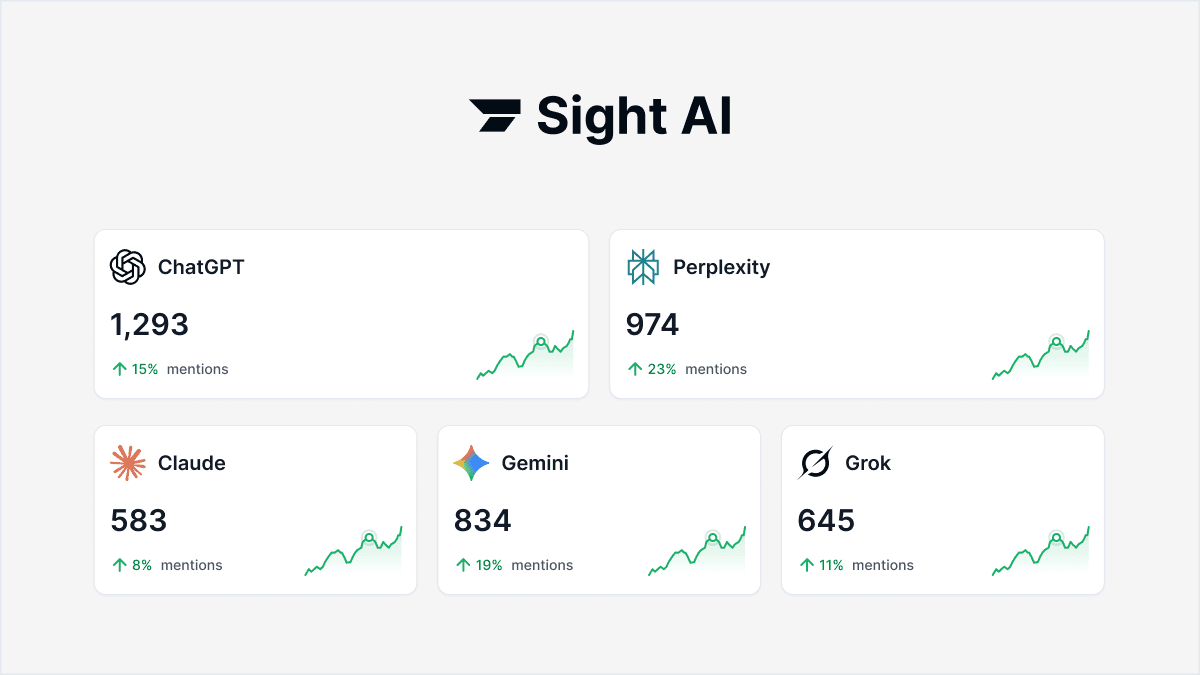
But here's the critical piece most teams miss: your content's performance depends not just on where it ranks in Google, but on whether AI models mention your brand when prospects ask for recommendations. Start tracking your AI visibility today and see exactly where your brand appears across top AI platforms—then optimize your autopilot strategy to capture both search and AI discovery channels simultaneously.