The content marketing landscape has fundamentally shifted. Marketers and founders who once spent hours manually publishing blog posts now face a new challenge: producing enough quality content to stay visible across both traditional search engines and AI platforms like ChatGPT, Claude, and Perplexity.
An AI content writer with auto publishing capabilities addresses this bottleneck by combining intelligent content generation with seamless distribution. But simply having the tools isn't enough—you need the right strategies to maximize their impact.
This guide walks you through seven battle-tested approaches that help brands generate SEO and GEO-optimized content at scale while ensuring that content actually gets discovered by both human readers and AI models. Whether you're a solo founder trying to build organic traffic or an agency managing multiple client accounts, these strategies will help you transform your content workflow from a time-consuming burden into an automated growth engine.
1. Build a Content Calendar That Feeds Your Auto Publishing Pipeline
The Challenge It Solves
Random content creation kills automation efficiency. When you generate articles on the fly without a strategic roadmap, you miss opportunities to build topical authority and create content clusters that reinforce each other. AI models increasingly favor sources that demonstrate comprehensive expertise on related topics rather than scattered one-off articles.
The Strategy Explained
Think of your content calendar as the blueprint for an automated factory line. Start by identifying your core topic clusters—groups of related subjects where your brand offers genuine expertise. For each cluster, map out pillar content (comprehensive guides) and supporting articles (specific how-tos, comparisons, and strategy pieces) that link back to each other.
Your calendar should balance publishing frequency with content depth. Many companies find that consistent weekly publishing builds momentum better than sporadic bursts of daily content. The key is creating a rhythm your AI content writer can maintain without overwhelming your review process.
Implementation Steps
1. Audit your existing content to identify gaps and opportunities where you could build comprehensive topic clusters around your core expertise areas.
2. Map out 90 days of content organized by theme, alternating between pillar pieces and supporting articles that naturally link together.
3. Schedule publishing dates that align with your review capacity, leaving buffer time for quality checks before auto publishing executes.
4. Tag each piece with its cluster category and target keywords to ensure your AI content writer maintains thematic consistency across related articles.
Pro Tips
Front-load your calendar with foundational content that establishes authority before branching into niche topics. This creates a strong base that AI models can reference when they encounter questions in your domain. Update your calendar monthly based on emerging trends and questions your target audience actually asks.
2. Optimize Your AI Content Prompts for Brand Consistency
The Challenge It Solves
Generic AI-generated content sounds like everyone else. When your automated content lacks distinctive voice and perspective, it fails to build brand recognition. Readers and AI models both struggle to differentiate your content from the hundreds of similar articles published daily on the same topics.
The Strategy Explained
Your brand voice is your competitive advantage in an automated content world. Create detailed style guidelines that your AI content writer can follow consistently across every piece. This includes specific vocabulary choices, sentence structure preferences, how you address readers, and the types of examples you use.
The most effective approach involves developing prompt templates that embed your brand personality directly into the content generation process. Instead of generic instructions, your prompts should specify tone, perspective, and the unique angle your brand brings to each topic.
Implementation Steps
1. Document your brand voice by analyzing your best-performing content and identifying patterns in language, structure, and approach that resonate with your audience.
2. Create a style guide that includes specific examples of preferred phrasing, terminology to use or avoid, and the level of technical detail appropriate for your audience.
3. Build prompt templates for different content types (guides, listicles, explainers) that incorporate your voice guidelines while allowing flexibility for specific topics.
4. Test your templates by generating several pieces and comparing them against manually written content to ensure consistency before scaling production.
Pro Tips
Include specific competitor differentiation in your prompts. If competitors take a purely technical approach, your prompts might emphasize practical implementation. If they focus on theory, emphasize actionable steps. This positioning helps your content stand out when AI models evaluate sources to reference.
3. Structure Content for Both Search Engines and AI Models
The Challenge It Solves
Traditional SEO alone no longer guarantees visibility. AI models like ChatGPT and Claude don't simply rank content by keywords—they evaluate structure, clarity, and how well content answers specific questions. Content optimized only for traditional search engines often gets overlooked when AI assistants compile responses.
The Strategy Explained
Generative Engine Optimization (GEO) represents the evolution of content formatting for AI discoverability. This approach combines traditional SEO fundamentals with structural elements that help AI models extract and cite information accurately. Clear hierarchies, concise explanations, and direct answers to common questions make content more likely to be referenced.
The strategy involves formatting content so both algorithms and AI models can quickly identify key information. This means using semantic HTML properly, creating logical content flows, and presenting information in digestible chunks that AI models can parse and attribute correctly.
Implementation Steps
1. Structure every article with clear H2 and H3 headings that directly answer specific questions your audience asks, making it easy for AI models to extract relevant sections.
2. Include concise definition paragraphs at the start of major sections that AI models can quote directly when answering related queries.
3. Use descriptive anchor text for internal links that signals topic relationships to both search engines and AI models evaluating your site's topical authority.
4. Format lists and step-by-step instructions as distinct paragraphs rather than buried in long text blocks, improving both readability and AI parseability.
Pro Tips
Front-load your most valuable insights in the first two paragraphs of each section. AI models often prioritize information that appears early in well-structured content when compiling responses. This positioning increases citation likelihood without compromising readability for human visitors.
4. Implement Smart Indexing to Accelerate Content Discovery
The Challenge It Solves
Publishing content means nothing if search engines take weeks to discover it. Traditional indexing relies on search engines eventually crawling your site, which creates a lag between publication and visibility. During this gap, your fresh content sits invisible while competitors' older articles continue capturing traffic.
The Strategy Explained
IndexNow protocol allows you to notify search engines instantly when you publish new content, dramatically reducing the time between publication and indexing. When integrated with auto publishing workflows, this creates an end-to-end pipeline where content moves from generation to search visibility without manual intervention.
Smart indexing combines IndexNow notifications with automated sitemap updates and strategic internal linking. This multi-layered approach ensures search engines not only discover your new content quickly but also understand its relationship to your existing content architecture.
Implementation Steps
1. Connect your auto publishing system to IndexNow-compatible search engines to trigger immediate indexing notifications when new content goes live.
2. Configure automated sitemap generation that updates immediately after publishing, providing search engines with a current map of your content structure.
3. Implement automatic internal linking that connects new articles to relevant existing content, helping search engines understand topical relationships and crawl depth.
4. Monitor indexing speed through search console tools to verify that your smart indexing setup actually accelerates discovery compared to passive crawling.
Pro Tips
Prioritize indexing for time-sensitive content and pillar pieces that anchor your topic clusters. While IndexNow works for all content, strategic prioritization ensures your most valuable articles gain visibility first, building authority that benefits supporting content later.
5. Create Feedback Loops Using AI Visibility Tracking
The Challenge It Solves
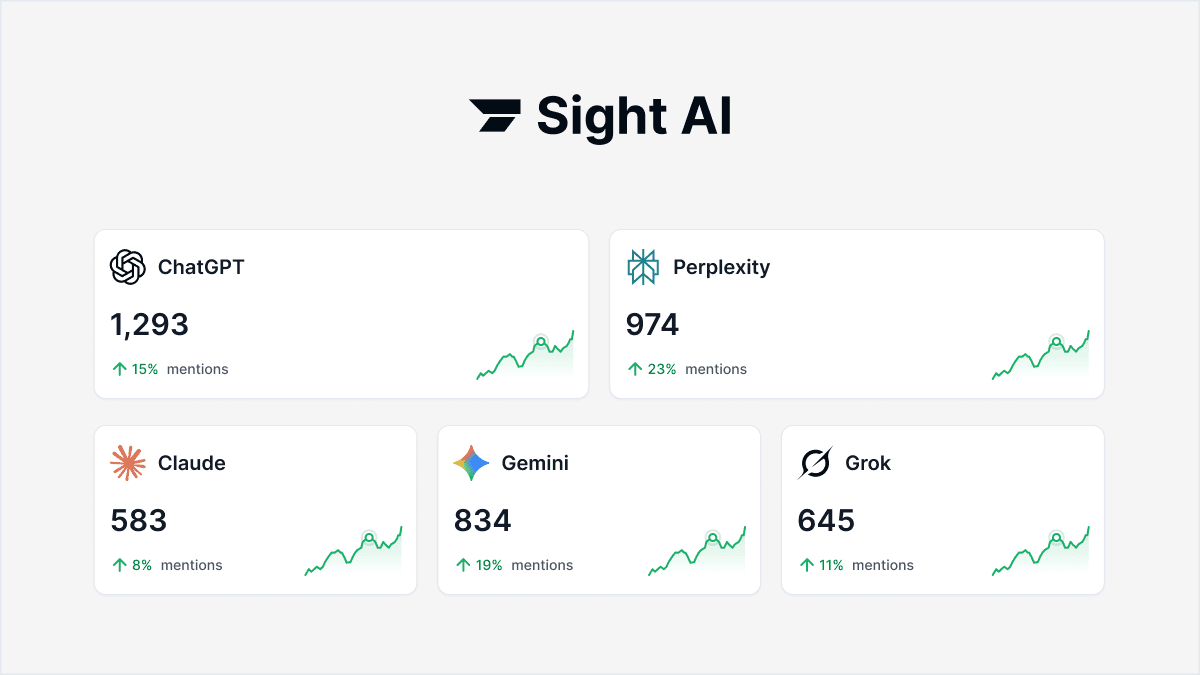
Most content teams operate blind to how AI models actually reference their brand. You publish articles optimized for search engines but have no visibility into whether ChatGPT, Claude, or Perplexity actually mention your brand when users ask relevant questions. This disconnect makes it impossible to optimize for AI discoverability.
The Strategy Explained
AI visibility tracking monitors how AI models respond to prompts related to your industry, tracking when and how they mention your brand. This creates a measurable feedback loop where you can see which content topics and formats lead to AI citations, then adjust your content strategy accordingly.
The most sophisticated approach involves tracking sentiment alongside mentions. Not all AI references are equal—understanding whether AI models recommend your brand positively, mention you neutrally, or cite competitors instead provides actionable intelligence for content improvement.
Implementation Steps
1. Identify the key prompts and questions your target audience asks AI models about topics in your domain, creating a baseline of queries to monitor.
2. Track how multiple AI platforms respond to these prompts over time, noting when your brand appears, the context of mentions, and how you compare to competitors.
3. Analyze patterns in which content topics and formats generate the most favorable AI mentions, identifying what makes certain pieces more citation-worthy.
4. Adjust your content calendar and AI writer prompts based on visibility data, doubling down on approaches that increase positive AI references.
Pro Tips
Pay special attention to topics where AI models currently cite competitors but not your brand. These represent immediate content opportunities where targeted articles could shift AI recommendations in your favor. Focus your auto publishing pipeline on filling these specific gaps with comprehensive, well-structured content.
6. Scale Content Production Without Sacrificing Quality
The Challenge It Solves
Higher content volume only helps if quality remains consistent. Many teams that adopt AI content writers with auto publishing initially see quantity spike while quality drops, ultimately hurting rather than helping their organic visibility. The challenge is maintaining standards while increasing output.
The Strategy Explained
Specialized AI agents handle different aspects of content creation better than single general-purpose tools. By routing different content types and sections to agents optimized for specific tasks, you maintain quality while increasing throughput. This division of labor mirrors how successful content teams organize human writers by expertise.
The key is building smart review workflows that catch issues before publication without creating bottlenecks. Automated quality checks can flag potential problems—factual inconsistencies, tone mismatches, or structural issues—while human reviewers focus on strategic decisions and final polish.
Implementation Steps
1. Assign different content types to specialized AI agents based on their strengths, using separate agents for technical guides, strategic listicles, and industry news updates.
2. Implement automated quality checks that review content for brand voice consistency, proper formatting, and logical flow before it reaches human reviewers.
3. Create tiered review processes where straightforward content updates get lighter review while pillar pieces receive comprehensive human oversight before auto publishing.
4. Establish clear quality metrics that define acceptable standards, measuring both AI-generated drafts and published content against these benchmarks consistently.
Pro Tips
Start with a lower publishing frequency and gradually increase volume as your review workflows prove reliable. Rushing to maximum output before your quality systems are tested often creates cleanup work that negates efficiency gains. Build confidence in your automation before scaling aggressively.
7. Measure ROI and Continuously Optimize Your Automation Stack
The Challenge It Solves
Content automation investments only pay off if you track the right metrics. Many teams measure vanity metrics like total articles published while missing the business outcomes that actually matter—organic traffic growth, AI visibility improvements, and time savings that free teams for strategic work.
The Strategy Explained
Effective measurement tracks the complete automation funnel from content generation through discovery and engagement. This includes traditional metrics like organic traffic and rankings alongside newer indicators like AI visibility scores and citation frequency across AI platforms. The goal is understanding which automation investments drive real business results.
The most valuable insights come from comparing time investment versus output quality. If your AI content writer with auto publishing produces ten articles in the time previously needed for two, but those ten articles generate equivalent traffic and AI mentions, you've achieved meaningful ROI.
Implementation Steps
1. Establish baseline metrics before implementing automation, tracking time spent on content creation, publishing frequency, organic traffic, and any existing AI visibility data.
2. Monitor AI visibility scores across major platforms to measure how automation affects your brand's presence in AI-generated responses over time.
3. Track efficiency gains by measuring time saved on content production and publishing workflows, quantifying the hours freed for strategy and optimization.
4. Analyze content performance patterns to identify which automated workflows produce the highest-quality results, then optimize your process around these successful approaches.
Pro Tips
Set quarterly review cycles where you assess your entire automation stack against ROI metrics. Technology and AI capabilities evolve rapidly—what works optimally today might need adjustment in six months. Regular evaluation ensures your automation strategy stays aligned with both your business goals and the latest platform capabilities.
Putting It All Together
Implementing an AI content writer with auto publishing isn't about replacing human creativity—it's about amplifying your capacity to reach audiences across every platform where they search for information.
Start by building your content calendar and establishing brand voice guidelines. These foundational elements ensure your automation produces consistent, strategic content rather than random articles. Once your foundation is solid, layer in smart indexing and AI visibility tracking to create a complete feedback loop that continuously improves your approach.
The brands winning in 2026 aren't just publishing more content. They're publishing strategically, measuring what AI models actually recommend, and continuously refining their approach based on real visibility data. This combination of volume and intelligence separates effective automation from content spam.
Begin with one or two strategies from this list, measure your results, and expand from there. If you're starting from scratch, prioritize building your content calendar and implementing smart indexing first. These create immediate value while establishing the infrastructure for more sophisticated optimization later.
For teams already publishing regularly, focus on AI visibility tracking and prompt optimization. These strategies help you understand and improve how AI models reference your existing content, often revealing quick wins that boost visibility without requiring more content production.
Stop guessing how AI models like ChatGPT and Claude talk about your brand—get visibility into every mention, track content opportunities, and automate your path to organic traffic growth. Start tracking your AI visibility today and see exactly where your brand appears across top AI platforms.
Your future self—and your organic traffic numbers—will thank you.