A well-structured outline is the difference between content that ranks and content that gets buried. Whether you're targeting traditional search results or optimizing for AI-generated responses, the outline you start with determines how well your content performs before a single body paragraph is written.
AI article outline generators have become essential for content teams that need to move fast without sacrificing structure. The best tools don't just suggest headings — they align your content architecture with what search engines and AI models actually reward. For teams focused on GEO (Generative Engine Optimization), that means structuring content so that AI platforms like ChatGPT, Claude, and Perplexity are more likely to cite your brand in their responses.
The tools below were selected based on outline quality, SEO and GEO optimization capabilities, workflow integration, and pricing accessibility. The list spans all-in-one AI content platforms, SERP-driven SEO tools, and flexible general-purpose AI assistants — so there's something here regardless of where your content strategy sits today.
1. Sight AI
Best for: Agencies and marketers optimizing content for both traditional SEO and AI search visibility.
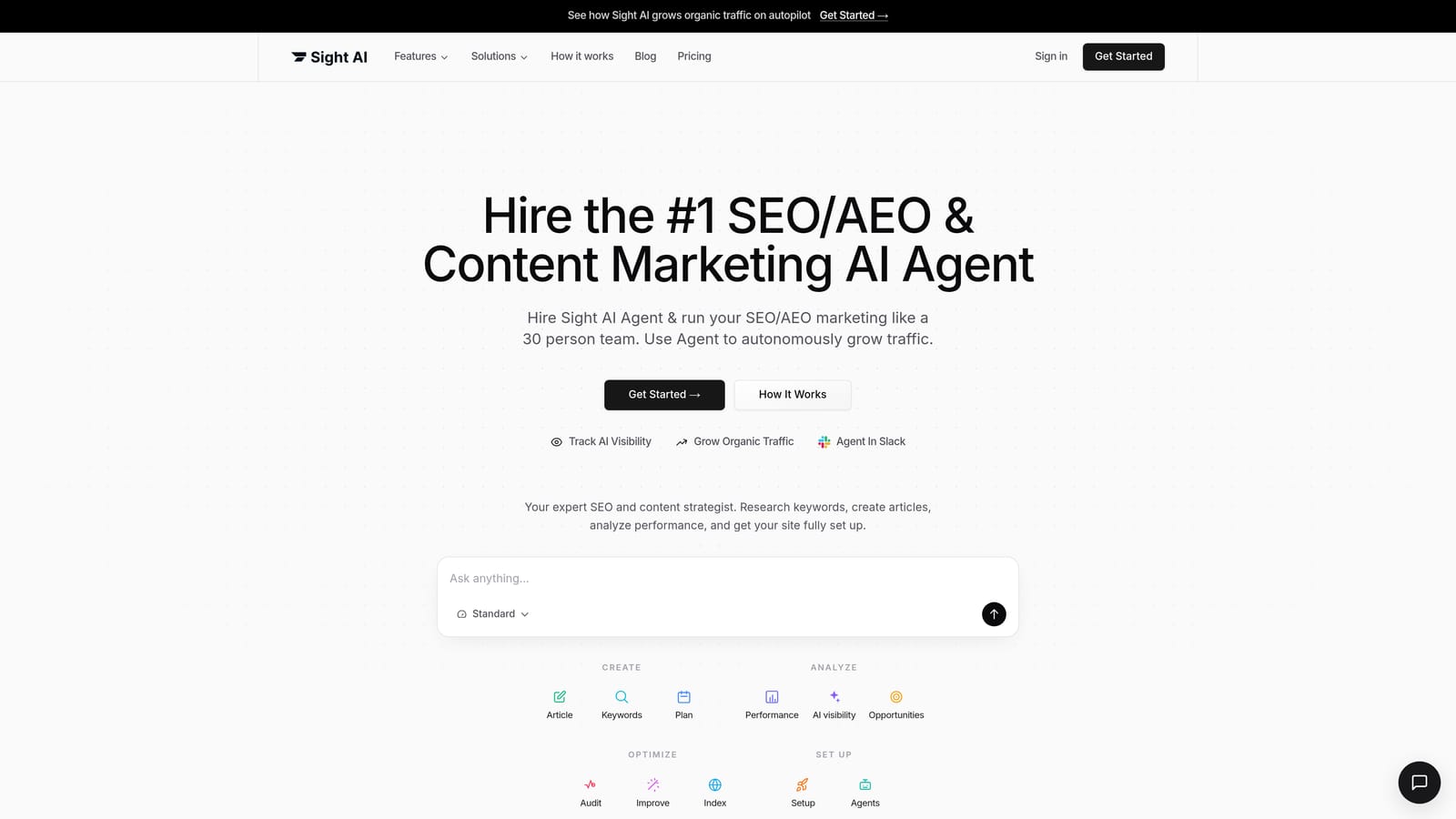
Sight AI is an all-in-one AI content platform that generates SEO and GEO-optimized outlines and full articles using 13+ specialized AI agents, with built-in AI visibility tracking across ChatGPT, Claude, Perplexity, and more.
Where This Tool Shines
Sight AI is one of the few tools that treats outline generation and AI visibility as connected problems. Most platforms help you build content that ranks in Google. Sight AI also helps you build content that gets your brand cited by AI models — a growing priority as more users get answers directly from AI assistants rather than clicking search results.
The Autopilot Mode is particularly useful for agencies managing high content volume. It handles the full pipeline from outline creation to CMS publishing, reducing the manual handoffs that slow down production. The IndexNow integration means published content gets discovered faster, which matters when you're trying to build topical authority quickly.
Key Features
13+ Specialized AI Agents: Purpose-built agents for listicles, guides, explainers, and other content formats — each optimized for its specific structure and intent.
GEO-Optimized Outlines: Outlines are designed to increase the likelihood that AI models mention your brand in relevant responses, not just rank in traditional search.
Autopilot Mode: End-to-end workflow from outline generation through writing, formatting, and CMS publishing without manual intervention at each stage.
AI Visibility Score: Tracks how and where your brand appears across 6+ AI platforms, with sentiment analysis and prompt tracking built in.
IndexNow Integration: Automatically notifies search engines after publishing so content gets indexed faster and starts accumulating signals sooner.
Best For
Sight AI is the strongest fit for marketing teams, founders, and agencies that need to scale content production while also tracking how AI models talk about their brand. If you're investing in both SEO and GEO strategy, the combination of outline generation, content publishing, and AI visibility tracking in a single platform removes a lot of tool-switching friction.
Pricing
Check current plans at trysight.ai. Pricing is structured around content volume and visibility tracking needs.
2. Surfer SEO
Best for: Content teams that want outlines built directly from real-time SERP data.
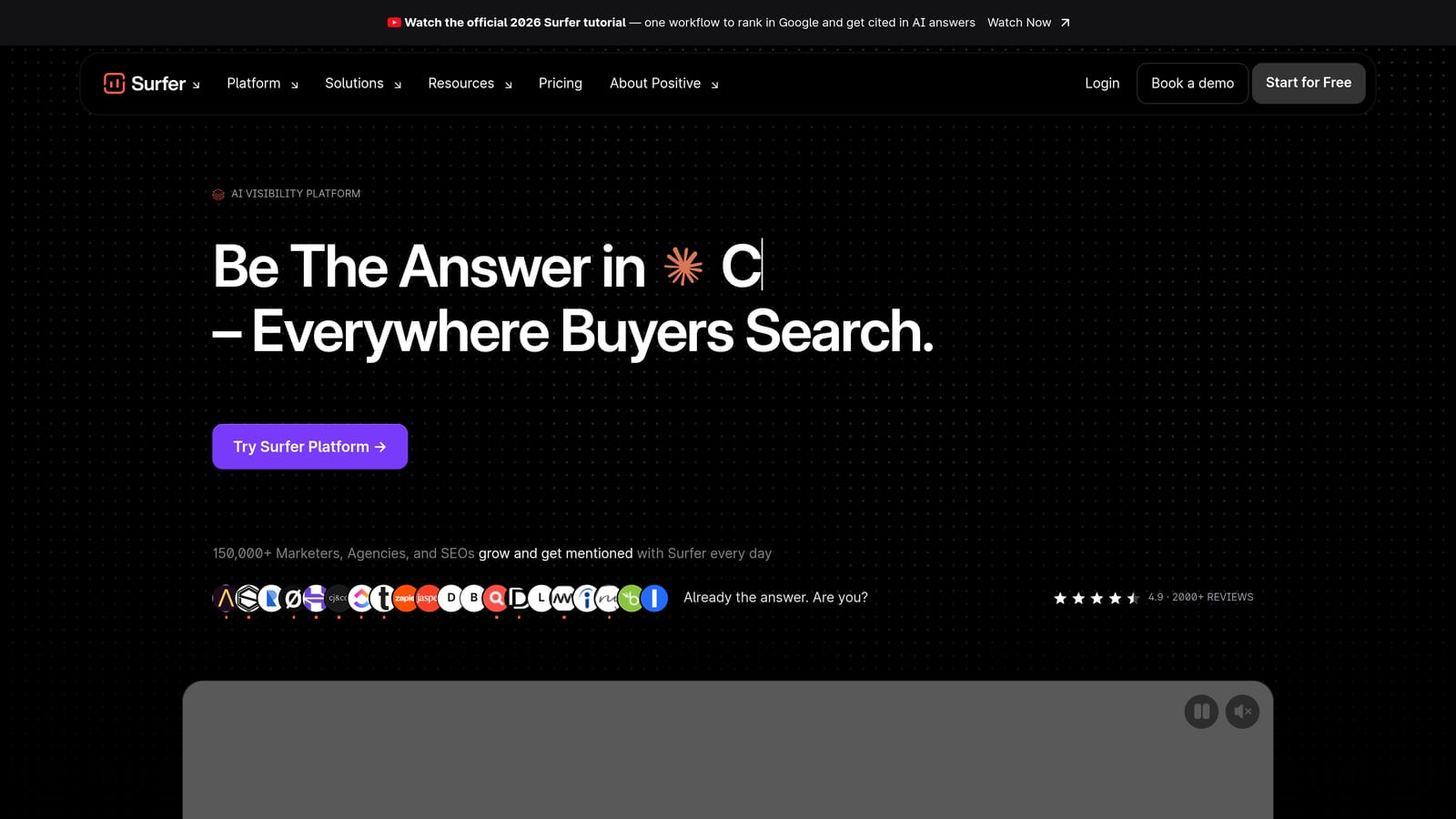
Surfer SEO is a data-driven SEO platform whose Content Editor generates article outlines based on real-time SERP analysis, suggested headings, and NLP term recommendations.
Where This Tool Shines
Surfer's strength is that its outline suggestions aren't guesswork. They're pulled from what's actually ranking for your target keyword right now. That means your heading structure starts from a position of competitive relevance rather than generic best practices.
The NLP term layer adds another dimension: it tells you which concepts and phrases need to appear in your content to match the semantic depth of top-ranking pages. For writers who need direction on both structure and substance, that's a meaningful head start.
Key Features
SERP-Based Heading Suggestions: Outline structure is informed by headings used across top-ranking pages for your target keyword.
NLP Term Recommendations: Surfaces semantically relevant terms to guide outline depth and topical coverage.
Google Docs and WordPress Integration: Work directly in the tools your team already uses without copying and pasting between platforms.
Content Score: Benchmarks your outline and draft completeness against competing pages in real time.
Keyword Research Integration: Keyword data flows directly into the outline workflow so you're not switching between tools.
Best For
Surfer is ideal for SEO-focused content teams and agencies that prioritize competitive alignment. It works particularly well when you need to produce content that's designed to outrank existing results rather than simply cover a topic.
Pricing
Tiered plans based on usage; check current pricing at surferseo.com.
3. Jasper
Best for: Enterprise marketing teams producing content at scale with strict brand consistency requirements.
Jasper is an enterprise-grade AI writing platform with campaign-level outline templates and brand voice settings, designed for marketing teams producing content at scale.

Where This Tool Shines
Jasper's differentiator isn't the outline itself — it's the infrastructure around it. Brand voice settings ensure that every outline and draft sounds like your company, not like generic AI output. For large teams where multiple writers are producing content simultaneously, that consistency is hard to achieve without guardrails baked into the tool.
The campaign workspace is useful for agencies managing multiple clients or brands. You can organize outlines, briefs, and drafts by project, which keeps production organized at scale rather than scattered across shared drives and Slack threads.
Key Features
Brand Voice Settings: Captures your tone, style, and messaging so outlines and content stay consistent across writers and campaigns.
Pre-Built Templates: Ready-made outline and brief templates for blog posts, landing pages, social content, and more.
Surfer SEO Integration: Connects with Surfer to layer SERP-based optimization onto Jasper's outline and writing workflow.
Campaign Workspace: Organizes multiple content projects in one place, useful for agencies juggling several clients.
Team Collaboration: Shared workspaces, commenting, and role-based access for enterprise and agency teams.
Best For
Jasper suits enterprise marketing departments and larger agencies where brand consistency and team coordination are as important as output volume. It's less suited to solo creators or small teams that don't need the organizational overhead.
Pricing
Tiered plans; check current pricing at jasper.ai.
4. Frase
Best for: Writers and strategists who want outlines built from competitor heading structures before writing begins.
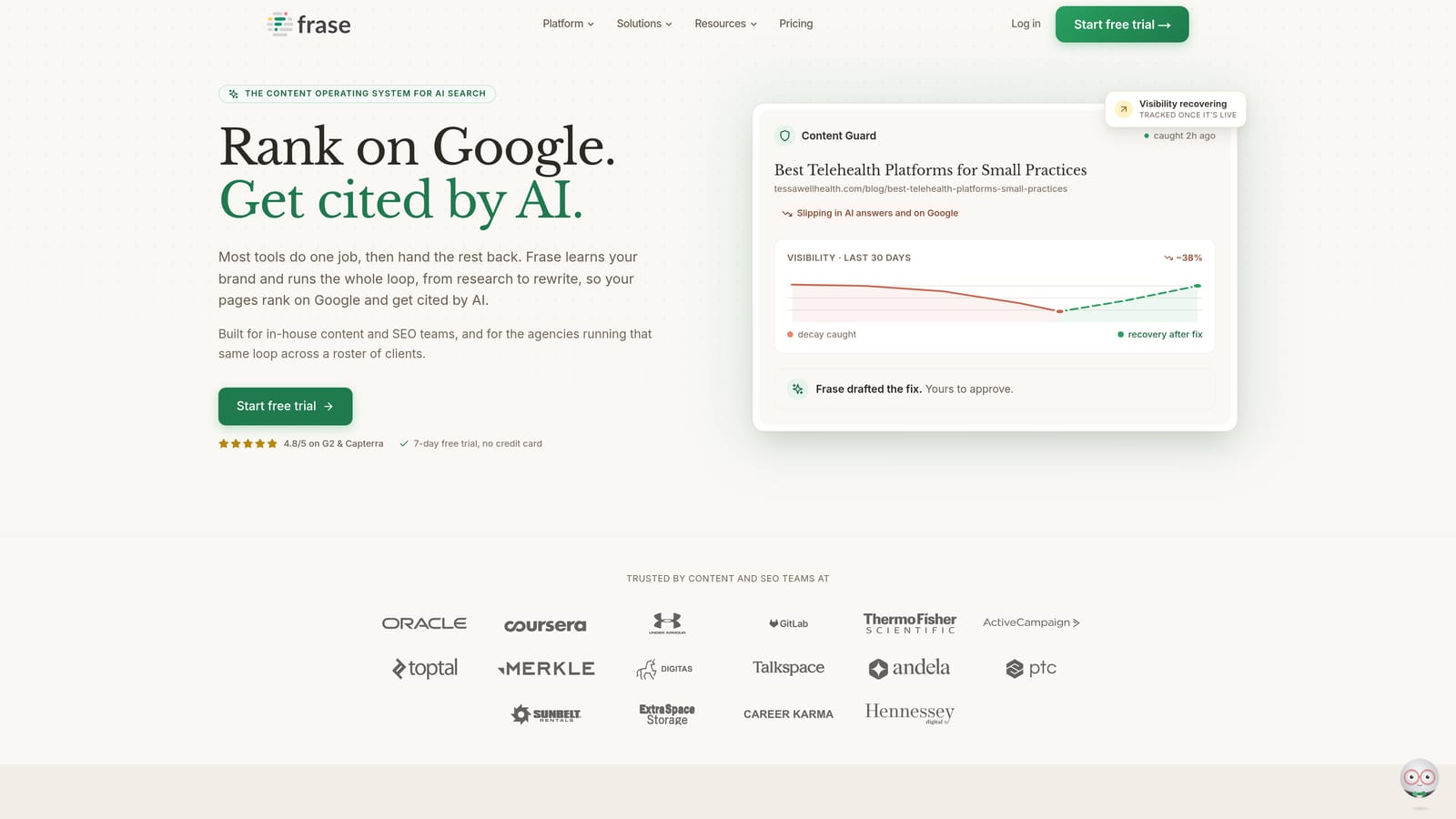
Frase is a content research and optimization platform that builds article outlines by aggregating heading structures from top-ranking SERP competitors.
Where This Tool Shines
Frase takes a research-first approach that many writers find more intuitive than starting from a blank prompt. Instead of asking an AI to invent a structure, Frase shows you what the top-ranking pages actually look like — their headings, their questions, their depth — and lets you build from there.
The question research feature is particularly useful for informational content. It surfaces the questions people are actually asking around your topic, which translates directly into H2s and H3s that address real search intent rather than assumed intent.
Key Features
Competitor Heading Aggregation: Automatically pulls and organizes heading structures from top SERP results so you can see what's working before you plan your own outline.
Content Brief Builder: Combines heading suggestions, question research, and keyword data into a structured brief your writers can follow.
Content Scoring: Rates your draft against top-ranking competitors so you know where your coverage is thin.
AI Writing Assistant: Expands outline sections into full paragraphs when you're ready to move from structure to copy.
Research-First Workflow: The tool is designed around understanding what's ranking before you decide what to write.
Best For
Frase works well for content strategists and SEO writers who want to ground their outlines in competitive reality. It's a strong choice for teams producing informational content where matching and exceeding existing SERP coverage is the primary goal.
Pricing
Tiered plans; check current pricing at frase.io.
5. Clearscope
Best for: Enterprise teams that use grade-based quality benchmarks to guide outline structure and editorial standards.
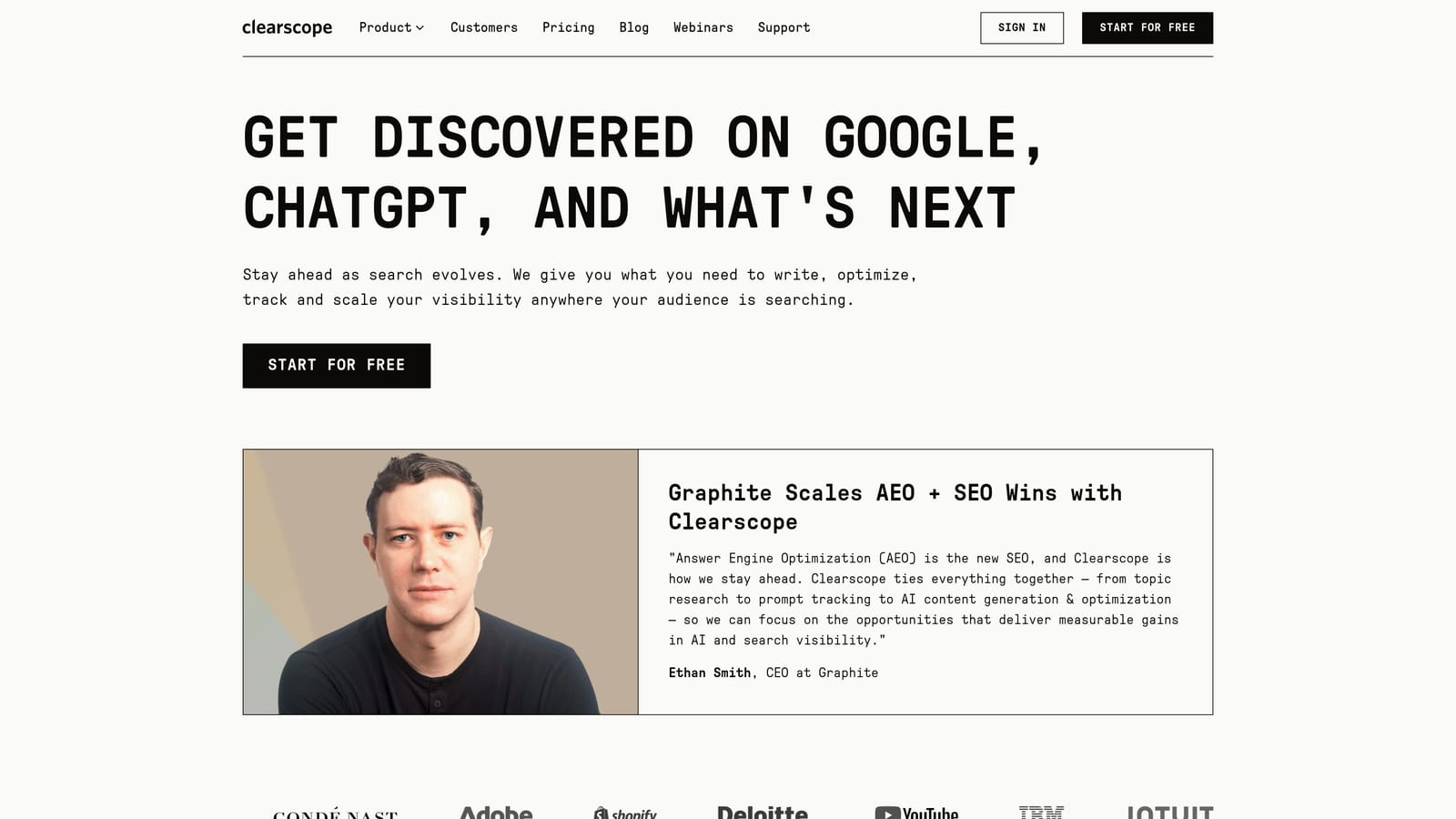
Clearscope is an enterprise content optimization platform that uses grade-based content reports and topic models to guide outline structure and semantic coverage.
Where This Tool Shines
Clearscope is less about generating outlines from scratch and more about ensuring your outline covers the right semantic territory. Its grade-based reports tell you which terms need to appear and at what frequency — giving your outline a quality target to hit before writing begins.
Enterprise teams tend to favor Clearscope because it creates a shared quality standard. When every writer is working from the same content grade benchmark, editorial consistency improves without requiring heavy manual review at every step.
Key Features
Grade-Based Content Reports: Scores your content against top-ranking pages with specific term frequency guidance to hit target grades.
Topic Model Suggestions: Surfaces semantically related concepts that should inform your heading selection and coverage depth.
Google Docs and WordPress Integration: Brings Clearscope's recommendations directly into the tools where writing happens.
Team Reporting: Tracks content performance and quality metrics across your team's output over time.
Quality Benchmarking: Sets a consistent editorial standard that scales across large writing teams without relying on individual judgment alone.
Best For
Clearscope is built for enterprise content operations where quality control and editorial consistency are non-negotiable. It's less accessible for smaller teams on tighter budgets, but for organizations where content quality directly impacts brand authority, it's a defensible investment.
Pricing
Higher-end pricing relative to other tools in this list; check current plans at clearscope.io.
6. ChatGPT
Best for: Writers who want maximum flexibility in outline structure without template constraints.
ChatGPT is OpenAI's general-purpose AI assistant, widely used for flexible outline generation via custom prompts with no fixed template limitations.

Where This Tool Shines
ChatGPT's advantage is adaptability. You can prompt it to generate any outline structure you need — long-form guide, comparison post, FAQ-heavy explainer, technical walkthrough — without being locked into a platform's predefined templates. For writers who already know what good structure looks like, that flexibility is genuinely useful.
The iterative conversation format also makes outline refinement natural. You can push back, ask for alternatives, request more depth in specific sections, or restructure the entire thing in a follow-up message. Canvas mode adds a more document-oriented editing experience for those who prefer working in a structured view.
Key Features
Custom Prompt Flexibility: Adaptable to any content format or outline structure without platform-imposed constraints.
Iterative Refinement: Conversational interface lets you refine, expand, or restructure outlines through follow-up prompts rather than starting over.
Canvas Mode: Structured document editing view for working on outlines as formatted documents rather than chat responses.
No SEO Data Layer: Requires you to provide keyword context and competitive insight — it doesn't pull SERP data on its own.
Free Tier Available: Accessible without a paid subscription, with advanced models available on paid plans.
Best For
ChatGPT is best for writers, strategists, and founders who are comfortable crafting their own prompts and don't need built-in SERP data. It's the most cost-accessible option and works well when paired with separate keyword research tools.
Pricing
Free tier available; ChatGPT Plus from $20/month for access to advanced models.
7. Writesonic
Best for: Content teams that want a guided keyword-to-outline-to-draft workflow in a single tool.
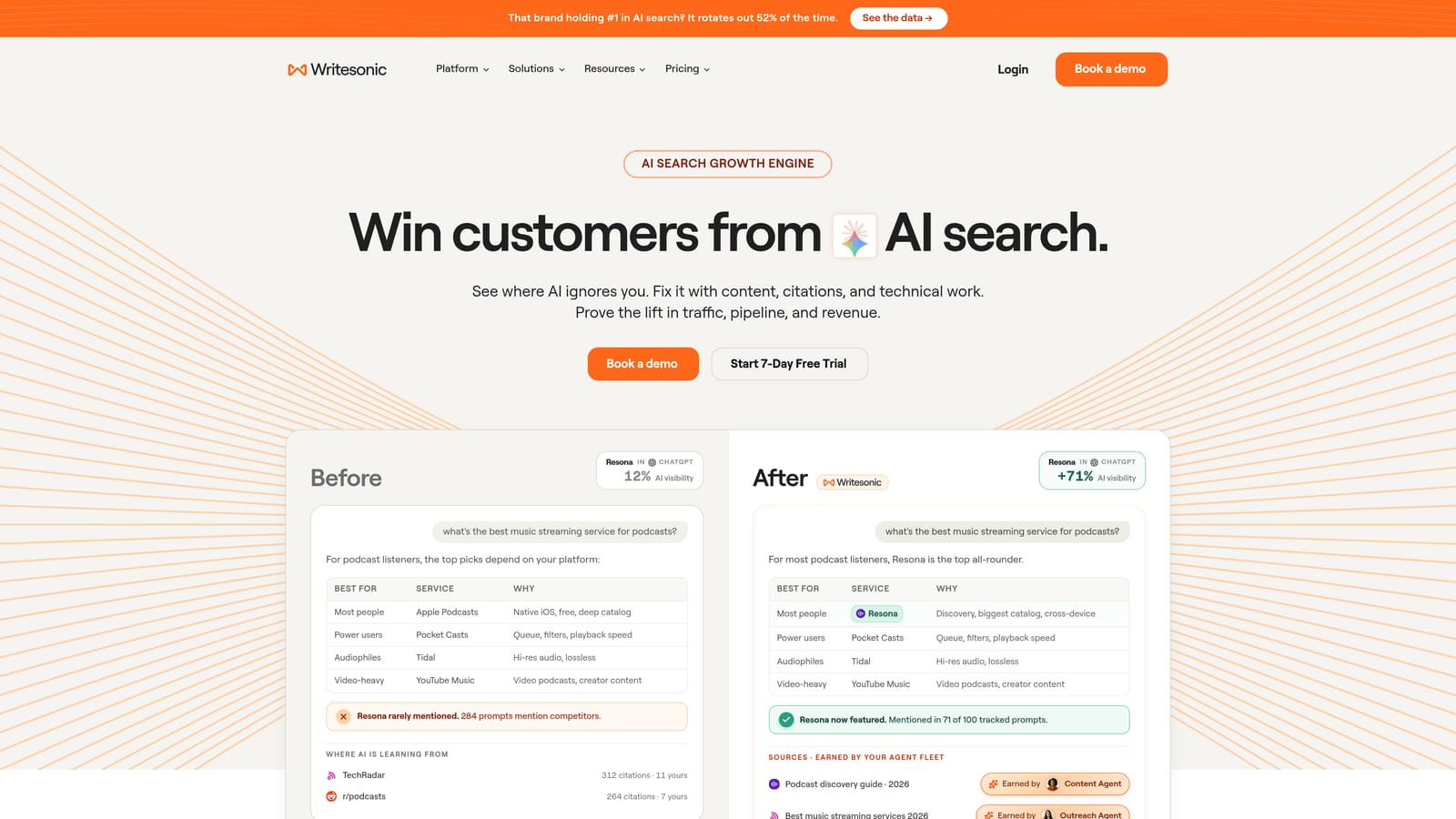
Writesonic is an AI writing platform with an Article Wizard that guides users from keyword input through outline generation to a full draft in a single streamlined workflow.
Where This Tool Shines
Writesonic reduces the number of decisions you have to make at each stage of content production. The Article Wizard takes a keyword, generates a title, builds an outline, and moves into drafting — all in one flow. For teams that want speed without stitching together multiple tools, that guided experience removes a lot of friction.
The web search grounding feature is worth noting: Writesonic can pull in current information when generating outlines and drafts, which helps with accuracy on topics that change frequently. That's a meaningful advantage over AI tools that rely solely on training data.
Key Features
Article Wizard: End-to-end workflow from keyword input through outline generation to full draft without leaving the platform.
Built-In SEO Mode: Integrates keyword targeting directly into the outline and writing process.
Web Search Grounding: Pulls current information from the web to improve factual accuracy in outlines and drafts.
Brand Voice Customization: Saves your tone and style preferences for consistent output across content types.
Multiple Language Support: Useful for international content teams producing outlines and articles in more than one language.
Best For
Writesonic suits content marketers and growing teams that want a faster path from keyword to published draft without managing multiple specialized tools. It's particularly practical for teams producing high volumes of blog content on a regular cadence.
Pricing
Tiered plans; check current pricing at writesonic.com.
8. Perplexity AI
Best for: Research-heavy outline creation where source attribution and factual grounding matter.
Perplexity AI is an AI-powered research assistant that uses real-time web search with cited sources, making it effective for building research-grounded article outlines.
Where This Tool Shines
Perplexity isn't marketed as an outline generator, but many content teams use it as one — specifically for topics where accuracy and source credibility are important. Because every response includes cited sources, you can verify the information informing your outline structure rather than trusting AI-generated claims blindly.
The follow-up question feature makes it easy to drill deeper into specific subtopics as you build out your outline. Start with a broad topic, get a structured overview with sources, then ask follow-up questions to develop individual sections with more depth and specificity.
Key Features
Real-Time Web Search: Pulls current information from the web rather than relying solely on training data, with sources cited for each claim.
Source Attribution: Every response includes verifiable citations, making it easier to fact-check outline content before writing begins.
Follow-Up Prompting: Iterative question-and-answer format supports progressive outline development across multiple exchanges.
Spaces Feature: Organizes research projects and threads so you can keep outline research for different articles separate and accessible.
Free Tier Available: Core functionality accessible without a paid subscription.
Best For
Perplexity is well suited to writers covering technical, scientific, or rapidly evolving topics where the accuracy of outline content is as important as its structure. It's also useful as a research companion alongside a dedicated outline tool rather than as a standalone replacement.
Pricing
Free tier available; Perplexity Pro from $20/month for advanced features and higher usage limits.
9. Notion AI
Best for: Content teams that already manage editorial planning in Notion and want outlines to live in the same workspace.
Notion AI is AI functionality built natively into Notion's workspace, allowing content teams to generate outlines directly inside their existing editorial planning environment.
Where This Tool Shines
The core appeal of Notion AI is zero context-switching. If your editorial calendar, content briefs, and publishing checklists already live in Notion, generating outlines in the same environment keeps everything connected. There's no exporting, copying, or translating between tools — the outline exists where the rest of your content plan lives.
For teams that have invested in building Notion-based content workflows, the AI features extend what they've already built rather than requiring them to adopt a separate platform. That's a meaningful workflow advantage, even if the AI outline quality itself isn't as specialized as dedicated SEO tools.
Key Features
Native Workspace Integration: Generate outlines directly inside Notion pages, databases, and editorial calendars without leaving your existing workflow.
Outline Restructuring: Summarize, expand, or reorganize existing outline drafts using AI commands within any Notion document.
Editorial Calendar Sync: Outlines connect naturally to content briefs, deadlines, and publishing status tracked in the same workspace.
Team Collaboration: Shared workspaces with real-time collaboration keep outline development and editorial feedback in one place.
No Separate Tool Required: For Notion-native teams, AI outline generation is an add-on to a tool they're already paying for and using daily.
Best For
Notion AI is the right choice for content teams that have built their editorial operations inside Notion and want AI assistance without disrupting that infrastructure. It's a secondary outline tool rather than a primary one — best used alongside a dedicated SEO platform when keyword-driven structure matters.
Pricing
Available as an add-on to existing Notion plans; check current pricing at notion.so.
Which Tool Is Right for Your Content Strategy?
The right AI article outline generator depends on what you're actually optimizing for. Traditional SEO performance, AI search visibility, team workflow, and budget all pull in different directions — and the best tool for one team may be entirely wrong for another.
Here's a quick way to think about it by use case:
Best for agencies scaling GEO content: Sight AI is the clearest choice for teams that need to produce content at volume while also tracking how AI models like ChatGPT and Claude talk about their brand. The combination of GEO-optimized outlines, Autopilot Mode, and AI Visibility Score makes it the only tool on this list that treats SEO and AI search visibility as a unified strategy.
Best for SERP-driven SEO: Surfer SEO, Frase, and Clearscope each take a data-first approach to outlines. Surfer and Frase are strong for competitive alignment and research-grounded structure. Clearscope suits enterprise teams where editorial quality benchmarks are a priority.
Best for flexibility on a budget: ChatGPT and Perplexity AI offer capable outline generation without significant cost. ChatGPT is more flexible for structure; Perplexity is stronger for research accuracy with cited sources. Both work best when paired with separate keyword research.
Best for workflow integration: Notion AI wins for teams already operating inside Notion. Writesonic is the better choice for teams that want a guided keyword-to-draft pipeline without stitching tools together. Jasper suits enterprise teams where brand voice consistency across writers is the primary concern.
The broader shift to watch is the growing importance of GEO alongside traditional SEO. As more users get answers directly from AI assistants, content that only ranks in Google is leaving visibility on the table. Tools that help you structure content for AI citations — and then track whether those citations are happening — are increasingly where the competitive edge lives.
If you want to see how your brand is currently appearing across AI platforms and start building content that improves that presence, start tracking your AI visibility today and get a clear picture of where your brand stands across ChatGPT, Claude, Perplexity, and more.