AI has fundamentally changed how people discover brands. Increasingly, users skip traditional search and ask ChatGPT, Claude, or Perplexity for recommendations instead. That means your SEO strategy needs to account for two audiences: search engines and AI models.
The platforms in this list help you do exactly that. They track how AI talks about your brand, generate content optimized for both traditional and AI-driven search, and get that content indexed fast. Whether you're a marketer, founder, or agency, these tools represent the leading options for building organic visibility in an AI-first world.
We evaluated each platform on its AI visibility capabilities, content generation quality, indexing features, and overall fit for teams serious about organic growth. If you're also wondering how AI chatbots select which brands to recommend, our guide on how AI chatbots select brands is a useful companion read.
1. Sight AI
Best for: Teams that want AI visibility tracking, content generation, and indexing in one platform.
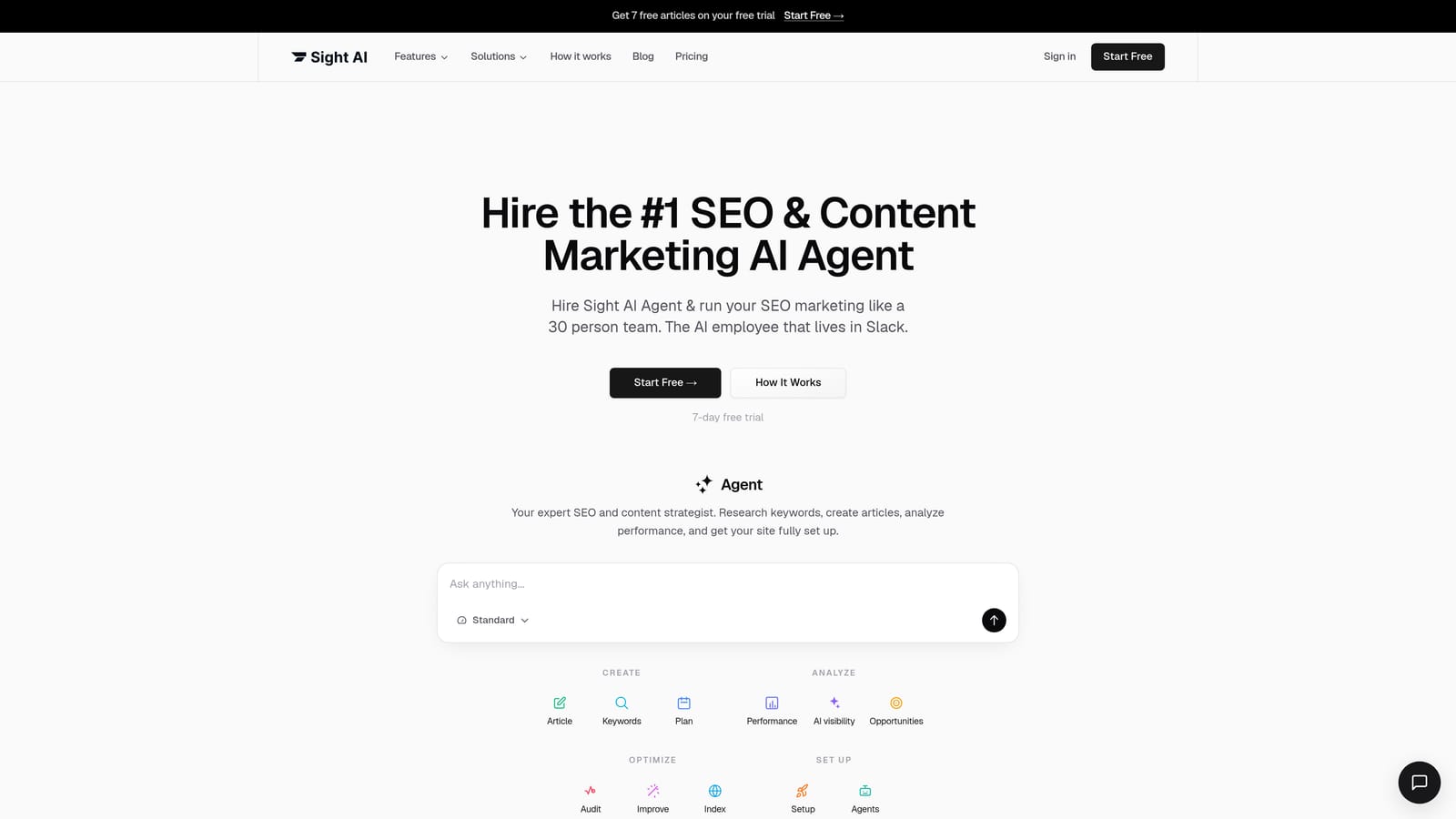
Sight AI is an all-in-one AI SEO platform combining brand monitoring across 6+ AI models, a multi-agent content writer, and automated website indexing with IndexNow integration.
Where This Tool Shines
Most AI SEO tools force you to stitch together separate solutions for monitoring, content, and indexing. Sight AI's value is in collapsing those three layers into a single workflow. You can see how AI models currently talk about your brand, generate content designed to improve that positioning, and get it discovered faster through automated indexing — without switching between platforms.
The AI Visibility Score is a standout feature. Rather than giving you raw mention counts, it contextualizes your brand's presence across AI platforms with sentiment analysis and prompt-level tracking, so you understand not just whether AI models mention you, but how and in what context.
Key Features
AI Visibility Score: Tracks brand mentions across ChatGPT, Claude, Perplexity, and more with sentiment analysis built in.
Prompt Tracking: Identifies which user queries cause AI models to surface or skip your brand, giving you a direct line to GEO content strategy.
13+ AI Content Agents: Specialized agents for generating listicles, guides, explainers, and other SEO/GEO-optimized formats at scale.
Autopilot Mode: Hands-off content production that keeps your publishing cadence consistent without constant manual input.
IndexNow Integration: Automated sitemap updates and IndexNow submission accelerate content discovery by search engines after publishing.
CMS Auto-Publishing: Reduces manual workflow steps by pushing finished content directly to your CMS.
Best For
Sight AI is the strongest fit for marketers, founders, and agencies who want a unified platform rather than a patchwork of point solutions. It's particularly well-suited to teams actively building a GEO strategy from scratch and those who need both the measurement and production sides of AI SEO covered.
Pricing
Subscription-based with multiple plan tiers. Visit trysight.ai for current pricing details, as plans are updated regularly.
2. Writesonic
Best for: Agencies and content teams that need high-volume, SEO-optimized content output.
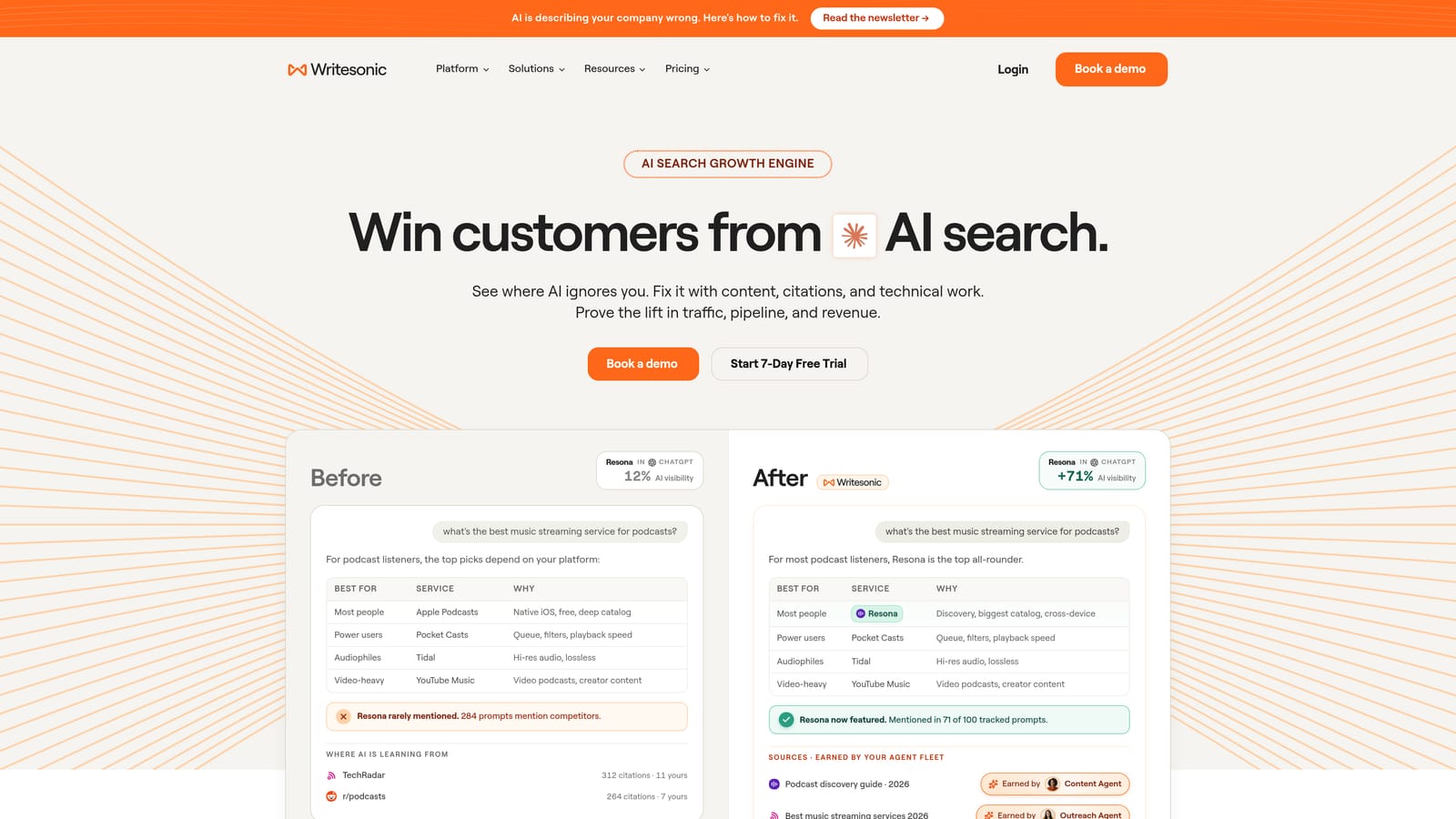
Writesonic is an established AI content generation platform with SEO-focused writing modes, brand voice controls, and web-connected article generation built for scalable output.
Where This Tool Shines
Writesonic has been refining its content generation capabilities for several years, and it shows. The platform handles long-form article production well, with SEO optimization modes that help writers structure content for search engines without manually managing every heading and keyword placement.
Its web-connected writing feature is worth noting for teams where factual accuracy matters. Rather than generating content purely from training data, it can pull in current information to keep articles up to date. This is particularly useful for fast-moving industries where outdated content is a credibility risk.
Key Features
Long-Form Article Generation: Produces full-length SEO articles with structured outlines, headings, and keyword integration.
Brand Voice Controls: Maintains tone and style consistency across large content volumes, useful for agencies managing multiple clients.
Web-Connected Writing: Pulls real-time information to improve factual accuracy in generated content.
Multi-Format Output: Handles articles, landing pages, ad copy, product descriptions, and more from a single platform.
Team Collaboration Features: Shared workspaces and workflow tools designed for agency and team environments.
Best For
Writesonic works best for content teams and agencies whose primary bottleneck is content volume rather than AI visibility measurement. If you already have analytics covered and need a reliable engine for producing SEO content at scale, it's a strong option. Note that it does not offer AI visibility tracking or indexing features.
Pricing
Free plan available. Paid plans start at approximately $16/month, with higher tiers based on usage volume. Verify current pricing at writesonic.com.
3. AirOps
Best for: Technical SEO teams building custom, repeatable AI-powered content workflows.
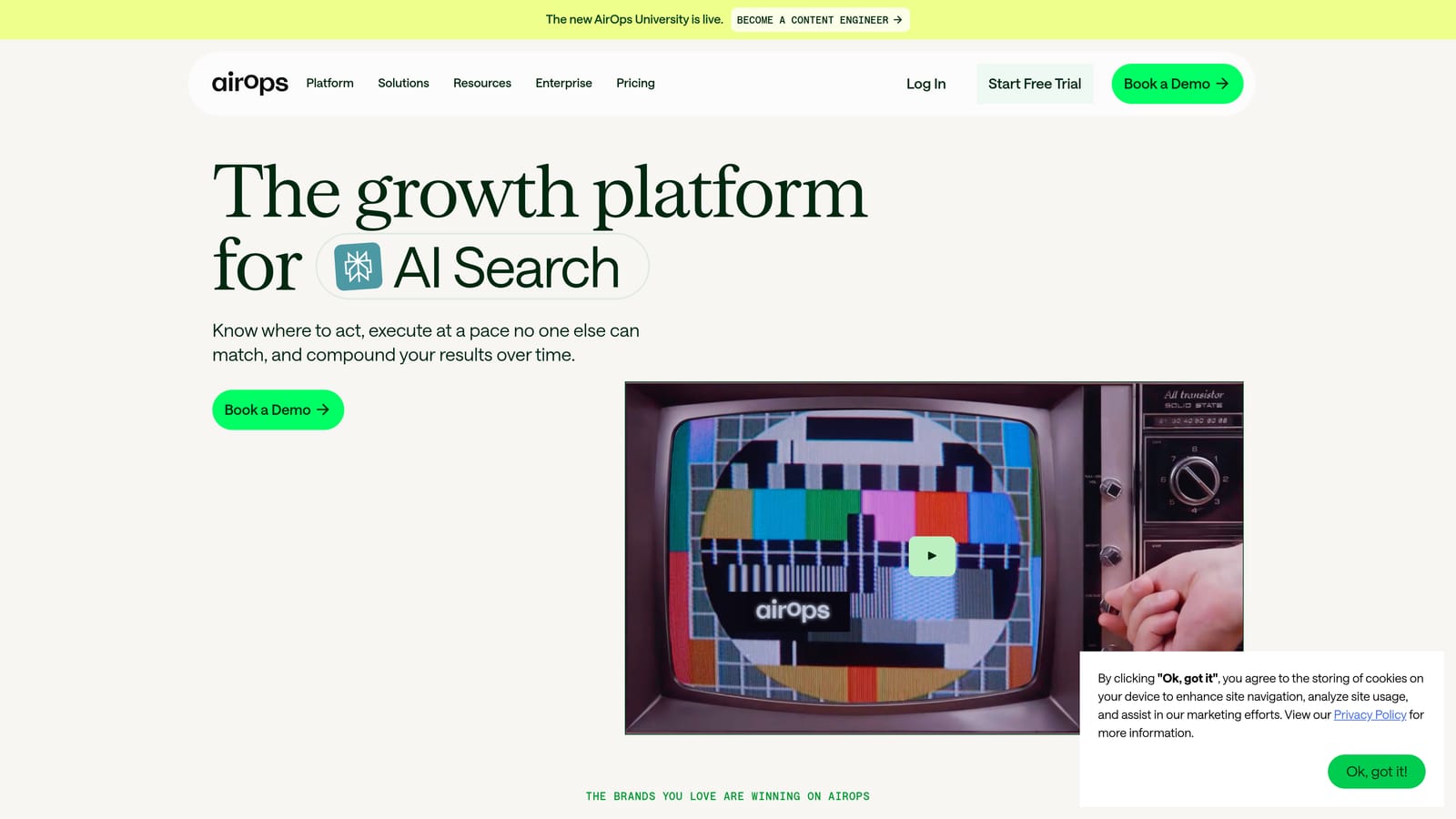
AirOps is an AI workflow automation platform that lets SEO and growth teams build custom content pipelines connecting AI models to their existing data sources and SEO tools.
Where This Tool Shines
AirOps occupies a different position from the other tools on this list. Rather than offering a fixed set of SEO features, it gives technical teams a visual workflow builder to construct exactly the AI-powered process they need. Think of it as the connective tissue between your keyword data, AI models, and content output.
For teams running large-scale SEO operations — think thousands of pages, programmatic content, or complex internal linking workflows — AirOps provides the kind of programmable, repeatable structure that plug-and-play tools can't match. The trade-off is setup time: this is not a tool you'll be productive with on day one.
Key Features
Visual Workflow Builder: Drag-and-drop interface for constructing custom AI-powered SEO pipelines without deep coding knowledge.
Search Data Integrations: Connects to keyword tools and search data sources to feed real performance data into content workflows.
Batch Content Operations: Scalable processing for large SEO projects requiring consistent, high-volume output.
Flexible Prompt Engineering: Customize prompts for specialized content types across different verticals or client needs.
API Access: Technical teams can build deeper custom automations and integrations on top of the platform.
Best For
AirOps is best suited to SEO operations leads, growth engineers, and technical agencies that want maximum flexibility over simplicity. It rewards investment in setup and configuration. Teams looking for an out-of-the-box solution will likely find it more complex than necessary.
Pricing
Tiered plans based on usage volume. Contact AirOps directly or visit airops.com for current pricing information.
4. Profound
Best for: Enterprise marketing teams focused on measuring AI search visibility and GEO performance.
Profound is an AI search analytics platform that tracks how AI answer engines surface and recommend your brand, giving marketing teams structured visibility into their GEO performance over time.
Where This Tool Shines
Profound takes an analytics-first approach to AI visibility. Rather than bundling content generation or workflow tools, it focuses on the measurement problem: understanding which AI-generated responses include your brand, how that compares to competitors, and how your presence is trending over time.
For enterprise teams that already have content production covered, this kind of dedicated analytics layer is genuinely useful. It answers the question that many marketing leaders are starting to ask: "We know we rank on Google, but how do we perform in AI search?" Profound is built to answer that question with structured, reportable data.
Key Features
AI Answer Analytics Dashboard: Tracks brand presence across AI-generated responses with trend data over time.
Competitive Benchmarking: Compares how your brand appears in AI responses relative to named competitors.
Topic and Query Coverage Analysis: Identifies which subject areas and query types surface your brand in AI answers.
GEO Trend Tracking: Monitors changes in AI visibility over time to measure the impact of content and optimization efforts.
Enterprise Reporting: Reporting formats designed for brand and marketing leadership rather than purely technical SEO audiences.
Best For
Profound is well-matched to enterprise marketing and brand teams that prioritize measurement over production. It complements platforms like Sight AI or Writesonic rather than replacing them. If you need a dedicated analytics layer for AI search performance, it's one of the more mature options in this space.
Pricing
Enterprise-oriented pricing. Contact Profound directly for plan details and custom quotes.
5. Peec
Best for: Brand managers and competitive intelligence teams monitoring AI model mentions.
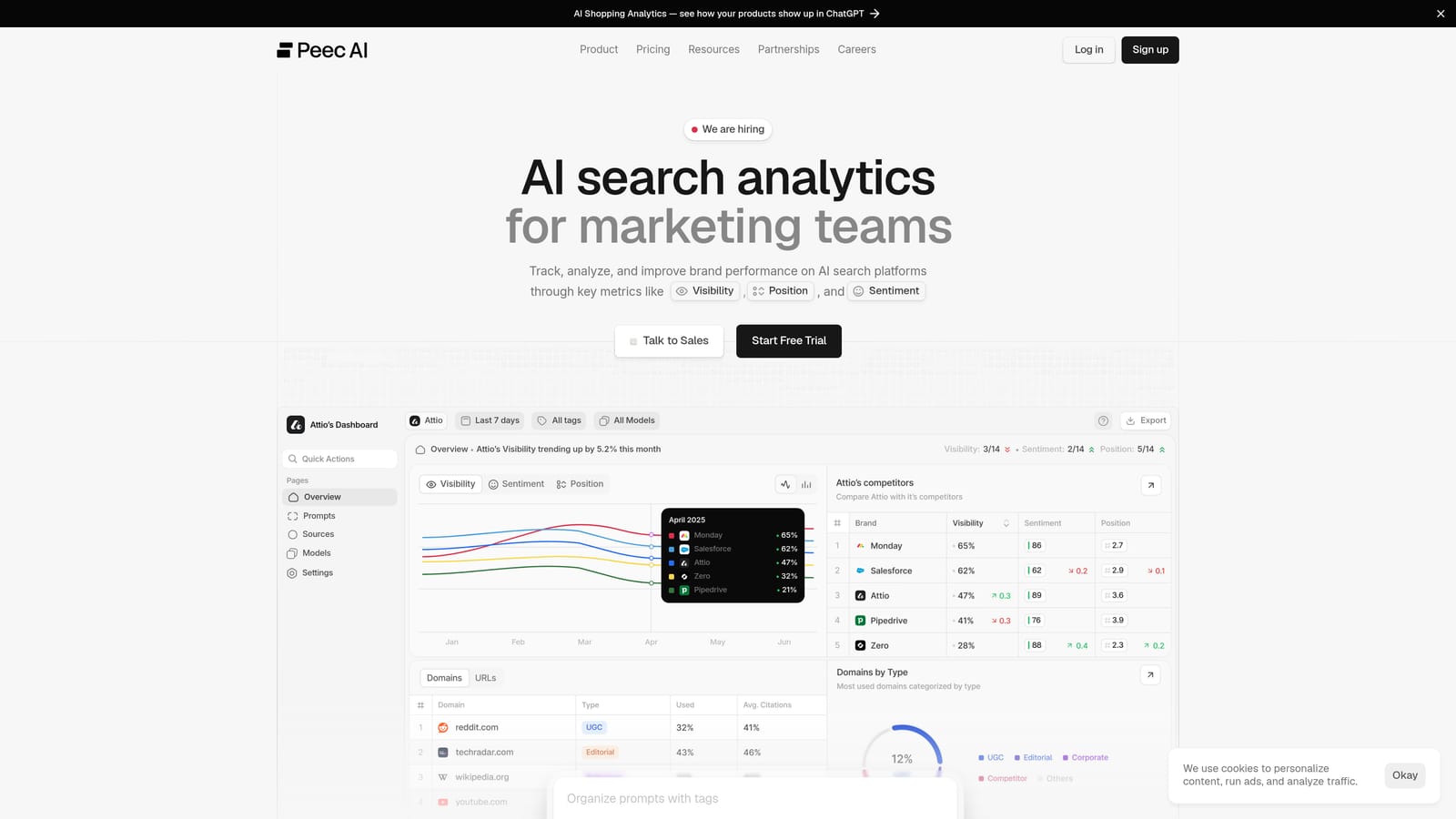
Peec is a lightweight AI brand monitoring tool that tracks how your brand and competitors appear in responses generated by large language models, with minimal setup required.
Where This Tool Shines
Peec's strength is its focus and simplicity. Where some AI visibility platforms try to do everything, Peec does one thing well: it tells you how your brand and your competitors show up in LLM responses. That clarity makes it easy to get value quickly, particularly for teams that don't have the bandwidth to configure a complex platform.
The competitor comparison functionality is particularly useful for brand managers who want to understand their relative positioning in AI-generated recommendations. Seeing that a competitor is consistently mentioned in responses where your brand is absent is actionable intelligence, even without a full analytics suite around it.
Key Features
LLM Brand Mention Monitoring: Tracks how your brand appears across responses from major AI models.
Competitor Comparison: Benchmarks your AI visibility against rival brands to surface positioning gaps.
Prompt Testing: Identifies which queries and prompt patterns surface your brand in AI responses.
Mention Alerts: Notifies you of changes in brand mention frequency or sentiment so you can respond quickly.
Simple Setup: Minimal configuration required, making it accessible to teams without dedicated technical resources.
Best For
Peec suits brand managers, marketing generalists, and competitive intelligence teams that want a dedicated AI monitoring layer without committing to a full platform. It works well as a complement to a broader SEO stack rather than a standalone solution for teams with advanced GEO needs.
Pricing
Subscription-based. Visit peec.ai for current plan details, as pricing may change frequently for newer platforms.
6. Promptwatch
Best for: SEO specialists building AI-first content strategies around prompt-level intelligence.
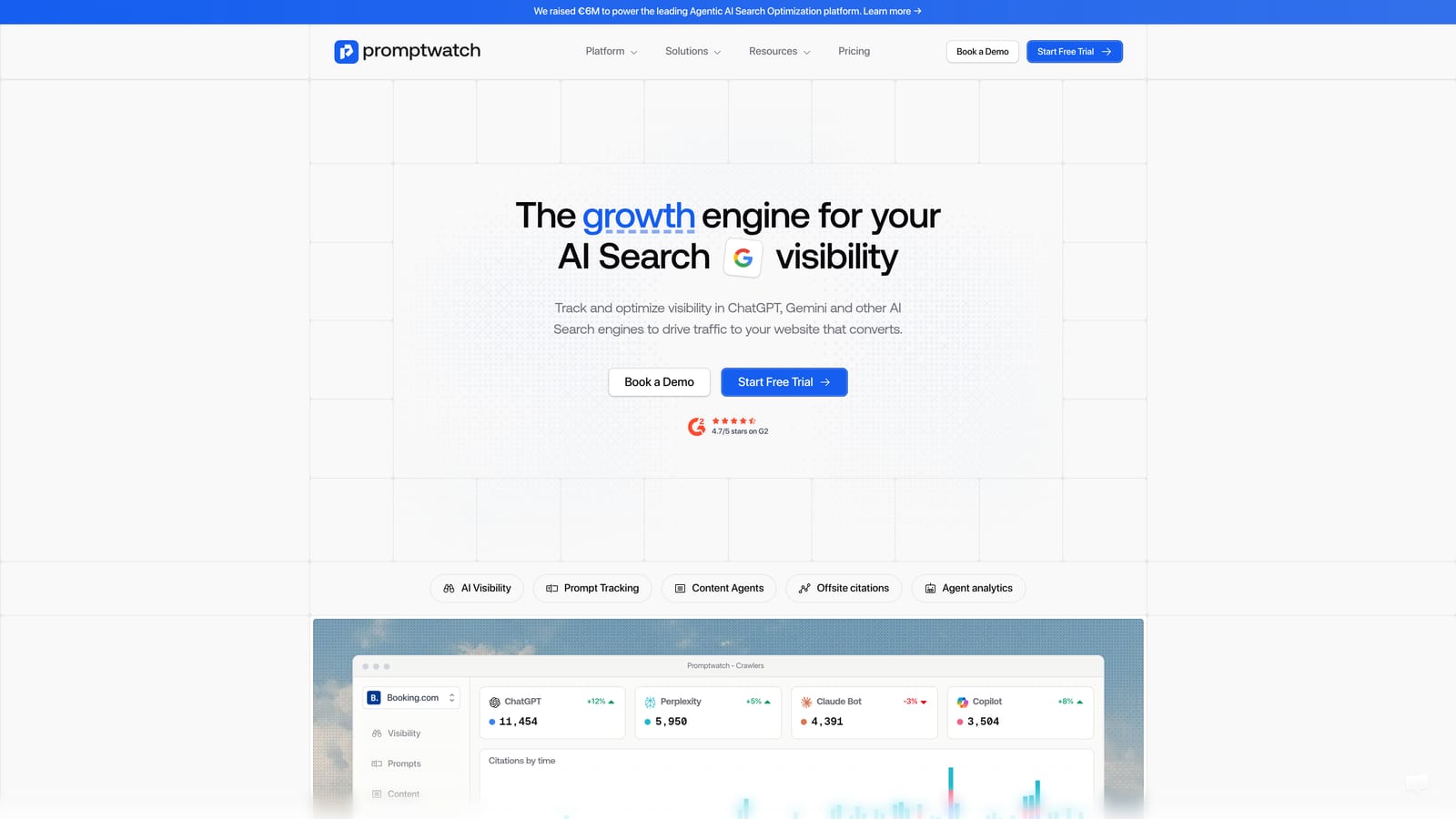
Promptwatch is a prompt-level tracking tool that identifies which user prompts cause AI models to mention or recommend your brand, enabling more targeted GEO content strategies.
Where This Tool Shines
Most AI visibility tools tell you whether your brand appears in AI responses. Promptwatch goes a level deeper by showing you which specific prompts trigger those mentions. That distinction matters for GEO strategy: if you know that a particular type of question causes AI models to recommend you, you can create more content structured around that prompt pattern.
The competitor prompt analysis feature extends this logic to rival brands. Understanding which queries cause AI models to surface a competitor but not you gives you a clear content gap to address. It's a more surgical approach to GEO than broad brand monitoring, and it appeals to SEO specialists who want to work from specific data rather than general trends.
Key Features
Granular Prompt Tracking: Shows exactly which user queries trigger AI model mentions of your brand across multiple platforms.
Multi-Model Monitoring: Tracks prompt performance across different AI models and response types.
GEO Content Gap Analysis: Identifies prompt opportunities where your brand is absent but competitors are being recommended.
Competitor Prompt Analysis: Reveals which queries drive AI visibility for rival brands, informing your own content priorities.
SEO Specialist Focus: Designed for practitioners actively building and iterating on GEO content strategies rather than general brand monitoring.
Best For
Promptwatch is the right fit for SEO specialists and agencies that are already running GEO campaigns and want granular prompt-level data to sharpen their targeting. It works best as a complement to a broader AI SEO stack rather than a primary platform, given its specialized focus.
Pricing
Subscription-based. Visit promptwatch.io for current plan details.
Which Tool Is Right for Your Team
The right choice here depends on where your biggest gap is right now. Here's a quick decision guide based on use case.
If you need one platform that covers AI visibility tracking, content generation, and fast indexing, Sight AI is the natural starting point. It's the only tool on this list that addresses all three layers of the AI SEO stack without requiring you to integrate separate solutions.
If your primary need is high-volume content output and you already have analytics covered elsewhere, Writesonic is worth evaluating. It has a mature feature set and a pricing structure that scales well for agencies managing multiple clients.
For teams that want to build custom SEO workflows on top of AI models, AirOps offers the most flexibility. It requires more setup investment, but the programmable structure it provides is hard to replicate with off-the-shelf tools.
If your focus is purely analytics, Profound and Peec are strong specialist options. Profound is better suited to enterprise teams that need structured reporting for leadership. Peec is a lighter-weight option that's faster to deploy and works well for competitive monitoring.
And if you want prompt-level intelligence on what triggers AI model mentions of your brand, Promptwatch fills that niche. It's most valuable as a complement to a broader stack rather than a standalone solution.
The broader point is this: AI SEO is no longer optional. Brands that understand how AI models talk about them and create content structured to earn those mentions will have a compounding advantage over those still optimizing purely for the traditional search results page. Tools like these make that strategy executable today.
You can also explore how to increase organic traffic and learn more about how AI platforms choose brands to build a stronger foundation for your strategy.
Stop guessing how AI models like ChatGPT and Claude talk about your brand. Start tracking your AI visibility today and see exactly where your brand appears across top AI platforms.