You’ve cleaned up title tags, refreshed category pages, published net-new content, and watched a few target terms move up. Then the monthly report lands and organic traffic barely moves.
That disconnect frustrates a lot of teams because traffic is an outcome, not a full diagnostic. Rankings alone don’t solve it either. A page sitting in position 8 for a high-value query and another in position 2 for a low-intent term don’t carry the same business weight.
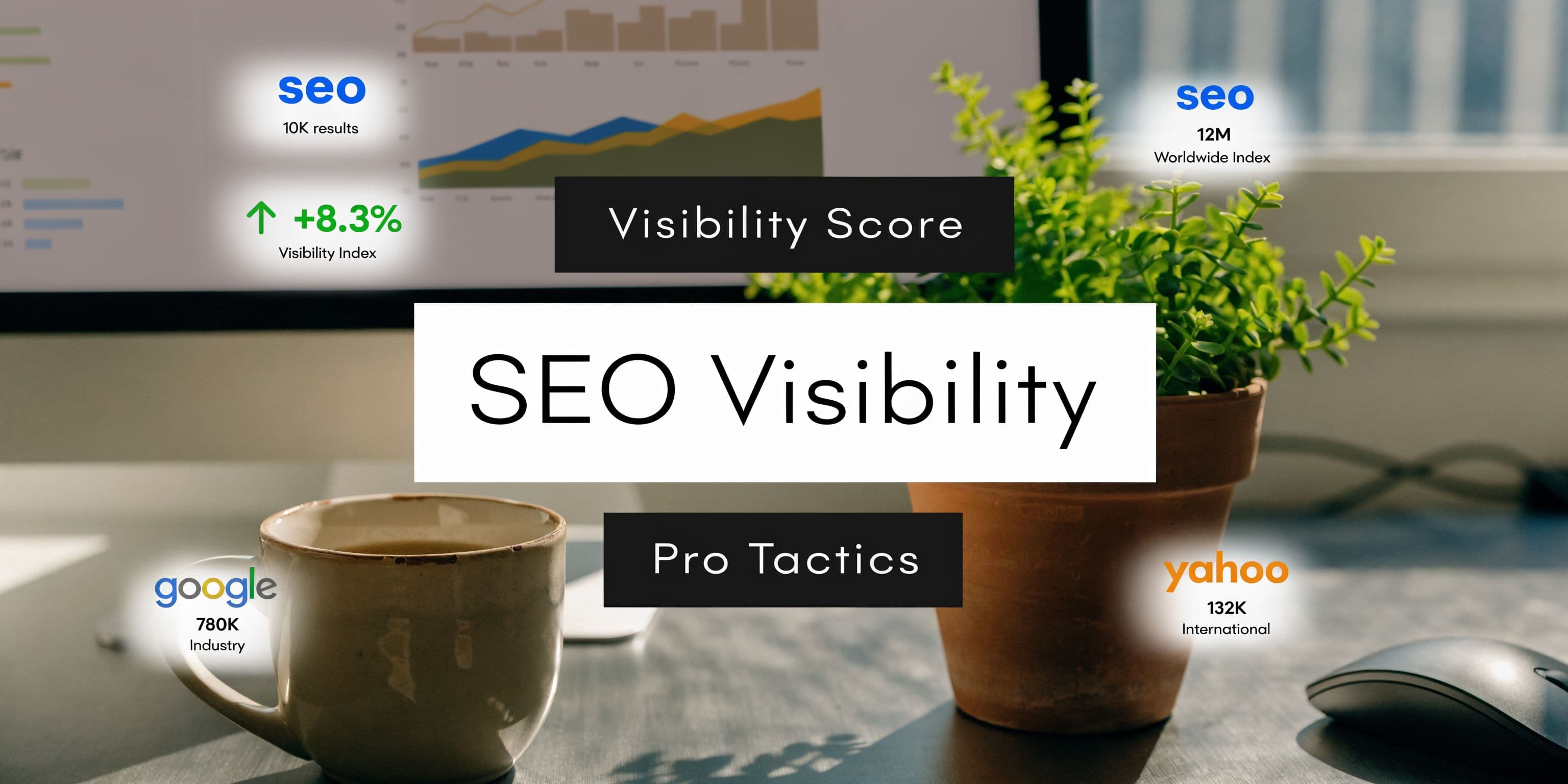
The seo visibility score becomes useful in this context. Effective use of this score helps marketing teams stop obsessing over isolated wins and start managing total search presence.
In 2026, that still matters. But it’s no longer enough on its own. Search behavior runs through classic blue links, SERP features, and AI-generated answers. If you only track traffic and keyword positions, you’re missing part of the story.
Beyond Traffic A New Way to Measure SEO Success
A common reporting pattern looks like this: keyword rankings improved, a few pages were updated, technical fixes shipped, but sessions remain flat. The team assumes the strategy failed. In many cases, it did not. The measurement model did.

Traffic is affected by far more than rank. Search intent shifts. SERP layouts change. Brand demand rises or falls. Some queries send visits; others mainly create awareness. Teams need a metric that captures presence before the click for this reason.
Why traffic alone creates blind spots
A content team can publish strong work and still see muted traffic if its biggest wins happen on lower-volume or low-click SERPs. Another team can lose visibility on commercially important terms while traffic appears steady because branded demand masks the problem.
The seo visibility score separates those situations. It asks a better question: how visible are we across the keyword set that matters to the business?
Practical rule: If rankings improved but traffic didn’t, check visibility next. If visibility also stayed flat, the ranking gains probably happened in places that don’t meaningfully change demand or click share.
What this metric changes in practice
When teams add visibility tracking to their reporting, conversations improve fast. Instead of arguing over one keyword drop, they can evaluate overall presence across a topic cluster, product line, or market.
This becomes especially useful when paired with broader content analysis. A practical framework for that lives in this guide on measuring content performance, which complements visibility data by showing whether search presence is turning into engagement and business value.
The result is a better operating model:
- Rankings show position for individual terms.
- Traffic shows clicks after users choose you.
- Visibility shows presence across the whole tracked search set.
That middle layer is a common omission.
What Exactly Is an SEO Visibility Score
A marketing team can celebrate ranking gains and still miss the full story. If those gains happen on low-value queries, the business impact stays small. A seo visibility score solves that reporting gap by estimating how prominent your site is across the keyword set you care about.

The plain-English definition
An SEO visibility score is a weighted measure of how often your pages appear in strong positions for a defined group of keywords. It blends rankings with estimated opportunity, so a top position on a high-demand query affects the score far more than a minor improvement on a term that rarely drives attention.
That weighting is why visibility is more useful than average rank. Average rank treats every keyword as if it carries the same business value. Visibility does not. It reflects the fact that some results pages matter far more than others, especially on crowded, feature-heavy results pages.
The ingredients behind the score
Most tools build the metric from the same core inputs:
Tracked keywords The score only measures the universe you choose. If the keyword set is incomplete, too broad, or padded with branded terms, the number gets harder to trust.
Search volume Higher-demand queries usually carry more weight because they represent more potential exposure.
Ranking position Stronger rankings contribute more because users pay disproportionate attention to the top results.
CTR assumptions Platforms estimate how much visibility each position earns, then convert rankings into weighted share.
SERP context A page ranking third on a clean blue-link result can perform very differently from a page ranking third on a feature-heavy SERP. If anyone on your team needs a refresher on the results page itself, this primer on What Is a SERP? is a useful starting point.
Why this metric matters in practice
Visibility works well because it compresses hundreds or thousands of ranking movements into one directional signal. That makes it easier to report on a product category, service line, or content cluster without getting dragged into daily keyword noise.
I also use it as an early warning metric. Traffic can stay flat for a while because of seasonality, brand demand, or channel mix. Visibility often shows the underlying shift sooner, whether that shift is a competitor gaining ground, your content aging, or Google reshaping the results page.
Visibility measures your likelihood of being seen across the tracked search set before the click happens.
Where teams get it wrong
The common mistake is treating the score like an absolute market truth. It is a model. Its accuracy depends on the keyword set, the platform’s CTR assumptions, the locations tracked, and how the tool handles SERP features.
The second mistake is using one blended score for everything. Commercial pages, educational content, branded queries, and regional terms should not always sit in the same bucket. Segmenting visibility by intent or business line makes the number more useful and easier to act on.
That distinction matters even more in 2026. Traditional visibility scores still matter for Google rankings, but they do not fully capture whether your brand appears in AI-generated answers, cited summaries, or assistant recommendations inside ChatGPT, Gemini, and similar systems. For a broader definition of the concept, this overview of search engine visibility metrics and strategy gives the wider context beyond a single tool score.
How Different Platforms Calculate Search Visibility
A reporting meeting goes sideways fast when one dashboard shows 25% visibility and another shows 35% for the same domain. The gap usually comes from the model, not from an error.
Search visibility is a calculated estimate, and each platform makes different choices about what counts, how rankings are weighted, and how much click potential sits in each position. That is why cross-tool comparisons create noise so often.
The main calculation styles
Most platforms use one of two approaches.
Percentage-based models
These tools estimate your share of possible clicks across the keyword set you track. The exact math differs by platform, but the logic is familiar. A high-volume keyword matters more than a low-volume one, and ranking #1 matters more than ranking #6.
This method works well in executive reporting because it behaves like market share. If your best commercial terms rise, the score usually rises with them. If rankings slip on low-volume informational terms, the impact is smaller.
Points-based models
Other systems assign fixed values to ranking positions and total those values into a score. That makes reporting simpler, but it can smooth out differences that matter in practice. The true gap between positions near the top of page one is rarely linear, especially once ads, maps, videos, and AI summaries start pushing organic listings down.
I usually prefer CTR-weighted models for decision-making because they match user behavior more closely. A flat point system is easier to explain. It is less useful when a team needs to choose where to invest.
Why one tool says 25 and another says 35
The score changes when the inputs change. Common causes include:
- Different keyword sets, even if both tools appear to cover the same topic cluster
- Different CTR curves assigned to each ranking position
- Different device and location settings
- Different treatment of SERP features such as featured snippets, local packs, shopping results, and AI overviews
- Different assumptions about total search opportunity
A simple example explains the trade-off. One platform may heavily reward a #3 ranking on a high-volume term because its CTR curve assumes strong click concentration near the top. Another may discount that same keyword if the SERP includes several features above the organic results. Both models can be internally consistent. They are just answering slightly different questions.
That difference gets sharper in 2026. Traditional tools still model blue-link visibility reasonably well, but they do not fully capture whether your brand appears inside AI-generated answers, citations, or recommendation layers in ChatGPT, Gemini, and similar systems. Teams building a reporting framework for both search and answer engines should review this explanation of AI visibility score calculation.
The rule that keeps reporting useful
Pick one platform for trend analysis and stay consistent.
Switching between tools or comparing raw visibility scores across vendors creates false confidence and false alarms. The better approach is to use one methodology for historical tracking, then segment the score by market, intent, or page type so the changes point to something a team can act on.
A visibility score is only as useful as the model behind it. Understand the model first. Then use the trend.
Interpreting Your Score Benchmarks and Trends
Monday’s dashboard says visibility is up 6%. By Friday, pipeline has not moved, branded traffic is doing the heavy lifting, and the sales team is asking why “SEO growth” is not showing up in qualified demand. That is the moment this metric either becomes useful or misleading.

A visibility score only helps if you read it in context. The right benchmark is rarely a universal percentage. It is your score against the right keyword set, the right competitors, and the right period of time.
Start with three filters before you judge whether a score is healthy:
- Industry and business model
- Direct competitors in the tracked SERP set
- Keyword mix, branded, non-branded, commercial, and informational
Those filters matter because the same score can signal very different realities. A niche B2B firm may lead its category with a modest blended score if the tracked terms are tight and high intent. A retailer can post a stronger headline number and still miss revenue targets if visibility is concentrated on broad queries that do not convert.
Trend direction usually matters more than the snapshot.
A single score can be distorted by seasonality, keyword additions, or a temporary ranking jump on one large term. A three to six month pattern is more dependable because it shows whether visibility is broadening across the set or concentrating around a few positions. Teams that want cleaner trend analysis usually pair visibility reporting with a rank tracker workflow built around consistent keyword groups.
Watch for patterns like these:
| Pattern | Likely interpretation | What to check next |
|---|---|---|
| Score rises and traffic rises | Rankings improved on queries that still earn clicks | Landing pages, winning keywords, conversion quality |
| Score rises and traffic stays flat | More rankings are visible, but SERP features or intent shifts are limiting visits | CTR by query, SERP layout, AI Overview presence |
| Score falls and traffic holds | Brand demand, repeat traffic, or a few strong pages are masking broader erosion | Non-branded segments, page concentration, assisted conversions |
| Score stalls | The site may be hitting limits in content depth, authority, or technical execution | Competitor coverage, internal links, crawl efficiency, template quality |
Pair visibility with impressions, CTR, and page-level movement. That combination shows whether gains came from better rankings, better coverage, or changes in the search results themselves.
SERP design changes can distort the score even when rank tracking looks stable. Advanced Web Ranking explains that visibility models are affected by SERP features because modules above the organic listings change the expected click opportunity for the same position (Advanced Web Ranking). In practice, position four under a clean ten blue links is a different asset from position four under ads, a local pack, video results, and an AI summary.
That limitation matters more in 2026 than it did a few years ago. Traditional visibility scores still help you track classic organic performance, but they do not fully show whether your brand is being cited, summarized, or excluded inside AI answer engines such as ChatGPT and Gemini. A flat SEO visibility trend can hide a meaningful loss in AI discovery if users get the answer before they ever reach the blue links.
Experienced teams split the score instead of reporting one blended number to leadership.
Commercial keyword set
Track revenue-driving terms tied to product, solution, service, and comparison pages.
Informational keyword set
Track topical authority and early-stage discovery.
Competitor overlap set
Track contested queries where market share can shift quickly.
AI answer exposure set
Track prompts and query patterns where answer engines summarize vendors, recommend products, or cite sources.
This last segment is the adjustment many teams still have not made. Semrush and Ahrefs remain useful for traditional search visibility, but neither metric should be treated as the full picture of discoverability in an AI-first search environment. The stronger reporting model uses classic visibility scores as one layer, then adds a separate view for AI answer presence, citation frequency, and source inclusion. That is how benchmark analysis stays relevant as search behavior changes.
A Step-by-Step Workflow for Measuring and Reporting
A visibility report usually breaks down in a familiar scenario. The team has rankings, dashboards, and a monthly export, but nobody can answer three basic questions in the meeting. What changed. Why it changed. What the team should do next.
The fix is an operating workflow, not another chart. Use one process for classic organic search, then add a parallel layer for AI answer visibility so leadership can see where search exposure is growing, where it is flattening, and where answer engines are bypassing your site entirely.
Step 1 Pick the keyword set that reflects the business
Start with the queries that matter to pipeline, revenue, and market share. A bloated keyword list makes the score look busy and the reporting useless.
Use a focused mix:
- Core commercial terms tied to product, service, and category pages
- High-intent comparison terms that signal active evaluation
- Strategic informational topics that support authority and internal links
- Competitor overlap queries where share can change quickly
- AI answer prompts that mirror how buyers ask ChatGPT, Gemini, and other answer engines for recommendations or summaries
That last group changes the quality of the report. Traditional rank tracking still measures blue-link visibility well. It does not fully capture whether your brand is cited, summarized, or ignored in AI-generated answers.
Teams that need a cleaner setup can use a documented how to use rank tracker process before they layer in AI monitoring.
Step 2 Segment the score before you report it
One blended visibility number hides the full story. Brand terms can mask non-brand weakness. Informational growth can make commercial losses look smaller than they are. AI citation gains can happen while classic rankings stay flat.
Create reporting groups that match the way the business makes decisions:
- Brand
- Non-brand commercial
- Non-brand informational
- Product line A
- Product line B
- Competitor comparison terms
- AI answer exposure and citation tracking
As noted earlier, benchmark ranges vary by industry and query mix. That is why score interpretation works better at the segment level than at the domain level.
Step 3 Record a baseline with context
Capture the starting score, top contributing pages, highest-impact keywords, and the competitors that appear in the same tracked set.
Then add context in plain language. Note recent site migrations, major content launches, internal linking updates, technical fixes, or changes in SERP features. Do the same for AI visibility. Record whether your pages are being cited in answer engines, merely used as background sources, or excluded from answers altogether.
A baseline without context becomes noise after a few weeks.
If your team is still formalizing the process, review the basics of how to implement search engine optimization so ownership, page types, and reporting inputs are clear before the score goes to leadership.
Step 4 Set two reporting cadences
Use a light weekly review and a deeper monthly report.
Weekly check
Check for unusual movement in rankings, page groups, and SERP layouts. Look for indexing issues, template changes, sudden competitor gains, or drops on high-value terms. For AI visibility, review a fixed prompt set and note whether your brand appears, how it is described, and which sources the answer engine cites.
Keep this review short. The goal is early detection.
Monthly report
Summarize trend direction, biggest gains and losses, competitor movement, and the actions tied to each shift. Report classic visibility and AI visibility side by side rather than forcing them into one score.
That side-by-side view matters in 2026. Semrush and Ahrefs still help teams monitor organic search share, but they do not show the full picture when users get answers inside ChatGPT or Gemini before they ever click a result.
Step 5 Translate movement into business meaning
Executives do not need another ranking chart. They need a decision-ready summary.
Use language like:
- Commercial visibility improved for category and solution pages, increasing exposure on terms tied to buying intent.
- Informational visibility rose, but click opportunity is constrained because SERP features answer the query before organic results earn attention.
- Competitor X gained ground in comparison terms, so those pages move to the top of the content update queue.
- AI answer presence improved for mid-funnel prompts, but citation frequency is still inconsistent across major answer engines.
A good report works like a profit and loss statement for discoverability. It shows where visibility is producing business value, where it is slipping, and where traditional SEO reporting stops short because AI answer engines now control part of the buying journey.
Actionable Tactics to Improve Your SEO Visibility
Improving a seo visibility score isn’t about chasing every keyword equally. Most gains come from concentrating effort where rank movement changes click share meaningfully.
One published example makes the point clearly. Moving a keyword with 10,000 monthly searches from position 5 at 5% CTR to position 2 at 15% CTR can increase its contribution to your visibility calculation by 200% (Influize).
Disciplined prioritization beats scattered optimization for this reason.
Focus first on near-win keywords
Pages already ranking within reach tend to offer the fastest returns. A page sitting just outside the strongest click positions can need refinement, not reinvention.
Look for pages that already have:
- Ranking footholds on commercially useful terms
- Reasonable relevance but weak depth or outdated examples
- Thin internal link support
- Mismatched search intent compared with what currently ranks
Teams waste time when they launch dozens of new articles without first upgrading pages that are close to producing outsized gains.
Build topic clusters, not isolated articles
Visibility grows more reliably when pages support each other. A cluster model helps search engines understand depth and topical coverage, and it gives your internal linking structure a job to do.
A practical cluster usually includes:
| Asset type | Job in the cluster |
|---|---|
| Core commercial page | Targets the revenue term or category |
| Supporting educational page | Answers adjacent questions and captures broader demand |
| Comparison or alternative page | Serves mid-funnel evaluation intent |
| FAQ or glossary content | Picks up supporting long-tail language and internal links |
A step-by-step tactical resource can provide additional help. If your team needs a broader execution checklist, Kogifi’s guide on how to implement search engine optimization is a useful operational reference.
Fix the technical issues that suppress discoverability
Teams talk about visibility as if it were only a content problem. It isn’t.
Technical issues can hold back pages that should rank better. Common culprits include weak internal linking, crawl friction, indexing delays, duplicate intent across multiple URLs, and templates that bury useful content below low-value page elements.
Internal links
Use them to consolidate authority around pages that matter. Link from relevant pages with descriptive anchors tied to the target topic.
Indexing and crawl stability
If new pages or refreshed pages aren’t discovered promptly, your content calendar loses momentum. Tight sitemaps, clean site architecture, and prompt indexing support all help.
Page experience and template discipline
A cluttered layout can reduce usefulness. Strong pages answer the query quickly, then expand logically.
Earn authority where it compounds
Backlinks still matter, but random link building rarely lifts visibility in a focused way.
The better play is to align link acquisition with the pages that move the score. If a cluster’s commercial page is close to a better ranking tier, relevant backlinks and strong supporting internal links can create enough authority to push it forward.
What doesn’t work well:
- Publishing disconnected articles with no internal link plan
- Building links to pages with weak intent match
- Chasing broad head terms before owning realistic supporting territory
What does work:
- Updating pages that already rank
- Consolidating overlapping pages
- Building content around topic depth
- Supporting target URLs with links that make editorial sense
For teams under pressure to show momentum quickly, this resource on fast SEO results helps frame which actions tend to move earliest and which require patience.
The Future Is AI Visibility Not Just SEO Visibility
A high seo visibility score still matters. It signals whether your site is prominent in classic organic search. But in 2026, that score has a major blind spot.

People don’t just scan blue links anymore. They ask ChatGPT for comparisons, use Gemini for summaries, and get answers directly from AI-generated search features. Your brand can influence those responses without earning a traditional click.
Why classic visibility no longer tells the whole story
Post-2025 reporting indicates industry-wide drops of 20-30% in traditional visibility scores as AI features cannibalize clicks, and analyses show a 25% reduction in organic CTR on SERPs featuring AI Overviews (LLMrefs).
That creates a strange reporting scenario. Your rankings can hold. Your legacy visibility score can look acceptable. Yet traffic stalls because the user got enough of an answer before reaching the organic results.
This isn’t a reason to abandon SEO. It’s a reason to expand measurement.
What AI visibility includes
Classic tools track positions, estimates, and click opportunity inside traditional search interfaces as their standard practice. They do not tell you the following:
- Whether your brand is cited in AI-generated answers
- Whether competitors are named more often than you
- Whether your products are recommended positively or negatively
- Which prompts and topics repeatedly surface competitor content
- Which content gaps matter specifically for AI answer retrieval
That’s a different visibility problem than rank tracking.
A brand can lose clicks and still gain influence if AI systems keep citing it. The opposite is also true. A site can rank well and be absent from AI answers that shape buyer perception.
How teams should adapt
The strongest search teams are starting to run two parallel scoreboards.
Traditional search visibility
Keep this for rankings, share of clicks, and competitor movement inside standard SERPs.
AI visibility
Track mentions, citations, prompt coverage, answer position, and sentiment across the AI systems your market uses.
The operating model changes too. Content must do more than rank. It needs to be structured, quotable, entity-clear, and aligned to the kinds of questions people ask AI systems directly.
That means tighter definitions, stronger comparison pages, better first-paragraph answers, clearer authorship signals, and broader topical coverage. In other words, the future isn’t “SEO versus AI.” It’s SEO plus AI visibility management.
Frequently Asked Questions About SEO Visibility
How often should I check my seo visibility score
Check for major movement weekly and report trends monthly. Weekly monitoring helps you catch problems early. Monthly analysis gives enough signal to explain what changed.
Is a 0% visibility score a reason to panic
Not always. A 0% visibility score can indicate no top-50 rankings in some visibility models, which implies the site has little meaningful presence yet for the tracked keyword set. It’s a problem if the keyword set is strategically important, but it’s also common on newer sites or freshly launched topic areas.
Why did traffic go up if visibility went down
Traffic can rise for reasons outside your tracked keyword set. Brand demand, referrals to a strong page, seasonal shifts, or a few pages gaining traction can offset broader visibility declines. Visibility should sit beside Search Console and analytics, not replace them, for this reason.
What’s a good score for my company
There isn’t one universal answer. Industry, competition, and keyword selection change the interpretation. Benchmark against direct competitors on the same tracked set rather than relying on a generic target.
Should I compare scores across Semrush, Ahrefs, and other tools
No. Use one platform consistently for trend tracking. Cross-tool score comparisons create confusion because each system models visibility differently.
Does seo visibility still matter if AI answers are taking clicks
Yes. It still matters because classic rankings remain a core discovery channel and can influence what gets cited elsewhere. But it’s no longer sufficient on its own. Teams need a second layer of measurement for AI-driven discovery.
If your team needs to track both traditional search presence and how AI platforms talk about your brand, Sight AI helps bridge that gap. It monitors prompts, mentions, positions, citations, and sentiment across major AI models, then turns those insights into publishable SEO and GEO content so you can improve visibility in both search and AI answers.