Something significant is shifting in content marketing, and it's not just about AI writing faster. The real change is architectural. For the past few years, most marketers have used AI as a smarter typewriter: you enter a prompt, you get a draft, you edit it, you publish it. That workflow is already becoming obsolete.
What's replacing it is a fundamentally different model: coordinated systems of specialized AI agents that research, plan, write, optimize, and publish content autonomously, each one focused on a specific task and passing structured outputs to the next agent in the pipeline. This is what SEO content agent technology actually means, and understanding the distinction matters enormously for anyone trying to grow organic traffic in 2026.
The pressure driving this shift is real. Marketers and founders are facing a content demand that no human team can sustainably meet at the required velocity. At the same time, the discovery landscape has changed. AI-powered interfaces like ChatGPT, Claude, and Perplexity are now primary channels through which users find answers, recommendations, and brands. A brand that isn't showing up in those AI-generated responses faces a visibility gap that traditional SEO rankings alone cannot close.
This article explains what SEO content agent technology is at an architectural level, how each layer of the agent stack functions, why conventional content workflows can't keep pace, and how GEO optimization fits into the picture alongside traditional search. If you're trying to understand where content production is heading and how to build a durable competitive advantage in organic search, this is the framework you need.
From Single Prompts to Orchestrated Intelligence
The simplest way to understand SEO content agent technology is to contrast it with what most people are already familiar with: a single AI model that takes a prompt and returns a response. That model is powerful for isolated tasks, but it has a fundamental limitation. It tries to do everything at once, which means it optimizes for nothing in particular.
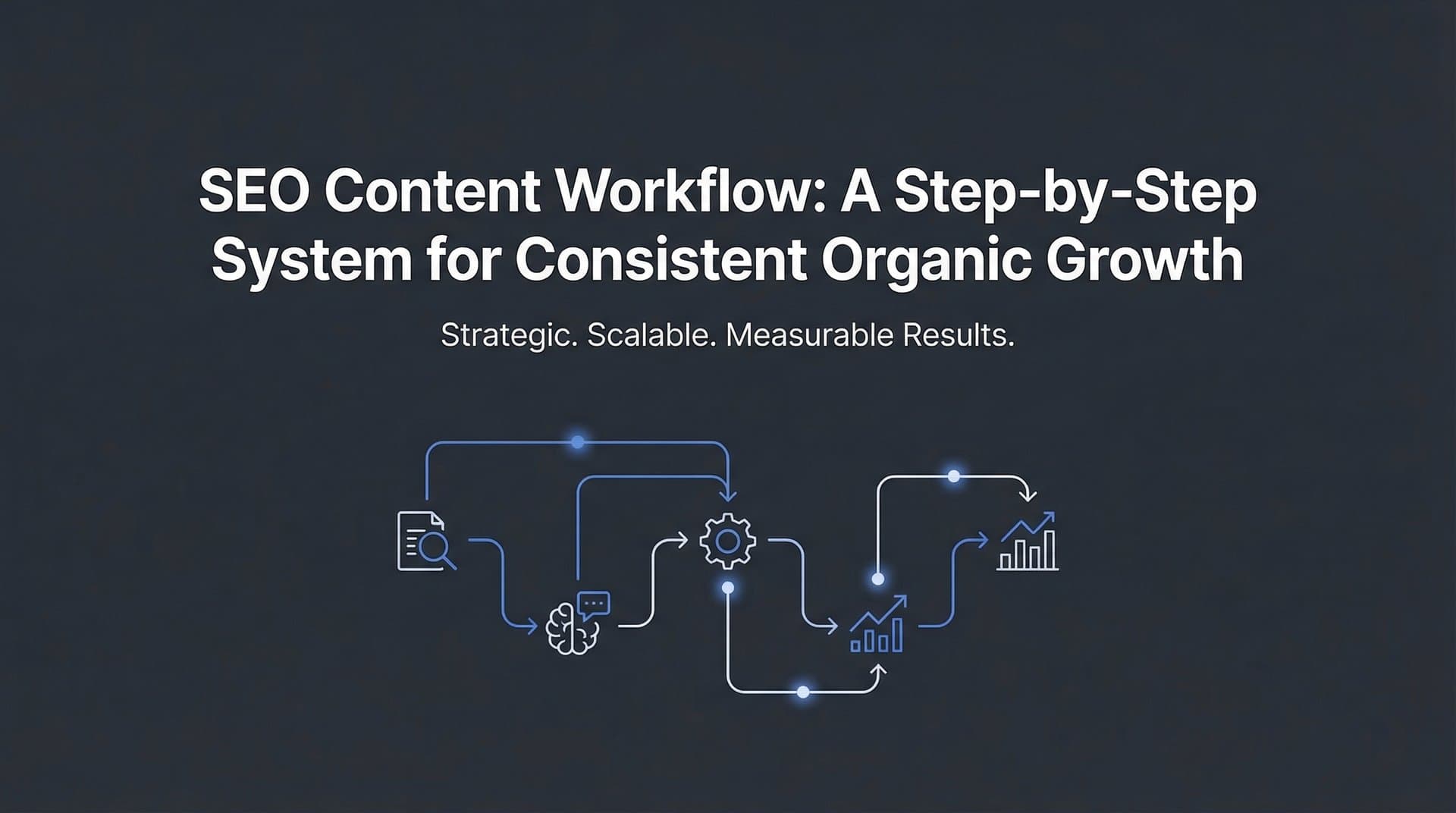
A true multi-agent system works differently. Instead of one generalist model handling an entire content pipeline, the work is distributed across specialized agents, each designed and configured for a specific function. One agent handles keyword research and SERP intent analysis. Another structures an outline based on both human readability and AI crawler signals. A writing agent drafts the content with semantic depth and entity coverage. A technical SEO agent reviews metadata, schema, and internal linking. A publishing agent connects the finished content to your CMS and triggers indexing protocols. An orchestration layer coordinates all of these agents, managing the sequence, passing structured outputs between them, and allowing agents to loop back and refine based on downstream signals.
This architecture produces something qualitatively different from what a single prompt can achieve. The agents communicate. A writing agent that receives a structured brief from a strategy agent produces more targeted content than one working from a raw user prompt. A technical SEO agent reviewing a draft can flag semantic gaps and send the writing agent back to address specific entity coverage before the content ever reaches publication.
The concept of GEO, or Generative Engine Optimization, adds a second optimization objective that single-prompt tools were never designed to address. Traditional SEO is concerned with how search engines rank content based on signals like relevance, authority, and technical quality. GEO is concerned with how AI models select, cite, and surface content when generating answers to user queries. These are related but distinct goals, and they require different structural decisions in how content is written and organized.
SEO content agents must now optimize for both simultaneously. A piece of content needs to rank well in traditional search while also being structured in a way that makes it a credible, citable source for AI-generated answers. That dual objective is difficult to achieve with a single monolithic prompt. It requires a pipeline where each agent understands its specific role in serving both goals, and where the orchestration layer ensures those objectives don't conflict.
This is the architectural reality of modern SEO content agent technology: not a smarter writing tool, but a coordinated intelligence system that treats content production as a multi-stage engineering problem.
The Agent Stack: What Each Layer Actually Does
Understanding what SEO content agents do in practice requires looking at each layer of the stack individually. The specific implementation varies across platforms, but the functional roles are consistent across well-designed systems.
The Research Agent: This agent operates at the top of the pipeline, analyzing keyword clusters, mapping SERP intent, identifying content gaps, and surfacing topical opportunities your brand isn't currently addressing. It doesn't just find keywords; it interprets what users at different stages of intent are actually looking for and categorizes that demand in a way that informs every downstream agent.
The Content Strategy Agent: Working from the research agent's structured output, the strategy agent builds outlines designed for two audiences simultaneously: human readers and AI crawlers. This means structuring content with clear entity definitions, logical heading hierarchies, and factual anchors that AI models can parse reliably, while also ensuring the flow serves a real reader's comprehension.
The Writing Agent: This is the most visible layer, but it's not the most important one in isolation. The writing agent drafts content with semantic depth, pulling in related entities, addressing sub-questions that research signals suggest users care about, and maintaining an authoritative tone throughout. Because it receives a structured brief rather than a raw prompt, its output is substantially more targeted than what a standalone AI writing tool produces.
The Technical SEO Agent: Once a draft exists, the technical agent reviews it for metadata completeness, schema markup opportunities, internal linking recommendations, and on-page optimization signals. This is the layer that ensures the content is technically sound before it ever reaches a CMS, catching issues that would otherwise require a separate audit cycle.
The Publishing Agent: This layer closes the loop between content generation and content discovery. It connects to CMS workflows to automate publication, and critically, it triggers indexing protocols like IndexNow. IndexNow is a real, open-source protocol supported by Microsoft Bing and Yandex that allows websites to notify search engines immediately when new content is published, rather than waiting for passive crawl schedules that can take days or weeks. A publishing agent that integrates IndexNow ensures new content enters the search ecosystem within hours of publication.
The reason specialization matters here is straightforward. A generalist agent asked to research, write, optimize, and technically audit a piece of content in a single pass will produce output that is adequate across all dimensions and excellent at none. A stack of specialized agents, each focused on its specific function and passing structured outputs to the next, produces content that is simultaneously readable, semantically rich, internally linked, and technically sound. The quality difference compounds as content volume scales.
Why Traditional SEO Workflows Can't Keep Pace
Conventional content production is a chain of handoffs, and every handoff introduces delay and the possibility of error. A typical workflow looks something like this: keyword research in one tool, competitive analysis in another, a content brief drafted manually, drafting in a word processor or AI writing tool, optimization checks in a separate SEO platform, internal linking added manually by a writer or editor, metadata filled in by whoever happens to be publishing, and then a manual submission to Google Search Console or simply waiting for the next crawl.
Each step in that chain requires a human to pick up the output of the previous step, interpret it, and pass it forward. That's not just slow; it's structurally fragile. Insights from keyword research get diluted by the time they reach a writer. Internal linking decisions get made by whoever is least busy rather than by someone with a strategic view of site architecture. Technical SEO checks happen after the fact, if they happen at all.
The problem has become more acute because AI search platforms have fundamentally compressed the timeline for brand visibility. In traditional search, a brand that publishes inconsistently might rank lower but still appear somewhere in results. In AI-generated answers, the selection is much more binary: your content either has the characteristics that make it a credible source for an AI model's response, or it doesn't appear at all. There's no page two in a ChatGPT answer.
This means content velocity and content quality are no longer in tension; they're both required simultaneously. A brand that publishes slowly but well misses the window. A brand that publishes quickly but without technical and semantic depth doesn't get cited. The only viable path is a workflow that can produce high-quality, optimized content at a consistent pace without proportionally scaling human labor.
Crawl efficiency is a specific dimension where the gap between manual and agent-driven workflows becomes stark. When a human publishes content and either forgets to submit it or relies on passive crawling, new content can sit undiscovered for weeks. During that window, it generates no traffic, no internal link equity, and no AI citation opportunities. An agent-driven workflow that automatically updates sitemaps and triggers IndexNow requests eliminates that window almost entirely, ensuring that each new piece of content begins accumulating value within hours of publication. Over time, that difference in indexing speed compounds into a meaningful organic growth advantage.
GEO Optimization: Teaching Agents to Win AI Citations
Generative Engine Optimization is the practice of structuring content so that large language models are likely to cite or surface it when generating answers to user queries. It's a discipline that has emerged alongside the rise of AI-powered search interfaces, and it requires a different set of decisions than traditional keyword optimization.
When a user asks ChatGPT, Claude, or Perplexity a question, the model doesn't rank pages the way a traditional search engine does. It selects sources based on signals like factual density, entity clarity, authoritative tone, and structural coherence. Content that reads as a confident, well-organized explanation of a specific topic, with clear definitions and verifiable claims, is more likely to be drawn upon than content that is vague, hedged, or structured primarily around keyword density.
SEO content agents optimized for GEO make specific structural decisions that generalist writing tools don't. They write with explicit entity definitions rather than assuming the reader already understands the context. They include structured factual claims that an AI model can parse and reference discretely. They maintain an authoritative, declarative tone rather than the hedged, listicle-style writing that dominated content marketing in earlier years. They build topical authority by covering a subject comprehensively across multiple related pieces, creating a body of content that AI models can draw on as a coherent source rather than a single isolated article.
The measurement layer for GEO is AI visibility tracking, and it's where many brands currently have a significant blind spot. You can monitor your traditional search rankings with established tools, but knowing whether your content is being cited by ChatGPT when someone asks a relevant question requires a different kind of monitoring. AI visibility tracking involves systematically querying AI platforms with prompts relevant to your brand and product category, then analyzing whether and how your brand appears in the responses, what sentiment surrounds those mentions, and where gaps exist.
Without that measurement layer, GEO optimization is essentially guesswork. You can follow best practices for structuring AI-friendly content, but you won't know whether it's working or where to focus next. AI visibility tracking closes that feedback loop, turning GEO from a set of writing guidelines into a measurable, improvable strategy. Platforms like Sight AI are built around exactly this capability, monitoring brand mentions across multiple AI platforms and surfacing the data that makes GEO optimization actionable rather than theoretical.
Autopilot Mode and the Compounding Content Advantage
One of the most significant capabilities that SEO content agent technology enables is what's often called Autopilot Mode: a configuration where agents continuously identify content gaps, generate optimized articles, publish them, and trigger indexing, with minimal human intervention at the execution level. This transforms content production from a campaign-based activity into an ongoing, scalable process.
The compounding effect of this approach is worth understanding precisely. Each indexed article contributes to topical authority by demonstrating depth and breadth of coverage in a subject area. It creates new internal linking opportunities that strengthen the overall site architecture. It opens additional entry points for both traditional search and AI model citations. And it does all of this simultaneously, with effects that accumulate over time rather than plateauing after a single campaign.
A brand that publishes ten well-optimized, indexed articles per month doesn't just have ten more articles after a year. It has a content ecosystem with substantially deeper topical authority, denser internal linking, broader keyword coverage, and more surface area for AI citations than it had at the start. The returns are not linear; they compound. Each new piece of content benefits from the authority established by the pieces that came before it, and it in turn strengthens the foundation for the pieces that follow.
Autopilot Mode doesn't mean removing humans from the equation. It means repositioning human involvement at the strategic level rather than the execution level. Humans set the content strategy: which topics to prioritize, which keyword clusters to pursue, which audience segments to address. They review performance through an SEO performance dashboard that surfaces what's working and what isn't. They make high-stakes decisions about brand positioning and messaging. What they don't do is manually brief every article, edit every draft, or remember to submit every new URL to search console.
The result is a content operation that scales with the business rather than with headcount. For founders and marketing leaders at growing companies, that scalability is the practical value of SEO content agent technology: not just faster content, but a fundamentally more efficient operating model for organic growth.
Choosing and Deploying an SEO Content Agent System
If you're evaluating SEO content agent platforms, the capability checklist matters more than the marketing language. Here's what to look for in practice.
Agent specialization and count: A platform with a larger number of specialized agents will generally produce better output than one with fewer, more generalist agents. Look for distinct agents handling research, strategy, writing, technical SEO, and publishing as separate functions, not a single model doing all of them in sequence.
GEO optimization support: Does the platform explicitly optimize content for AI citation, not just traditional keyword ranking? This means writing with entity clarity, factual density, and authoritative tone as deliberate outputs, not side effects.
Native CMS publishing and IndexNow integration: If the platform can't connect directly to your CMS and trigger IndexNow requests automatically, you're still managing a manual handoff at the most time-sensitive point in the workflow. Fast indexing is a meaningful competitive advantage; don't sacrifice it.
AI visibility tracking across multiple platforms: A system that generates content without measuring AI citation outcomes is operating without a feedback loop. Look for platforms that monitor brand mentions across ChatGPT, Claude, Perplexity, and other AI interfaces, with sentiment analysis and prompt tracking to show you exactly where you appear and where you don't.
For a practical starting framework: begin with a content gap audit focused specifically on AI visibility. Identify the queries and topics where your brand should appear in AI-generated answers but currently doesn't. Configure your agents around the high-intent keyword clusters that map to those gaps. Set up indexing automation before you start scaling volume, because fast indexing is what converts content output into organic traffic quickly rather than eventually.
Then use AI visibility scoring as your primary feedback mechanism. The goal isn't just to publish more content; it's to build a body of content that AI models recognize as authoritative and cite consistently. That feedback loop, from AI visibility data back to agent configuration and content strategy, is what makes the system self-improving over time rather than just self-operating.
The Bigger Picture
SEO content agent technology is not a faster way to do the same old content marketing. It is a different operating model, one that treats content production as an engineered pipeline rather than a creative project, and that addresses both traditional search ranking and AI citation visibility as simultaneous, measurable objectives.
The brands building compounding organic advantages right now are not the ones with the best single AI writing tool. They're the ones deploying coordinated agent stacks that research, write, optimize, publish, and index continuously, while tracking AI visibility to close the feedback loop and refine the strategy over time.
The window for establishing that advantage is not permanent. As more brands adopt multi-agent content systems, the baseline for what it takes to appear in AI-generated answers will rise. The brands that move now, while the gap between agent-driven and manual content workflows is still wide, will build topical authority and AI citation presence that becomes increasingly difficult for later entrants to displace.
Sight AI is built for exactly this moment. With 13+ specialized AI agents, native CMS publishing, IndexNow-powered indexing for fast content discovery, and AI visibility tracking across ChatGPT, Claude, Perplexity, and more, it's the all-in-one platform that connects every layer of the SEO content agent stack. Start tracking your AI visibility today and see exactly where your brand appears across top AI platforms, where the gaps are, and how to close them with content that compounds.