You've probably spent the last hour comparing SEO automation platforms, and if you're like most marketers, you're more confused now than when you started. One platform charges $79/month but limits you to 50 pages. Another wants $500/month with unlimited everything. A third won't even show pricing until you book a demo. Welcome to the wild west of SEO automation pricing in 2026.
The frustration isn't just about numbers. It's about trying to compare apples to oranges when one platform charges per seat, another bills by keyword volume, and a third uses some mysterious credit system that requires a calculator and a degree in mathematics to decode. Meanwhile, your boss wants a budget proposal by Friday, and you're stuck trying to figure out if $300/month is a steal or highway robbery.
Here's what we're going to do. We'll cut through the pricing fog and show you exactly what SEO automation platforms actually cost in 2026, which pricing models make sense for different situations, and most importantly, the hidden fees that can turn a $200/month tool into a $600/month surprise. By the end, you'll know exactly how to budget smart and avoid the traps that catch most teams off guard.
The Pricing Model Maze: Understanding How Platforms Actually Charge
The first challenge isn't the price itself—it's understanding what you're actually paying for. SEO automation platforms have adopted wildly different pricing philosophies, and each comes with its own advantages and gotchas.
Per-Seat Licensing: This is the traditional SaaS model. You pay for each team member who needs access, typically ranging from $50-150 per user per month. The appeal? Predictable costs if your team size stays stable. The problem? It gets expensive fast when you're an agency managing multiple clients or a growing team that needs to onboard new marketers quarterly. Some platforms charge the same rate whether someone uses the tool daily or logs in twice a month, which feels wasteful.
Usage-Based Pricing: This model charges based on what you actually consume—pages crawled, keywords tracked, content pieces generated, or API calls made. AI-powered platforms particularly favor this approach because their costs scale with computational resources. The advantage is flexibility; light months cost less, heavy months cost more. The downside? Budget unpredictability. Your February bill might be $200, but March could spike to $450 if you launch a major content initiative.
Flat-Rate Subscriptions: Pay one price, get everything included up to certain limits. This model has gained popularity because teams crave simplicity. You know exactly what you're spending each month, and you can plan accordingly. The catch is that "everything included" often comes with fine print—maybe unlimited keyword tracking but only 20 content generations per month, or unlimited users but restricted API access. Understanding SEO automation platform subscription structures helps you navigate these nuances.
AI-powered platforms have introduced a twist to traditional pricing. Because they rely on expensive large language models, many now structure costs around AI features separately from basic SEO functions. You might pay $200/month for technical SEO audits and rank tracking, then another $100-300/month for AI content generation capabilities. This modular approach lets you pay only for what you need, but it also means your total cost depends on how deeply you embrace AI-powered workflows.
The newest model gaining traction is outcome-based pricing, where platforms charge based on results delivered—traffic increases, rankings improved, or content published. This sounds appealing until you realize that SEO outcomes depend on factors beyond the tool itself. Your content quality, site authority, and competitive landscape all matter. Most platforms offering this model still have base fees with performance bonuses, not pure pay-for-results structures.
What You'll Actually Pay: Price Ranges by Platform Tier
Let's talk real numbers. SEO automation platforms in 2026 cluster into three distinct pricing tiers, and understanding what you get at each level helps you avoid overpaying or underinvesting.
Entry-Level Tools ($50-200/month): These platforms handle fundamental automation—scheduled rank tracking, basic technical audits, and simple reporting. Think of them as replacing the most tedious manual tasks. You'll get keyword position monitoring across search engines, automated site crawls to catch technical issues, and basic competitor tracking. What's typically missing? Advanced AI features, robust content generation, comprehensive backlink analysis, and white-label reporting for agencies.
These tools work well for solopreneurs managing a single website or small businesses just starting their SEO journey. The limitations become obvious when you need to scale. You might be capped at 500 tracked keywords, 10,000 crawled pages per month, or basic integrations that don't connect with your full marketing stack. For budget-conscious teams, exploring affordable SEO automation platform options can reveal surprisingly capable solutions.
Mid-Market Platforms ($200-800/month): This is where most growing teams find their sweet spot. Mid-tier platforms typically bundle technical SEO, content optimization, rank tracking, and increasingly, AI-powered content assistance into comprehensive suites. You're getting meaningful automation that saves hours daily, not just convenience features.
At this level, expect AI content generation with multiple output formats, advanced keyword research that identifies opportunities competitors miss, detailed technical audits with prioritized fix recommendations, and integration capabilities that connect SEO data with your CMS, analytics, and marketing automation tools. The difference from entry-level isn't just more features—it's depth. Instead of knowing your rankings changed, you understand why and get actionable recommendations.
Agencies often find this tier attractive because platforms here typically offer client management features, white-label reporting, and per-client cost structures that protect margins. A $500/month platform managing 10 clients costs $50 per client—far less than multiple entry-level tools.
Enterprise Solutions ($1,000+/month): When you're operating at scale—managing hundreds of thousands of pages, tracking tens of thousands of keywords, or coordinating SEO across multiple brands—enterprise SEO automation platform solutions justify their premium pricing. These solutions offer unlimited or near-unlimited usage, dedicated account management, custom integrations, advanced API access, and priority support.
The real value at this tier isn't just capacity—it's sophistication. Enterprise platforms provide predictive analytics that forecast traffic impact before you publish, advanced AI models trained on your specific content, custom automation workflows that match your exact processes, and security features that meet corporate compliance requirements. You're also paying for reliability; enterprise SLAs guarantee uptime and response times that smaller platforms can't match.
Here's the thing about enterprise pricing: it's often negotiable. The published $2,000/month rate might drop to $1,400/month with an annual contract, or you might get additional features bundled in. Unlike lower tiers where pricing is fixed, enterprise deals involve actual negotiation.
The Costs They Don't Advertise: Hidden Fees That Inflate Your Bill
The sticker price is just the beginning. Let's talk about the expenses that turn a seemingly affordable platform into a budget-buster.
Onboarding and Setup Fees: Many platforms charge $200-1,000 for initial setup, data migration, and training. Some position this as "implementation services" and make it optional, but practically speaking, you need it to get value from the platform. Without proper onboarding, you'll spend weeks figuring out features you could have mastered in days with guided training.
API Call Limits and Overage Charges: This is where usage-based pricing gets tricky. Your plan includes 100,000 API calls per month, which sounds generous until you realize each page crawl uses multiple calls, each rank check counts separately, and any automation you build consumes calls rapidly. Overage fees typically run $0.001-0.01 per additional call, which doesn't sound like much until you're 50,000 calls over and facing a $500 surprise charge.
AI content generation introduces similar dynamics. Your plan might include 50 articles per month, but longer articles consume more tokens, and suddenly you're hitting limits faster than expected. Additional content might cost $5-20 per piece, depending on length and complexity. Reviewing detailed SEO automation software pricing plans before committing helps you anticipate these costs.
Tool Fragmentation Costs: Here's the hidden expense nobody calculates properly. You're paying $150/month for a rank tracker, $200/month for a content optimization tool, $100/month for a technical SEO auditor, $80/month for a backlink analyzer, and $120/month for a reporting platform. That's $650/month across five tools, plus the mental overhead of switching between platforms, reconciling different data sources, and maintaining five separate logins.
Comprehensive platforms that consolidate these functions into one suite might cost $500/month—saving you $150 monthly while eliminating integration headaches. An all in one SEO automation platform eliminates the 3-5 hours weekly you're not spending switching between tools and manually combining data.
Training and Transition Costs: Switching platforms means retraining your team, rebuilding automation workflows, and dealing with a productivity dip during the transition. If you have a five-person team and each person needs 10 hours to get proficient with a new platform, that's 50 hours of reduced productivity. At $50/hour average cost, that's $2,500 in hidden transition expense—equivalent to 5-12 months of platform fees depending on your tier.
The ROI Equation: When Automation Actually Pays for Itself
Let's get practical about return on investment. The question isn't whether SEO automation costs money—it's whether it makes you more money than it costs.
Time Savings Math: Consider what you're currently doing manually. A comprehensive technical SEO audit of a medium-sized site takes 6-8 hours when done by hand. An automated platform does it in 20 minutes. If you're auditing weekly, that's 24-32 hours saved monthly. At a $75/hour rate for SEO expertise, you're saving $1,800-2,400 in labor costs. A $500/month platform just paid for itself four times over. Understanding the SEO automation vs manual optimization tradeoffs clarifies these calculations.
Keyword research offers similar math. Manually researching keywords, analyzing competition, and identifying opportunities might take 4 hours per content piece. An AI-powered platform does it in 15 minutes. If you're publishing 10 pieces monthly, you're saving 37.5 hours—worth roughly $2,800 in labor. Even a $600/month platform delivers substantial ROI.
Content Velocity Impact: Here's where automation compounds. Manual workflows might let you publish 8 optimized articles per month. With AI-assisted content generation and automated optimization, that number jumps to 20-25 pieces monthly. More content means more keywords targeted, more entry points for organic traffic, and faster growth.
The impact isn't immediate—SEO takes time—but the acceleration matters. If manual processes would take 18 months to reach 50,000 monthly organic visitors, automation might compress that timeline to 10-12 months. Those 6-8 extra months of higher traffic translate to real revenue. For an e-commerce site converting at 2% with a $100 average order value, an extra 20,000 monthly visitors means $40,000 additional monthly revenue. Your $500/month platform investment looks microscopic compared to that return.
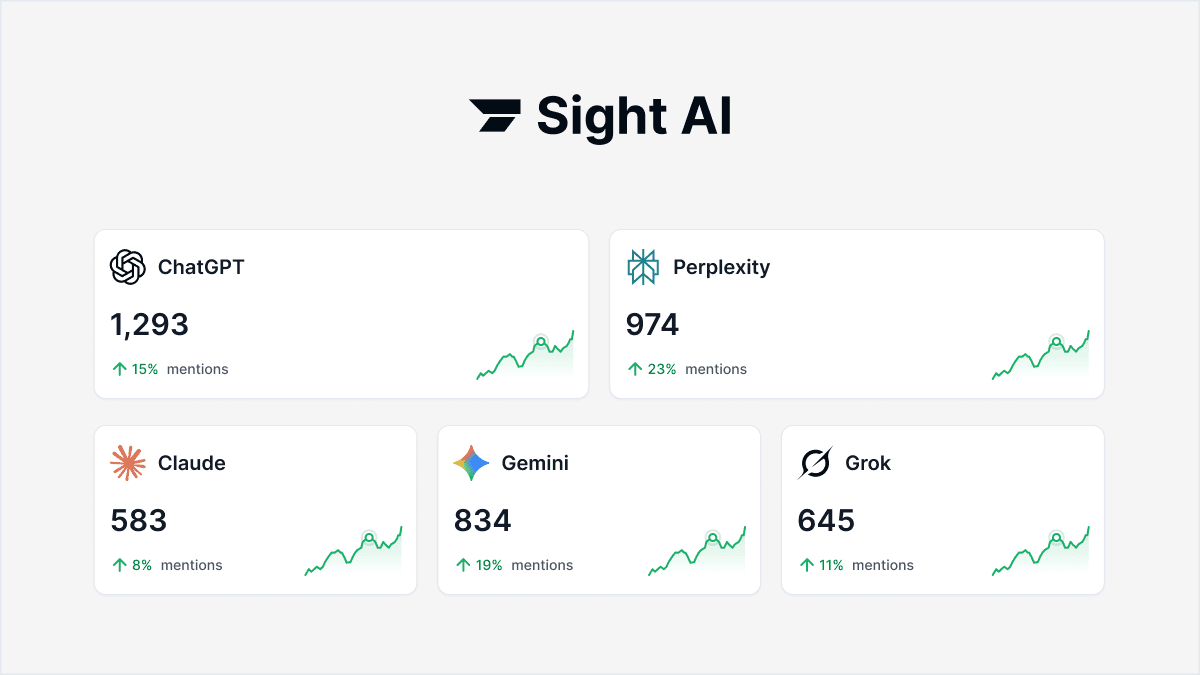
AI Visibility Tracking Value: This is the newest ROI dimension. As AI search platforms like ChatGPT, Claude, and Perplexity become primary research tools, tracking how these models mention your brand becomes crucial. Traditional SEO tools can't see this; specialized AI visibility tracking can.
When you discover that AI models mention your competitor 15 times more often than your brand, you've identified a critical gap. Closing that gap through targeted content that gets picked up by AI training data creates a compounding advantage. The brands that AI models recommend become the default choices for millions of users. The cost of missing this trend? Potentially catastrophic. The cost of tracking it? Typically an additional $100-300/month depending on platform.
Matching Your Budget to Your Growth Stage: What Makes Sense When
The right investment depends entirely on where you are in your journey. Let's break it down by situation.
Solopreneurs and Small Teams: You're probably wearing multiple hats—marketer, content creator, analyst, and strategist. Your budget is tight, maybe $200-400/month maximum for all marketing tools combined. Prioritize platforms that deliver the highest impact per dollar spent. That typically means focusing on content velocity and basic technical SEO rather than comprehensive analytics.
Look for platforms that combine content generation with essential SEO functions. Spending $200/month on a tool that helps you publish 15 optimized articles monthly beats spending $100/month on rank tracking and another $150/month on a separate content tool. Consolidation saves money and simplifies workflows when you're a team of one. Many SEO automation platform for startups options are designed specifically for this budget range.
Agencies Managing Multiple Clients: Your math is different. You need to calculate cost per client and ensure your tools don't eat into margins. If you're managing 8 clients and spending $800/month on SEO automation, that's $100 per client—which needs to fit within your service fees while leaving room for profit.
Agencies benefit from platforms with white-label reporting, client management features, and flexible user permissions. A $600/month platform that handles 15 clients costs $40 per client. If you're charging clients $500-1,000/month for SEO services, that cost structure protects healthy margins. The alternative—separate tools for each client—creates chaos and kills profitability. Dedicated SEO automation platform for agencies solutions address these specific needs.
Watch for platforms that charge per seat but offer agency-specific plans. Some platforms charge $150/user for standard plans but offer agency plans at $400/month for up to 10 users plus client management features. That's the difference between $1,500/month and $400/month for the same team size.
Scaling Companies: You're past the startup phase, generating meaningful revenue, and ready to invest in growth acceleration. Your SEO budget might be $1,000-3,000/month, and you're evaluating whether premium platforms justify the premium pricing.
The trigger for upgrading is usually hitting limits on your current platform—running out of keyword tracking capacity, maxing out content generation quotas, or needing features your mid-tier tool doesn't offer. When your SEO team spends 5 hours weekly working around platform limitations, that's the signal to upgrade. Those 20 monthly hours cost more than the price difference between mid-tier and enterprise platforms.
At this stage, focus on platforms that scale with you. Unlimited keyword tracking matters when you're targeting thousands of terms. Advanced AI features matter when you're publishing 50+ pieces monthly. Integration depth matters when SEO needs to connect seamlessly with your CRM, marketing automation, and analytics stack.
The Questions That Reveal True Platform Cost
Before you commit, ask these questions. The answers tell you whether the advertised price matches the real price.
Contract Flexibility: Can you cancel anytime, or are you locked into annual contracts? Some platforms offer 20-30% discounts for annual commitments, which sounds great until you realize the platform doesn't fit your workflow and you're stuck for 12 months. Monthly contracts cost more but give you flexibility to switch if things don't work out. Calculate the real cost: is saving $600 annually worth the risk of being locked in?
Ask about cancellation terms specifically. Some platforms require 30-60 days notice, meaning you're paying for months you're not using if you decide to switch. Others let you cancel immediately. That difference matters when evaluating true costs. Taking advantage of an SEO automation platform free trial before committing helps you avoid costly mistakes.
Price Lock Guarantees: Will your rate increase after the first year? Many platforms offer promotional pricing for year one, then bump rates 15-30% on renewal. A $400/month platform that jumps to $520/month in year two changes your long-term budget calculations significantly. Get pricing guarantees in writing, or at least understand the renewal terms before signing.
Feature Roadmap Transparency: This question separates honest platforms from ones that will nickel-and-dime you. Ask directly: when you add new features, do existing customers get them included, or do they become premium add-ons? Some platforms include all new features in existing plans. Others introduce new capabilities as separate paid modules, meaning your costs creep up over time as you need to stay competitive.
If a platform won't share their feature roadmap or dodges questions about future pricing, that's a red flag. Transparent platforms will tell you exactly what's coming and how it affects pricing.
Support Quality by Tier: What level of support comes with each pricing tier? Entry-level plans often get email-only support with 48-hour response times. Mid-tier might include chat support with 24-hour responses. Enterprise gets dedicated account managers and priority phone support. Understand what you're getting because when your site breaks or rankings drop, support response time directly impacts revenue.
Ask about onboarding specifically. Do they provide training sessions, documentation, and ongoing education? Or do they point you to generic help articles and wish you luck? The platform with slightly higher pricing but comprehensive onboarding might deliver better ROI than the cheaper option that leaves you figuring everything out alone.
Making Your Investment Decision: Clarity Over Confusion
Here's the truth about SEO automation platform costs in 2026: the "right" price isn't the lowest number or the highest tier—it's the investment that delivers measurable returns for your specific situation. A $200/month platform that helps a solopreneur publish 20 optimized articles monthly is a better investment than a $1,500/month enterprise solution with features they'll never use.
Start with your goals, not your budget. Do you need to increase organic traffic by 50% in six months? Do you need to publish 30 content pieces monthly to compete in your niche? Do you need to understand how AI models like ChatGPT talk about your brand versus competitors? Once you're clear on objectives, work backward to determine what level of automation investment makes those goals achievable.
The platforms worth your money share common traits: transparent pricing with no hidden fees, clear ROI through time savings or revenue impact, and features that match your actual workflow rather than impressive-sounding capabilities you'll never use. They scale with you, offering upgrade paths as your needs grow without forcing you to migrate to entirely new systems.
Remember that the cost of not automating often exceeds the cost of automation itself. Manual SEO processes limit your content velocity, slow your traffic growth, and consume hours that could be spent on strategy instead of execution. In an increasingly competitive landscape where AI-powered competitors publish faster and optimize smarter, the question isn't whether you can afford automation—it's whether you can afford to fall behind.
Stop guessing how AI models like ChatGPT and Claude talk about your brand—get visibility into every mention, track content opportunities, and automate your path to organic traffic growth. Start tracking your AI visibility today and see exactly where your brand appears across top AI platforms.