You check Google Analytics for the third time this week, hoping the numbers will somehow look different. Your rankings haven't budged—you're still sitting comfortably in positions 3-5 for your target keywords. But the traffic? Down 30% over the past six months. Your content quality hasn't changed. Your technical SEO is solid. So what's going on?
The answer is staring at you from the top of every Google search result: AI-generated summaries that answer questions before users even think about clicking. Welcome to the era of zero-click search, where maintaining your rankings no longer guarantees your traffic.
This isn't another algorithm update you can wait out. It's a fundamental restructuring of how people interact with search engines. When AI can deliver a complete answer in three seconds, why would anyone click through to read your 2,000-word guide? The rules of the game have changed, and the marketers who adapt fastest will be the ones who survive—and thrive.
The Zero-Click Revolution: How AI Answers Changed Search Behavior
Think of search engines as evolving from librarians to personal assistants. The old model pointed you toward information. The new model delivers it directly, wrapped in a conversational AI summary that feels like getting advice from a knowledgeable friend.
Google's AI Overviews, which rolled out broadly across search results in 2025, now appear for a significant portion of informational queries. ChatGPT's SearchGPT integration brings real-time web results into conversational AI. Perplexity positions itself as an "answer engine" rather than a search engine. The pattern is clear: AI platforms are racing to keep users on their platforms by providing complete answers, not just links.
Here's where it gets interesting. These AI summaries don't just appear for obscure queries—they dominate the exact search types that traditionally drove the most organic traffic. "How do I fix a leaky faucet?" Used to send thousands of clicks to home improvement blogs. Now? AI Overviews walk users through the steps with illustrations, and many searchers never scroll past it.
The queries getting hit hardest share common characteristics. Informational searches ("what is keyword clustering") get instant AI definitions. How-to queries ("how to write a meta description") receive step-by-step AI breakdowns. Definition-based searches ("explain semantic search") are answered before the organic results even load. These were the bread and butter of content marketing strategies for the past decade.
But here's the twist that makes this different from previous search changes: users aren't complaining. They're getting faster answers. They're solving problems in seconds instead of minutes. The AI summary experience is genuinely better for many query types, which means this behavior shift isn't temporary—it's the new normal.
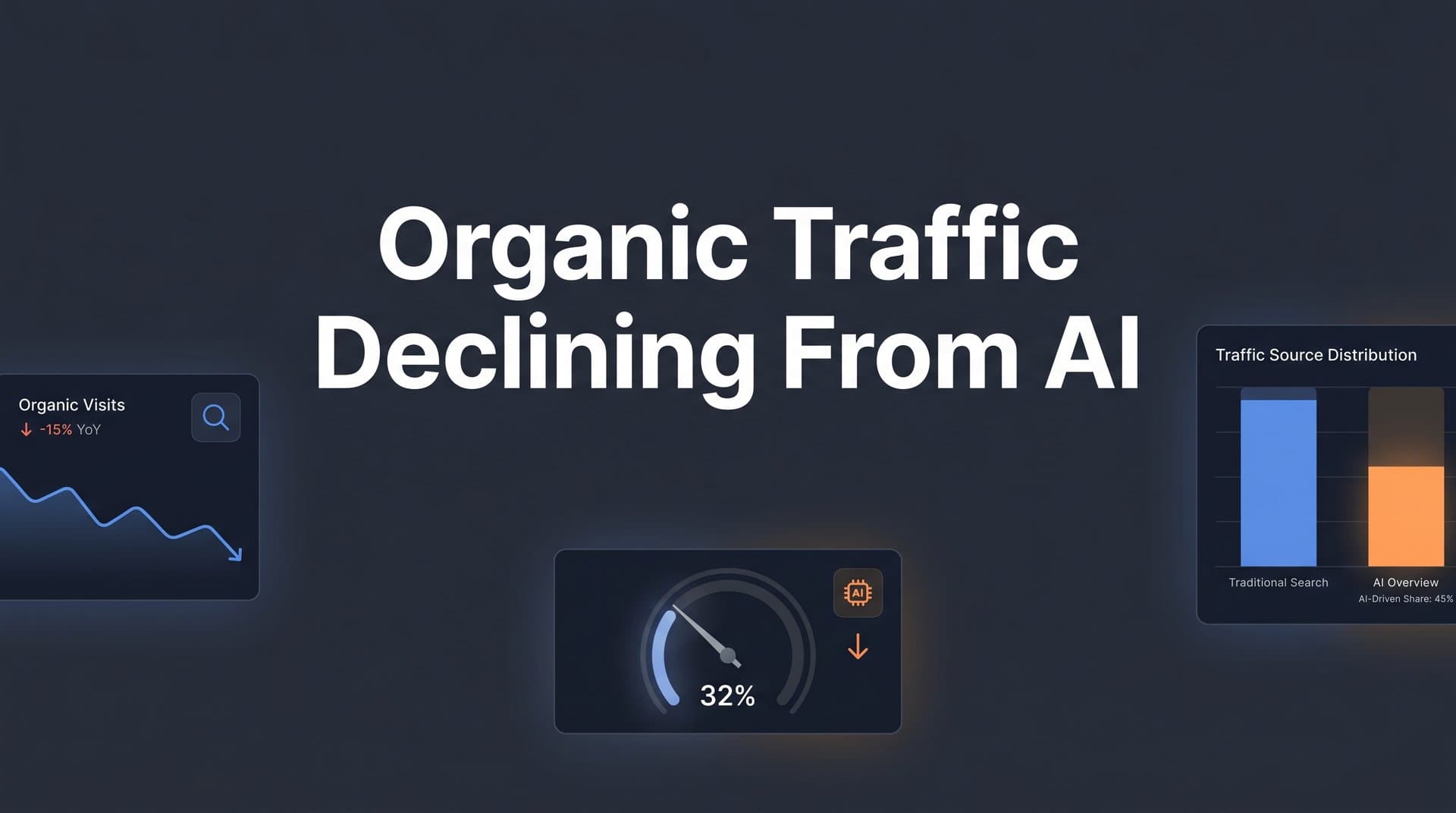
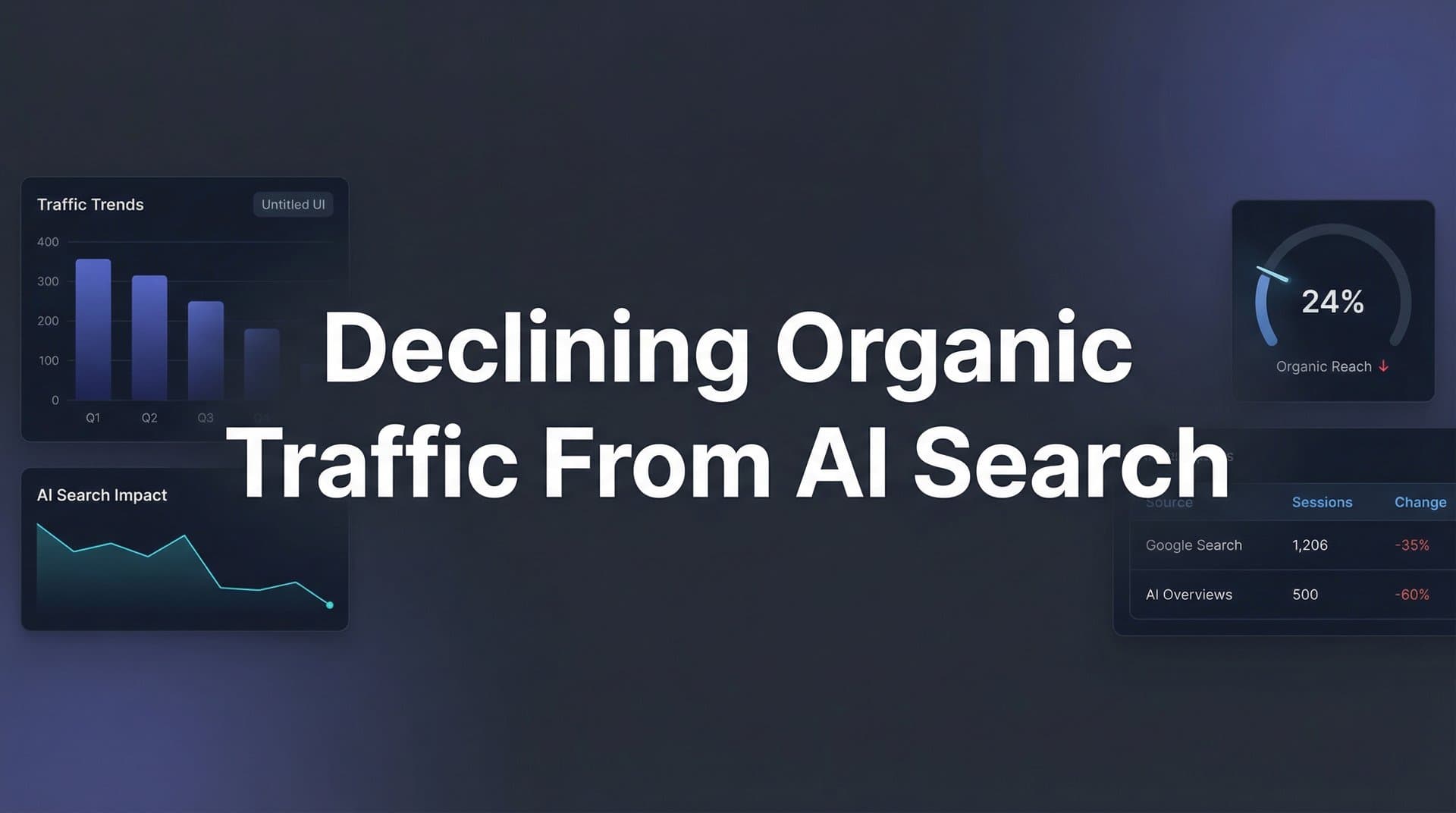
The data tells a stark story. Marketers are reporting maintained or improved rankings alongside significant traffic declines. The math doesn't lie: when your impression-to-click ratio drops from 8% to 3% while your average position stays at 4, the problem isn't your SEO—it's that users are finding what they need without clicking. This pattern of losing traffic to AI answers is becoming increasingly common across industries.
This creates a paradox. Traditional SEO metrics say you're winning. Your traffic reports say you're losing. Both are true. You're ranking well for queries that no longer generate clicks because AI has intercepted the user's journey at the moment of answer, not at the moment of click.
Diagnosing Your Traffic Loss: Separating AI Impact from Other Factors
Before you overhaul your entire content strategy, you need to confirm what's actually causing your traffic decline. Not every drop is AI-related, and misdiagnosing the problem leads to wasted effort on the wrong solutions.
Start with Google Search Console, but look at it differently than you're used to. Open your Performance report and filter for queries that show high impressions but declining clicks over the past 6-12 months. Sort by impression-to-click ratio and look for patterns. If you see queries with stable or growing impressions but plummeting click-through rates, you've found your AI-affected keywords. Understanding organic traffic in Google Analytics helps you identify these patterns more effectively.
Here's the critical distinction: a ranking drop shows declining impressions and clicks together. AI impact shows stable or growing impressions with declining clicks. The first means Google is showing your content less. The second means Google is showing your content the same amount, but users aren't clicking because they're getting answers from AI summaries.
Create a simple categorization framework for your pages. Pull your top 50 landing pages by historical traffic and classify each by query intent. Informational queries ("what is," "how does," "why do") are high vulnerability. Transactional queries ("buy," "pricing," "compare") are low vulnerability. Commercial investigation queries ("best," "top," "review") fall somewhere in the middle.
Now cross-reference this with your actual traffic data. If your informational content is bleeding traffic while your comparison and buying guides hold steady, you're looking at classic AI impact. If everything's down proportionally, you might have a technical SEO issue or algorithm penalty instead. When your website traffic dropped suddenly, this diagnostic approach helps pinpoint the root cause.
Pay special attention to your impression data. Growing impressions with declining clicks is the signature of AI-affected content—you're showing up in search results, but AI Overviews are answering the question first. Declining impressions with declining clicks suggests ranking problems unrelated to AI.
One often-overlooked diagnostic: check your branded search traffic. If people searching for your company name are still clicking through at normal rates, but generic topic searches are way down, that confirms AI is intercepting informational queries while branded intent remains strong. This distinction matters for your recovery strategy.
Document your findings in a spreadsheet. Column one: page URL. Column two: primary query type. Column three: traffic trend. Column four: impression trend. Column five: AI vulnerability assessment (high/medium/low). This becomes your roadmap for deciding which content to update, which to retire, and which to double down on.
Which Content Types Are Bleeding Traffic (And Which Are Immune)
Not all content is equally vulnerable to AI disruption. Understanding which types are at risk versus which remain resilient helps you allocate resources strategically instead of panicking and rewriting everything.
High-Risk Content (Severe Traffic Decline): FAQ pages are getting hammered. When someone asks "what is bounce rate," AI delivers a clean definition in three sentences. Your 800-word FAQ page explaining the same thing? Unnecessary. Basic how-to guides face similar challenges—AI can synthesize step-by-step instructions from multiple sources and present them more concisely than most blog posts.
High-Risk Content (Continued): Definition-based content and glossary pages are particularly vulnerable. If your entire value proposition is explaining what a term means, AI summaries have essentially commoditized your content. Simple listicles without unique insights ("10 types of marketing analytics") are also bleeding because AI can compile similar lists instantly. This is why many sites are experiencing declining organic traffic from AI search at unprecedented rates.
Medium-Risk Content (Partial Traffic Decline): Comprehensive guides that go beyond surface-level information show mixed results. If your guide includes original frameworks, proprietary data, or unique perspectives, it retains more traffic. If it's essentially a longer version of what AI can summarize, clicks decline. The determining factor is whether your content offers something AI summaries cannot replicate.
Low-Risk Content (Traffic Holding Steady): Original research and proprietary data remain highly click-worthy. AI can cite your statistics, but users still need to click through to see the full study, methodology, and detailed findings. Interactive tools, calculators, and templates are essentially immune—AI can't replace functionality, only describe it.
Low-Risk Content (Continued): Comparison content and buying guides show surprising resilience. When someone searches "Shopify vs WooCommerce," they want nuanced analysis based on specific use cases, not a generic AI summary. Transactional queries maintain click-through rates because users are in buying mode and want to verify information before making decisions.
Here's the pattern: content that can be fully consumed from a snippet or summary is high-risk. Content that requires deeper engagement, offers unique value, or facilitates action is low-risk. The question to ask about each piece of content: "Could AI answer this query completely in 200 words or less?" If yes, expect traffic decline. If no, you're in better shape.
One counterintuitive finding: extremely detailed, technical content often performs better now than simplified explanations. When AI provides the simple answer, users clicking through are specifically looking for depth. Your 3,000-word technical deep-dive might get fewer total clicks, but the clicks you do get are from highly engaged readers who actually want comprehensive information.
Flipping the Script: Getting Your Brand Mentioned in AI Answers
Here's where the conversation shifts from defense to offense. If AI answers are intercepting traffic, the logical question becomes: how do you get your brand mentioned in those AI answers?
Think of AI visibility as the new organic traffic channel. When someone asks ChatGPT "what are the best SEO tools," being mentioned in that response is the equivalent of ranking on page one of Google. Except the audience is different—these are users who prefer AI interfaces over traditional search, and that demographic is growing rapidly. This represents a fundamental shift toward organic traffic from AI search as a primary acquisition channel.
AI models source information differently than search engines rank pages. They're trained on vast amounts of web content and generate responses based on patterns in that training data, plus real-time web searches for current information. What makes content "quotable" to AI? Clear, authoritative statements. Original data and research. Structured formatting that's easy to parse. Content that's frequently cited by other authoritative sources.
Start by structuring your content for AI citation. Use clear, definitive statements that can stand alone. Instead of writing "Many experts believe that email marketing remains effective," write "Email marketing generates an average ROI of $36 for every $1 spent, according to Litmus research." The second version is specific, citable, and useful to AI models synthesizing information.
Original research is your secret weapon. When you publish unique data, AI models have no choice but to cite you as the source if they want to reference those statistics. A proprietary study on "AI impact on organic traffic across 500 websites" becomes cite-worthy content that AI cannot replicate—it can only reference your findings.
Pay attention to how you present expertise. AI models favor content from recognized authorities. Building topical authority through consistent, high-quality content in your niche increases the likelihood of citation. Publishing regularly on specific topics signals expertise that AI models recognize when determining which sources to reference.
Structure matters more than you think. Use clear headings, bullet points for key takeaways, and concise paragraphs. AI models parse structured content more effectively than long, rambling text. When your content is easy for AI to understand and extract information from, citation becomes more likely.
Monitor your AI visibility actively. Test queries related to your industry across ChatGPT, Claude, and Perplexity. See which competitors get mentioned and analyze why. What content formats are they using? What makes their information cite-worthy? This competitive intelligence reveals patterns you can apply to your own content strategy.
The ultimate goal is becoming the default source AI models reference in your niche. When someone asks an AI assistant about your topic area, your brand should appear in the response—not as a link they might click, but as a cited authority they trust because the AI vouched for you.
Rebuilding Your Content Strategy for the AI Search Era
Adapting to AI search requires more than tweaking existing tactics—it demands a strategic overhaul of how you approach content creation, distribution, and measurement.
Start with a content audit focused on AI vulnerability. Take your top 100 pages by historical traffic and categorize each by the framework we discussed: high-risk (easily summarizable), medium-risk (partially unique), or low-risk (unique value AI cannot replicate). This isn't about deleting content—it's about understanding what needs transformation versus what's already positioned well.
For high-risk content, you have three options. Option one: enhance it with original data, unique frameworks, or proprietary insights that make it cite-worthy instead of replaceable. Option two: convert it into a different format—turn that FAQ into an interactive tool or decision tree. Option three: accept reduced traffic and focus resources elsewhere. Not every piece of content deserves rescue. Understanding organic traffic growth strategies helps you prioritize which content to invest in.
Prioritize content types that AI cannot easily replicate. Original research, case studies with specific results, interactive tools, and content requiring login or interaction all maintain value in the AI era. If you're creating new content, ask: "Could AI summarize this completely, or does it offer something that requires the user to engage directly with my platform?"
Diversify your traffic sources beyond traditional organic search. Email lists become more valuable when search traffic becomes less predictable. Social media distribution, particularly on platforms where your audience actively engages, provides traffic that AI cannot intercept. Partnerships and co-marketing create referral traffic independent of search behavior changes.
Rethink your metrics and KPIs. Traffic volume alone no longer tells the complete story. Track engagement depth—time on page, scroll depth, conversion rates. A page getting 50% less traffic but converting at 2x the rate might actually be performing better in the AI era because you're attracting more qualified visitors who specifically chose to click through despite AI alternatives.
Add AI visibility tracking to your measurement stack. Monitor how often your brand gets mentioned across major AI platforms. Track which content gets cited and which gets ignored. This becomes your leading indicator for long-term organic visibility—if AI models recognize you as an authority, you're building sustainable brand awareness even as click-through rates decline. Leveraging organic traffic growth through AI channels requires this kind of comprehensive tracking.
Build content specifically for AI citation. Create "quotable" resources—statistics pages, research reports, definitive guides with clear takeaways. Think of these as your AI-optimized assets, designed not primarily for direct traffic but for establishing authority that AI models recognize and reference.
The most successful adaptation strategy combines defense and offense. Protect and enhance your high-value, unique content while simultaneously building AI visibility. You're not abandoning traditional SEO—you're expanding your definition of organic visibility to include AI platforms where your audience increasingly spends time.
Moving Forward: Treating AI Search as Opportunity, Not Threat
The organic traffic decline from AI answers isn't a death sentence for content marketing—it's a forcing function that separates generic content from genuinely valuable resources. The marketers who adapt fastest aren't the ones mourning lost traffic; they're the ones building visibility in the channels where their audience has migrated.
The key insights are straightforward. First, diagnose accurately before reacting. Not every traffic decline is AI-related, and misidentifying the problem leads to wasted effort. Use the diagnostic framework we covered to separate AI impact from other factors. Second, understand content vulnerability. FAQ pages and basic how-tos are high-risk. Original research and interactive tools are resilient. Allocate resources accordingly.
Third, flip the script from traffic loss to AI visibility gain. If users are getting answers from AI instead of clicking your links, make sure your brand is the one being cited in those AI answers. Structure content for citation, publish original data, and build topical authority that AI models recognize. Fourth, rebuild your strategy around content AI cannot replicate. Unique insights, proprietary tools, and depth that requires engagement all maintain value when AI summaries commoditize surface-level information.
The uncomfortable truth is that much of the content that drove organic traffic over the past decade was, frankly, replaceable. If an AI summary can fully satisfy a user's query, your 1,500-word blog post wasn't offering unique value—it was just the most convenient way to access information before AI provided a faster alternative. This shift forces a reckoning with content quality that ultimately benefits users and rewards creators who go beyond the minimum.
Looking ahead, success requires expanding your definition of organic visibility. Traditional search rankings remain important, but AI visibility—whether your brand gets mentioned when users ask AI assistants questions in your niche—becomes equally critical. The companies adapting successfully are tracking both metrics, optimizing for both channels, and treating AI search as an opportunity to build brand authority in a new medium.
The choice is clear: resist the change and watch traffic decline while clinging to outdated strategies, or embrace the evolution and position your brand for visibility across both traditional search and AI platforms. The traffic you're losing to AI answers isn't coming back. But the opportunity to build brand awareness and authority through AI citations is just beginning.
Start tracking your AI visibility today and see exactly where your brand appears across top AI platforms. Stop guessing how AI models like ChatGPT and Claude talk about your brand—get visibility into every mention, track content opportunities, and automate your path to organic traffic growth in the AI search era.