Your brand is being discussed across AI platforms right now—in ChatGPT conversations, Claude responses, Perplexity searches, and Gemini queries. The question is: do you know what these AI models are saying about you?
Multi-platform AI visibility tracking has become essential for modern marketers as AI-powered search increasingly shapes how consumers discover and evaluate brands. Unlike traditional SEO monitoring, tracking your presence across AI platforms requires a fundamentally different approach—one that monitors how large language models reference, recommend, and describe your brand in real-time conversations.
Here's the challenge: each AI platform operates independently with different training data, knowledge cutoffs, and response patterns. Your brand might be well-represented in Claude but completely absent from Gemini responses. Traditional SEO tools can't help you here because LLMs generate responses dynamically rather than serving indexed pages.
This guide walks you through the exact process of setting up comprehensive AI visibility tracking across all major platforms. By the end, you'll have a working system that monitors your brand mentions across ChatGPT, Claude, Perplexity, Gemini, and other AI assistants, giving you actionable insights to improve how AI talks about your business.
Step 1: Audit Your Current AI Visibility Baseline
Before you can improve your AI visibility, you need to understand where you stand today. Think of this like taking a "before" photo—it's the only way to measure real progress.
Start by manually querying each major AI platform with prompts your potential customers would actually use. Open ChatGPT, Claude, Perplexity, Gemini, and Microsoft Copilot side by side. Then ask each one the same questions.
Product category queries: "What are the best AI visibility tracking tools?" or "Which platforms help monitor brand mentions in AI search?"
Comparison requests: "Compare AI visibility tracking solutions for marketing teams" or "What's the difference between traditional SEO and AI visibility monitoring?"
Direct recommendations: "I need to track how ChatGPT talks about my brand. What should I use?"
Document everything. Create a simple spreadsheet with columns for each platform, the prompt you used, whether your brand was mentioned, how it was described, and where it appeared in the response (first mention, buried in a list, or absent entirely).
Pay special attention to sentiment and accuracy. Is the AI describing your product correctly? Are there outdated features or pricing mentioned? Does the tone feel positive, neutral, or subtly negative?
Here's where it gets interesting: identify the gaps. Look for patterns where competitors consistently appear but your brand doesn't. These gaps represent immediate opportunities. If three AI platforms recommend competitor tools for "content optimization" but never mention yours, you've found a specific visibility problem to fix. Understanding what AI visibility tracking entails helps you frame this audit correctly.
Create a baseline scorecard with simple metrics: total mentions across all platforms, percentage of queries where you appeared, average position when mentioned, and overall sentiment rating. This becomes your starting point for measuring improvement.
The success indicator for this step? You should have a clear, documented picture of exactly how each major AI platform currently talks about your brand—or doesn't. If you can't answer "Does ChatGPT recommend us for X?" with confidence, keep testing.
Step 2: Define Your Tracking Prompts and Keywords
Now that you understand your baseline, it's time to build the prompt library that will power your ongoing monitoring. This is where most people make a critical mistake: they only track branded terms.
Your prompt library needs to cover the full spectrum of how customers actually search. Start with three categories that map to different stages of the buyer journey.
Awareness stage prompts: These are broad, educational queries. "What is AI visibility tracking?" or "How do AI search engines work?" Your brand might not appear here yet, but tracking these prompts shows you the educational content landscape and where thought leadership opportunities exist.
Consideration stage prompts: These compare solutions and explore options. "Best tools for monitoring AI brand mentions" or "How to track ChatGPT responses about my company." This is where you absolutely want to appear, because users are actively evaluating options.
Decision stage prompts: These are specific and intent-driven. "Sight AI vs [competitor]" or "How to set up AI visibility monitoring with [your product]." If you're not appearing here, you're losing customers at the finish line.
Within each category, build variations. Don't just track "AI visibility tracking"—also track "monitor brand mentions in AI," "track ChatGPT responses," "AI search monitoring tools," and "generative engine optimization tracking." Each AI platform may respond differently to slight prompt variations.
Include your product names, feature names, and industry-specific terminology. If you offer "AI Visibility Score," make that a tracked term. If your industry calls it "LLM brand monitoring," track that too. For SaaS companies specifically, LLM visibility tracking requires tailored prompt strategies.
Here's the key: map each prompt to specific business goals. Awareness prompts help you understand thought leadership opportunities. Consideration prompts directly impact lead generation. Decision prompts affect conversion rates. This mapping helps you prioritize which visibility gaps to fix first.
Before you automate anything, manually test your entire prompt library across at least three platforms. You're looking for prompts that consistently generate useful, comparable responses. If a prompt returns wildly different response types across platforms, refine it until it's more consistent.
The verification step: take your top ten prompts and run them through ChatGPT, Claude, and Perplexity. If you can clearly identify whether your brand appears and how it's positioned in each response, your prompts are ready for automated tracking.
Step 3: Configure Multi-Platform Monitoring Tools
Manual tracking gave you insights, but it's not sustainable. You need automated monitoring that checks all platforms simultaneously and alerts you to changes in real-time.
Setting up multi-platform AI visibility tracking requires a tool that can query multiple AI models with your prompt library and aggregate the results into actionable dashboards. The goal is to automate what you just did manually in Step 1, but continuously and at scale. Explore the best AI visibility tracking tools to find the right fit for your needs.
Start by connecting your brand profile to the monitoring system. This typically includes your company name, product names, key executives, and main competitors. The more complete your profile, the more accurately the system can identify relevant mentions—even when AI platforms reference you indirectly.
Configure your competitor tracking list carefully. Include direct competitors, but also adjacent solutions that might appear in the same AI responses. If you're in AI visibility tracking, you might compete with traditional SEO tools in some queries and specialized monitoring platforms in others. Track both.
The real power comes from setting up intelligent alerts. Configure thresholds that notify you when meaningful changes occur. A 20% drop in mention frequency across any platform deserves immediate attention. A sudden shift from positive to neutral sentiment in Claude responses signals something changed in how that model perceives your brand.
Here's what smart alert configuration looks like: daily summaries for overall visibility scores, immediate alerts for sentiment changes, weekly reports on new competitor mentions, and monthly trend analysis for strategic planning. Too many alerts and you'll ignore them. Too few and you'll miss critical shifts.
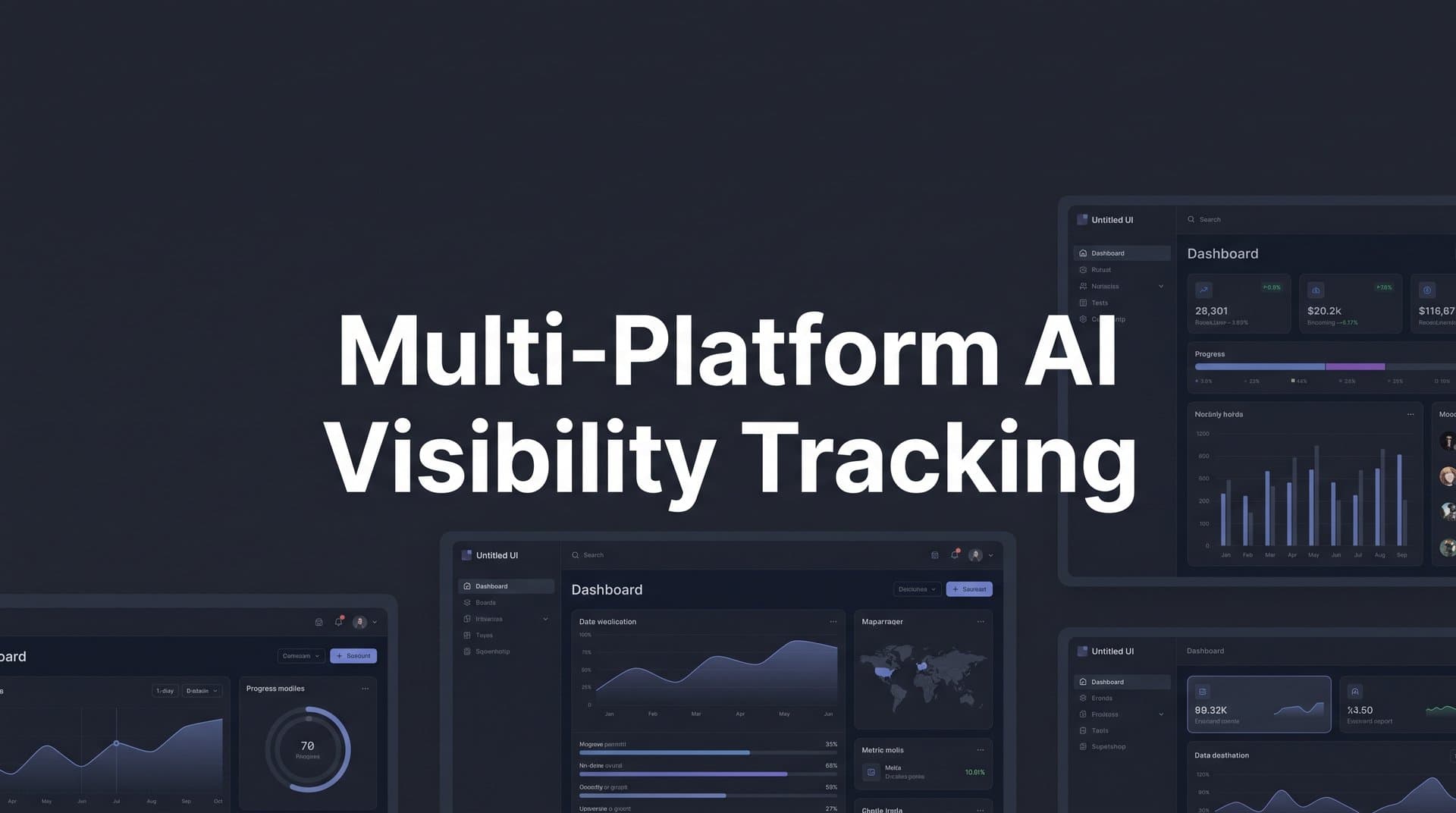
Integration with existing marketing dashboards creates a unified view of your entire digital presence. When your AI visibility score drops at the same time your organic traffic dips, you've identified a correlation worth investigating. When a new content piece boosts your Perplexity mentions, you know that content strategy is working.
Most platforms allow you to customize tracking frequency. For rapidly changing industries, daily tracking makes sense. For more stable markets, every three days might be sufficient. The key is consistency—tracking sporadically creates data gaps that hide important trends. Consider multi-platform AI tracking software that handles this complexity automatically.
Test your configuration by running a full monitoring cycle manually. Check that all six platforms (ChatGPT, Claude, Perplexity, Gemini, Copilot, and any others you're tracking) are being queried correctly. Verify that the data is flowing into your dashboard accurately. Confirm that alerts trigger when they should.
Success indicator: you should be able to log into your dashboard and immediately see your current AI visibility status across all platforms, with historical trend data and active alerts for any significant changes. If you can't answer "How did my AI visibility change this week?" in under 30 seconds, your configuration needs refinement.
Step 4: Establish Your AI Visibility Score Benchmarks
Raw data means nothing without context. Your AI visibility score needs benchmarks that tell you whether you're winning or losing—and by how much.
Think of AI visibility scoring like domain authority in traditional SEO. It's a composite metric that combines multiple factors into a single, trackable number. The components typically include mention frequency, sentiment quality, information accuracy, and prominence in responses. Learn more about AI visibility score tracking to understand these metrics deeply.
Mention frequency: How often do AI platforms reference your brand when prompted with relevant queries? If you appear in 30% of consideration-stage prompts, that's your baseline frequency score.
Sentiment quality: When AI mentions you, is the framing positive, neutral, or negative? A mention that says "Sight AI offers comprehensive tracking" scores higher than "Sight AI is one option among many."
Information accuracy: Are AI platforms describing your features, pricing, and positioning correctly? Outdated or incorrect information lowers your score even if mention frequency is high.
Prominence in responses: First-mention positions carry more weight than appearing buried in a list. Being the only recommended solution scores higher than being one of five options.
Setting realistic targets requires understanding both your industry baseline and competitor performance. If competitors average a 45% mention rate in your category, targeting 60% is ambitious but achievable. Targeting 90% might be unrealistic without significant market share. Use AI visibility benchmark tracking to establish these competitive baselines.
Create tiered benchmarks: minimum acceptable performance, target performance, and aspirational performance. For a new product, minimum might be 15% mention rate, target could be 35%, and aspirational might be 55%. These tiers help you celebrate progress while maintaining ambitious long-term goals.
Establish both weekly and monthly tracking cadences. Weekly reviews catch rapid changes and allow quick responses. Monthly reviews reveal longer-term trends and inform strategic planning. The weekly check answers "What needs immediate attention?" The monthly review answers "Are we moving in the right direction?"
Here's the strategic piece: not all score components deserve equal priority. If you're launching a new feature, prioritize information accuracy—make sure AI platforms know about it. If you're fighting negative perception, prioritize sentiment quality. If you're invisible in your category, prioritize mention frequency above all else.
Document your benchmarks clearly. Create a simple dashboard that shows current score, target score, and the gap between them for each component. This visualization makes it immediately obvious where you're succeeding and where you need to focus optimization efforts.
Step 5: Analyze Sentiment and Context Patterns
Numbers tell you what's happening. Context tells you why it matters and what to do about it.
Start by reviewing how AI models actually describe your brand. Open your tracking data and read the full responses, not just the metrics. You're looking for patterns in language, framing, and positioning that reveal how AI platforms "think" about your company.
Positive framing sounds like: "Sight AI provides comprehensive multi-platform tracking" or "A leading solution for AI visibility monitoring." Neutral framing sounds like: "Sight AI is a tool that tracks AI mentions" or "One option for monitoring brand presence." Negative framing includes qualifiers: "While Sight AI offers tracking, it may not be suitable for..." or "Some users find Sight AI limited in..."
Pay special attention to recurring inaccuracies. If Claude consistently mentions a feature you deprecated six months ago, that outdated information is actively hurting your positioning. If Gemini describes your pricing tier incorrectly, potential customers are getting false information during their research phase.
Context patterns reveal the "when" and "why" of AI mentions. Track which types of queries trigger your brand appearance. Do you show up for "enterprise AI tracking" but disappear for "startup AI monitoring"? That pattern suggests AI models associate you with a specific market segment—which might or might not align with your actual positioning. Implementing brand sentiment tracking software helps automate this analysis.
Look for competitor comparison patterns. When AI platforms mention you alongside competitors, what's the framing? Are you positioned as the premium option, the budget alternative, the feature-rich choice, or the user-friendly solution? This positioning might differ from your intended brand message, revealing a gap between how you market yourself and how AI interprets your market position.
Here's where sentiment analysis in AI differs from social media monitoring: AI responses carry implicit authority. When ChatGPT recommends a tool, users often treat that recommendation as expert advice. A neutral mention in AI can be more damaging than a neutral social media post because it lacks the endorsement weight that drives conversions.
Document actionable insights as you analyze. Create a running list of content gaps, inaccuracies to correct, and positioning opportunities. If AI platforms never mention your integration capabilities, that's a content gap. If they describe an old pricing model, that's an inaccuracy. If they position you narrowly when you serve a broader market, that's a positioning opportunity.
The success indicator: you should be able to articulate exactly how each major AI platform perceives your brand, identify the specific language patterns they use, and pinpoint the information gaps causing visibility problems. If you can't explain why Claude mentions you more favorably than Gemini, dig deeper into the context patterns.
Step 6: Create Your Optimization Action Plan
Data without action is just interesting trivia. Your analysis reveals problems—now you need a systematic plan to fix them.
Start by prioritizing content gaps based on business impact. If AI platforms don't mention you for high-intent queries like "best AI visibility tracking for agencies," that gap directly affects lead generation. Fix it first. If they miss you on broad awareness queries, that's important but less urgent. Review how AI visibility tracking for agencies addresses these specific challenges.
Build a content calendar specifically designed to address AI visibility weaknesses. This isn't traditional SEO content—it's GEO-optimized material that helps AI platforms understand and accurately represent your brand.
Structured data content: Create clear, factual pages that explain your features, pricing, and use cases in language AI models can easily parse. Think FAQ formats, comparison tables, and straightforward feature descriptions without marketing fluff.
Authority-building content: Publish thought leadership that establishes your expertise in AI visibility tracking. AI platforms often reference authoritative sources when generating responses, so becoming a cited authority improves your mention frequency.
Update cycles: Schedule regular content refreshes to keep information current. If you launch a new feature, update your product pages within days—not months. AI models that train on or reference recent content will pick up these changes faster.
Create feedback loops between your tracking data and content creation. When you publish new GEO-optimized content, monitor how it affects your AI visibility scores over the following weeks. If a new comparison guide boosts your Perplexity mentions by 25%, you've validated that content approach. Double down on it. Understanding the differences between AI visibility tracking and traditional SEO helps you craft the right content strategy.
Set up a testing framework for content optimization. Don't just publish and hope—publish, measure, iterate. If updating your pricing page doesn't fix the inaccurate pricing mentions in Claude, try a different format or add more structured data. Keep testing until you see movement in the metrics.
Schedule your optimization work in sprints. Week one: fix critical inaccuracies. Week two: address top-priority content gaps. Week three: improve sentiment through better positioning content. Week four: review results and plan the next sprint. This rhythm creates momentum and prevents optimization from becoming an endless, unfocused project.
The key is connecting every action to a specific metric improvement goal. "Publish more content" is vague. "Publish three comparison guides to increase consideration-stage mention frequency from 30% to 45% within six weeks" is actionable and measurable.
Your Multi-Platform AI Visibility System Is Live
You now have a complete framework for multi-platform AI visibility tracking. Let's recap the implementation checklist you've built.
Your baseline audit revealed exactly where you stand today across all major AI platforms. Your prompt library covers awareness, consideration, and decision-stage queries that matter to your business. Your monitoring tools are configured to track six platforms simultaneously with intelligent alerts for meaningful changes. Your benchmarks establish clear targets for mention frequency, sentiment, accuracy, and prominence. Your sentiment analysis process uncovers the context patterns that explain why AI platforms position you the way they do. Your optimization action plan connects specific content initiatives to measurable visibility improvements.
Start with Step 1 today—even a manual audit across three platforms will reveal surprising insights about your current AI presence. You'll likely discover that you're invisible for queries you assumed you dominated. You'll find competitors mentioned where you expected to appear. You'll uncover inaccuracies that are actively hurting your brand perception.
As AI search continues growing through platforms like Perplexity and ChatGPT's browsing features, brands that track and optimize their AI visibility early will capture significant competitive advantage. The shift from traditional search to AI-powered discovery is already underway. Users increasingly trust AI recommendations as authoritative guidance, making your presence in these responses critical to future growth.
Review your tracking dashboard weekly. Look for sudden drops in mention frequency or sentiment shifts that signal problems. Celebrate wins when your optimization work moves the needle. Adjust your content strategy based on what the data reveals about AI platform behavior.
Watch your AI visibility scores climb as you systematically address gaps and inaccuracies. Each improvement compounds—better mentions lead to more frequent recommendations, which reinforce AI models' understanding of your market position, which drives even stronger visibility in future responses.
Stop guessing how AI models like ChatGPT and Claude talk about your brand—get visibility into every mention, track content opportunities, and automate your path to organic traffic growth. Start tracking your AI visibility today and see exactly where your brand appears across top AI platforms.