Getting your content indexed quickly is the difference between ranking and being invisible. Publish a piece of content and wait days for Google to discover it, and you've already lost ground to competitors who are moving faster. But the challenge isn't just speed anymore. In 2026, discoverability means two things: getting crawled by search engines and getting cited by AI models like ChatGPT, Claude, and Perplexity.
With subscription costs and feature sets varying widely across indexing and discoverability tools, knowing what you're actually paying for matters. This guide breaks down the best options available, comparing what each platform offers, who it's built for, and what it costs. Whether you're a solo founder pushing new blog posts, a marketer managing dozens of URLs, or an agency juggling multiple client sites, there's a right tool for your workflow.
We evaluated each option on indexing speed, automation capabilities, integration options, and overall value for money. Here are the top tools worth your attention in 2026.
1. Sight AI
Best for: Teams wanting indexing automation, AI content generation, and AI visibility tracking in one platform.
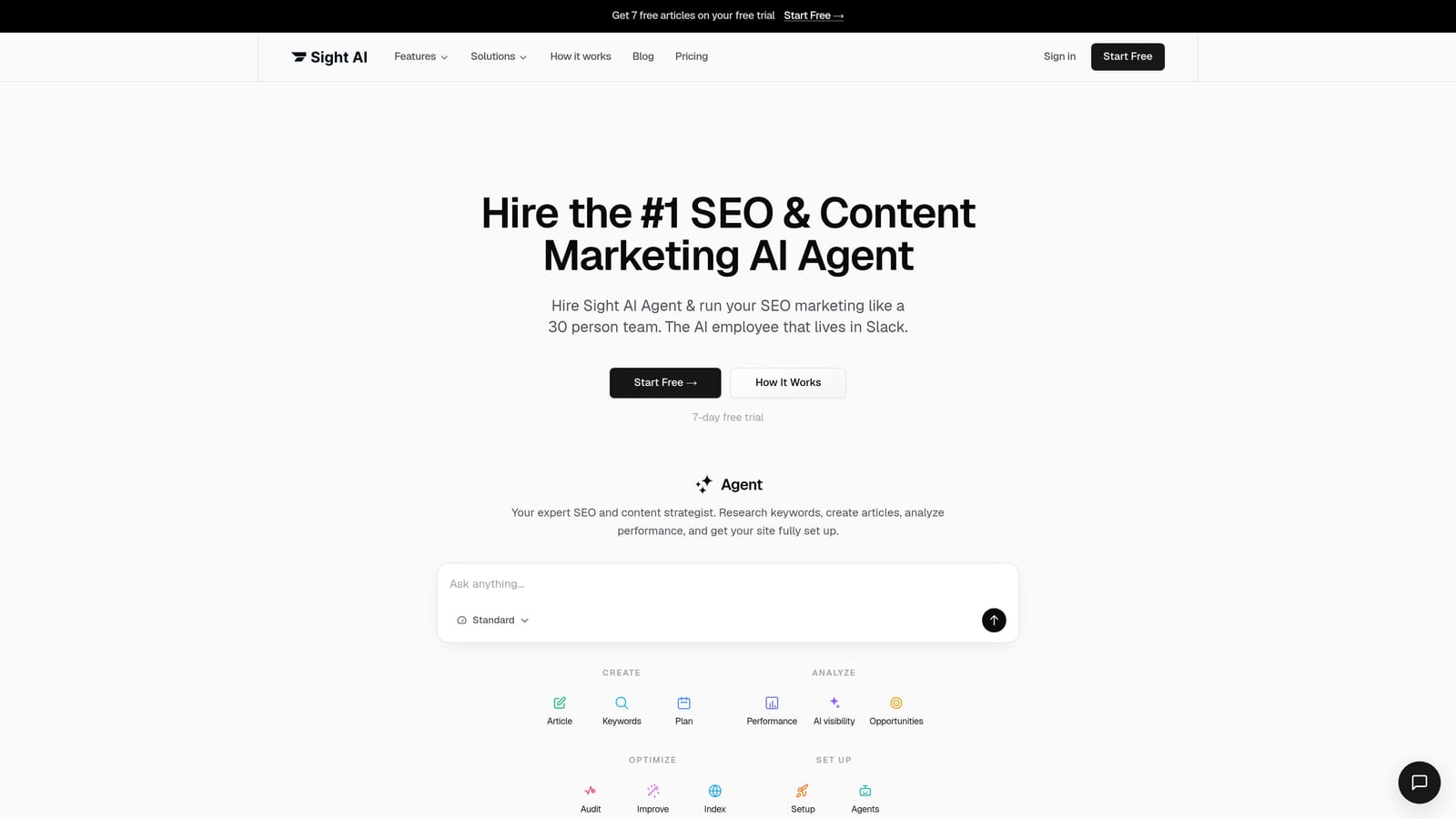
Sight AI is an all-in-one organic growth platform combining website indexing automation, AI-powered content creation, and brand visibility tracking across major AI models.
Where This Tool Shines
Most indexing tools do one thing: push URLs to search engines faster. Sight AI takes a broader view. It handles the indexing layer through IndexNow integration and automated sitemap updates, but it also addresses the growing challenge of AI discoverability. If your brand isn't appearing when someone asks ChatGPT or Perplexity a question in your category, that's a visibility gap that traditional indexing tools simply can't solve.
The Autopilot Mode is particularly compelling for high-frequency publishers. Content can be generated by specialized AI agents, published through CMS integrations, and submitted for indexing in a streamlined workflow without manual intervention at each step. For teams trying to scale content output without scaling headcount, this kind of end-to-end automation is genuinely useful.
Key Features
IndexNow Integration: Submits URLs to supporting search engines near-instantly when content is published or updated, reducing the lag between publishing and crawling.
Automated Sitemap Updates: Sitemap refreshes are triggered automatically on content publish, keeping your site map current without manual maintenance.
AI Visibility Score: Tracks how your brand is mentioned across ChatGPT, Claude, Perplexity, and 6+ AI platforms, with sentiment analysis and prompt-level tracking.
13+ Specialized AI Agents: Generates SEO and GEO-optimized content formats including listicles, guides, and explainers, each agent tuned for a specific content type.
CMS Auto-Publishing with Autopilot Mode: Connects content generation to publishing and indexing in a hands-off workflow, reducing the manual steps between creation and discoverability.
Best For
Marketers, founders, and agencies who want more than a URL submission tool. If you're thinking about indexing as part of a broader organic growth strategy that includes AI search visibility, Sight AI is built for exactly that use case. It's particularly well-suited to teams producing consistent content volume who need both speed and strategic insight.
Pricing
Subscription plans are available at varying tiers. Check trysight.ai for current pricing details, as plans and features are updated regularly.
2. Writesonic
Best for: Content-first teams producing high volume who need SEO-oriented writing and publishing support.
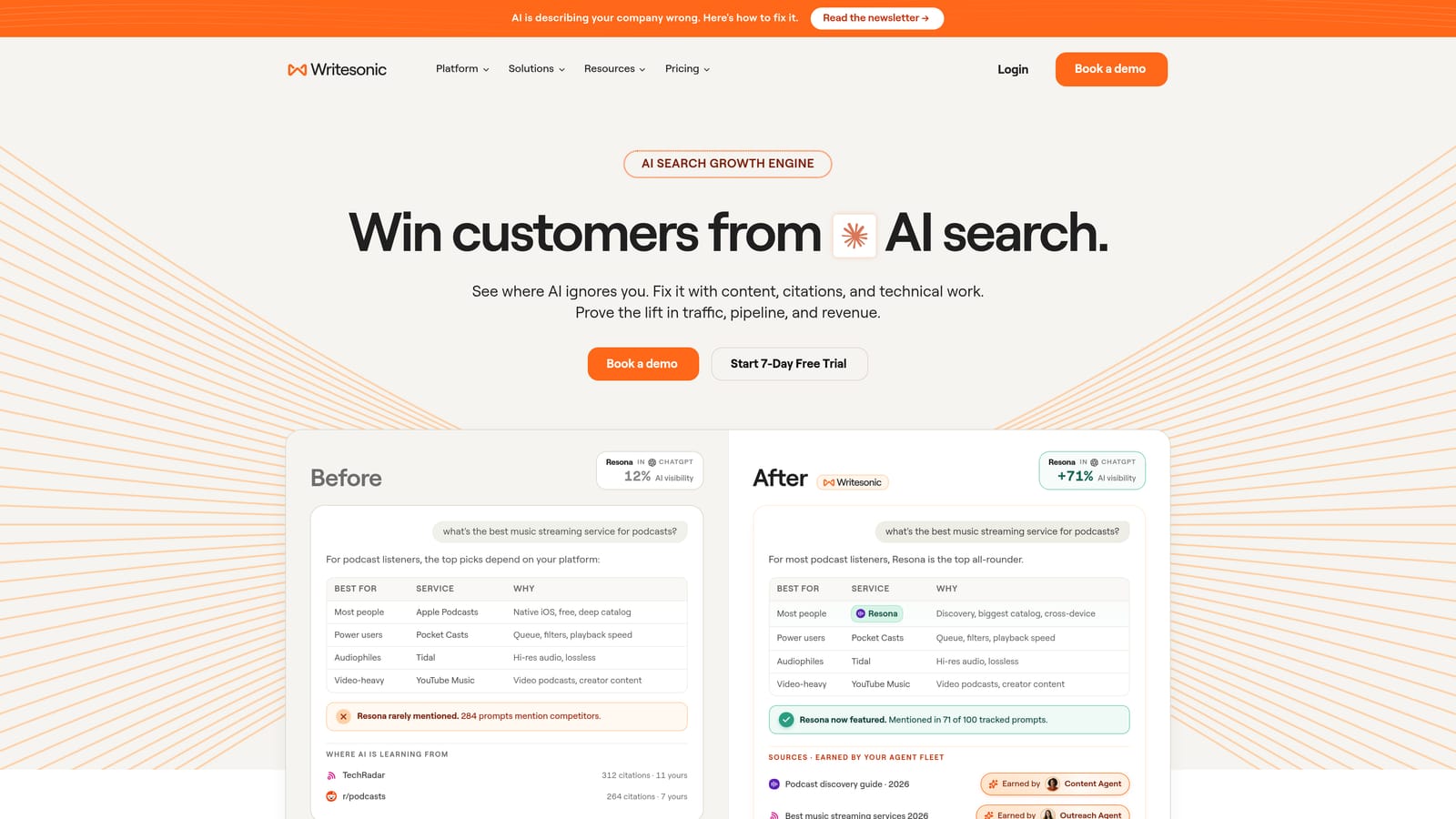
Writesonic is an AI-powered content creation platform with SEO-oriented features designed to help teams produce and publish discoverable content at scale.
Where This Tool Shines
Writesonic earns its place in this list not as a dedicated indexing tool, but as a platform that addresses the upstream challenge: creating content that's worth indexing in the first place. For teams generating high volumes of blog posts, landing pages, and marketing copy, having SEO guidance baked into the writing process reduces the gap between content creation and search performance.
The brand voice customization is a practical feature for agencies managing multiple clients. Rather than starting from scratch on tone and style for each account, writers can configure voice settings that carry through across content types. Multi-language support also broadens its utility for teams operating across markets.
Key Features
AI Writing Tools: Covers blog posts, landing pages, ad copy, and marketing content with AI assistance throughout the drafting process.
SEO Mode: Provides keyword optimization guidance during writing, helping teams create content aligned with search intent from the start.
Content Publishing Integrations: Connects to CMS platforms to streamline the path from draft to published page.
Brand Voice Customization: Configurable tone and style settings that persist across content types and campaigns.
Multi-Language Support: Generates content in multiple languages, useful for international SEO strategies.
Best For
Marketing teams and agencies focused on content volume who want SEO guidance integrated into the writing workflow. Writesonic is a strong fit if your primary bottleneck is content production rather than technical indexing. Teams who also need actual URL submission and AI visibility tracking will want to pair it with a dedicated tool or consider a more integrated platform.
Pricing
Writesonic offers tiered subscription plans. Visit writesonic.com for current pricing, as plans are updated frequently.
3. AirOps
Best for: Marketing and revenue operations teams building no-code content and publishing pipelines.
AirOps is a workflow automation platform that lets teams build no-code pipelines connecting content creation, enrichment, and publishing across their existing tools.
Where This Tool Shines
AirOps isn't a traditional indexing tool, but it's a powerful option for operations-minded teams who want to build custom workflows that touch indexing-adjacent steps. Think of it as the connective tissue between your content tools: you can build pipelines that take content from generation to transformation to publishing, reducing the manual handoffs that slow down discoverability.
For teams with more complex content operations, the no-code builder is a genuine differentiator. You don't need engineering resources to create sophisticated automation sequences. If your workflow involves multiple platforms and content types, AirOps can help you standardize and accelerate the process from creation to live page.
Key Features
No-Code Workflow Builder: Visual pipeline builder for connecting content and data operations without writing code.
AI-Powered Content Enrichment: Transforms and enhances content through AI processing steps within the pipeline.
CMS and Publishing Integrations: Connects to content management systems and publishing tools to automate the path from draft to live.
Scalable Automation: Handles high-volume content operations without proportional increases in manual effort.
Team Collaboration: Shared workflow management for teams coordinating across content, SEO, and operations functions.
Best For
Revenue operations and marketing ops teams who need custom automation between their existing tools. AirOps is best for organizations that have already defined their content workflow and want to automate it, rather than teams looking for an out-of-the-box indexing solution. It rewards teams with clear processes and a willingness to configure pipelines.
Pricing
AirOps offers tiered subscription plans. Visit airops.com for current pricing and plan details.
4. Profound
Best for: Enterprise teams tracking brand visibility in AI-generated answers and identifying content gaps at scale.
Profound is an AI search visibility platform that tracks how brands appear in AI-generated responses, helping enterprise teams understand which content to prioritize for both indexing and AI citation.
Where This Tool Shines
Profound addresses a question that traditional indexing tools don't ask: once your content is indexed, is it actually being cited by AI models? That distinction matters more in 2026 than it did even a year ago. As AI search becomes a primary discovery channel for many categories, knowing whether your brand appears in ChatGPT or Perplexity responses for relevant queries is strategic intelligence, not just a vanity metric.
The competitive visibility benchmarking is particularly valuable for enterprise teams. Understanding not just where you appear, but where competitors appear and you don't, creates a clear content and indexing roadmap. Profound turns that competitive gap into actionable priorities.
Key Features
AI Answer Tracking: Monitors brand appearances across major LLM platforms in response to relevant queries.
Brand Mention Monitoring: Tracks how and how often your brand is referenced in AI-generated responses.
Competitive Visibility Benchmarking: Compares your AI visibility against competitors to surface gaps and opportunities.
Content Gap Identification: Highlights queries where competitors are cited and you're absent, informing content creation priorities.
Enterprise Reporting and Analytics: Structured reporting suited to enterprise stakeholder communication and strategic planning.
Best For
Enterprise marketing and SEO teams with budget for dedicated AI visibility intelligence. Profound is well-suited to organizations where understanding AI search presence is a strategic priority and where competitive benchmarking justifies the investment. Smaller teams or those earlier in their AI visibility journey may find lighter-weight alternatives more appropriate.
Pricing
Profound uses enterprise pricing. Visit profound.com for current plan details and to request a demo.
5. Peec
Best for: Smaller teams wanting accessible AI brand mention tracking without enterprise complexity.
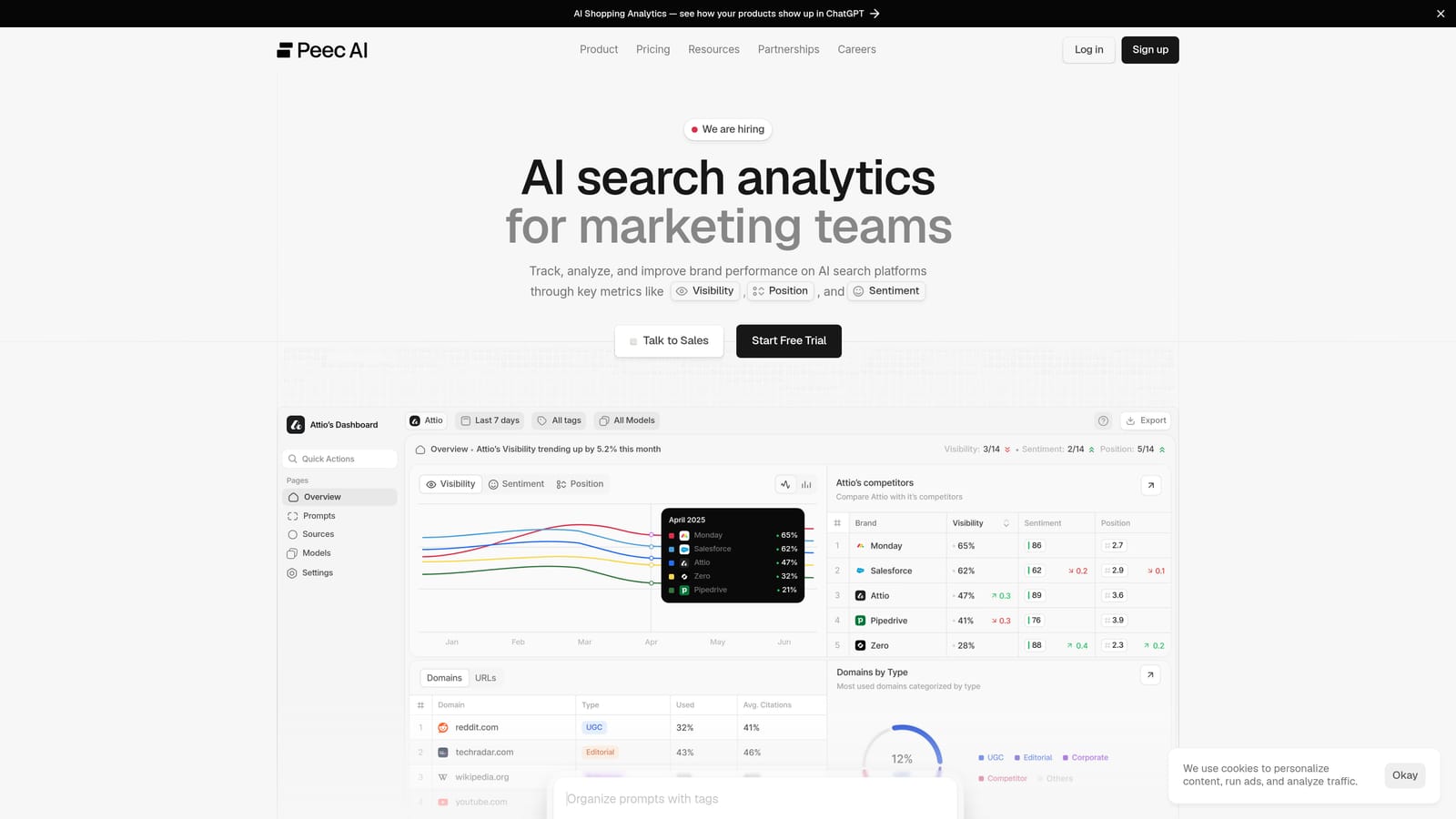
Peec is a lightweight AI visibility monitoring tool that tracks brand mentions across AI platforms, giving smaller teams clear insight into where they appear in AI-generated responses.
Where This Tool Shines
Peec occupies a practical middle ground in the AI visibility space. Where enterprise platforms can feel overwhelming for smaller teams, Peec focuses on delivering clear, actionable data without the complexity. If you're a startup, a small agency, or a solo marketer trying to understand your AI search presence, Peec gives you that visibility without requiring a dedicated analyst to interpret the output.
The competitor mention comparison feature is worth highlighting. Seeing where competitors are being cited by AI models, and you're not, quickly surfaces the content and indexing priorities that matter most. It's a direct line from monitoring data to content strategy.
Key Features
Brand Mention Tracking: Monitors where and how your brand appears in AI platform responses across major models.
Accessible Dashboard: Designed for non-enterprise teams who need clear data without complex configuration.
Competitor Mention Comparison: Shows how your AI visibility compares to named competitors across the same queries.
AI Visibility Trend Monitoring: Tracks changes in brand mention frequency over time, surfacing momentum or decline.
Content Prioritization Insights: Translates visibility data into recommendations for which content to create or update next.
Best For
Startups, small marketing teams, and independent consultants who want AI visibility data without enterprise pricing or complexity. Peec is a strong starting point for teams new to AI search monitoring who need to understand their current presence before building a more sophisticated strategy.
Pricing
Peec offers subscription plans suited to smaller teams. Visit peec.ai for current pricing and plan options.
6. Promptwatch
Best for: SEO specialists tracking prompt-level AI brand appearances to inform content and indexing strategy.
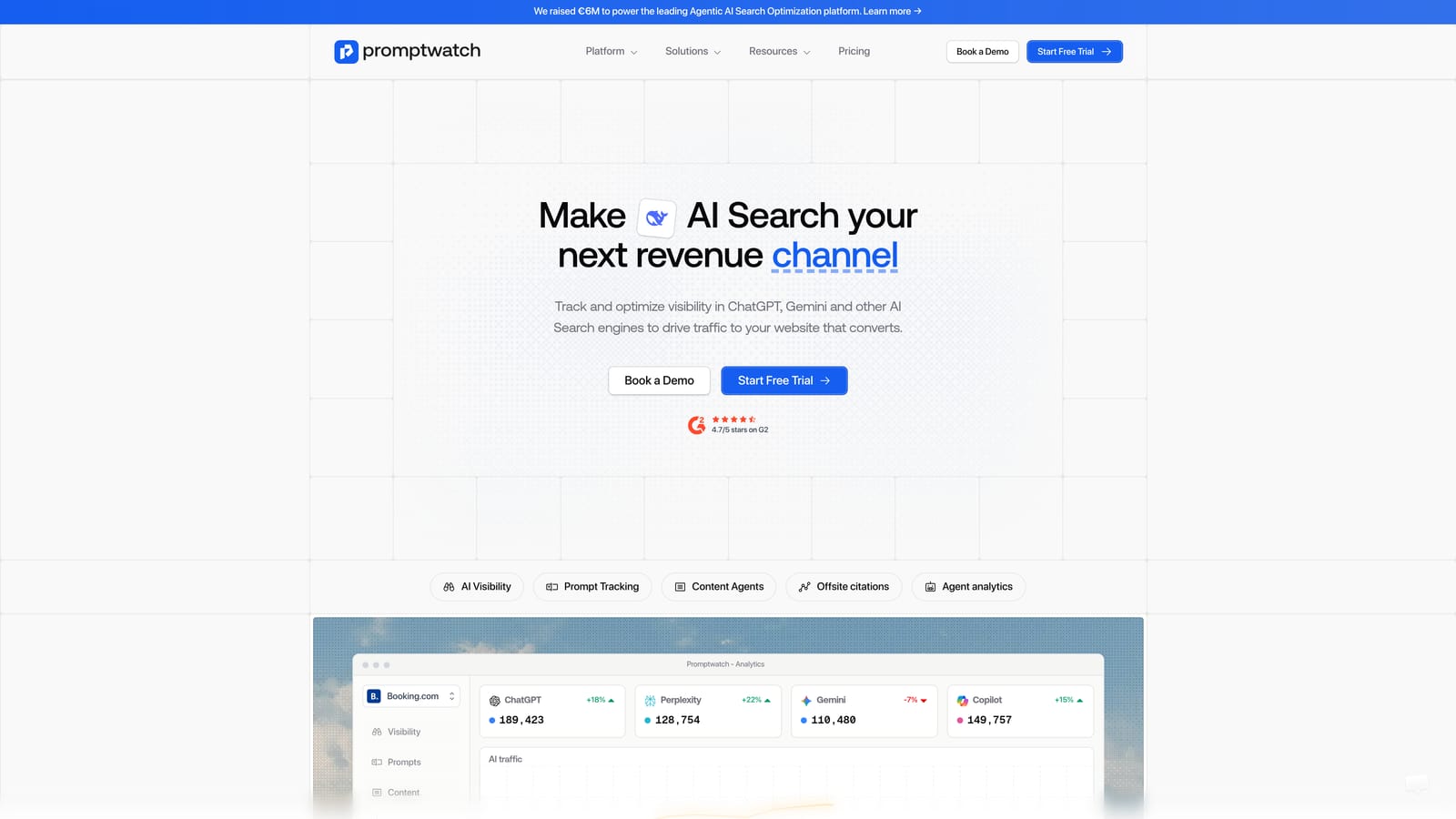
Promptwatch is a prompt-level AI monitoring tool that tracks specific queries to identify where a brand is appearing, or conspicuously absent, in AI-generated responses.
Where This Tool Shines
Promptwatch takes a more granular approach to AI visibility than most tools in this category. Rather than tracking broad brand mentions, it focuses on specific prompts and query types, giving you a precise map of which questions trigger your brand to appear and which ones don't. For SEO specialists building AI-era content strategies, that level of detail is genuinely useful.
The connection to content and indexing priorities is direct. If you can see that your brand doesn't appear when someone asks a specific question in your category, you have a clear brief for the content that needs to be created, optimized, and indexed. Promptwatch turns AI monitoring data into a content roadmap rather than just a report.
Key Features
Prompt-Specific Tracking: Monitors brand appearances at the individual query level across multiple AI models.
Brand Appearance by Query Type: Segments visibility data by query category to surface patterns in where you appear and where you don't.
Content Gap Identification: Highlights specific prompts where competitors appear and your brand is absent.
AI Citation Frequency Reporting: Tracks how often your brand is cited in response to tracked prompts over time.
SEO and GEO Planning Insights: Translates prompt-level data into strategic guidance for both traditional SEO and generative engine optimization.
Best For
SEO specialists, content strategists, and growth-focused marketers who want granular data on AI search presence. Promptwatch is best for teams who are already thinking about generative engine optimization and want prompt-level intelligence to guide their content creation and indexing priorities.
Pricing
Visit promptwatch.io for current subscription pricing and plan details.
Which Tool Is Right for Your Workflow?
The tools in this list reflect how discoverability has evolved. Pure URL submission is table stakes. The teams gaining ground in 2026 are thinking about indexing as one layer of a broader strategy that includes AI citation, content automation, and ongoing visibility monitoring.
Here's a quick guide by use case:
For all-in-one indexing plus AI visibility: Sight AI is the only tool on this list that covers automated indexing, AI content generation, and AI visibility tracking in a single platform. If you want to stop managing three separate tools and start treating discoverability as an integrated workflow, it's the strongest option here.
For content-first teams scaling output: Writesonic is a practical choice if your primary bottleneck is content production and you want SEO guidance built into the writing process.
For operations teams building custom pipelines: AirOps is worth evaluating if you have defined workflows and want to automate the handoffs between content creation, publishing, and indexing.
For enterprise AI visibility intelligence: Profound offers the depth of competitive benchmarking and reporting that enterprise teams need to make AI search a strategic priority.
For smaller teams monitoring AI mentions: Peec and Promptwatch both offer accessible entry points into AI visibility tracking, with Peec focusing on brand-level monitoring and Promptwatch going deeper on prompt-specific intelligence.
If you're ready to see exactly how AI models are talking about your brand, and use that data to drive faster indexing and smarter content decisions, Start tracking your AI visibility today with Sight AI and get visibility into every mention across the platforms that matter.