AI has fundamentally changed how marketers plan, create, and distribute content. From generating SEO-optimized articles to tracking how your brand appears in AI-generated answers, the right automation stack can compress weeks of work into hours.
But not every tool is built for the same job. Some focus on content creation, others on AI visibility monitoring, and others on workflow automation. The challenge is knowing which tools actually move the needle for your specific situation.
This guide covers the best content marketing AI automation tools available in 2026, selected for their ability to drive measurable organic growth, reduce manual effort, and help brands stay visible across both traditional search engines and AI platforms like ChatGPT, Claude, and Perplexity. Whether you're a solo founder, in-house marketer, or agency managing multiple clients, here's a clear breakdown of what each tool does best.
1. Sight AI
Best for: All-in-one AI content creation, AI visibility tracking, and automated indexing
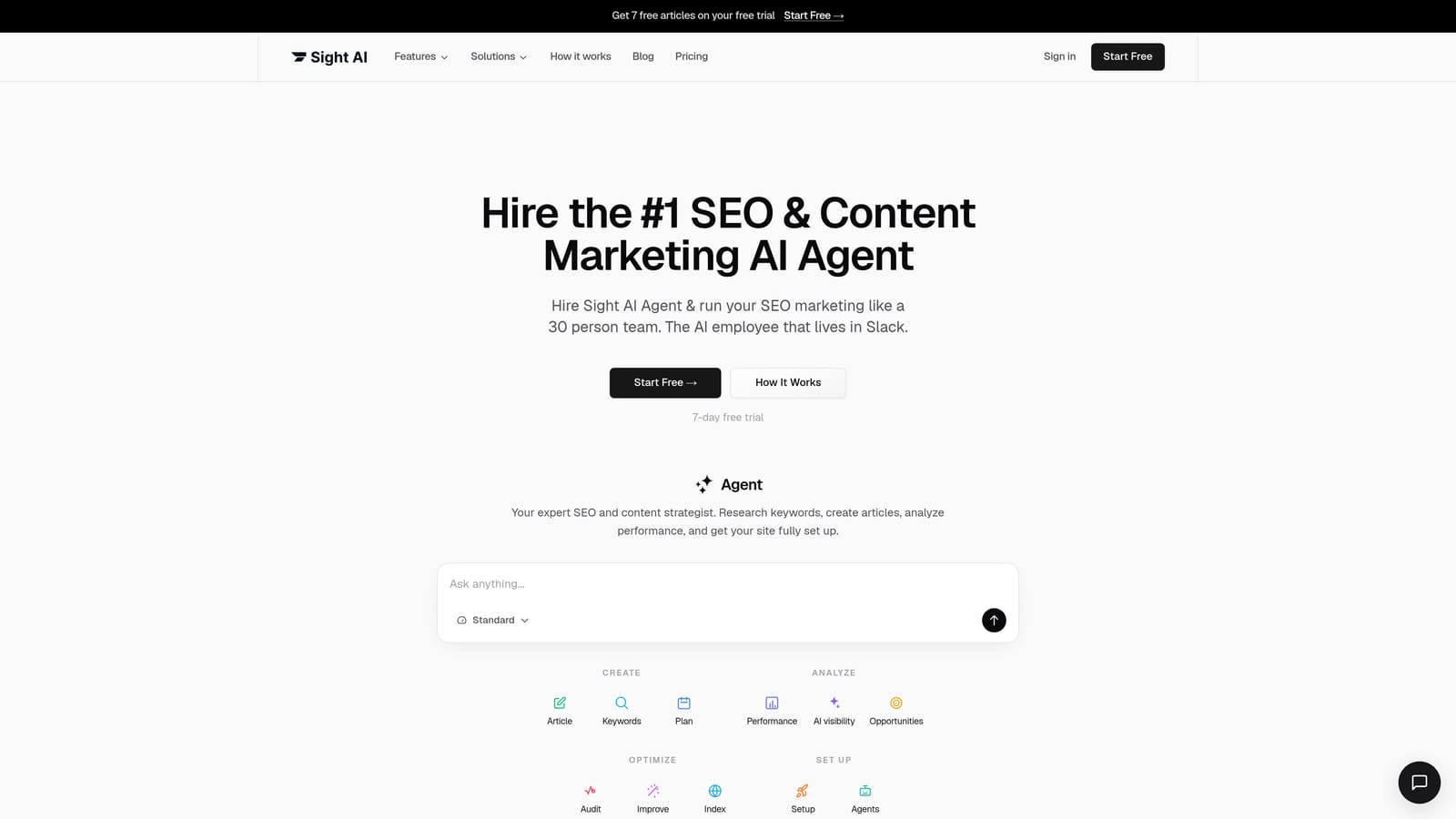
Sight AI is an all-in-one AI content marketing platform that connects content generation directly to AI visibility measurement, covering the full lifecycle from article creation to brand mention tracking across major AI platforms.
Where This Tool Shines
Most tools in this space handle either content creation or AI visibility monitoring. Sight AI is one of the few platforms that does both within a single workflow. You can generate a GEO-optimized article, publish it through CMS auto-publishing, get it indexed fast via IndexNow integration, and then track whether that content improves your brand's presence in AI-generated answers.
The AI Visibility Score is particularly useful for teams navigating the shift toward Generative Engine Optimization (GEO). Instead of guessing whether your content strategy is working, you get concrete data on how AI models like ChatGPT, Claude, and Perplexity are framing your brand across specific prompts and topics.
Key Features
AI Visibility Score: Tracks brand mentions and sentiment across ChatGPT, Claude, Perplexity, and 3+ other AI platforms to show exactly where your brand appears in AI-generated responses.
13+ Specialized AI Agents: Purpose-built agents for generating listicles, guides, explainers, and other SEO/GEO-optimized formats, each tuned for different content types and search intents.
Autopilot Mode: Automates end-to-end content workflows so your team can scale production without manually managing each step of the pipeline.
Website Indexing with IndexNow: Integrates with IndexNow and automates sitemap updates to accelerate content discovery by search engines after publication.
CMS Auto-Publishing: Pushes finished content directly to your CMS, removing the manual handoff between content generation and site publication.
Best For
Sight AI is best suited for marketers, founders, and agencies who want a unified platform rather than a patchwork of separate tools. It's especially valuable for teams investing in GEO content strategies who need to both produce optimized content and measure its impact on AI search visibility simultaneously.
Pricing
Paid plans are available. Visit trysight.ai directly for current pricing tiers, as plans are updated regularly to reflect new features.
2. Writesonic
Best for: High-volume AI content generation across blogs, ads, and marketing copy
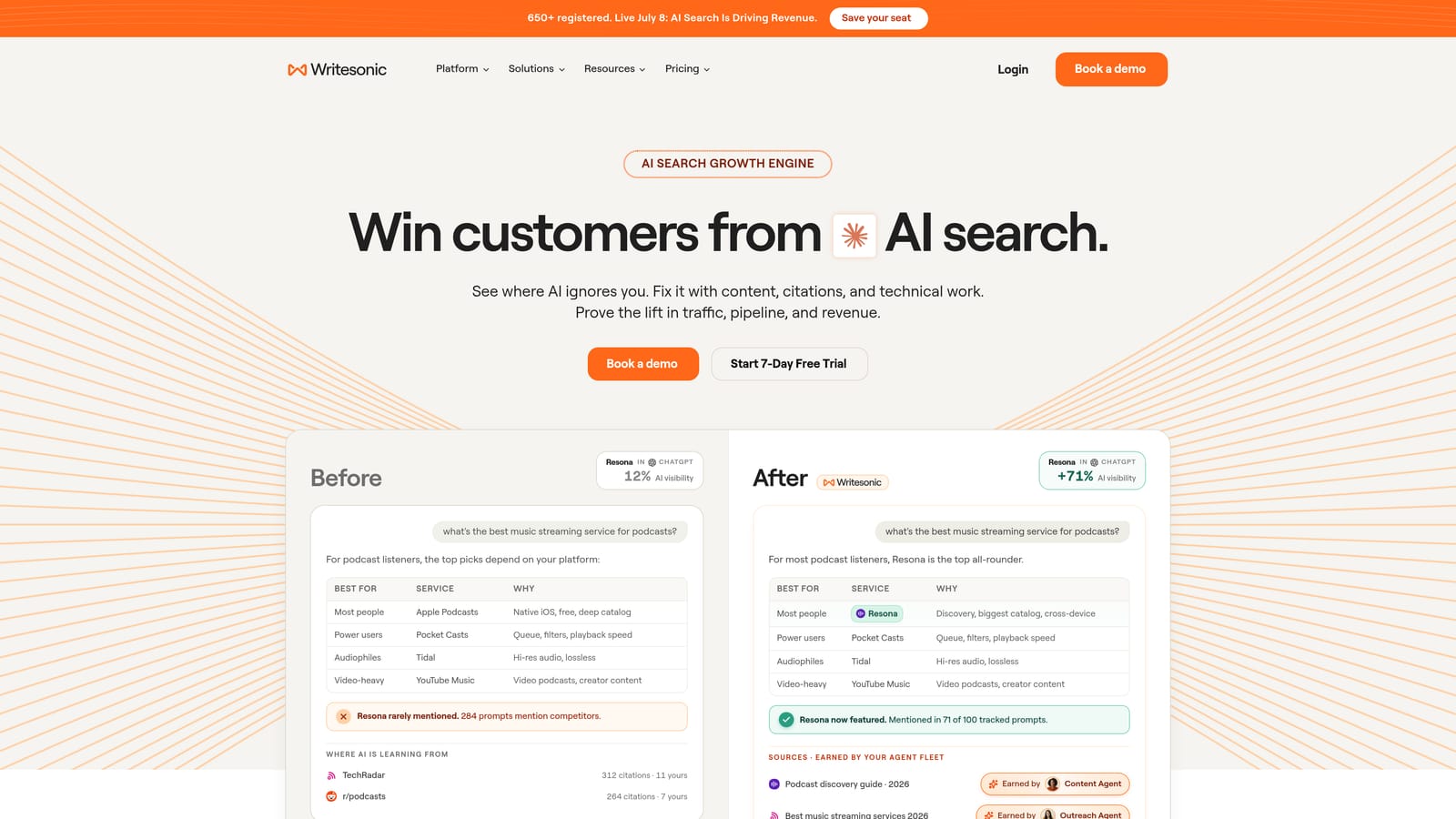
Writesonic is a widely-used AI writing platform offering long-form content generation, real-time web-connected writing via Chatsonic, and a broad library of templates for blogs, ads, and marketing copy.
Where This Tool Shines
Writesonic has built a strong reputation for accessible, fast content generation at scale. Its template library covers a wide range of marketing formats, making it practical for teams that need to produce content across multiple channels without context-switching between different tools.
Chatsonic, its real-time web-connected writing assistant, is particularly useful when your content needs to reference current events, recent data, or timely topics. This sets it apart from AI writers that rely solely on training data with a knowledge cutoff.
Key Features
Long-Form Article Generation: Produces full blog posts and articles with SEO mode enabled, helping writers structure content around target keywords more efficiently.
Chatsonic: Integrates real-time web data into the writing process, allowing for factually grounded content on current topics without manual research.
Template Library: Covers ads, landing pages, email sequences, social posts, and more, giving marketing teams a single tool for multi-channel content needs.
Brand Voice Customization: Lets teams define and maintain a consistent tone across all content types generated within the platform.
Botsonic: Enables teams to build AI-powered chatbots for customer-facing applications, extending the platform's utility beyond content creation alone.
Best For
Writesonic works well for content teams and solo marketers who need to produce high volumes of written content quickly across multiple formats. It's a strong fit if your primary bottleneck is content production volume rather than AI visibility tracking or workflow automation.
Pricing
A free plan is available. Paid plans start at approximately $16 per month, though pricing tiers change frequently. Verify current options on the Writesonic website before committing.
3. AirOps
Best for: Building custom, repeatable AI content workflows connected to business data
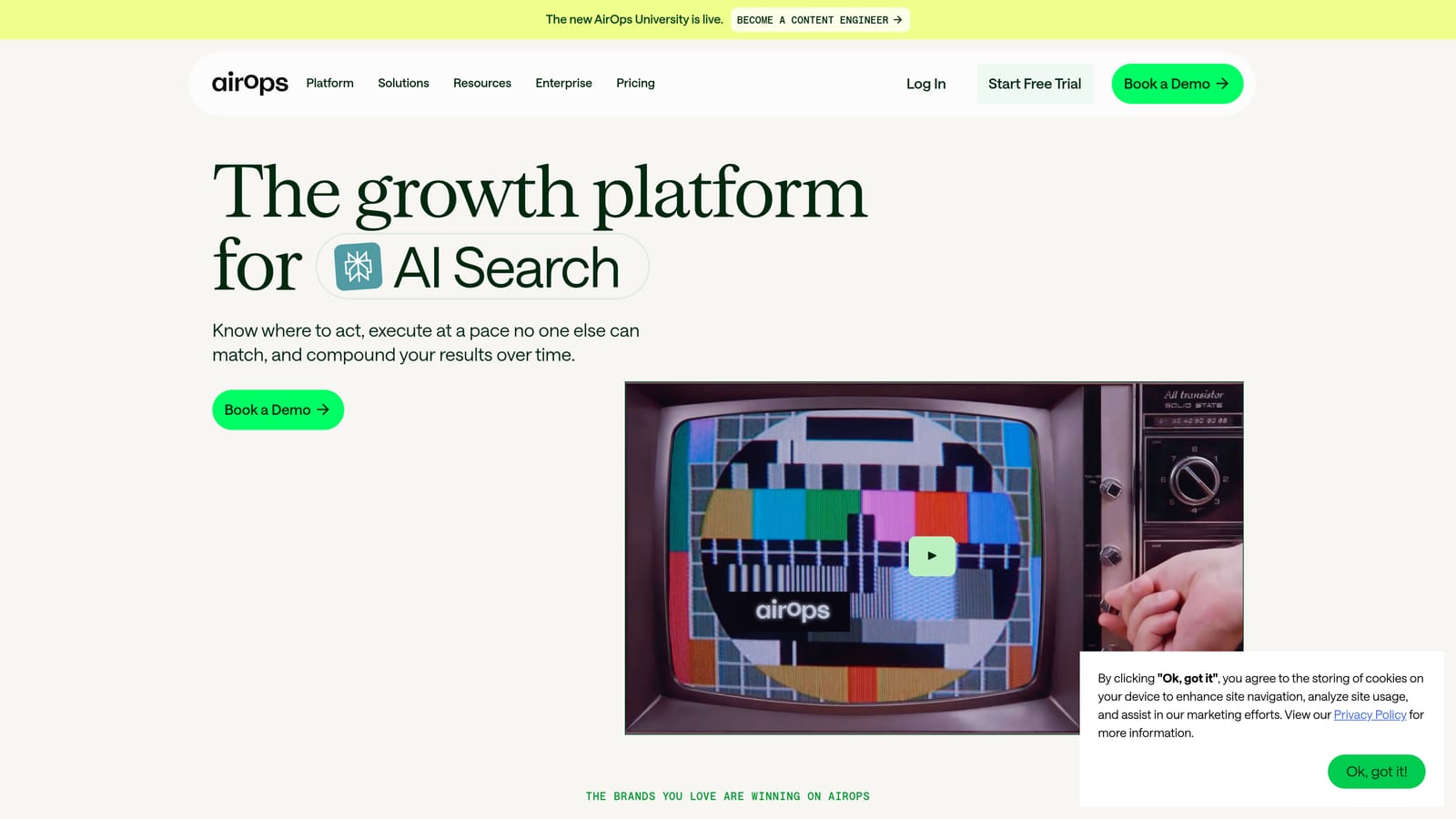
AirOps is a no-code AI workflow builder that connects large language models to business data sources, APIs, and CMS platforms, enabling teams to build multi-step content automation pipelines without writing code.
Where This Tool Shines
Where most AI writing tools give you a fixed interface for generating content, AirOps gives you the building blocks to design your own workflows. Think of it like a content automation layer that sits between your data and your publishing destination. You can chain AI steps together, pull in product data, run content through multiple models, and push the output wherever it needs to go.
This flexibility makes AirOps particularly powerful for teams with structured data needs, such as e-commerce businesses generating product descriptions at scale or agencies running content enrichment workflows across client accounts.
Key Features
No-Code Workflow Builder: Lets non-technical marketers chain AI steps together with business data sources and outputs without requiring engineering support.
Multi-LLM Support: Allows teams to incorporate GPT-4, Claude, and other models within a single workflow, choosing the right model for each step.
CMS and Data Integrations: Connects to popular CMS platforms and data sources so content workflows can pull from and push to the systems teams already use.
Workflow Templates: Pre-built templates for common content operations including brief generation, content enrichment, and bulk production speed up initial setup.
Team Collaboration Features: Shared workflow management makes it practical for teams where multiple people need to access, edit, or run the same automation pipelines.
Best For
AirOps is best for marketing operations teams, agencies, and technical marketers who need custom content pipelines that go beyond what off-the-shelf AI writers offer. It's particularly effective when content generation needs to pull from structured business data rather than starting from scratch.
Pricing
A free tier is available. Paid plans scale with usage volume. Check the AirOps website for current plan details, as pricing reflects the platform's enterprise and team-focused positioning.
4. Profound
Best for: Enterprise-level AI answer engine monitoring and competitive brand intelligence
Profound is an enterprise-focused AI answer engine monitoring platform that tracks how brands appear in AI-generated responses and provides competitive intelligence on AI search visibility across major platforms.

Where This Tool Shines
Profound is purpose-built for brand teams and strategists who need to understand their position in the AI search landscape at a competitive level. Rather than focusing on content creation, it focuses on the intelligence side: which brands are AI models recommending, for which queries, and how does your share of voice compare to competitors?
For organizations where brand perception in AI-generated answers has become a strategic priority, Profound's reporting dashboards give stakeholders a clear picture of where they stand and where opportunities exist to improve AI visibility.
Key Features
Brand Mention Monitoring: Tracks how and when your brand appears across major AI answer engines in response to relevant queries.
Competitive Intelligence: Shows which competing brands AI models are recommending for specific queries, giving context to your own visibility performance.
Share-of-Voice Analytics: Quantifies how frequently your brand appears in AI-generated responses relative to competitors in your category.
Query and Topic Tracking: Identifies which prompts and topics are driving AI visibility for brands in your space, surfacing content opportunities.
Reporting Dashboards: Provides structured reporting for brand teams and agencies to communicate AI visibility performance to stakeholders.
Best For
Profound is designed for enterprise and mid-market organizations with dedicated brand strategy or SEO teams who need deep competitive intelligence on AI search performance. It's a strong fit for teams where understanding the AI visibility landscape is a core strategic function.
Pricing
Profound operates on enterprise pricing. Contact their team directly through the Profound website for current plan details and to discuss your specific monitoring needs.
5. Peec
Best for: SEO professionals and agencies tracking prompt-level brand visibility in AI search
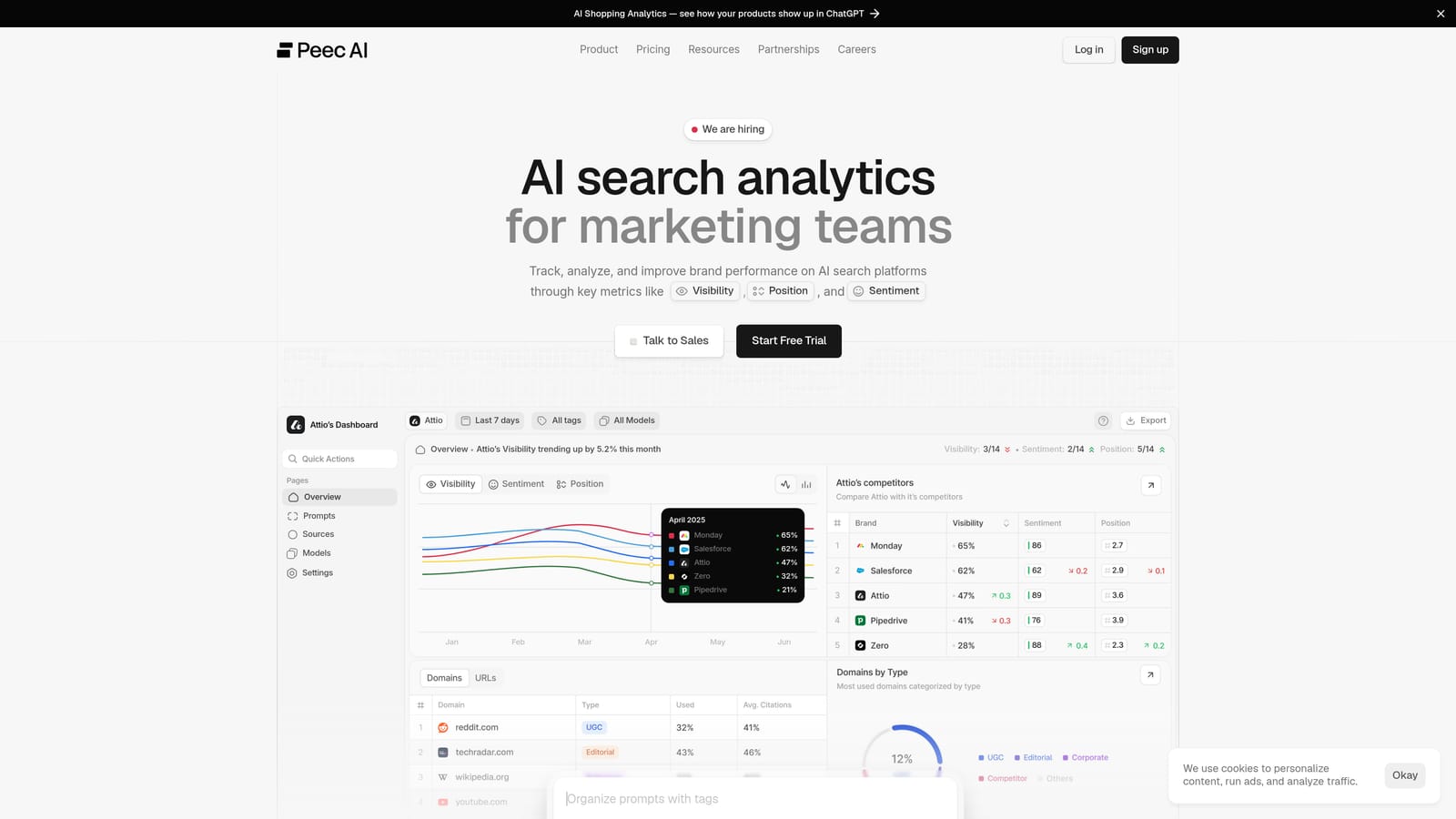
Peec is an AI search visibility tool designed for SEO professionals and agencies, offering prompt-level tracking to monitor where and how brands appear in AI-generated answers across platforms.
Where This Tool Shines
Peec goes deeper than simple brand mention counting. Its prompt-level tracking shows you exactly which queries trigger your brand to appear in AI responses and, critically, which queries are missing your brand entirely. That granularity is valuable for SEO professionals who want to understand the specific content and topic gaps affecting their AI search presence.
The agency-friendly reporting features make it practical for teams managing multiple clients, allowing them to deliver clear AI visibility performance data without building custom reporting from scratch.
Key Features
Prompt-Level Tracking: Shows which specific queries trigger brand mentions in AI-generated responses, enabling targeted content strategy decisions.
Brand Sentiment Analysis: Analyzes how AI models frame your brand within their responses, not just whether you appear.
Competitor Mention Monitoring: Tracks competitor brand appearances across AI platforms so you can benchmark your visibility performance.
Agency Reporting: Multi-client reporting features designed for agencies managing AI visibility across several accounts simultaneously.
Keyword and Topic Discovery: Surfaces GEO content opportunities by identifying topics where your brand has low or no AI search presence.
Best For
Peec is well-suited for SEO professionals, content strategists, and digital agencies who need actionable, prompt-level data on AI search visibility. It works best as a monitoring and intelligence layer that informs the content strategy decisions your team executes elsewhere.
Pricing
Paid plans are available. Visit the Peec website to verify current pricing tiers, as plans evolve alongside the platform's feature set.
6. Promptwatch
Best for: Granular analysis of how AI models frame and respond to brand-related prompts
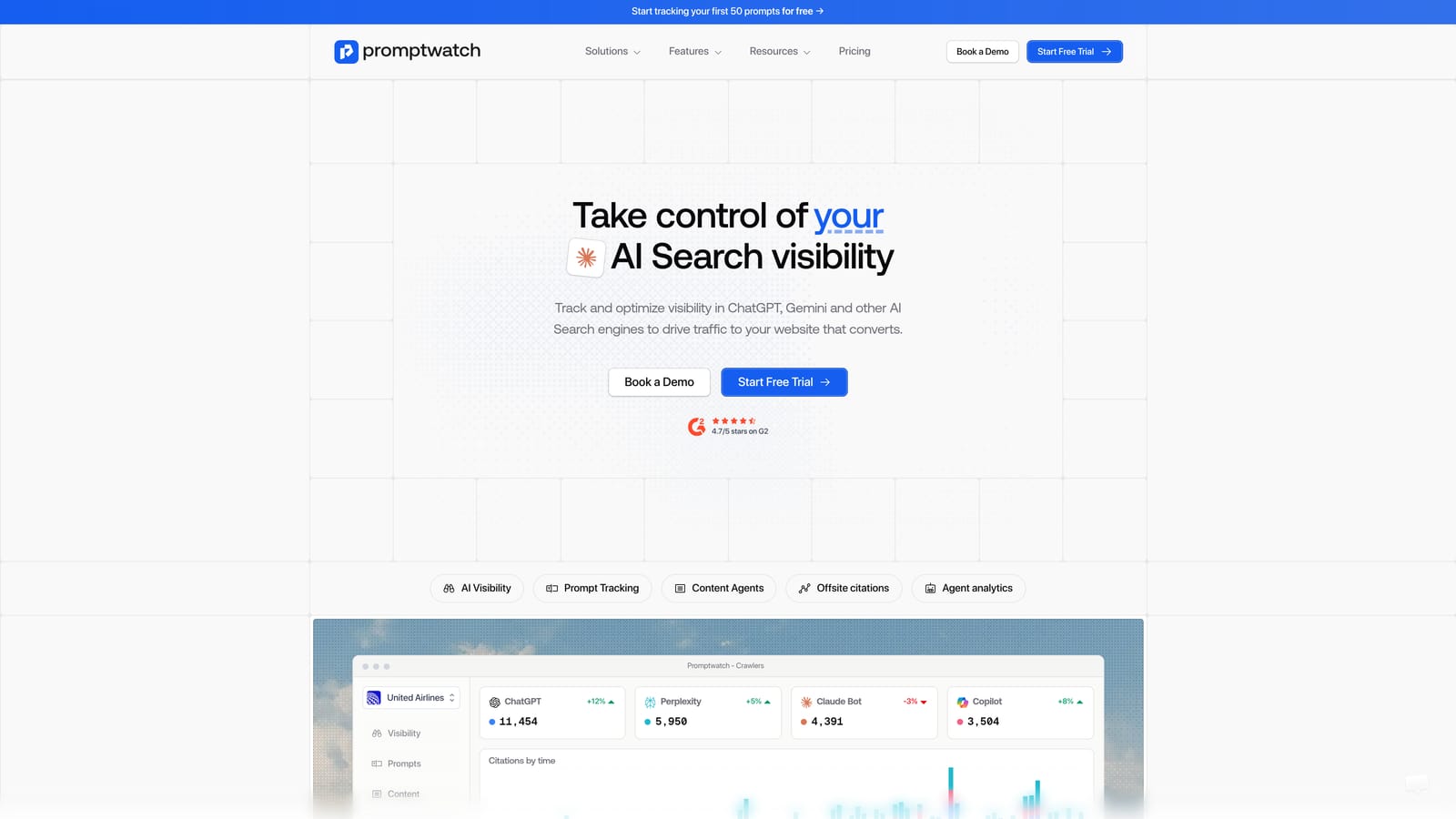
Promptwatch is a brand monitoring tool focused on analyzing how AI models frame and respond to prompts related to your brand, providing detailed insight into AI response patterns and brand sentiment across platforms.
Where This Tool Shines
Promptwatch takes a prompt-centric lens to AI brand monitoring. Rather than reporting only on whether your brand appears in AI responses, it examines how your brand is being described, what context surrounds those mentions, and how response patterns shift over time. This makes it useful for teams that need to understand not just visibility but the quality and framing of their AI presence.
The alerts feature adds a proactive dimension: instead of manually checking AI responses, your team gets notified when something meaningful changes in how AI models are describing or recommending your brand.
Key Features
Prompt-Centric Monitoring: Tracks AI model responses to brand-related queries with a focus on how your brand is framed, not just whether it appears.
Contextual Sentiment Analysis: Analyzes the surrounding context of brand mentions in AI answers to surface nuanced sentiment signals beyond simple positive or negative classifications.
Multi-Platform Response Tracking: Monitors response patterns across multiple AI platforms to identify where your brand's AI presence is strongest and where it's weakest.
Change Alerts: Notifies your team when AI models shift how they describe or recommend your brand, enabling faster response to reputation changes.
Analytics Dashboard: Provides an ongoing view of AI brand monitoring data in a structured format for regular reporting and trend analysis.
Best For
Promptwatch is a strong fit for brand managers, PR teams, and SEO professionals who want deep qualitative insight into how AI models represent their brand. It complements content creation tools well by helping teams understand whether their content investments are improving their AI brand framing over time.
Pricing
Paid plans are available. Check the Promptwatch website for current pricing details before evaluating it against your budget.
Choosing the Right Tool for Your Stack
The tools in this list serve different parts of the content marketing lifecycle, so the right choice depends on where your biggest gaps actually are.
If you need a single platform that handles AI visibility tracking, content creation, and automated indexing together, Sight AI is the natural starting point. It's one of the few tools that connects what you publish to how AI models surface your brand, which matters more than ever as GEO becomes a core part of organic growth strategy.
If your primary need is high-volume content production across multiple formats, Writesonic is a strong standalone choice with accessible pricing and a broad template library. For teams that need to build custom content pipelines connected to existing business data, AirOps fills that gap in a way that off-the-shelf AI writers simply can't.
If AI search monitoring is your core focus, Profound, Peec, and Promptwatch each offer specialized tracking capabilities worth evaluating side by side. Profound leans toward enterprise competitive intelligence, Peec toward prompt-level SEO analysis, and Promptwatch toward brand framing and contextual sentiment.
The most effective content marketing stacks in 2026 combine content generation with AI visibility intelligence. Producing great content is only half the equation. Knowing whether AI models are surfacing that content when your audience asks relevant questions is the other half.
Start by auditing where your current gaps are: content volume, AI visibility, or technical indexing. Then layer in the tools that close those gaps most directly. And if you want to understand exactly where your brand stands in AI-generated answers right now, Start tracking your AI visibility today and see exactly where your brand appears across top AI platforms.