You hit publish on your new product launch page at 9 AM. By noon, you're refreshing Google Search Console, expecting to see it indexed. By end of day, nothing. A week passes. Still nothing. Meanwhile, your competitor's nearly identical announcement is already ranking on page one, capturing the traffic that should have been yours.
This isn't a rare scenario. It's the silent killer of content marketing ROI.
Content indexing delays don't just postpone visibility—they fundamentally undermine your entire content strategy. That seasonal campaign you planned three months in advance? Worthless if it doesn't get indexed until after the holiday passes. The breaking industry news analysis you published within hours of the announcement? Stale by the time search engines finally discover it. Every day your content sits in indexing limbo is a day of lost traffic, missed conversions, and wasted investment.
The frustration compounds when you realize you're doing everything "right"—publishing quality content, following SEO best practices, maintaining a healthy site. Yet somehow, your pages languish in Google's queue while competitors with objectively weaker content get indexed within hours.
Here's what most marketers don't understand: indexing delays are rarely about content quality alone. They're a complex interplay of technical signals, crawl economics, and algorithmic prioritization. The good news? Once you understand the mechanics, you can diagnose and fix most indexing problems systematically. This guide breaks down exactly why indexing delays happen, how to identify your specific bottlenecks, and the proven strategies that accelerate discovery—including emerging protocols that give you direct control over when search engines crawl your content.
The Hidden Cost of Waiting: How Indexing Delays Impact Your Business
Let's start with the math that keeps CMOs awake at night. When a time-sensitive piece of content takes two weeks to index instead of two days, you're not just losing 12 days of traffic. You're losing the 12 most valuable days—the period when search demand peaks, social shares multiply, and backlinks accumulate naturally.
Consider a SaaS company launching a new feature. They coordinate a press release, social campaign, and email blast—all driving searches for the feature name. If their feature page isn't indexed when this demand spike hits, those searches land on competitor comparison pages, review sites, or worse, outdated information. The traffic window closes. By the time the page finally indexes three weeks later, the launch buzz has evaporated and paid ads have consumed the budget that organic traffic should have offset.
The opportunity cost compounds across your content operation. If your average article takes 10 days to index instead of 2, and you publish 40 articles per month, you're effectively running your content program at 20% reduced capacity. Those 320 days of delayed visibility per month represent thousands of potential visitors, leads, and customers who found answers elsewhere. Understanding how indexing delays cost traffic is essential for calculating the true impact on your business.
Here's where many marketers make a critical error: they conflate indexing delays with ranking delays. These are fundamentally different problems requiring different solutions. Indexing delay means search engines haven't discovered or added your page to their index at all—it won't appear even for exact-title searches. Ranking delay means your page is indexed but hasn't accumulated enough authority signals to rank competitively yet.
The distinction matters because indexing delays are largely technical and solvable through direct action. Ranking delays involve competitive factors beyond your immediate control. When you can't find your new page in search results, your first diagnostic step should always be checking if it's indexed at all, not obsessing over why it's not ranking for your target keyword.
The ripple effects extend beyond individual pages. Chronic indexing delays signal to search engines that your site doesn't publish valuable content worth crawling frequently. This creates a vicious cycle: slower crawling leads to delayed indexing, which reduces traffic, which further deprioritizes your site in crawl budget allocation. Breaking this cycle requires understanding why search engines are taking their time with your content in the first place.
Why Google Takes Its Time: Common Causes of Indexing Delays
Search engines operate under economic constraints that most publishers never consider. Every crawl costs computational resources, bandwidth, and energy. Google doesn't crawl the entire web daily—it makes strategic decisions about which pages deserve frequent attention and which can wait.
This is where crawl budget enters the picture. Think of crawl budget as the number of pages a search engine is willing to crawl on your site within a given timeframe. High-authority sites with millions of pages and frequent updates get generous crawl budgets. Smaller sites, newer domains, or sites with technical issues get far less. If you publish 50 new pages but Google only allocates budget to crawl 20 pages that day, 30 pages sit in the queue regardless of their quality.
Several factors determine your crawl budget allocation: Site authority plays a major role—established domains with strong backlink profiles and consistent traffic get crawled more aggressively. Server performance matters significantly; if your site responds slowly or frequently times out, search engines reduce crawl frequency to avoid overloading your infrastructure. Content freshness signals also influence allocation—sites that update regularly train search engines to check back often, while stagnant sites get deprioritized.
Beyond crawl budget, technical barriers often prevent pages from being discovered at all. Orphan pages—content with no internal links pointing to them—might never get crawled unless they appear in your sitemap. Even then, search engines may deprioritize orphaned content as potentially low-value. If you're experiencing content indexing problems with Google, technical barriers are often the root cause.
Poor internal linking architecture creates similar problems. If your new blog post requires six clicks from your homepage to reach, it sits at the bottom of the crawl priority queue. Search engines follow link equity like water flowing downhill—pages close to high-authority entry points get crawled first and most frequently.
Configuration mistakes cause surprisingly common indexing failures. A misplaced disallow directive in robots.txt can block entire sections of your site. An accidental noindex tag left over from staging can prevent a page from being indexed indefinitely. Canonical tags pointing to the wrong URL can tell search engines to index a different page entirely. These issues often persist for weeks because they're invisible in standard website testing—the pages load fine for users, but search engines receive explicit instructions not to index them.
Content quality signals add another layer of complexity. Search engines increasingly use machine learning to predict which pages will satisfy user intent before investing crawl resources. Thin content—pages with minimal unique value or substance—may get crawled but deprioritized for indexing. Duplicate content creates ambiguity about which version deserves the index slot. Pages that closely resemble existing indexed content may be deemed unnecessary and skipped entirely.
Low perceived value extends beyond word count. If your page lacks substantive information, original insights, or clear utility, algorithmic quality filters may flag it as not worth indexing promptly. This doesn't mean the content is "bad"—it means search engines predict it won't generate significant search demand or user engagement, so they allocate crawl budget elsewhere.
Diagnosing Your Indexing Problems: A Practical Audit Framework
Effective diagnosis starts with understanding what search engines actually see when they encounter your content. Google Search Console provides the most direct visibility into indexing status through two essential tools: URL Inspection and the Coverage report.
Start with URL Inspection for specific pages you're concerned about. Enter the full URL and Google returns detailed information about its indexing status, last crawl date, any errors encountered, and whether the page is mobile-friendly. The "Coverage" section tells you definitively whether the page is indexed, discovered but not yet indexed, or excluded for specific reasons.
Pay close attention to the specific status messages. "Discovered - currently not indexed" means Google found the URL (likely through your sitemap or internal links) but hasn't prioritized crawling it yet—often a crawl budget issue. "Crawled - currently not indexed" is more concerning—Google visited the page but decided not to add it to the index, usually due to quality signals or technical issues. "Excluded by noindex tag" or "Blocked by robots.txt" indicate configuration problems you can fix immediately. For a deeper dive into diagnosing these issues, explore why your content isn't indexing.
The Coverage report provides a site-wide view, categorizing all known URLs into four buckets: Error, Valid with warnings, Valid, and Excluded. The "Excluded" category deserves special scrutiny. While some exclusions are intentional (like admin pages or duplicate pagination), many represent indexing opportunities you're missing.
Click into each exclusion reason to see affected URLs. "Duplicate without user-selected canonical" often indicates thin or similar content that needs consolidation or differentiation. "Alternate page with proper canonical tag" is usually fine—it confirms your canonical tags are working. "Page with redirect" is normal for moved content. But "Crawl anomaly" or "Server error (5xx)" point to technical problems preventing indexing.
Server logs reveal what Search Console can't: actual crawl behavior in real-time. While Search Console shows Google's interpretation of your site, server logs show every request Google's crawler made, when it happened, and how your server responded. This granular data helps identify patterns Search Console aggregates away.
Look for pages that should be getting crawled but aren't appearing in your logs at all. Check crawl frequency—are important sections getting crawled daily or weekly? Examine response codes—consistent 503 errors or slow response times signal infrastructure problems. Compare crawl patterns before and after site changes to identify what triggered indexing slowdowns.
Create a systematic indexing health checklist to audit regularly. First, verify your sitemap is accessible, error-free, and includes all important URLs. Check that your sitemap is submitted in Search Console and that Google has successfully processed it recently. Outdated or broken sitemaps are invisible barriers to discovery.
Second, audit internal link depth. Use a crawler like Screaming Frog to map how many clicks separate each page from your homepage. Pages requiring more than three clicks are indexing risk candidates. Prioritize adding strategic internal links to bring important content closer to your site's authority centers.
Third, assess page load speed and Core Web Vitals. Slow-loading pages consume more crawl budget and may be deprioritized. Use Google's PageSpeed Insights to identify performance bottlenecks. Mobile usability issues similarly impact crawl priority as Google's index is mobile-first—pages that don't render properly on mobile may be excluded entirely.
Finally, check for accidental indexing blocks. Review your robots.txt file line by line. Search for any noindex meta tags or X-Robots-Tag headers in your page source and server responses. Verify canonical tags point to the correct URLs. These configuration errors are easy to introduce during site updates and surprisingly difficult to notice without systematic checking.
Accelerating Discovery: Proven Strategies to Speed Up Indexing
Once you've identified your indexing bottlenecks, you can implement targeted solutions that dramatically reduce time-to-index. The most powerful tool in your arsenal is the IndexNow protocol—a direct notification system that tells search engines about new or updated content instantly.
Traditional indexing relies on search engines discovering changes through regular crawling. IndexNow flips this model by letting you push notifications when content changes. When you publish a new page or update an existing one, your system sends a simple HTTP request to participating search engines with the URL. Microsoft Bing, Yandex, and other search engines immediately add that URL to their crawl queue, often indexing within minutes instead of days. Learning how to improve content indexing speed starts with understanding these modern protocols.
Implementation is straightforward. Generate an API key, place a verification file on your server, and configure your CMS or publishing workflow to send IndexNow pings on publish. Many modern platforms now include IndexNow support built-in or available through plugins. The protocol is lightweight and free—there's no technical barrier to adoption.
While Google hasn't officially adopted IndexNow, the company has indicated they monitor its usage and may incorporate similar functionality. More importantly, optimizing for rapid indexing on Bing and other search engines still drives valuable traffic and establishes best practices that benefit all search channels.
XML sitemap optimization provides complementary benefits. Rather than treating your sitemap as a static file updated monthly, implement dynamic sitemap generation that reflects your content library in real-time. When you publish new content, it should appear in your sitemap within minutes. When you update existing pages, their lastmod timestamp should reflect the actual change date.
Priority and changefreq signals in your sitemap help search engines allocate crawl resources efficiently. Set higher priority values for your most important pages—homepage, key product pages, cornerstone content. Use realistic changefreq values: daily for frequently updated sections like news or blog listings, weekly for standard blog posts, monthly for evergreen guides. Avoid marking everything as daily priority—search engines learn to ignore inflated signals.
Strategic internal linking funnels crawl equity to pages that need it most. When you publish new content, don't just add it to your blog archive and hope for discovery. Immediately link to it from related existing content, especially high-authority pages that get crawled frequently. This creates multiple discovery paths and signals that the new content is valuable enough to connect to your established content ecosystem.
Create hub pages that aggregate related content and get updated regularly. These hubs become crawl magnets—search engines visit them often because they change frequently, and each visit exposes links to newer content. A "Latest Updates" section on your homepage serves this function, as do category pages that list recent posts.
For critical pages that need immediate indexing, use the URL Inspection tool in Search Console to request indexing directly. After inspecting a URL, you'll see a "Request Indexing" button. This doesn't guarantee immediate indexing, but it prioritizes the page in Google's crawl queue. Use this sparingly for truly important pages—submitting hundreds of requests will likely get ignored or throttled.
Address technical performance issues that slow crawling. Implement server-side caching to reduce response times. Optimize your database queries so pages load quickly even under crawl load. Consider using a CDN to distribute content geographically and reduce latency. Search engines crawl faster when your infrastructure responds faster, allowing them to index more pages within their allocated crawl budget for your site.
Automation and Monitoring: Building a Proactive Indexing Workflow
Manual indexing optimization doesn't scale. The difference between sites that consistently achieve fast indexing and those that struggle often comes down to automation—building systems that handle indexing tasks without human intervention.
Start by automating sitemap submissions and IndexNow notifications. Your publishing workflow should trigger these actions automatically when content goes live. Modern CMS platforms support webhooks or plugins that fire on publish events. Connect these to services that handle sitemap updates and IndexNow pings. The goal is zero manual steps between clicking "publish" and notifying search engines. Implementing content indexing automation eliminates the manual bottlenecks that slow down your publishing workflow.
Create monitoring dashboards that track indexing velocity across your content library. Pull data from Search Console API to visualize how quickly pages move from published to discovered to indexed. Calculate average time-to-index for different content types. Track the percentage of published pages that achieve indexing within 24 hours, 7 days, and 30 days. These metrics reveal patterns—perhaps your blog posts index quickly but product pages lag, indicating different technical issues in each section.
Set up alerts for indexing anomalies. If your average time-to-index suddenly doubles, you want to know immediately, not weeks later when traffic has already suffered. Monitor for spikes in "Crawled but not indexed" or "Discovered but not indexed" pages. These often signal technical changes that broke something—a new plugin conflicting with your robots.txt, a server configuration change affecting performance, or a template update that introduced noindex tags. A content indexing monitoring dashboard gives you real-time visibility into these critical metrics.
Integrate indexing tools directly with your CMS for hands-off optimization. Platforms like WordPress, Webflow, and custom CMSs can be configured to handle technical SEO tasks automatically. When you publish content, the system should verify canonical tags are correct, ensure the page is linked from appropriate hub pages, update your sitemap, and send indexing notifications—all without requiring manual checklists.
Build automated internal linking into your content workflow. Use plugins or custom code to automatically add contextual links from new content to related existing pages, and vice versa. When you publish an article about "content marketing metrics," your system should identify existing articles about "analytics" or "KPIs" and suggest or automatically add relevant cross-links. This creates the dense internal linking structure that facilitates rapid crawling without manual link building.
Schedule regular automated audits that check for common indexing blockers. Run weekly scans for accidental noindex tags, verify your robots.txt hasn't changed unexpectedly, confirm your sitemap is accessible and error-free. Automated monitoring catches configuration drift before it impacts your entire site's indexing performance.
Consider implementing structured data markup automation. Schema.org markup helps search engines understand your content's context and purpose, potentially accelerating indexing for content types that benefit from structured data like articles, products, events, and FAQs. Rather than manually adding schema to each page, use templates or dynamic generation to ensure every published page includes appropriate markup.
Beyond Google: Indexing for AI Search and Emerging Platforms
The indexing landscape is shifting beneath our feet. While Google remains dominant, AI-powered search platforms like ChatGPT, Perplexity, and Claude are changing how content gets discovered and referenced. These systems don't follow traditional crawling patterns—they often prioritize recently indexed, authoritative sources when generating responses or pulling real-time information.
AI models discover and reference content through different mechanisms than traditional search. Some rely on periodic training data updates that incorporate recently crawled web content. Others use real-time retrieval systems that fetch current information from indexed sources. In both cases, content that isn't indexed quickly may miss the window for inclusion in AI responses. Understanding AI-generated content indexing issues helps you optimize for both traditional and AI-powered discovery.
This creates new urgency around indexing speed. When users ask ChatGPT or Perplexity about recent industry developments, these systems surface content that's both authoritative and recently indexed. If your analysis of a breaking news story takes two weeks to index while a competitor's appears within hours, the AI platform will likely reference their content, not yours—even if your analysis is more comprehensive.
Structured data plays an expanded role in AI discoverability. While schema.org markup has always helped traditional search engines, it's becoming critical for AI systems trying to understand content context and extract specific information. Well-structured article schema, product markup, or FAQ schema makes it easier for AI models to parse and reference your content accurately.
The emerging llms.txt standard provides another signal for AI platforms. Similar to robots.txt, llms.txt is a file you place in your site root that tells AI systems how to interact with your content—which sections are most important, how to attribute information, and what context to consider. While adoption is still early, forward-thinking publishers are implementing llms.txt to optimize for AI discoverability alongside traditional SEO.
Fast indexing matters even more in the AI context because these platforms often prioritize fresh, authoritative sources. An AI model deciding between citing a three-year-old article and a recently published analysis will typically favor the recent content, assuming comparable authority. Indexing delays don't just postpone traditional search visibility—they exclude your content from AI training data updates and real-time retrieval entirely.
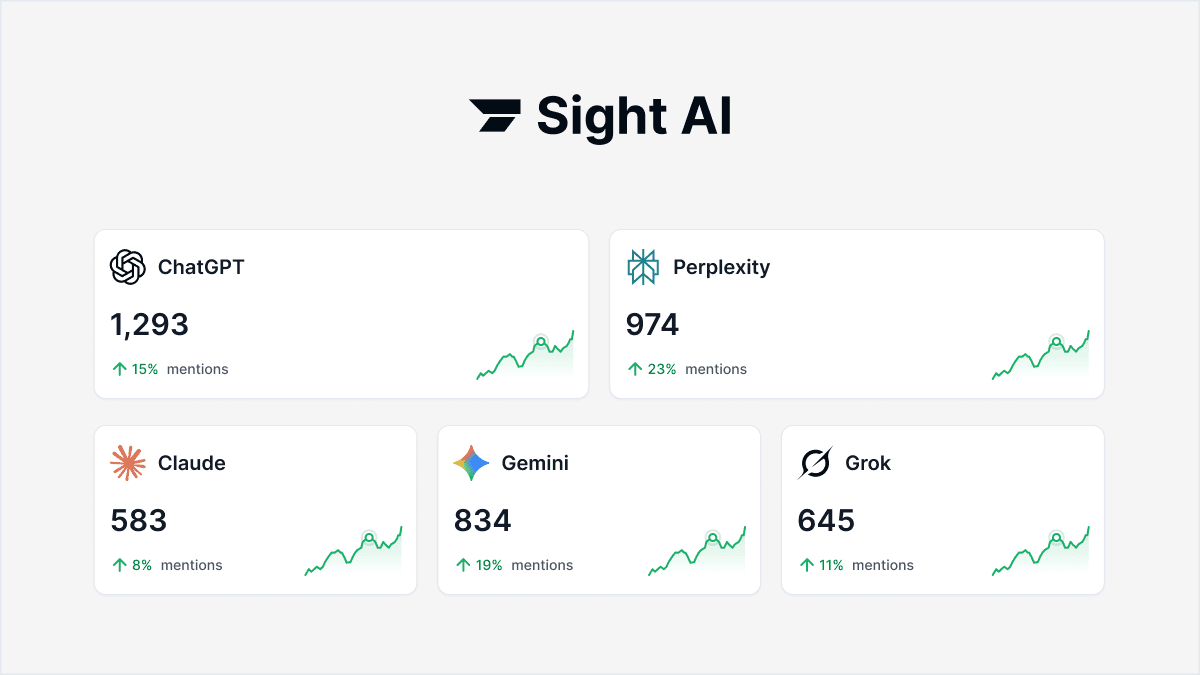
The fragmentation of search across multiple AI platforms also means you need visibility into how each system discovers and references your content. Traditional SEO focused almost exclusively on Google. Today's content operations require monitoring mentions across ChatGPT, Claude, Perplexity, and other AI platforms—understanding not just if your content is indexed, but how AI models are actually using and citing it in responses.
Taking Control of Your Indexing Future
Content indexing delays are frustrating, costly, and entirely solvable. The difference between waiting weeks for pages to appear in search results and achieving indexing within hours comes down to understanding the mechanics, diagnosing your specific bottlenecks, and implementing systematic solutions.
Start with a thorough audit using the framework outlined above. Check your Google Search Console Coverage report for patterns in excluded or delayed pages. Review your internal linking structure to ensure important content isn't buried six clicks deep. Verify your sitemap is current, accessible, and properly formatted. Look for technical blockers like accidental noindex tags, robots.txt misconfigurations, or server performance issues.
Then implement the acceleration strategies that address your specific situation. Deploy IndexNow to notify search engines instantly when you publish or update content. Optimize your XML sitemap for dynamic updates and realistic priority signals. Build strategic internal links that funnel crawl equity to new pages. Address any technical performance issues slowing your server response times.
Most importantly, automate everything possible. Configure your CMS to handle sitemap updates, IndexNow pings, and internal linking without manual intervention. Set up monitoring dashboards that track indexing velocity and alert you to anomalies. Build indexing optimization into your standard publishing workflow so it happens consistently, not just when you remember.
The stakes extend beyond traditional search. As AI-powered platforms increasingly shape how people discover and consume information, fast indexing determines whether your content gets included in AI responses, training data updates, and real-time retrieval systems. Treating indexing as a core content operations priority—not an afterthought—positions you to capture traffic across both traditional search and emerging AI platforms.
Stop guessing how AI models like ChatGPT and Claude talk about your brand—get visibility into every mention, track content opportunities, and automate your path to organic traffic growth. Start tracking your AI visibility today and see exactly where your brand appears across top AI platforms.