Choosing content automation software is a significant commitment, and most platforms look impressive in a demo. The real test comes when you actually use the tool on your own content, for your own audience, with your own workflow constraints. A meaningful trial cuts through the marketing noise and shows you what the platform actually delivers.
The content automation landscape in 2026 spans three overlapping categories: AI content generators that produce drafts at scale, workflow automation platforms that orchestrate multi-step content pipelines, and AI visibility tools that track how brands appear in AI-generated search results. The best trials let you evaluate all three dimensions before you sign anything.
Here are the top content automation tools worth trialing this year, evaluated on trial generosity, feature depth, content quality, and whether the platform addresses modern needs like GEO optimization and AI search visibility.
1. Sight AI
Best for: Marketers and agencies who need content creation, AI visibility tracking, and indexing in one platform.
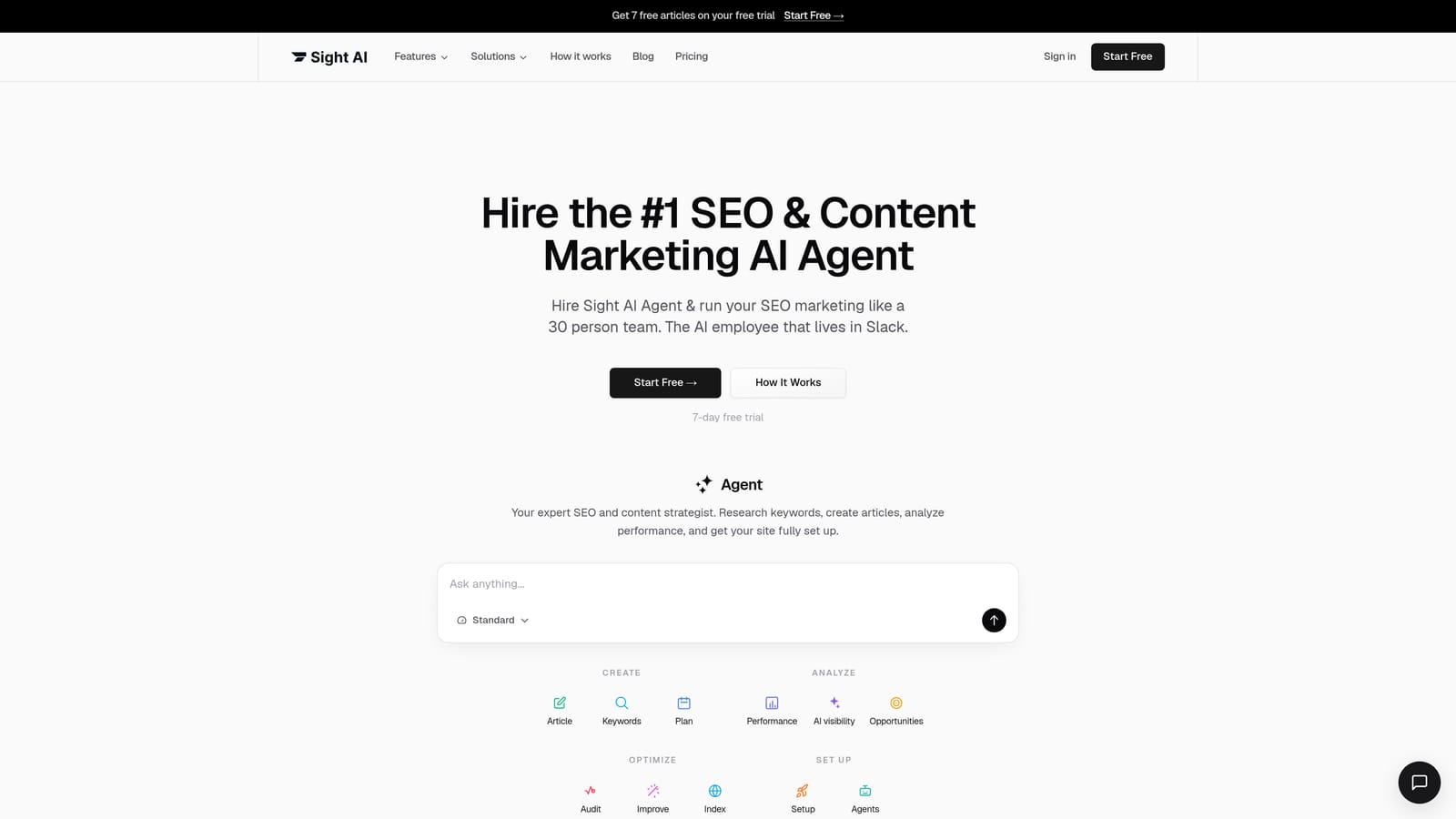
Sight AI is an all-in-one platform combining AI content generation, brand visibility tracking across major LLMs, and automated website indexing built for teams who need to perform in both search engines and AI-generated answers.
Where This Tool Shines
Most content automation tools solve one problem well. Sight AI is designed to solve three: generating optimized content, tracking how AI models actually talk about your brand, and making sure that content gets indexed fast. For agencies and founders managing multiple content priorities, that consolidation matters.
The AI Visibility Score is particularly worth testing during the trial. It surfaces how your brand is mentioned across ChatGPT, Claude, Perplexity, and other major AI platforms, complete with sentiment analysis and prompt-level tracking. This is the kind of intelligence that traditional SEO tools simply don't provide.
Key Features
13+ Specialized AI Agents: Purpose-built agents for listicles, guides, explainers, and other content formats, each optimized for both SEO and GEO performance rather than generic output.
AI Visibility Score: Tracks brand mentions across ChatGPT, Claude, Perplexity, and three or more additional AI platforms, with sentiment analysis and prompt tracking included.
IndexNow Integration: Automatically submits new content to search engines via IndexNow and updates sitemaps, reducing the lag between publishing and indexing.
Autopilot Mode: CMS auto-publishing with hands-off scheduling lets teams set content cadences without manual intervention at each step.
Prompt Tracking: Monitors which prompts and queries surface your brand in AI-generated responses, helping you identify content gaps and optimization opportunities.
Best For
Sight AI is the right trial for marketers, founders, and agencies who want a single platform covering content creation, AI search presence, and indexing speed. It's especially valuable for teams already thinking about GEO alongside traditional SEO, or those tired of stitching together multiple tools to manage the full content lifecycle.
Pricing
Trial available. Check trysight.ai for current plan details and trial access options, as pricing is updated regularly.
2. Writesonic
Best for: Content teams that need high-volume AI writing across multiple formats with built-in SEO signals.
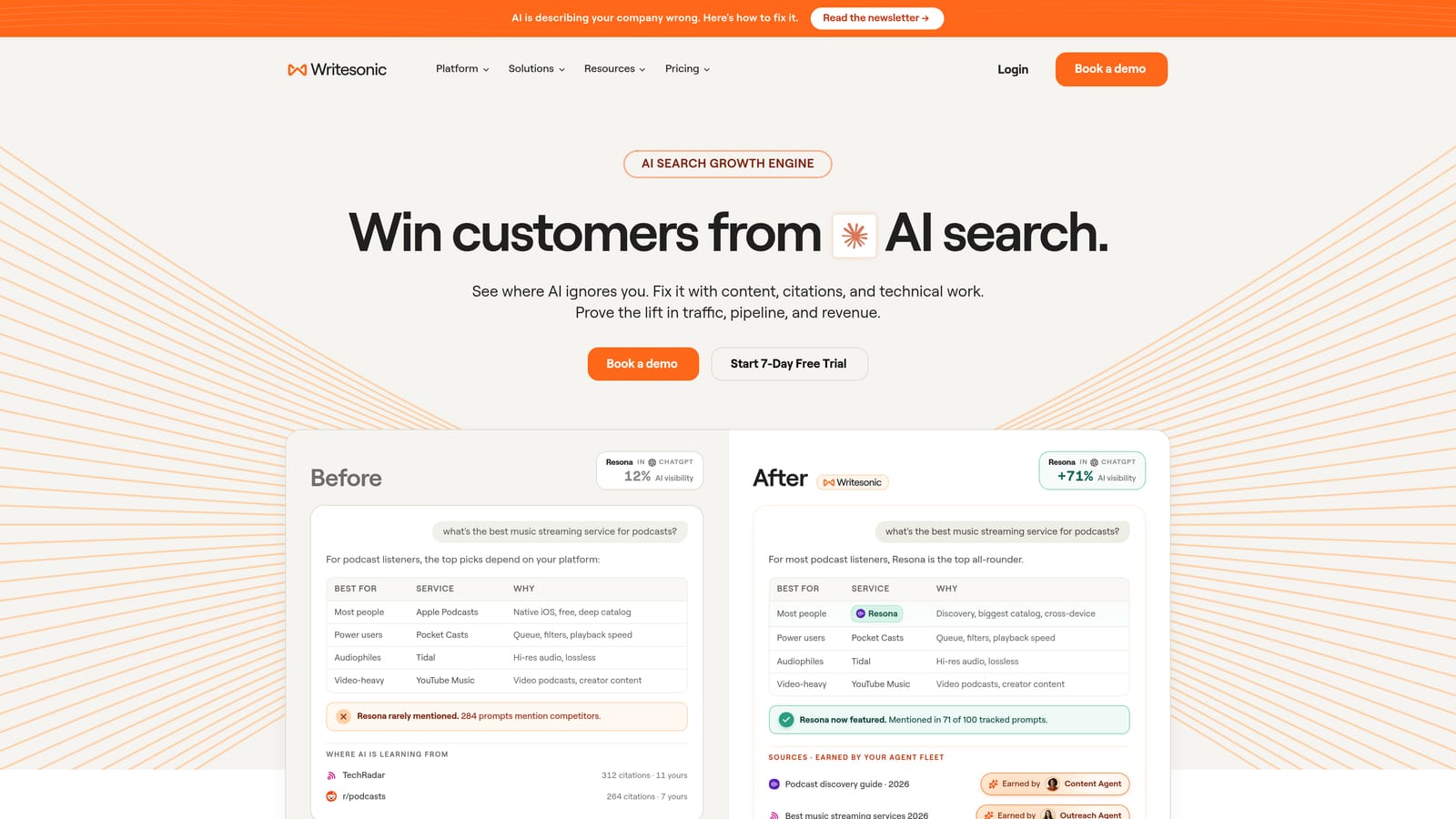
Writesonic is a high-volume AI content generation platform with a broad template library covering long-form articles, ad copy, and social content, with SEO optimization built into the core workflow.
Where This Tool Shines
Writesonic has built a reputation for breadth. If your team produces content across multiple formats, from blog posts to product descriptions to paid ad copy, the template library covers most of what you need without requiring custom workflow setup. The free tier makes it genuinely accessible for teams testing the waters before committing to a paid plan.
The Surfer SEO integration is a meaningful differentiator for teams focused on on-page optimization. Rather than treating SEO as an afterthought, Writesonic surfaces keyword and structure signals during the drafting process, which reduces the editing cycle after generation.
Key Features
Long-Form Article Generator: Produces full-length articles with SEO mode enabled, including structure suggestions and keyword targeting built into the output.
Surfer SEO Integration: Connects directly with Surfer SEO to incorporate on-page optimization signals during content creation rather than after.
Chatsonic: A conversational AI layer built on top of the content engine, useful for iterating on drafts or generating content through a chat-based interface.
Multi-Format Templates: Covers ads, product descriptions, social posts, email sequences, and more, reducing the need for separate tools across different content types.
Free Tier Access: A free plan with limited word credits lets teams evaluate core features before upgrading, lowering the barrier to trial.
Best For
Writesonic works well for content teams prioritizing volume and format variety. It's a strong fit for marketers who need to produce across multiple channels and want SEO signals embedded in the workflow. Teams focused on AI search visibility or GEO optimization will need to supplement it with other tools.
Pricing
Free tier available with limited credits. Paid plans start at varying price points. Verify current pricing at writesonic.com before committing.
3. AirOps
Best for: Go-to-market and content teams that need custom multi-step AI pipelines without engineering support.
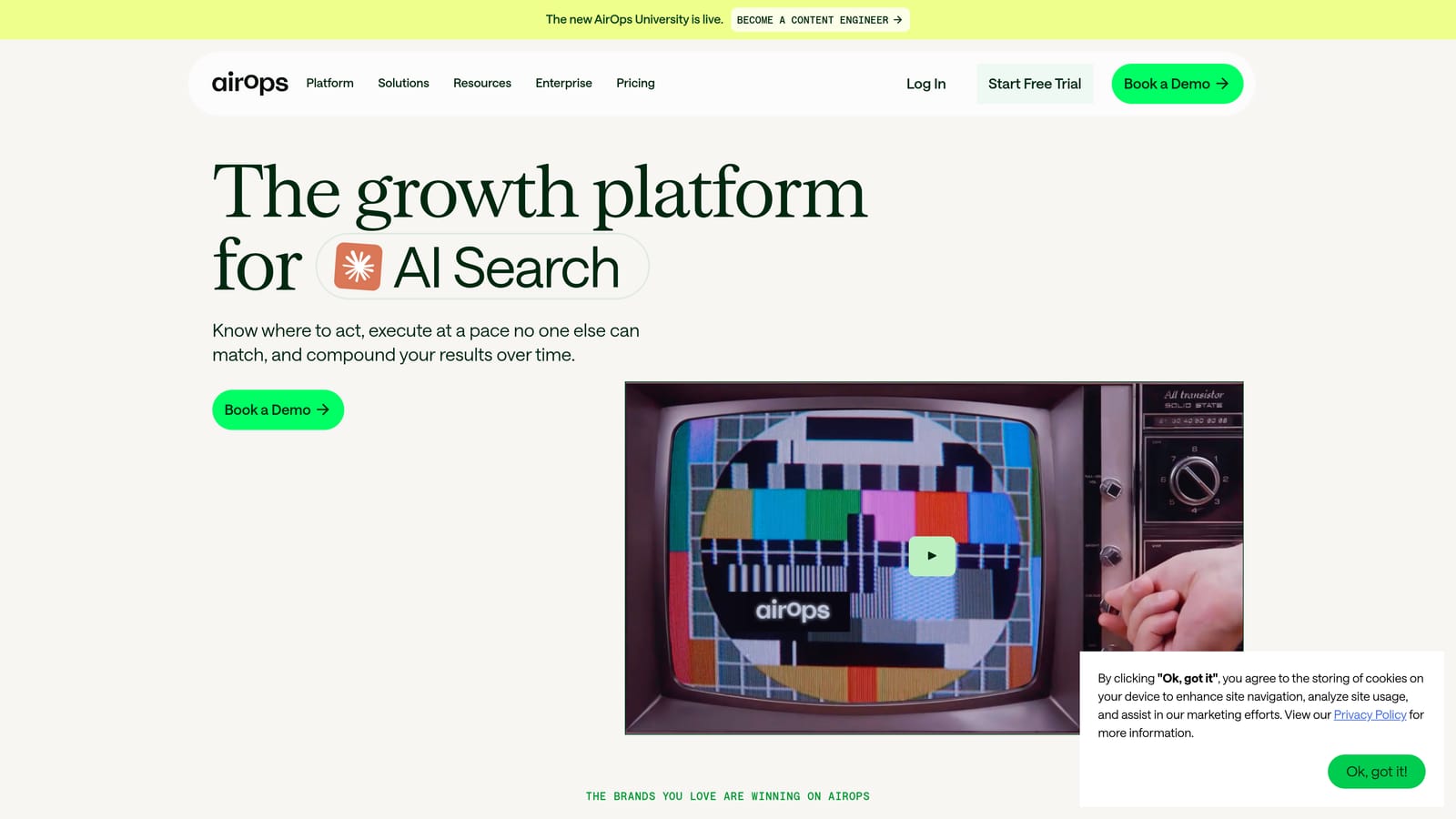
AirOps is an AI workflow automation platform that lets teams build repeatable, multi-step content pipelines using a visual builder, without writing code or relying on engineering resources.
Where This Tool Shines
AirOps is not a "write me an article" tool. It's an automation layer that sits above your LLMs and content processes, letting you define exactly how data flows through a workflow: pulling from a spreadsheet, running it through a model, formatting the output, and delivering it to the right destination. For agencies managing complex, repeatable content operations, that level of control is hard to find elsewhere.
The ability to run multiple LLM models within a single workflow is worth testing specifically during the trial. Different models perform differently on different tasks, and AirOps lets you route steps to the model best suited for each one rather than locking you into a single provider.
Key Features
Drag-and-Drop Pipeline Builder: Visual workflow creation lets non-technical users build and modify multi-step AI content pipelines without code.
Multi-LLM Support: Run different language models within a single workflow, allowing teams to optimize each step for quality and cost.
Data Enrichment: Pull structured data from external sources and run it through AI pipelines, enabling large-scale content operations tied to real data inputs.
Team Collaboration: Shared workflow libraries and collaboration features make it practical for agency teams managing multiple client pipelines simultaneously.
API and Spreadsheet Integrations: Connect to existing data sources and tools, reducing manual data transfer between systems.
Best For
AirOps is the right trial for agencies and content operations teams that have outgrown single-prompt AI tools and need structured, repeatable pipelines. It rewards teams willing to invest in workflow design upfront in exchange for scalable, consistent output over time.
Pricing
Trial available. Verify current pricing and plan details at airops.com before starting your evaluation.
4. Promptwatch
Best for: Teams running internal LLM-powered content workflows who need to monitor, version, and improve prompt performance over time.
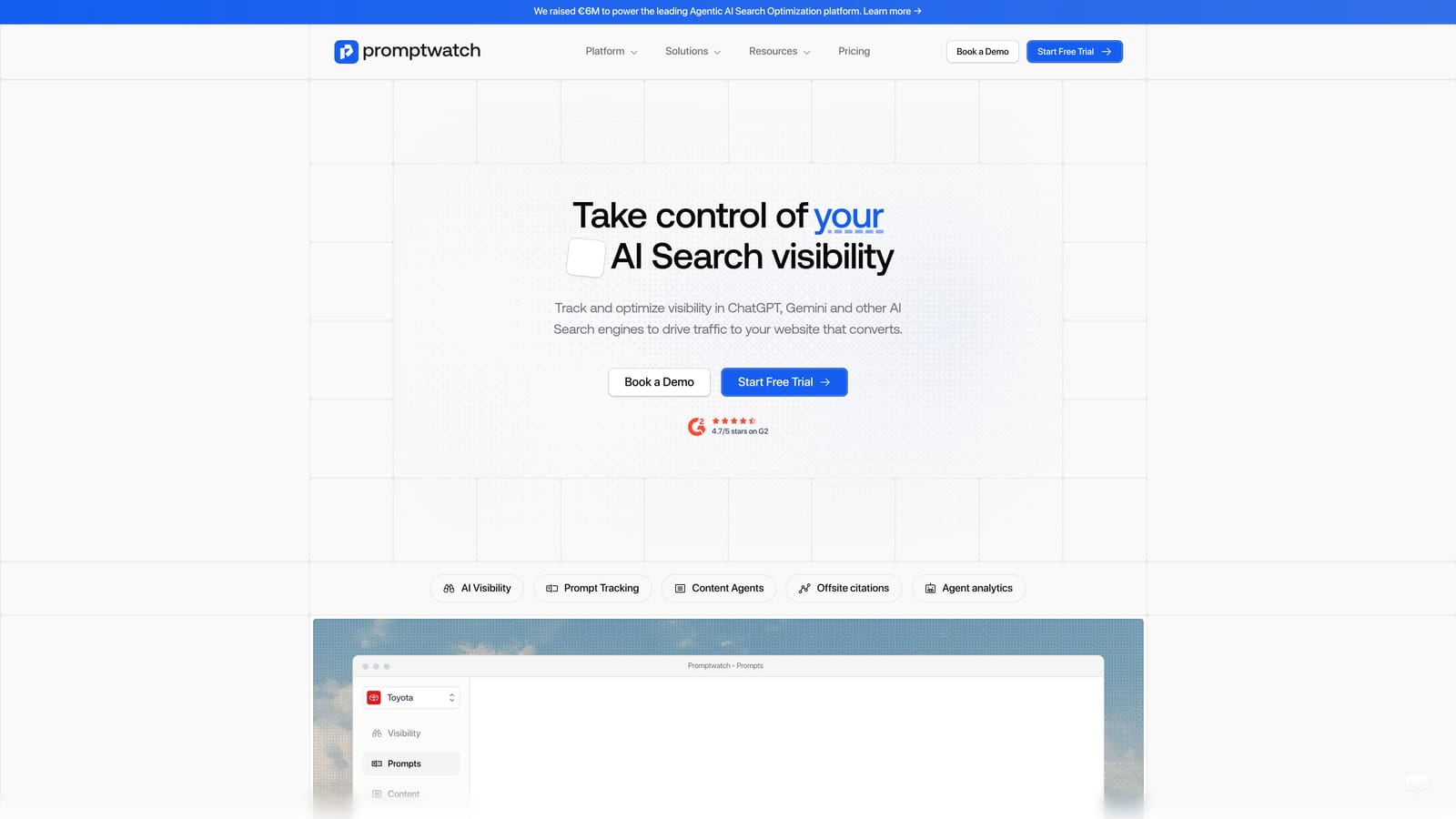
Promptwatch is a prompt monitoring and versioning platform designed for organizations that have already built AI content workflows and want to systematically improve output quality rather than starting from scratch.
Where This Tool Shines
Promptwatch occupies a specific niche: it's not a content generator, it's a quality management layer for teams already generating content with LLMs. If your team has built internal AI workflows and is struggling with inconsistent output, prompt drift, or difficulty knowing which prompt versions actually perform better, this is the tool worth trialing.
The version control and A/B comparison features are particularly useful for content teams that iterate on prompts frequently. Rather than relying on informal notes or tribal knowledge about which prompts work, Promptwatch creates a structured record that teams can analyze and build on systematically.
Key Features
Prompt Version Control: Track changes to prompts over time and compare versions side-by-side to understand what drives output quality differences.
A/B Comparison: Run structured comparisons between prompt variations to identify which versions consistently produce better content outputs.
Output Quality Tracking: Monitor performance metrics across your AI content pipeline to identify degradation or improvement over time.
Team Prompt Library: Centralize prompt management at the team level, reducing duplication and ensuring consistent use of high-performing prompts across the organization.
Logging and Debugging: Full logging of AI pipeline inputs and outputs makes it easier to diagnose issues when content quality drops unexpectedly.
Best For
Promptwatch is best suited for content operations teams, technical marketers, and agencies that are already running LLM-powered workflows and want to optimize them systematically. It's less useful as a starting point for teams new to AI content automation.
Pricing
Trial available. Verify current pricing and access tiers at promptwatch.io before evaluating.
5. Profound
Best for: Enterprise marketing teams investing in GEO and brand visibility in AI-generated search responses.
Profound is an AI answer engine optimization platform that tracks and analyzes how brands appear in AI-generated responses across major AI search platforms, built for enterprise teams with serious GEO ambitions.

Where This Tool Shines
Profound focuses exclusively on the question that traditional SEO tools cannot answer: how does your brand appear when AI models generate answers to user queries? For enterprise marketing teams where brand presence in AI-generated responses is a measurable business priority, this level of dedicated tracking is difficult to replicate with general-purpose tools.
The competitive share-of-voice analysis is one of the more actionable features worth testing during a trial. Understanding not just your own AI visibility but how it compares to named competitors gives marketing teams a concrete benchmark for GEO strategy decisions.
Key Features
AI Answer Visibility Monitoring: Tracks how and where your brand appears in AI-generated responses across major platforms, providing a structured view of your AI search presence.
GEO Reporting: Purpose-built reporting for Generative Engine Optimization, translating AI visibility data into actionable content strategy insights.
Competitive Share-of-Voice: Benchmarks your brand's presence in AI-generated answers against competitors, revealing where you lead and where you're losing ground.
Content Gap Identification: Surfaces topics and queries where competitors appear in AI responses but your brand does not, informing content creation priorities.
Enterprise Dashboards: Reporting infrastructure designed for enterprise marketing teams, including dashboards built for stakeholder reporting and cross-team visibility.
Best For
Profound is the right trial for enterprise marketing teams and large agencies where GEO is an established strategic priority and where brand visibility in AI-generated answers needs to be tracked, reported, and acted on at scale. It complements content creation tools rather than replacing them.
Pricing
Enterprise pricing model. Verify current plan details and trial access at profound.co before reaching out to their team.
6. Peec
Best for: SEO professionals and agencies that need to benchmark brand visibility in AI search against named competitors.
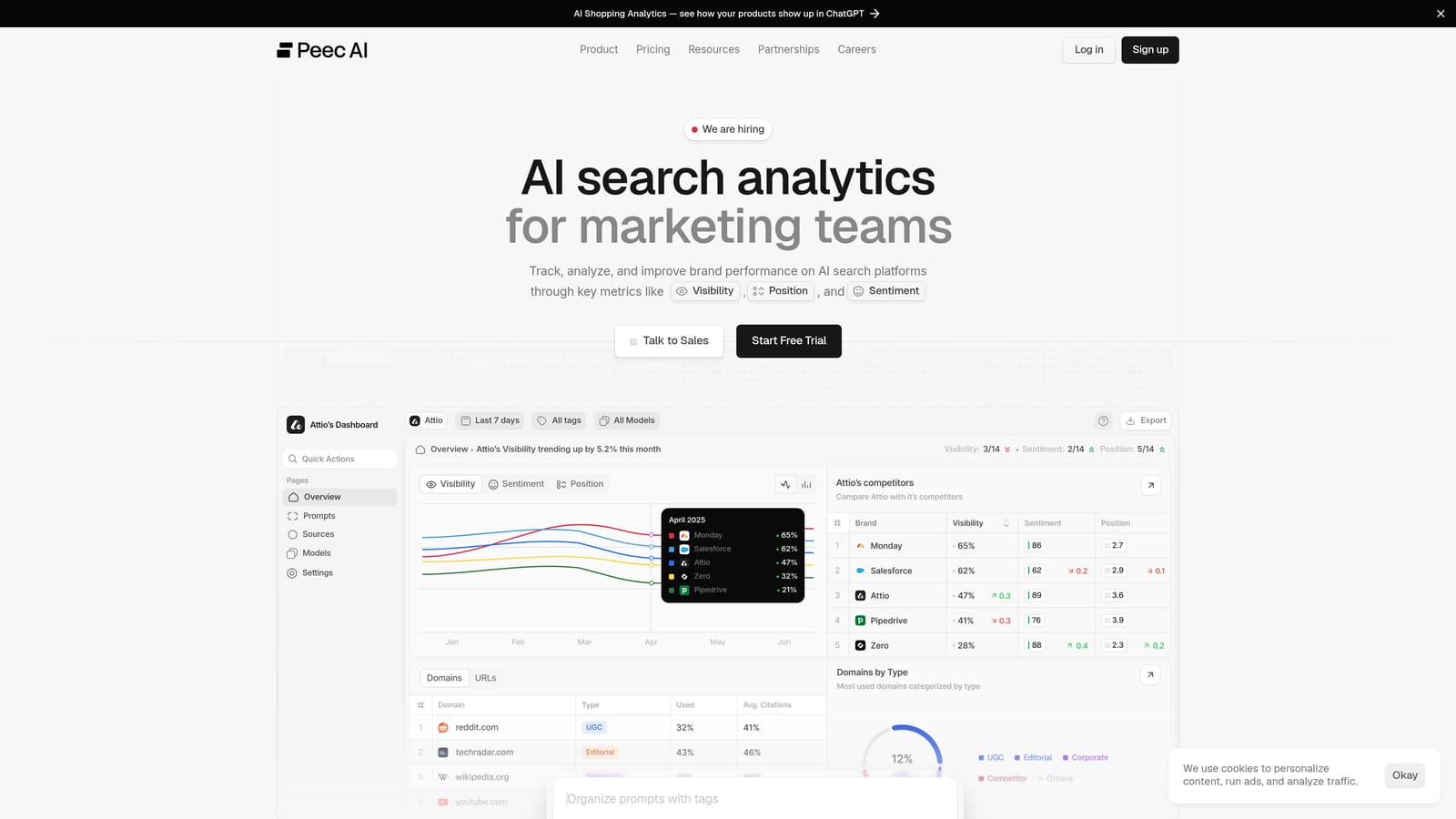
Peec is a competitive intelligence tool for AI search environments, focused on benchmarking brand share-of-voice in AI-generated answers and tracking how that visibility shifts over time relative to competitors.
Where This Tool Shines
Where Profound targets enterprise GEO strategy broadly, Peec leans into the competitive intelligence angle specifically. If your primary question is "how does our AI search presence compare to our top three competitors," Peec is built to answer that question with structured, exportable data rather than anecdotal observation.
The prompt-level analysis is worth testing carefully during the trial. Understanding which specific queries surface competitors but not your brand gives content teams a concrete, prioritized list of content gaps to address, rather than a general sense that AI visibility needs improvement.
Key Features
AI Search Share-of-Voice Benchmarking: Quantifies your brand's presence in AI-generated responses relative to named competitors, giving you a measurable baseline to track over time.
Competitor Tracking: Monitors how specific competitors appear in AI-generated answers, surfacing the queries and topics where they outperform your brand.
Visibility Trend Reporting: Tracks changes in AI search presence over time, helping teams identify whether content and optimization efforts are moving the needle.
Keyword and Prompt-Level Analysis: Breaks down AI visibility data at the individual query level, enabling precise content gap identification and prioritization.
Exportable Reports: Clean, exportable reporting formats designed for agency client reporting workflows, reducing manual data compilation.
Best For
Peec is well-suited for SEO professionals, content strategists, and agencies that need to quantify AI search presence and communicate competitive positioning to clients or internal stakeholders. It works best alongside a content creation platform rather than as a standalone solution.
Which Tool Should You Trial First?
The right starting point depends on where your biggest content gap actually lives right now. Here's a quick breakdown to help you prioritize.
If you need an all-in-one platform that handles content creation, AI visibility tracking, and indexing without stitching together multiple tools, start with Sight AI. The combination of specialized AI agents, AI Visibility Score, and IndexNow integration makes it the most comprehensive trial for teams serious about both traditional SEO and AI search performance.
If volume and format variety are your primary constraints, Writesonic's free tier makes it the lowest-friction trial on this list. Test the long-form generator and Surfer integration before deciding whether to upgrade.
If your team manages complex, repeatable content operations and needs structured pipelines rather than single-prompt generation, AirOps is the trial worth prioritizing. Budget time to actually build a workflow during the trial period rather than just exploring the interface.
If you've already built internal AI content workflows and output quality is inconsistent, Promptwatch fills a gap that most content tools ignore entirely. Trial it specifically against your existing prompt library.
For enterprise teams where GEO and AI answer visibility are strategic priorities, Profound offers the reporting depth and competitive benchmarking that justifies the enterprise price point. Peec is the right trial if competitive intelligence and share-of-voice reporting for clients are your primary deliverables.
One final piece of advice: evaluate trials on real output quality, not feature checklists. Run each platform against an actual content brief from your current workload. The tool that produces the most usable output on your real use case is the one worth buying, regardless of how impressive the feature list looks in a demo.
Start tracking your AI visibility today and see exactly where your brand appears across top AI platforms, uncover content opportunities you're currently missing, and automate your path to faster organic traffic growth.