You've invested months building your brand's online presence. Your SEO is solid. Your content ranks well. But when potential customers ask ChatGPT for recommendations in your space, does your brand even come up?
This isn't a hypothetical problem anymore. AI-powered search is fundamentally changing how customers discover products and services. When someone asks ChatGPT, Claude, or Perplexity for software recommendations, restaurant suggestions, or service providers, these models are making decisions about which brands to mention—and which to ignore entirely.
The challenge? Traditional analytics tools show you nothing about this new discovery channel. You can track Google rankings and monitor social mentions, but you're completely blind to whether AI models recommend your brand, mention your competitors instead, or describe your offerings accurately.
That's where AI visibility tracking comes in. Just as you wouldn't run SEO campaigns without ranking data, you can't optimize for AI search without knowing your current position. This guide explores seven practical approaches to tracking your brand's presence across AI platforms, from comprehensive monitoring solutions to creative DIY methods. Whether you're working with an enterprise budget or bootstrapping a startup, you'll find strategies that fit your resources and technical capabilities.
1. Dedicated AI Visibility Platforms
The Challenge They Solve
Most marketing teams discover they have an AI visibility problem when a competitor mentions getting leads from ChatGPT recommendations. By then, you're already behind. The fundamental issue is that AI mentions aren't tracked by any traditional tool—not your SEO platform, not your brand monitoring service, not your analytics dashboard.
You need systematic, ongoing monitoring across multiple AI models to understand where you stand. Manual checking isn't scalable, and building custom solutions requires significant technical resources most teams don't have.
The Strategy Explained
Purpose-built AI visibility platforms solve this by continuously monitoring how AI models respond to brand-relevant queries. Think of it like rank tracking for traditional search, but focused specifically on AI-generated responses.
These platforms typically work by maintaining libraries of prompts related to your industry and automatically querying multiple AI models. When your brand gets mentioned, the system captures the context, sentiment, and competitive positioning. You get dashboards showing trends over time, which prompts trigger mentions, and how your visibility compares to competitors.
The key differentiator from DIY approaches is consistency and scale. A dedicated platform can test hundreds of prompt variations across multiple AI models daily, something no manual process can match. You're also getting sentiment analysis—understanding whether mentions are positive, neutral, or negative—which is crucial for optimization.
Implementation Steps
1. Define your tracking scope: Identify which product categories, service types, and competitor sets matter most for your business. Start focused rather than trying to track everything.
2. Set up baseline monitoring: Configure the platform to track your primary brand terms and key competitor names across ChatGPT, Claude, Perplexity, and other relevant AI models.
3. Establish reporting cadence: Set up weekly dashboards to track visibility trends and monthly deep-dives to analyze which content improvements are moving the needle.
Pro Tips
Look for platforms that offer prompt libraries specific to your industry rather than generic tracking. The quality of prompts directly determines the usefulness of your data. Also prioritize solutions that track multiple AI platforms simultaneously—visibility can vary significantly between ChatGPT and Claude based on their different training data sources.
2. Manual Prompt Testing
The Challenge It Solves
Not every business has budget for dedicated tracking tools, especially when first exploring AI visibility. You need some way to understand your current position without committing to monthly software costs. Manual testing provides that initial reconnaissance.
The approach works best for small businesses, solopreneurs, or teams in the early stages of building an AI visibility strategy. It gives you directional insights about whether you have a visibility problem worth solving.
The Strategy Explained
Manual prompt testing means systematically asking AI models questions your customers would ask, then documenting whether and how your brand appears in responses. You're essentially conducting periodic audits rather than continuous monitoring.
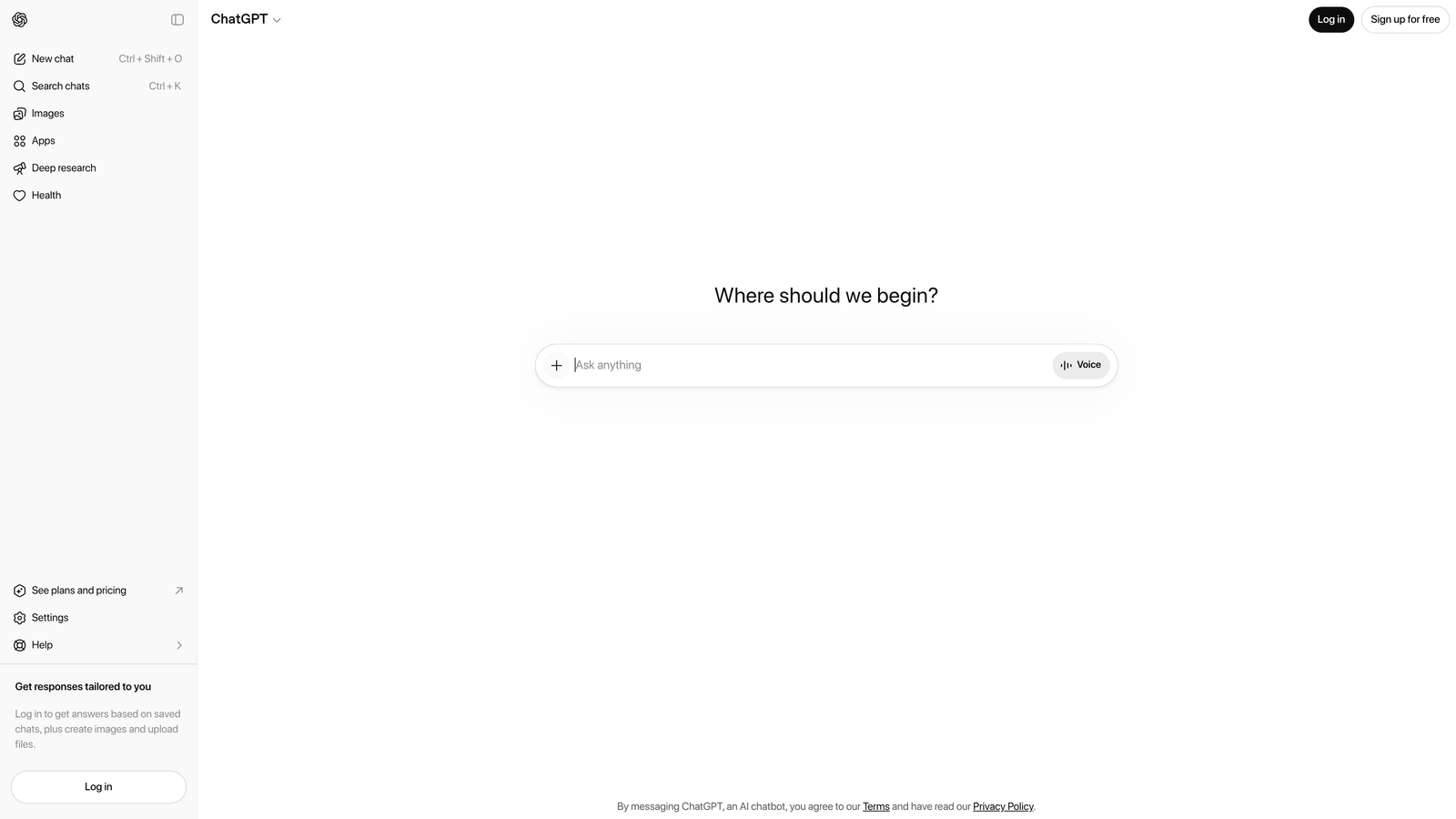
Create a spreadsheet with 20-30 prompts covering different aspects of your business. Include direct queries like "What are the best [your category] tools?" and indirect ones like "How do I solve [problem your product addresses]?" Test each prompt across ChatGPT, Claude, and Perplexity, recording whether your brand gets mentioned, the context of mentions, and which competitors appear.
Run this audit monthly to spot trends. Are you gaining visibility? Losing ground? Which types of queries trigger mentions versus which leave you invisible?
Implementation Steps
1. Build your prompt library: Create a Google Sheet with columns for prompt text, AI platform, date tested, your brand mentioned (yes/no), competitors mentioned, and sentiment notes.
2. Schedule testing blocks: Set aside 2-3 hours monthly to systematically test all prompts across your target AI platforms. Use private browsing to avoid personalization affecting results.
3. Document patterns: After each testing session, write a brief summary of what changed since last month and which prompt categories show strongest (or weakest) visibility.
Pro Tips
Use different account contexts when testing—logged out, new accounts, accounts with different usage histories. AI models may personalize responses based on conversation history. Also, test the same prompts at different times of day over a week, as model updates can cause response variations. This approach differs significantly from automated AI visibility tracking, which provides more consistent data.
3. API-Based Custom Solutions
The Challenge It Solves
Companies with technical resources often want more control and customization than off-the-shelf platforms provide. You might need to integrate AI visibility data with proprietary analytics systems, or you want to test highly specific prompt variations tied to your unique product positioning.
Building custom solutions also makes sense when you need to track AI visibility as part of larger automated workflows—for example, triggering content optimization tasks when visibility drops below certain thresholds.
The Strategy Explained
API-based tracking means building your own monitoring system using the APIs provided by OpenAI, Anthropic, and other AI platform providers. You programmatically send prompts to these models, capture responses, and analyze them for brand mentions using custom logic.
This approach requires developer resources but offers maximum flexibility. You control exactly which prompts get tested, how responses are analyzed, and how data integrates with your existing systems. You can also optimize costs by running tests at specific intervals rather than continuously.
The technical architecture typically involves a scheduled script that iterates through your prompt library, calls relevant APIs, parses responses for brand mentions using pattern matching or sentiment analysis libraries, and stores results in your database for analysis.
Implementation Steps
1. Set up API access: Create developer accounts with OpenAI, Anthropic, and other providers. Review pricing tiers and rate limits to estimate monthly costs based on your testing volume.
2. Build the monitoring script: Develop a Python or Node.js script that reads prompts from a configuration file, calls APIs sequentially, and parses responses for brand mentions using regex patterns or NLP libraries.
3. Create the data pipeline: Set up a database to store results with fields for timestamp, prompt, model, raw response, brand mentioned flag, and extracted sentiment. Build dashboards or reports to visualize trends.
Pro Tips
Implement caching to avoid redundant API calls for identical prompts within short time windows—this significantly reduces costs. Also consider using smaller, cheaper models for initial screening, then only calling premium models for prompts that show interesting patterns. Monitor your API spending closely in the first month to avoid surprise bills from inefficient implementations.
4. Competitive Intelligence Tools with AI Features
The Challenge It Solves
Many marketing teams already pay for brand monitoring or competitive intelligence platforms. If your existing tools are adding AI tracking features, you might get basic visibility monitoring without adding another subscription to your stack.
This approach works when AI visibility is important but not your primary focus—you're already monitoring traditional channels and want AI as a supplementary data point rather than a core metric.
The Strategy Explained
Traditional brand monitoring platforms are beginning to add AI platform tracking alongside their web, social, and news monitoring capabilities. These features typically focus on detecting when your brand or competitors appear in AI-generated content across the web, rather than direct AI model monitoring.
The implementation varies by platform, but generally involves adding AI sources to your existing monitoring streams. You'll see AI mentions in the same dashboards where you track social sentiment and news coverage. The depth of analysis may be less specialized than dedicated AI visibility tools, but the convenience of consolidated reporting has value.
Expect these features to be most useful for high-level awareness—knowing that AI visibility is changing—rather than detailed optimization insights. They answer "Are we being mentioned?" more effectively than "How do we improve our AI presence?" For a deeper dive into available options, explore this AI visibility tracking tools comparison.
Implementation Steps
1. Audit your current tools: Review your existing brand monitoring, social listening, and competitive intelligence platforms to see which offer AI tracking features. Check if these require add-on purchases or are included in your current tier.
2. Configure AI monitoring: Enable AI source tracking in your platform settings, ensuring your brand terms, competitor names, and relevant keywords are properly configured for AI content detection.
3. Integrate into reporting: Add AI mention metrics to your existing weekly or monthly reports, treating them as an additional channel alongside social and traditional media coverage.
Pro Tips
Understand the limitations of your platform's AI tracking before relying on it for strategic decisions. Many tools track AI-generated content published on websites rather than monitoring AI model responses directly. This gives you downstream visibility but misses the actual AI recommendation context that matters most for customer acquisition.
5. Content Optimization Strategy
The Challenge It Solves
Tracking AI visibility without acting on the insights wastes resources. You need a strategy that connects visibility data to content improvements that actually increase your presence in AI responses.
The core challenge is that AI models train on existing web content, meaning your visibility depends on how well your online presence communicates your value proposition. Simply tracking mentions doesn't improve them—you need systematic content optimization based on what you discover.
The Strategy Explained
Content optimization for AI visibility—often called Generative Engine Optimization (GEO)—means creating and updating content specifically to improve how AI models understand and recommend your brand. This goes beyond traditional SEO to address how AI models synthesize information from multiple sources.
The strategy involves analyzing which competitors get mentioned in AI responses, studying their content patterns, and identifying gaps in your own content coverage. You then create comprehensive resources that clearly articulate your offerings, use cases, differentiators, and customer results in ways AI models can easily parse and cite.
Think of it as optimizing for an AI reader rather than a human one. This means emphasizing clear structure, explicit comparisons, factual claims with sources, and comprehensive coverage of topics where you want visibility. Learn more about how to improve your brand visibility in ChatGPT through strategic content creation.
Implementation Steps
1. Conduct visibility gap analysis: Use your tracking data to identify which prompt categories show low visibility, then analyze what content competitors have that you lack in those areas.
2. Create GEO-optimized content: Develop comprehensive guides, comparison pages, and use case documentation that explicitly addresses the queries where you want AI visibility. Structure content with clear headings, factual statements, and explicit brand positioning.
3. Measure and iterate: After publishing new content, track whether your AI visibility improves for related prompts over the following 4-8 weeks. AI model training cycles mean changes won't be immediate, but you should see trends.
Pro Tips
Focus on creating authoritative, citable content rather than keyword-stuffed pages. AI models tend to reference sources that provide clear, factual information with proper context. Also, ensure your content includes explicit comparisons and positioning statements—AI models need clear signals about how you differ from competitors to recommend you appropriately.
6. Multi-Platform Monitoring
The Challenge It Solves
Focusing exclusively on ChatGPT misses a significant portion of the AI search landscape. Different AI platforms have different training data, update schedules, and user bases. Your brand might have strong visibility in ChatGPT but be completely absent from Claude or Perplexity.
Customers use multiple AI platforms depending on context—some prefer Perplexity for research, others use Claude for detailed analysis, and many default to ChatGPT for quick questions. Missing visibility on any major platform means losing potential customers.
The Strategy Explained
Multi-platform monitoring means tracking your brand presence across ChatGPT, Claude, Perplexity, Gemini, and other significant AI platforms simultaneously. This provides a complete picture of your AI visibility rather than a single-platform snapshot.
The approach requires testing identical prompts across platforms to understand where your visibility is strong versus weak. You'll often discover surprising variations—a brand might appear frequently in Claude responses but rarely in Perplexity, or vice versa. These differences stem from different training data sources, update frequencies, and algorithmic approaches to information synthesis.
Effective multi-platform monitoring also means understanding each platform's unique characteristics. Perplexity emphasizes recent sources and explicit citations. Claude tends toward detailed, nuanced responses. ChatGPT balances breadth and accessibility. Your optimization strategy should account for these differences. For platform-specific insights, explore Perplexity AI visibility tracking strategies.
Implementation Steps
1. Identify priority platforms: Determine which AI platforms your target customers actually use. Start with ChatGPT, Claude, and Perplexity as the core three, then expand based on your industry and audience.
2. Establish cross-platform baselines: Test the same 20-30 prompts across all target platforms to understand your current visibility profile. Document which platforms show strong visibility versus which need improvement.
3. Create platform-specific optimization: Based on visibility gaps, develop content strategies tailored to each platform's characteristics. For Perplexity, focus on recent, well-cited content. For Claude, emphasize comprehensive, nuanced resources.
Pro Tips
Pay attention to platform-specific citation patterns. Perplexity explicitly links to sources, making it easier to see which content drives visibility. ChatGPT and Claude synthesize without citations, requiring more detective work to understand what content influences their responses. Use this intelligence to prioritize optimization efforts where you can most directly measure impact.
7. Agency and Enterprise Approaches
The Challenge It Solves
Managing AI visibility for multiple clients or brands introduces complexity that individual solutions can't handle efficiently. Agencies need centralized dashboards showing all clients, automated reporting for each account, and the ability to benchmark performance across their portfolio.
Enterprises with multiple product lines or regional brands face similar challenges—they need consolidated visibility data while maintaining separate tracking for each brand entity. Manual approaches or single-brand tools don't scale to these requirements.
The Strategy Explained
Scaled AI visibility tracking requires platforms designed for multi-account management with role-based access, white-label reporting, and portfolio-level analytics. The goal is operational efficiency—managing dozens of brands without proportionally increasing team workload.
The architecture typically involves a master account with sub-accounts for each client or brand. Each sub-account has its own prompt library, competitor set, and tracking configuration, but data rolls up to portfolio dashboards showing trends across all accounts. This enables pattern recognition—identifying optimization strategies that work across multiple clients.
For agencies, white-label reporting capabilities are crucial. You need to deliver branded reports to clients without exposing your monitoring platform or methodology. The best solutions let you customize report templates, add your agency branding, and automate delivery schedules. Understanding AI visibility tracking software pricing helps agencies build profitable service offerings.
Implementation Steps
1. Select a multi-account platform: Evaluate AI visibility tools specifically designed for agency or enterprise use. Key requirements include unlimited sub-accounts, role-based permissions, and white-label reporting capabilities.
2. Standardize onboarding processes: Create templates for new client setup including standard prompt libraries, competitor identification workflows, and baseline reporting formats. This ensures consistency and reduces setup time.
3. Establish portfolio analytics: Build dashboards that show performance across all clients, enabling you to identify which optimization strategies work consistently versus which are client-specific. Use these insights to improve your overall methodology.
Pro Tips
Develop tiered service offerings based on AI visibility tracking depth. Basic tiers might include monthly visibility reports and quarterly optimization recommendations. Premium tiers could include weekly tracking, continuous optimization, and direct integration with clients' content calendars. This lets you serve clients at different budget levels while maintaining operational efficiency.
Putting It All Together
The right AI visibility tracking approach depends entirely on your resources, technical capabilities, and how central AI search is to your customer acquisition strategy. For most marketing teams, dedicated AI visibility platforms provide the fastest path to actionable insights without requiring developer resources or consuming excessive team time.
If you're just beginning to explore AI visibility, start with manual prompt testing to understand whether you have a visibility problem worth solving. Run a monthly audit for three months. If you discover significant gaps—competitors appearing where you don't, or negative sentiment in AI responses—that's your signal to invest in systematic tracking.
For teams with technical resources and specific integration needs, API-based custom solutions offer maximum flexibility. Just ensure you've calculated the true cost including developer time, ongoing maintenance, and API fees. Often, the total cost exceeds dedicated platform pricing while providing less sophisticated analysis.
The critical insight across all approaches is that visibility data only creates value when connected to optimization efforts. Knowing how AI models perceive your brand should directly inform your content strategy, SEO priorities, and product positioning. The brands gaining competitive advantage today treat AI visibility as a core metric alongside traditional search rankings.
As you implement tracking, remember that AI visibility is a long game. Changes to your content won't immediately affect AI responses because models train on historical data. Plan for 4-8 week lag times between optimization efforts and measurable visibility improvements. This makes consistent tracking even more important—you need trend data to understand what's working.
Stop guessing how AI models like ChatGPT and Claude talk about your brand—get visibility into every mention, track content opportunities, and automate your path to organic traffic growth. Start tracking your AI visibility today and see exactly where your brand appears across top AI platforms.