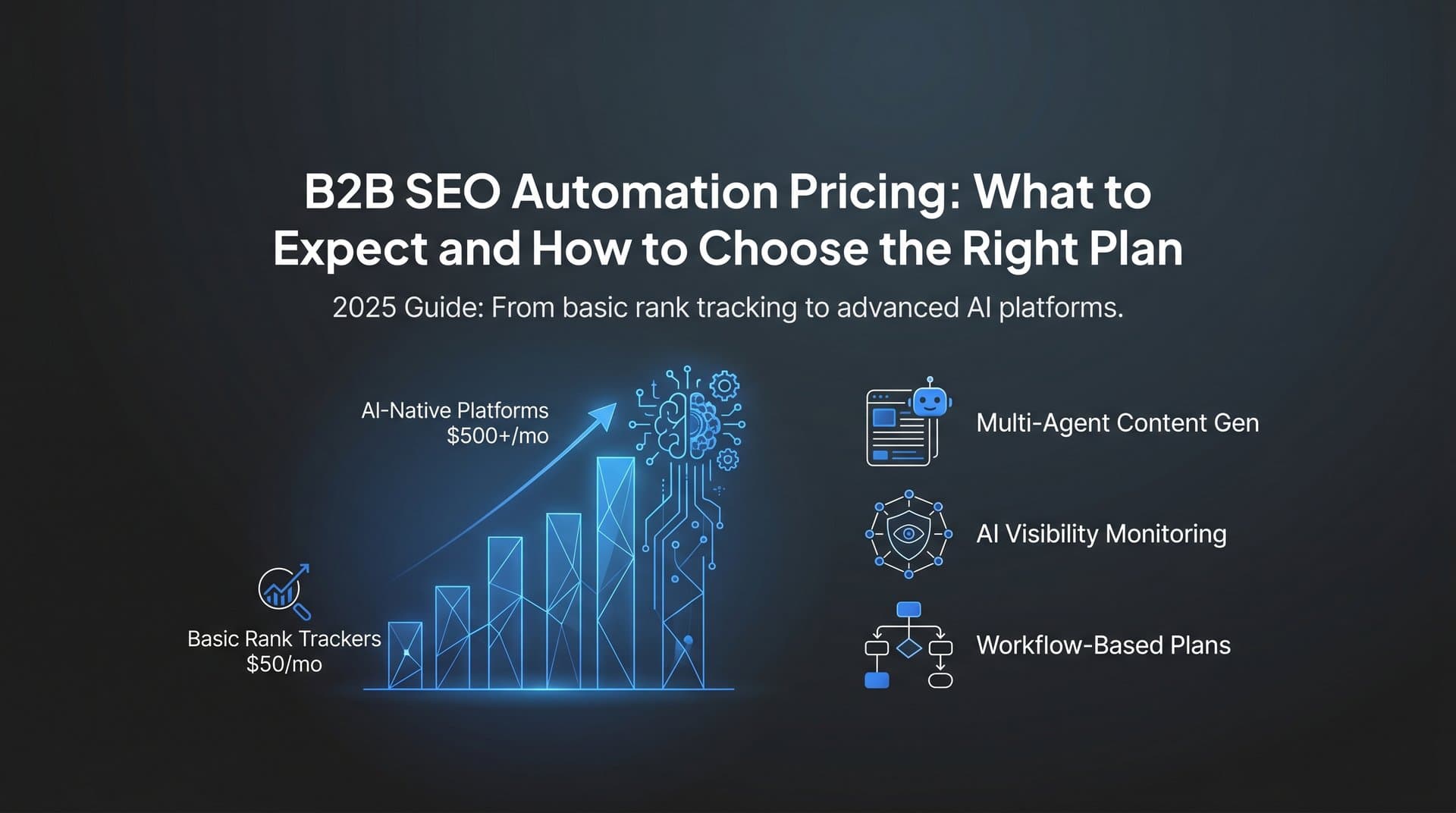
Budgeting for B2B SEO automation in 2025 feels a bit like shopping for a car without knowing how many seats you need, what fuel type the roads require, or whether you'll be driving across town or across continents. The market is crowded, pricing models vary wildly, and the ROI story is rarely straightforward. You might be comparing a $50/month rank tracker against a $500/month AI-native platform and wondering whether the ten-times price difference is justified, or whether you're just paying for features you'll never use.
The situation has gotten more complex with the rise of AI-driven SEO tools. Traditional platforms like Ahrefs, SEMrush, and Moz built their pricing around keyword databases and crawl limits. But a new generation of AI-native platforms has introduced entirely different capabilities: multi-agent content generation, automated indexing via IndexNow, and AI visibility monitoring that tracks how models like ChatGPT, Claude, and Perplexity mention your brand. These capabilities come with new pricing structures that many B2B buyers aren't prepared to evaluate.
This guide is designed to fix that. Whether you're a solo founder running lean, an agency managing a dozen client sites, or an in-house marketing team at a mid-market company, you'll find a practical breakdown of how B2B SEO automation pricing actually works: what drives costs up or down, what the realistic budget ranges look like, and how to evaluate whether a platform is genuinely worth the investment. Let's get into it.
Why the Price Tag Varies So Much
Walk into any SaaS comparison site and you'll find B2B SEO automation tools ranging from under $100 per month to several thousand dollars per month for enterprise contracts. That range isn't arbitrary. It reflects genuine differences in feature depth, infrastructure costs, and the scope of problems each tool is designed to solve.
The biggest pricing driver is feature depth. A tool that does one thing well, say rank tracking or technical audits, will almost always cost less than a platform that bundles content generation, indexing automation, AI visibility monitoring, and reporting into a single subscription. Point solutions are cheaper upfront, but they tend to multiply across your stack. By the time you've subscribed to a content writer, a rank tracker, an indexing tool, and a brand monitoring platform, the combined cost often exceeds what a unified all-in-one SEO automation platform would charge.
Usage limits are the second major variable. Most platforms gate their pricing around measurable consumption: pages crawled per month, articles generated, keywords tracked, or domains managed. These limits define the tiers and determine whether a plan is viable for your actual workflow. A small team publishing four articles per month has very different needs than an agency producing forty.
Then there's the AI capabilities layer, which is genuinely new territory. Traditional SEO tools priced around data access. AI-native platforms price around computational resources, model usage, and agent complexity. Features like multi-agent content generation, where specialized AI agents handle research, outlining, writing, and optimization in sequence, represent a fundamentally different cost structure than a simple keyword database lookup. Platforms that offer this kind of depth often have higher base prices, but they're also replacing work that would otherwise require human hours or multiple separate subscriptions.
AI visibility tracking is another category that simply didn't exist in legacy SEO tooling. Monitoring how AI models respond to prompts related to your brand, tracking sentiment across platforms like ChatGPT, Claude, and Perplexity, and identifying which competitors are getting mentioned instead of you requires ongoing API calls and sophisticated analysis. Tools that offer this capability are priced to reflect that infrastructure investment. For B2B brands where AI-driven discovery is increasingly part of the buyer journey, this isn't a luxury feature. It's becoming a strategic necessity.
The practical takeaway: don't compare sticker prices without comparing scope. A platform that costs three times as much but replaces four separate tools and adds capabilities you couldn't easily replicate otherwise may represent a significantly better value proposition when comparing SEO software pricing for your team.
The Four Pricing Models and What They Mean for Your Team
Understanding the structure of a pricing model matters as much as understanding the number. The same monthly spend can feel very different depending on how costs scale with usage, team size, or client count. Here are the four main models you'll encounter in the B2B SEO automation market.
Flat monthly subscriptions offer a predictable, fixed cost regardless of how much you use the platform within defined limits. These work well for teams with consistent, stable workflows. The risk is paying for capacity you don't use during slow months, or hitting hard limits during busy periods without a clean upgrade path.
Usage-based pricing charges you for what you actually consume: per article generated, per keyword tracked, per page crawled. This model is appealing for smaller teams or companies with variable content needs because you're not paying for idle capacity. The downside is cost unpredictability. A high-output month can produce a surprisingly large invoice, and usage-based pricing can make budgeting difficult for finance teams that prefer fixed line items.
Tiered plans are the most common structure in SaaS SEO tools. You choose a plan (often labeled Starter, Growth, and Enterprise or similar) that bundles a defined set of features and usage limits at a fixed price. Tiers work well because they create a clear upgrade path, but they can also create awkward situations where you need one feature from the next tier but don't need anything else it includes. For a deeper look at how these tiers compare across vendors, an SEO automation tools comparison can help clarify the differences.
Custom enterprise pricing is negotiated directly with the vendor and typically includes SLAs, dedicated support, custom integrations, and higher usage ceilings. This model suits large organizations with complex requirements, but it requires more time to evaluate and commit to. Enterprise contracts often come with annual or multi-year commitments that reduce flexibility.
Beyond the base model, watch for costs that don't appear in the headline price. Per-seat charges can make a nominally affordable tool expensive for larger teams. API access is sometimes gated behind premium tiers even when it's essential for integration with your existing stack. CMS auto-publishing, which allows content to be pushed directly to platforms like WordPress or Webflow, is a feature that some tools charge extra for despite being a significant time-saver. IndexNow integration, which speeds up content discovery by notifying search engines of new or updated pages automatically, is another feature worth checking before assuming it's included.
For solo founders and very small teams, usage-based or entry-level tiered plans typically offer the best fit. Agencies managing multiple client sites should prioritize platforms with project-level management built into mid-tier plans rather than paying per-client add-ons. In-house teams at mid-market companies often benefit most from tiered subscriptions that include enough usage headroom to support a consistent publishing cadence without hitting overage fees every quarter.
Realistic Budget Ranges for Different Team Types
Published benchmark data on B2B SEO automation spend is limited, and any specific numbers you find online are likely outdated or context-dependent. What we can do is map out realistic ranges based on the types of tools involved and the scope of work different teams typically need.
For small teams and solo founders, a functional SEO automation setup typically means covering the basics: content creation support, basic rank tracking, and some form of indexing. If you're assembling point solutions, you might combine a lightweight AI writing tool, a starter rank tracking subscription, and a basic indexing utility. Each of these carries its own monthly cost, and the total adds up faster than most people expect. A unified platform that covers multiple functions at an entry tier often comes in at a comparable or lower total cost while also reducing the operational overhead of managing multiple logins, billing cycles, and integrations. Founders especially should explore the best SEO automation software for founders to find the right fit.
Growing companies with active content programs and multiple stakeholders need more: higher article output limits, multi-user access, more robust reporting, and often CMS integration so content can be published directly rather than manually uploaded. At this level, the cost of separate tools becomes more pronounced. A dedicated content writer subscription, a mid-tier SEO platform, an indexing tool with IndexNow support, and a brand monitoring service can collectively represent a significant monthly spend before you've even accounted for the time cost of managing them all.
Agencies face a different calculus entirely. The per-client cost of separate tools can become unsustainable at scale. An agency managing ten or twenty client sites needs project-level organization, white-label reporting, and enough usage capacity to support multiple active campaigns simultaneously. Platforms that offer agency-friendly SEO automation pricing with project management built in can dramatically reduce the cost-per-client compared to licensing individual tools for each account.
The trend worth noting here is the consolidation toward AI-native platforms that combine what used to require three or four separate subscriptions. Sight AI, for example, bundles AI content generation with 13+ specialized agents, website indexing with IndexNow integration, and AI visibility tracking across six or more AI platforms into a single subscription. For teams that need all of these capabilities, this kind of consolidation simplifies both budgeting and operations. Instead of reconciling four invoices and managing four vendor relationships, you're working with one platform and one pricing conversation.
Measuring ROI: Beyond the Monthly Invoice
The question isn't just what a platform costs. It's what the platform produces relative to what you're paying. For B2B SEO automation, ROI typically shows up in a few distinct ways, and understanding each one helps you make a more honest comparison between options.
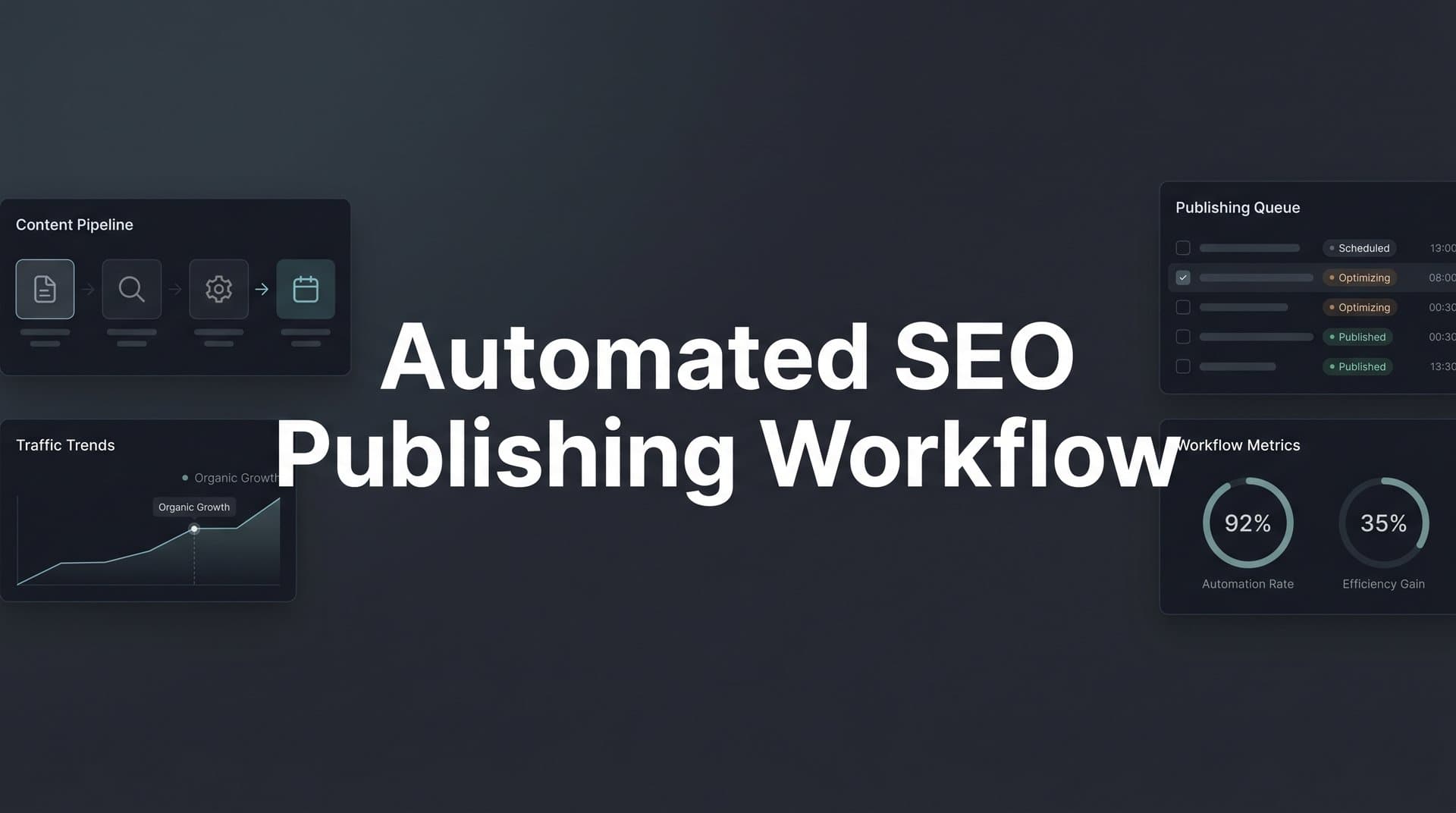
Time savings are often the most immediate and underappreciated return. Manual SEO tasks, including keyword research, content briefing, writing, optimization, internal linking, sitemap updates, and indexing requests, can consume significant hours each week. Platforms that automate large portions of this workflow return that time to your team for higher-value strategic work. Understanding the tradeoffs between SEO automation vs manual optimization can help you quantify where automation delivers the most value. When evaluating a platform, estimate how many hours per week it would save across your team, assign a rough labor cost to those hours, and compare that to the monthly subscription cost. For many B2B teams, this calculation alone justifies the investment.
Content output velocity is the second major metric. How many articles can you realistically publish per month with your current resources? How many could you publish with automation support? The gap between those numbers represents a growth opportunity. More content, published consistently and optimized effectively, compounds over time in organic search. Platforms with autopilot content generation modes, where you define topics and let AI agents handle the rest, can dramatically increase publishing velocity without proportionally increasing headcount.
Two practical metrics worth tracking are cost per indexed page and cost per published article. These normalize your platform spend against actual output and make it much easier to compare options. A platform that costs more per month but produces twice the indexed content at twice the speed may have a significantly lower cost per result than a cheaper alternative with limited output capacity.
The often-overlooked ROI dimension is AI visibility. As more B2B buyers start their research with AI assistants rather than traditional search, whether your brand appears in those AI-generated responses matters. Sight AI's AI Visibility Score tracks how often and how positively your brand is mentioned across platforms like ChatGPT, Claude, and Perplexity. This kind of monitoring helps you understand whether your content strategy is translating into AI-driven discoverability, and it surfaces the gaps where competitors are getting mentioned instead of you. Traditional SEO metrics don't capture this. For B2B brands where the buying cycle often starts with an AI-assisted research phase, investing in AI SEO optimization can provide strategic intelligence that justifies its cost independently of organic traffic metrics alone.
Smarter Spending: How to Negotiate and Optimize Your SEO Automation Budget
Once you understand the pricing landscape, the next step is making sure you're spending efficiently. A few practical approaches can help you get more value from your SEO automation budget without sacrificing capability.
Start by matching your plan to your current needs rather than your aspirational future state. It's tempting to buy into a higher tier "just in case," but overpaying for unused capacity is a common and avoidable mistake. Most platforms make it straightforward to upgrade when you actually hit the limits of your current plan. Start lean, validate the platform's value, and scale your subscription as your usage grows.
Annual billing discounts are one of the most reliable ways to reduce cost on platforms you're confident about. Many SaaS tools offer meaningful discounts for annual commitments compared to month-to-month pricing. The caveat is that annual contracts reduce flexibility, so reserve them for platforms you've already tested and validated through a free trial or starter plan.
Consolidation is the highest-leverage optimization available to most B2B teams. Audit your current tool stack and identify overlap. If you're paying for a standalone AI writer, a separate rank tracker, an indexing tool, and a brand monitoring service, there's a good chance a unified platform covers most or all of those functions at a lower combined cost. The operational simplicity of a single platform also has real value: fewer vendor relationships, a single support channel, and a unified data model that makes reporting easier.
Know the signals that indicate it's time to upgrade. Consistently hitting article generation limits, needing to manage more than one or two domains, wanting autopilot content generation, or requiring automated sitemap submission are all clear indicators that your current plan has become a constraint rather than a fit. Upgrading reactively in response to real needs is much more efficient than speculative over-buying.
Finally, use free trials and starter tiers deliberately. A pilot period isn't just about testing whether a platform works. It's about benchmarking its actual output against your specific use case. Track articles generated, pages indexed, time saved, and any AI visibility data you can collect. This evidence makes the ROI conversation concrete and gives you confidence before committing to an annual contract.
Finding the Right Fit: A Decision Framework for B2B Teams
With dozens of platforms and multiple pricing models in play, the most useful thing you can do before making a decision is map your actual priorities against what each tier typically delivers. This framework helps you avoid both underpaying for tools that can't support your workflow and overpaying for capabilities you won't use.
Start by ranking your top three or four priorities. Common ones for B2B teams include content volume and quality, indexing speed and automation, AI visibility tracking, rank monitoring, and reporting depth. Once you know what matters most, evaluate platforms against those specific criteria rather than comparing feature lists in the abstract. A platform with a hundred features you don't need is less valuable than one with ten features you'll use every day.
For agencies and multi-brand teams: Project-level management and CMS integrations should be non-negotiable. Without them, the cost of managing multiple clients across separate tools multiplies rapidly. Look for platforms that include these capabilities in mid-tier plans rather than charging for them as add-ons. Reviewing the best SEO automation tools for agencies can help you identify which platforms deliver the most agency-friendly feature sets.
For in-house teams at growing companies: Prioritize platforms that balance SEO content automation with indexing automation and AI visibility tracking. As your content program scales, you need tools that keep pace without requiring proportional increases in manual effort. Autopilot modes and automated sitemap submission become increasingly valuable as publishing volume grows.
For solo founders and small teams: The highest-value investment is usually a platform that reduces the number of separate tools you need to manage. Even if an all-in-one platform costs slightly more than a single point solution, the reduction in complexity and the additional capabilities typically deliver better overall value.
The best-value B2B SEO automation platform isn't necessarily the cheapest or the most feature-rich. It's the one that aligns with your current workflow, scales cleanly with your growth, and covers the capabilities that matter most to your specific goals. Flexible pricing that grows with your content and visibility needs is a feature in itself, and it's worth asking vendors directly how their plans scale before you commit.
Putting It All Together
B2B SEO automation pricing isn't one-size-fits-all, and it shouldn't be evaluated as if it were. The right budget depends on your team size, your content goals, the scope of your SEO workflow, and how much of that workflow you're ready to hand off to automation. What's clear is that the market has shifted. AI-native platforms have introduced capabilities, and corresponding pricing structures, that legacy tools simply don't offer.
The smartest move most B2B teams can make right now is to audit their current tool spend, identify where they're paying for redundant capabilities, and evaluate whether a consolidated platform could cover more ground at a comparable or lower total cost. For many teams, the answer is yes, especially when AI visibility tracking is factored in as a capability that most traditional SEO tools don't provide at all.
If you're ready to stop piecing together a fragmented stack and start working with a platform that combines content generation, website indexing, and AI visibility tracking in one place, Sight AI is worth exploring. Start tracking your AI visibility today and see exactly where your brand appears across ChatGPT, Claude, Perplexity, and more. Stop guessing how AI models talk about your brand and start using that intelligence to drive your content strategy and organic growth.