Choosing between Ahrefs and Moz is one of the most common decisions marketers, founders, and agencies face when building their SEO stack. Both platforms have evolved significantly over the years, each carving out distinct strengths. Ahrefs has built a reputation around its massive backlink index and content exploration capabilities. Moz is known for its Domain Authority metric and accessible on-page optimization tools that make it a favorite for client-facing teams.
But the real question isn't which tool is "better" in the abstract. It's which strategies you need to execute, and which platform best supports those specific workflows.
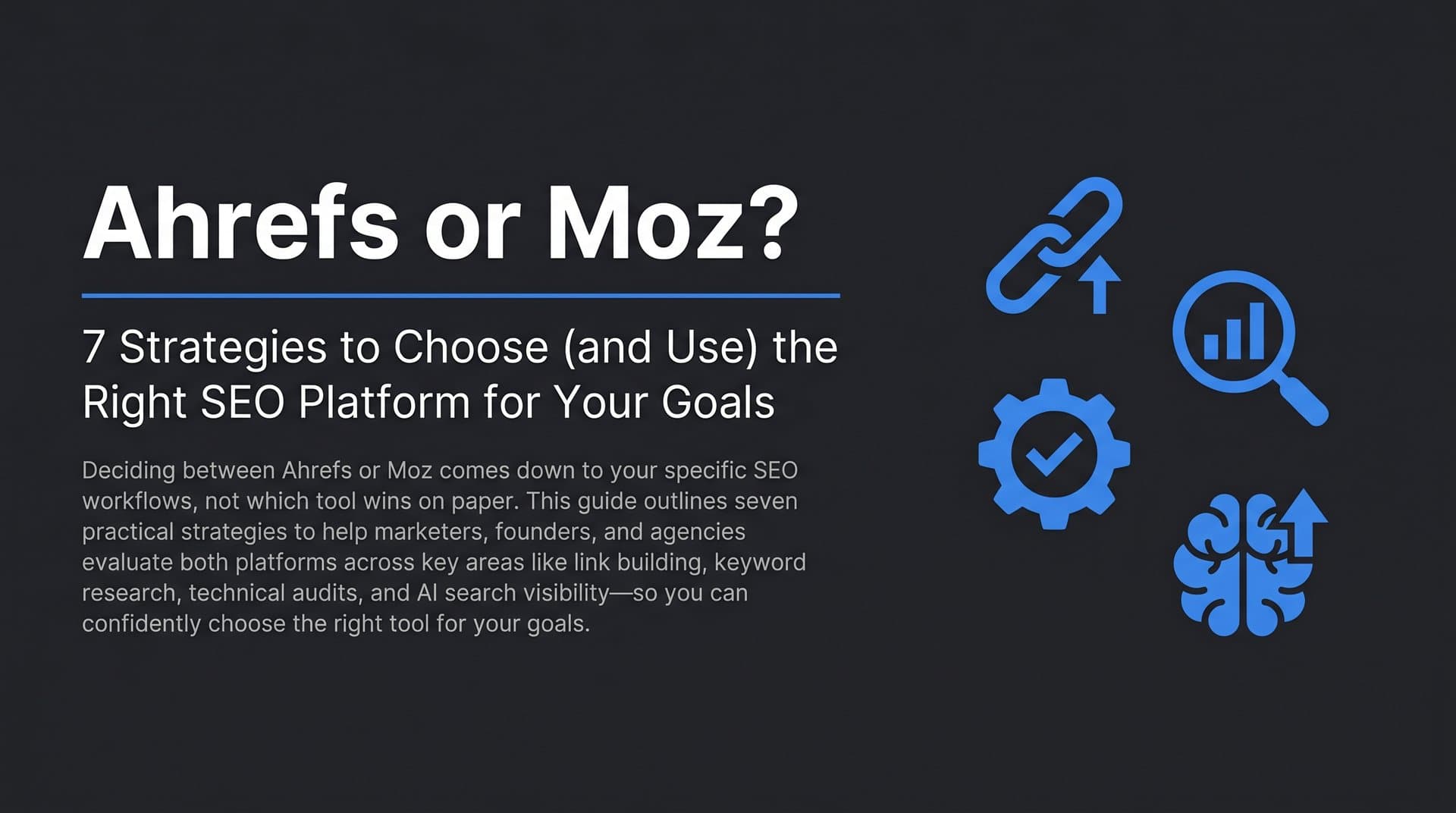
This guide breaks down seven decision-making strategies to help you evaluate Ahrefs vs. Moz based on your actual SEO priorities. From link building and keyword research to technical audits and AI visibility, each strategy focuses on a specific goal and shows you how to leverage the right tool for that job.
And as AI-powered search continues to reshape how brands get discovered, we'll also explore where both platforms fall short and where newer solutions fill critical gaps that neither tool currently addresses.
1. Match Your Link Building Ambitions to the Right Backlink Database
The Challenge It Solves
Link building is resource-intensive. Whether you're running a targeted outreach campaign or auditing your own backlink profile, the quality of your data directly determines the quality of your decisions. Choosing the wrong tool here means wasted prospecting hours, missed opportunities, or outreach built on unreliable metrics.
The Strategy Explained
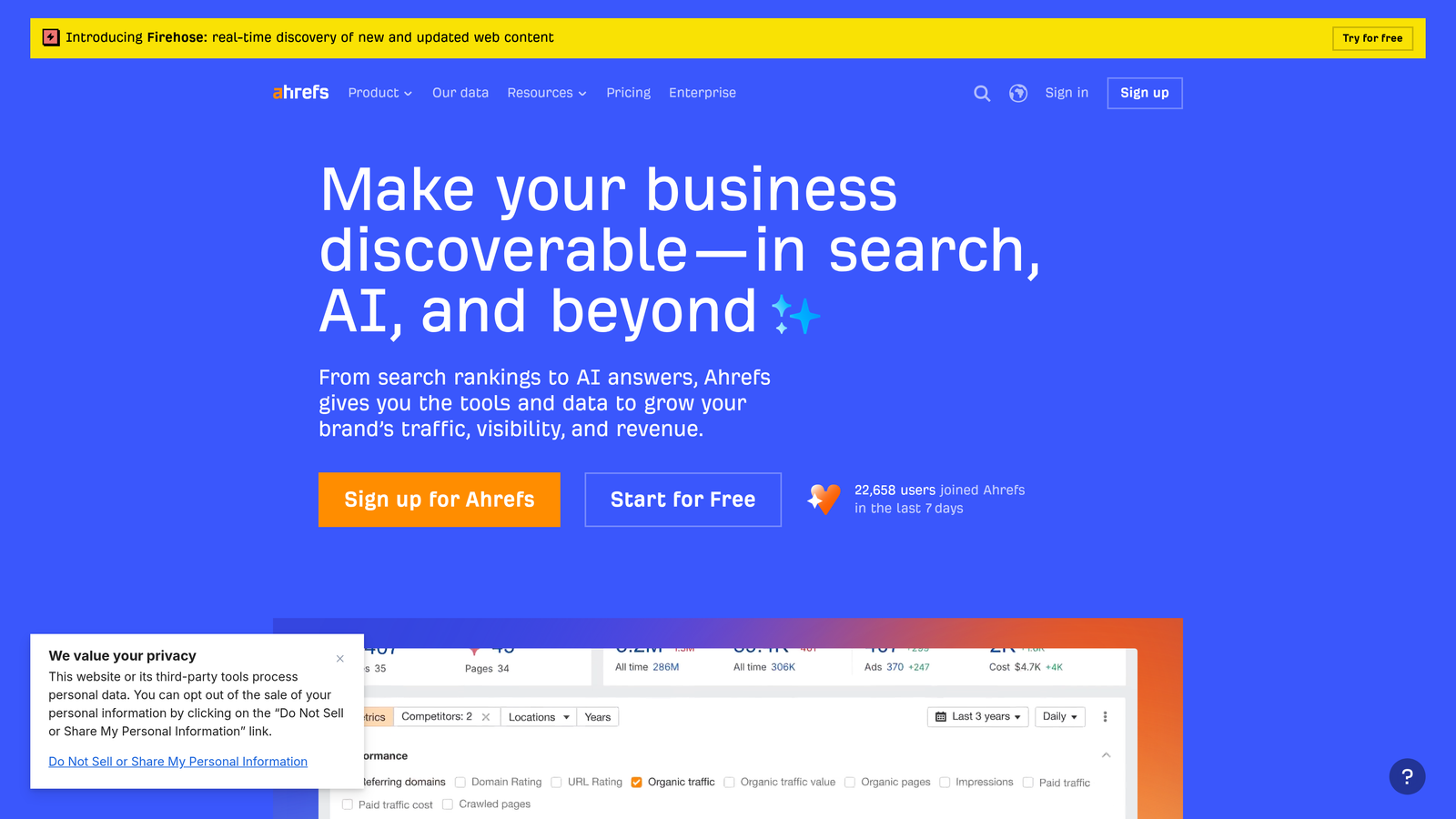
Ahrefs publicly documents that it continuously crawls the web and maintains one of the largest backlink indexes among SEO tools. If your link building strategy involves deep prospecting, finding broken link opportunities at scale, or analyzing competitor link profiles in granular detail, Ahrefs is built for that level of exploration. The data freshness and index depth give you a broader canvas to work from.
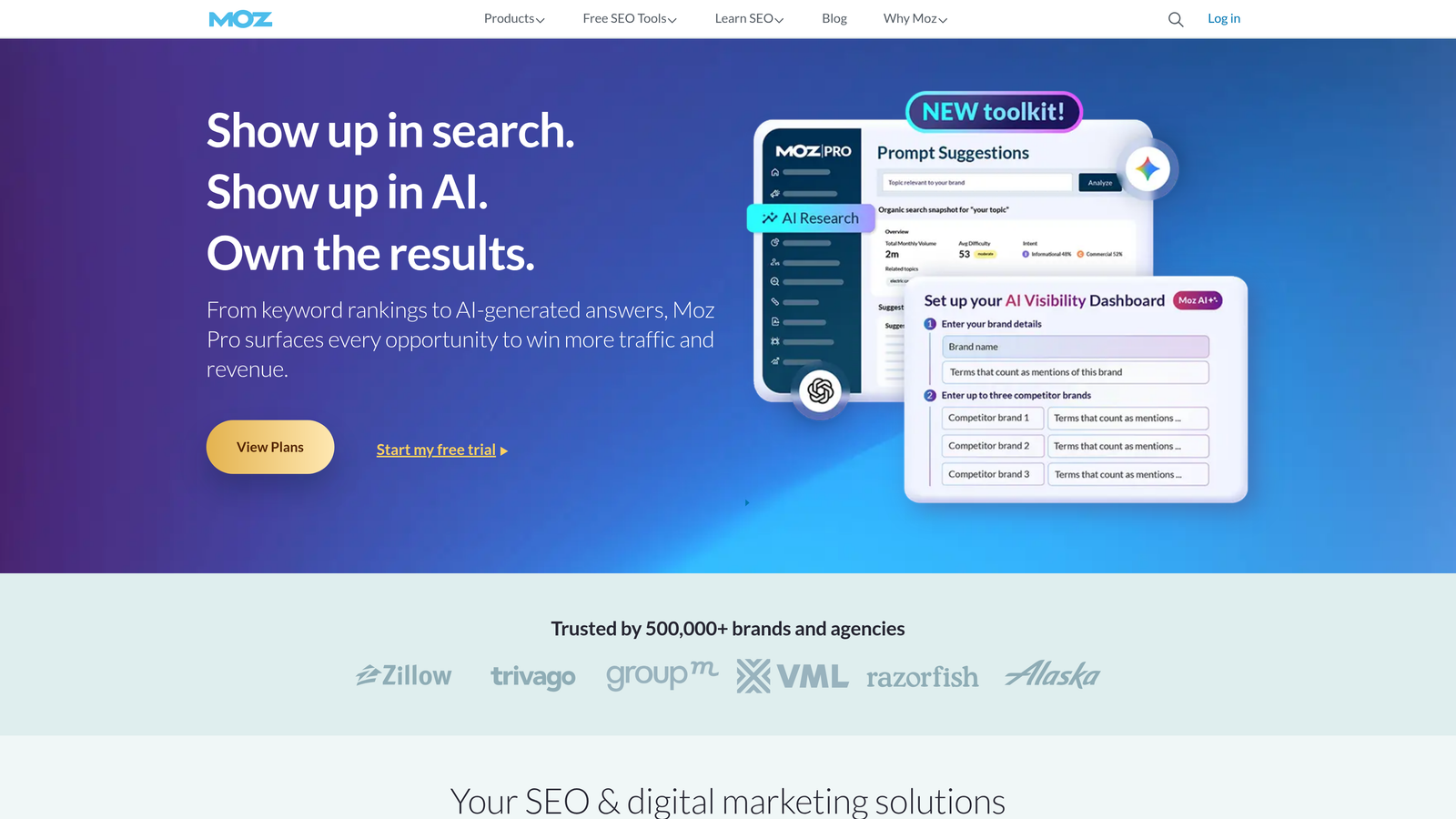
Moz, on the other hand, has built something arguably more valuable for outreach benchmarking: widespread industry adoption of its Domain Authority (DA) metric. DA has become a standard shorthand in link building conversations. When you're qualifying prospects or communicating the value of a link to a client, DA is the metric most people already understand. Moz's Spam Score also provides a useful filter for identifying risky links during audits.
Implementation Steps
1. Define your primary link building mode: prospecting at scale, auditing your own profile, or qualifying outreach targets.
2. If prospecting at scale, use Ahrefs' Site Explorer to analyze competitor backlink profiles and filter by link type, anchor text, and referring domain metrics.
3. If qualifying outreach targets or communicating results to clients, layer in Moz's DA and Spam Score as your benchmark metrics.
4. Export your prospect lists and tag each by DA tier to prioritize outreach sequences.
Pro Tips
Many experienced link builders use Ahrefs for discovery and Moz's metrics for qualification. You don't have to commit to one exclusively for this workflow. Think of Ahrefs as your prospecting engine and Moz's DA as your shared language with clients and collaborators, which is why many teams rely on dedicated SEO reporting tools for agencies to unify these metrics in one place.
2. Align Your Keyword Research Workflow with Platform Strengths
The Challenge It Solves
Keyword research is rarely just about finding search volume. Teams need to understand competitive difficulty, click-through potential, and how to group keywords into actionable content themes. When your research tool doesn't match your workflow, you end up with bloated keyword lists that never translate into a real content calendar.
The Strategy Explained
Ahrefs' Keywords Explorer is built for depth. It surfaces click-through data alongside volume estimates, which helps you understand not just how many people search a term but how many actually click on organic results. This distinction matters enormously when evaluating whether a keyword is worth targeting. Ahrefs also makes it easy to cluster related terms and explore topic-level opportunities rather than chasing individual keywords in isolation.
Moz Keyword Explorer takes a different approach with its Priority score, a documented feature that combines search volume, difficulty, and organic CTR into a single composite metric. For teams that need to move fast and communicate keyword choices clearly to stakeholders or clients, Priority scores simplify the decision-making process considerably. You spend less time debating which metric to weight and more time executing.
Implementation Steps
1. Start with your content goals: Are you building out a broad topic cluster, or do you need to identify the single best keyword to target this month?
2. For cluster-based content planning, use Ahrefs to explore parent topics, identify subtopics, and map click potential across a keyword set.
3. For rapid prioritization, run your seed keywords through Moz Keyword Explorer and sort by Priority score to identify quick wins.
4. Feed your prioritized keyword list directly into your content calendar with assigned difficulty tiers and target publish dates.
Pro Tips
Whichever platform you use for keyword research, always validate your targets against actual SERP intent before assigning them to content briefs. Learning how to track keyword rankings effectively ensures your prioritized terms are actually delivering results after publication.
3. Run Technical SEO Audits Based on Your Site's Complexity
The Challenge It Solves
Technical SEO issues silently suppress organic performance. But the right audit tool depends heavily on your site's scale and your team's technical capacity. Using an enterprise-grade audit tool on a simple marketing site wastes time. Using a basic crawl tool on a large, complex site means critical issues go undetected.
The Strategy Explained
Ahrefs Site Audit is well-suited for large, complex sites where crawl configuration, JavaScript rendering, and advanced issue categorization matter. The platform gives you granular control over crawl settings and surfaces technical issues with enough context to prioritize fixes systematically. For development teams and technical SEOs working on enterprise or e-commerce sites, understanding crawl budget optimization becomes essential at this scale.
Moz's Site Crawl is designed with accessibility in mind. It surfaces on-page issues clearly, explains them in plain language, and makes it easier for non-technical team members or clients to understand what needs fixing and why. For agencies managing multiple smaller client sites, or for marketing teams without dedicated technical SEO resources, Moz's more guided approach reduces the friction between identifying an issue and acting on it.
Implementation Steps
1. Assess your site's complexity: page count, JavaScript dependencies, international configurations, and crawl budget concerns.
2. For sites with high complexity, configure Ahrefs Site Audit with custom crawl rules, set up recurring crawls, and prioritize issues by estimated traffic impact.
3. For simpler sites or client reporting contexts, use Moz's Site Crawl to generate accessible issue reports and track fixes over time.
4. In both cases, build a fix prioritization matrix: critical issues affecting crawlability first, then indexability, then on-page optimization.
Pro Tips
Run audits on a scheduled cadence rather than reactively. Monthly crawls catch regressions introduced by site updates before they compound into traffic losses. Both platforms support recurring crawl scheduling, so there's no excuse for letting technical debt accumulate silently.
4. Build a Rank Tracking System That Matches Your Reporting Needs
The Challenge It Solves
Rank tracking serves two very different masters: internal strategy and external reporting. What a technical SEO needs from rank data is completely different from what a client or executive stakeholder needs. Choosing a tracking setup that doesn't serve both audiences creates reporting friction and erodes trust in your data.
The Strategy Explained
Ahrefs' rank tracking capabilities are oriented toward competitive intelligence. You can monitor your own rankings alongside competitor movements, track SERP feature ownership, and segment data by device, location, and tag. For in-house teams and agencies that use rank data to inform tactical decisions, this depth is genuinely useful.
Moz's rank tracking and reporting interface tends to be more polished for client-facing delivery. The visual presentation is clean, the metrics are explained accessibly, and the reporting outputs are easier to share with stakeholders who don't live inside SEO tools every day. Centralizing this data in a well-designed SEO performance dashboard helps bridge the gap between raw data and actionable insights for both audiences.
Implementation Steps
1. Separate your rank tracking use cases: internal competitive monitoring vs. external client or stakeholder reporting.
2. Set up keyword groups in your chosen platform that mirror your content clusters and campaign priorities.
3. Configure competitor tracking in Ahrefs to monitor share-of-voice shifts across your target keyword sets.
4. For client deliverables, use Moz's reporting templates or export features to build consistent, branded ranking reports.
Pro Tips
Rank tracking data is most valuable when it's contextualized. A ranking drop means very little without knowing whether a competitor moved up, a SERP feature appeared, or your page lost crawl coverage. Always pair rank changes with a quick SERP check before drawing conclusions or communicating results.
5. Leverage Content Gap Analysis to Uncover Hidden Opportunities
The Challenge It Solves
Publishing content without a competitive lens means you're guessing at what your audience needs. Content gap analysis flips this around: instead of starting from scratch, you identify exactly which keywords your competitors rank for that you don't, and build your content calendar around closing those gaps strategically.
The Strategy Explained
Ahrefs has a dedicated Content Gap tool built directly into its competitive research workflow. You input your domain and up to three or four competitor domains, and the tool surfaces keywords those competitors rank for that you currently don't. You can filter by keyword difficulty, search volume, and the number of competitors ranking for a term, which helps you identify both quick wins and longer-term content investments.
This workflow integrates naturally with Ahrefs' keyword clustering and content explorer features, making it one of the most efficient ways to populate a content calendar with validated, competition-informed targets. Reviewing strong content marketing strategy examples can help you translate those gap findings into a structured publishing plan.
Implementation Steps
1. Identify three to five direct competitors in Ahrefs Site Explorer and note their top-performing content by organic traffic.
2. Run a Content Gap analysis using your domain and those competitors as inputs.
3. Filter results by keywords where two or more competitors rank but you don't, prioritizing by volume and difficulty balance.
4. Group gap keywords by topic cluster and assign each cluster to a content brief with a target publish date.
Pro Tips
Don't treat every gap keyword as an automatic content opportunity. Check the SERP intent for each target before assigning it to a content type. A keyword gap that's dominated by product pages, for example, won't be closed by publishing a blog post, no matter how well-optimized it is.
6. Evaluate Local SEO and SERP Feature Capabilities for Your Market
The Challenge It Solves
Local SEO and national or global SEO require fundamentally different toolsets and strategies. Using a platform designed for broad organic research to manage local search presence creates gaps in your workflow. Conversely, using a local-focused tool for enterprise-level SERP analysis limits your competitive visibility.
The Strategy Explained
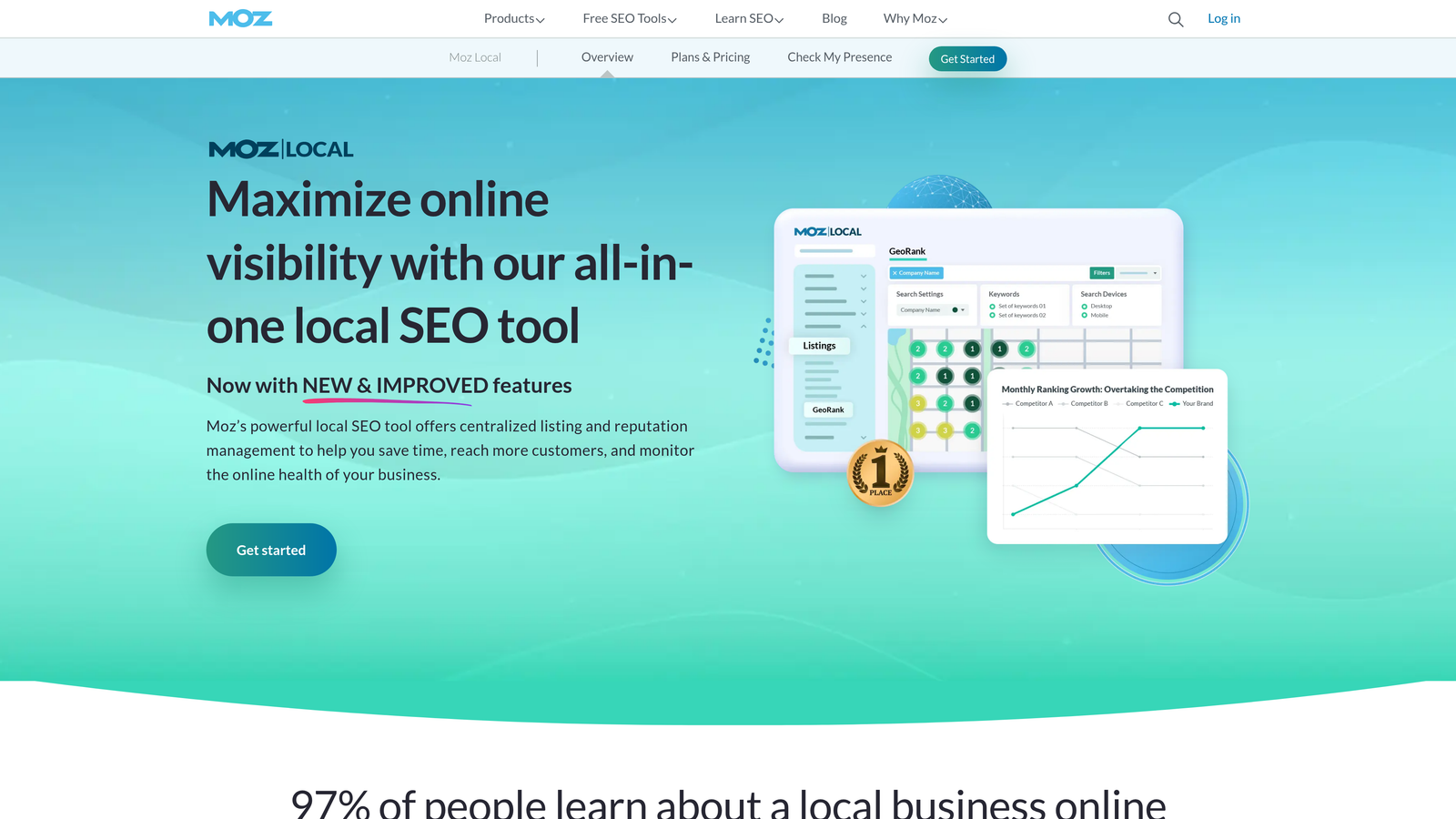
Moz has a genuine differentiator here: Moz Local is a separate, dedicated product built specifically for local search management. It handles listing distribution, citation consistency, review management, and local ranking visibility in a way that Ahrefs simply doesn't replicate. For agencies managing local clients, franchises, or multi-location businesses, Moz Local is purpose-built for that workflow in a way that general SEO platforms aren't.
Ahrefs, on the other hand, provides broader SERP feature data that's more useful for national and global campaigns. Its SERP analysis tools help you understand which features dominate a given keyword landscape, whether that's featured snippets, People Also Ask boxes, or video carousels. For campaigns targeting competitive, non-local keywords, understanding how to improve organic search ranking through SERP feature targeting is more actionable than local listing management.
Implementation Steps
1. Clarify your primary market scope: local, national, or global.
2. For local clients or campaigns, evaluate Moz Local as a standalone addition to your stack for citation and listing management.
3. For national or global campaigns, use Ahrefs' SERP overview to map which features appear for your target keywords and identify which ones you can realistically compete for.
4. Build a SERP feature strategy alongside your keyword targeting plan, not as an afterthought.
Pro Tips
Local SEO and organic SEO are increasingly intertwined. Even for primarily local businesses, content that targets informational queries can drive organic visibility that supports local conversions. Don't silo your local and content strategies entirely; use both toolsets to inform a unified approach.
7. Go Beyond Both: Track AI Visibility Where Traditional Tools Can't
The Challenge It Solves
Ahrefs and Moz are built to track performance in traditional search engines. But as of May 2026, neither platform has launched AI visibility tracking features. That means every time ChatGPT recommends a product, Perplexity summarizes an industry comparison, or Claude answers a question about the best tools in your category, you have no visibility into whether your brand is being mentioned, how it's being described, or which competitors are getting the AI-generated endorsements you're missing.
The Strategy Explained
AI-powered search is becoming a significant discovery channel. Users increasingly turn to ChatGPT, Perplexity, Claude, and similar platforms to get recommendations, comparisons, and answers that previously came from Google's first page. The brands that appear in those AI-generated responses are gaining a form of visibility that traditional rank tracking simply doesn't measure.
This is where purpose-built AI visibility tracking fills a critical gap. Platforms like Sight AI monitor how AI models mention your brand across multiple platforms, track sentiment in those mentions, and identify the content opportunities that would increase your presence in AI-generated answers. This isn't a replacement for Ahrefs or Moz. It's the layer those tools don't cover, and it's becoming harder to ignore as AI search behavior grows.
Sight AI's AI Visibility Score gives you a concrete benchmark for how your brand appears across AI platforms, which prompts surface your competitors instead of you, and which content gaps are costing you AI-generated mentions. Combined with its AI Content Writer and automated indexing tools, leveraging AI content creation tools lets you close those gaps faster than manual workflows allow.
Implementation Steps
1. Audit your current SEO stack and identify whether you have any visibility into AI-generated search results. If the answer is no, that's a gap worth addressing now.
2. Set up AI visibility tracking to monitor brand mentions across ChatGPT, Claude, Perplexity, and other major AI platforms.
3. Review your AI Visibility Score and identify which competitor brands are appearing in responses where yours isn't.
4. Use content gap findings from your AI visibility data to brief and publish SEO/GEO-optimized content that increases your chances of being mentioned in AI-generated answers.
Pro Tips
GEO (Generative Engine Optimization) content isn't just about keywords. AI models cite brands that appear authoritative, well-documented, and frequently referenced across credible sources. A strong backlink profile and well-structured content optimized for SEO both contribute to AI visibility, which is another reason your traditional SEO work and AI visibility strategy should inform each other rather than operate in separate silos.
Putting It All Together: Your SEO Platform Decision Framework
The Ahrefs vs. Moz decision doesn't have to be binary. The most effective strategy is to match each platform's strengths to your specific SEO priorities rather than forcing a single tool to do everything.
Here's a practical summary of where each platform excels:
Ahrefs is your best choice for: Deep backlink prospecting, click-through-informed keyword research, large-scale technical audits, competitive content gap analysis, and SERP feature intelligence for national or global campaigns.
Moz is your best choice for: DA-based outreach qualification, streamlined keyword prioritization with Priority scores, accessible on-page audit reporting, client-friendly rank tracking, and local search management through Moz Local.
Neither covers: AI visibility. As AI-powered search becomes a more significant discovery channel, the gap in both platforms' capabilities becomes more consequential. Brands that only track traditional search rankings are operating with incomplete intelligence about how they're being discovered and recommended.
Start by auditing your current SEO workflow against the seven strategies above. Identify where your current tools serve you well, where they create friction, and where you have no visibility at all. Then fill the AI visibility gap before your competitors do.
Start tracking your AI visibility today and see exactly where your brand appears across top AI platforms. Stop guessing how ChatGPT and Claude talk about your brand, and start using that intelligence to drive organic traffic growth from every channel that matters in 2026 and beyond.