The pressure on B2B content teams in 2026 is unlike anything most marketers have experienced before. Buyers expect detailed, relevant content at every stage of their decision journey, yet the average content team is stretched thin trying to produce even a handful of articles per month. Meanwhile, a new discovery channel has emerged that most teams aren't fully optimized for: AI-powered search tools like ChatGPT, Claude, and Perplexity, where prospects are now asking for vendor recommendations and getting curated answers that may or may not include your brand.
This is where B2B AI content publishing enters the picture. At its core, it's the practice of using AI-powered tools and workflows to research, create, optimize, and publish content at scale, specifically designed for business audiences and the complex buying journeys they navigate. It's not just about writing faster. It's about building a systematic approach to content that performs across both traditional search engines and AI-generated responses.
This article breaks down exactly what B2B AI content publishing involves, why it matters for organic growth and AI visibility, and how to construct a publishing workflow that produces measurable results. Whether you're a marketer trying to scale output, a founder building brand authority, or an agency managing content for multiple clients, this is the framework you need to compete in the current landscape.
Why Traditional B2B Content Workflows Are Breaking Down
B2B buyers don't make purchasing decisions after reading a single blog post. They consume multiple content assets across research, evaluation, and decision stages, which means your brand needs to show up consistently across dozens of relevant topics and keyword clusters. Most content teams simply can't keep pace with that demand using traditional, manual workflows.
The volume-quality tension is real. Producing a well-researched, properly optimized B2B article often takes several days when you factor in topic research, keyword analysis, drafting, editing, SEO formatting, and CMS publishing. Multiply that across the number of topics you need to cover, and the math quickly becomes unsustainable. Competitors who find ways to publish more frequently, without sacrificing quality, build topical authority faster and capture more organic traffic over time. The challenges of manual SEO content writing are well-documented and only intensify at scale.
Then there's the AI search problem. Professionals increasingly turn to AI models to answer questions like "what's the best B2B marketing automation platform for a mid-market SaaS company?" These models generate synthesized answers that reference specific brands and solutions. If your content isn't structured in a way that AI models can parse, cite, and reference, your brand may be invisible in this growing discovery channel, even if you rank well on traditional SERPs.
Manual publishing bottlenecks compound the problem further. Think about every step between a content idea and a live, indexed page: keyword research, competitive analysis, outlining, drafting, editing, SEO optimization, internal linking, meta tag writing, CMS formatting, image sourcing, publishing, and then waiting for search engines to discover and index the page. Each of those steps introduces friction and delay. For teams trying to operate at scale, that friction is the difference between publishing ten articles a month and publishing fifty. Understanding the content publishing bottleneck is the first step toward solving it.
The traditional workflow was designed for a world where publishing a few high-quality pieces per month was enough to compete. That world no longer exists. B2B AI content publishing is the response to a market that now rewards both quality and velocity.
The Core Components of a B2B AI Content Publishing Stack
Building a scalable B2B content operation requires thinking in systems, not individual tasks. A well-constructed AI content publishing stack addresses three distinct layers: content creation, optimization, and distribution. Each layer has its own tools and processes, and the real power comes from connecting them into a unified workflow.
AI Content Generation: This is the foundation of the stack. Specialized AI writing agents can produce structured, SEO and GEO-optimized articles across formats like explainers, listicles, comparison guides, and how-to content. The key word here is "specialized." General-purpose AI tools can produce decent drafts, but agents built specifically for content marketing understand things like keyword placement, heading hierarchy, entity inclusion, and the structural signals that help both search engines and AI models interpret and reference your content accurately. A multi-agent content writing system is particularly effective at handling these diverse format requirements.
Automated Optimization and Quality Control: Generating a draft is only part of the equation. Before content goes live, it needs to meet a set of technical and editorial standards. This includes keyword targeting and density checks, internal link recommendations, readability scoring, meta tag generation, and schema markup. AI-driven optimization layers can handle most of this automatically, flagging issues and applying fixes before a human reviewer ever sees the draft. The result is content that arrives at the editorial review stage already meeting baseline publishing standards, which dramatically reduces the time editors spend on technical corrections.
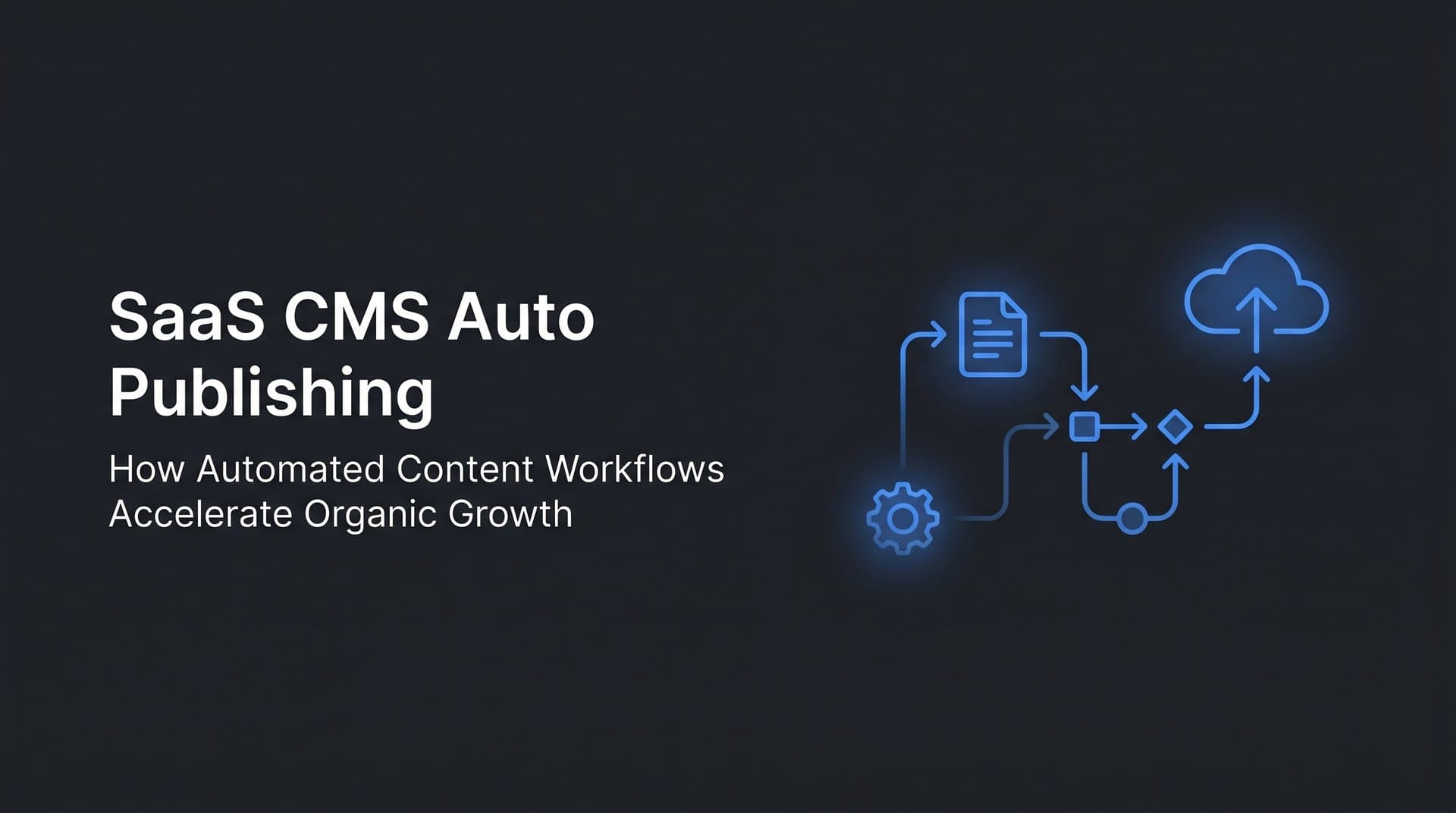
CMS Auto-Publishing and Indexing: This is the most underappreciated component of the stack. Even perfectly written, fully optimized content creates no value sitting in a draft folder. Auto-publishing capabilities push approved content directly to your CMS, formatted and ready to go live. Equally important is what happens immediately after publishing: triggering indexing protocols like IndexNow, which notifies search engines the moment new content is available. Without this step, new pages can sit undiscovered for days or weeks, delaying the traffic and visibility gains you've worked to create.
Platforms like Sight AI integrate all three of these layers into a single workflow, combining AI content generation with automated optimization, CMS publishing, and IndexNow integration. For B2B teams trying to scale without proportionally scaling headcount, that kind of content publishing workflow automation is a significant operational advantage.
The goal isn't to remove humans from the process. It's to position human expertise where it creates the most value: strategic direction, editorial judgment, and quality assurance, rather than manual formatting and technical SEO cleanup.
Building Content That AI Models Actually Reference
Ranking on Google is no longer the only game in town. As AI-powered search tools become a primary research channel for B2B buyers, getting your brand cited in AI-generated answers has become a meaningful business objective. The discipline that addresses this is called Generative Engine Optimization, or GEO.
GEO is about structuring your content so that AI models can extract, understand, and confidently reference it. This means writing with clear definitions and explicit claims rather than vague, hedged language. It means covering topics comprehensively enough that an AI model treating your content as a source would find everything it needs in one place. It means using entity-rich language that connects your brand, products, and expertise to the specific topics and categories your buyers are researching. Mastering SEO-optimized AI content generation is foundational to this approach.
Think of it this way: AI models are essentially pattern-matching engines that synthesize information from content they've been trained on or can access. Content that is clearly structured, factually grounded, and semantically precise is far more likely to be surfaced in a response than content that is vague, thin, or poorly organized. A well-structured B2B explainer that defines key concepts, provides authoritative analysis, and uses precise industry terminology gives an AI model exactly what it needs to include your brand in a relevant answer.
The intersection of SEO and GEO is where B2B AI content publishing gets particularly interesting. Traditional SEO signals, including proper header hierarchy, internal linking, meta descriptions, and structured data, still matter for search engine rankings. But they also contribute to how AI models interpret and weight your content. A page with clean technical SEO signals is easier for both search crawlers and AI systems to parse. This means optimizing for traditional search and AI search simultaneously isn't a contradiction; it's a reinforcing strategy. Learning how to optimize content for SEO remains essential even in the age of AI discovery.
Tracking AI visibility closes the loop. This newer category of marketing analytics monitors how AI models respond to prompts related to your brand, competitors, and industry. Which AI platforms mention your brand? What sentiment do those mentions carry? Which content topics seem to trigger references to your products or services? Sight AI's AI Visibility Score and prompt tracking capabilities are designed to answer exactly these questions, giving B2B marketers the data they need to understand their AI search presence and adjust their content strategy accordingly.
Without this visibility, you're essentially publishing into a black box, hoping that AI models are picking up your content but with no way to verify or optimize based on real data.
A Step-by-Step B2B AI Publishing Workflow
Understanding the components of B2B AI content publishing is one thing. Putting them into a repeatable, scalable workflow is another. Here's how a well-designed process flows from idea to indexed page.
Step 1: Topic Discovery and Keyword Mapping
Every piece of content should start with a clear strategic rationale. AI-driven research tools can identify content gaps in your existing library, surface high-intent B2B keywords that your competitors are ranking for, and even analyze what questions your target audience is asking AI models directly. This last point is increasingly important: the queries people type into ChatGPT or Perplexity often reveal intent signals that traditional keyword research tools miss entirely. Knowing where to find blog content ideas is the critical first step in building a scalable pipeline.
The output of this stage is a prioritized content calendar that maps topics to funnel stages, keyword clusters, and audience segments. Rather than publishing randomly, you're building topical authority systematically, covering a subject area comprehensively enough that both search engines and AI models recognize your brand as an authoritative source.
Step 2: AI-Assisted Drafting and Human Review
With a topic and keyword target defined, specialized AI agents generate a structured draft. The best implementations use agents purpose-built for different content formats: one agent optimized for long-form explainers, another for comparison listicles, another for how-to guides. Each format has different structural requirements, and purpose-built agents produce output that requires less editorial correction than a one-size-fits-all approach.
Human review remains essential, particularly in B2B contexts where accuracy, expertise signals, and brand voice directly influence buyer trust. Editorial oversight at this stage focuses on factual accuracy, industry-specific nuance, and ensuring the content reflects genuine expertise rather than generic AI output. The goal is content that reads as authoritative and human, even when AI did the heavy lifting on the initial draft. The best AI content tools for B2B marketing are designed to support this human-in-the-loop approach.
Step 3: Publish, Index, and Measure
Once content clears editorial review, auto-publishing pushes it directly to your CMS with formatting intact. Immediately after publishing, IndexNow integration notifies search engines that new content is available, compressing the discovery window from days or weeks to hours. If you've ever wondered why your content is not indexed quickly, this step is often the missing piece. From there, performance tracking across both traditional search rankings and AI model mentions gives you the data to understand what's working and iterate accordingly.
This three-step loop, when executed consistently, creates a compounding content asset base that grows your organic and AI visibility over time.
Common Pitfalls and How to Avoid Them
B2B AI content publishing is a powerful approach, but it's not without failure modes. Understanding the most common pitfalls is essential for teams that want to scale without creating problems that undermine their SEO and credibility.
Publishing Volume Without Strategic Intent: The biggest risk of AI-assisted content production is the temptation to publish at high volume without a coherent topical strategy. Flooding your site with generic articles that lack clear audience relevance or topical depth can actually dilute your domain's SEO signals. Search engines reward topical authority, which means depth and coherence across a subject area matters more than raw article count. Every piece of content should serve a specific keyword target, audience segment, or funnel stage. If it doesn't, it's not contributing to your authority; it may be working against it. Developing sound blog writing content strategies before scaling production is essential.
Ignoring the Indexing and Technical SEO Layer: Well-written, well-optimized content still fails if search engines can't efficiently discover and crawl it. Sitemaps need to be current and accurate. Crawl budget needs to be managed so search engine bots spend their time on your highest-value pages. And new content needs to be indexed promptly, which is why protocols like IndexNow aren't optional extras but core infrastructure for any team publishing at scale. Skipping this layer is one of the most common reasons content programs underperform relative to their output volume.
Treating AI Content as Set-and-Forget: B2B content isn't a one-time investment. Rankings shift, AI model training data evolves, competitor content improves, and buyer intent changes. Content that performs well today may need to be updated in six months to maintain its position. Building a review cadence into your workflow, informed by ranking data and AI visibility metrics, ensures your content library stays competitive over time rather than slowly degrading.
Avoiding these pitfalls requires treating B2B AI content publishing as a strategic discipline, not just a production shortcut. The teams that get the most value from AI-assisted workflows are the ones that pair automation with clear strategic guardrails and ongoing performance management.
Your B2B AI Content Publishing Roadmap
Let's bring this together into a clear framework. B2B AI content publishing, done well, follows a consistent cycle: identify content opportunities through AI-driven research, generate optimized content using specialized AI agents with human editorial oversight, auto-publish and trigger immediate indexing, then track performance across both traditional search and AI model mentions to refine your strategy and repeat.
The competitive advantage here is the combination of content velocity and AI visibility tracking. Most B2B brands are still operating with manual workflows that limit them to a fraction of the publishing frequency they need to build topical authority. And most aren't monitoring their presence across AI platforms at all, leaving a growing discovery channel completely unmanaged.
Brands that publish strategically at scale and monitor how AI models talk about them will capture demand that competitors miss entirely. When a prospect asks ChatGPT or Perplexity for a vendor recommendation in your category, the brands that appear in that answer are the ones that have invested in both content depth and GEO optimization. That's not luck. It's the result of a deliberate, systematic publishing approach.
B2B AI content publishing isn't about replacing your content team or cutting corners on quality. It's about building a system that creates discoverable, authoritative content optimized for both traditional search engines and the AI models that are increasingly shaping how buyers find and evaluate vendors. The teams that build this system now will have a compounding advantage that becomes harder for competitors to close over time.
Ready to see where your brand actually stands across AI platforms? Start tracking your AI visibility today and get visibility into every mention, uncover content opportunities your competitors are missing, and automate your path to organic traffic growth with Sight AI's all-in-one platform for AI visibility tracking, content generation, and automated indexing.