Creating comprehensive SEO guides manually is time-intensive and often inconsistent. Marketers spend hours researching keywords, structuring content, and optimizing for search—only to repeat the process for the next piece. Automated SEO guide creation transforms this workflow by leveraging AI agents and systematic processes to produce optimized, authoritative content at scale.
This approach doesn't replace human expertise; it amplifies it. By automating research, structure, and optimization tasks, teams can focus on strategy and refinement while maintaining quality across dozens or hundreds of guides. Whether you're building a content hub for your SaaS product or scaling an agency's output, these seven strategies will help you implement automated SEO guide creation that actually ranks and converts.
1. Build a Keyword-to-Outline Automation Pipeline
The Challenge It Solves
Content teams often face a bottleneck at the research and planning stage. Manually pulling keyword data, analyzing search intent, and structuring outlines can consume several hours per guide. This creates a frustrating cycle: you know what topics to cover, but the prep work delays actual content creation. The result is slower publishing velocity and missed opportunities to capture emerging search trends.
The Strategy Explained
A keyword-to-outline automation pipeline connects your keyword research directly to AI outline generation. Think of it like a conveyor belt: keyword data enters one end, and structured content outlines emerge from the other. The system analyzes search volume, intent signals, and related queries, then automatically generates section headings, subheadings, and content requirements based on that data.
This doesn't mean you lose control. The automation handles the mechanical work of organizing information and identifying content gaps. You retain strategic oversight, refining outlines to match your brand voice and unique positioning. The time saved on structure creation shifts to higher-value activities like adding proprietary insights and optimizing messaging.
Implementation Steps
1. Connect your keyword research tool's API to your content workflow, ensuring you can programmatically access search volume, difficulty scores, and related terms for any target keyword.
2. Configure AI agents with specific outline generation prompts that incorporate your keyword data, search intent classification, and preferred guide structure formats.
3. Set up a review queue where generated outlines await approval, allowing your team to refine sections before moving to full content generation.
Pro Tips
Feed your AI outline generator examples of your best-performing guides to train it on your preferred structure patterns. Include competitor SERP data in your pipeline so the system identifies content gaps that your guides should address. Schedule your pipeline to run weekly on priority keywords, creating a steady stream of approved outlines ready for content production.
2. Deploy Specialized AI Agents for Different Guide Sections
The Challenge It Solves
Generic AI prompts produce generic content. When you use a single AI configuration for every section of your guide, you get inconsistent quality. Introductions lack hooks, technical sections oversimplify complex concepts, and conclusions feel disconnected from the content that preceded them. This one-size-fits-all approach undermines the authority and coherence that comprehensive guides require.
The Strategy Explained
Role-specific AI agents function like a specialized writing team. One agent focuses exclusively on crafting compelling introductions with strong hooks and clear value propositions. Another handles technical explanations, configured to maintain depth while ensuring clarity. A third manages conclusions, trained to synthesize key points and create natural transitions to calls-to-action.
Each agent operates with tailored instructions, examples, and quality criteria specific to its section type. This specialization produces content that feels cohesive yet varied—each part optimized for its specific purpose within the larger guide. The approach mirrors how editorial teams assign different writers based on their strengths, but executes at automation speed. For a deeper dive into this methodology, explore how SEO content creation with multiple AI agents can transform your workflow.
Implementation Steps
1. Identify the distinct section types in your guides—typically introductions, overview sections, technical deep-dives, practical implementation steps, and conclusions—and create dedicated AI agent configurations for each.
2. Train each agent with high-quality examples from your existing content library, showing the specific characteristics that make each section type effective in your brand voice.
3. Build a content assembly workflow that routes each outline section to its corresponding specialized agent, then combines the outputs into a complete draft for review.
Pro Tips
Create an agent specifically for FAQ sections that pulls from actual customer questions in your support tickets or sales conversations. Configure your technical content agent with industry-specific terminology and your preferred explanation frameworks. Test agent outputs against your editorial guidelines regularly, refining prompts when quality drifts from your standards.
3. Implement Dynamic Internal Linking During Generation
The Challenge It Solves
Manual internal linking becomes exponentially harder as your content library grows. Writers forget which related articles exist, miss valuable linking opportunities, or spend excessive time searching through your CMS for relevant pieces. The result is weak site architecture, diminished topical authority signals, and readers who can't easily navigate to related information.
The Strategy Explained
Dynamic internal linking systems analyze your content inventory in real-time during guide generation. As the AI writes about a specific concept or topic, the system identifies existing articles in your library that provide relevant context or deeper exploration. It then automatically suggests or inserts contextually appropriate links, complete with natural anchor text.
This approach treats your content library as a living knowledge graph. Each new guide automatically connects to the existing network, strengthening your site's topical authority while creating pathways for readers to explore related concepts. The automation ensures consistency—every relevant connection gets made, not just the ones a writer happens to remember. Teams implementing an automated SEO content pipeline see the most dramatic improvements in site architecture.
Implementation Steps
1. Build a searchable index of your content library that includes article titles, primary topics, key concepts covered, and target keywords for each published piece.
2. Configure your content generation system to query this index as it writes, identifying potential linking opportunities based on semantic relevance between the current section and existing content.
3. Establish linking rules that define how many internal links per section, preferred anchor text patterns, and which content types should receive priority for internal links.
Pro Tips
Weight your linking algorithm to favor cornerstone content and recently updated articles, ensuring your most valuable pages receive consistent internal link equity. Implement a "link audit" step that flags sections with zero internal links or excessive linking density before publishing. Update your content index immediately when publishing new guides so they become available for internal linking in subsequent content generation.
4. Automate Competitive Gap Analysis Into Your Workflow
The Challenge It Solves
Publishing guides that miss critical topics or fail to address what searchers actually want wastes resources and produces content that underperforms. Manual competitive analysis is thorough but slow, creating delays between identifying opportunities and publishing content. By the time you analyze the SERP and create your guide, competitors may have already filled the gap you identified.
The Strategy Explained
Automated competitive gap analysis integrates SERP research directly into your content generation workflow. Before creating a guide, the system analyzes top-ranking content for your target keyword, extracting the topics, sections, and questions those articles address. It then identifies gaps—concepts covered by some competitors but not all, or questions your content could answer more comprehensively.
This intelligence feeds directly into your outline generation and content creation. Your guides automatically include sections addressing identified gaps, positioning your content to rank for long-tail variations and provide more complete coverage than existing results. The automation compresses what used to be hours of manual SERP analysis into minutes of systematic data extraction. Building a robust automated SEO content strategy starts with this competitive intelligence layer.
Implementation Steps
1. Set up automated SERP scraping for your target keywords, extracting content from the top 10 ranking pages including their headings, key topics, and word counts.
2. Implement content analysis that identifies common patterns across ranking pages—what topics appear in most results—and unique elements that only some competitors include.
3. Configure your outline generator to incorporate gap analysis findings, automatically suggesting sections that address underserved topics or questions missing from competitor content.
Pro Tips
Run gap analysis not just for your primary keyword but for related long-tail variations, uncovering subtopics that could strengthen your guide's comprehensiveness. Schedule recurring gap analysis for your existing guides, identifying opportunities to update content with sections addressing newly emerging topics in the SERP. Track which gap-addressing sections correlate with ranking improvements, refining your analysis to focus on the most impactful content additions.
5. Create Template Libraries for Consistent Guide Structures
The Challenge It Solves
Inconsistent guide structures confuse readers and dilute your brand identity. When each guide follows a different format, readers can't develop expectations about where to find specific information types. This structural chaos also complicates automation—without standardized templates, your AI agents lack clear frameworks to follow, resulting in guides that feel disjointed or incomplete.
The Strategy Explained
Template libraries establish modular frameworks for different guide types. A "How-To Guide" template might include standard sections for prerequisites, step-by-step instructions, troubleshooting, and next steps. A "Comparison Guide" template structures content around evaluation criteria, feature breakdowns, and recommendation logic. Each template defines not just section headings but content requirements, word count ranges, and specific elements each section must include.
These templates become the foundation for your automated content generation. AI agents receive clear structural blueprints, ensuring every guide of a particular type maintains consistent organization and coverage. The standardization also accelerates your review process—editors know exactly what to expect and can quickly identify missing or weak sections. For teams producing high volumes, bulk SEO content creation becomes manageable only with solid template foundations.
Implementation Steps
1. Audit your existing high-performing guides to identify common structural patterns, grouping them into distinct guide types based on their purpose and organization.
2. Document each guide type as a formal template, specifying required sections, optional sections, content requirements for each part, and any type-specific formatting or style guidelines.
3. Configure your content generation system to select the appropriate template based on keyword intent and guide type classification, automatically structuring outlines according to your template specifications.
Pro Tips
Build flexibility into your templates with optional sections that appear based on topic characteristics—technical guides might include a "Common Pitfalls" section while beginner guides skip it. Create template variations for different content depths: quick guides, comprehensive guides, and ultimate guides with progressively more detailed section requirements. Version control your templates, tracking which template versions produce the best engagement and ranking results.
6. Set Up Automated Quality Scoring Before Publishing
The Challenge It Solves
Scaling content production without quality controls leads to a library filled with mediocre guides that neither rank nor convert. Manual quality review of every piece becomes impractical at volume, yet publishing unvetted AI-generated content risks damaging your brand authority. You need systematic quality assurance that identifies issues before content reaches your audience.
The Strategy Explained
Automated quality scoring evaluates content against predefined criteria before it enters your publishing queue. The system checks for completeness—are all required sections present with sufficient depth? It assesses readability, flagging overly complex sentences or jargon-heavy paragraphs. It verifies SEO fundamentals like keyword usage, meta description quality, and internal linking density. Content that scores below your threshold gets flagged for human review or revision.
This creates a quality gate that operates at automation speed. Your team focuses review time on flagged content while high-scoring guides move through your workflow with minimal intervention. The scoring system also provides data on common quality issues, helping you refine your AI agent configurations to prevent recurring problems. Implementing the right automated SEO workflow tools makes this quality layer seamless.
Implementation Steps
1. Define your quality criteria across categories—content completeness, readability metrics, SEO optimization, factual accuracy indicators, and brand voice alignment—with specific thresholds for each.
2. Implement automated checks that evaluate generated content against these criteria, producing a composite quality score and flagging specific issues found in each category.
3. Create a review workflow that routes low-scoring content to editors with detailed quality reports, while high-scoring content advances to final approval with minimal intervention.
Pro Tips
Weight your quality scoring based on what actually correlates with content performance—if guides with more examples consistently outperform those without, increase the scoring weight for practical examples. Build a feedback loop where editor revisions on flagged content inform updates to your AI agent prompts, gradually reducing the frequency of common quality issues. Track quality score trends over time to identify when agent performance degrades, triggering prompt refinement before it impacts published content.
7. Connect Generation to Instant Indexing for Faster Discovery
The Challenge It Solves
Publishing great content means nothing if search engines take weeks to discover and index it. Traditional crawl-based indexing creates frustrating delays between publishing and ranking, especially for newer sites or those publishing at high volume. During this lag, your guides generate zero organic traffic despite being live and optimized.
The Strategy Explained
Instant indexing protocols like IndexNow notify search engines immediately when you publish new content. Instead of waiting for crawlers to discover your guide, you push a notification directly to search engines, dramatically compressing the time between publishing and indexing. When integrated into your automated workflow, this happens seamlessly—your system generates content, publishes it, and notifies search engines in a single automated sequence.
This acceleration is particularly valuable for time-sensitive content or when you're competing for emerging keywords. Your guides can begin accumulating ranking signals and traffic within hours instead of days or weeks. The faster indexing also creates tighter feedback loops for your content strategy—you learn what works more quickly, enabling faster optimization. Learn how an automated indexing service for SEO can eliminate these discovery delays entirely.
Implementation Steps
1. Implement IndexNow or similar instant indexing protocols on your publishing platform, ensuring your system can programmatically submit URLs to search engines upon publication.
2. Configure your automated publishing workflow to trigger indexing notifications immediately after content goes live, including both the new guide URL and updated sitemap locations.
3. Set up monitoring to track indexing speed and status, identifying any technical issues that prevent successful notification delivery or indexing.
Pro Tips
Submit not just new content but updated guides when you make significant revisions, ensuring search engines re-crawl improved versions quickly. Combine instant indexing with automatic sitemap updates, giving search engines multiple discovery paths for your content. Monitor indexing patterns to identify any content types or topics that index more slowly, investigating potential technical or quality issues affecting those guides.
Putting It All Together
Automated SEO guide creation isn't about removing humans from the process—it's about removing friction. Start by implementing the keyword-to-outline pipeline, as this foundation makes every subsequent strategy more effective. Once you have systematic outline generation, layer in template libraries and specialized AI agents to ensure consistent quality at scale.
Next, focus on the intelligence layer: competitive gap analysis and dynamic internal linking. These strategies ensure your automated content doesn't just match existing guides—it surpasses them with more comprehensive coverage and stronger site architecture. Finally, connect your workflow to instant indexing to compress the time between publishing and ranking.
The teams seeing the best results treat automation as a system, not a collection of disconnected tools. Each strategy reinforces the others, creating a content engine that produces guides faster, more consistently, and with better SEO fundamentals than manual processes ever could.
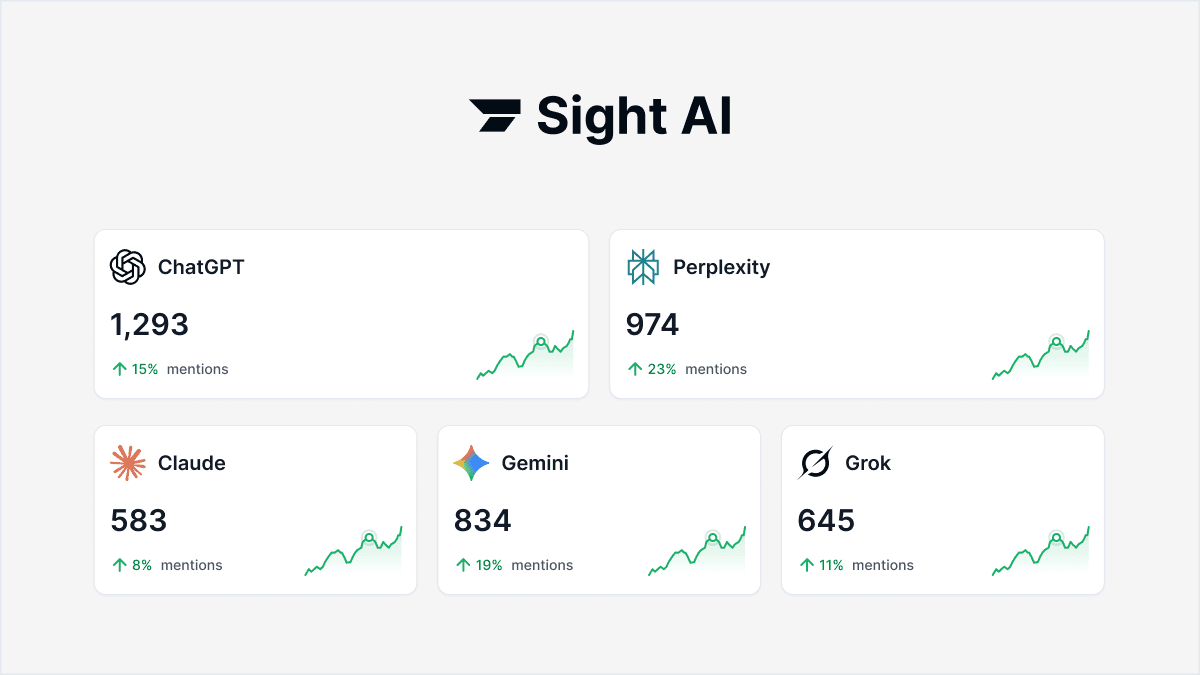
But here's what many teams miss: you need visibility into whether your content actually gets mentioned by AI models that increasingly influence search behavior. Publishing optimized guides is step one. Understanding how ChatGPT, Claude, and Perplexity reference your brand is the next frontier. Start tracking your AI visibility today and see exactly where your brand appears across top AI platforms—then use those insights to refine your automated content strategy for both traditional search and AI-powered discovery.