Manual content optimization is a time sink that pulls marketers away from strategic work. You spend hours analyzing performance data, updating meta descriptions, refreshing outdated statistics, and tweaking headlines—only to repeat the same process next month. An automated content optimization workflow changes this equation entirely.
Instead of reactive, piecemeal updates, you create a system that continuously monitors, flags, and improves your content with minimal manual intervention. Think of it like setting up a security system for your content library—once configured, it watches for problems and alerts you before small issues become traffic disasters.
This guide walks you through building that system from scratch. You'll learn how to set up automated performance monitoring, create content scoring criteria, establish update triggers, and integrate AI tools that handle the heavy lifting. By the end, you'll have a repeatable workflow that keeps your content library optimized for both search engines and AI platforms—without burning out your team.
The payoff? Your content maintains its rankings longer, captures more opportunities as they emerge, and stays relevant across both traditional search and the growing landscape of AI-powered answer engines. Let's build your automated optimization machine.
Step 1: Audit Your Current Content Library and Identify Optimization Opportunities
You can't optimize what you don't measure. Your first step is creating a comprehensive inventory of every piece of content you've published, along with the metrics that reveal its current health.
Start by exporting your content list from your CMS. You need basic data points: URL, publish date, last modified date, word count, and primary topic or target keyword. This gives you the structural foundation of your content library.
Next, layer in performance data from your analytics platform. Pull traffic metrics for the past 90 days and compare them to the previous 90-day period. You're looking for directional trends, not just absolute numbers. A post getting 500 visits per month that used to get 1,200 is a bigger red flag than one consistently getting 50.
Add ranking data from Search Console or your rank tracking tool. Focus on primary keyword positions and their movement over time. Content that's slipped from position 3 to position 8 needs immediate attention—it's in the danger zone where small improvements can recapture significant traffic.
Now comes the critical categorization work. Sort your content into three priority buckets:
High-Traffic Declining: These are your former stars losing their shine. They still drive meaningful traffic but show consistent downward trends. These pieces offer the highest ROI for optimization because they've already proven they can perform.
Underperforming with Potential: Content that ranks on page two or three for valuable keywords. These pieces have solid foundations but need strategic improvements to break through. Often, they're missing key sections competitors cover or lack the depth that modern search algorithms reward.
Outdated but Relevant: Content with publication dates older than 18 months that covers topics still relevant to your audience. These pieces may contain outdated statistics, broken links, or references to discontinued tools. The topic remains valuable, but the execution needs refreshing.
Create a baseline content health score for each piece. A simple starting formula: combine traffic trend (positive, neutral, or negative), keyword ranking position (top 3, top 10, top 20, or below), and content freshness (updated within 6 months, 6-12 months, 12-18 months, or older than 18 months). Assign point values to each factor based on what matters most to your business goals.
Document which content types need frequent updates versus evergreen pieces requiring minimal maintenance. How-to guides covering specific tool features need regular updates as software changes. Conceptual explanations of fundamental principles stay relevant for years. This distinction prevents wasted effort refreshing content that doesn't need it. For a deeper dive into building these systems, explore our guide on SEO content optimization fundamentals.
Step 2: Define Your Content Scoring Criteria and Optimization Triggers
Automation only works when you've defined clear rules for what triggers action. Vague criteria like "update when traffic drops" leads to inconsistent decisions and wasted effort. You need quantifiable thresholds that remove guesswork.
Start with traffic-based triggers. Set specific percentage drops that warrant attention. For example, a 20% traffic decline over 30 days compared to the previous period might trigger a content review. A 40% drop demands immediate optimization. These thresholds should reflect your content's typical volatility—seasonal content needs different benchmarks than evergreen pieces.
Ranking position changes offer another powerful trigger. Dropping from position 1-3 to position 4-10 represents a critical threshold where click-through rates plummet. Similarly, falling from page one to page two typically means losing 90% or more of your traffic potential. These position changes should automatically flag content for review.
Time since last update provides your freshness trigger. Many industries find that content older than 12 months begins showing performance degradation, even if it hasn't dropped significantly yet. Setting a 12-month or 18-month automatic review ensures you catch decay before it accelerates.
Build a weighted scoring system that combines these factors. Not all triggers carry equal weight. A 30% traffic drop on a high-value conversion page matters more than the same drop on a low-priority blog post. Assign weights that reflect business impact: traffic volume, conversion rate, keyword value, and strategic importance. Learn how to implement these scoring systems with automated SEO content workflow strategies.
Create tiered response protocols based on score ranges. This removes the "what should we do about this?" paralysis that stalls optimization efforts:
Minor Updates (Score 40-60): Quick fixes like updating statistics, refreshing examples, adding recent data points, or fixing broken links. These optimizations take 30-60 minutes and don't require republishing with a new date.
Major Refreshes (Score 61-80): Substantial rewrites that add new sections, restructure content for better flow, incorporate recent developments, or address competitor content gaps. Plan 2-4 hours per piece and republish with an updated date to signal freshness.
Complete Rewrites (Score 81-100): Ground-up reconstructions that maintain the URL but essentially create new content. Use these for pieces where the topic remains valuable but the approach, angle, or depth needs fundamental changes. Budget 6-8 hours and treat it like creating new content.
Build decision trees that map scores to specific actions. If a piece scores 75 and shows a ranking drop but stable traffic, the decision tree might recommend adding depth to compete with longer competitor content. If it scores 75 but shows traffic decline with stable rankings, the focus shifts to improving engagement signals through better formatting or more compelling hooks.
Step 3: Connect Your Data Sources and Build Automated Monitoring
Your optimization triggers mean nothing if you're manually checking them every week. True automation requires connecting your data sources to a central system that monitors performance continuously and alerts you when thresholds breach.
Start by integrating your analytics platform with your content inventory. Most analytics tools offer API access or scheduled export capabilities. Configure automated data pulls that refresh your content performance metrics daily or weekly, depending on your traffic volume. High-traffic sites benefit from daily updates to catch problems quickly. Smaller sites can typically operate on weekly refreshes.
Connect Search Console data to track keyword rankings, impressions, and click-through rates. Search Console's API allows automated queries that pull performance data for specific URLs or keywords. Set up scheduled imports that update your content inventory with current ranking positions and search visibility metrics.
Integrate rank tracking tools if you use them. While Search Console provides Google data, dedicated rank trackers often offer more granular tracking, competitor monitoring, and historical data visualization. Connect these tools through their APIs or export functions to enrich your central dashboard with comprehensive ranking intelligence.
Configure automated alerts for performance threshold breaches. When content crosses your defined triggers—traffic drops 20%, rankings fall from page one to page two, or updates hit the 12-month mark—the system should notify your team automatically. Use email alerts, Slack notifications, or project management tool integrations depending on where your team already works. Explore automated content workflow tools that simplify this integration process.
Set up scheduled reports that surface optimization opportunities weekly. Rather than waiting for alerts on individual pieces, create digest reports that show your top 10-20 optimization priorities based on current scoring. These reports turn scattered data points into actionable work queues.
Create automated tagging systems within your CMS or project management tool. When content meets specific criteria—high-traffic declining, outdated but relevant, or underperforming with potential—automatically apply tags that make filtering and prioritization effortless. This transforms your content library into a dynamic system that continuously categorizes itself.
Build dashboards that visualize your content health at a glance. Use tools like Google Data Studio, Tableau, or specialized SEO platforms to create views showing content distribution across health scores, traffic trends over time, and optimization queue status. These dashboards should answer three questions instantly: What's performing well? What needs attention now? What's trending in the wrong direction?
The goal is a system that requires zero manual data gathering. You should open your dashboard and immediately see which content needs optimization, why it needs attention, and what level of effort the fix requires. Everything else is automated background work.
Step 4: Implement AI-Powered Content Analysis and Recommendations
Identifying that content needs optimization is only half the battle. The other half is knowing exactly what to fix. AI-powered analysis tools can automatically diagnose content gaps, readability issues, and keyword opportunities that would take hours to identify manually.
Use AI content analysis tools to scan your flagged content and identify specific improvement opportunities. These tools can detect missing subtopics that competitors cover, sentences with poor readability scores, sections lacking supporting evidence, or paragraphs that could benefit from restructuring. Instead of guessing what needs improvement, you get a diagnostic report highlighting specific weaknesses. Our comprehensive guide to AI content optimization covers these diagnostic approaches in detail.
Set up automated competitor content monitoring. Configure tools to track when competitors publish new content on topics you already cover or significantly update existing pieces. When a competitor adds 1,500 words to their guide on a topic where you have a competing piece, your system should flag this as a potential content gap requiring review. This turns competitor research from a quarterly project into a continuous intelligence stream.
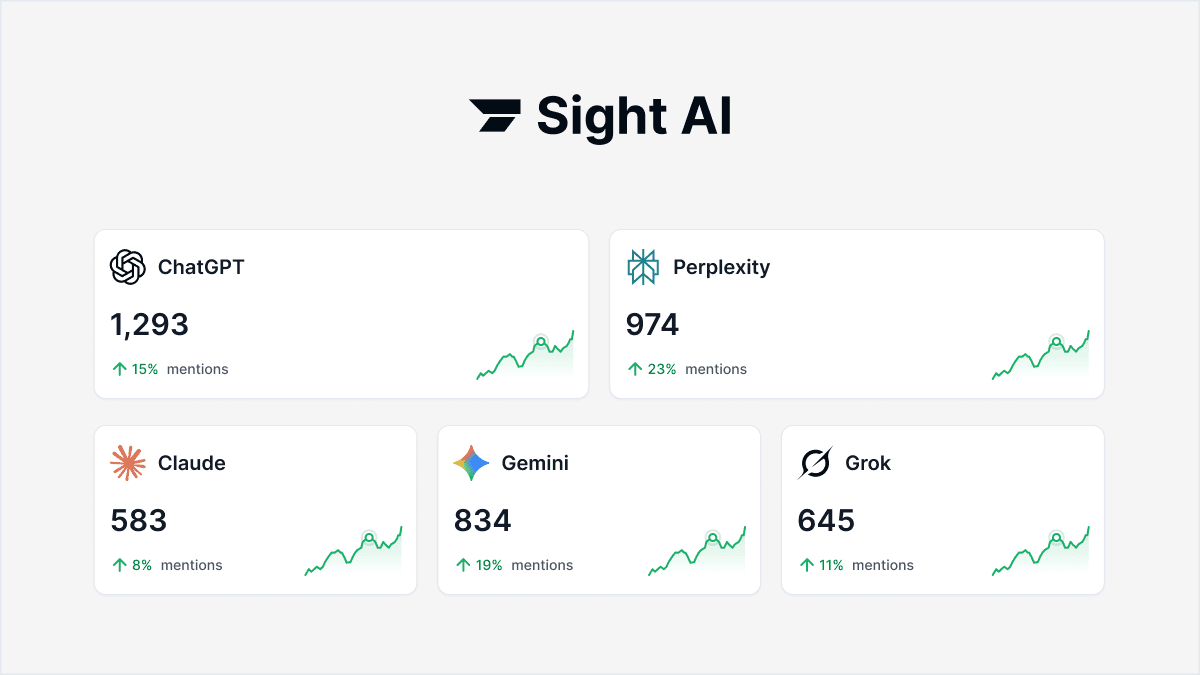
Configure AI visibility tracking to monitor how your content performs across AI search platforms like ChatGPT, Claude, and Perplexity. These platforms increasingly surface content in their responses, creating a new optimization frontier beyond traditional search engines. Track which topics get your brand mentioned, which competitors appear in AI responses, and what content gaps exist in AI-generated answers. This intelligence reveals opportunities to optimize for AI visibility alongside SEO. Learn more about content optimization for AI models to stay ahead of this trend.
Create automated briefs that outline exactly what each piece needs for optimization. When content gets flagged for a major refresh, AI tools can generate optimization briefs that specify: sections to add based on competitor analysis, keywords to incorporate naturally, outdated statistics to replace, structural improvements for better scannability, and opportunities to improve topical depth. These briefs transform vague "this needs updating" tasks into specific, actionable work orders.
Implement sentiment and tone analysis for content that engages audiences differently than expected. If analytics show high bounce rates despite good rankings, AI analysis might reveal that your tone is too technical for the audience searching that query, or too basic for the expertise level they expect. These insights guide not just what to update, but how to rewrite for better audience alignment.
The key is moving from "we should probably update this" to "here are the seven specific things this content needs, prioritized by impact." AI analysis provides that specificity at scale, turning content optimization from an art into a science.
Step 5: Automate Content Updates and Publishing Workflows
You've identified what needs optimization and what specific changes to make. Now you need workflows that move content from "flagged for update" to "published and indexed" with minimal friction and maximum consistency.
Establish templated optimization workflows for different content types and update levels. Your minor update workflow might look like: assign to editor, update statistics and examples, refresh meta description, check for broken links, publish without date change, request indexing. Your major refresh workflow adds steps: competitive analysis review, outline new sections, draft new content, update images, change publish date, update internal links, request indexing, promote on social channels.
Configure CMS integrations that streamline publishing of updated content. Many content management systems offer API access or plugin ecosystems that can automate repetitive publishing tasks. Set up automated workflows that handle meta tag updates, image optimization, internal link suggestions, or schema markup generation. These integrations ensure consistency while reducing the manual work required for each update. Discover how automated content publishing workflow systems can accelerate your update cycles.
Set up automated sitemap updates and indexing requests to accelerate discovery of refreshed content. When you publish an optimized piece, your system should automatically update your XML sitemap and submit indexing requests through IndexNow or Google's Indexing API. This ensures search engines discover your improvements quickly rather than waiting for the next routine crawl, which could take days or weeks.
Create approval workflows that balance automation speed with quality control. Not every update needs the same level of oversight. Minor statistical updates might auto-publish after a single editor review. Major refreshes might require content lead approval. Complete rewrites might need stakeholder sign-off before going live. Build these approval gates into your workflow automation so quality standards remain consistent even as you scale optimization efforts.
Implement version control and rollback capabilities. When you're optimizing content at scale, some updates won't perform as expected. Build systems that track before-and-after versions of content and allow quick rollbacks if an optimization actually hurts performance. This safety net encourages more aggressive optimization testing without the fear of permanent damage.
Set up automated internal linking updates. When you refresh a piece of content, your system should identify other relevant content in your library that should link to the updated piece. Automated internal linking suggestions based on topic relevance and keyword relationships ensure your optimized content gets the internal link equity it deserves without manual cross-referencing of your entire content library.
The goal is reducing the time from "this content needs updating" to "updated content is live and indexed" from days or weeks to hours. Automation removes the bottlenecks that cause optimization backlogs to pile up.
Step 6: Measure Results and Continuously Refine Your Workflow
Your automated workflow is operational, but automation without measurement is just organized chaos. You need feedback loops that validate your optimization efforts and make your system smarter over time.
Track before-and-after metrics for every optimized piece. Record the traffic, rankings, engagement metrics, and conversion rates before optimization, then monitor how these metrics change in the 30, 60, and 90 days following the update. This creates a performance database that reveals which optimization actions produce results and which waste effort.
Identify which optimization actions produce the highest ROI. You might discover that adding comprehensive FAQ sections consistently improves rankings, while updating publish dates without substantial content changes shows minimal impact. Or that restructuring content with better subheadings dramatically improves engagement time, while refreshing statistics alone does little. These insights let you double down on high-impact optimizations and eliminate low-value busy work. Compare different approaches using our AI content optimization tools comparison to find what works best for your workflow.
Adjust scoring weights and triggers based on actual performance data. If you find that content scoring 65-75 consistently shows bigger improvements than content scoring 80-90, your scoring formula might be miscalibrated. Refine your weights to better predict which content will benefit most from optimization. Similarly, if your 20% traffic drop trigger catches problems too late, tighten it to 15% or add a trending indicator that flags declining content earlier.
Build feedback loops that make your automated workflow smarter over time. Use machine learning or simple rule refinement to improve your optimization recommendations based on what actually worked. If adding video embeds consistently improved engagement for tutorial content but not for thought leadership pieces, your system should learn to recommend video additions selectively rather than universally.
Monitor for unintended consequences. Sometimes optimization in one area creates problems elsewhere. Lengthening content might improve SEO but hurt conversion rates. Adding more keywords might improve rankings but reduce readability. Track holistic performance metrics to ensure your optimization efforts improve overall business outcomes, not just individual metrics in isolation.
Create regular workflow audits where you review your automation rules and update them based on changing search algorithms, audience behavior, or business priorities. The workflow you build today won't be optimal forever. Search engines evolve, AI platforms change how they surface content, and your audience's needs shift. Schedule quarterly reviews to ensure your automated workflow adapts rather than optimizes for yesterday's reality.
Putting It All Together
Your automated content optimization workflow transforms content maintenance from a reactive scramble into a proactive system. Instead of discovering traffic drops weeks after they happen, you get alerts the moment performance dips. Instead of guessing what to fix, you receive AI-generated briefs with specific recommendations. Instead of manual publishing and indexing, your workflow handles the repetitive work automatically.
Here's your quick checklist to verify your workflow is operational: content library audited and scored with clear health metrics, optimization triggers defined with specific thresholds that remove guesswork, monitoring dashboards connected and alerting properly when content crosses performance boundaries, AI analysis tools integrated for gap identification and competitor monitoring, publishing workflows automated with proper indexing to accelerate discovery, and measurement systems tracking ROI to validate your optimization efforts.
Start with your highest-traffic content that shows declining performance. These pieces offer the fastest wins and help you refine your workflow before scaling to your entire library. You'll learn what triggers work best, which optimization actions produce results, and how to calibrate your scoring system to your specific content and audience.
As your system matures, you'll spend less time on manual optimization and more time creating new content that your automated workflow will keep performing for years. The content you publish today won't just perform well at launch—it'll maintain that performance through continuous, automated optimization that keeps it relevant, comprehensive, and visible across both search engines and AI platforms.
The shift from manual to automated optimization isn't just about efficiency. It's about building a content library that compounds in value over time rather than decaying. Every piece you publish becomes an asset that your system actively maintains, creating a sustainable competitive advantage that grows stronger as your library expands.
Stop guessing how AI models like ChatGPT and Claude talk about your brand—get visibility into every mention, track content opportunities, and automate your path to organic traffic growth. Start tracking your AI visibility today and see exactly where your brand appears across top AI platforms.