Your brand just got recommended by ChatGPT to a potential customer. Or maybe it didn't. Perhaps Claude mentioned your competitor instead when someone asked for the best solution in your category. The truth is, you probably have no idea which scenario just played out—and that's the problem.
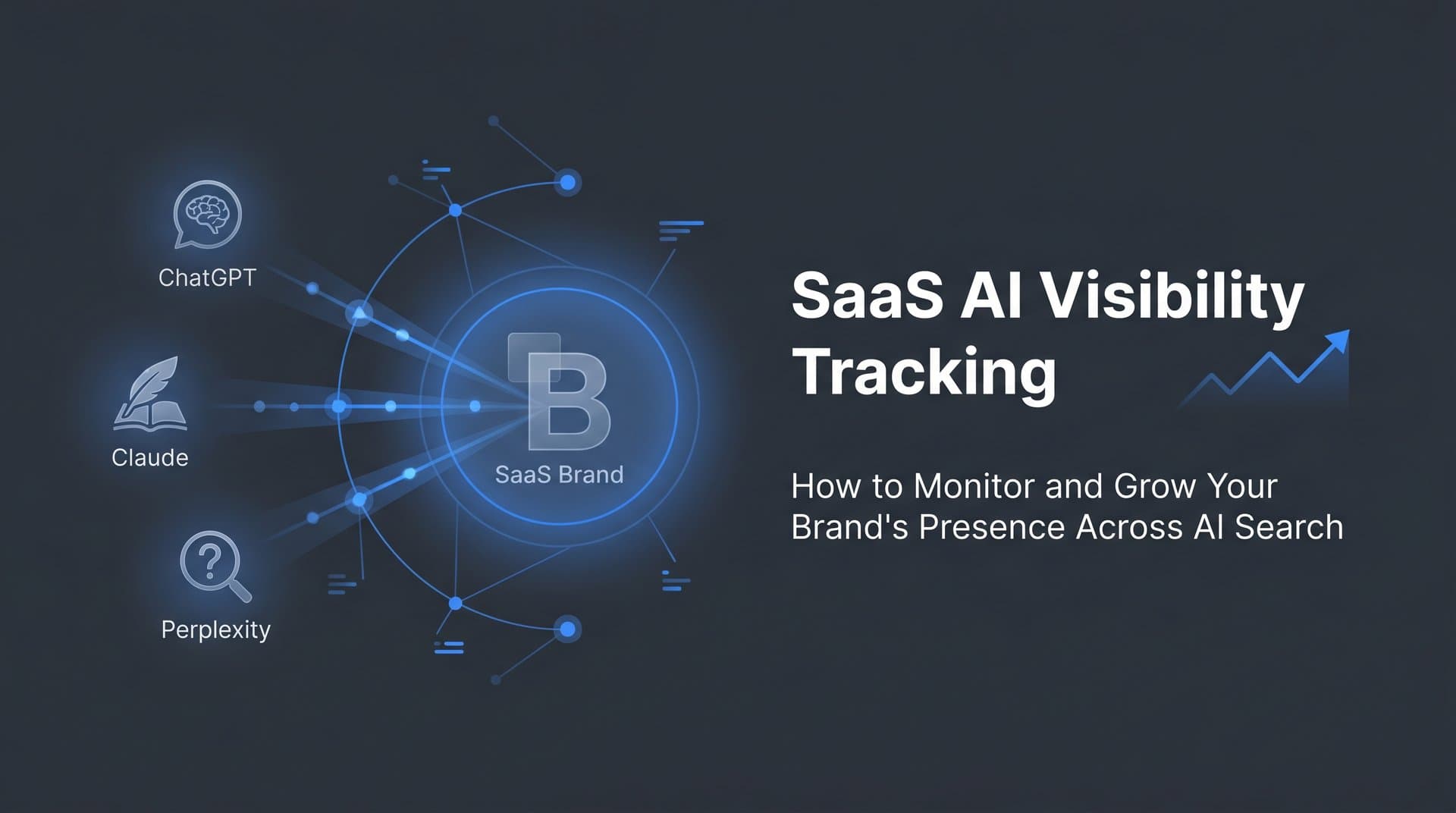
We're witnessing a fundamental shift in how people discover brands. Instead of scrolling through ten blue links on Google, users are asking AI assistants direct questions and trusting the synthesized answers they receive. When someone asks "What's the best project management tool for remote teams?" or "Which CRM should a startup use?", AI models like ChatGPT, Claude, Perplexity, and Google's AI Overviews are delivering immediate recommendations.
This creates a visibility blind spot that traditional SEO metrics can't illuminate. Your Google Analytics shows organic traffic, your rank tracker reports keyword positions, but neither tells you whether AI models are mentioning your brand when it matters most. AI visibility metrics tracking solves this gap by systematically measuring how often, how accurately, and in what context AI models mention your brand across different platforms and prompts.
The stakes are clear: brands that ignore this measurement are flying blind in the fastest-growing discovery channel. While you're optimizing meta descriptions and building backlinks, your competitors might be dominating the AI conversation in your category. Let's explore how to measure what's actually happening in this new landscape.
The New Discovery Layer: Why AI Mentions Matter
AI assistants don't just index and rank content like traditional search engines. They synthesize information from multiple sources, form judgments about relevance and quality, and deliver conversational recommendations. This fundamental difference changes everything about visibility.
Think about the user experience: someone asks Claude "What analytics tools should I use for my SaaS startup?" The AI doesn't return a list of ranked results—it provides a curated answer, possibly mentioning three to five tools by name, explaining their strengths, and sometimes making a direct recommendation. If your brand isn't in that response, you don't exist for that user in that moment.
The business impact is immediate and measurable. When AI models consistently mention your brand in response to buying-intent questions, you're capturing consideration at the most critical moment. Conversely, being omitted from these responses means losing opportunities you might never know existed. There's no "page two" where users can find you if they scroll further.
What makes this particularly challenging is the recommendation dynamic. Traditional search engines present options and let users choose. AI assistants often guide users toward specific solutions, using language like "I'd recommend" or "the best option for your needs is." This shifts the power dynamic—the AI becomes a trusted advisor, not just an information retrieval system.
Your traditional SEO dashboard completely misses this layer. You can rank #1 for "best project management software" on Google and still be invisible when ChatGPT answers that exact question. The visibility gap exists because AI models synthesize information based on their training data, real-time search capabilities, and internal ranking factors that differ entirely from traditional search algorithms. Understanding brand visibility tracking in AI has become essential for modern marketers.
This isn't a future concern. Users are already forming habits around AI-assisted search. They're asking follow-up questions, requesting comparisons, and making decisions based on AI recommendations. The brands measuring this visibility now are building competitive intelligence that will compound over time.
Core Metrics That Define AI Visibility
Effective AI visibility tracking centers on three interconnected metrics that together paint a complete picture of your brand's presence across AI platforms.
Mention Frequency: This foundational metric tracks how often your brand appears when AI models respond to relevant prompts. The key word is "relevant"—you're not measuring total mentions across random questions, but rather tracking appearance rates within your target prompt categories. If you're a CRM platform, mention frequency matters most for prompts about sales tools, customer management, and business software recommendations.
Frequency alone tells an incomplete story. You need to track this across different AI platforms because each model has different training data, retrieval methods, and recommendation patterns. Your brand might appear frequently in ChatGPT responses but rarely in Claude or Perplexity. This platform-level granularity reveals where your visibility is strong and where gaps exist. A multi-model AI tracking solution helps capture these cross-platform differences.
Sentiment Analysis: Not all mentions are created equal. When an AI model mentions your brand, the context and framing determine the actual impact. Positive mentions position you as a recommended solution, highlighting strengths and use cases. Neutral mentions acknowledge your existence without endorsement. Negative mentions might cite limitations, complaints, or recommend alternatives instead.
Sentiment tracking requires analyzing the surrounding language. Does the AI say "X is an excellent choice for" or "X is an option, although users often prefer"? These subtle differences dramatically affect how users perceive your brand. The goal isn't just to be mentioned—it's to be mentioned favorably in contexts that drive consideration.
Advanced sentiment analysis also tracks accuracy. AI models sometimes mention brands with outdated information, incorrect pricing, or misattributed features. These inaccuracies can harm your brand even when the mention itself seems neutral. Tracking accuracy helps you identify where AI models need better information about your offerings. Learn more about brand sentiment tracking in AI to understand these nuances.
Prompt Coverage: This metric reveals which types of questions trigger your brand mentions versus competitor mentions. It's your share of voice across the AI conversation landscape. When users ask about specific use cases, price points, or feature requirements, which brands do AI models recommend?
Prompt coverage analysis segments questions by intent and specificity. Broad category questions like "what are the best marketing tools?" might trigger different mentions than specific queries like "what's the best email marketing platform for e-commerce stores under $50/month?" Understanding your coverage across this spectrum reveals positioning opportunities.
The competitive dimension matters enormously. If AI models mention your brand in 30% of relevant prompts, that number means little without context. If your main competitor appears in 60% of the same prompts, you're losing share of voice. Prompt coverage tracking should always include competitive benchmarking to contextualize your performance.
These three metrics work together to create actionable intelligence. High mention frequency with negative sentiment signals a reputation problem. Low mention frequency in specific prompt categories reveals content gaps. Strong performance on one platform but not others indicates optimization opportunities. The metrics become powerful when you track them systematically over time and across competitive context.
Building Your AI Visibility Tracking System
Measuring AI visibility requires a systematic approach because AI platforms don't provide built-in analytics dashboards. You're essentially creating your own measurement infrastructure.
Manual Monitoring Foundations: Start by identifying your core prompt set—the 20-30 questions that represent how your target customers discover solutions in your category. These might include direct product comparisons, use-case-specific queries, and buying decision questions. Document these prompts and manually query them across ChatGPT, Claude, Perplexity, and Google's AI Overviews.
Record whether your brand appears, the context of mentions, competitor mentions, and the overall quality of information presented. This manual baseline reveals patterns and establishes your starting point. The limitation becomes obvious quickly: manually querying even 30 prompts across 4 platforms weekly consumes hours and introduces inconsistency. Understanding the tradeoffs between AI visibility tracking vs manual monitoring helps you make informed decisions.
Manual tracking also misses the dynamic nature of AI responses. The same prompt can generate different responses at different times, especially as AI models update their training data or adjust their retrieval methods. Capturing this variability requires more frequent monitoring than manual methods can sustain.
Automated Tracking Infrastructure: Scaling AI visibility tracking demands automation. Specialized AI visibility tracking tools systematically query AI models with your prompt set on a scheduled basis, capturing responses, analyzing mentions, and tracking changes over time. This automation solves the consistency problem and enables tracking at a scale that reveals meaningful patterns.
Effective automated systems query multiple AI platforms simultaneously, maintaining prompt consistency while accounting for platform-specific response patterns. They parse responses to identify brand mentions, extract surrounding context for sentiment analysis, and flag when new competitors appear in responses or when your brand disappears from previously positive mentions.
The automation should include prompt variation testing. AI models respond differently to subtle prompt changes—"best CRM for startups" might generate different recommendations than "top CRM tools for early-stage companies." Automated systems can test these variations systematically, revealing which prompt formulations trigger your brand mentions most consistently.
Competitive Benchmarking Framework: Your tracking system needs competitive context built in from the start. Identify your three to five main competitors and track their mention frequency, sentiment, and prompt coverage alongside your own metrics. This transforms raw data into strategic intelligence.
Competitive tracking reveals positioning gaps and opportunities. If a competitor dominates mentions in prompts about a specific use case, you can investigate whether they have superior content addressing that use case or if AI models are simply citing older, more established information. Implementing brand tracking across AI models provides the comprehensive view you need.
Set up regular reporting that shows your share of voice across prompt categories. Track how this share changes over time and correlate changes with your content updates, product launches, or competitor activities. The goal is creating a feedback loop where tracking informs action, and action improves tracked metrics.
Building this system requires upfront investment, but the alternative is operating without visibility into a channel that's increasingly driving discovery and consideration. The brands establishing measurement infrastructure now are building competitive advantages that will compound as AI-assisted search continues growing.
From Metrics to Action: Improving Your AI Presence
Tracking AI visibility metrics only creates value when you use the insights to improve your presence. The optimization strategies that work for AI citations differ meaningfully from traditional SEO approaches.
Content Strategies for AI Citation: AI models prioritize authoritative, well-structured content when synthesizing responses. This means creating comprehensive resources that thoroughly address specific topics rather than thin content targeting individual keywords. When AI models search for information to answer user queries, they favor sources that demonstrate depth and expertise.
Structured data becomes more critical in the AI context. While traditional SEO uses schema markup to help search engines understand content, AI models benefit from clear hierarchical structure, explicit definitions, and well-organized information architecture. Use headings, lists, and clear section breaks to make your content easily parseable. Understanding LLM citation tracking software helps you see which content formats perform best.
Citation-worthy content often includes specific, factual information that AI models can reference confidently. Detailed feature comparisons, pricing information, use case documentation, and implementation guides provide the kind of concrete information AI assistants need when making recommendations. Vague marketing language gets ignored in favor of specific, useful details.
GEO vs. Traditional SEO: Generative Engine Optimization focuses on optimizing content specifically for AI citation rather than search engine ranking. While traditional SEO emphasizes keyword placement, backlink profiles, and technical page optimization, GEO prioritizes comprehensive coverage, authoritative tone, and structured information presentation.
GEO content often performs well in traditional SEO too, but the optimization priorities differ. For AI visibility, you're optimizing for being cited in synthesized responses, not for ranking in a list of results. This means creating content that AI models can confidently reference and quote, with clear attributions and verifiable information.
The tone matters more in GEO. AI models tend to cite content that sounds authoritative without being promotional. Educational content, detailed guides, and objective comparisons perform better than sales-heavy landing pages. The goal is becoming a trusted source that AI models reference when they need reliable information about your category.
The Optimization Feedback Loop: Use your tracking metrics to guide content improvements. If your mention frequency is low in prompts about a specific use case, create comprehensive content addressing that use case. If sentiment analysis reveals AI models cite outdated information about your product, publish updated resources with current details.
Track changes after content updates to measure impact. When you publish new content optimized for AI citation, monitor whether your mention frequency increases in related prompts over the following weeks. This feedback loop helps you understand which optimization strategies actually improve AI visibility versus which changes have minimal impact. An AI visibility tracking dashboard makes monitoring these changes straightforward.
The timeline for seeing results differs from traditional SEO. AI models may incorporate new information relatively quickly if they have real-time search capabilities, or it might take longer if changes need to filter into training data. Tracking lets you understand these dynamics for different platforms and adjust expectations accordingly.
Common Tracking Mistakes and How to Avoid Them
The Vanity Metrics Trap: Many brands start AI visibility tracking by monitoring whether their brand name appears when users ask about it directly. This creates a false sense of security. The critical metric isn't whether ChatGPT knows about your brand when someone asks specifically—it's whether AI models recommend your brand when users ask category questions without mentioning you by name.
Focus your tracking on discovery prompts, not brand awareness prompts. The question "What do you know about [Your Brand]?" tests recognition. The question "What's the best solution for [specific use case]?" tests actual visibility in the consideration process. The latter matters far more for business outcomes. Learning how to measure AI visibility metrics properly helps avoid these common pitfalls.
Similarly, total mention counts without context create misleading signals. Being mentioned 100 times sounds impressive until you realize your main competitor gets mentioned 500 times in the same prompt set. Always contextualize your metrics against competitive benchmarks and business-relevant prompts.
Ignoring Competitive Context: Your absolute mention frequency means little without understanding your share of voice. If AI models mention five different brands when answering questions in your category, what percentage of those mentions belong to you? This share-of-voice metric reveals your actual competitive position.
Track not just whether you're mentioned, but who you're mentioned alongside. If AI models consistently group you with lower-tier competitors instead of category leaders, that positioning signal matters. If you're frequently mentioned as an alternative after a competitor gets the primary recommendation, you're losing the most valuable mention position.
Competitive tracking also reveals category expansion opportunities. When new competitors start appearing in AI responses, it signals market changes or emerging segments. Early detection lets you respond strategically rather than being surprised by shifting competitive dynamics. Explore the best tools for tracking AI mentions to build robust competitive intelligence.
One-Time Audit Mentality: Some brands treat AI visibility as a one-time assessment rather than ongoing measurement. They audit their current presence, identify gaps, make improvements, and then stop tracking. This misses the dynamic nature of AI visibility.
AI models update their training data, platforms adjust their algorithms, competitors publish new content, and user prompt patterns evolve. Your visibility today doesn't guarantee visibility next month. Continuous tracking reveals trends, identifies emerging threats, and validates whether your optimization efforts are working.
Establish a regular reporting cadence—weekly or monthly depending on your resources—and track metrics consistently over time. The trends matter more than any single data point. Is your mention frequency increasing or decreasing? Is sentiment improving? Are you gaining or losing share of voice? These directional signals guide strategic decisions.
Putting It Into Practice: Your First 30 Days
Week 1: Establish Your Baseline Start by defining your core prompt set. Identify 15-20 questions that represent how your target customers discover solutions in your category. Include broad category questions, specific use-case queries, and buying decision prompts. Manually query these across ChatGPT, Claude, and Perplexity, documenting every response.
Record which brands get mentioned, the context and sentiment of mentions, and the overall quality of information presented. This baseline reveals your starting position and identifies immediate gaps. You might discover that AI models have outdated information about your product, consistently mention competitors you didn't consider threats, or ignore your brand entirely in certain prompt categories. A dedicated ChatGPT brand visibility tracking approach helps establish platform-specific baselines.
Week 2: Competitive Intelligence Gathering Expand your tracking to include systematic competitive monitoring. For each prompt in your core set, document which competitors appear, how often, and in what context. Calculate preliminary share-of-voice metrics across your prompt categories.
Analyze the content that AI models cite when mentioning competitors. What makes that content citation-worthy? Look for patterns in structure, depth, and information presentation. This competitive intelligence guides your content strategy and helps prioritize optimization efforts.
Week 3: Content Gap Analysis Compare your baseline metrics against your content inventory. For prompt categories where your mention frequency is low, do you have comprehensive content addressing those topics? For areas where competitors dominate, what content advantages do they have?
Create a prioritized list of content opportunities based on business impact. Focus first on high-intent prompts where you're currently invisible but have strong product-market fit. These represent the quickest wins for improving AI visibility in contexts that drive business results.
Week 4: Implement Tracking Infrastructure Decide whether to continue manual tracking or implement automated monitoring. For most brands tracking more than 20 prompts across multiple platforms, automation becomes necessary to maintain consistency and capture meaningful trends.
Set up your regular reporting cadence and establish benchmarks for improvement. What mention frequency would represent success in your key prompt categories? What share-of-voice target makes sense given your competitive position? These benchmarks create accountability and help measure progress over time.
Your Next Steps in AI Visibility
AI visibility metrics tracking is rapidly evolving from an experimental practice to an essential marketing discipline. The brands measuring their presence across AI platforms today are building competitive advantages that will compound as AI-assisted search continues growing. They understand which prompts trigger their brand mentions, how their visibility compares to competitors, and which content strategies actually improve their AI presence.
The competitive advantage of early adoption is real and measurable. While most brands still focus exclusively on traditional SEO metrics, the discovery landscape is shifting beneath them. Users are forming new habits around AI-assisted search, asking questions directly to AI models instead of parsing search results. The brands that appear in those AI responses are capturing consideration at the most critical moment.
This isn't about abandoning traditional SEO—it's about expanding your visibility measurement to match how users actually discover brands today. The same content strategies that improve AI visibility often strengthen traditional search performance too. The difference is knowing whether your optimization efforts are working across both channels.
The measurement infrastructure you build now creates compounding value. Each week of tracking data reveals trends and patterns that inform smarter optimization decisions. The baseline you establish today becomes the benchmark for measuring future improvements. The competitive intelligence you gather helps you anticipate market shifts before they impact business results.
Start tracking your AI visibility today and see exactly where your brand appears across top AI platforms. Stop guessing how AI models like ChatGPT and Claude talk about your brand—get visibility into every mention, track content opportunities, and automate your path to organic traffic growth. The brands measuring this now will understand the landscape before it becomes crowded, building advantages that become harder to replicate over time.