Many teams adopt AI content platforms only to produce generic, forgettable content that neither ranks nor resonates. The difference between mediocre results and exceptional organic growth lies in how strategically you deploy these capabilities.
This guide breaks down seven battle-tested strategies for extracting maximum value from your AI content generation suite—from workflow optimization to AI visibility tracking—so your brand gets mentioned where it matters most.
1. Architect Your Content Workflow Before Generating
The Challenge It Solves
Without a structured workflow, even the most powerful AI content generation suite becomes a random article factory. Teams produce content that lacks cohesion, contradicts previous messaging, or misses strategic opportunities entirely. The result? A content library that confuses both search engines and readers, diluting your topical authority instead of building it.
The Strategy Explained
Think of your content workflow as the blueprint before construction begins. Before generating a single article, establish your content pillars—the three to five core topics that define your expertise. Within each pillar, define your brand voice parameters: tone, perspective, technical depth, and key messaging points that must remain consistent.
Create reusable templates that align with your content goals. A product comparison template looks fundamentally different from a technical guide template. When your AI content generation suite works from these predefined structures, every piece of content reinforces your strategic positioning rather than working against it. Understanding AI content generation best practices helps establish these foundational workflows.
Implementation Steps
1. Map your three to five content pillars based on your expertise, audience needs, and business objectives—these become the foundation for all content decisions.
2. Document your brand voice parameters in a single reference document that includes tone examples, prohibited phrases, technical depth guidelines, and perspective preferences.
3. Build content templates for each major content type you produce, specifying required sections, internal linking patterns, and CTA placement rules.
4. Configure your AI content generation suite with these parameters as defaults so every new piece starts from your strategic foundation rather than a blank slate.
Pro Tips
Start with just one content pillar and perfect the workflow before expanding. The most successful teams spend more time refining their content architecture than they do generating articles. When your workflow is dialed in, scaling becomes effortless because quality remains consistent regardless of volume.
2. Leverage Multi-Agent Systems for Specialized Tasks
The Challenge It Solves
General-purpose AI generation treats every content type the same way—a listicle gets the same approach as a technical guide, a product comparison receives identical treatment to an explainer article. This one-size-fits-all approach produces mediocre results across the board because different content types demand fundamentally different structures, depth levels, and optimization strategies.
The Strategy Explained
Modern AI-powered content generation suites employ specialized agents trained for specific content tasks. One agent excels at creating comprehensive how-to guides with step-by-step instructions. Another specializes in comparison articles with balanced feature analysis. A third focuses on listicles with engaging hooks and scannable formatting.
By matching the right specialized agent to your content goal, you achieve results that feel purpose-built rather than template-generated. Each agent brings domain-specific knowledge about structure, pacing, and optimization that a general model simply can't match. Exploring SEO content generation with AI agents reveals how these specialized systems outperform generic approaches.
Implementation Steps
1. Audit your content calendar to identify the five most common content types you produce—these become your priority specializations.
2. Test different agents within your AI content generation suite against the same brief to understand each agent's strengths and natural output style.
3. Create a simple decision matrix that maps content goals to specific agents based on your testing results and performance data.
4. Train your team to select agents strategically rather than defaulting to a single general-purpose option for all content needs.
Pro Tips
The most sophisticated platforms offer autopilot modes that automatically route content briefs to the optimal agent based on your goals. This eliminates the decision paralysis while ensuring each piece benefits from specialized expertise. Learn more about AI content generation with autopilot to streamline your workflow.
3. Integrate GEO Optimization from the First Draft
The Challenge It Solves
Traditional SEO optimization focuses exclusively on search engine algorithms, ignoring how AI models like ChatGPT, Claude, and Perplexity consume and reference content. When AI platforms become primary discovery channels, content optimized only for Google misses massive visibility opportunities. Your brand remains invisible in the conversations happening across AI search platforms where your audience increasingly begins their research.
The Strategy Explained
Generative Engine Optimization represents a fundamental expansion of content strategy. While traditional SEO focuses on keywords and backlinks, GEO optimization structures content for AI model comprehension and citation. This means clear entity relationships, authoritative statements that models can confidently reference, and formatting that helps AI systems extract accurate information.
The most effective approach treats GEO and SEO as complementary rather than competing priorities. Content structured with clear headings, definitive statements, and logical information hierarchy performs well in both traditional search results and AI-generated responses. When your AI-powered content generation suite builds this dual optimization into every draft, you capture visibility across all discovery channels simultaneously.
Implementation Steps
1. Configure your content generation parameters to prioritize clear entity definitions, authoritative statements, and structured information presentation that AI models can easily parse.
2. Include explicit topic connections and context within your content so AI models understand relationships between concepts and can accurately cite your brand as a source.
3. Structure content with scannable headings and logical information flow that works equally well for human readers and AI model training data. Mastering SEO optimized AI content generation ensures your content ranks across all platforms.
4. Test your published content by querying AI platforms directly to see how and whether they reference your brand when discussing relevant topics.
Pro Tips
The brands winning in AI search focus on being the definitive source for specific topics rather than covering everything superficially. When AI models need to reference a particular concept, they cite the most authoritative, clearly structured source. Make that source your content by going deeper on fewer topics rather than broader on more.
4. Build Feedback Loops with AI Visibility Tracking
The Challenge It Solves
Publishing content without understanding its impact across AI platforms means operating blind. You invest resources in content creation with no visibility into whether ChatGPT, Claude, or Perplexity actually mention your brand, recommend your solutions, or cite your expertise. This disconnect between effort and measurable AI visibility prevents strategic optimization and wastes budget on content that doesn't move the needle.
The Strategy Explained
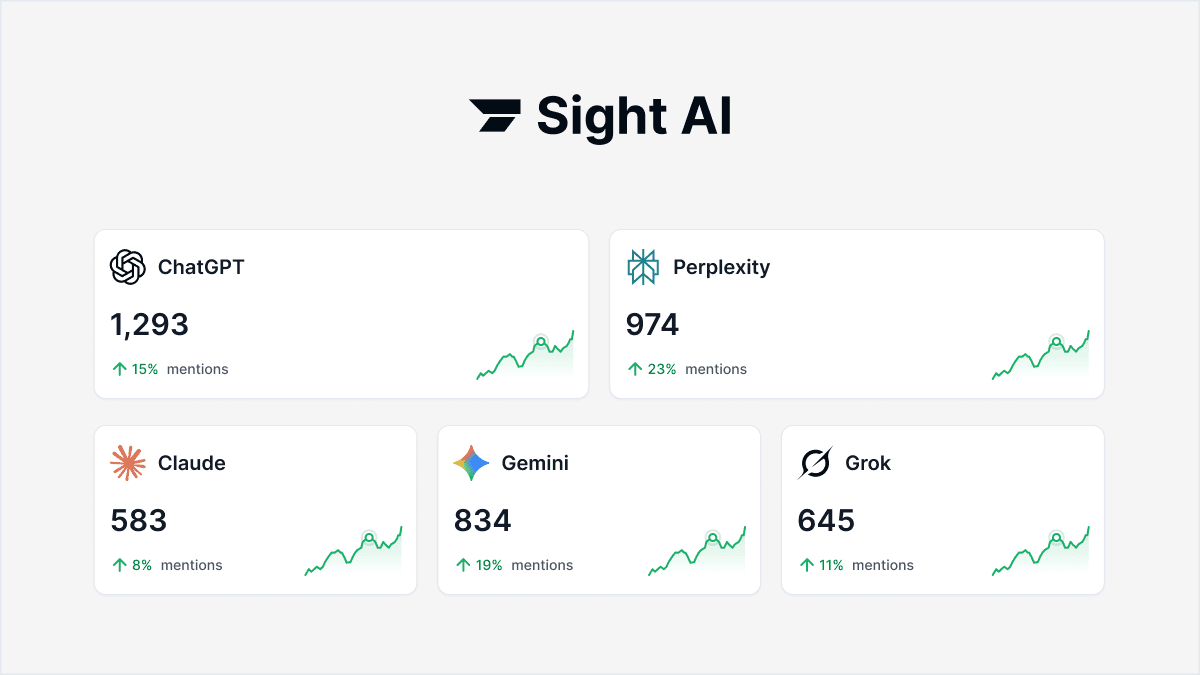
AI visibility tracking creates a closed feedback loop between content production and brand mentions across AI platforms. Instead of guessing which topics or formats earn citations, you measure exactly how AI models reference your brand, the sentiment of those mentions, and which prompts trigger your brand's appearance.
This data transforms content strategy from intuition-based to evidence-based. When you know that certain content types consistently earn positive mentions while others get ignored, you allocate resources accordingly. The connection between your AI-powered content generation suite and visibility tracking becomes your competitive advantage—you're not just creating content, you're creating content proven to earn AI citations.
Implementation Steps
1. Establish baseline AI visibility metrics before implementing new content strategies so you can measure actual impact rather than making assumptions.
2. Tag published content with specific topics and formats so you can correlate content types with changes in AI visibility scores and mention frequency.
3. Monitor sentiment analysis alongside mention volume to understand not just whether AI models reference your brand, but how positively they position your solutions. Teams focused on AI content generation for marketers find this feedback loop essential for optimization.
4. Create monthly content strategy reviews that incorporate AI visibility data alongside traditional SEO metrics to inform future content priorities.
Pro Tips
The most actionable insight comes from tracking which specific prompts trigger brand mentions. When you understand the exact questions your audience asks AI platforms, you can reverse-engineer content that positions your brand as the answer. This prompt-level visibility turns AI tracking from a vanity metric into a strategic content roadmap.
5. Automate the Post-Publication Pipeline
The Challenge It Solves
Manual content indexing creates frustrating delays between publication and search visibility. Your team publishes optimized content only to wait days or weeks for search engines to discover and index it. During this gap, competitors who automate their indexing pipeline capture traffic you should own. Every hour of delay represents lost visibility and missed opportunities.
The Strategy Explained
Modern AI-powered content generation suites integrate directly with indexing protocols that notify search engines the moment new content goes live. IndexNow integration allows your site to ping major search engines instantly, dramatically reducing the discovery lag that traditionally plagued content marketing.
Beyond immediate indexing, automation handles sitemap updates, internal link refreshes, and CMS publishing without manual intervention. Your content moves from draft to fully optimized live article with zero manual steps. Implementing an automated SEO content generation platform eliminates human error and ensures consistency.
Implementation Steps
1. Configure IndexNow integration within your content management system to automatically notify search engines whenever new content publishes or existing content updates.
2. Set up automated sitemap generation and submission so your XML sitemap stays current without manual updates or scheduled tasks.
3. Implement auto-publishing workflows that move approved content from your AI content generation suite directly to your CMS with all optimization elements intact.
4. Create monitoring dashboards that track indexing speed and flag any content that doesn't get indexed within your target timeframe.
Pro Tips
The fastest-growing content teams treat automation as non-negotiable infrastructure rather than a nice-to-have feature. When your post-publication pipeline runs automatically, you can scale content volume without scaling team size. The efficiency gains compound over time as your content library grows and requires ongoing maintenance.
6. Create Content Clusters That Compound Authority
The Challenge It Solves
Isolated articles compete against established authority sites with comprehensive topic coverage. Publishing standalone pieces means each article fights for visibility independently rather than benefiting from collective topical authority. Search engines and AI models favor brands that demonstrate deep expertise across an entire subject area, not just surface-level coverage of disconnected topics.
The Strategy Explained
Content clusters transform individual articles into interconnected ecosystems. A pillar article covers a broad topic comprehensively while cluster articles dive deep into specific subtopics. Strategic internal linking connects these pieces, signaling to both search engines and AI models that your brand owns this entire topic area.
When your AI-powered content generation suite creates content within a cluster framework, each new article strengthens the authority of related pieces. The compound effect means your tenth article in a cluster performs better than your first because it benefits from the accumulated topical authority. This systematic approach to content creation builds moats around your expertise areas that competitors struggle to breach.
Implementation Steps
1. Identify three to five pillar topics where you want to establish definitive authority and map out ten to fifteen cluster articles that support each pillar.
2. Create your pillar content first as comprehensive resources that cover the broad topic and naturally link to planned cluster articles. Leveraging AI content generation at scale makes building these clusters efficient.
3. Generate cluster articles systematically using your AI content generation suite, ensuring each piece links back to the pillar and to related cluster articles.
4. Update pillar content quarterly to incorporate links to new cluster articles and maintain its position as the comprehensive hub for the topic.
Pro Tips
The most effective clusters follow a hub-and-spoke model where all cluster articles link to the pillar, but also connect laterally to related cluster pieces. This creates a topic web that search engines recognize as comprehensive coverage. When AI models need to reference your topic area, they cite your pillar content because it demonstrates the deepest expertise.
7. Measure What Matters: Beyond Vanity Metrics
The Challenge It Solves
Traditional content metrics focus on traffic volume and keyword rankings while ignoring the quality of visibility and brand positioning. High traffic means nothing if AI models never mention your brand, recommend competitors instead, or associate your company with negative sentiment. Optimizing for vanity metrics leads to content strategies that boost numbers without driving business outcomes.
The Strategy Explained
Strategic content measurement combines traditional SEO data with AI visibility metrics to understand true content performance. AI visibility scores reveal how frequently and positively AI models reference your brand. Sentiment analysis shows whether those mentions position you favorably or raise concerns. Prompt tracking identifies which questions trigger brand mentions, revealing content gaps and opportunities.
When you measure across both traditional search and AI platforms, you gain a complete picture of content effectiveness. An article might rank well in Google but earn zero AI citations, suggesting optimization opportunities. Conversely, content with modest traditional rankings might generate consistent positive mentions across ChatGPT and Claude, indicating high-value topics worth expanding. Reviewing an AI content generation platform comparison helps identify tools with robust analytics capabilities.
Implementation Steps
1. Establish a measurement dashboard that tracks AI visibility scores, sentiment analysis, and mention frequency alongside traditional SEO metrics like rankings and organic traffic.
2. Set baseline metrics for both traditional search performance and AI platform visibility so you can measure improvement over time rather than tracking absolute numbers.
3. Create content scorecards that evaluate each piece across multiple dimensions—search rankings, AI mentions, sentiment, and business impact—to identify your highest-performing content types.
4. Use prompt-level data to inform content strategy by identifying questions your audience asks AI platforms that currently don't trigger brand mentions.
Pro Tips
The most sophisticated content teams weight AI visibility metrics increasingly heavily as AI search adoption grows. While traditional SEO remains important today, forward-thinking marketers recognize that AI platforms represent the future of content discovery. Measuring AI visibility now positions you ahead of competitors still optimizing exclusively for traditional search.
Putting It All Together
Implementing these seven strategies transforms your AI-powered content generation suite from a simple writing tool into a comprehensive organic growth engine. The difference between teams that struggle with AI content and those that dominate their categories comes down to systematic implementation.
Start with workflow architecture and multi-agent optimization. These foundational strategies ensure every piece of content you generate aligns with strategic goals and leverages specialized expertise. Without this foundation, the remaining strategies lack the structural integrity to deliver compounding results.
Layer in GEO optimization and visibility tracking next. As AI platforms increasingly mediate content discovery, optimizing for both traditional search and AI model comprehension becomes non-negotiable. The feedback loop between content generation and AI visibility metrics turns guesswork into data-driven strategy.
Automate your post-publication pipeline and build content clusters systematically. These operational strategies eliminate manual bottlenecks while creating topical authority that competitors can't easily replicate. The compound effect of interconnected content ecosystems builds sustainable competitive advantages.
Finally, measure what actually matters. Traditional metrics tell part of the story, but AI visibility scores and sentiment analysis reveal whether your content earns the citations and recommendations that drive business outcomes.
The most successful teams treat their content suite as an integrated system—where generation, optimization, indexing, and measurement work together seamlessly. Begin with the strategy that addresses your biggest current bottleneck, master it, then expand. The brands winning in AI search aren't just creating more content; they're creating smarter content systems.
Stop guessing how AI models like ChatGPT and Claude talk about your brand—get visibility into every mention, track content opportunities, and automate your path to organic traffic growth. Start tracking your AI visibility today and see exactly where your brand appears across top AI platforms.