The gap between companies that struggle with AI content generation APIs and those that thrive often comes down to implementation strategy, not the technology itself. Many teams integrate an API, generate a few articles, and wonder why results fall flat. The reality is that raw API access is just the starting point.
Success requires thoughtful architecture, smart prompt engineering, quality control systems, and strategic workflows that transform API calls into content that actually ranks and converts. This guide covers seven battle-tested strategies that help marketing teams, agencies, and founders extract maximum value from their AI content generation API investments.
Whether you're scaling content production for multiple clients or building an internal content engine, these approaches will help you move beyond basic integration toward systems that consistently produce SEO-optimized, brand-aligned content at scale.
1. Architect Your API Workflow for Scale
The Challenge It Solves
Most teams treat AI content generation as a single-step process: send prompt, receive article, publish. This approach creates bottlenecks when scaling to dozens or hundreds of articles monthly. Without modular architecture, you end up with fragile systems where one failed API call derails entire content batches, and quality issues only surface after publication.
The real problem isn't the API's capability—it's that linear workflows don't accommodate the complexity of professional content operations. You need separation between generation phases, strategic intervention points, and fault tolerance that keeps production moving even when individual calls fail.
The Strategy Explained
Think of your API workflow like a manufacturing assembly line rather than a single machine. Break content generation into distinct phases: research and planning, outline generation, section drafting, optimization, and formatting. Each phase calls the API independently with specialized prompts designed for that specific task.
This modular approach means you can batch-process outlines for fifty articles, review them strategically, then move approved outlines into the drafting phase. When a section needs refinement, you regenerate just that piece without starting over. The architecture creates natural checkpoints where human expertise adds the most value—strategic direction at the outline stage, quality verification before publishing.
Modern content teams often separate their workflows into three tiers: high-volume evergreen content that runs mostly automated, strategic pieces requiring more oversight, and flagship content where humans drive each phase while the API accelerates execution. Many teams leverage automated SEO content generation platforms to manage these tiered workflows effectively.
Implementation Steps
1. Map your content creation process into discrete phases (research, outlining, drafting, optimization, formatting) and identify which phases benefit most from API assistance versus human input.
2. Build a queue system that tracks content through each phase, stores intermediate outputs, and flags items requiring review before advancing to the next stage.
3. Create phase-specific API prompts optimized for each task—outline generation prompts differ significantly from section drafting prompts in structure and instructions.
4. Implement error handling that logs failed calls, automatically retries with adjusted parameters, and escalates persistent issues without blocking other content in the pipeline.
5. Establish batch processing schedules that align with your team's review capacity, ensuring human checkpoints happen when team members can provide meaningful oversight.
Pro Tips
Store all intermediate outputs—outlines, draft sections, revision iterations—in a searchable database. This creates a knowledge base of successful patterns you can reference when refining prompts. When scaling to multiple content types, create workflow templates for each format rather than forcing every piece through the same pipeline. Your listicle workflow should differ from your technical guide workflow in meaningful ways.
2. Layer Context Through Systematic Prompt Engineering
The Challenge It Solves
Generic prompts produce generic content. When you send an API request asking for "an article about email marketing," you get surface-level content that sounds like every other AI-generated piece on the internet. The output lacks your brand's perspective, misses your audience's specific pain points, and fails to differentiate from competitors covering the same topic.
The challenge intensifies when multiple team members use the API differently, creating inconsistent content that confuses readers about your brand voice. Without systematic prompt engineering, you're essentially hoping the AI guesses what you want rather than instructing it precisely.
The Strategy Explained
Effective prompt engineering means building reusable templates that inject strategic context into every API call. Start with a base template that defines your brand voice, target audience characteristics, and content standards. Then layer topic-specific context, competitive insights, and audience research into each request.
Picture your prompt as a briefing document you'd give a freelance writer. You wouldn't just say "write about email marketing"—you'd explain who the audience is, what problems they face, how your approach differs from competitors, and what tone to use. Your API prompts should contain that same depth of instruction.
The most sophisticated content teams maintain prompt libraries organized by content type, audience segment, and funnel stage. A prompt for generating top-of-funnel awareness content differs substantially from one designed for bottom-of-funnel comparison pieces. Following AI content generation best practices helps ensure your templates produce consistently high-quality output.
Implementation Steps
1. Document your brand voice with concrete examples of preferred and avoided language, tone characteristics, and stylistic preferences that can be articulated in prompt instructions.
2. Create audience personas that capture not just demographics but specific challenges, questions, and objections your readers bring to each topic—feed these into your prompts as context.
3. Build a prompt template library with base templates for each content format (listicles, guides, comparisons, explainers) that include your brand voice and structural requirements.
4. Develop a system for injecting dynamic context—keyword research data, competitor content analysis, trending questions—into prompts before each API call.
5. Version your prompts systematically, tracking which iterations produce the best results so you can refine based on actual performance rather than guesswork.
Pro Tips
Include negative instructions in your prompts—explicitly tell the API what to avoid, not just what to include. Many teams find success adding sections like "Do not use generic phrases like 'in today's digital landscape'" or "Avoid listicle clichés like 'game-changer' or 'unlock'." Test your prompts with edge cases before deploying them at scale. The prompt that works beautifully for mainstream topics might produce awkward results for niche subjects.
3. Build Quality Gates That Catch Issues Before Publishing
The Challenge It Solves
Even well-engineered prompts occasionally produce content that misses the mark. The API might generate factually questionable claims, drift off-topic, or produce sections that sound robotic despite your best prompt instructions. Publishing these issues damages credibility and wastes the time you invested in generation.
Manual review of every piece becomes impractical when you're producing dozens of articles weekly. You need automated systems that flag potential problems while allowing quality content to flow through efficiently. The goal is catching the 20% that needs attention without slowing down the 80% that's publication-ready.
The Strategy Explained
Quality gates are automated scoring systems that evaluate generated content against specific criteria before it reaches human reviewers or publication. Think of them as intelligent filters that catch common issues—off-topic drift, readability problems, structural inconsistencies, or potential factual claims requiring verification.
The most effective approach combines multiple scoring mechanisms. Readability analyzers check for appropriate grade levels and sentence complexity. Semantic analysis verifies the content stays on-topic and covers required concepts. Brand voice scoring compares generated text against your established style patterns. Fact-checking flags identify claims that need human verification.
Content that passes all gates moves directly to publication queues. Pieces that trigger flags enter review workflows where humans focus specifically on the identified issues rather than reading entire articles from scratch. This targeted review is far more efficient than blanket quality checks. Understanding the tradeoffs in AI content generation vs manual writing helps you calibrate these gates appropriately.
Implementation Steps
1. Define your quality criteria explicitly—what makes content publication-ready versus needing revision? Create measurable standards for readability, topic coverage, structural completeness, and brand alignment.
2. Implement automated scoring for each criterion using available tools—readability formulas, keyword density analysis, semantic similarity checks against your best-performing content.
3. Set threshold scores that determine routing—high-scoring content advances automatically, mid-range content enters human review, low-scoring content triggers regeneration with adjusted prompts.
4. Build feedback loops that feed review decisions back into your prompt engineering, helping you understand which prompt patterns produce content that consistently passes quality gates.
5. Create dashboards that surface quality trends over time, helping you identify when prompt adjustments are needed or when certain content types consistently struggle.
Pro Tips
Start with lenient thresholds and tighten them as your prompts improve. Overly strict gates at launch will bottleneck everything in review queues. Track false positives—content flagged by your gates but deemed fine by human reviewers—and adjust scoring algorithms accordingly. Consider implementing different quality standards for different content tiers. Your high-priority strategic content might require stricter gates than high-volume evergreen pieces.
4. Integrate SEO Intelligence Directly Into API Calls
The Challenge It Solves
Generating content without SEO intelligence means creating articles that might read well but fail to rank. The API doesn't inherently know which keywords matter, what questions searchers actually ask, or how top-ranking competitors structure their content. Without this context, you end up with content that misses ranking opportunities and fails to match search intent.
Treating SEO as an afterthought—optimizing content after generation—is inefficient and often ineffective. Retrofitting keywords into already-drafted content creates awkward phrasing and missed opportunities to naturally incorporate search intent throughout the piece.
The Strategy Explained
Feed keyword research, SERP analysis, and competitive intelligence directly into your API prompts before generation begins. This means your content is optimized from the first draft rather than requiring extensive revision. The API should know your target keyword, related terms, common questions, and how top-ranking content approaches the topic.
Modern SEO integration goes beyond keyword density. Include search intent analysis in your prompts—is this an informational query, comparison search, or solution-seeking search? Feed in the headings and subtopics that appear across top-ranking content. Provide context about featured snippet opportunities and People Also Ask questions.
The most sophisticated implementations connect API workflows directly to keyword research tools, automatically pulling fresh data for each topic. Exploring AI content generation for SEO reveals how leading teams structure these integrations for maximum ranking impact.
Implementation Steps
1. Establish a keyword research workflow that runs before content generation, identifying target keywords, search volume, difficulty scores, and related terms for each topic.
2. Analyze SERP features for your target keywords—note featured snippets, People Also Ask boxes, and common content structures among top-ranking pages.
3. Create prompt templates that incorporate SEO data systematically—target keyword placement instructions, related term integration, heading structure based on top-ranking content patterns.
4. Build competitor content analysis into your workflow, extracting the topics and subtopics competitors cover so your content can match or exceed their comprehensiveness.
5. Implement post-generation SEO scoring that verifies keyword integration feels natural, headings target relevant queries, and content structure aligns with SERP expectations.
Pro Tips
Don't just list keywords in your prompt—provide context about how to use them naturally. Instead of "include these keywords," try "naturally incorporate these terms when discussing [specific aspects of the topic]." Pay attention to semantic SEO by including topically related terms even if they're not explicit target keywords. Search engines increasingly understand topic relationships beyond exact keyword matches. Consider the rise of AI-driven search and GEO alongside traditional SEO—content that ranks well often also gets cited by AI models.
5. Create Content Variations for Multi-Channel Distribution
The Challenge It Solves
Publishing the same content format everywhere creates missed opportunities. Your comprehensive blog article could become a LinkedIn post series, Twitter threads, email newsletter segments, and social media snippets—but manually adapting content for each channel is time-intensive and often gets deprioritized.
The result is that most content lives in just one place, reaching only the audience segment that visits your blog. Meanwhile, potential readers on other platforms never encounter your expertise because repurposing feels like starting from scratch each time.
The Strategy Explained
Use your AI content generation API to create channel-specific variations from a single source article. The key is generating these variations systematically rather than as afterthoughts. When your API generates the main article, immediately create derivative content optimized for different platforms and formats.
This isn't about copying and pasting excerpts. Each channel has distinct audience expectations, content consumption patterns, and format requirements. A LinkedIn post needs professional framing and business context. Twitter threads require punchy, standalone points. Email newsletters benefit from conversational tone and clear calls to action.
The most efficient approach treats your comprehensive article as the source of truth, then uses targeted API calls to extract key insights and reframe them for specific channels. Teams using bulk content generation tools can automate this variation process across dozens of pieces simultaneously.
Implementation Steps
1. Map your distribution channels and define content specifications for each—character limits, tone preferences, structural requirements, and engagement patterns that work on each platform.
2. Create channel-specific prompt templates that instruct the API how to adapt content for each platform while maintaining core messaging and brand voice.
3. Build a variation generation workflow that triggers automatically after main content approval, creating all channel-specific versions in a single batch process.
4. Implement preview and approval systems that let you review variations quickly, approving strong adaptations while flagging pieces needing adjustment.
5. Track performance across channels to identify which content types and topics resonate best on each platform, feeding these insights back into your variation prompts.
Pro Tips
Don't create variations for every channel on every piece. Identify which articles have strong multi-channel potential and focus variation efforts there. Some topics naturally lend themselves to social distribution while others work better as in-depth resources. When generating social variations, create multiple options for each platform—give yourself choices rather than accepting the first output. Consider creating channel-specific content calendars that space out variations strategically rather than flooding all channels simultaneously.
6. Monitor AI Visibility to Refine Content Strategy
The Challenge It Solves
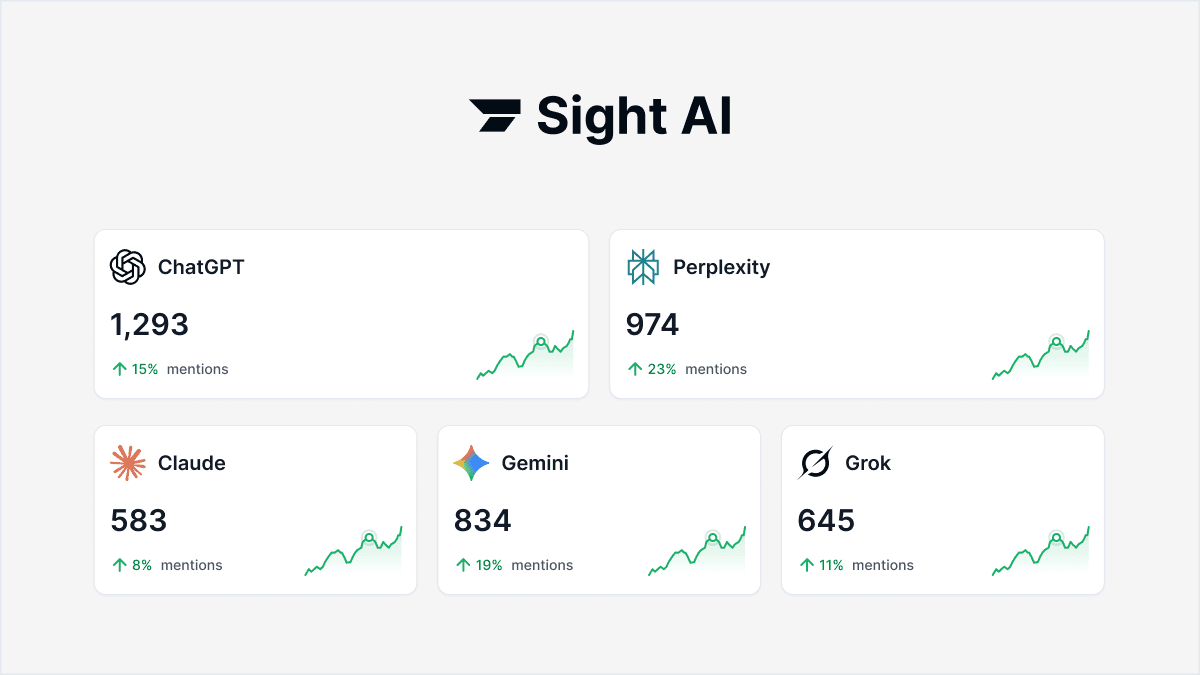
Traditional SEO metrics only tell you how content performs in search engines, but they miss an increasingly important channel: AI model responses. When users ask ChatGPT, Claude, or Perplexity for recommendations or information in your space, does your brand get mentioned? Most teams have no visibility into these conversations, meaning they're missing opportunities and failing to understand how AI models perceive their content.
This blind spot becomes critical as more users turn to AI assistants for research and recommendations. Content that ranks well in Google but never gets cited by AI models is missing a growing segment of potential customers. You need visibility into both traditional search and AI-driven discovery.
The Strategy Explained
AI visibility monitoring tracks how AI models reference your brand, content, and competitors across various prompts and queries. This emerging discipline—often called Generative Engine Optimization or GEO—helps you understand which topics and content formats earn citations from AI models.
The insight comes from testing relevant prompts across multiple AI platforms and analyzing when your brand appears, in what context, and with what sentiment. Are you mentioned as a top solution? Do AI models cite your content as authoritative? When users ask for alternatives, does your brand come up?
This visibility data reveals content gaps and opportunities. If competitors get cited for topics you also cover, your content might need stronger authority signals or better structure. If certain content formats earn more AI citations, you can prioritize those formats in your production pipeline. Reviewing AI content generation platform comparisons can help you identify tools that support these visibility tracking capabilities.
Implementation Steps
1. Identify the key prompts and queries where you want AI visibility—questions your target audience asks, comparison queries, recommendation requests, and topic explanations in your domain.
2. Establish baseline visibility by testing these prompts across major AI platforms (ChatGPT, Claude, Perplexity, and others) and documenting current brand mentions.
3. Analyze the content that earns citations—what makes it citation-worthy? Look for patterns in structure, authority signals, comprehensiveness, and formatting.
4. Integrate AI visibility insights into your content strategy, prioritizing topics where you lack visibility and formats that earn consistent citations.
5. Monitor visibility trends over time, tracking how content updates and new publications impact your presence in AI model responses.
Pro Tips
AI visibility often correlates with traditional SEO signals but not always. Some content ranks well but rarely gets cited by AI models, while other pieces earn frequent citations despite modest search rankings. Test prompts from different angles—direct questions, comparison requests, problem-solution queries—to understand the full spectrum of AI visibility. Consider how AI models frame your brand when they do mention you. Positive, authoritative citations matter more than simple name mentions.
7. Establish Version Control and Content Governance
The Challenge It Solves
When multiple team members use AI content generation APIs without coordination, chaos follows. Different prompts produce inconsistent content. Nobody knows which prompt version generated which article. Compliance requirements become nightmares because you can't trace content back to specific inputs or demonstrate oversight.
As content operations scale, the lack of governance creates risk. You can't efficiently improve prompts because you don't know which versions are currently in use. Content quality drifts as team members modify workflows independently. Audit trails don't exist when stakeholders ask about content decisions.
The Strategy Explained
Content governance for API-generated content means implementing version control for prompts, creating approval workflows for high-stakes content, and building audit trails that document the generation process. Think of it like software development—you wouldn't deploy code without version control and review processes. Content operations deserve the same rigor.
Version control tracks every prompt iteration, noting what changed, why, and how it impacted output quality. When a prompt produces excellent results, you can identify exactly which version to standardize. When quality issues emerge, you can trace them to specific prompt changes and roll back if needed. Organizations exploring enterprise content generation software often find built-in governance features that simplify this process.
Approval workflows ensure appropriate oversight for content that carries risk—regulatory compliance concerns, brand-sensitive topics, or high-visibility publications. These workflows route content through designated reviewers before publication while maintaining efficiency for lower-risk pieces.
Implementation Steps
1. Implement a prompt versioning system that tracks all prompt iterations with timestamps, change descriptions, and performance notes for each version.
2. Create approval workflow tiers based on content risk and importance—high-stakes content requires multiple reviews while routine content can flow through with lighter oversight.
3. Build audit trails that log every step of the content generation process—which prompt version was used, who approved it, when it was generated, what quality scores it received, and who published it.
4. Establish governance policies that define who can modify prompts, create new workflows, approve content for publication, and access sensitive API credentials.
5. Create documentation standards that capture the reasoning behind prompt decisions, workflow structures, and quality thresholds so knowledge persists as team members change.
Pro Tips
Start with lightweight governance and add structure as needs emerge. Overly bureaucratic processes at launch will slow adoption and frustrate team members. Use your version control data to identify your highest-performing prompts and standardize them across the team. Consider implementing regular prompt audits where you review all active prompts, retire underperforming versions, and consolidate duplicates. For compliance-sensitive industries, build governance requirements directly into your API workflow so they can't be accidentally bypassed.
Putting It All Together
Implementing these strategies transforms an AI content generation API from a simple text generator into a strategic content engine. The teams seeing the strongest results treat their API integration as an evolving system, continuously refining based on performance data and changing search landscapes.
Start with workflow architecture and prompt engineering as your foundation. These two strategies create the infrastructure everything else builds upon. Without modular workflows, you'll struggle to scale. Without systematic prompt engineering, your content will lack consistency and strategic alignment.
Layer in quality gates and SEO integration next. These ensure your scaled content production maintains standards and actually ranks. Many teams rush to generate volume without these safeguards, then spend more time fixing problems than they saved through automation.
As your system matures, expand into multi-channel distribution and AI visibility monitoring. These strategies help you maximize the value of each piece you create while understanding how your content performs in both traditional search and AI-driven discovery.
Finally, establish governance that protects your investment. Version control and approval workflows prevent the chaos that often emerges as content operations scale. They also create the documentation you need to continuously improve your system.
The opportunity now is to build content operations that scale efficiently while maintaining the quality and strategic alignment that drives organic growth. But here's the reality: you can't optimize what you can't measure. Understanding how AI models reference your brand—or don't—is becoming as critical as tracking search rankings.
Start tracking your AI visibility today and see exactly where your brand appears across top AI platforms. Stop guessing how ChatGPT and Claude talk about your brand. Get visibility into every mention, track content opportunities, and automate your path to organic traffic growth. The content systems you build today need to perform in both traditional search and AI-driven discovery—make sure you have the visibility to optimize for both.