Picture this: A potential customer opens ChatGPT and types, "What's the best email marketing platform for small businesses?" In seconds, they receive a curated list of recommendations—complete with features, pricing considerations, and use cases. Your competitor's name appears. Yours doesn't.
This scenario is playing out millions of times daily across AI platforms. Users are bypassing Google entirely, turning instead to ChatGPT, Claude, and Perplexity for product recommendations, tool comparisons, and buying advice. These AI conversations have become the new front line of brand discovery.
The critical question facing marketers today: When AI chatbots answer questions in your industry, does your brand make the cut? AI chatbot brand mentions—instances where AI models reference your company in their responses—represent a visibility channel that most businesses haven't begun to address. While your competitors scramble to understand this shift, early movers are capturing mindshare in the one place traditional SEO can't reach: inside AI-generated recommendations.
The New Visibility Battleground: Why AI Responses Matter
AI chatbot brand mentions occur when large language models like ChatGPT, Claude, or Perplexity reference your brand, products, or services in their responses to user queries. Think of it as the AI equivalent of appearing in search results—except there's no page two, no ads section, and often just three to five brands mentioned total.
The mechanics behind these mentions differ fundamentally from traditional search rankings. Google shows you a list of links ranked by relevance and authority. AI models, by contrast, synthesize information and generate conversational responses that feel like personalized recommendations from a knowledgeable advisor.
These models draw from two primary knowledge sources. First, they rely on training data—vast amounts of web content ingested during their development. When ChatGPT mentions Salesforce in a response about CRM software, it's pulling from patterns learned across millions of documents that discussed Salesforce. Second, some AI platforms use real-time retrieval, actively searching the web to supplement their responses. Perplexity built its entire platform around this approach, citing current sources for every answer.
The business implications are profound. Users perceive AI recommendations differently than search results. When Google returns ten blue links, users understand they're seeing algorithmically ranked websites. When Claude suggests three project management tools with specific use cases for each, it feels like curated, unbiased advice from an expert.
This perception dramatically increases the value of each mention. A user who sees your brand recommended by an AI chatbot is further along the decision journey than someone who merely clicked a search result. They're receiving what feels like a trusted referral, not just discovering that your website exists.
The shift is accelerating rapidly. Conversational AI platforms are becoming the starting point for research, comparison, and decision-making across industries. While traditional search remains dominant, the trajectory is clear: AI-mediated discovery is claiming an increasing share of how people find and evaluate brands.
How AI Models Decide Which Brands to Mention
Understanding why AI chatbots mention certain brands and ignore others requires looking under the hood at how these models make decisions. The selection process isn't random—it's driven by patterns in the data and specific signals that indicate authority and relevance. Learning how AI models choose brands to recommend is essential for any marketer serious about this channel.
Content authority sits at the foundation. AI models learn which brands matter by observing how frequently and prominently they appear across authoritative sources. When hundreds of respected technology publications, industry blogs, and expert reviews mention your brand in relevant contexts, AI models internalize that pattern. Your brand becomes strongly associated with specific use cases, features, or industry segments.
The quality of mentions matters as much as quantity. A single in-depth case study from a respected industry publication carries more weight than dozens of brief mentions on low-authority sites. AI models pick up on signals of expertise, authoritativeness, and trustworthiness—the same E-E-A-T principles that guide search quality, but applied to the training data itself.
Structured, clear content gives AI models something concrete to work with. When your product information is well-organized, factual, and easy to parse, AI can more readily extract and synthesize it. Vague marketing speak or poorly structured content makes it harder for models to understand what you actually offer and when to recommend you.
Platform architecture creates important distinctions in how brands get mentioned. ChatGPT primarily relies on knowledge from its training data, with a knowledge cutoff date beyond which it has no information. This means recent developments might not appear in its responses unless users specifically enable web browsing features. Claude operates similarly, though with different training data and cutoff dates.
Perplexity takes a different approach entirely, searching the web in real-time for every query and citing specific sources. This means recent content can influence Perplexity's responses immediately, while the same content might take months to affect ChatGPT's base knowledge through model updates. Understanding Perplexity AI brand mentions requires a different strategy than other platforms.
Sentiment in source material shapes how AI discusses your brand. If authoritative sources consistently highlight specific strengths—"exceptional customer support" or "best for enterprise teams"—AI models learn to associate your brand with those attributes. Conversely, if negative patterns appear across multiple sources, they can influence whether and how AI mentions you.
The competitive context matters too. AI models don't just decide whether to mention your brand in isolation—they're implicitly comparing you against alternatives. When someone asks for "the best CRM software," the AI draws on patterns about which brands are most frequently discussed, most positively reviewed, and most relevant to common use cases.
Tracking Your Brand Across AI Platforms
Monitoring AI chatbot brand mentions presents unique challenges. Unlike traditional search where you can check rankings for specific keywords, AI responses vary based on how questions are phrased, the conversation context, and which platform is being used. What ChatGPT says about your brand might differ significantly from Claude's response to the same question.
The core challenge is scale and consistency. To understand your AI visibility, you need to test hundreds of relevant prompts across multiple platforms, track how responses change over time, and identify patterns in when you're mentioned versus overlooked. Doing this manually is impractical—it would require constantly querying each AI platform with variations of industry questions and cataloging the results.
Several key metrics define AI visibility performance. Mention frequency tells you what percentage of relevant queries include your brand. If AI mentions you in 60% of responses about "marketing automation platforms" but only 15% of responses about "email marketing tools," you've identified a visibility gap in specific use case categories.
Sentiment analysis reveals how AI discusses your brand when it does mention you. Are you positioned as a premium option? A budget-friendly alternative? The best choice for specific industries or company sizes? Understanding these patterns helps you see how AI models have internalized your brand positioning. Implementing sentiment analysis for AI brand mentions provides crucial insights into your reputation.
Competitive share of voice shows your visibility relative to competitors. When AI recommends project management tools, are you mentioned alongside Asana and Monday.com, or are you absent from those conversations entirely? This metric quantifies your position in the AI-mediated consideration set. You can track competitor mentions in AI models to benchmark your performance.
Prompt-response patterns identify which types of questions trigger mentions of your brand. You might discover that AI consistently mentions you for "enterprise solutions" queries but rarely for "small business" questions—insight that can guide both your content strategy and product positioning.
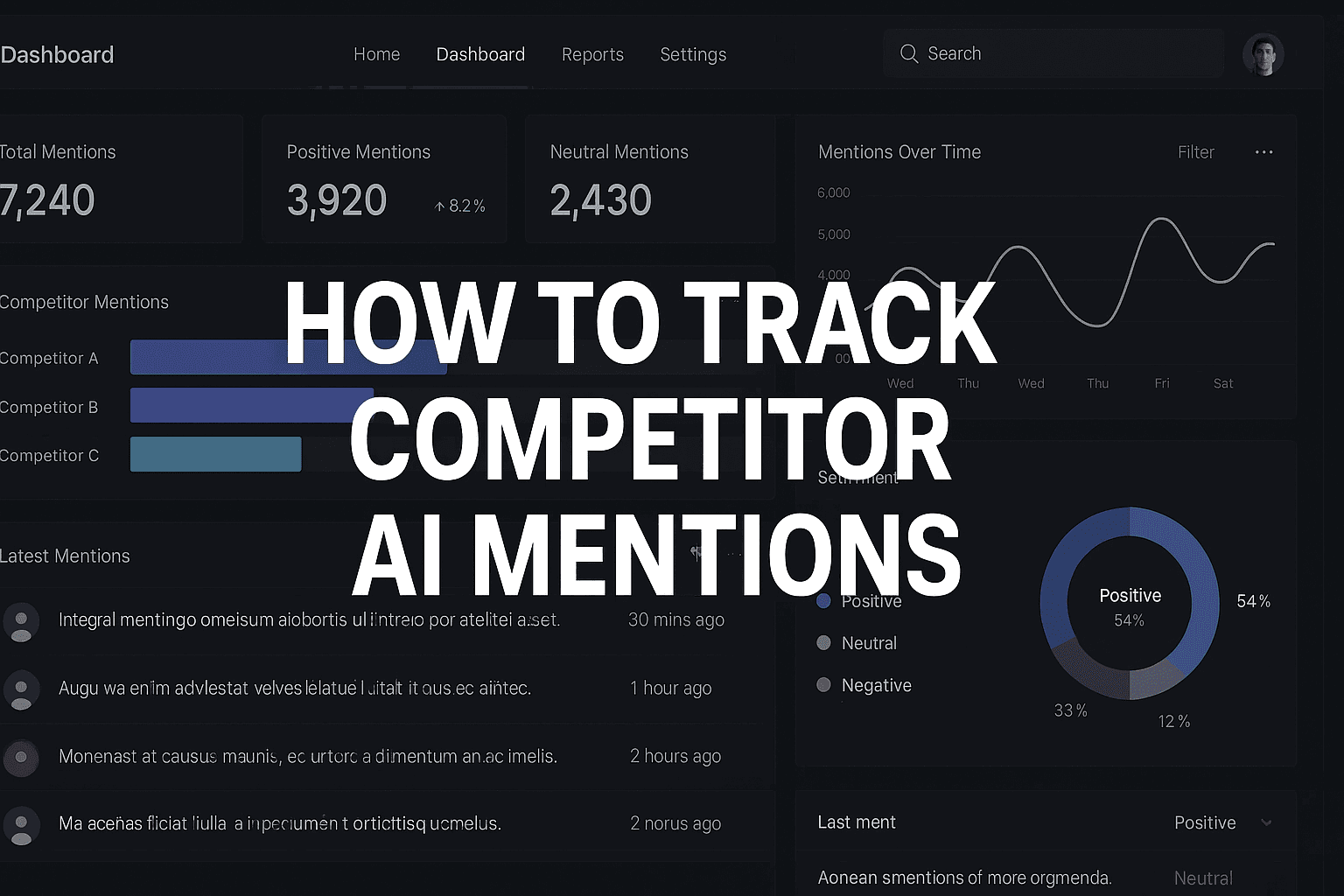
AI visibility tracking tools have emerged to automate this monitoring process. These platforms systematically query multiple AI models with relevant prompts, analyze the responses for brand mentions, and track changes over time. The technology handles the tedious work of testing hundreds of prompt variations and provides dashboards showing where your brand appears across the AI landscape. Exploring AI chatbot brand tracking tools can help you find the right solution for your needs.
The most sophisticated tracking systems go beyond simple mention detection. They analyze the context around mentions, identify which specific features or use cases trigger recommendations, and alert you when competitive positioning shifts. Some platforms integrate with content management systems to help you create optimized content that improves your AI visibility scores.
Content Strategies That Earn AI Recommendations
Getting AI chatbots to mention your brand requires a strategic approach to content creation—what's emerging as Generative Engine Optimization, or GEO. This discipline focuses on creating content that AI models can easily comprehend, extract, and cite when generating responses.
The foundation is building genuine topical authority. AI models learn to associate your brand with specific topics by observing consistent, high-quality content across those subjects. If you want AI to recommend your analytics platform, you need comprehensive content addressing analytics use cases, implementation strategies, integration approaches, and industry-specific applications.
Depth matters more than breadth in the early stages. Rather than creating surface-level content across dozens of topics, establish deep expertise in your core areas. Publish detailed guides, case studies, and technical documentation that demonstrate genuine knowledge. AI models pick up on this depth and learn to trust your brand as an authoritative source.
Clear, factual writing helps AI models parse and understand your content. Avoid vague marketing language in favor of specific, concrete information. Instead of "Our revolutionary platform transforms how teams collaborate," write "Our platform includes real-time document editing, threaded comments, and version control for teams up to 500 members." The second version gives AI clear facts to work with.
Structured content formats make extraction easier. Use clear headings, bullet points for features and benefits, and consistent formatting for product information. When AI models scan content to answer questions, well-structured information is easier to identify and synthesize than dense paragraphs of text.
Comparison-friendly content positions you for competitive queries. Many AI queries involve comparing options: "Slack vs. Microsoft Teams" or "best CRM for small business." Creating content that honestly addresses how your solution compares to alternatives—including where competitors might be stronger fits—builds credibility and ensures you're part of these comparison conversations.
Third-party mentions amplify your authority signal. AI models weight information from diverse sources more heavily than self-published content alone. Earning mentions in industry publications, appearing in expert roundups, and generating authentic user reviews creates multiple data points that reinforce your brand's relevance and authority.
Technical content shouldn't be hidden behind gates or login walls. AI models primarily learn from publicly accessible content. While gated content has its place in demand generation, your foundational educational content should be openly available for AI models to access and learn from.
Update and maintain your content regularly. AI models trained on outdated information about your brand will provide outdated recommendations. Keep your key pages current with latest features, pricing, and positioning. For platforms using real-time retrieval, fresh content can influence responses immediately.
The goal isn't gaming the system—it's making your genuine value proposition clear and accessible to AI models. Think of it as translating your expertise into a format that both humans and AI can easily understand and act upon. For actionable tactics, explore how to improve brand mentions in AI responses.
Fixing Negative or Missing Brand Mentions
Discovering that AI chatbots mention competitors but not your brand—or worse, mention you incorrectly or negatively—requires a diagnostic and strategic response. If you're wondering why AI chatbots are ignoring your brand, you're not alone. The fix isn't immediate, but it's achievable with the right approach.
Start by diagnosing the visibility gap. If AI consistently overlooks your brand, the issue typically stems from insufficient authority signals in the model's training data or real-time retrieval results. Ask yourself: Do authoritative third-party sources discuss your brand in relevant contexts? Is your own content comprehensive and well-structured? Have you built clear associations between your brand and specific use cases?
Content gaps often explain missing mentions. If AI doesn't mention your CRM when users ask about sales automation, you may lack substantial content connecting your brand to that specific use case. Create comprehensive resources addressing that gap—guides, case studies, and comparison content that establish your relevance.
Correcting inaccurate information requires updating the source material AI models learn from. If AI provides outdated details about your pricing or features, ensure your website, documentation, and public-facing materials clearly communicate current information. For platforms using real-time retrieval, these updates can influence responses relatively quickly.
Building third-party authority takes longer but carries more weight. Pursue opportunities for coverage in industry publications, expert interviews, and inclusion in software comparison sites. Each authoritative mention creates another data point that helps AI models understand your market position and relevance.
Negative sentiment requires careful attention. If AI mentions your brand with negative context, investigate the source. Are there legitimate issues being discussed across multiple sources? Address those problems directly—both in your product and in how you communicate about improvements. Authentic improvement backed by updated content and new positive reviews will gradually shift AI's perspective. Understanding AI model brand sentiment tracking helps you monitor these shifts.
Timeline management is critical. Don't expect overnight changes. AI models update their knowledge bases on different schedules. ChatGPT's base knowledge changes only when OpenAI releases new model versions—typically months apart. Claude operates on a similar cadence. Perplexity reflects changes faster due to real-time retrieval, but even then, building authority across the sources it pulls from takes time.
Focus on sustainable improvements rather than quick fixes. The content and authority you build to improve AI visibility also strengthens your traditional SEO, brand reputation, and customer education. Think of this as long-term brand building that happens to influence AI recommendations, not as a separate channel requiring different tactics.
Measuring ROI and Building an AI Visibility Program
Connecting AI chatbot brand mentions to business outcomes requires both new metrics and integration with existing marketing analytics. The challenge is that AI mentions don't generate direct, easily trackable clicks like search results or social media posts.
Brand awareness represents the most immediate value. When AI consistently mentions your brand in relevant contexts, you're building mindshare with users who might never have discovered you through traditional channels. This awareness compounds over time as more people encounter your brand through AI interactions.
Competitive positioning becomes measurable through share of voice metrics. Track what percentage of relevant AI responses include your brand versus competitors. Improving from 20% to 50% mention rate in your category represents significant gains in competitive visibility, even if you can't directly attribute specific conversions.
Some traffic attribution is possible through indirect signals. Monitor branded search volume, direct traffic, and referral patterns. Increases in users searching for your brand name or visiting your site directly may correlate with improved AI visibility, suggesting users discovered you through AI interactions and followed up with direct research.
Building a sustainable AI visibility program requires treating it as an integrated component of your content marketing strategy, not a separate initiative. The content that improves AI mentions also serves your SEO, thought leadership, and customer education goals.
Establish a baseline by auditing your current AI visibility across key platforms and query categories. Document where you're mentioned, where you're absent, and how you're positioned relative to competitors. This baseline lets you measure progress over time. Learning how to monitor brand mentions across AI platforms is the first step.
Create a content roadmap addressing visibility gaps. Prioritize topics where AI mentions would reach high-intent audiences in your target market. Develop comprehensive resources that establish authority in those areas.
Monitor regularly but don't obsess over daily changes. AI visibility shifts gradually as models update and your content authority builds. Monthly or quarterly reviews provide enough frequency to track trends without getting lost in noise. Consider implementing real-time brand monitoring across LLMs for more comprehensive coverage.
The convergence of SEO and GEO is accelerating. As AI search continues gaining market share, the lines between optimizing for traditional search engines and optimizing for AI responses will blur. The fundamental principles—create authoritative, well-structured content that genuinely serves user needs—remain constant across both channels.
Early investment in AI visibility pays compounding returns. As more users adopt AI for research and discovery, brands with established presence in AI responses will capture disproportionate attention. The window for building this foundation while competition remains limited won't stay open indefinitely.
Taking Control of Your AI Presence
AI chatbot brand mentions represent the next evolution of search visibility—one where the rules are still being written and early movers gain lasting advantages. While your competitors debate whether AI search matters, you have the opportunity to establish authority, build visibility, and capture mindshare in the channel that's reshaping how people discover and evaluate brands.
The brands that will dominate AI recommendations aren't necessarily those with the biggest marketing budgets or the longest history. They're the ones investing now in clear, authoritative content that AI models can understand and cite. They're tracking their visibility across platforms, identifying gaps, and systematically building the authority signals that influence AI responses.
This isn't about gaming algorithms or finding shortcuts. It's about making your genuine expertise and value proposition accessible to the AI systems that millions of people now trust for recommendations. It's about ensuring that when someone asks an AI chatbot for advice in your category, your brand is part of the conversation.
The technical foundation you build for AI visibility strengthens everything else you do. Better content structure improves user experience. Clearer value propositions convert more visitors. Third-party authority boosts traditional SEO. You're not choosing between AI visibility and other marketing channels—you're building assets that perform across all of them.
Stop guessing how AI models like ChatGPT and Claude talk about your brand—get visibility into every mention, track content opportunities, and automate your path to organic traffic growth. Start tracking your AI visibility today and see exactly where your brand appears across top AI platforms.
The question isn't whether AI search will matter to your business. The question is whether you'll be visible when it does.