Your brand is being discussed in AI conversations right now—but do you know what's being said? As AI platforms like ChatGPT, Claude, and Perplexity become primary information sources for millions of users, brand mentions within these systems directly influence purchasing decisions and brand perception. Unlike traditional social media monitoring, tracking AI platform brand mentions requires understanding how large language models retrieve, process, and present information about your company.
Think of it this way: when someone asks ChatGPT "What's the best marketing analytics tool?" or queries Claude about "alternatives to Google Analytics," these AI models are making recommendations that shape purchasing decisions. If your brand appears in those responses, you're gaining visibility. If it doesn't, you're invisible to an entire channel of discovery.
This guide walks you through the exact process of setting up comprehensive AI brand mention tracking, from identifying which platforms matter most to analyzing sentiment and uncovering content opportunities. By the end, you'll have a working system that monitors how AI models talk about your brand and actionable insights to improve your AI visibility.
Step 1: Identify Your Priority AI Platforms and Mention Types
Not all AI platforms matter equally for your brand. Your first step is mapping which platforms your target audience actually uses and how they use them.
Start by creating a platform priority matrix. The major players include ChatGPT (OpenAI), Claude (Anthropic), Perplexity AI, Google Gemini, Microsoft Copilot, and Meta AI. Each platform has different user demographics and use cases. ChatGPT tends to attract a broad consumer and professional audience. Perplexity users often seek research-oriented answers. Copilot integrates with Microsoft products, making it popular among enterprise users.
Here's where it gets strategic: match platforms to your industry and customer behavior. If you're a B2B SaaS company, ChatGPT and Claude likely matter most because professionals use them for research and decision-making. If you're in e-commerce, platforms integrated into shopping experiences become critical. Understanding brand tracking across AI platforms helps you prioritize where to focus your monitoring efforts.
Define Your Mention Types: Not all mentions are created equal. You need to track four distinct categories.
Direct brand mentions occur when the AI explicitly names your company or product. These are the gold standard—the AI is recommending you by name.
Product references happen when the AI describes your solution without using your brand name. For example, "tools that track AI visibility" might describe your product without naming you specifically.
Competitor comparisons are crucial. When users ask "What's better than [Competitor]?" you want to know if your brand appears in the response.
Category recommendations reveal whether you're included when users ask broad questions like "best SEO tools" or "top marketing analytics platforms."
Create Your Tracking Matrix: Build a simple spreadsheet with platforms as columns and mention types as rows. For each intersection, note whether that combination is high, medium, or low priority for your business.
You've succeeded at this step when you have documented at least 6 platforms with specific tracking criteria for each. You should know exactly which mention types matter most on which platforms based on where your customers actually spend time.
Step 2: Build Your Brand Mention Query Library
AI platforms don't spontaneously mention your brand—they respond to prompts. Your tracking effectiveness depends entirely on asking the right questions.
Think of this like keyword research, but for conversational AI. You're building a library of prompts that mirror how real users would naturally ask about solutions in your space.
Informational Query Templates: These prompts seek to understand a topic or problem. Start with patterns like "What is the best way to [solve problem]?" or "How do I [achieve outcome]?" For a marketing analytics tool, that might be "How do I track my brand mentions in AI platforms?" or "What's the best way to monitor AI visibility?"
These queries often trigger AI models to recommend tools and solutions, making them prime opportunities for brand mentions.
Comparative Query Templates: Users frequently ask AI to compare options. Build prompts like "What are alternatives to [competitor]?" or "Compare [Category A] vs [Category B] tools." Include your direct competitors by name. If you're competing with established players, queries like "What are alternatives to SEMrush for AI visibility?" become essential tracking prompts.
The twist? AI models often provide different recommendations based on subtle prompt variations. "Best marketing tools" might generate different responses than "Top marketing platforms" or "Leading marketing software."
Transactional Query Templates: These indicate purchase intent. Prompts like "Which [product category] should I buy?" or "What's the most cost-effective [solution type]?" signal users ready to make decisions. Track these aggressively—if your brand appears here, you're capturing high-intent visibility.
Competitor Landscape Queries: Don't just track your own brand. Build prompts around competitor names to understand your relative positioning. "Is [Competitor X] the best option for [use case]?" reveals whether AI models recommend alternatives—ideally including your brand. Learning how to track LLM brand mentions gives you the framework for building effective competitor queries.
Include variations covering different user sophistication levels. Beginners ask different questions than experts. "How do I start with SEO?" versus "What's the best technical SEO audit tool?" might surface your brand to different audience segments.
You've succeeded when you have a library of 20-30 prompts covering your core use cases, competitor landscape, and different user intents. Test each prompt across multiple platforms to verify they actually trigger relevant responses. If a prompt consistently generates generic answers without brand mentions, refine or replace it.
Step 3: Set Up Systematic Monitoring and Data Collection
Now comes the operational reality: actually tracking mentions across platforms consistently. You have two paths—manual workflows or automated tools.
Manual Tracking Workflow: This approach works for smaller brands or those just starting. Create a tracking schedule—weekly or bi-weekly depending on your content velocity. Open each priority AI platform and systematically run through your query library. Copy responses into a structured spreadsheet.
Your data capture system needs these columns: Date, Platform, Prompt Used, Full Response, Brand Mentioned (Yes/No), Mention Type (Direct/Product/Comparison/Category), Position in Response (1st, 2nd, 3rd+ recommendation), Sentiment (Positive/Neutral/Negative), and Notes.
The challenge? This is time-intensive. Running 25 prompts across 6 platforms means 150 queries per tracking cycle. If you're doing this weekly, that's significant manual effort.
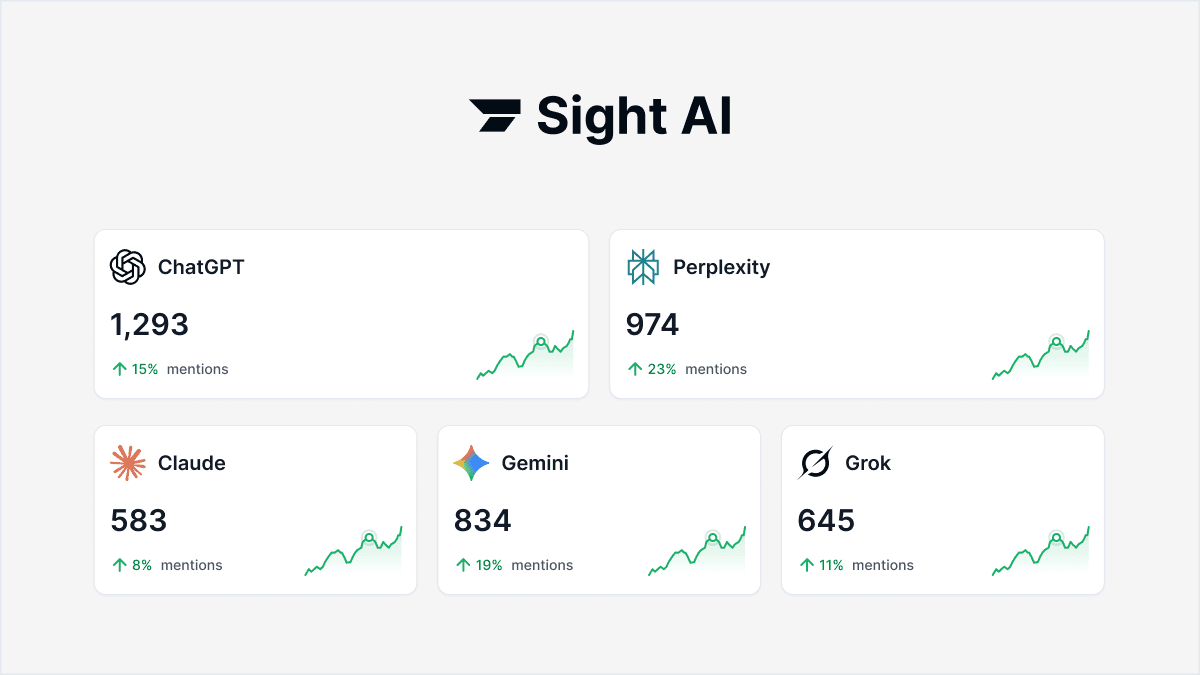
Automated Tracking with AI Visibility Tools: This is where platforms like Sight AI transform the process. Instead of manually querying each AI platform, automated tools run your prompt library systematically, capture responses, and analyze mentions without manual intervention. Exploring AI brand visibility tracking tools helps you understand what automation options exist.
The advantage goes beyond time savings. Automated tools can track more frequently—even daily—giving you real-time visibility into how AI models discuss your brand. They can also detect changes: when a platform that previously didn't mention you suddenly starts recommending your brand, or when a competitor displaces you in responses.
Establish Your Monitoring Frequency: How often should you track? This depends on your content publishing velocity and competitive dynamics. If you're publishing new content weekly and actively working to improve AI visibility, weekly tracking makes sense. If you're in a stable market with slower content cycles, bi-weekly or monthly might suffice.
Here's the thing: AI models update their training data and algorithms periodically. Your visibility can shift when platforms refresh their knowledge bases. More frequent monitoring helps you catch these changes quickly.
Run Your Baseline Queries: Before you start regular monitoring, establish a baseline. Run your complete query library across all priority platforms and document current state. This becomes your benchmark for measuring improvement.
You've successfully set up monitoring when you have a repeatable process that captures structured data consistently. Whether manual or automated, you should be able to compare results week-over-week and identify trends. If you're manually tracking, set calendar reminders and stick to your schedule religiously—inconsistent monitoring produces unreliable data.
Step 4: Analyze Mention Sentiment and Context Quality
Getting mentioned isn't enough. How AI platforms talk about your brand matters as much as whether they mention you at all.
Start by categorizing every mention into sentiment buckets. Positive recommendations are the goal—when the AI explicitly suggests your brand as a solution or describes it favorably. These mentions typically include language like "excellent for," "highly recommended," or "leading solution." Using brand sentiment tracking software can automate this categorization process.
Neutral references simply acknowledge your existence without endorsement. The AI might list your brand among options without particular enthusiasm or include you in a category definition. These aren't harmful, but they're not driving preference either.
Negative associations are critical to identify. If an AI model describes your brand with caveats, limitations, or unfavorable comparisons, you have a visibility problem that requires content intervention.
Evaluate Context Accuracy: This is where things get interesting. AI models sometimes hallucinate or present outdated information. You need to verify whether the AI is providing correct information about your brand.
Check these accuracy dimensions: Does the AI correctly describe what your product does? Are the features mentioned current or outdated? Is pricing information accurate? Are integrations and capabilities described correctly?
Picture this scenario: an AI model mentions your brand but describes features from two years ago, missing your recent major product updates. Users receiving that information form impressions based on outdated capabilities. That's a content gap you need to address.
Identify Positioning Patterns: Look for patterns in how different AI models position your brand relative to competitors. Does ChatGPT consistently mention you alongside premium competitors while Claude groups you with budget alternatives? These positioning differences reveal how AI models categorize your brand.
Pay attention to mention order. When AI models provide recommendation lists, appearing first versus fifth signals different levels of confidence in your solution. Track your position across queries and platforms.
Flag Misinformation Requiring Correction: Create a priority list of inaccuracies that need addressing. If multiple platforms present the same incorrect information, that suggests the misinformation exists in commonly referenced sources that AI models trained on.
The natural question becomes: how do you fix AI misinformation? That's where strategic content creation comes in—publishing authoritative, well-structured content that AI models can reference when generating future responses.
You've succeeded at this step when you can answer: What's our overall sentiment distribution? What percentage of mentions are positive versus neutral versus negative? What specific inaccuracies appear most frequently? Which platforms present the most favorable positioning?
Step 5: Calculate Your AI Visibility Score and Benchmark Progress
Raw mention counts don't tell the complete story. You need a scoring methodology that reflects mention quality, platform importance, and competitive positioning.
Develop Your Scoring Formula: A comprehensive AI visibility score combines multiple factors. Start with mention frequency—how often your brand appears across your query library. If you're mentioned in 15 out of 25 prompts, that's a 60% mention rate.
Apply sentiment weighting. Positive mentions should count more than neutral references. A simple weighting system: positive mentions = 3 points, neutral mentions = 1 point, negative mentions = -2 points. This incentivizes not just visibility but favorable visibility.
Factor in platform importance. Not all platforms carry equal weight for your business. If ChatGPT drives 60% of your target audience's AI usage, mentions there should count more heavily than platforms with smaller user bases in your market. Understanding measuring brand mentions across platforms helps you weight each platform appropriately.
Consider position in responses. Being the first recommendation in an AI response is more valuable than appearing fifth in a list. Weight first-position mentions higher than subsequent positions.
Here's a sample scoring approach: (Mention Frequency × Sentiment Weight × Platform Importance × Position Multiplier) = AI Visibility Score. Adjust the formula based on what matters most for your specific goals.
Establish Your Baseline Metrics: Before implementing any optimization strategies, document your current state. What's your visibility score today? This becomes your benchmark for measuring improvement over time.
Record these baseline metrics: Overall mention rate across all queries, Average sentiment score, Visibility score by platform, Mention rate for high-intent transactional queries specifically, Position distribution (what percentage of mentions are first position versus second, third, etc.).
Benchmark Against Competitors: Your absolute score matters less than your relative positioning. If your visibility score is 45 but your main competitor scores 75, you have work to do. If you're at 60 and competitors average 40, you're winning the AI visibility game.
Run the same query library but focused on competitor brands. Calculate their visibility scores using your same methodology. This reveals your competitive standing in AI recommendation space.
Set Realistic Improvement Targets: Based on your baseline and competitive benchmarks, establish improvement goals. If you're currently mentioned in 30% of relevant queries, aiming for 80% in one month is unrealistic. A target of 45% in three months might be achievable with consistent content optimization.
Think in terms of quarterly improvement cycles. AI models don't update their knowledge instantly—your content optimization efforts take time to influence how platforms discuss your brand.
You've succeeded when you have a clear numerical baseline, a documented scoring methodology you can apply consistently, competitive benchmark data, and realistic improvement targets with timelines. This transforms AI visibility from a vague concept into a measurable metric you can optimize systematically.
Step 6: Turn Tracking Insights into Content Opportunities
This is where tracking becomes strategy. Your mention data reveals exactly where to focus content creation efforts for maximum AI visibility impact.
Identify Visibility Gaps: Review queries where competitors get mentioned but your brand doesn't appear. These represent your highest-priority content opportunities. If users ask "What are the best AI visibility tracking tools?" and competitors appear in responses while you don't, that's a gap screaming for content intervention.
Create a gap analysis spreadsheet. List queries where you're absent, note which competitors appear instead, and identify the apparent reason. Sometimes you're missing because you lack content addressing that specific use case. Other times, your content exists but isn't structured in ways AI models can easily reference.
Spot Incomplete or Outdated AI Responses: Look for queries where AI platforms provide incomplete, outdated, or partially incorrect information. These represent opportunities to publish authoritative content that becomes the reference source AI models cite.
Let's say AI models describe your product category but miss recent innovations or best practices. Publishing a comprehensive, well-structured guide to current best practices positions your brand as the authoritative source. When AI models next update their knowledge, your content becomes referenceable.
Prioritize Based on Intent and Impact: Not all content opportunities are equally valuable. Prioritize based on query intent and potential business impact.
High-intent queries with low brand visibility should top your list. If users asking "Which [product category] should I buy for [specific use case]?" don't see your brand mentioned, and that use case represents your ideal customer, that's your number-one content priority.
Informational queries with high search volume come next. These build awareness and establish authority even if they don't immediately drive conversions.
Competitor displacement opportunities matter too. If a competitor consistently appears in responses you want to own, create content that directly addresses those queries with superior depth and structure. Reviewing AI brand tracking tools comparison can help you understand how competitors approach their visibility strategies.
Create SEO/GEO-Optimized Content: GEO—Generative Engine Optimization—is the practice of creating content specifically designed for AI model visibility. This means structuring information in ways AI platforms can easily parse and reference. Learning about LLM optimization platforms for brands provides frameworks for this approach.
Use clear headings that mirror natural questions. Include concise definitions and explanations. Provide structured comparisons when relevant. Add specific use cases and examples. Make your content the most comprehensive, accurate, and well-organized resource on the topic.
The goal isn't just ranking in traditional search engines—it's becoming the source AI models reference when generating responses about your topic area.
Start with your top three visibility gaps. Create comprehensive content addressing each gap. Publish and index that content quickly using tools like IndexNow to accelerate discovery. Then monitor whether your visibility improves for those specific queries in subsequent tracking cycles.
You've succeeded at this step when you have a prioritized content roadmap directly tied to visibility gaps, and you're systematically publishing content designed to close those gaps. Track whether new content improves mention rates for targeted queries—that's your proof the strategy works.
Your AI Visibility Tracking System Is Ready
Tracking AI platform brand mentions isn't a one-time project—it's an ongoing visibility strategy that compounds over time. The brands monitoring their AI presence today are building advantages that competitors will struggle to overcome as AI platforms become primary discovery channels.
Start with Step 1 today by mapping your priority platforms. You don't need to track every AI model simultaneously—begin with the three platforms your target audience uses most. Build your initial query library with 15-20 prompts covering your core use cases. Run baseline queries to understand your current visibility.
Here's your quick-start checklist: Identify 6 AI platforms to monitor based on your audience behavior. Create 20+ tracking prompts covering informational, comparative, and transactional queries. Establish your data capture system—spreadsheet or automated tool. Run baseline queries across all platforms and document current mention rates. Calculate your initial visibility score using a consistent methodology. Identify your first three content opportunities based on visibility gaps.
Then commit to a monitoring schedule. Weekly tracking provides enough data to identify trends without becoming overwhelming. Monthly tracking works if you're publishing content less frequently or operating in a slower-moving market.
The most important thing? Start tracking now. Every week you delay is another week your competitors might be building AI visibility advantages. The brands that win in AI-driven discovery will be those that understood early how these platforms work and optimized accordingly.
As AI platforms continue shaping how people discover and evaluate brands, the companies tracking and optimizing their AI visibility now will have significant advantages. You'll know exactly what's being said about your brand, identify content opportunities before competitors spot them, and systematically improve how AI models recommend your solutions.
Ready to automate this entire process? Start tracking your AI visibility today and see exactly where your brand appears across top AI platforms. Sight AI's visibility tracking monitors your brand across ChatGPT, Claude, Perplexity, and other major AI models automatically, providing sentiment analysis, position tracking, and actionable content recommendations that help you improve your AI visibility systematically.