Your brand is being discussed in AI conversations right now—but do you know what ChatGPT is telling millions of users about your company? As AI-powered search becomes the default way people discover and evaluate brands, tracking how ChatGPT mentions your business has shifted from 'nice to have' to essential competitive intelligence.
Unlike traditional search where you can monitor rankings and backlinks, AI conversations happen in a black box. Users ask ChatGPT for product recommendations, service comparisons, and brand evaluations—and the responses shape purchasing decisions before prospects ever visit your website.
This guide walks you through the exact process of setting up comprehensive ChatGPT brand mention tracking, from initial setup to ongoing optimization. You'll learn how to monitor what ChatGPT says about your brand, analyze sentiment and context, identify content gaps that affect AI visibility, and turn these insights into actionable improvements.
Whether you're a marketer protecting brand reputation, a founder seeking competitive advantages, or an agency managing multiple clients, these steps will help you gain visibility into the AI conversations that increasingly drive business outcomes.
Step 1: Define Your Brand Tracking Parameters
Before you can track how ChatGPT mentions your brand, you need to know exactly what you're looking for. Think of this as creating a comprehensive search net that catches every variation of how users might reference your company.
Start by documenting every possible variation of your brand name. This includes your official company name, shortened versions, common misspellings, acronyms, and product names. If you're "Advanced Marketing Solutions," you'll want to track "AMS," "Advanced Marketing," and even "Advance Marketing" (a common typo).
Product and Service Names: List every product, service, or tool your company offers. AI models often reference specific products rather than parent companies, especially when users ask targeted questions like "best project management tools" rather than "best software companies."
Competitor Mapping: Identify your top 5-10 competitors to track alongside your brand. This comparative data reveals when ChatGPT recommends alternatives instead of your solution. You'll discover patterns like "ChatGPT mentions Competitor A in 80% of prompts where we appear in only 30%"—that's actionable intelligence.
Create tracking categories that reflect how brands get mentioned in AI conversations. These typically include direct mentions (your brand name appears), recommendations (AI suggests your product as a solution), comparisons (your brand versus competitors), and sentiment indicators (positive, neutral, or negative framing).
Priority Levels Matter: Not all mentions carry equal weight. Assign priority levels to your tracking terms. Your primary brand name gets highest priority, while minor product variations might be medium priority. This helps you focus analysis on what matters most.
Document everything in a structured tracking spreadsheet. Include columns for the term, variation type, priority level, and category. This becomes your reference document for consistent monitoring—essential when you're tracking dozens of variations across multiple time periods.
Success indicator: You've completed this step when you have a comprehensive list of 15-30 brand variations, 5-10 competitor brands, and clear categories for organizing your findings.
Step 2: Set Up Your AI Visibility Monitoring System
Now that you know what to track, you need to decide how you'll actually monitor ChatGPT mentions. You have two main approaches: manual prompt testing or automated AI visibility tracking platforms.
Manual tracking means opening ChatGPT yourself and testing prompts one by one. This works for small-scale monitoring or initial exploration, but it becomes unsustainable fast. Testing 20 prompts daily across multiple AI models quickly consumes hours of manual work, and you lose historical comparison data.
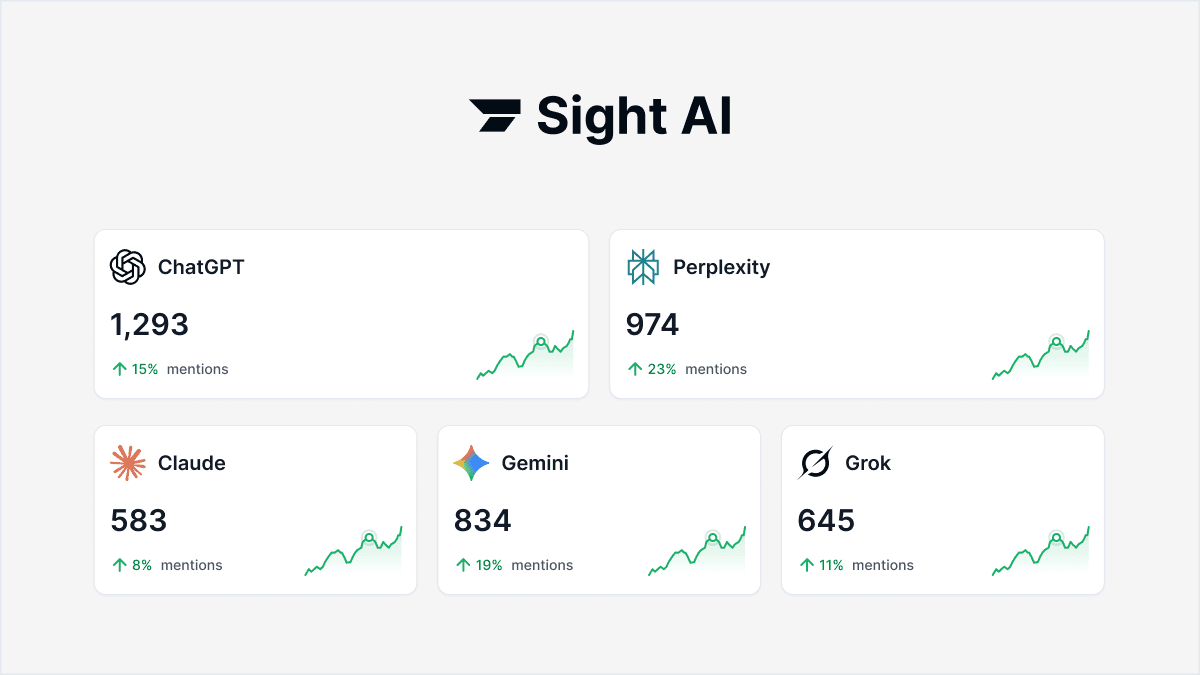
Automated Tracking Platforms: Purpose-built AI visibility tools like Sight AI monitor brand mentions across ChatGPT, Claude, Perplexity, and other AI models automatically. They run your test prompts on schedule, track sentiment changes over time, and alert you to significant shifts in how AI represents your brand.
Here's why multi-model tracking matters: ChatGPT might recommend your brand for certain queries while Claude suggests competitors instead. Each AI model has different training data, real-time information access, and recommendation patterns. Tracking only ChatGPT gives you an incomplete picture of your AI visibility.
Configure your monitoring system to cover these AI platforms at minimum: ChatGPT (including GPT-4 variants), Claude (Anthropic's assistant), Perplexity (AI-powered search), and Google Gemini. This quartet represents the majority of AI-assisted brand discovery happening today.
Establish Monitoring Frequency: High-stakes brands tracking competitive markets should run prompts daily. If you're in a rapidly evolving industry where AI training data updates frequently, daily monitoring catches shifts before they impact business outcomes. For more stable markets, weekly tracking provides sufficient trend visibility without overwhelming your team with data.
Set up your system to save historical responses. The real value isn't just knowing what ChatGPT says today—it's tracking how mentions evolve over weeks and months. Did your recent content campaign improve mention frequency? Has sentiment shifted after a product launch? Historical data answers these questions.
Technical Setup Tips: If using automated platforms, connect them to your communication tools. Slack or email alerts for significant changes mean you don't need to check dashboards constantly. Configure alerts for: new competitor mentions, sentiment drops, or complete absence from previously positive prompts.
Success indicator: Your monitoring system runs automatically, covers at least 3-4 AI platforms, and saves historical data for trend analysis. You receive alerts when meaningful changes occur.
Step 3: Create Strategic Test Prompts That Mirror User Behavior
The prompts you test determine the quality of insights you'll gain. Generic prompts like "Tell me about [Brand]" miss how real users actually interact with AI assistants. You need prompts that mirror authentic buyer behavior across the entire decision journey.
Develop prompts for the awareness stage first. These are broad, problem-focused queries where users don't yet know specific solutions. Examples: "What are the best tools for tracking website analytics?" or "How can I improve my email marketing results?" These prompts reveal whether AI introduces your brand when users are just discovering their options.
Consideration Stage Prompts: Users in this phase compare specific alternatives. Create prompts like "Compare [Your Brand] vs [Competitor A] vs [Competitor B]" or "What's the difference between [Your Product] and [Competitor Product]?" These show how AI positions your brand in direct competitive contexts.
Decision stage prompts get specific: "Should I use [Your Brand] for [specific use case]?" or "Is [Your Product] worth the investment for [specific business type]?" AI responses here often include specific recommendations or warnings that directly impact conversion.
Industry-specific queries matter tremendously. If you're a marketing automation platform, test prompts like "best marketing automation for e-commerce" and "marketing automation for B2B SaaS" separately. AI recommendations vary significantly based on use case specificity.
Branded vs. Unbranded Balance: Test both branded queries (where your name appears in the prompt) and unbranded queries (where it doesn't). Branded queries show how AI describes your brand when asked directly. Unbranded queries reveal whether AI recommends you organically when users don't know you exist yet. Understanding how ChatGPT responds to brand queries helps you craft more effective test prompts.
Document every prompt variation in your tracking system. Use consistent phrasing across time periods so you can compare results accurately. If you test "best project management software" in January, use the exact same prompt in February—don't switch to "top project management tools" or you lose comparison validity.
Create prompt categories that align with your business goals. If you're focused on a specific market segment, weight your prompts toward that audience. A B2B SaaS company might test 60% enterprise-focused prompts and 40% small business prompts, reflecting their revenue priorities.
Success indicator: You have 10-20 strategic prompts documented that span awareness, consideration, and decision stages. Each prompt reflects how real users in your target market actually query AI assistants.
Step 4: Analyze Mention Quality and Sentiment Patterns
Getting mentioned by ChatGPT isn't enough—you need to understand the quality and context of those mentions. A brief reference buried in a list of ten alternatives carries far less weight than a detailed recommendation positioned as the top solution.
Start by categorizing each mention into quality tiers. Positive recommendations mean AI explicitly suggests your brand as a strong solution, often with specific benefits highlighted. Neutral references mention your brand without strong endorsement—you're listed among options but not particularly championed. Negative associations include warnings, limitations, or unfavorable comparisons.
Context Analysis Reveals Positioning: When your brand appears, what role does it play in the response? Are you mentioned as an industry leader, a viable alternative, or a cautionary example? Track this positioning across prompts to identify patterns.
Pay attention to the depth of information AI provides about your brand. Detailed mentions that reference specific features, use cases, or differentiators indicate strong AI knowledge of your product. Shallow mentions with generic descriptions suggest content gaps you need to address.
Sentiment tracking in AI contexts differs from social media monitoring. AI models rarely express purely positive or negative opinions—they typically present balanced assessments. Look for sentiment indicators like "excellent for," "limited in," "best suited for," or "may struggle with." These phrases reveal how AI qualifies its recommendations. For a deeper dive into this topic, explore how to track brand sentiment online.
Competitive Comparison Patterns: When AI mentions your brand alongside competitors, note the comparison framework. Are you positioned as the premium option, the budget choice, the easiest to use, or the most feature-rich? This positioning shapes how prospects evaluate you before ever visiting your website.
Track recurring themes in AI descriptions of your brand. If ChatGPT consistently mentions "strong customer support" across multiple prompts, that's a recognized brand strength. If "steep learning curve" appears repeatedly, that's a perception problem to address through content and product improvements.
Create a simple scoring system for mention quality. Assign points for positive positioning, detailed feature mentions, and favorable comparisons. Deduct points for limitations mentioned or competitor preference. This quantifies what would otherwise be subjective analysis.
Absence Analysis: Track prompts where competitors appear but your brand doesn't. These gaps are often more revealing than the mentions themselves—they show where AI doesn't consider you relevant, pointing to content opportunities or positioning weaknesses.
Success indicator: You can articulate how ChatGPT positions your brand (leader, alternative, specialist), identify 3-5 recurring themes in mentions, and quantify mention quality with a consistent scoring framework.
Step 5: Identify Content Gaps Affecting AI Visibility
The patterns you've discovered in mention analysis directly reveal content opportunities. Every prompt where competitors appear but you don't represents a gap in how AI understands your brand's relevance—and content can fix that.
Start by mapping prompts to content gaps. If AI recommends competitors for "best email marketing for e-commerce" but never mentions your brand, you likely lack content that clearly positions your solution for e-commerce use cases. Create detailed use case content, comparison guides, and implementation examples that fill this knowledge gap.
Information Depth Gaps: When AI mentions your brand but provides minimal detail, it signals insufficient information availability. Analyze what AI seems to know versus what it doesn't. If ChatGPT never mentions your advanced reporting features while highlighting competitors' analytics, you need content that thoroughly documents and explains your reporting capabilities.
Cross-reference AI gaps with your existing content library. You might discover you actually have great content on a topic, but it's not structured or optimized in ways that AI models can easily parse and reference. This often means improving content formatting, adding clear feature descriptions, and creating structured data.
Prioritize content gaps based on business impact. A gap in high-intent, bottom-of-funnel prompts (like specific product comparisons) deserves immediate attention because it directly affects conversions. Gaps in broader awareness-stage prompts matter for long-term brand building but are less urgent.
Competitive Content Analysis: When competitors consistently appear in prompts where you don't, study their content strategy. What topics do they cover that you've neglected? How do they structure their feature documentation? What comparison content exists? This competitive intelligence guides your content roadmap.
Create a prioritized content roadmap with specific deliverables. Instead of vague goals like "improve AI visibility," set concrete objectives: "Create detailed use case guide for e-commerce segment," "Publish comprehensive feature comparison vs. Competitor A," or "Develop FAQ content addressing common limitations mentioned by AI." Learn more about strategies to improve brand mentions in AI responses.
Consider content formats that AI models parse effectively. Detailed guides, structured feature lists, clear comparison tables, and well-organized FAQ sections tend to inform AI responses better than purely promotional content or vague marketing copy.
Update Frequency Matters: AI models incorporate relatively recent information, especially those with real-time search capabilities. Regular content updates signal active product development and current relevance. Outdated content can cause AI to present your brand as less current than actively publishing competitors.
Success indicator: You have a documented content roadmap with 5-10 specific pieces addressing identified AI visibility gaps, prioritized by business impact and mapped to the prompts where you're currently underperforming.
Step 6: Build Your Ongoing Tracking Dashboard and Reporting Workflow
Tracking ChatGPT mentions becomes valuable when insights drive action. Transform your monitoring data into a systematic reporting workflow that keeps stakeholders informed and guides strategic decisions.
Establish core metrics that quantify your AI visibility. Your AI Visibility Score measures overall mention frequency across tracked prompts—what percentage of relevant queries include your brand? Mention frequency tracks raw volume over time. Sentiment ratio calculates positive versus neutral versus negative mention proportions. Competitive share of voice shows your mention percentage compared to tracked competitors.
Dashboard Design Principles: Your tracking dashboard should answer key questions at a glance: Are mentions increasing or decreasing? How does sentiment trend over time? Which prompts consistently exclude your brand? Where do competitors dominate? Organize data to surface these insights without requiring deep analysis.
Set up a regular reporting cadence that matches your business rhythm. Weekly reports work well for active optimization periods—like during content campaigns or product launches when you expect AI mentions to shift. Monthly reports suit steady-state monitoring where you're tracking long-term trends rather than immediate changes.
Include trend analysis in every report. Single data points mean little without context. Show mention frequency this month versus last month. Track sentiment changes over the past quarter. Highlight prompts where competitive positioning shifted. Trends reveal whether your optimization efforts are working.
Alert Configuration: Set up automated alerts for significant changes that need immediate attention. A sudden drop in mention frequency might indicate new competitors entering the space or AI training data shifts. Negative sentiment spikes could reflect product issues or bad press that AI models have incorporated. Catching these early allows rapid response. Consider using brand mentions automation to streamline this process.
Connect tracking insights directly to content workflows. When your dashboard identifies a content gap, create a task in your project management system. When sentiment analysis reveals a misunderstood feature, brief your content team to address it. Insights without action waste the entire tracking effort.
Build stakeholder-specific views of your tracking data. Executives care about overall AI Visibility Score trends and competitive positioning. Content teams need detailed gap analysis and prompt-level performance. Product teams benefit from feature mention tracking and limitation patterns. Tailor reporting to each audience.
Historical Comparison Value: Archive every report to build a historical record. Six months of tracking data reveals seasonal patterns, content impact timelines, and long-term positioning shifts that weekly snapshots miss. This historical context makes your tracking increasingly valuable over time.
Success indicator: You have a functional dashboard showing key metrics, scheduled reporting cadence, configured alerts for significant changes, and a clear process for turning insights into content or optimization actions.
Your Path to AI Visibility Mastery
Tracking ChatGPT brand mentions transforms AI from an unknown variable into a strategic asset you can actively optimize. By following these six steps—defining tracking parameters, setting up monitoring systems, creating strategic prompts, analyzing sentiment, identifying content gaps, and building reporting workflows—you establish ongoing visibility into how AI represents your brand to potential customers.
The brands winning in AI search aren't leaving their mentions to chance. They're systematically tracking, analyzing, and optimizing their AI presence. Start with Step 1 today: document your brand variations and competitor terms, then build your monitoring system from there.
Quick-start checklist:
✓ List all brand name variations
✓ Identify top 5 competitors to track
✓ Choose your monitoring approach
✓ Create 10 initial test prompts
✓ Schedule your first tracking session
Stop guessing how AI models like ChatGPT and Claude talk about your brand—get visibility into every mention, track content opportunities, and automate your path to organic traffic growth. Start tracking your AI visibility today and see exactly where your brand appears across top AI platforms.