Understanding SEI content generation pricing has become increasingly complex as AI-powered tools reshape the content marketing landscape. Whether you're a startup founder evaluating your first content platform, an agency scaling client deliverables, or a marketing team optimizing budget allocation, the pricing models you encounter can significantly impact your ROI.
From per-word rates to subscription tiers, usage-based billing to enterprise contracts, the options are vast—and the wrong choice can drain resources without delivering results. The challenge isn't just finding affordable tools; it's identifying pricing structures that align with your actual content needs, quality standards, and growth trajectory.
This guide breaks down seven strategic approaches to evaluating, negotiating, and maximizing value from SEO content generation pricing structures, helping you make informed decisions that align with your growth objectives and content quality standards.
1. Map Your Content Volume to the Right Pricing Model
The Challenge It Solves
Many organizations select pricing models based on what seems affordable upfront, only to discover they're either overpaying for unused capacity or hitting expensive usage caps mid-month. Without understanding your actual content volume patterns—including seasonal fluctuations and campaign spikes—you're essentially gambling on which billing structure will serve you best.
The disconnect between projected needs and actual usage creates budget overruns and forces uncomfortable conversations about platform switches mid-quarter.
The Strategy Explained
Start by auditing your content production over the past six months. Track not just total article count, but publishing frequency, word count variations, and seasonal patterns. Look for the rhythm in your content calendar—do you publish consistently throughout the month, or do you batch-produce around campaign launches?
This data reveals whether you're a candidate for flat subscription pricing (consistent high-volume production), per-piece pricing (irregular publishing schedules), or usage-based models (variable monthly needs). Think of it like choosing between an unlimited data plan versus pay-per-gigabyte—the right choice depends entirely on your consumption patterns.
For high-volume publishers producing 50+ articles monthly, subscription models typically offer the best value. For teams publishing 5-15 pieces with inconsistent schedules, per-piece pricing often makes more financial sense. Usage-based models work well when you need flexibility but want to avoid paying for unused capacity.
Implementation Steps
1. Export your content calendar from the past 6-12 months and calculate your average monthly article count, median word count, and standard deviation to identify consistency patterns.
2. Map your content types to complexity levels (simple blog posts versus comprehensive guides) since many platforms price differently based on content depth and research requirements.
3. Project your next quarter's needs based on upcoming campaigns, product launches, and seasonal trends, adding a 20% buffer for unexpected content opportunities.
4. Calculate cost-per-article across different pricing models using your actual volume data, including the buffer, to identify which structure delivers the lowest effective rate.
5. Test your projections against platforms offering free trials or starter tiers to validate assumptions before committing to annual contracts.
Pro Tips
Don't just average your monthly volume—identify your peak month and ensure your chosen pricing model can accommodate those spikes without penalty fees. Many platforms charge premium rates when you exceed tier limits, which can quickly erode any savings from a lower base price. Build your pricing strategy around your busiest months, not your average ones.
2. Evaluate Total Cost of Ownership Beyond the Sticker Price
The Challenge It Solves
Platform pricing pages showcase attractive monthly rates, but the true cost of content generation extends far beyond subscription fees. Organizations frequently discover that a $99/month tool actually costs $500+ monthly when factoring in editing time, SEO optimization, fact-checking, integration work, and training expenses.
This hidden cost gap creates budget surprises and makes it nearly impossible to accurately compare platforms or calculate real ROI on your content investment.
The Strategy Explained
Total cost of ownership (TCO) analysis reveals what you'll actually spend to get publication-ready content from any platform. This includes direct costs like subscription fees, but also indirect costs like the hours your team spends editing AI-generated drafts, manually optimizing for SEO, uploading to your CMS, and training new team members on the platform.
A platform charging $199/month that produces near-publication-ready content with automated SEO optimization and CMS integration often costs less than a $49/month tool requiring two hours of editing per article. When you're producing 20 articles monthly, those editing hours represent significant salary costs that dwarf the subscription price difference.
The platforms delivering the best TCO typically combine content generation with built-in SEO optimization, automated indexing, and publishing workflows that eliminate manual steps. These integrated features reduce the hidden labor costs that inflate your true content expenses.
Implementation Steps
1. Track the actual time your team spends on content tasks beyond writing—including SEO optimization, fact-checking, formatting, uploading, and indexing—for at least 10 recent articles to establish baseline labor costs.
2. Calculate your blended hourly rate for content work by averaging the salaries of everyone who touches content (writers, editors, SEO specialists, web admins) and dividing by productive hours.
3. Multiply your time-per-article by your blended hourly rate to determine labor costs, then add platform subscription fees, integration costs, and training time to calculate true cost-per-article.
4. Request trial access to platforms you're evaluating and produce 3-5 test articles, tracking every minute your team spends from generation to publication to measure real-world TCO.
5. Build a TCO comparison spreadsheet that includes subscription costs, editing time, integration expenses, and training hours across all platforms you're considering.
Pro Tips
Pay special attention to platforms that automate post-publication tasks like indexing and distribution. These features rarely appear in pricing comparisons but can save dozens of hours monthly. A platform with IndexNow integration and automated sitemap updates eliminates manual indexing work that many teams don't even realize they're doing until they calculate the hours involved.
3. Prioritize Platforms with AI Agent Specialization
The Challenge It Solves
Generic AI content generators produce acceptable first drafts, but they lack the specialized intelligence needed for high-performing SEO and GEO content. Organizations using these tools often find themselves spending excessive time on optimization, keyword integration, and structural adjustments—essentially using AI as a rough draft generator rather than a true content solution.
The result is content that requires so much post-generation work that the efficiency gains disappear, and the quality still falls short of what search algorithms and AI models reward.
The Strategy Explained
Specialized AI agents represent a significant evolution beyond general-purpose content generators. These agents are trained specifically for content types like listicles, how-to guides, comparison articles, and explainers—understanding the structural requirements, optimization patterns, and user intent specific to each format.
Think of it like the difference between hiring a general contractor versus a specialist. A general AI tool can write about anything, but a specialized SEO listicle agent understands exactly how to structure numbered lists for featured snippets, integrate keywords naturally, and create the engagement patterns that drive organic traffic.
When evaluating pricing, platforms offering 10+ specialized agents deliver substantially more value than those providing a single general-purpose model. Each agent brings expertise that would otherwise require manual optimization, reducing your editing burden and improving content performance from the first draft.
The pricing premium for specialized agents—when it exists—typically pays for itself through reduced editing time and improved organic performance. Content that ranks faster and drives more traffic delivers better ROI regardless of the subscription cost.
Implementation Steps
1. List your most common content types (listicles, guides, comparisons, explainers) and identify platforms offering dedicated AI agents for each format rather than one-size-fits-all generators.
2. Request sample outputs from specialized agents in your content categories and compare them against general-purpose AI tools, evaluating SEO optimization, structural quality, and edit requirements.
3. Calculate the editing time saved by using specialized agents versus generic tools by producing the same article with both approaches and tracking revision hours.
4. Evaluate whether platforms include GEO optimization (Generative Engine Optimization) capabilities that help content get mentioned by AI models like ChatGPT and Claude, not just traditional search engines.
5. Factor the time savings and performance improvements from specialized agents into your TCO analysis to determine if premium pricing is justified by measurable efficiency gains.
Pro Tips
Look for platforms offering "Autopilot Mode" or similar automation features that let specialized agents work together without manual intervention. This capability transforms content generation from a supervised process into a truly automated workflow, multiplying the value of agent specialization by eliminating the coordination overhead between different content creation steps.
4. Assess Indexing and Distribution Value in Pricing Tiers
The Challenge It Solves
Publishing content is only half the battle—getting it discovered by search engines and AI models determines whether it actually drives traffic. Many organizations pay for content generation tools, then spend additional time and resources on manual indexing, sitemap updates, and distribution workflows that could be automated within their content platform.
This fragmented approach creates inefficiencies, delays between publication and indexing, and additional costs that make it difficult to calculate true content ROI.
The Strategy Explained
Platforms that bundle content generation with automated indexing and distribution features deliver significantly more value than standalone writing tools. IndexNow integration, for example, instantly notifies search engines when you publish new content—dramatically reducing the time between publication and discovery compared to waiting for traditional crawling cycles.
Automated sitemap updates ensure search engines always have current information about your content structure without requiring manual XML file management. CMS auto-publishing capabilities eliminate the copy-paste workflow that consumes hours when you're producing high volumes of content.
When comparing pricing, platforms offering these integrated features may appear more expensive at the subscription level but actually reduce your total content operation costs. You're essentially paying for one tool instead of three or four separate solutions, while also eliminating the integration complexity and manual workflows that create bottlenecks.
The speed advantage matters too. Content that gets indexed within hours instead of days starts driving organic traffic faster, improving your time-to-value and making your content investment more productive from day one.
Implementation Steps
1. Audit your current content workflow to identify every manual step between content creation and full publication, including CMS uploading, formatting, sitemap updates, and indexing requests.
2. Calculate the time your team spends on these post-generation tasks monthly and multiply by your blended hourly rate to determine the cost of manual distribution workflows.
3. Evaluate platforms offering IndexNow integration and automated sitemap management, requesting demonstrations of how these features work in practice and what manual steps they eliminate.
4. Test the indexing speed difference by publishing sample content with and without IndexNow integration, tracking how quickly each piece appears in search results.
5. Compare the combined cost of your current content generator plus manual distribution time against platforms offering integrated indexing and publishing, factoring in both subscription costs and labor savings.
Pro Tips
Prioritize platforms that support direct CMS integration for your specific platform—whether that's WordPress, Webflow, or another system. Generic export features still require manual formatting and uploading, which erodes the efficiency gains. True auto-publishing that handles formatting, featured images, and metadata automatically represents the highest value tier for distribution features.
5. Factor AI Visibility Tracking into Your Pricing Equation
The Challenge It Solves
Traditional SEO tools track your visibility in Google and Bing, but they're blind to how AI models like ChatGPT, Claude, and Perplexity talk about your brand. As more users turn to AI for research and recommendations, this visibility gap means you're optimizing for yesterday's search landscape while missing the conversations happening in AI-powered platforms today.
Organizations investing heavily in content generation without tracking AI visibility are essentially flying blind—unable to measure whether their content strategy is positioning them for the future of search and discovery.
The Strategy Explained
AI visibility tracking represents a new category of SEO intelligence that monitors how and when AI models mention your brand, products, or content. This capability goes beyond traditional keyword rankings to reveal the actual language AI models use when discussing your space, the context in which they recommend you, and the sentiment they express about your brand.
When evaluating content generation platforms, those that include AI visibility monitoring as part of their pricing tiers deliver substantially more strategic value than standalone writing tools. You're not just creating content—you're measuring its impact on AI model knowledge and adjusting your strategy based on how these models represent you to users.
This integration matters because content optimization for AI visibility (GEO) requires different approaches than traditional SEO. Platforms that track your AI mentions can guide content creation toward topics and formats that improve your representation in AI responses, creating a feedback loop that continuously improves your visibility.
The pricing consideration here is whether to pay separately for AI visibility tracking tools or choose an integrated platform that combines content generation with AI monitoring. Integrated solutions typically offer better value and eliminate the complexity of correlating data across multiple platforms.
Implementation Steps
1. Identify which AI platforms matter most to your audience—ChatGPT, Claude, Perplexity, Gemini, or others—and prioritize tools that monitor your visibility across these specific models.
2. Evaluate platforms offering AI Visibility Scores that quantify your brand presence and sentiment across AI models, making it easy to track improvement over time.
3. Look for prompt tracking capabilities that show you exactly what questions or topics trigger AI mentions of your brand, revealing content opportunities and gaps in your coverage.
4. Assess whether platforms combine AI visibility data with content recommendations, using your monitoring insights to guide topic selection and optimization strategies.
5. Calculate the value of integrated AI visibility tracking by comparing the cost of separate monitoring tools plus manual correlation work against platforms offering unified dashboards.
Pro Tips
Don't treat AI visibility tracking as a nice-to-have feature—it's becoming as essential as traditional keyword tracking as user behavior shifts toward AI-powered research. Platforms that include this capability in their standard pricing tiers position you for the future of search without requiring additional tool purchases when AI visibility becomes a board-level metric. The early adopters of AI visibility tracking are building competitive advantages that will compound as AI adoption accelerates.
6. Negotiate Enterprise Features at Growth-Stage Prices
The Challenge It Solves
Many growing companies assume enterprise features are reserved for large organizations with massive budgets, accepting limitations in their growth-tier plans that create inefficiencies and force workarounds. Meanwhile, SaaS platforms often have flexibility in their pricing structures that they don't advertise publicly, leaving value on the table for customers who don't ask.
This negotiation gap means organizations pay full enterprise prices when they finally scale up, having missed opportunities to secure better terms during earlier growth stages.
The Strategy Explained
Strategic negotiation isn't about aggressive haggling—it's about understanding what vendors value and structuring deals that create mutual benefit. SaaS platforms care about predictable revenue, longer commitment periods, case study opportunities, and reducing churn risk. These priorities create negotiation leverage even for companies that haven't reached enterprise scale.
The timing of your negotiation matters significantly. End-of-quarter and end-of-year periods often bring more flexibility as sales teams work to hit targets. Platform launches and feature releases create opportunities to negotiate as early adopters. Your own growth milestones—like closing a funding round or winning a major client—give you credibility to request custom pricing.
Bundling represents another powerful negotiation tool. If a platform offers multiple products (content generation, AI visibility tracking, indexing tools), you can often secure better pricing by committing to the full suite rather than individual features. Annual commitments typically unlock 15-25% discounts compared to month-to-month pricing.
The key is approaching negotiation as a partnership conversation rather than a transaction. Share your growth trajectory, explain how the platform fits your strategy, and propose commitment structures that reduce vendor risk while unlocking features you need.
Implementation Steps
1. Research the platform's pricing structure thoroughly, identifying which features are gated to enterprise tiers and which represent the most value for your specific use case.
2. Document your growth trajectory and content volume projections to demonstrate that you're a high-potential customer worth investing in with custom pricing.
3. Time your negotiation conversations strategically around quarter-end periods, platform launches, or your own company milestones that strengthen your negotiating position.
4. Propose specific commitment structures—like annual contracts, case study participation, or referral agreements—that create value for the vendor beyond subscription revenue.
5. Request custom pricing packages that bundle multiple features or products at growth-stage rates in exchange for longer commitment periods or specific usage milestones.
Pro Tips
Don't negotiate solely on price—focus on unlocking features that will drive measurable ROI. Getting enterprise-level API access, higher usage limits, or priority support often delivers more value than a 10% discount on the base price. Frame your negotiation around the outcomes you need to achieve rather than just the dollars you want to save, and vendors will often find creative ways to structure deals that work for both parties.
7. Build a Scalable Pricing Framework for Long-Term Growth
The Challenge It Solves
Organizations frequently make content platform decisions based on current needs without considering how their requirements will evolve as they scale. This short-term thinking leads to platform switches, migration headaches, and disrupted workflows when teams outgrow their initial choices—often at the worst possible times during rapid growth periods.
Without a framework for evaluating pricing scalability, companies end up locked into platforms that can't grow with them or constantly jumping between tools as their needs change.
The Strategy Explained
A scalable pricing framework establishes decision criteria that account for both present needs and future growth trajectories. This means evaluating platforms not just on current cost-per-article, but on how pricing evolves as you 2x, 5x, or 10x your content volume. It means assessing whether feature limitations will create bottlenecks as your team expands.
The framework should include clear ROI benchmarks that justify pricing increases as you scale. For example, if your content currently drives $50 in revenue per article and a platform costs $5 per article, you have a 10x ROI. As you scale and optimize, that revenue per article might increase to $75—meaning you can justify paying up to $7.50 per article while maintaining the same ROI ratio.
Your framework should also account for team efficiency metrics. If a platform's automation features save your team 10 hours weekly at your current volume, how much time will they save at 3x volume? Platforms that scale efficiency proportionally with volume deliver compounding value, while those requiring linear increases in manual work become liabilities as you grow.
The most effective frameworks include trigger points—specific metrics that signal when it's time to upgrade tiers, renegotiate pricing, or evaluate alternative platforms. These might include content volume thresholds, team size milestones, or revenue-per-article targets that justify different pricing structures.
Implementation Steps
1. Map your expected content volume growth over the next 12-24 months based on your business plan, and calculate how different pricing models will scale with that growth trajectory.
2. Establish ROI benchmarks by tracking revenue per article, leads per article, or other business metrics that justify your content investment at current scale.
3. Define efficiency metrics that measure how much time your team saves through platform automation, and project how these savings will scale as volume increases.
4. Set specific trigger points for pricing decisions—like "when we exceed 100 articles monthly" or "when content drives $X in monthly revenue"—that indicate when to upgrade or renegotiate.
5. Build a quarterly review process that compares actual performance against your framework benchmarks, ensuring pricing decisions stay aligned with business outcomes as you scale.
Pro Tips
Build flexibility into your framework by avoiding long-term contracts until you've validated that a platform can truly scale with your needs. Many organizations commit to annual deals prematurely, then find themselves locked into platforms that can't support their growth. Start with quarterly commitments when possible, then extend to annual contracts once you've confirmed scalability. The slight premium you pay for shorter terms is worth the flexibility to pivot if your growth trajectory changes or better solutions emerge.
Putting Your Pricing Strategy Into Action
Navigating SEO content generation pricing in 2026 requires a strategic approach that goes far beyond comparing subscription costs. Start with the fundamentals: map your content volume patterns to identify the pricing model that matches your actual publishing rhythm, then calculate total cost of ownership to understand what you'll really spend including editing, integration, and distribution work.
From there, evaluate platforms based on the features that drive measurable efficiency gains. Specialized AI agents reduce editing time and improve content performance. Integrated indexing and distribution features eliminate manual workflows. AI visibility tracking ensures your content strategy positions you for the future of search, not just yesterday's algorithms.
Your implementation roadmap should prioritize these steps:
Begin with a thorough audit of your current content volume and costs to establish baseline metrics. Use this data to identify which pricing models align with your publishing patterns and which platforms offer the features that will reduce your total cost of ownership most significantly.
Focus your platform evaluation on integrated solutions that combine content generation with AI visibility tracking and automated indexing. These comprehensive platforms typically deliver better ROI than cobbling together separate tools, while also eliminating the integration complexity that creates inefficiencies.
Approach pricing negotiations strategically, using commitment structures and timing to unlock enterprise features at growth-stage prices. Build your negotiation around the outcomes you need to achieve rather than just the dollars you want to save.
Finally, establish a scalable framework with clear ROI benchmarks and trigger points that guide pricing decisions as your content operation grows. This framework ensures you're making strategic choices aligned with business outcomes rather than reactive decisions based on short-term budget pressures.
The content generation landscape continues to evolve rapidly, with AI capabilities advancing and new pricing models emerging regularly. Organizations that build strategic frameworks for evaluating pricing—rather than chasing the lowest monthly rate—position themselves to scale efficiently while maintaining the content quality and performance that drives organic growth.
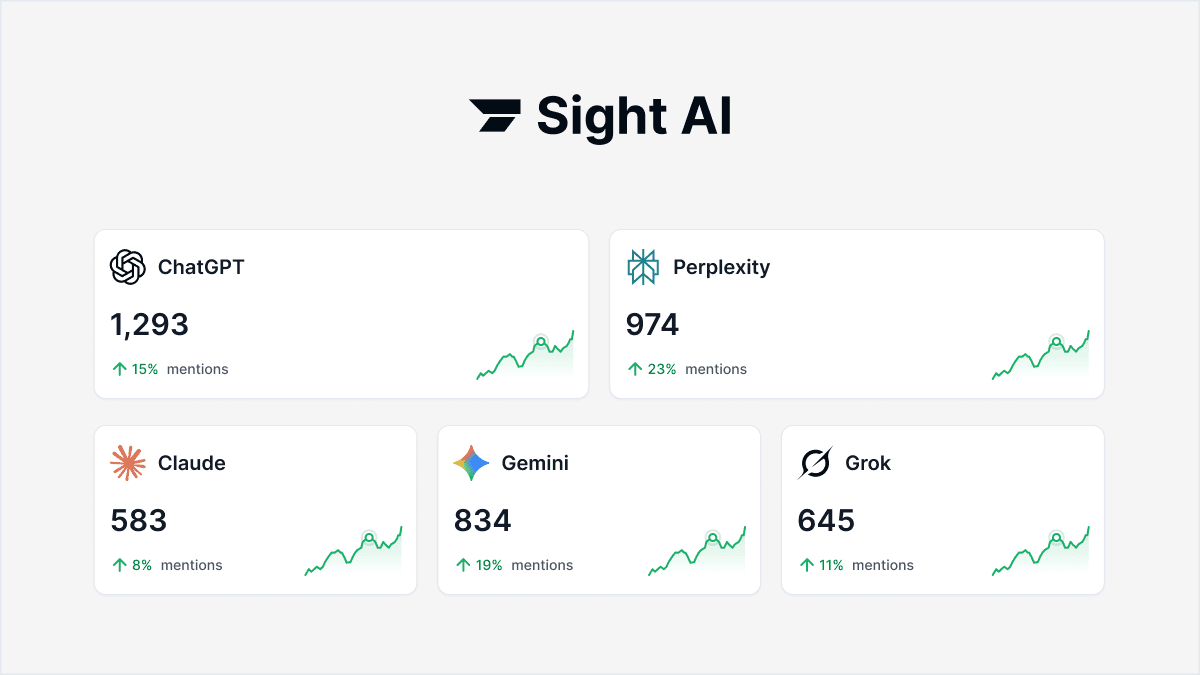
Start tracking your AI visibility today and see exactly where your brand appears across top AI platforms. Stop guessing how AI models like ChatGPT and Claude talk about your brand—get visibility into every mention, track content opportunities, and automate your path to organic traffic growth with a platform that combines specialized AI content generation, automated indexing, and comprehensive AI visibility monitoring in a single solution.