Content generation tools have transformed how marketing teams produce articles, social media posts, and website copy at scale. But with pricing models ranging from per-word charges to unlimited monthly subscriptions, choosing the right approach can mean the difference between a profitable content operation and a budget drain. The challenge isn't just finding the cheapest option—it's aligning your investment with actual content needs, quality requirements, and business goals.
Think of it like choosing a gym membership. The unlimited access plan sounds great until you realize you only work out twice a week, while the pay-per-session option becomes expensive when you're training daily. Content generation pricing works the same way—the "best" plan depends entirely on your usage patterns, quality standards, and strategic goals.
This guide breaks down proven strategies for evaluating, negotiating, and optimizing content generation pricing so you get maximum value from every dollar spent on AI-powered content tools.
1. Audit Your Actual Content Volume Before Choosing a Plan
The Challenge It Solves
Marketing teams frequently misjudge their content needs, either overestimating and paying for capacity they never use, or underestimating and hitting plan limits mid-month when campaigns are in full swing. Without a clear picture of your actual content volume across all channels, you're essentially throwing darts blindfolded at pricing tiers.
The problem compounds when different teams operate independently. Your blog team might need 20 long-form articles monthly, while social media requires 100+ short posts, and product marketing needs email sequences. Without aggregating these numbers, you can't make an informed pricing decision.
The Strategy Explained
Start by tracking every piece of content your organization produces for at least one full month, ideally three months to account for seasonal variations. Create a simple spreadsheet that captures content type, word count, frequency, and the team responsible. Include blog posts, social media captions, email campaigns, product descriptions, landing page copy, and any other written materials.
Next, categorize this content by urgency and quality requirements. Not all content needs the same level of sophistication. Social media posts might work fine with minimal editing, while thought leadership articles require substantial refinement. This distinction matters because it affects how you'll actually use a content generation tool.
Calculate your baseline monthly volume in both piece count and total words. Then add a 20-30% buffer for growth and unexpected campaigns. This becomes your target capacity when evaluating pricing plans.
Implementation Steps
1. Create a content audit spreadsheet tracking type, word count, frequency, and responsible team for all content produced over the past three months.
2. Categorize each content type by quality requirements (minimal editing vs. heavy refinement) and calculate your monthly baseline volume with a 25% growth buffer.
3. Map your calculated volume against available pricing tiers, identifying the plan that covers your needs without paying for excessive unused capacity.
Pro Tips
Consider seasonal spikes in your calculations. If you're an e-commerce brand with major holiday campaigns, your November content volume might be triple your February baseline. Look for pricing plans with flexible overages rather than hard caps that could leave you stuck during peak periods.
2. Calculate Total Cost of Ownership Beyond the Sticker Price
The Challenge It Solves
The monthly subscription fee is just the visible tip of the iceberg. Many teams discover too late that a seemingly affordable content generation tool actually costs significantly more when you factor in the hours spent editing AI output, training team members on the platform, integrating with existing workflows, and managing quality control processes.
A tool with a lower monthly price but higher editing requirements can easily cost more in total than a premium option that produces publication-ready content. Without calculating these hidden costs, you're making decisions based on incomplete information.
The Strategy Explained
Total cost of ownership includes the subscription fee plus all associated labor and operational costs. Start by estimating editing time per piece of generated content. If your team spends 30 minutes editing a blog post that cost $5 in platform credits, and your editor's hourly rate is $50, the true cost is $30, not $5.
Factor in onboarding and training time. A complex platform might require 10-20 hours of team training, while a more intuitive tool gets your team productive immediately. Calculate the dollar value of this training time at your team's hourly rates.
Consider integration costs as well. Does the tool connect seamlessly with your CMS, or will you need developer time to build custom workflows? Will you need additional subscriptions for SEO analysis, grammar checking, or plagiarism detection that some platforms include natively?
Implementation Steps
1. Track editing time for sample content pieces from each platform you're evaluating, multiplying average editing hours by your team's hourly rate to calculate labor costs per piece.
2. Add up all supplementary costs including training time (hours × hourly rate), integration development, and any additional tools you'll need alongside the content generator.
3. Create a 12-month cost projection combining subscription fees, editing labor, training, and supplementary tools to identify the true most cost-effective option.
Pro Tips
Create a simple formula: (Monthly Subscription + Monthly Editing Labor + Supplementary Tools) × 12 + One-Time Setup Costs = Annual Total Cost of Ownership. Compare this number across platforms rather than just comparing subscription prices. The platform with the highest sticker price often delivers the lowest total cost when quality and efficiency are factored in.
3. Leverage Annual Billing for Significant Savings
The Challenge It Solves
Month-to-month billing feels safer because it offers flexibility, but this perceived safety comes at a premium. Many content generation platforms offer substantial discounts for annual commitments, yet teams hesitate to commit without absolute certainty. This caution costs them hundreds or thousands of dollars annually in missed savings opportunities.
The hesitation is understandable. What if the tool doesn't work out? What if your needs change? But there's a strategic way to capture annual savings while minimizing risk.
The Strategy Explained
The key is validating fit before committing. Run a thorough 30-60 day trial with clear success metrics, then negotiate annual terms once you've confirmed the platform meets your needs. Most SaaS platforms offer discounts in the range of 15-30% for annual billing, which compounds significantly over time.
But don't just accept the standard annual discount. This is a negotiation opportunity. If you're committing to a year upfront, you have leverage. Ask about additional discounts for longer commitments, bundled features, or volume pricing if you're bringing multiple team members or departments onto the platform.
Consider the timing of your commitment as well. Many platforms offer deeper discounts at quarter-end or year-end when sales teams are working to hit targets. A strategic commitment timed with these periods can unlock additional savings beyond standard annual discounts.
Implementation Steps
1. Validate platform fit through a structured 60-day trial with defined success metrics before considering any annual commitment.
2. Once validated, contact sales to negotiate annual terms, asking specifically about extended commitment discounts, feature bundles, and volume pricing for team seats.
3. Time your commitment strategically around quarter-end or year-end periods when sales teams have additional flexibility to offer enhanced discounts.
Pro Tips
Ask about "annual billing with quarterly opt-out" structures. Some vendors will offer annual pricing but allow you to cancel quarterly if the platform isn't working out, giving you the best of both worlds. Even if this isn't standard, it's often negotiable for larger accounts or multi-seat purchases.
4. Stack Features That Eliminate Other Tool Costs
The Challenge It Solves
Most marketing teams operate with fragmented tech stacks—separate subscriptions for content generation, SEO optimization, grammar checking, plagiarism detection, content scheduling, and website indexing. Each individual tool seems reasonably priced, but the aggregate monthly cost becomes substantial. You might be spending $50 here, $100 there, and $75 somewhere else, totaling hundreds of dollars monthly for capabilities that could be consolidated.
This fragmentation also creates workflow friction. Content moves between tools, requiring manual transfers, reformatting, and coordination across platforms. The inefficiency costs time beyond just the subscription fees.
The Strategy Explained
Look for content generation platforms that bundle multiple capabilities under one subscription. The most strategic platforms combine AI content creation with built-in SEO optimization, publishing automation, content indexing, and performance tracking. Instead of paying separately for each function, you get an integrated workflow at a consolidated price point.
Calculate your current tech stack costs. Add up every tool you use in your content workflow from ideation through publication and performance tracking. Then compare this aggregate cost against comprehensive platforms that bundle these features. You'll often find that a platform with a higher individual price point actually costs less than your fragmented stack while delivering better workflow efficiency.
The efficiency gains matter as much as the cost savings. When your content generation tool automatically optimizes for SEO, publishes directly to your CMS, and triggers indexing through protocols like IndexNow, you eliminate the manual steps that consume team time and introduce errors.
Implementation Steps
1. Audit your current content tech stack and calculate total monthly costs across all subscriptions used from content creation through publication and tracking.
2. Identify platforms that bundle multiple capabilities (content generation + SEO optimization + publishing + indexing + tracking) and compare their pricing against your fragmented stack total.
3. Test the integrated workflow to ensure the bundled features actually replace your separate tools without sacrificing quality or functionality.
Pro Tips
Pay special attention to platforms that include automated indexing with IndexNow integration. This feature alone can replace separate indexing tools while dramatically accelerating how quickly your content gets discovered by search engines. The time savings from automated sitemap updates and instant search engine notifications often justifies the platform cost even before considering other bundled features.
5. Start with Pilot Programs to Validate Quality-to-Price Ratio
The Challenge It Solves
Content generation platforms make impressive claims about quality, efficiency, and results, but these promises don't always translate to your specific use case. Your industry terminology, brand voice requirements, and content complexity might be dramatically different from the generic examples shown in demos. Committing to a pricing plan based on sales promises rather than validated performance is a recipe for disappointment and wasted budget.
The quality-to-price ratio varies significantly across platforms. Some tools excel at short-form content but struggle with long-form thought leadership. Others produce technically accurate content but require heavy editing for brand voice. You won't know which platform delivers the best value until you test them with your actual content needs.
The Strategy Explained
Design a structured pilot program that tests multiple platforms simultaneously with identical content briefs. Create 5-10 representative content pieces that span your typical needs—perhaps a long-form guide, several blog posts, social media content, and email copy. Run these same briefs through each platform you're evaluating.
Establish clear success metrics before the pilot begins. Define what "good enough" looks like for different content types. How much editing time is acceptable? What quality threshold must the content meet? How well does it match your brand voice? Assign numerical scores to these criteria so you can objectively compare platforms.
Track both quality and efficiency metrics. A platform that produces slightly better content but requires twice the editing time might not be the better value. Calculate the total time from brief to publication-ready content, including any revisions or refinements needed.
Implementation Steps
1. Create 5-10 representative content briefs spanning your typical content needs and define clear success metrics for quality, editing time, and brand voice match before testing begins.
2. Run identical briefs through 3-4 platforms simultaneously, tracking editing time, revision cycles, and quality scores for each piece to build comparable data.
3. Calculate quality-to-price ratios by dividing quality scores by total cost (subscription + editing labor) to identify which platform delivers the best value for your specific needs.
Pro Tips
Include edge cases in your pilot program. Test the platforms with your most challenging content types—the technical pieces, the nuanced thought leadership, the content requiring specific industry knowledge. How platforms handle your hardest content reveals more about long-term value than how they handle simple blog posts. If a platform struggles with your complex content during the pilot, it won't magically improve after you've committed to an annual plan.
6. Optimize for AI Visibility, Not Just Content Volume
The Challenge It Solves
Traditional content generation pricing focuses on volume metrics—how many articles, how many words, how many posts you can produce monthly. But in 2026, content success increasingly depends on whether AI platforms like ChatGPT, Claude, and Perplexity mention your brand when answering user queries. You could generate hundreds of articles monthly that never get referenced by AI models, making volume-focused pricing a poor value indicator.
The challenge is that most content generation tools optimize exclusively for traditional SEO without considering Generative Engine Optimization. They help you rank in Google search results but don't help you appear in AI-generated responses. As more users shift to AI platforms for information discovery, this gap becomes increasingly expensive.
The Strategy Explained
Shift your pricing evaluation framework to prioritize AI visibility capabilities alongside content generation. Look for platforms that not only create content but also track how AI models mention your brand, identify content gaps where you're missing from AI responses, and optimize content specifically for AI platform citations.
This means evaluating tools based on their ability to help you appear in AI-generated responses, not just their content output capacity. A platform that generates 50 articles monthly with strong AI visibility potential delivers more value than one producing 200 articles that AI models ignore.
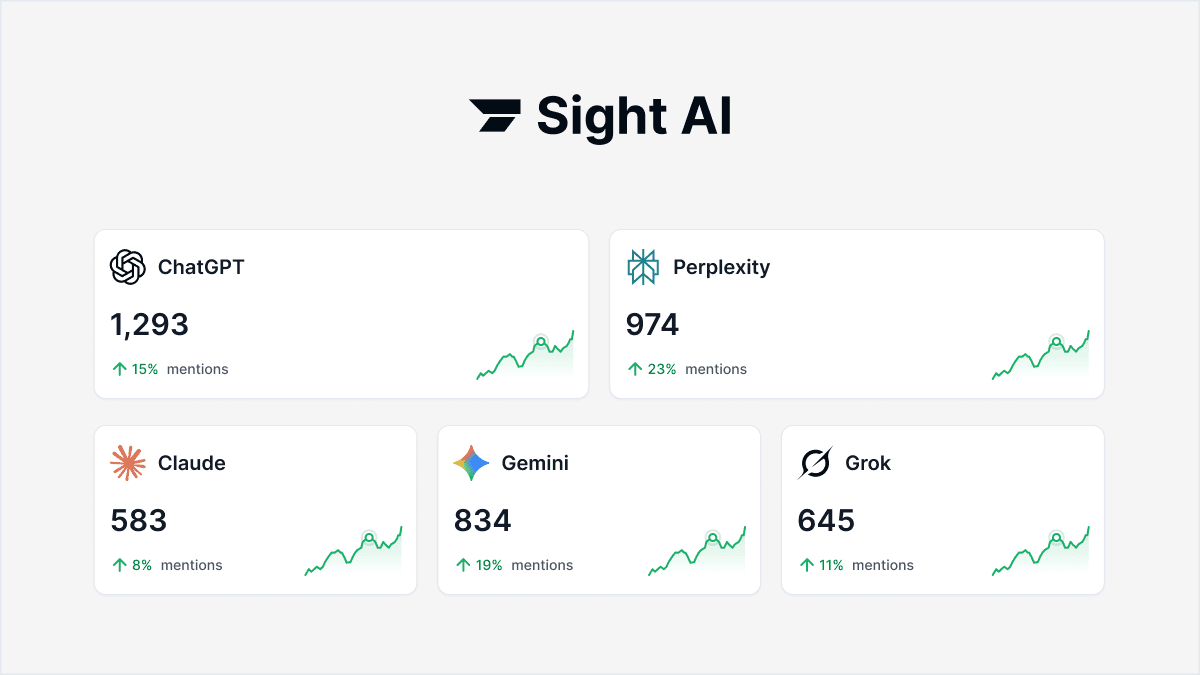
The most strategic platforms combine content generation with AI visibility tracking across multiple platforms—ChatGPT, Claude, Perplexity, and other emerging AI models. This integration allows you to create content informed by where you're currently mentioned, where competitors appear instead of you, and what content gaps represent opportunities.
Implementation Steps
1. Evaluate content platforms based on their AI visibility features, specifically asking whether they track brand mentions across AI models and optimize content for Generative Engine Optimization.
2. Calculate ROI based on AI visibility metrics rather than just content volume, measuring success by increases in brand mentions across AI platforms alongside traditional traffic metrics.
3. Prioritize platforms that integrate AI visibility tracking with content generation, allowing you to identify content opportunities and measure whether your generated content improves AI platform mentions.
Pro Tips
Look for platforms that provide an AI Visibility Score with sentiment analysis and prompt tracking. Understanding not just whether AI models mention your brand, but how they talk about you and in response to what queries, transforms content strategy from guesswork into data-driven optimization. This visibility into AI model behavior is becoming as critical as traditional keyword rankings for measuring content ROI.
7. Build Scalable Pricing into Your Content Strategy
The Challenge It Solves
Many teams choose content generation pricing based solely on current needs, only to hit painful inflection points as their content operation grows. What worked perfectly at 20 articles monthly becomes restrictive at 50, forcing disruptive platform migrations or expensive plan upgrades at the worst possible time—when you're in growth mode and need stability.
The opposite problem is equally common. Teams overestimate growth and lock into enterprise plans they won't grow into for years, paying for capacity that sits unused while the budget could fund other marketing initiatives.
The Strategy Explained
Build a 12-month growth projection for your content operation. Where will you be in six months? Twelve months? What new content channels might you launch? How will team size change? Use this projection to evaluate not just whether a pricing plan fits today, but whether it scales appropriately with your trajectory.
Look for platforms with flexible tier structures that allow smooth scaling. The best pricing models offer multiple intermediate tiers rather than forcing you to jump from a small plan to an enterprise plan with nothing in between. Gradual scaling prevents both overpaying for unused capacity and hitting restrictive limits.
Negotiate volume-based discounts proactively. Even if you're starting small, ask about the pricing structure if you 2x or 3x your usage. Get these terms in writing so you know exactly what scaling will cost. Some platforms offer automatic volume discounts that kick in as usage increases, while others require renegotiation. Understanding this upfront prevents budget surprises.
Implementation Steps
1. Create a 12-month content growth projection estimating volume increases, new channels, and team expansion to understand your scaling trajectory.
2. Evaluate platforms based on their tier structure flexibility, looking for multiple intermediate plans that allow gradual scaling rather than forcing large jumps between tiers.
3. Negotiate and document volume-based discount structures upfront, getting written confirmation of pricing at 2x and 3x your current usage to eliminate future budget uncertainty.
Pro Tips
Ask about "growth guarantees" where your pricing per unit decreases as volume increases, even if you don't change plans. Some platforms automatically apply volume discounts when you exceed certain thresholds, rewarding growth without requiring plan changes or renegotiation. This structure aligns vendor incentives with your success—they benefit when you scale, making them more invested in your content operation's effectiveness.
Putting It All Together
Optimizing content generation pricing isn't about finding the cheapest tool—it's about maximizing the value you extract from your investment. The strategies we've covered work together to create a comprehensive evaluation framework that goes far beyond comparing monthly subscription fees.
Start by auditing your actual content needs to establish a realistic baseline, then calculate true ownership costs including editing and integration time. This foundation prevents the most common pricing mistakes—overpaying for unused capacity or underestimating the hidden costs that inflate your true investment.
Look for platforms that consolidate multiple tools into integrated workflows. When your content generation tool includes SEO optimization, publishing automation, and indexing capabilities, you eliminate separate subscriptions while improving efficiency. The time saved from automated workflows often justifies the platform cost even before considering the direct subscription savings.
The shift toward AI visibility represents a fundamental change in how content value should be measured. Traditional volume-focused pricing makes less sense when success depends on whether AI platforms mention your brand. Prioritize tools that help you track and improve your presence across ChatGPT, Claude, Perplexity, and other AI models alongside traditional search visibility.
Run structured pilot programs before committing to annual plans, but don't let caution prevent you from capturing significant savings once you've validated platform fit. The combination of annual billing discounts and strategic negotiation can reduce your effective costs by 20-30% or more.
Finally, build scalability into your decision from day one. Choose platforms with flexible tier structures and negotiate volume-based discounts proactively. Your content operation will evolve, and your pricing should scale smoothly with your growth rather than forcing disruptive migrations or budget surprises.
Review your current content stack against these strategies. Calculate your true total cost of ownership, identify consolidation opportunities, and evaluate whether your tools optimize for AI visibility or just traditional metrics. You'll likely find opportunities to either reduce costs significantly or dramatically increase output quality at your current spend level.
Stop guessing how AI models like ChatGPT and Claude talk about your brand—get visibility into every mention, track content opportunities, and automate your path to organic traffic growth. Start tracking your AI visibility today and see exactly where your brand appears across top AI platforms.