Something fundamental has shifted in how people find information. A growing share of users now open ChatGPT, Claude, or Perplexity instead of typing a query into Google. They ask a question, get a synthesized answer, and move on without ever clicking a blue link. For marketers and founders who built their organic growth strategies around search engine rankings, this creates a real and uncomfortable question: if your brand ranks on page one of Google but never appears in an AI-generated answer, how much visibility are you actually getting?
This is the core tension defining organic growth strategy in 2026. Traditional SEO is not dead. Far from it. But it is no longer sufficient on its own. AI models have become a primary discovery channel for many audiences, particularly in B2B, technology, and high-consideration purchase categories where users want synthesized guidance rather than a list of links to evaluate. The brands that understand this are already adapting. The ones that do not are quietly losing ground to competitors they may not even be tracking.
The good news is that SEO and AI visibility are not competing priorities. They are complementary disciplines that, when combined into a unified strategy, reinforce each other in powerful ways. Strong SEO creates the crawlable, authoritative content that feeds AI models. AI visibility optimization shapes how that content is written and structured so it gets cited and recommended. Together, they form the new playbook for organic growth. This article breaks down exactly how that playbook works, what signals matter across both channels, and how to build a strategy that wins in both worlds simultaneously.
Two Worlds of Search, One Audience
Traditional search engines and AI answer engines are solving the same problem for users: helping them find information quickly and confidently. But the mechanisms could not be more different, and those differences have significant implications for how brands need to think about visibility.
When someone searches Google or Bing, the engine returns a ranked list of links. The user evaluates the options, clicks through, and engages with content on your site. Your visibility in that system is measured by where your page ranks and how often users choose to click. The signals that drive those rankings include backlink authority, on-page optimization, technical health, and increasingly, content quality and topical relevance.
When someone asks ChatGPT, Claude, or Perplexity the same question, something different happens. The AI synthesizes an answer drawing from its training data, retrieved web content, or both, depending on the platform. The user gets a direct response. They may never visit your website at all. In that interaction, your visibility is not measured by rankings. It is measured by whether your brand is mentioned, cited, or recommended as part of the answer.
This is what AI visibility actually means in practice: the degree to which your brand appears favorably in AI-generated responses to prompts relevant to your category. It is a distinct metric from keyword rankings, but it matters just as much for brand discovery, especially when your target audience is increasingly using AI as their first stop for research.
Here is where it gets strategically interesting. The overlap between these two worlds is real and significant. AI models, particularly those with web retrieval capabilities like Perplexity and Bing Copilot, actively pull from indexed web content. Even models that rely primarily on training data tend to favor sources that were authoritative and well-cited on the web. This means that strong SEO, particularly the kind that builds genuine topical authority and earns third-party citations, creates a meaningful foundation for AI visibility.
But the reverse is not automatic. A brand can have strong AI visibility based on historical training data or third-party mentions while having weak SEO fundamentals. And a brand can rank well in Google while being largely absent from AI-generated answers because its content is structured for keyword density rather than direct, synthesized answers. Understanding this asymmetry is the first step toward building a strategy that captures both channels effectively.
The Visibility Gap No One Warned You About
Picture this scenario: your content team has done everything right by traditional SEO standards. You have built backlinks, optimized title tags, published long-form content, and earned a position on page one for your most important keywords. By every conventional metric, your organic strategy is working. Then someone on your team starts asking ChatGPT about your product category. Your competitors come up repeatedly. Your brand barely appears.
This is the visibility gap, and it is more common than most marketing teams realize. Ranking well in Google and appearing in AI-generated recommendations are driven by overlapping but distinct signals, and optimizing for one does not guarantee success in the other.
AI models weight signals that traditional SEO has historically underemphasized. How often is your brand mentioned in trusted third-party sources, not just linked to, but actually cited by name in authoritative content? How directly does your content answer the kinds of questions users phrase conversationally when talking to an AI? How clearly does your content establish your brand's perspective and expertise on a topic, rather than simply covering keywords? These are the dimensions where many SEO-optimized pages fall short in AI retrieval contexts.
This is where GEO, or Generative Engine Optimization, enters the picture. GEO is the discipline of optimizing content so it gets cited, summarized, and recommended by generative AI systems. It is not a replacement for SEO. It is the natural evolution of it, adapted for a world where retrieval-augmented generation and model training data determine what gets surfaced rather than a traditional ranking algorithm.
GEO involves writing content that answers questions directly and clearly, using natural language that mirrors how users actually phrase prompts. It involves building the kind of third-party citation footprint that signals authority to AI models. It involves structuring content so that key claims and recommendations are easy for an AI to extract and synthesize. These practices complement good SEO rather than conflict with it, but they require intentional effort beyond standard optimization workflows. Understanding how to improve your brand visibility in AI starts with recognizing these structural differences in how content gets surfaced.
The risk of ignoring either channel is real and asymmetric. Brands that abandon SEO fundamentals lose the crawlable, well-indexed content that feeds AI models in the first place. Without strong technical SEO, your content may not even be accessible to AI retrieval systems. Brands that ignore AI visibility, on the other hand, are ceding a fast-growing discovery channel to competitors who are paying attention. In 2026, neither blind spot is acceptable for a serious organic growth strategy.
The Signals That Drive Both Channels
One of the most useful frameworks for thinking about SEO and AI visibility combined is to map the signals that drive performance in each channel, identify where they overlap, and understand where they diverge. This mapping exercise reveals where to focus effort for maximum cross-channel impact.
The shared signals are substantial. Authoritative, well-structured content with genuine topical depth benefits both traditional search rankings and AI model retrieval. Google's E-E-A-T framework, which emphasizes experience, expertise, authoritativeness, and trustworthiness, aligns closely with what AI models tend to favor in their training and retrieval. Content that demonstrates deep, consistent expertise on a topic tends to perform well in both environments.
Strong internal linking and content architecture matter in both worlds. A well-organized content cluster signals topical authority to Google's crawlers and also creates a coherent, interconnected body of knowledge that AI models can draw from more comprehensively. Proper indexing and crawl efficiency are foundational to both channels because if search engines cannot efficiently access and process your content, AI retrieval systems often cannot either.
The divergent signals are where the strategy gets more nuanced. AI models additionally weight the frequency and quality of third-party mentions. It is not enough to have authoritative content on your own site. Your brand needs to be cited, referenced, and recommended in content published by other authoritative sources. This is closer to digital PR than traditional on-page SEO, but it directly influences how prominently your brand appears in AI-generated answers.
The clarity and directness of answers within your content also matters more for AI visibility than it typically does for SEO rankings. Search engines can rank a comprehensive, nuanced article even if the key answer is buried in paragraph twelve. AI models prefer content where the direct answer is surfaced early and clearly, making it easy to extract and synthesize. This has practical implications for how you structure every piece of content you publish.
Natural language alignment is another divergent signal. AI models respond to prompts phrased conversationally, and content that uses natural, question-and-answer style language tends to align better with those prompts. This does not mean abandoning well-crafted prose. It means being intentional about including the kinds of direct, plain-language statements that match how your audience actually phrases questions when talking to an AI.
Technical SEO fundamentals, particularly fast indexing and sitemap health, have a direct influence on AI visibility that is often underappreciated. AI retrieval systems that pull from the live web, like Perplexity, can only surface your content if it is discoverable and indexed. Slow indexing means new content enters the retrieval pipeline late, reducing its chances of appearing in early AI-generated responses on emerging topics. This is a practical reason why technical SEO investment pays dividends well beyond traditional search performance.
Building a Unified Content Strategy
The most effective unified strategies do not treat SEO and AI visibility as separate workstreams. They build content that is designed from the ground up to perform in both environments, using a structure that serves both retrieval mechanisms simultaneously.
The practical content structure for dual optimization follows a clear pattern. Lead with a direct, prompt-like answer to the core question your content addresses. This serves AI retrieval by making the key insight immediately extractable. Then support that answer with depth, context, examples, and nuance. This serves SEO ranking by demonstrating topical authority and giving users a reason to stay on the page. Use clear, descriptive headings that mirror how users phrase questions, because these headings function as both navigational signals for search engines and natural language anchors for AI retrieval.
Prompt tracking is the AI-era analog of keyword research, and it deserves a central place in your content planning process. Traditional keyword research for organic SEO identifies what users type into search engines. Prompt tracking identifies the specific questions and queries users submit to AI models about your category, your competitors, and the problems your product solves. These prompts often differ meaningfully from search keywords. They tend to be more conversational, more specific, and more intent-rich. Identifying these prompts and creating content that positions your brand as the answer is one of the highest-leverage activities in a combined SEO and AI visibility strategy.
Topical authority is the connective tissue that makes everything else work. Google has made clear through its helpful content guidance and E-E-A-T documentation that it favors sources demonstrating consistent, deep expertise on a topic over time. AI models exhibit similar patterns, tending to surface brands and sources that appear repeatedly and authoritatively across a topic area rather than those with isolated pieces of content. This means your content strategy needs to build comprehensive, interlinked clusters around your core topics rather than publishing disconnected individual articles.
A practical approach to cluster building starts with identifying the three to five topic areas most central to your brand's expertise. For each cluster, map the full range of questions your audience asks, from broad definitional questions to highly specific tactical ones. Create content that addresses each question, link them together deliberately, and update them regularly to maintain freshness signals. This approach builds the kind of cumulative topical presence that both Google and AI models recognize as authoritative.
The cadence of publication matters too. Consistent, regular publishing signals to both search engines and AI retrieval systems that your brand is an active, current source of expertise. Irregular publishing, even of high-quality content, tends to produce inconsistent visibility across both channels. Building a sustainable production workflow, ideally one that incorporates AI-assisted content creation to maintain velocity without sacrificing quality, is a practical necessity for brands serious about combined SEO and AI visibility performance.
Measuring What Actually Matters Across Both Channels
One of the most common mistakes brands make when expanding into AI visibility is continuing to measure success exclusively through traditional SEO metrics. Organic sessions, keyword rankings, and click-through rates tell you how your content is performing in traditional search. They tell you nothing about whether your brand is showing up when users ask ChatGPT, Claude, or Perplexity about your category.
This measurement gap creates a dangerous blind spot. A brand could be steadily losing AI visibility to competitors while its Google rankings remain stable, and its analytics dashboard would show no warning signal. By the time the impact shows up in traffic trends, the competitive gap may already be significant.
The AI Visibility Score is a concept that addresses this gap directly. It functions as a composite metric tracking how often and how favorably your brand appears across AI platforms in response to prompts relevant to your category. Rather than measuring a single interaction, it aggregates mention frequency, sentiment, and prompt coverage over time, giving you a comparable, trackable indicator of your AI channel performance. When measured consistently, it enables the same kind of trend analysis and competitive benchmarking that organic ranking tracking provides for traditional SEO.
Sentiment matters as much as frequency in AI visibility measurement. A brand that is mentioned frequently but in a neutral or negative context is not benefiting from that visibility. Understanding how AI models characterize your brand, what language they use, what attributes they associate with you, gives you actionable intelligence for shaping your content and positioning strategy.
Prompt coverage is another critical dimension. Which queries about your category trigger your brand to appear? Which ones surface competitors instead? Mapping this coverage reveals specific content gaps where targeted GEO-optimized content could improve your position. This is the AI visibility equivalent of identifying keyword ranking gaps in traditional SEO, and it is equally actionable. The right AI search visibility tools make this kind of systematic prompt coverage analysis feasible at scale.
An integrated measurement approach combines these AI visibility metrics with traditional SEO performance indicators: keyword rankings, indexation health, organic traffic trends, and crawl efficiency. Together, these metrics give you a complete picture of your organic presence across both channels. Reviewing them in tandem, rather than in separate reporting silos, is what enables genuinely unified strategy decisions rather than channel-by-channel optimization that misses cross-channel interactions.
From Strategy to Execution: A Practical Starting Framework
The conceptual case for combining SEO and AI visibility is compelling. The practical challenge is knowing where to start, especially for teams that have been focused exclusively on traditional search until now.
The most effective starting point is a dual audit. On the SEO side, assess your current indexation health, identify crawl issues, map content gaps against your target topic clusters, and review your internal linking structure. This baseline tells you whether your technical foundation is solid enough to support the content strategy you want to build. On the AI visibility side, systematically test how your brand appears in responses from ChatGPT, Claude, Perplexity, and Google Gemini for the prompts most relevant to your category. This baseline tells you where you stand today and where the most significant competitive gaps exist.
With both baselines established, the content production cycle becomes much more targeted. Use your AI visibility data to identify specific prompts where competitors are being mentioned and your brand is absent. These gaps represent direct content opportunities. Create GEO-optimized content targeting those prompts, structured with the direct-answer-then-depth format described earlier. Then ensure rapid indexing so that new content enters both the search and AI retrieval pipelines as quickly as possible. Tools that support IndexNow integration and automated sitemap updates reduce the lag between publication and discoverability, which matters more than most teams appreciate.
The compounding effect of this approach is one of its most powerful characteristics. Each piece of well-indexed, authoritative, prompt-aware content adds to your cumulative presence across both channels. Over time, brands that publish consistently in this way build a body of work that is progressively harder for competitors to displace. They appear more frequently in AI-generated answers, which builds brand familiarity that reinforces click behavior in traditional search, which generates more engagement signals that further support rankings. The channels do not just coexist. They amplify each other.
Automation plays a meaningful role in sustaining this cycle at scale. AI-assisted content creation, automated indexing workflows, and systematic AI visibility monitoring reduce the manual overhead of running a combined strategy, making it feasible for lean teams to compete with larger organizations that have dedicated SEO and content resources.
The Combined Advantage: Putting It All Together
The central insight of this entire framework is simple but consequential: in 2026, organic growth requires presence in both traditional search and AI-generated answers, and the strategies that drive each channel reinforce rather than compete with each other.
Brands that invest in authoritative, well-structured, topically deep content are building assets that perform across both environments. Brands that maintain strong technical SEO fundamentals are ensuring their content is accessible to both search crawlers and AI retrieval systems. Brands that track AI visibility alongside traditional SEO metrics are operating with a complete picture of their organic presence rather than a partial one.
The opportunity is real, and the window for competitive advantage is open now. Most organizations are still measuring and optimizing for traditional search alone. The brands that layer in AI visibility strategy today are building a lead that will compound over time as AI-driven discovery continues to grow in importance.
If you are not sure where your brand stands in AI-generated answers today, that is the right place to start. Audit your current strategy for blind spots in either channel. Identify the prompts your audience is using and check whether your brand appears. Look at your technical SEO health and assess whether your content is being indexed quickly enough to enter AI retrieval pipelines promptly.
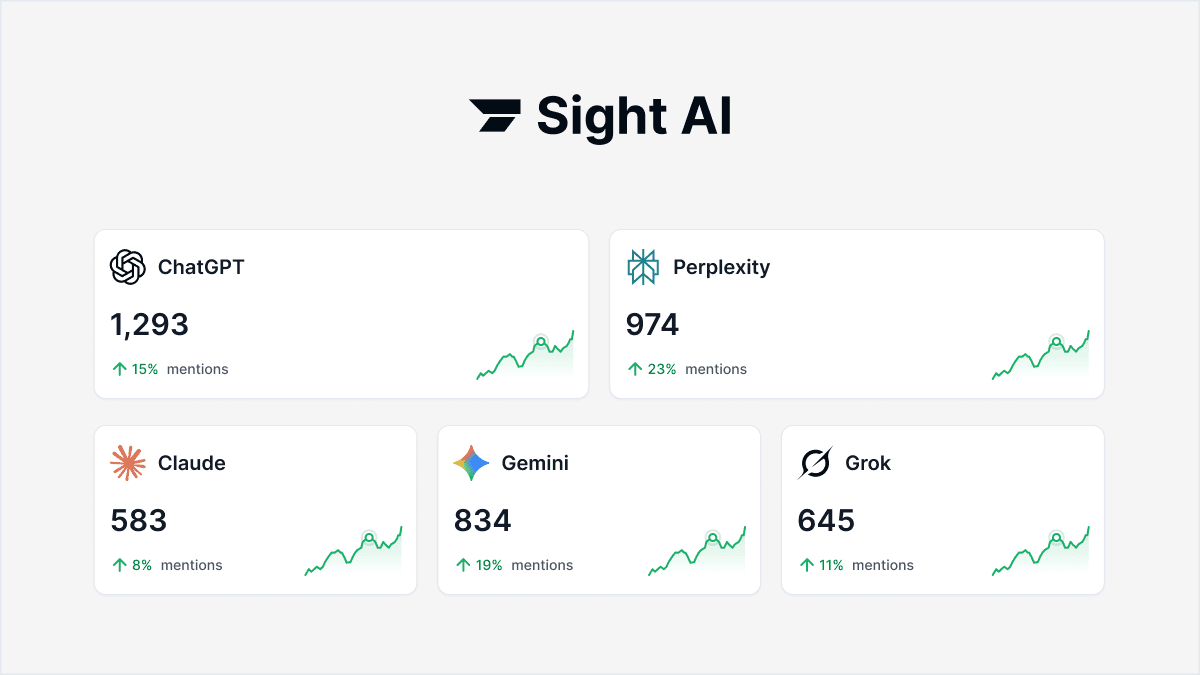
Sight AI is built specifically for this combined challenge. It unifies AI visibility tracking across ChatGPT, Claude, Perplexity, and more, GEO-optimized content creation with specialized AI agents, and fast indexing with IndexNow integration, all in one platform. Stop guessing how AI models talk about your brand. Start tracking your AI visibility today and see exactly where your brand appears across top AI platforms, where your competitors are winning, and what content you need to publish to close the gap.