Search engines have evolved far beyond matching keywords to queries. In 2026, Google's algorithms understand context, intent, and the relationships between concepts—and so do AI platforms like ChatGPT, Claude, and Perplexity when they recommend brands and resources.
This shift means traditional keyword stuffing is not just ineffective; it can actively hurt your visibility.
Semantic SEO optimization focuses on building topical authority by creating content that addresses the full context of what your audience seeks. Instead of targeting isolated keywords, you're mapping entire topic clusters, answering related questions, and establishing your content as the definitive resource on a subject.
For marketers, founders, and agencies focused on organic traffic growth and AI visibility, mastering semantic SEO is no longer optional—it's the foundation of being discovered by both traditional search engines and AI models.
This guide walks you through six actionable steps to transform your content strategy from keyword-centric to semantically rich, helping your brand become the answer that both Google and AI assistants serve up.
Step 1: Map Your Core Topics and Entity Relationships
The foundation of semantic SEO optimization starts with identifying the 3-5 pillar topics that define your brand's expertise. Think of these as the broad subject areas where your business has genuine authority and can provide comprehensive coverage.
These aren't just categories on your website. They're the conceptual territories where your brand should dominate search results and AI recommendations.
Start by asking: What problems do we solve? What questions do our customers repeatedly ask? What topics could we write 20+ articles about without running out of valuable insights?
Once you've identified your pillar topics, the next step is understanding entity relationships. Entities are the people, places, concepts, and brands that connect to your core topics. Google's Knowledge Graph operates on these connections—it understands that "semantic SEO" relates to entities like "natural language processing," "topic clusters," and "structured data."
Tools like Google's Natural Language API can help you identify which entities appear in your existing content and which ones you're missing. Upload a sample article and the API will extract key entities, categorize them, and show their salience scores—essentially how important they are to the overall meaning.
Create a visual topic map using tools like mind mapping software or even a simple spreadsheet. Place your pillar topic at the center, then branch out with related entities, subtopics, and questions. This becomes your semantic blueprint. For a deeper dive into the fundamentals, explore what is semantic SEO and how it differs from traditional approaches.
Verify success: You should have a clear hierarchy showing how subtopics connect to pillar topics, which entities are most relevant to each topic area, and where gaps exist in your current content coverage. If you can't explain how three pieces of content relate to each other within your topic map, your structure needs refinement.
Step 2: Conduct Intent-Based Keyword Research
Traditional keyword research stops at search volume and competition metrics. Semantic SEO optimization requires you to dig deeper into why people search and what they're trying to accomplish.
Every search query falls into an intent category. Informational queries seek knowledge: "what is semantic SEO" or "how does Google understand context." Navigational queries aim to reach a specific destination: "Sight AI login" or "Google Search Console." Transactional queries indicate purchase readiness: "best SEO tools" or "hire SEO consultant."
The power of intent-based research is grouping semantically related queries together. Someone searching "semantic SEO optimization" likely also searches "topic clusters for SEO," "entity-based search explained," and "how to build topical authority." These aren't separate keyword targets—they're facets of the same search intent.
Use Google's "People Also Ask" boxes as your semantic goldmine. Type your core keyword and note every question that appears. Click each question to reveal more. Within minutes, you'll have 30-50 related questions that represent the full spectrum of what searchers want to know about your topic.
Pay special attention to conversational search optimization techniques and question patterns. AI models process natural language questions constantly: "How do I optimize content for semantic search?" or "What's the difference between keywords and entities?" These longer, conversational queries reveal the actual language your audience uses.
Create intent clusters by grouping queries that share the same underlying goal. One cluster might focus on "understanding semantic SEO concepts," another on "implementing semantic optimization," and a third on "measuring semantic SEO results." Each cluster becomes a content opportunity.
Verify success: Your keyword research document should be organized by intent clusters, not alphabetically or by search volume. Each cluster should contain 10-20 related queries, and you should be able to articulate the user's goal for each cluster in one sentence. If you're still looking at isolated keywords, you're not thinking semantically yet.
Step 3: Build Comprehensive Topic Clusters
Topic clusters are the architectural foundation of semantic SEO optimization. This content structure signals to search engines and AI models that you have deep expertise in a subject area, not just surface-level coverage.
The pillar-cluster model works like this: Your pillar page provides broad, comprehensive coverage of a core topic. It addresses the main questions and concepts but doesn't dive deep into every detail. Think of it as the 10,000-foot view that gives readers a complete understanding of the landscape.
Supporting cluster content tackles specific subtopics, questions, and use cases in depth. Each cluster piece focuses on one aspect of the broader topic and links back to the pillar page. The pillar page, in turn, links out to all relevant cluster content.
Let's say your pillar topic is "AI visibility tracking." Your pillar page would cover what AI visibility is, why it matters, how it works, and the main strategies for tracking it. Your cluster content might include individual pieces on tracking brand mentions in ChatGPT, monitoring sentiment across AI platforms, comparing AI visibility tools, optimizing content for AI recommendations, and measuring AI-driven traffic.
The internal linking architecture is crucial. Every cluster piece should link to the pillar page using relevant anchor text. The pillar page should link to each cluster piece in context, not just as a list of related articles. This creates a semantic web that search engines can crawl and understand. Understanding SEO content optimization principles helps you structure these connections effectively.
Start with one pillar topic and aim for 5-10 supporting pieces. Quality matters more than quantity—each piece should provide genuine value and cover its subtopic comprehensively. A thin cluster of weak content won't build topical authority.
As you create cluster content, look for opportunities to link between cluster pieces when relevant. If your article on "tracking brand mentions in ChatGPT" naturally relates to your piece on "optimizing content for AI recommendations," link them. These horizontal connections strengthen the entire topic cluster.
Verify success: Each pillar topic should have 5-10 interconnected supporting pieces within three months. Your analytics should show improved rankings not just for target keywords but for related queries you didn't explicitly optimize for. If readers consistently bounce from pillar to cluster content and back, your structure is working.
Step 4: Optimize Content for Entity Recognition
Search engines and AI models don't just read words—they identify entities and understand the relationships between them. Optimizing for entity recognition means helping these systems understand exactly what you're talking about and how it connects to broader knowledge.
Include relevant entities naturally throughout your content. If you're writing about semantic SEO optimization, mention related entities like Google's Knowledge Graph, natural language processing, Schema.org, and specific tools or platforms. Don't force it—entities should appear because they're genuinely relevant to your topic.
Context matters enormously for entity disambiguation. The word "Apple" could refer to the fruit or the technology company. Search engines determine which entity you mean based on surrounding context. When you mention an entity that could be ambiguous, provide clarifying context in the same sentence or paragraph.
Structured data markup is your direct line of communication with search engines. Schema.org provides standardized formats for marking up different types of content—articles, products, organizations, people, events, and more. This markup explicitly tells search engines what entities are on your page and how they relate. For advanced techniques, review semantic search optimization techniques that leverage entity relationships.
For most content, Article schema is your starting point. It includes fields for headline, author, date published, and organization. Add Person schema for author bios, Organization schema for company mentions, and FAQ schema for question-and-answer sections within your content.
Use consistent entity naming across your site. If you mention "Google's Natural Language API" in one article, don't call it "Google NLP API" in another and "Google's language processing tool" in a third. Consistency helps search engines connect references to the same entity across your content.
Tools like Google's Rich Results Test let you validate your structured data. Paste your URL and the tool will show which schema types it detects and flag any errors. If your markup isn't validating, search engines might not be able to extract the entity information you're providing.
Verify success: Google's Rich Results Test validates your structured data without errors. Your content appears in relevant entity-based features like Knowledge Panels or People Also Ask boxes. When you search for your brand plus a core topic, Google understands the connection and shows relevant results.
Step 5: Create Content That Answers the Full Query Spectrum
The most powerful semantic SEO optimization technique is anticipating and answering not just the primary question but every related question a reader might have. This is how you create content that search engines and AI models recognize as definitive resources.
Think about the journey someone takes when researching a topic. They start with a basic question, then ask follow-up questions based on what they learn. They want to know how something works, why it matters, what alternatives exist, and how to implement it themselves.
Address this full spectrum in your content. If your primary topic is "implementing semantic SEO," also cover what semantic SEO is, why it's different from traditional SEO, what results to expect, common mistakes to avoid, and how to measure success. Understanding the distinction between generative engine optimization vs SEO helps you cover this comprehensively.
Use semantic variations and synonyms naturally throughout your content. Instead of repeating "semantic SEO optimization" twenty times, vary your language: "semantic search optimization," "topic-based SEO," "entity-focused content strategy," "meaning-driven optimization." This signals comprehensive coverage while making your content more readable.
Include comparison content when relevant. Readers often want to understand how different approaches, tools, or strategies stack up against each other. Comparing semantic SEO to traditional keyword optimization, or discussing different tools for entity analysis, adds depth to your coverage.
Practical applications and use cases make abstract concepts concrete. Don't just explain what semantic SEO is—show how a SaaS company might implement it, how an e-commerce site would approach it differently, or how agencies can apply it to client work. Real-world context helps both readers and AI models understand practical relevance.
The goal is creating content so comprehensive that readers don't need to click back to search results or ask AI models follow-up questions. You've anticipated and answered everything they might want to know about the topic.
Verify success: Your content ranks for multiple related queries, not just your target keyword. Analytics show long average time on page and low bounce rates—readers are consuming your full content. AI models reference your content when answering related questions, indicating they recognize its comprehensive coverage.
Step 6: Monitor Semantic Performance and Iterate
Semantic SEO optimization isn't a one-time implementation—it's an ongoing process of monitoring performance, identifying gaps, and refining your approach. The metrics that matter go beyond traditional rankings.
Track topic authority metrics by monitoring how many related queries you rank for within each topic cluster. If your pillar page on semantic SEO ranks for 50 related terms, you're building authority. If it only ranks for your exact target keyword, your semantic optimization needs work. Learn how to track SEO rankings effectively across your topic clusters.
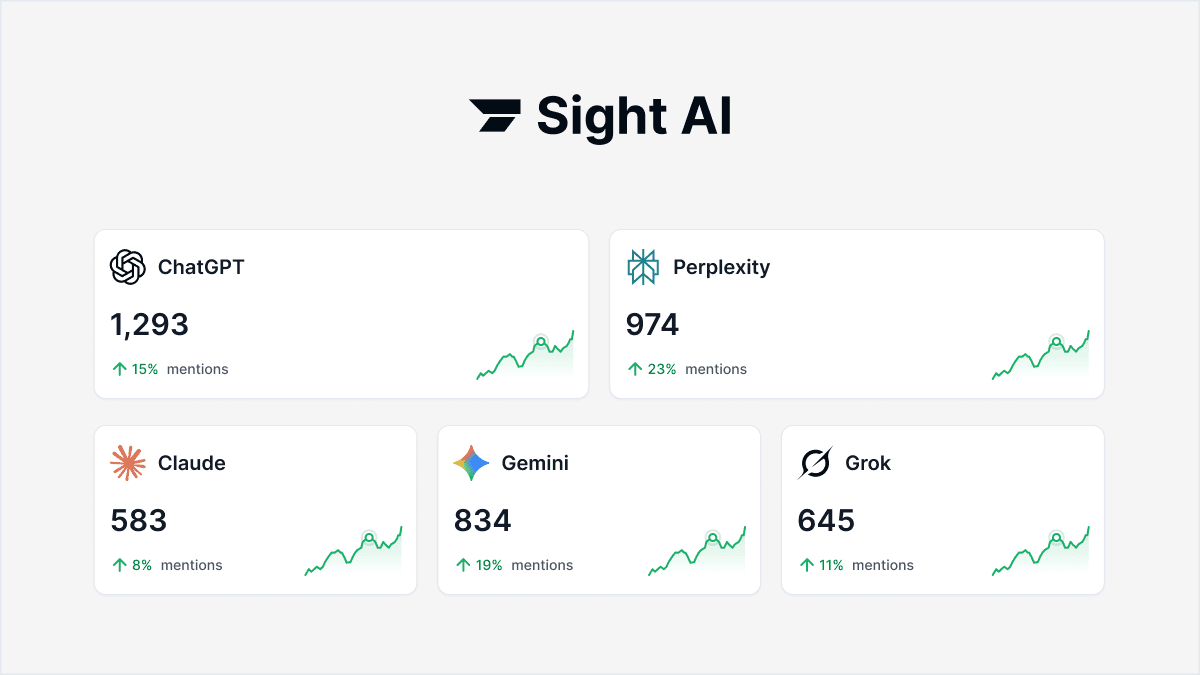
Monitor how AI models reference your content and brand. Tools like Sight AI's visibility tracking show exactly when and how platforms like ChatGPT, Claude, and Perplexity mention your brand or cite your content. This visibility in AI responses is the new frontier of semantic performance—it means AI models recognize your topical authority.
Analyze which semantic clusters drive the most qualified traffic. Not all topics are created equal. Some might generate high volume but low engagement, while others bring smaller but highly qualified audiences. Double down on clusters that attract readers who convert, engage deeply, or return frequently.
Look for gaps in your topical coverage that competitors are filling. Use AI search engine optimization tools to analyze which related queries your competitors rank for that you don't. These gaps represent opportunities to expand your semantic footprint and capture additional search intent.
Update existing content regularly to maintain semantic relevance. As new entities emerge, questions evolve, and search patterns shift, your content needs to reflect current understanding. Add new sections addressing emerging questions, update examples with current data, and refine entity mentions to match current terminology.
Pay attention to how your internal linking structure performs. Which pillar-to-cluster pathways do readers actually follow? If certain cluster pieces never receive traffic from the pillar page, either the linking isn't prominent enough or the topic isn't relevant enough to your audience.
Verify success: Your topic clusters consistently rank for an expanding set of related queries. AI visibility tracking shows increasing mentions across platforms. Traffic from semantic queries grows month over month, and engagement metrics remain strong, indicating your content continues to satisfy search intent comprehensively.
Putting It All Together
Semantic SEO optimization transforms your content from isolated keyword targets into interconnected knowledge that search engines and AI models trust and recommend. The shift from keyword-centric to semantically rich content isn't just about better rankings—it's about becoming the authoritative source that both traditional search and AI platforms reference when users seek answers.
Here's your quick implementation checklist: Map your core topics and entity relationships to establish your semantic blueprint. Research keywords by intent clusters to understand the full spectrum of what your audience seeks. Build comprehensive topic clusters with strong internal linking that demonstrates depth of expertise. Optimize for entity recognition with structured data that helps search engines understand your content. Create content addressing the full query spectrum so readers find everything they need in one place. Continuously monitor both traditional and AI-driven performance to identify opportunities for expansion.
The brands winning in 2026 aren't those with the most content—they're those with the most contextually rich, semantically connected content ecosystems. Every piece reinforces topical authority, every internal link strengthens the semantic web, and every entity mention builds recognition across search platforms.
Start with one pillar topic, execute these six steps, and expand from there. The beauty of semantic SEO is that each topic cluster you build creates a foundation for the next. As you establish authority in one area, related topics become easier to rank for because search engines already recognize your expertise.
Stop guessing how AI models like ChatGPT and Claude talk about your brand—get visibility into every mention, track content opportunities, and automate your path to organic traffic growth. Start tracking your AI visibility today and see exactly where your brand appears across top AI platforms.
The semantic web rewards depth over breadth, context over keywords, and authority over volume. Build your content ecosystem with these principles, and you'll create visibility that compounds across every search platform that matters.