As AI-generated answers increasingly replace traditional search results, brands that aren't visible across ChatGPT, Claude, Perplexity, and other large language models are leaving organic traffic on the table. Multi-LLM optimization software helps marketers, founders, and agencies track how AI models reference their brand, identify content gaps, and publish material that earns mentions across the AI search ecosystem.
The challenge is that the market is fragmented, with tools ranging from narrow prompt-monitoring utilities to full-stack platforms combining visibility tracking, content generation, and indexing. This list focuses on the platforms that genuinely move the needle for teams serious about AI visibility and generative engine optimization (GEO). Each tool was evaluated on breadth of LLM coverage, actionability of insights, content workflow support, and overall value for growth-focused teams.
1. Sight AI
Best for: Teams that need end-to-end AI visibility tracking, GEO content creation, and automated indexing in one platform.
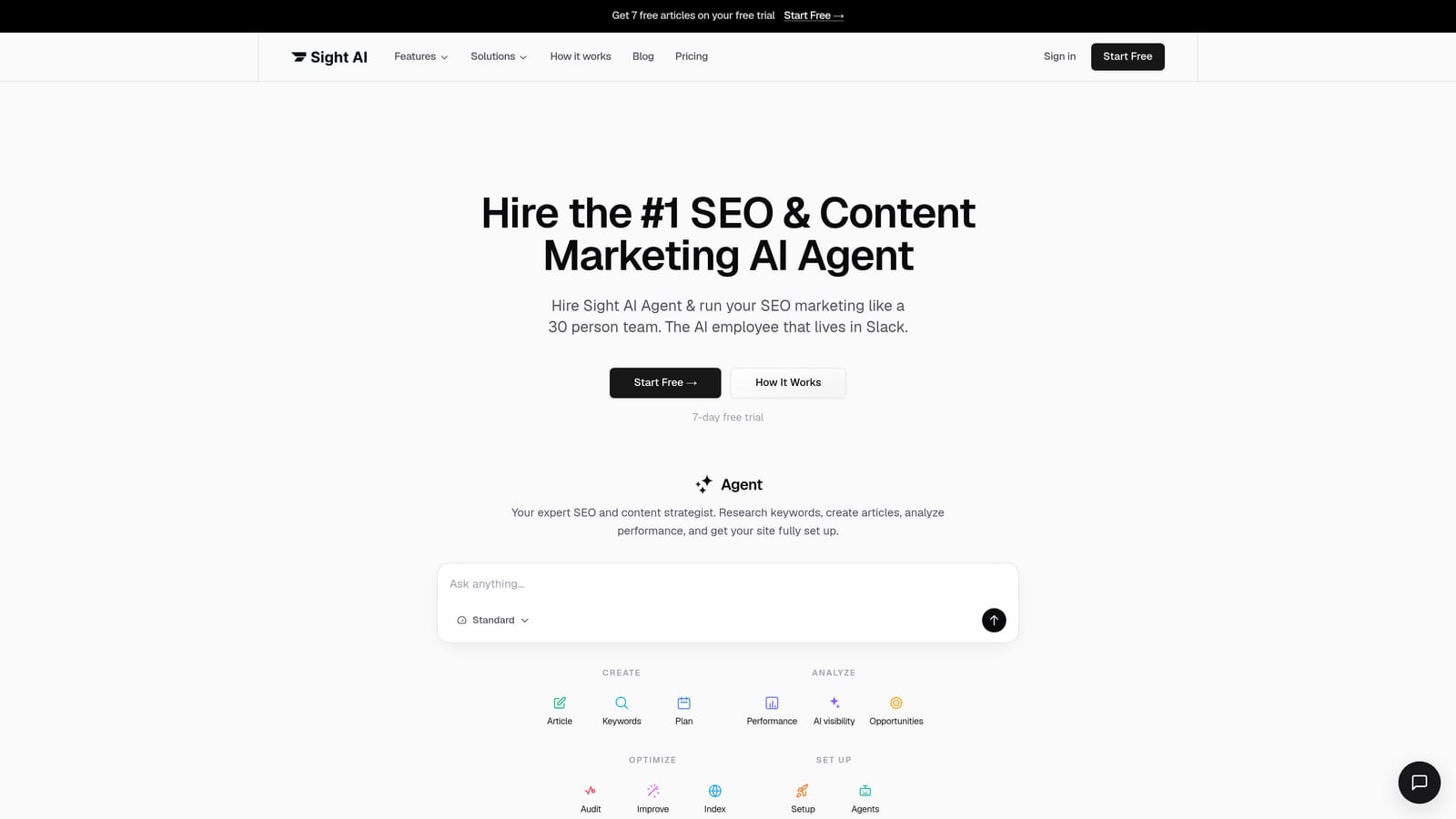
Sight AI is a full-stack multi-LLM optimization platform that tracks brand mentions across 6+ AI models, generates SEO/GEO-optimized content via 13+ specialized AI agents, and automates indexing with IndexNow integration — all from a single dashboard.
Where This Tool Shines
Most tools in this space ask you to choose between monitoring and creating. Sight AI removes that trade-off. You can see exactly how ChatGPT, Claude, and Perplexity are describing your brand today, then immediately act on those insights by generating optimized content designed to improve future mentions.
The Autopilot Mode is particularly useful for lean teams. Rather than manually managing a content calendar around AI visibility gaps, you can configure the platform to identify opportunities and publish content without constant hands-on oversight. For agencies managing multiple clients, that kind of workflow efficiency compounds quickly.
Key Features
AI Visibility Score: A proprietary metric that aggregates brand mention data with sentiment analysis across ChatGPT, Claude, Perplexity, and three or more additional platforms, giving you a single benchmarkable score to track over time.
Prompt Tracking: Monitor how specific queries surface your brand in AI-generated responses, so you can identify which prompts you're winning and which you're invisible on.
13+ Specialized AI Agents: Purpose-built agents for generating listicles, guides, explainers, and other content formats optimized for generative engine optimization, not just traditional keyword rankings.
Autopilot Mode: Hands-off content publishing and scheduling that keeps your content pipeline moving without requiring manual intervention at every step.
IndexNow Integration: Automated sitemap updates and IndexNow submission accelerate content discovery, so new articles get indexed faster and start influencing AI model training signals sooner.
CMS Auto-Publishing: Streamlines the content-to-live workflow by connecting directly to your CMS, reducing the gap between content creation and publication.
Best For
Sight AI is the strongest fit for marketers, founders, and agencies who want a single platform to cover the full AI visibility workflow: monitoring where they stand, creating content to improve that position, and ensuring that content gets discovered quickly. It's especially compelling for growth teams that can't afford to run three separate tools for three separate functions.
Pricing
See trysight.ai for current plans and pricing tiers.
2. Profound
Best for: Enterprise marketing teams tracking competitive share-of-voice in AI-generated search responses.
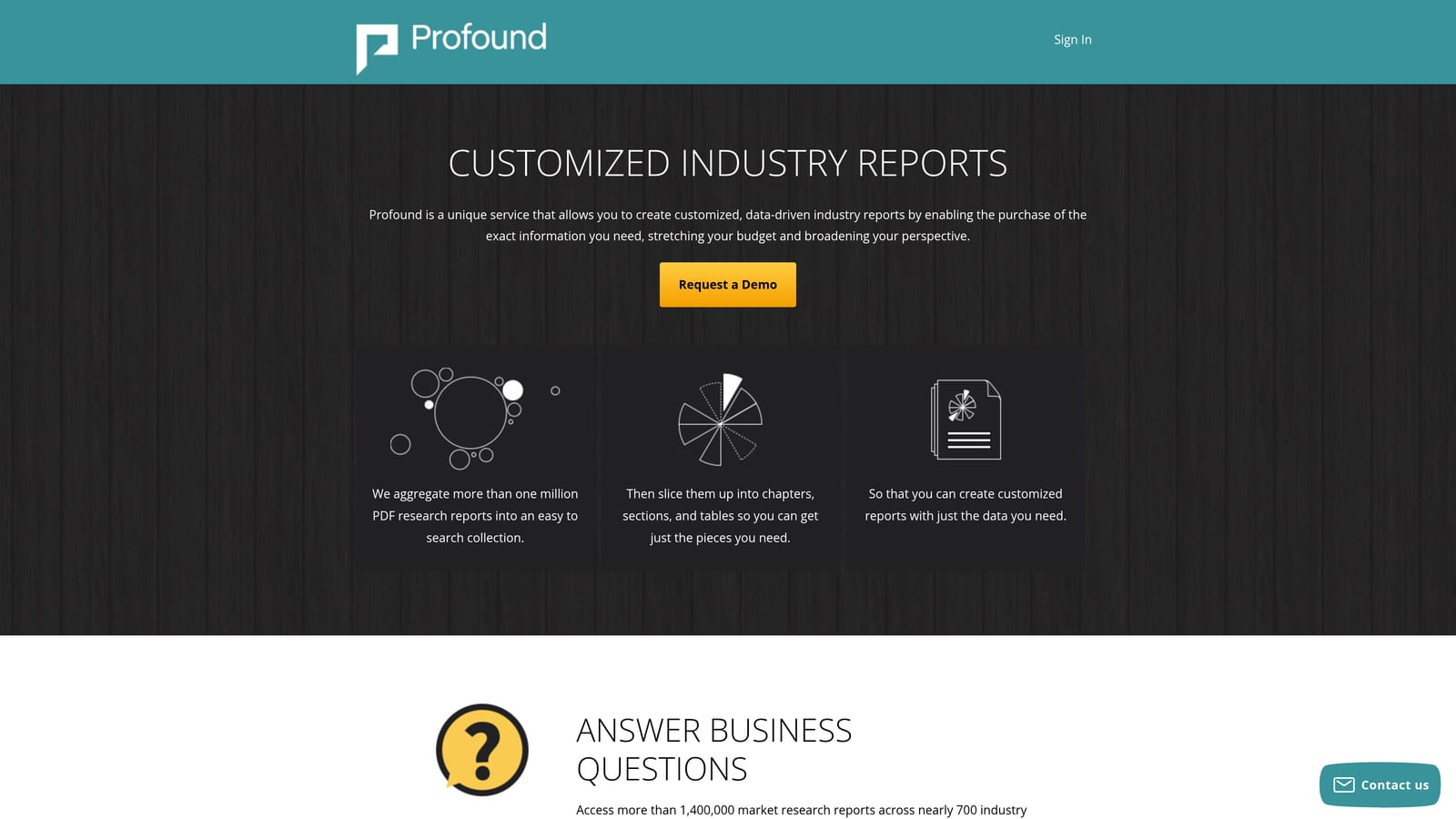
Profound is an enterprise-focused AI answer monitoring platform that tracks how large language models respond to category and brand queries, providing competitive share-of-voice analytics in AI-generated content.
Where This Tool Shines
Profound is built for organizations that need to understand how their brand is positioned relative to the entire competitive landscape within AI search. Rather than just tracking whether your brand appears, it helps you understand your share of the conversation across category-level queries. Think of it as the AI search equivalent of share-of-voice tracking in traditional media.
The platform is designed with enterprise workflows in mind, which means it tends to offer the reporting depth and team collaboration features that larger marketing organizations and agency clients expect. If you're reporting AI visibility metrics to a CMO or client, Profound's analytics layer is built for that kind of structured presentation.
Key Features
AI Answer Monitoring: Tracks how major LLMs respond to both brand-specific and category-level queries, giving you a broader view of where your brand fits in the AI-generated narrative.
Competitive Share-of-Voice: Measures your brand's presence in AI search responses relative to named competitors, surfacing where you're winning and where you're being displaced.
Brand Presence Trend Analytics: A dashboard that tracks how your AI visibility evolves over time, useful for measuring the impact of content and PR efforts on LLM responses.
Enterprise and Agency Workflow Support: Designed with larger team structures in mind, supporting the reporting and collaboration needs of enterprise marketing departments and their agency partners.
Best For
Profound is well-suited for enterprise brands and agencies that prioritize competitive intelligence in AI search over content creation capabilities. If your primary need is understanding how AI models are positioning your brand versus competitors, and you have the budget for an enterprise solution, Profound is worth evaluating.
Pricing
Contact Profound directly for pricing. Verify current plans at profound.com before purchase.
3. Promptwatch
Best for: SEO specialists and brand managers who need granular, prompt-level tracking of LLM brand mentions over time.
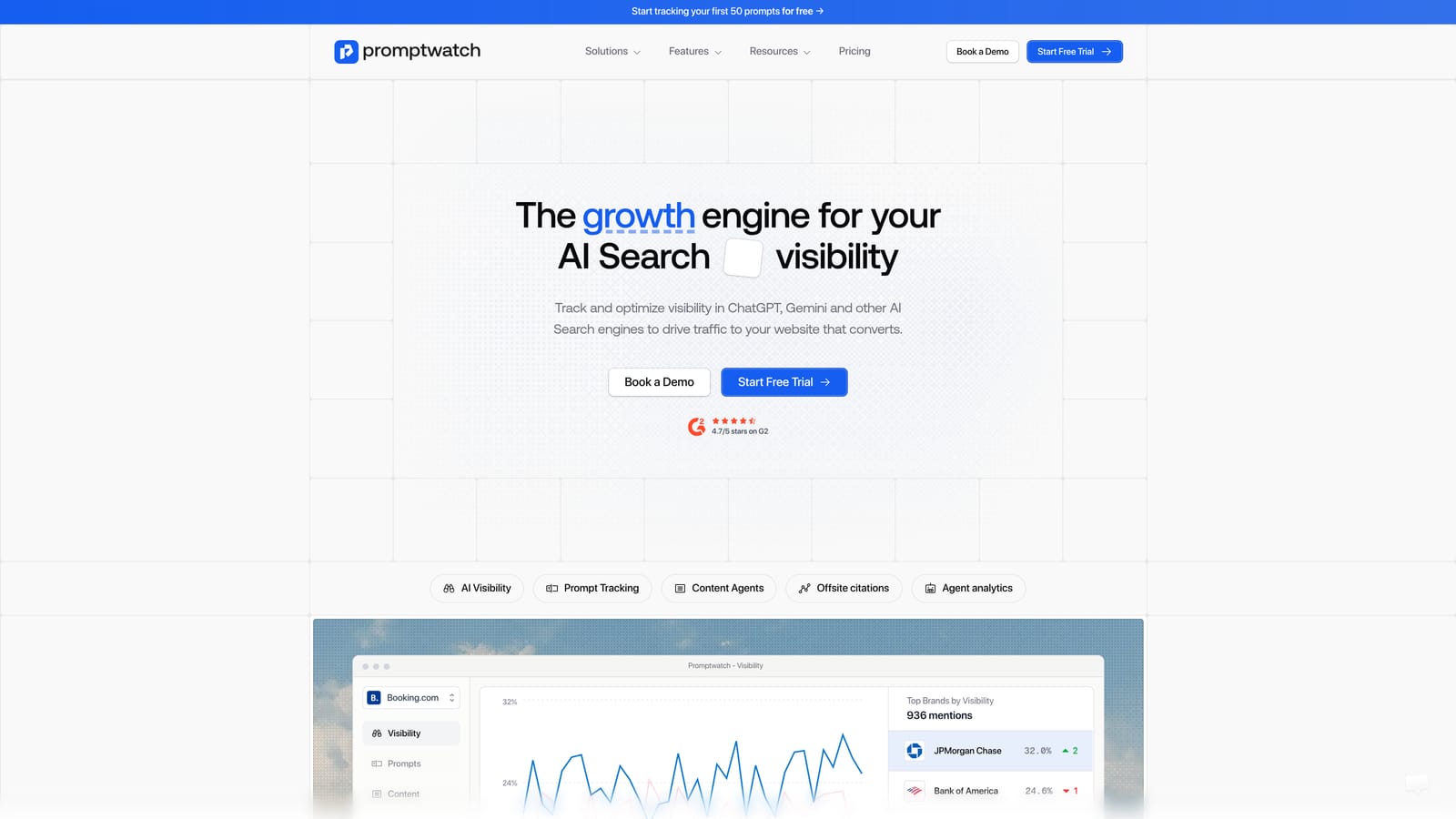
Promptwatch is a prompt-level AI monitoring tool that tracks how specific prompts return brand and competitor mentions across LLMs, surfacing trends in sentiment and brand description over time.
Where This Tool Shines
Where other tools give you a broad view of AI visibility, Promptwatch goes narrow and deep. You define a specific set of prompts that matter to your brand, and the platform monitors how LLM responses to those exact prompts evolve over time. This is particularly useful when you want to know not just whether you're mentioned, but how you're described and whether that description is shifting.
The sentiment tracking layer adds meaningful context. If an AI model's tone around your brand starts drifting negative, or if a competitor suddenly appears more frequently in the same responses, Promptwatch surfaces those shifts before they become bigger problems. For brand teams managing reputation in AI-generated content, that early warning capability has real value.
Key Features
Defined Prompt Set Tracking: Monitor a curated list of prompts over time to measure how consistently LLMs mention your brand in response to queries that matter to your business.
Sentiment Shift Detection: Surfaces changes in how AI models describe your brand, helping you catch negative drift or positive momentum in LLM-generated brand narratives.
Competitor Mention Tracking: Shows which competitors appear alongside your brand in response to the same prompts, giving you a real-time read on competitive positioning within AI answers.
Granular Prompt-Level Reporting: Delivers detailed, query-specific data rather than aggregated scores, which is useful for SEO and brand teams that need to justify content decisions with specific evidence.
Best For
Promptwatch is a strong fit for SEO specialists and brand managers who want precise, prompt-level data rather than high-level dashboards. It works well as a complement to a broader content strategy, helping teams identify exactly which queries need attention based on how LLMs are currently responding.
Pricing
See promptwatch.io for current plans. Verify pricing at publication.
4. Peec
Best for: Growth teams and agencies focused on benchmarking AI search visibility against direct competitors.
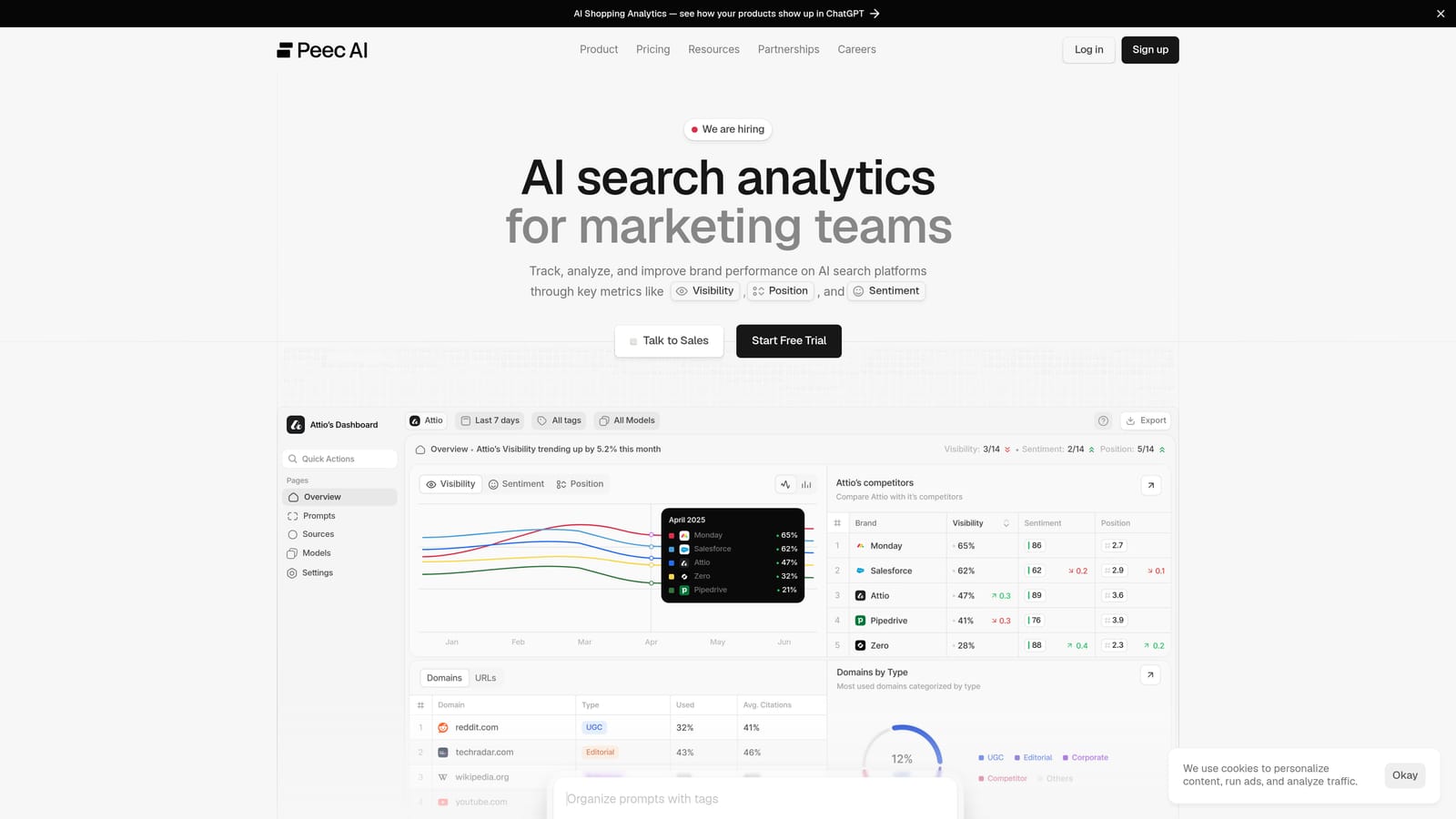
Peec is an AI search visibility benchmarking tool that measures your brand's relative presence in LLM-generated responses compared to direct competitors, helping teams understand their share of AI-driven recommendations.
Where This Tool Shines
Peec takes a benchmarking-first approach to AI visibility. Rather than focusing on absolute mention counts, it frames your performance in context: how does your brand's presence in AI-generated answers compare to the specific competitors you care about? That framing makes it easier to set realistic targets and communicate progress to stakeholders who think in competitive terms.
The query-type segmentation is particularly useful for teams operating in categories with diverse buyer intents. Understanding that you're strong in AI recommendations for one type of query but weak in another helps prioritize content investment where it will have the most competitive impact.
Key Features
Competitive AI Visibility Benchmarking: Measures your brand's share of LLM-generated recommendations against named competitors, giving you a relative rather than absolute view of your AI search presence.
Share-of-AI-Recommendation Metrics: Breaks down visibility by category and query type, so you can see where you lead and where competitors are capturing the AI-generated conversation.
Trend Tracking for Competitive Positioning: Monitors how your relative standing in generative search evolves over time, useful for assessing the impact of content and optimization efforts.
Growth Team and Agency Focus: Built with competitive intelligence use cases in mind, making it a natural fit for teams whose primary goal is outperforming specific rivals in AI search visibility.
Best For
Peec is best suited for growth teams and agencies that want to frame AI visibility in competitive terms. If your key question is "are we ahead of or behind our main competitors in AI-generated recommendations," Peec is designed to answer that question directly and track it over time.
Pricing
See peec.ai for current plans. Verify pricing at publication.
5. AirOps
Best for: Content and marketing teams building custom, high-volume AI content pipelines without heavy engineering resources.
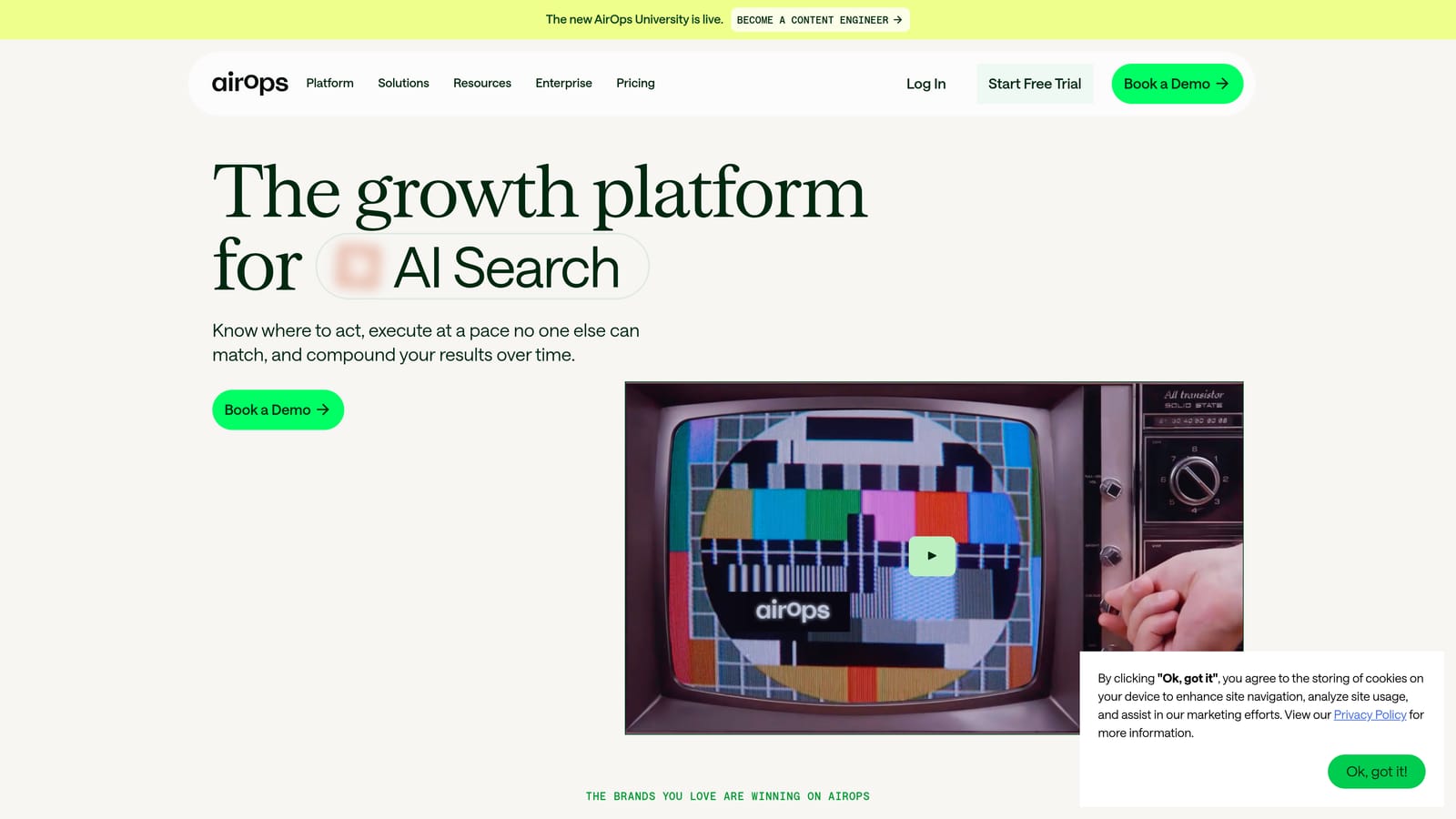
AirOps is an AI workflow automation platform that enables content and marketing teams to build custom LLM-powered content pipelines at scale without requiring deep technical resources.
Where This Tool Shines
AirOps occupies a different part of the multi-LLM optimization stack. It's less about monitoring where your brand appears in AI responses and more about building the operational infrastructure to produce content at the volume and consistency required to influence those responses over time. Think of it as the engine room for content-heavy GEO strategies.
The custom workflow builder is its standout capability. Teams can connect multiple LLMs within a single automated pipeline, configure different agents for different content types, and integrate the output with existing publishing tools. For organizations producing content at scale, this kind of orchestration capability reduces bottlenecks without requiring a dedicated engineering team to maintain it.
Key Features
Custom AI Workflow Builder: A visual interface for constructing multi-step content pipelines that connect different LLMs and processing steps without writing custom code.
Multi-LLM Pipeline Support: Connects and orchestrates multiple AI models within a single workflow, allowing teams to use the best model for each step in the content production process.
High-Volume Content Operations: Built to support teams producing large quantities of content consistently, with configurable AI agents that can handle repetitive production tasks.
Marketing Tool Integrations: Connects with existing marketing and publishing platforms, reducing friction in the handoff between AI-generated content and live publication.
Best For
AirOps is a strong fit for content operations teams and agencies that need to build scalable, custom AI content workflows. It's less suited for teams whose primary need is AI visibility monitoring; its strength is on the production and automation side of the GEO equation.
Pricing
See airops.com for current plans and pricing details.
6. Writesonic
Best for: Marketing teams that need to produce large volumes of SEO-oriented content across multiple formats and languages.
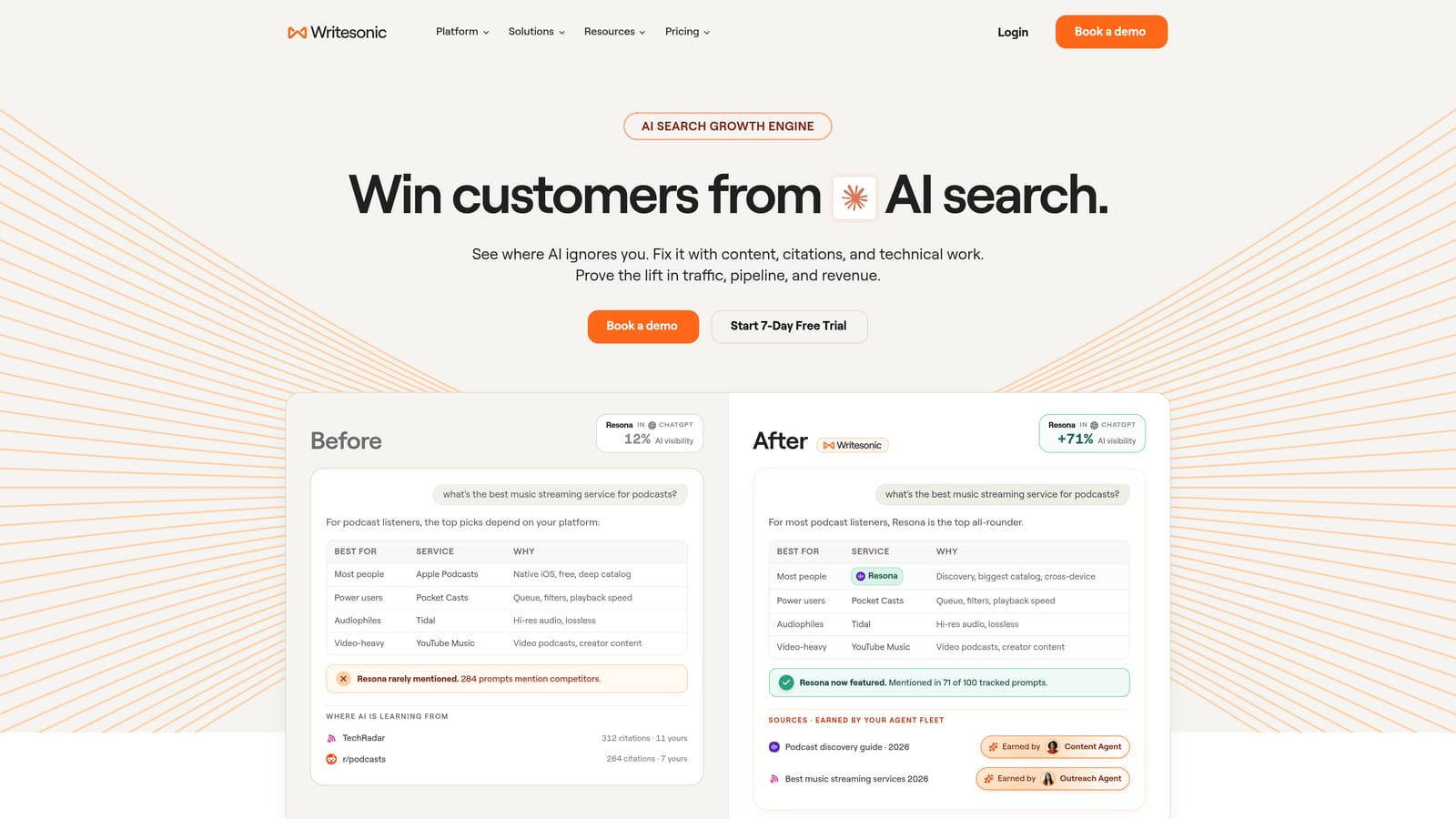
Writesonic is a broad AI content generation platform with SEO-oriented output modes, supporting teams that need to produce large volumes of search-optimized content across blogs, product pages, and long-form formats.
Where This Tool Shines
Writesonic's strength is breadth. It covers a wide range of content types and formats, from short-form landing page copy to long-form blog articles, and its SEO optimization modes make it easier for teams to produce content with keyword targeting built into the workflow rather than bolted on afterward.
The multi-language support is a meaningful differentiator for global marketing teams. Producing GEO-optimized content in multiple languages at scale is a significant operational challenge, and Writesonic's native language capabilities reduce the friction of maintaining that kind of international content program.
Key Features
AI Content Generation Across Formats: Supports blogs, landing pages, product descriptions, and long-form articles, giving teams a single platform for diverse content production needs.
Built-In SEO Optimization Modes: Keyword targeting and SEO guidance are integrated into the content creation workflow, reducing the need to switch between separate tools for writing and optimization.
CMS and Publishing Integrations: Connects with popular content management and publishing platforms, streamlining the path from content creation to live publication.
Multi-Language Support: Enables global marketing teams to produce content in multiple languages without relying on separate localization workflows for each market.
Best For
Writesonic is best suited for marketing teams that need a flexible, high-output content generation tool with SEO baked in. It's worth noting that Writesonic is primarily a content creation platform rather than a dedicated AI visibility monitoring tool, so teams looking for LLM mention tracking will need to pair it with a monitoring solution.
Pricing
A free plan is available. Paid plans start at rates published on writesonic.com. Verify current pricing before purchase.
Which Tool Is Right for Your Team?
The right choice depends on where you are in your AI visibility journey and what your most pressing need is right now.
If you want one platform that handles monitoring, content creation, and indexing without stitching together multiple tools, Sight AI is the most complete option in this list. Its combination of AI Visibility Score tracking, 13+ specialized content agents, and IndexNow-powered indexing makes it particularly valuable for growth-focused teams and agencies that can't afford to run separate systems for each function.
For enterprise teams whose primary need is competitive share-of-voice analytics in AI search, Profound is purpose-built for that use case. If granular, prompt-level brand monitoring is the priority, Promptwatch offers the deepest visibility at the individual query level. Teams focused on benchmarking their AI search presence against specific competitors will find Peec most useful for that framing.
On the content production side, AirOps suits teams building custom, high-volume AI content pipelines, while Writesonic is a strong general-purpose content generation platform for teams that need SEO-oriented output at scale.
Before committing to any vendor, ask these questions: Which LLMs does the platform actually monitor, and how frequently? Does it surface actionable insights or just raw data? How does it support the full workflow from insight to published content? And does it integrate with your existing CMS and publishing stack?
Stop guessing how AI models like ChatGPT and Claude talk about your brand. Start tracking your AI visibility today and see exactly where your brand appears across top AI platforms, which content gaps are costing you mentions, and how to close them faster than your competitors.