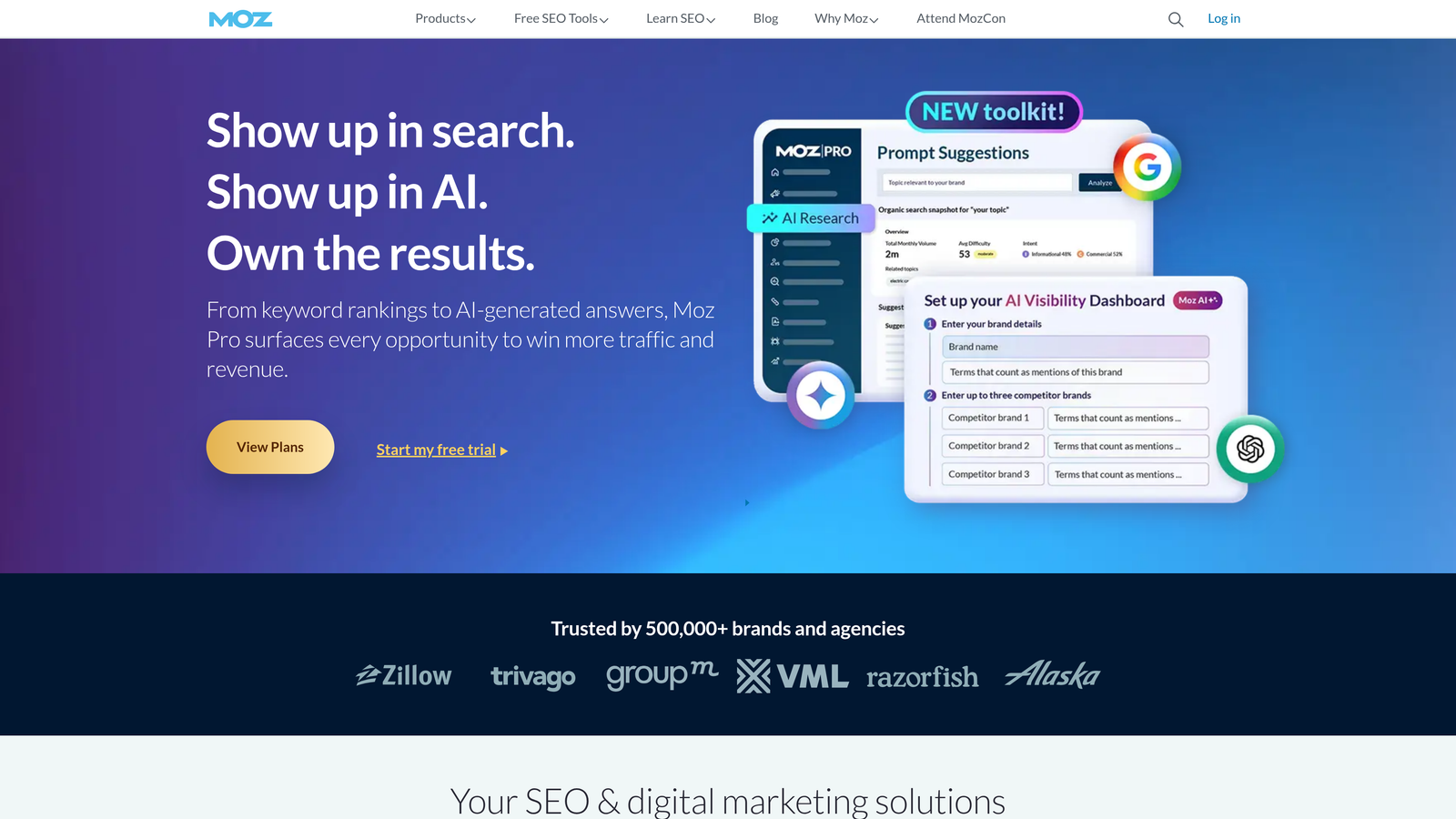
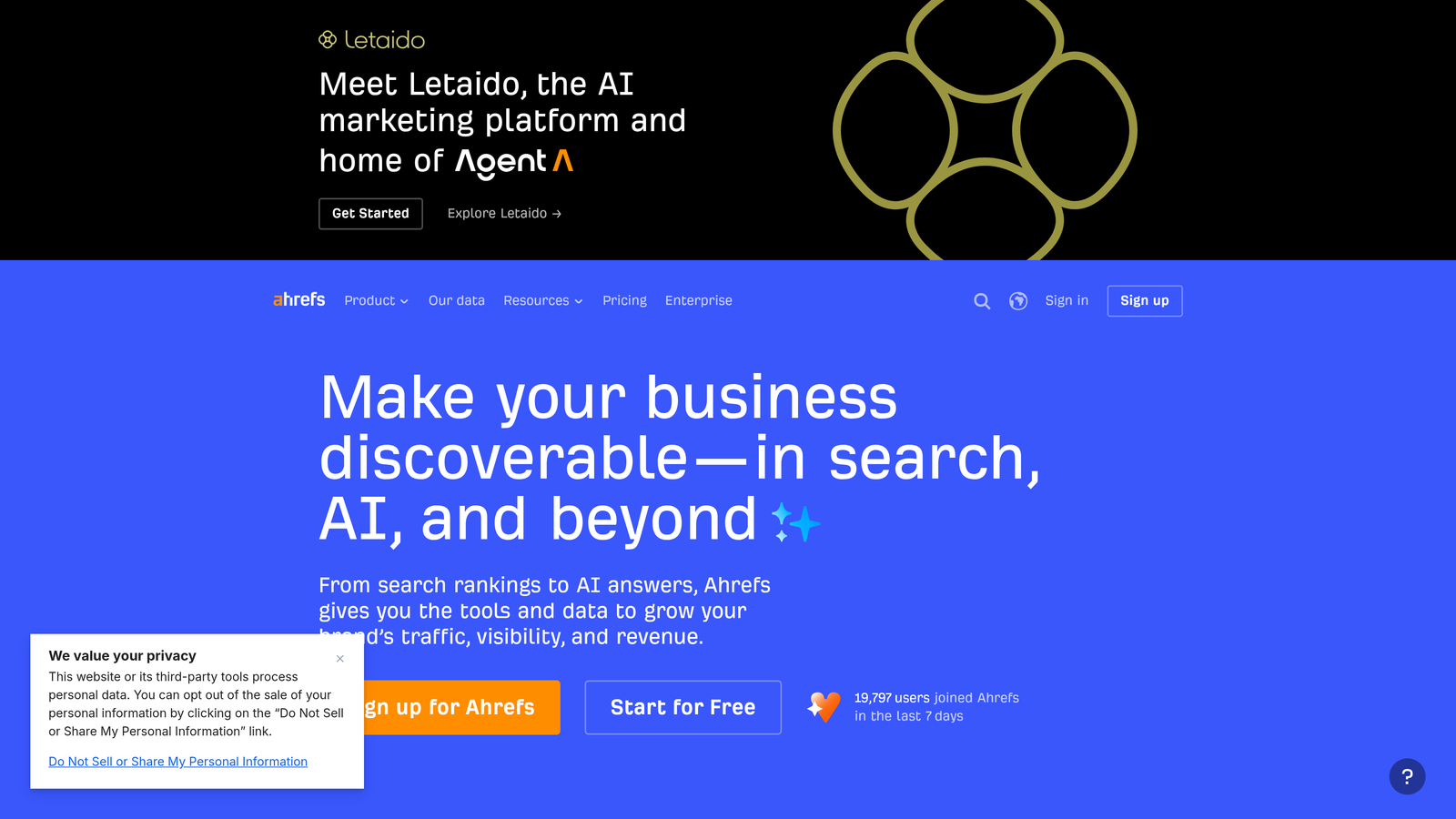
For marketers, founders, and agencies serious about organic growth, Moz and Ahrefs are two of the most powerful SEO platforms available. Each brings distinct strengths to the table: Ahrefs excels at backlink analysis and competitive research, while Moz is known for its Domain Authority metric, on-page optimization tools, and accessible interface.
The challenge most teams face isn't choosing between them. It's knowing how to use them together strategically to drive measurable results. Used in isolation, either tool can leave gaps in your SEO intelligence. Used together with a clear workflow, they create a comprehensive view of your site's health, link profile, keyword opportunities, and competitive landscape.
This guide breaks down seven actionable strategies for combining Moz and Ahrefs insights to accelerate organic traffic growth — from technical audits and keyword gap analysis to content planning and rank tracking. Whether you're running a lean marketing team or managing multiple client accounts at an agency, these strategies will help you build a more efficient, data-driven SEO process.
We'll also touch on where traditional SEO tools have blind spots — particularly around AI search visibility — and how forward-thinking teams are filling those gaps.
1. Run Complementary Site Audits to Catch What One Tool Misses
The Challenge It Solves
No single crawl tool surfaces every technical issue on your site. Ahrefs Site Audit and Moz Site Crawl each use different crawling logic, issue categorization, and severity thresholds. Relying on just one means you're almost certainly leaving fixable problems on the table — problems that could be suppressing your rankings without you knowing it.
The Strategy Explained
Run both audits on the same schedule — ideally monthly or after major site changes — and compare the outputs side by side. Pay special attention to issues flagged by both tools, as these represent the highest-confidence problems worth prioritizing immediately.
Ahrefs tends to be strong on crawlability issues, internal link structure, and page-level performance signals. Moz often surfaces on-page optimization gaps, metadata issues, and duplicate content patterns that Ahrefs may categorize differently. Together, they give you a more complete technical picture than either provides alone.
Implementation Steps
1. Schedule both Ahrefs Site Audit and Moz Site Crawl to run on the same day each month so you're comparing fresh, synchronized data.
2. Export issue reports from both tools and merge them into a single spreadsheet, tagging each issue with its source (Ahrefs, Moz, or both).
3. Prioritize issues flagged by both tools first, then address high-severity issues unique to each platform in order of estimated traffic impact.
4. Track resolution progress in your spreadsheet and re-run both audits after fixes are deployed to confirm resolution.
Pro Tips
Don't just fix issues mechanically. Use the audit data to identify patterns — for example, if both tools flag dozens of pages with thin content, that's a signal to revisit your content strategy, not just add words to individual pages. Patterns reveal systemic problems that one-off fixes won't solve.
2. Build a Unified Keyword Strategy Using Both Keyword Explorers
The Challenge It Solves
Ahrefs and Moz frequently return different keyword difficulty scores and search volume estimates for the same queries. This discrepancy isn't a bug — it reflects different data sources, modeling approaches, and index sizes. If you're making targeting decisions based on one tool alone, you may be overestimating how winnable a keyword is, or dismissing opportunities that are actually within reach.
The Strategy Explained
Cross-referencing both tools turns this discrepancy into an advantage. When Ahrefs and Moz both rate a keyword as low-to-medium difficulty, you have stronger confidence it's genuinely winnable. When they diverge significantly, that's a signal to dig deeper into the SERP before committing resources.
Use Ahrefs for its click-through data and traffic potential estimates, which help you understand how much of a keyword's search volume actually translates to clicks. Layer in Moz's SERP analysis to understand the competitive landscape — specifically, what Domain Authority levels are ranking and whether there's room for your site to break in.
Implementation Steps
1. Build your initial keyword list in Ahrefs Keyword Explorer, filtering by search volume and traffic potential relevant to your niche.
2. Run the same keyword list through Moz Keyword Explorer and record both difficulty scores in a comparison spreadsheet.
3. Flag keywords where both tools rate difficulty below your site's competitive threshold as your highest-priority targets.
4. For keywords where scores diverge significantly, manually review the SERP to assess whether the ranking pages are genuinely beatable based on content quality and authority.
Pro Tips
Pay particular attention to keywords where Ahrefs shows strong click potential but Moz's SERP analysis reveals weak incumbent content. These represent the sweet spot: real traffic opportunity with a beatable competitive landscape. These are the keywords worth building dedicated content around first.
3. Use Ahrefs for Backlink Prospecting, Moz for Authority Validation
The Challenge It Solves
Link building without a qualification process wastes outreach time and can introduce low-quality links that do more harm than good. Finding link opportunities is only half the work — validating that those opportunities are worth pursuing requires a different lens than raw backlink discovery.
The Strategy Explained
Ahrefs is widely regarded as having one of the largest backlink indexes available, making it the natural starting point for prospecting. Use it to identify sites linking to your competitors, resource pages in your niche, and broken link opportunities. Once you have a prospect list, bring Moz into the workflow to validate each prospect's Domain Authority and Spam Score before investing time in outreach.
Moz's Domain Authority metric is widely used across the industry as a proxy for link quality assessment, and its Spam Score helps you avoid prospects that could trigger algorithmic penalties. This two-tool qualification process gives your link building program both scale and precision.
Implementation Steps
1. Use Ahrefs Site Explorer to pull the backlink profiles of your top three to five competitors and export all referring domains.
2. Filter the export to sites linking to two or more competitors but not yet linking to you — these are your highest-value prospects.
3. Run the prospect list through Moz's Link Explorer to pull Domain Authority and Spam Score for each domain.
4. Set minimum thresholds (for example, DA above a certain baseline and Spam Score below a defined ceiling) and remove prospects that don't qualify.
5. Prioritize remaining prospects by DA and topical relevance before beginning outreach.
Pro Tips
Don't treat DA as an absolute filter. A lower-DA site in a highly relevant niche can deliver more SEO value than a high-DA site with no topical connection to your content. Use Spam Score as your hard filter and DA as a relative ranking signal, not a binary pass/fail threshold.
4. Conduct Competitive Gap Analysis Across Both Platforms
The Challenge It Solves
Competitive SEO isn't just about knowing what keywords you rank for — it's about understanding what you're missing. Your competitors may be capturing significant organic traffic from topics your site doesn't address at all, and identifying those gaps systematically is one of the highest-leverage activities in SEO planning.
The Strategy Explained
Ahrefs Content Gap tool is purpose-built for this: it shows you keywords your competitors rank for that you don't. But the output alone doesn't tell you which gaps are worth closing. That's where Moz's SERP analysis adds context — helping you assess whether the pages currently ranking for those gap keywords are genuinely beatable given your site's authority profile.
Running this analysis across both platforms helps you build a gap list that's not just comprehensive but also realistic. You're not just finding opportunities — you're finding opportunities you can actually win.
Implementation Steps
1. In Ahrefs Content Gap, enter two to four of your primary competitors and run the analysis against your own domain to generate a keyword gap list.
2. Filter the gap list by search volume and relevance to your core topics, removing keywords that are tangential to your business.
3. For your top gap opportunities, use Moz SERP Analysis to review the authority levels of ranking pages and assess competitive difficulty in context.
4. Segment your gap list into three tiers: quick wins (low difficulty, moderate volume), medium-term targets (moderate difficulty, higher volume), and long-term plays (high difficulty, high volume).
Pro Tips
Run this analysis quarterly rather than as a one-time exercise. Competitor content strategies shift, new players enter your space, and gaps that were too competitive six months ago may have opened up. Treating competitive gap analysis as an ongoing process rather than a project keeps your content pipeline continuously aligned with real market opportunity.
5. Establish a Rank Tracking System That Covers All Channels
The Challenge It Solves
Rank tracking in a single tool gives you a partial view of your SERP performance. Different tools sample keyword positions differently, cover different SERP features, and update at different frequencies. More importantly, neither Moz nor Ahrefs tracks how your brand appears in AI-generated search responses — a channel that is rapidly becoming a significant source of discovery for many audiences.
The Strategy Explained
Set up rank tracking for your priority keywords in both Ahrefs and Moz. Use Ahrefs for its granular SERP feature tracking and historical rank data, and Moz for its broader keyword set coverage and local rank tracking capabilities if you serve geographic markets. Cross-referencing both gives you higher confidence in your actual position trends.
But here's the gap worth acknowledging directly: neither tool tells you whether ChatGPT, Claude, Perplexity, or other AI platforms are recommending your brand when users ask relevant questions. As AI search becomes a meaningful traffic source, tracking only traditional SERP positions means you're missing an entire dimension of how your audience finds you.
Implementation Steps
1. Identify your top 50 to 100 priority keywords and set up tracking in both Ahrefs Rank Tracker and Moz Pro Campaigns.
2. Configure both tools to track SERP features (featured snippets, People Also Ask, local packs) relevant to your keyword targets.
3. Set up weekly reporting in both platforms and compare position trends monthly to identify divergences worth investigating.
4. Add AI visibility tracking to your stack — using a platform like Sight AI — to monitor how your brand is mentioned across AI models alongside your traditional rank data.
Pro Tips
Don't wait until AI search is a proven major traffic driver for your specific niche before you start tracking it. Establishing a baseline now means you'll have historical data to reference as the channel grows — and you'll be ahead of competitors who start tracking later.
6. Align Content Production With Data From Both Tools
The Challenge It Solves
Content created without a data foundation often targets the wrong keywords, misses the format users expect, or fails to meet the optimization standards needed to rank competitively. The challenge for most teams is translating raw tool data into a clear content brief that writers can actually execute against — without spending hours manually synthesizing inputs from multiple platforms.
The Strategy Explained
Use Ahrefs Top Pages report to research what content formats and topics are driving the most traffic for sites in your niche. This tells you not just what to write about, but how to structure it — whether the top-performing content is long-form guides, comparison pages, listicles, or something else entirely.
Then use Moz On-Page Grader to optimize individual pages after drafting, ensuring your content meets on-page SEO standards for your target keyword. Layer in Generative Engine Optimization (GEO) principles — creating structured, authoritative, citation-worthy content — to increase the likelihood your content is referenced in AI-generated responses, not just traditional search results.
Implementation Steps
1. Use Ahrefs Top Pages to identify the highest-traffic content formats in your niche and use these as structural templates for your own content planning.
2. Build content briefs that incorporate target keywords from your unified keyword strategy (Strategy 2) and competitive gap analysis (Strategy 4).
3. After drafting, run each page through Moz On-Page Grader and address high-priority recommendations before publishing.
4. Apply GEO best practices: use clear headers, include original insights or data, write in a direct and authoritative tone, and structure content so AI models can easily extract and cite it.
5. Use a content generation platform like Sight AI's AI Content Writer to produce SEO and GEO-optimized articles at scale, reducing the manual overhead of content production without sacrificing optimization quality.
Pro Tips
GEO isn't a separate content track — it's a layer of intentionality you add to content you'd be writing anyway. Structured headings, clear definitions, and authoritative sourcing all serve both traditional SEO and AI visibility simultaneously. The best content strategies optimize for both channels with a single piece of content.
7. Extend Your SEO Stack Beyond Traditional Tools for AI Search
The Challenge It Solves
Moz and Ahrefs are excellent tools for traditional search engine optimization. But as of 2025 and into 2026, neither platform offers native tracking for brand mentions or citations within AI language model outputs. When a user asks ChatGPT for a software recommendation, or asks Perplexity to compare vendors in your category, neither Moz nor Ahrefs can tell you whether your brand appeared — or what it said about you.
The Strategy Explained
This isn't a criticism of Moz or Ahrefs — it's simply outside the scope of what they were built to do. The emerging discipline of AI visibility tracking addresses a genuinely new question: how does your brand show up when AI models generate responses to queries relevant to your business?
Platforms like Sight AI are purpose-built to answer this. They monitor brand mentions across AI models including ChatGPT, Claude, and Perplexity, provide sentiment analysis on how your brand is described, and track which prompts and topics trigger your brand to appear. This data is distinct from traditional rank tracking and fills a blind spot that no traditional SEO tool currently addresses.
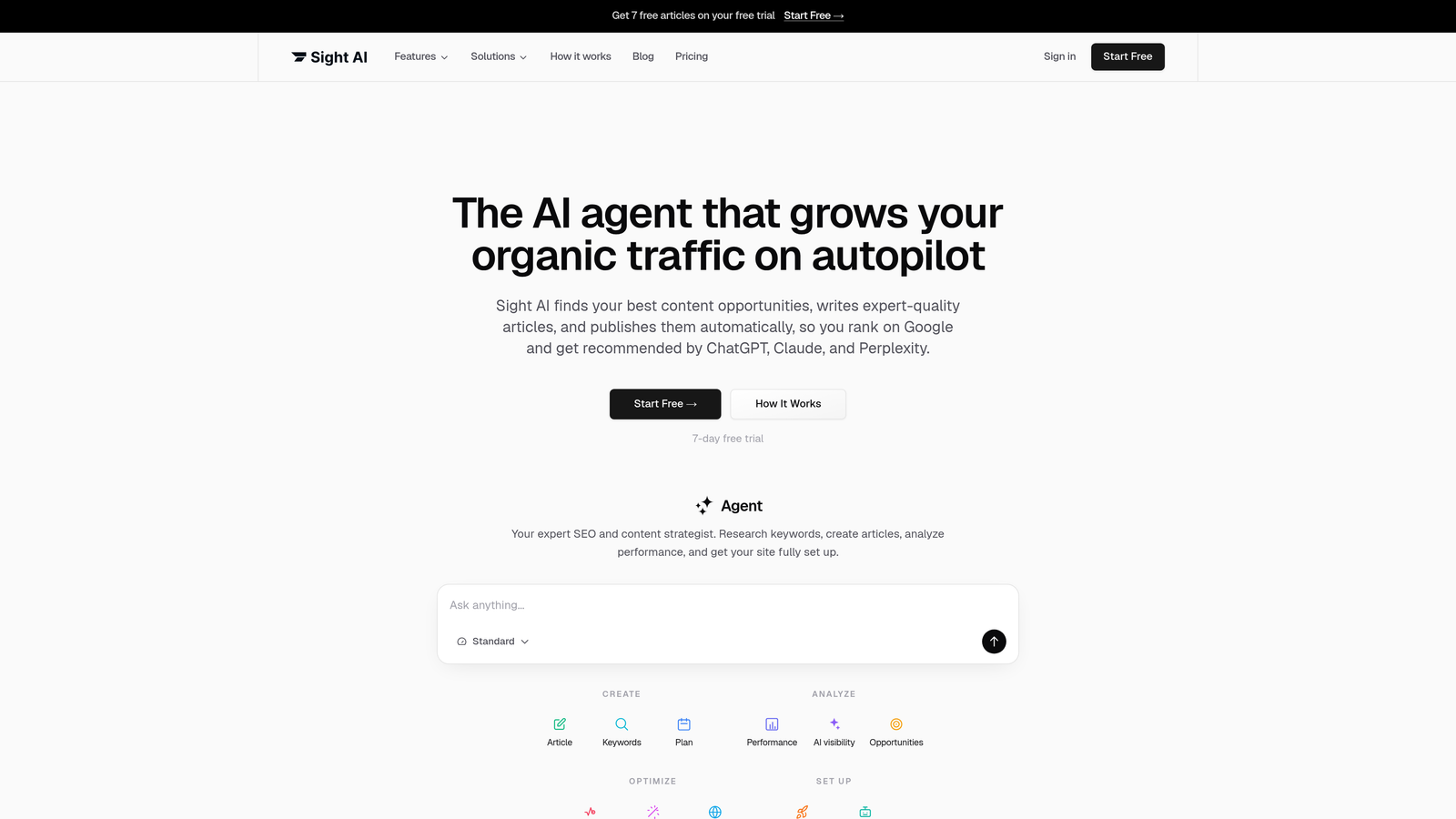
For agencies managing multiple client accounts, AI visibility tracking also creates a new category of reporting and value delivery — showing clients not just where they rank in Google, but how they're represented across the AI platforms their customers increasingly use for research and recommendations.
Implementation Steps
1. Audit your current SEO stack and identify what questions it cannot answer — specifically around AI model citations and brand mentions in generative responses.
2. Define the prompts and queries most relevant to your business: the questions your target audience is most likely to ask AI models when looking for solutions like yours.
3. Set up AI visibility tracking in a platform like Sight AI to monitor brand mentions, sentiment, and prompt coverage across major AI platforms.
4. Review AI visibility data alongside your traditional Moz and Ahrefs reports to build a complete picture of your brand's discovery footprint.
5. Use AI visibility insights to inform your content strategy — identifying topics where you're not being mentioned and creating content specifically designed to earn citations in AI-generated responses.
Pro Tips
AI visibility data is most valuable when it informs action. Don't just track mentions — use the data to identify content gaps that, when filled, increase the likelihood of your brand being cited. Treat every AI model response that mentions a competitor but not you as a content brief waiting to be executed.
Putting It All Together
Moz and Ahrefs are most powerful when used as complementary tools rather than interchangeable alternatives. By combining their respective strengths — Ahrefs for backlink discovery, competitive research, and click data; Moz for authority scoring, on-page optimization, and SERP analysis — you build a more complete and actionable SEO workflow than either tool delivers on its own.
Start by implementing the auditing and keyword strategies first. These deliver the fastest clarity on where your site stands and which opportunities are most immediately within reach. Then layer in the competitive gap analysis and content alignment strategies to fuel sustained organic growth over the following months.
As you build momentum with traditional SEO, don't overlook the growing role of AI search. Tools like Moz and Ahrefs weren't built to track how AI models discuss your brand — but platforms like Sight AI were. Tracking your AI visibility alongside your traditional SEO metrics ensures you're capturing the full picture of how your audience discovers you.
The brands that win in organic search over the next few years will be those that treat traditional SEO and AI visibility as two sides of the same coin — and build their tech stack accordingly. Stop guessing how AI models like ChatGPT and Claude talk about your brand. Start tracking your AI visibility today and see exactly where your brand appears across top AI platforms.