When someone asks ChatGPT for CRM recommendations or prompts Claude to suggest project management tools, does your brand appear in the response? For most marketers and founders, this question triggers a moment of uncomfortable uncertainty. You've spent years optimizing for Google, building backlinks, and climbing search rankings—but you have no idea what AI models are saying about your company when millions of users ask them for advice.
This isn't a hypothetical concern anymore. AI models have become the new discovery layer, influencing purchase decisions before users ever click a search result. Someone researching solutions in your category might ask Perplexity to compare options, consult ChatGPT for recommendations, or use Claude to evaluate alternatives—all without visiting your website or seeing your carefully crafted meta descriptions.
The problem? Traditional analytics can't tell you what's happening in these conversations. You can track search rankings and website visits, but you're completely blind to how AI assistants discuss, recommend, or ignore your brand across thousands of daily queries.
Understanding how AI models reference brands isn't just interesting—it's becoming essential for sustainable growth. This guide walks you through the mechanics of how these systems generate brand mentions, the factors that influence AI recommendations, and the exact steps you can take to track and improve your brand's AI visibility. By the end, you'll have a clear framework for monitoring how AI talks about your company and actionable strategies to get mentioned more often in the conversations that matter.
Step 1: Understand How AI Models Generate Brand References
Before you can influence how AI models reference your brand, you need to understand the mechanics behind these mentions. AI systems don't just randomly pick brands to recommend—they follow specific patterns based on how they access and process information.
AI models generate brand references through two primary mechanisms. First, there's knowledge from training data—information the model learned during its initial training phase. This knowledge has a cutoff date, meaning the model's base understanding of your brand is frozen at a specific point in time. ChatGPT-4, for example, has training data through a certain date, and anything that happened after that cutoff isn't part of its foundational knowledge.
Second, many modern AI models use real-time retrieval capabilities. This is where things get more dynamic and interesting for brand visibility. Models with browsing capabilities or retrieval-augmented generation can access current web content, pulling in fresh information to supplement their responses. This means your recent content, latest reviews, and current brand mentions can influence AI responses even if they occurred after the model's training cutoff. Understanding how AI models cite sources helps you optimize for these retrieval mechanisms.
Different AI platforms take different approaches. ChatGPT with browsing can search the web in real-time when needed, pulling current information into its responses. Perplexity is built around this concept, actively citing sources and retrieving recent content for nearly every query. Claude relies more heavily on its training data but can access information through integrations. Gemini combines Google's vast search index with AI capabilities, creating yet another variation.
Here's why this matters for your brand visibility strategy. If an AI model is working purely from training data, your focus needs to be on building long-term authority that gets captured in future training cycles. But if the model uses real-time retrieval, you can influence mentions much faster through current content optimization and fresh authoritative mentions.
Think of it like this: training data is your brand's permanent record, while real-time retrieval is your ability to update that record in real-time. You need strategies for both. The brands that understand this dual nature of AI knowledge can optimize for immediate visibility while building the foundation for long-term AI recognition.
Step 2: Identify the Factors That Influence Brand Mentions
Understanding the mechanics is just the foundation. Now you need to know which specific factors make AI models more likely to mention, recommend, or discuss your brand. These aren't mysterious black-box variables—they're signals you can identify, measure, and influence.
Content Authority Signals: AI models prioritize information from sources they recognize as authoritative. This includes your domain's overall reputation, the depth of your topical coverage, and the quality of backlinks pointing to your content. When an AI needs to answer a question about your industry, it's more likely to reference brands that appear on high-authority domains and have comprehensive content demonstrating expertise.
Entity Clarity and Structured Data: AI models need to understand what your brand actually is and what it does. Clear entity associations help tremendously. This means consistent brand mentions across the web, proper schema markup on your site, and explicit connections between your brand name and your category. If your company name is ambiguous or your category unclear, AI models struggle to confidently recommend you.
Frequency and Recency of Mentions: How often does your brand appear across authoritative sources? AI models notice patterns. A brand mentioned frequently across trusted publications, review sites, and expert content creates a stronger signal than one with sparse, outdated references. Recency matters too—fresh mentions suggest current relevance and active market presence. Learn more about why AI models recommend certain brands over others.
Sentiment and Context: This is where things get nuanced. AI models don't just count mentions—they evaluate context. Positive associations, expert endorsements, and solution-focused mentions increase recommendation likelihood. If your brand consistently appears in contexts like "best tools for X" or "recommended by experts," AI models pick up on these positive signals.
Comparative Presence: AI models often generate recommendations by comparing options. Your visibility relative to competitors matters significantly. If three competitors have comprehensive comparison content, detailed feature breakdowns, and multiple expert reviews while you don't, the AI has much more material to work with when discussing alternatives.
The success indicator for this step is simple: you should be able to list five or more factors you can directly influence. If you're still thinking of AI visibility as a mysterious algorithm you can't affect, you haven't internalized this step. Each factor represents an opportunity for optimization—from improving your content authority to ensuring clear entity associations to earning more frequent mentions in relevant contexts.
These factors work together, not in isolation. A single high-authority mention might not move the needle, but consistent signals across multiple factors create the cumulative effect that makes AI models confident in referencing your brand.
Step 3: Audit Your Current AI Visibility Across Major Models
You can't improve what you don't measure. Before implementing any optimization strategies, you need to establish your baseline AI visibility. This means systematically testing how different AI models currently discuss your brand and documenting what you find.
Start with manual testing across the major platforms: ChatGPT, Claude, Perplexity, and Gemini. But here's the critical part—don't just search for your brand name. That tells you almost nothing useful. Instead, use prompts that mirror how real users actually seek recommendations.
Try prompts like "What are the best [category] tools for [specific use case]?" or "Compare the top solutions for [problem your product solves]." These purchase-intent queries reveal whether AI models naturally recommend your brand when users ask for help, not just whether they know your brand exists. Understanding how ChatGPT selects brands to mention can inform your testing approach.
Document everything you find. Create a simple spreadsheet tracking mention frequency (how often you appear), sentiment (positive, neutral, negative context), and positioning (are you listed first, third, or not at all?). Note the specific context—does the AI mention you as a budget option, an enterprise solution, or a specialist tool? These details matter.
Now comes the competitive comparison. Run the exact same prompts but pay attention to which competitors get mentioned. If Claude consistently recommends three competitors but never mentions you, that's crucial data. If Perplexity cites your competitors' comparison pages but not yours, you've identified a content gap.
A common pitfall here is testing only generic queries instead of specific, purchase-intent prompts. Asking "What is [your company]?" will probably return accurate information if you have decent web presence. But that's not how most users interact with AI assistants. They ask for recommendations, comparisons, and solutions to specific problems. Your audit needs to reflect these real-world usage patterns.
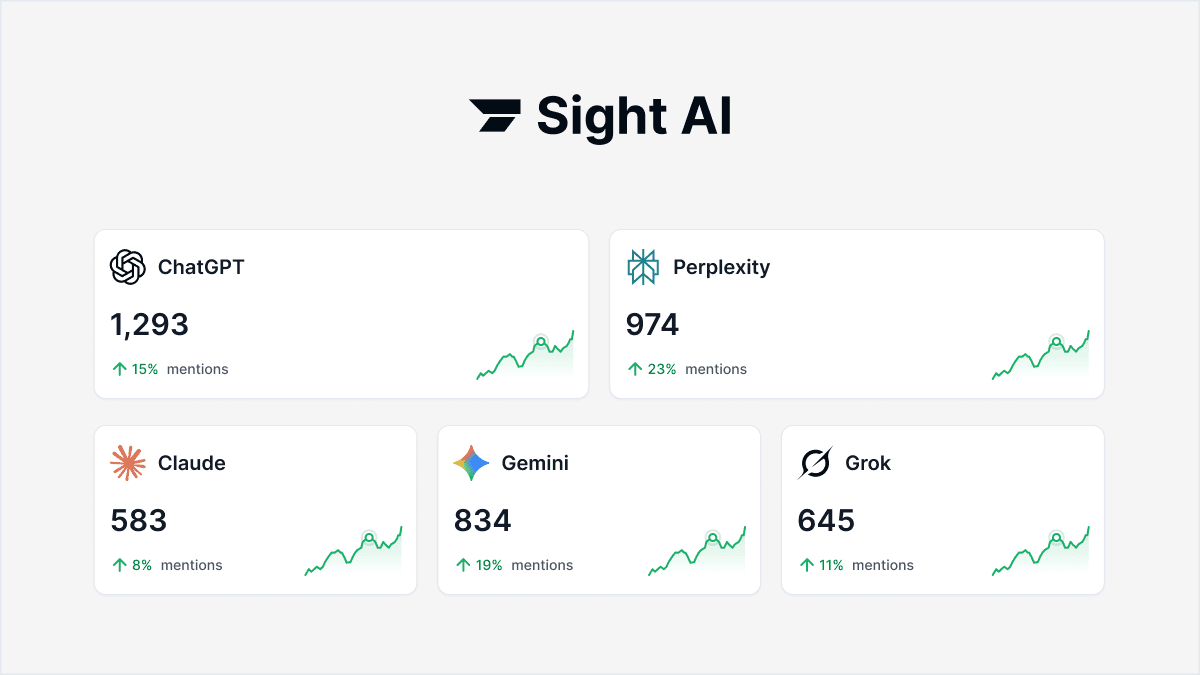
For teams serious about AI visibility, manual testing quickly becomes unsustainable. You need to track mentions across multiple models, monitor changes over time, and scale beyond what's practical with manual queries. This is where AI visibility tracking tools become essential—they automate the testing process, track sentiment shifts, and alert you to significant changes in how AI models discuss your brand.
The output of this step should be a clear baseline report: where you appear, where you don't, how you compare to competitors, and which AI platforms represent your biggest opportunities or gaps.
Step 4: Optimize Your Content for AI Discoverability
With your baseline established, it's time to optimize. AI discoverability requires a different content approach than traditional SEO, though there's significant overlap. You're not just optimizing for keywords—you're creating content that AI models recognize as authoritative, comprehensive, and worth citing.
Start by creating content that directly answers the questions AI models frequently receive. Think about the informational queries in your space: "How to choose a [category]," "What features matter most in [product type]," or "Common mistakes when implementing [solution]." When AI models encounter these questions, they need authoritative content to pull from. Your goal is to be that source.
Comprehensive, in-depth content performs better in AI contexts than thin, keyword-stuffed pages. AI models can evaluate content quality and topical depth. A 3,000-word guide that thoroughly explores a topic signals more authority than ten 300-word posts covering the same ground superficially. Build content that demonstrates genuine expertise. For detailed strategies, explore how to optimize content for AI models.
Use clear entity markup and structured data to help AI models understand your brand associations. Schema markup that explicitly connects your company to your category, products, and key features makes it easier for AI systems to confidently reference you. When the data is ambiguous, AI models hedge or skip your brand entirely.
Build topical clusters that establish comprehensive expertise in your domain. If you sell project management software, don't just write about your product—create authoritative content about project management methodologies, team collaboration best practices, and workflow optimization strategies. This topical authority signals to AI models that you're a trusted voice in the space.
Ensure fast indexing so new content enters AI knowledge bases quickly. For models with real-time retrieval capabilities, fresh content can influence responses almost immediately—but only if search engines have discovered and indexed it. IndexNow integration and automated sitemap updates accelerate this process, helping your latest content become available to AI models faster. If you're struggling with visibility, learn how to improve web indexing for better results.
The success indicator here is straightforward: your content should start ranking for informational queries that AI models commonly answer. When you create a comprehensive guide and it begins appearing in search results for related questions, you're building the foundation for AI visibility. These are the pages AI models will cite and reference when users ask similar questions.
Step 5: Build External Signals That AI Models Trust
Here's a truth that surprises many marketers: for AI visibility, third-party mentions often matter more than your owned content. AI models place significant weight on what others say about your brand, not just what you say about yourself. This makes earned media crucial in ways that go beyond traditional SEO.
Focus on earning mentions in authoritative industry publications and review sites. When reputable sources discuss your brand, AI models take notice. A mention in a well-respected industry publication carries more weight than a dozen self-promotional blog posts. These external validations signal that your brand is worth discussing and recommending.
Develop relationships with content creators whose work AI models frequently cite. Pay attention to which authors, publications, and platforms appear most often in AI-generated responses in your industry. These are the sources AI models trust. Getting mentioned by these creators puts your brand in the content stream that AI systems actively reference. Discover more about how to get cited by AI models through strategic outreach.
Participate in industry discussions, expert roundups, podcasts, and collaborative content. When you contribute expertise to broader industry conversations, you create multiple mention opportunities across different contexts. AI models synthesize information from various sources—appearing in diverse, authoritative contexts strengthens your overall signal.
Why does third-party validation matter more for AI than traditional SEO? Because AI models are trained to be helpful and accurate, not promotional. They're inherently skeptical of marketing claims and self-promotion. But when independent sources validate your expertise or recommend your solution, AI models interpret that as genuine signal worth incorporating into recommendations.
A common pitfall is focusing exclusively on owned content while ignoring earned media. You might publish excellent blog posts and create comprehensive guides, but if no one outside your company ever mentions you, AI models have limited material to work with. The most effective AI visibility strategies balance owned content excellence with active earned media development.
Think about it from the AI's perspective. If it needs to recommend project management tools and finds dozens of independent reviews, comparison articles, and expert mentions for your competitors but only self-published content for your brand, which seems like the safer recommendation? External validation reduces the AI's uncertainty and increases recommendation confidence.
Step 6: Implement Ongoing AI Visibility Monitoring
AI visibility isn't a one-time optimization—it's an ongoing process that requires systematic monitoring. The AI landscape changes constantly as models update, training data refreshes, and new content enters the ecosystem. What works today might not work next month, and opportunities you're missing now might become obvious with proper tracking.
Set up systematic tracking across multiple AI platforms. Don't just monitor ChatGPT—track how Claude, Perplexity, Gemini, and other major models discuss your brand. Each platform has different strengths, user bases, and retrieval mechanisms. Your visibility might be strong on one platform and weak on another, and you won't know without comprehensive monitoring.
Monitor competitor mentions alongside your own brand. AI visibility is inherently comparative. Understanding when and how AI models recommend competitors helps you identify content gaps, messaging opportunities, and positioning advantages. If a competitor suddenly starts appearing more frequently in AI recommendations, you need to know immediately so you can investigate and respond. Analyzing AI model preference patterns reveals valuable competitive insights.
Track sentiment shifts and context changes over time. It's not just about whether AI models mention you—it's about how they discuss you. Are you positioned as a premium solution or a budget alternative? Do mentions emphasize your strengths or note your limitations? Sentiment tracking reveals how your brand perception evolves in AI-generated content.
Create alerts for significant changes in how AI discusses your brand. If your mention frequency suddenly drops, if sentiment shifts negative, or if a new competitor starts dominating recommendations, you need to know quickly. Automated monitoring systems can alert you to these changes so you can investigate causes and adjust strategy. For comprehensive guidance, see how to track brand mentions in AI models.
For teams managing AI visibility at scale, manual monitoring becomes impractical. Multi-model monitoring solutions automate the testing process, track changes over time, and provide comparative analytics that would take hours to compile manually. These tools transform AI visibility from a periodic check into a continuous optimization process.
The goal isn't just data collection—it's actionable insight. Your monitoring system should answer questions like: Which content improvements had the biggest impact on AI mentions? Which competitors are gaining ground in AI recommendations? Which AI platforms represent your biggest opportunities? Where should you focus your next optimization efforts?
Your Roadmap to AI Visibility Mastery
Tracking how AI models reference your brand is no longer optional—it's a competitive necessity. As AI assistants become the default research tool for millions of users, brands that aren't part of these conversations are missing opportunities at scale. The good news? You now have a systematic framework for understanding, monitoring, and improving your AI visibility.
Start with the fundamentals: understand how AI models generate brand references through both training data and real-time retrieval. Identify the specific factors that influence mentions—content authority, entity clarity, mention frequency, sentiment, and comparative presence. Audit your current visibility across major platforms to establish your baseline and identify gaps.
Then move to optimization: create comprehensive, authoritative content that AI models recognize as worth citing. Build external signals through earned media and third-party validation. Implement ongoing monitoring so you can track progress, spot opportunities, and respond to changes in the AI landscape.
Here's your quick-start checklist to implement immediately. Test your brand across four major AI models today using purchase-intent prompts, not just brand searches. Document your baseline visibility and compare it directly to two or three competitors using identical queries. Identify three specific content gaps where AI recommends competitors instead of you—these are your highest-priority optimization opportunities.
Implement structured data improvements this week. Add clear schema markup that helps AI models understand your brand, category, and key associations. Set up ongoing monitoring to track progress systematically rather than relying on sporadic manual checks.
The brands that master AI visibility now will have a significant advantage as these platforms continue to shape how consumers discover and evaluate products. Every day you delay is another day your competitors might be building advantages in this new channel. The mechanics are understandable, the factors are influenceable, and the tools for tracking are available.
Start tracking your AI visibility today and see exactly where your brand appears across top AI platforms. Stop guessing how AI models like ChatGPT and Claude talk about your brand—get visibility into every mention, track content opportunities, and automate your path to organic traffic growth. The conversation about your brand is happening right now in thousands of AI interactions. It's time to know what's being said and take control of your AI presence.