When someone asks ChatGPT for product recommendations or queries Perplexity about the best tools in your industry, does your brand come up? This question has become critical for marketers as AI-powered search increasingly shapes how customers discover and evaluate products. Unlike traditional search where you can track rankings and optimize meta tags, AI models generate dynamic responses based on their training data, real-time retrieval, and complex reasoning—making brand mentions feel like a black box.
The stakes are high. AI platforms now handle billions of queries monthly, and when your brand doesn't appear in those responses, you're invisible to potential customers at crucial decision moments. But here's the thing: AI brand mentions aren't random. They follow patterns you can understand, track, and influence.
This guide breaks down exactly how AI models decide which brands to mention, and more importantly, gives you a practical framework for tracking and improving your AI visibility. You'll learn the mechanics behind AI brand mentions, discover how to monitor what different AI platforms say about your company, and implement strategies that increase your chances of being recommended when it matters most.
Step 1: Understand How AI Models Generate Brand Recommendations
Before you can improve your AI visibility, you need to understand the machinery behind brand mentions. AI models don't randomly select brands—they make decisions based on specific technical factors that you can influence.
Training data forms the foundation. AI models learn from massive datasets of web content, forums, reviews, and authoritative sources. Brands that appear frequently in high-quality training data—with positive context and clear associations—naturally surface more often in AI responses. Think of it like this: if your brand is consistently mentioned alongside specific use cases or problems in the content the AI learned from, it becomes part of the model's understanding of solutions in your space.
But training data is just the starting point. Modern AI systems increasingly rely on retrieval-augmented generation (RAG), which changes everything. RAG-enabled models like Perplexity and Bing Chat actively pull real-time information from the web when answering queries. This means your current content visibility directly impacts whether you get mentioned today—not just what was in the training data months or years ago.
Context matching drives relevance. AI models evaluate query intent and match brands to specific use cases, features, or audience needs mentioned in the prompt. When someone asks "What's the best CRM for small teams with limited technical expertise?", the AI analyzes multiple dimensions: company size, technical capability, and specific needs. Brands that clearly articulate these dimensions in their content have better odds of matching the query context. Understanding how AI models choose brands to recommend gives you a strategic advantage in this process.
Authority signals matter enormously. AI models weight information from established publications, official documentation, and high-engagement content more heavily than random blog posts. When TechCrunch or industry-specific publications mention your brand, that signal carries more weight than hundreds of low-authority mentions. The model learns to trust certain sources and prioritizes information from those channels.
Understanding these mechanics reveals a crucial insight: improving AI visibility isn't about gaming the system. It's about ensuring your brand is well-represented in the places AI models look for authoritative, relevant information about your industry.
Step 2: Audit Your Current AI Visibility Across Major Platforms
You can't improve what you don't measure. Start by systematically testing how AI platforms currently talk about your brand—or whether they mention you at all.
Test queries your audience actually uses. Don't just search for your brand name. Create prompts that mirror real customer research: "What are the best solutions for [your category]?", "Compare [your product] vs [competitor]", or "I need a tool that [specific use case]—what do you recommend?" Test these across ChatGPT, Claude, Perplexity, Gemini, and Copilot. Each platform has different architectures and data sources, so mentions vary significantly.
Document everything with forensic detail. Which competitors appear in responses? In what context are they mentioned? What specific attributes or features does the AI highlight about them? Capture the exact wording—does the AI describe a competitor as "industry-leading" or "budget-friendly"? These descriptors reveal how the model has learned to position different brands. Learning how to track brand mentions in AI models systematically will transform your competitive intelligence.
Look for your own brand. When you do appear, note how you're described and what attributes are associated with your company. Sometimes the description is accurate. Other times, you'll find outdated information, incorrect feature descriptions, or positioning that doesn't match your current strategy. These gaps represent immediate opportunities for improvement.
Pay special attention to sentiment and positioning. Does the AI mention your brand with qualifiers like "emerging" or "established"? Is it recommended for specific use cases or presented as a general solution? Understanding current positioning helps you identify where perception doesn't match reality.
Create a simple tracking spreadsheet with columns for platform, query, competitors mentioned, your brand mention (yes/no), context, and sentiment. This baseline audit becomes your reference point for measuring progress. Most brands discover they're either invisible in AI responses or positioned very differently than intended—both problems you can systematically address.
Step 3: Set Up Systematic AI Brand Monitoring
One-time audits give you a snapshot, but AI visibility changes as models update and new content gets indexed. Systematic monitoring turns visibility tracking into a strategic capability.
Build a comprehensive prompt library. Create 15-20 prompts covering your key use cases, competitor comparisons, and industry questions. Include variations: "best [category] for [audience]", "alternatives to [competitor]", "[use case] tools comparison", and problem-focused queries like "how to solve [problem your product addresses]". This library becomes your standard testing protocol.
Establish monitoring frequency based on your industry velocity. Fast-moving SaaS categories benefit from weekly checks. More stable industries can monitor bi-weekly or monthly. The key is consistency—you're looking for trends and changes over time, not just point-in-time data. You can monitor brand mentions in AI models effectively with the right framework in place.
Track multiple dimensions systematically. Beyond simple presence/absence, monitor sentiment shifts, context changes, and competitive positioning. Did you move from being mentioned third to being mentioned first? Did the AI start associating you with a new use case? These nuances reveal what's working in your content strategy.
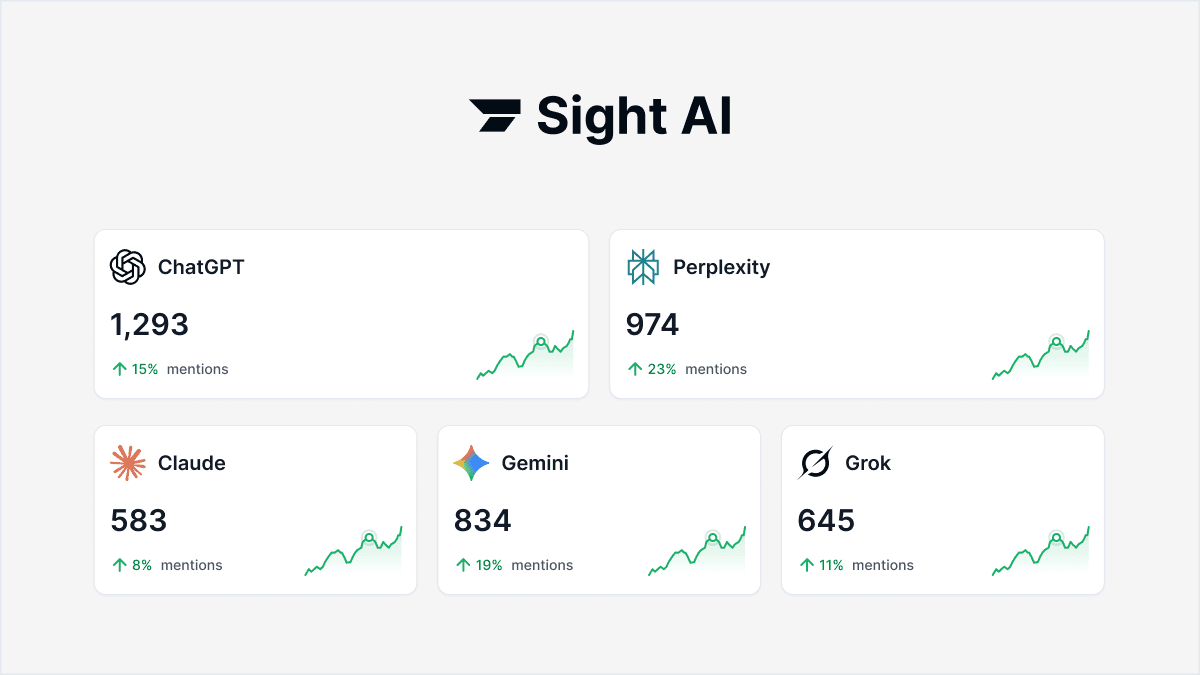
Manual monitoring across platforms is time-intensive and prone to inconsistency. AI visibility tracking tools automate this process, running your prompt library across multiple platforms simultaneously and tracking changes over time. This automation ensures you catch shifts quickly and can correlate them with specific content or marketing initiatives.
Set up alerts for significant changes. If your brand suddenly stops appearing in responses where it previously showed up, you need to investigate immediately. Conversely, new mentions in high-value queries signal that your optimization efforts are working.
Step 4: Analyze Why Competitors Get Mentioned (And You Don't)
The fastest path to improving your AI visibility is understanding what competitors are doing right. This isn't about copying—it's about identifying the content patterns and signals that AI models favor.
Examine competitor content that AI models cite. When Perplexity mentions a competitor, it typically includes source citations. Follow those links. What content formats appear most often? Many brands find that comprehensive comparison guides, detailed technical documentation, and structured feature breakdowns generate the most AI citations. These formats provide the clear, factual information AI models prefer. Understanding how AI models cite sources reveals what content types earn the most visibility.
Look for content structure patterns. Competitors who get mentioned frequently often use specific formatting: clear headings that match common queries, bulleted feature lists, comparison tables, and explicit use-case descriptions. This structured approach makes it easier for AI models to extract and cite relevant information.
Analyze how mentioned brands describe themselves. Pay attention to the language competitors use for features and capabilities. Brands that get recommended often use precise, specific terminology rather than vague marketing language. They clearly state what problems they solve, who they're built for, and what differentiates them—all information AI models can easily parse and match to queries.
Identify your content gaps. Create a matrix comparing your content coverage to competitors who dominate AI mentions. Do they have buying guides you lack? Have they published comparison content for every major alternative in your space? Do they maintain detailed documentation that positions them as authoritative sources? These gaps represent your highest-priority content opportunities. You can track competitor mentions in AI models to benchmark your performance against industry leaders.
Look beyond direct competitors to category leaders. Even if you're in a different segment, brands that consistently appear in AI recommendations share common content characteristics you can adapt to your context.
Step 5: Create Content Optimized for AI Discovery and Citation
Now that you understand the patterns, it's time to create content specifically designed to improve your AI visibility. This isn't traditional SEO—it's about making your brand's value proposition clear, factual, and easily discoverable by AI systems.
Structure content with clear, factual statements. AI models favor content that makes explicit claims about product capabilities and use cases. Instead of "We help businesses succeed," write "Our platform helps mid-market SaaS companies reduce customer churn through automated engagement workflows." Specificity helps AI models match your solution to relevant queries.
Build comprehensive comparison content and buying guides in your niche. Create guides like "Choosing the Right [Category] for [Audience]" that objectively compare solutions, including your own. Yes, mention competitors—AI models trust balanced content that acknowledges alternatives more than promotional material that ignores the competitive landscape. Learning how to optimize content for AI models will accelerate your visibility gains.
Develop authoritative resources AI models want to cite. Think research reports, industry benchmarks, methodology explanations, and technical deep-dives. Content that educates rather than sells establishes authority signals that AI models recognize. When you become the source of information about your category, AI models naturally cite you when explaining concepts to users.
Ensure technical accuracy and specificity throughout your content. AI models favor precise, verifiable information over marketing fluff. Include specific numbers, clear feature descriptions, and explicit use-case explanations. When you say your tool "improves efficiency," quantify it: "automates 15+ repetitive tasks" or "reduces manual data entry by eliminating duplicate record creation."
Format content for machine readability. Use clear headings that match natural language queries, include structured data where appropriate, and organize information logically. The easier you make it for AI to extract relevant information, the more likely you'll be cited.
Step 6: Accelerate Content Indexing for Real-Time AI Retrieval
Creating great content is only half the battle. For RAG-based AI systems that pull real-time information, getting your content indexed quickly dramatically improves your chances of being mentioned.
Implement IndexNow or similar protocols immediately. IndexNow allows you to push new content directly to search engines like Bing and Yandex the moment you publish, rather than waiting for crawlers to discover it. This matters because AI systems like Perplexity and Copilot that integrate with search infrastructure can access your content much faster.
Maintain updated sitemaps and ensure proper technical SEO fundamentals. Clean site architecture, proper internal linking, and fast page load times help search engines crawl and index your content efficiently. AI retrieval systems often rely on the same infrastructure, so technical SEO problems that hurt traditional search also hurt AI visibility. If your content not showing in AI results, indexing issues are often the culprit.
Publish consistently to build a pattern. AI systems that retrieve real-time content favor sources that regularly publish fresh, relevant information. A blog that publishes weekly sends stronger authority signals than one with sporadic updates. Consistency demonstrates that you're an active, current source of information in your space.
Monitor indexing status and troubleshoot delays. Use Google Search Console and Bing Webmaster Tools to verify that your content is getting indexed. If pages aren't appearing in search engines, they won't be available for AI retrieval either. Common issues include robots.txt blocks, noindex tags, or canonicalization problems—all fixable with proper technical attention.
The speed advantage compounds over time. Brands that consistently get content indexed within hours of publication build authority signals that slower competitors can't match. When news breaks or trends emerge in your industry, being the first authoritative source indexed gives you a significant AI visibility advantage.
Step 7: Measure Progress and Iterate Your AI Visibility Strategy
AI visibility improvement is a continuous process, not a one-time project. Establish measurement systems that help you understand what's working and where to focus next.
Establish baseline metrics across multiple dimensions. Track mention frequency (how often you appear in relevant queries), sentiment score (positive, neutral, or negative context), and competitive share of voice (your mentions vs. competitors in the same responses). These metrics give you a comprehensive view of your AI visibility health. Understanding how AI models perceive your brand helps you measure progress accurately.
Track correlation between content changes and AI mention improvements. When you publish a comprehensive buying guide, does your mention frequency increase in related queries over the following weeks? When you update product documentation with clearer use-case descriptions, does positioning improve? These correlations reveal which content investments drive the most AI visibility value.
Adjust your content strategy based on performance data. If comparison content generates significantly more mentions than thought leadership pieces, double down on comparisons. If certain platforms consistently mention you while others don't, investigate what's different about the platforms where you're invisible and adapt your approach.
Set quarterly goals for improving AI visibility scores across target platforms. Make these goals specific: "Increase mention frequency in top 10 buyer intent queries by 40%" or "Achieve positive sentiment in 90% of brand mentions across all platforms." Specific goals create accountability and help you prioritize initiatives.
Review your prompt library quarterly and update it based on evolving customer questions and market changes. The queries customers ask AI models shift as your industry evolves—your monitoring needs to evolve with them. Add new prompts that reflect emerging use cases or competitive dynamics.
Your Path Forward in AI Visibility
Improving how AI models mention your brand isn't a one-time project—it's an ongoing discipline that combines content strategy, technical optimization, and systematic monitoring. The brands winning in AI search are those treating it as a distinct channel with its own optimization requirements, not an afterthought to traditional SEO.
Start with the fundamentals: audit your current AI visibility across at least five major platforms, then build the infrastructure to track changes over time. This baseline tells you exactly where you stand and creates accountability for improvement.
Focus your content efforts strategically. You don't need to create everything at once. Identify the top three gaps where competitors currently dominate AI recommendations in your space, then systematically fill those gaps with authoritative, well-structured content. One comprehensive comparison guide that gets cited repeatedly delivers more value than ten superficial blog posts.
Technical infrastructure matters more than most marketers realize. Implement faster indexing protocols, ensure your content is easily crawlable, and maintain the technical health that allows AI retrieval systems to access your information efficiently. Speed advantages compound over time.
Use this checklist to get started: audit visibility across five or more AI platforms using realistic customer queries, set up weekly monitoring with a structured prompt library of 15-20 queries, identify your top three content gaps based on competitor analysis, create your first AI-optimized comparison guide with clear structure and factual information, and implement faster indexing protocols like IndexNow to accelerate content discovery.
The AI visibility landscape will continue evolving as models improve and new platforms emerge. But the core principles remain constant: create authoritative content, make it easily discoverable, and systematically track how AI models talk about your brand. Start small, measure everything, and iterate based on what works. Stop guessing how AI models like ChatGPT and Claude talk about your brand—get visibility into every mention, track content opportunities, and automate your path to organic traffic growth. Start tracking your AI visibility today and see exactly where your brand appears across top AI platforms.