You've just published what you believe is your best content yet. You check Google Search Console the next day. Nothing. A week passes. Still not indexed. Two weeks later, you're refreshing the URL Inspection tool like it's a lottery ticket, wondering if your content will ever see the light of day.
This waiting game isn't just frustrating—it's costly. Every day your content sits in Google's queue is a day you're missing out on organic traffic, leads, and revenue.
Here's what's actually happening: Google's crawl budget is finite. Larger sites compete for limited crawl resources, while smaller sites often lack the signals needed to trigger frequent crawling. Technical barriers like robots.txt misconfigurations, noindex tags, or server errors can block Googlebot entirely. And increasingly, Google prioritizes crawling based on quality signals—thin or duplicate content simply gets deprioritized.
The good news? Most indexing delays can be resolved within 24-72 hours with the right systematic approach. This isn't about gaming the system or using black-hat tricks. It's about removing technical barriers, strengthening the signals Google uses to prioritize crawling, and implementing modern protocols that notify search engines instantly when you publish.
In this guide, you'll learn seven proven steps to diagnose why Google indexing is taking too long and fix it. We'll start by checking your current indexing status, eliminate technical blockers, leverage modern crawl notification protocols, and strengthen the signals that tell Google your content deserves immediate attention. By the end, you'll have a repeatable system that prevents future indexing delays entirely.
Step 1: Diagnose Your Indexing Status in Google Search Console
Before you can fix indexing delays, you need to understand exactly what's happening with your content. Google Search Console's URL Inspection tool is your diagnostic command center—it shows you precisely how Google sees your pages and what's preventing indexing.
Open Google Search Console and navigate to the URL Inspection tool in the left sidebar. Paste the URL of your unindexed page into the search bar at the top. Within seconds, you'll see one of several status messages that reveal what's going on.
URL is on Google: Your page is already indexed. If you're not seeing it in search results, the issue is ranking, not indexing—a completely different problem requiring content optimization and backlinks.
URL is not on Google: This is where diagnosis gets interesting. Click into the detailed report to see why Google hasn't indexed your page yet.
The two most common non-indexed statuses are "Discovered - currently not indexed" and "Crawled - currently not indexed." These sound similar but indicate very different problems.
"Discovered - currently not indexed" means Google found your URL (probably in your sitemap or through a link) but hasn't bothered to crawl it yet. This typically signals low perceived value—Google doesn't think the page is important enough to use crawl budget on. You'll need to strengthen internal linking and improve quality signals.
"Crawled - currently not indexed" is more concerning. Google visited your page but decided not to add it to the index. This usually indicates quality issues: thin content, duplicate content, or pages that don't provide unique value. You'll need to significantly improve the content before Google will index it. If you're experiencing this issue frequently, you may be dealing with broader content indexing problems that require a systematic approach.
Look for specific error messages in the Coverage section. "Blocked by robots.txt" means your robots.txt file is preventing access. "Noindex tag detected" indicates a meta robots tag or HTTP header telling Google not to index the page. "Server error (5xx)" means your server is failing to respond properly. Each error points to a specific fix in the steps ahead.
Here's your quick win: If the page is technically sound but just hasn't been crawled yet, click "Request Indexing" directly in the URL Inspection tool. This sends your URL to the front of Google's crawl queue. It's not a guarantee, but it often triggers indexing within 24-48 hours for pages without underlying issues. For a deeper dive into this process, check out our guide on Google request indexing.
Document what you find for each unindexed URL. You're building a roadmap of exactly which fixes to apply in the following steps.
Step 2: Fix Technical Barriers Blocking Googlebot
Technical barriers are the most common reason Google indexing takes too long—or never happens at all. These issues actively prevent Googlebot from accessing your content, and no amount of quality improvements will matter until you remove them.
Start with your robots.txt file. This simple text file tells search engines which parts of your site they can and cannot crawl. Access it by typing yourdomain.com/robots.txt into your browser. Look for "Disallow" directives that might be blocking important pages.
A common mistake is accidentally blocking entire sections. For example, "Disallow: /blog/" would prevent Google from indexing your entire blog. If you see disallow rules affecting pages you want indexed, remove them immediately. After updating robots.txt, use Google Search Console's robots.txt tester to verify Googlebot can now access your URLs.
Check for noindex tags: These are invisible directives telling search engines not to index a page. View your page's source code and search for "noindex" in two places: the meta robots tag in the HTML head section, and the X-Robots-Tag in HTTP headers (use browser developer tools to check headers).
If you find a noindex directive on pages you want indexed, remove it immediately. This often happens when developers forget to remove staging environment settings before launching, or when SEO plugins are misconfigured. After removing noindex tags, request indexing again through Search Console.
Verify canonical tags point correctly: Canonical tags tell Google which version of a page is the "master" copy. If a page's canonical tag points to a different URL, Google will only index the canonical version. Check your page source for a tag like this: <link rel="canonical" href="...">. The href should point to the current page's URL, not somewhere else.
Self-referencing canonicals (pointing to themselves) are best practice. If your canonical points to a different page, either remove the tag or fix it to point to the correct URL. Incorrect canonicals are particularly common on paginated content, filtered product pages, and content management systems with poor default settings.
Test server response codes: Your server must return a 200 (success) status code for Google to index your content. Use a tool like Screaming Frog or the Network tab in Chrome DevTools to check the HTTP status code. If you see 5xx errors (500, 502, 503), your server is failing to respond properly—Google cannot and will not index pages it cannot reliably access.
Work with your hosting provider or developer to resolve server errors immediately. These often indicate resource limitations, misconfigurations, or stability issues that affect more than just indexing.
Step 3: Submit an Updated XML Sitemap
Your XML sitemap is essentially a roadmap you provide to Google, listing all the pages you want indexed and when they were last updated. A clean, well-structured sitemap dramatically speeds up discovery and crawling of new content.
First, audit your current sitemap. Access it at yourdomain.com/sitemap.xml (or wherever your CMS generates it). Open it in a browser and review the URLs listed. Your sitemap should contain only indexable, high-value pages—no pages blocked by robots.txt, no URLs with noindex tags, no redirect chains, and no 404 errors.
Many sites make the mistake of including every single page in their sitemap, including low-value pages like tag archives, author pages with no content, or duplicate product variations. This dilutes your crawl budget. Google has to waste resources checking pages you don't actually want indexed, which slows down crawling of your important content.
Generate a clean sitemap: Most modern CMS platforms generate sitemaps automatically, but they often include too much. Use your CMS settings or an SEO plugin to exclude low-value page types. Your sitemap should focus on your most important content: core service pages, blog posts, product pages, and key landing pages.
Set appropriate lastmod dates for each URL. This timestamp tells Google when the page was last updated. When you publish new content or make significant updates, ensure the lastmod date reflects this change. Search engines prioritize crawling URLs with recent lastmod dates, treating them as signals of fresh content worth checking.
Submit through Google Search Console: Navigate to the Sitemaps section in Search Console and submit your sitemap URL. Google will process it and show you how many URLs were discovered versus how many were successfully indexed. If you see a large discrepancy, those unindexed URLs need investigation using the URL Inspection tool from Step 1.
After submitting, monitor the Coverage report in Search Console. This shows you which sitemap URLs Google successfully indexed and which encountered errors. Address any errors immediately—they're preventing indexing.
Fix orphan pages: An orphan page exists in your sitemap but has no internal links pointing to it from other pages on your site. Google discovers these pages through your sitemap but treats them as low priority because your own site doesn't link to them. This signals they're not important.
Identify orphan pages by cross-referencing your sitemap with your internal link structure using a crawler like Screaming Frog. For any orphan pages you find, add contextual internal links from relevant existing content. This tells Google these pages matter enough to be woven into your site's structure.
Step 4: Implement IndexNow for Instant Crawl Requests
Traditional indexing relies on search engines discovering your content through sitemaps or links, then deciding when to crawl it based on their own schedules. IndexNow flips this model: you notify search engines instantly whenever you publish or update content, dramatically reducing discovery delays.
IndexNow is an open protocol currently supported by Microsoft Bing, Yandex, and several other search engines. While Google hasn't officially adopted it yet, they're evaluating the protocol. The key advantage: instead of waiting for search engines to check your sitemap or discover links, you push notifications directly to them the moment content changes.
Think of it like the difference between leaving a note on someone's desk hoping they'll see it eventually, versus sending them a text message. IndexNow is the text message—immediate and impossible to miss.
Setting up IndexNow: You need to generate an API key (a unique identifier for your site) and implement a way to send HTTP POST requests to the IndexNow endpoint whenever content is published or updated. The IndexNow website provides detailed documentation and API key generation tools. If you're weighing your options, our comparison of IndexNow vs Google Search Console can help you understand when to use each approach.
For most users, the easiest approach is using a plugin or tool with built-in IndexNow support. Many modern CMS platforms and SEO tools now include IndexNow integration—when you publish or update a page, they automatically send the notification to participating search engines. This removes the technical burden of implementing the API yourself. Explore the best IndexNow tools for faster indexing to find the right solution for your workflow.
If you're comfortable with code, you can implement IndexNow directly. When a page is published or updated, send a POST request to api.indexnow.org/indexnow with your API key and the URL that changed. The search engines receive this notification instantly and prioritize crawling that URL.
Verify submissions are working: After implementing IndexNow, publish a test page or update an existing one. Check your server logs or use the monitoring tools provided by your IndexNow implementation to confirm the notification was sent successfully. You should see a 200 response code indicating the search engines received your submission.
For Bing specifically, you can verify indexing through Bing Webmaster Tools. While IndexNow doesn't guarantee instant indexing—search engines still evaluate content quality before adding it to their index—it ensures your content gets crawled quickly. For sites publishing frequently, this can reduce indexing time from days or weeks down to hours.
The real power of IndexNow comes from automation. Once set up, every piece of content you publish triggers an instant notification. You're no longer dependent on search engines eventually discovering your updates—you're proactively telling them exactly when to crawl.
Step 5: Strengthen Internal Linking to Orphaned Pages
Google discovers and prioritizes pages based partly on how your own site treats them. Pages buried deep in your site structure with few internal links pointing to them signal low importance. Google mirrors this assessment, deprioritizing these pages in its crawl queue.
Internal linking serves two critical functions for indexing: it helps Googlebot discover pages by following links from already-indexed content, and it distributes "link equity" throughout your site, signaling which pages deserve priority attention.
Identify pages with weak internal linking: Use a crawler like Screaming Frog, Ahrefs Site Audit, or Semrush Site Audit to analyze your internal link structure. Look for pages with zero internal links (orphan pages) or just one or two links from obscure locations. These pages are nearly invisible to Googlebot's crawling algorithms.
Pay special attention to new content. If you publish a blog post but don't link to it from anywhere except your blog archive page, you're telling Google it's not important enough to integrate into your site's content ecosystem. Google takes this signal seriously when deciding crawl priority.
Add contextual internal links from high-authority pages: The quality of internal links matters as much as quantity. A link from your homepage or a popular blog post carries more weight than a link from a rarely-visited page buried in your footer. Identify your highest-traffic, most-linked-to pages, then add relevant internal links from those pages to your unindexed content.
Make these links contextual—embedded naturally in the body content where they provide genuine value to readers. A contextual link in a relevant paragraph signals stronger topical connection than a link in a sidebar widget or footer list.
Create hub pages or resource centers: Hub pages are comprehensive resources that link out to multiple related pieces of content. For example, a "Complete Guide to SEO" might link to individual articles about keyword research, technical SEO, link building, and content optimization. These hub pages serve as high-authority launching points that help Google discover and prioritize your related content.
Build hub pages around your key topic clusters. Link to them from your main navigation or homepage, establishing them as important destinations. Then use those hub pages to distribute link equity to newer, less-linked-to content that needs indexing.
The goal is creating a site architecture where every important page is no more than three clicks from your homepage. This shallow depth ensures Googlebot encounters your content quickly when crawling from your most authoritative pages.
Step 6: Improve Page Quality Signals
Google doesn't index every page it discovers. When crawl budget is limited or content quality seems questionable, Google may choose to leave pages out of its index entirely. Understanding and improving the quality signals Google evaluates can move your content from "not worth indexing" to "priority crawl."
Thin content is one of the most common reasons Google delays or skips indexing. If your page offers minimal information, duplicates content found elsewhere on your site or across the web, or provides no unique value, Google may decide it doesn't deserve space in its index. This is particularly common with automatically generated pages, thin product descriptions, or blog posts that simply rehash information available in dozens of other places.
Add unique value: Audit your unindexed pages critically. Do they offer something genuinely useful that can't be found elsewhere? Strengthen them with original data, expert insights from your experience, comprehensive coverage that goes deeper than competing content, or unique perspectives that only you can provide.
For product pages, this might mean adding detailed specifications, original photos, customer reviews, and comparison information. For blog posts, it could mean conducting original research, sharing case studies from your own work, or providing step-by-step instructions based on your expertise. The key is differentiation—give Google a reason to believe this page deserves to rank. If you're struggling with AI content not ranking in Google, quality signals become even more critical.
Ensure mobile-friendliness and Core Web Vitals: Google uses mobile-first indexing, meaning it primarily evaluates the mobile version of your content. If your pages aren't mobile-friendly or suffer from poor Core Web Vitals scores, Google may deprioritize indexing them. Use Google's Mobile-Friendly Test and PageSpeed Insights to identify issues.
Common problems include text too small to read on mobile devices, clickable elements too close together, content wider than the screen, and slow loading times. Address these issues before expecting Google to prioritize your content. While perfect Core Web Vitals scores aren't required for indexing, pages that fail basic mobile usability thresholds may be delayed.
Remove or consolidate low-value pages: Sometimes the best way to improve indexing is deletion. If you have hundreds of thin, outdated, or duplicate pages competing for crawl budget, they dilute your site's overall quality profile. Google has to waste resources crawling pages that shouldn't be indexed, which slows down crawling of your important content.
Audit your site for pages that serve no real purpose: old tag archives with two posts, author pages for contributors who wrote one article five years ago, duplicate product variations that should be consolidated, or outdated content that's no longer relevant. Either improve these pages substantially, redirect them to better alternatives, or remove them entirely and add them to your robots.txt disallow list.
This pruning signals to Google that your site focuses on quality over quantity. When every page in your sitemap deserves to be indexed, Google can allocate crawl budget more efficiently to your valuable content.
Step 7: Build External Signals to Accelerate Discovery
While technical fixes and on-site improvements form the foundation of faster indexing, external signals tell Google your content matters beyond your own website. These signals trigger more frequent crawling and faster indexing decisions.
Social media sharing generates initial traffic signals that catch Google's attention. When you publish new content, share it across your active social platforms—LinkedIn, Twitter, Facebook, or wherever your audience engages. While social signals aren't direct ranking factors, the traffic they generate tells Google this content is actively being consumed and deserves crawling.
Share strategically: Don't just post a link with a generic caption. Craft compelling social posts that encourage clicks and engagement. The more traffic your social shares drive, the stronger the signal to Google that this content is worth indexing quickly. For B2B content, LinkedIn often drives the highest-quality traffic. For visual content, Pinterest and Instagram can be powerful. Choose platforms where your audience actually engages.
Reach out for legitimate backlinks: External links from relevant, authoritative sites in your industry are among the strongest signals that content deserves indexing. When another site links to your page, Google discovers it through that link and treats it as a vote of confidence in your content's value.
Identify sites in your industry that might find your content valuable. Reach out with personalized messages explaining why your content would benefit their audience. This isn't about spammy link building—it's about creating genuinely useful content that other sites want to reference. One high-quality backlink from a relevant industry site can trigger indexing within hours.
Submit to relevant directories or aggregators: Depending on your niche, there may be legitimate directories, resource lists, or content aggregators where your content belongs. Industry-specific directories, local business listings, or curated resource pages can provide initial external signals that accelerate discovery.
Avoid low-quality link directories or paid link schemes—these can harm more than help. Focus on legitimate, human-curated resources where your content provides genuine value to users browsing those collections.
Monitor indexing status 24-72 hours after implementation: After applying these steps, give Google time to respond. Check the URL Inspection tool in Search Console after 24 hours, then again at 48 and 72 hours. You should see status changes as Google crawls and evaluates your improved pages.
If pages still aren't indexed after 72 hours, revisit the earlier steps. Check for technical barriers you might have missed, evaluate whether your content quality improvements were substantial enough, and ensure your internal linking and external signals are actually reaching the pages you want indexed.
Remember that indexing isn't instant—even with all signals aligned, Google operates on its own schedule. But by removing barriers, strengthening signals, and actively notifying search engines of your content, you shift from passively waiting to actively accelerating the process.
Putting It All Together: Your Faster Indexing Checklist
Google indexing taking too long isn't a mystery—it's a solvable problem with clear diagnostic steps and proven fixes. By systematically addressing technical barriers, quality signals, and discovery mechanisms, you can reduce indexing time from weeks to days or even hours.
Here's your quick-reference checklist to implement immediately:
1. Diagnose with URL Inspection: Check every unindexed page in Google Search Console to understand the specific reason for delay. Request indexing for pages without underlying issues.
2. Remove Technical Barriers: Audit robots.txt, eliminate noindex tags, fix canonical issues, and resolve server errors preventing Googlebot access.
3. Submit Clean Sitemaps: Generate sitemaps containing only high-value, indexable pages with accurate lastmod dates. Remove orphan pages by adding internal links.
4. Implement IndexNow: Set up instant crawl notifications so search engines learn about new and updated content immediately rather than discovering it on their own schedule.
5. Strengthen Internal Linking: Add contextual links from high-authority pages to unindexed content. Create hub pages that distribute link equity effectively.
6. Improve Content Quality: Add unique value, ensure mobile-friendliness, fix Core Web Vitals issues, and remove or consolidate thin pages diluting your site's quality.
7. Generate External Signals: Share content on social platforms, reach out for relevant backlinks, and submit to legitimate directories to accelerate discovery.
The key to long-term indexing success is consistency. Don't treat these steps as a one-time fix—build them into your content publishing workflow. When you publish new content, automatically trigger IndexNow notifications, add internal links from relevant existing content, share on social media, and monitor indexing status. This systematic approach prevents future delays entirely.
For sites publishing frequently or managing large content libraries, automation becomes essential. Tools that handle indexing workflows automatically—from sitemap generation to IndexNow notifications to monitoring—save hours of manual work while ensuring nothing falls through the cracks. Our roundup of content indexing automation tools covers the best options available today.
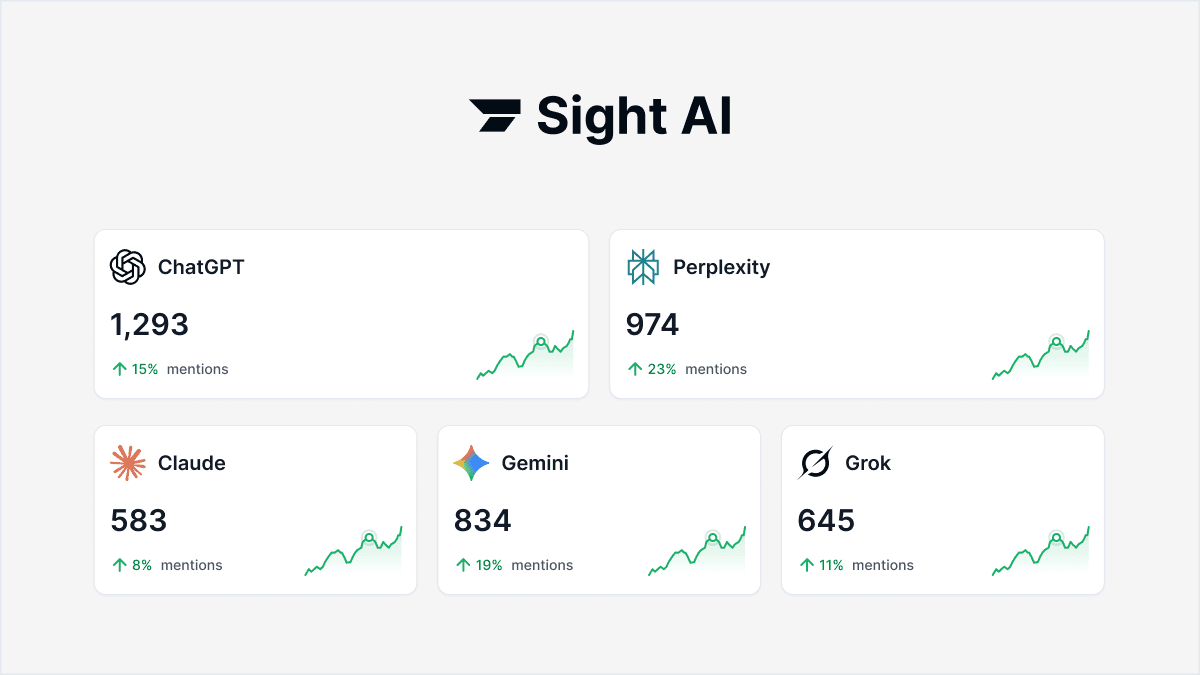
But here's something most SEO guides won't tell you: the future of organic visibility extends beyond traditional Google search. AI models like ChatGPT, Claude, and Perplexity are increasingly becoming the first place people go for answers. If your content isn't optimized for AI visibility, you're missing a massive opportunity to get mentioned in AI-generated responses—which often happens faster than traditional indexing.
Start tracking your AI visibility today and see exactly where your brand appears across top AI platforms. Stop guessing how AI models talk about your brand—get visibility into every mention, track content opportunities, and automate your path to organic traffic growth. The same principles that accelerate Google indexing—quality content, technical excellence, and strong signals—also determine whether AI models mention your brand when answering user queries.