Startups face a brutal content paradox: you need consistent, high-quality content to compete for organic traffic and AI visibility, but you rarely have the budget or headcount of established players. The right content generation platform can close that gap, automating research, writing, publishing, and even tracking how AI models like ChatGPT and Perplexity talk about your brand.
This list covers the best content generation platforms purpose-built or well-suited for startup teams. We evaluated each tool on content quality, SEO and GEO optimization capabilities, automation depth, pricing accessibility, and how well they support the full content lifecycle from ideation to indexing. Whether you're a solo founder, a lean marketing team, or an agency managing multiple startup clients, there's a platform here that fits your workflow.
1. Sight AI
Best for: Startups that need content generation, AI visibility tracking, and automated indexing in one platform.
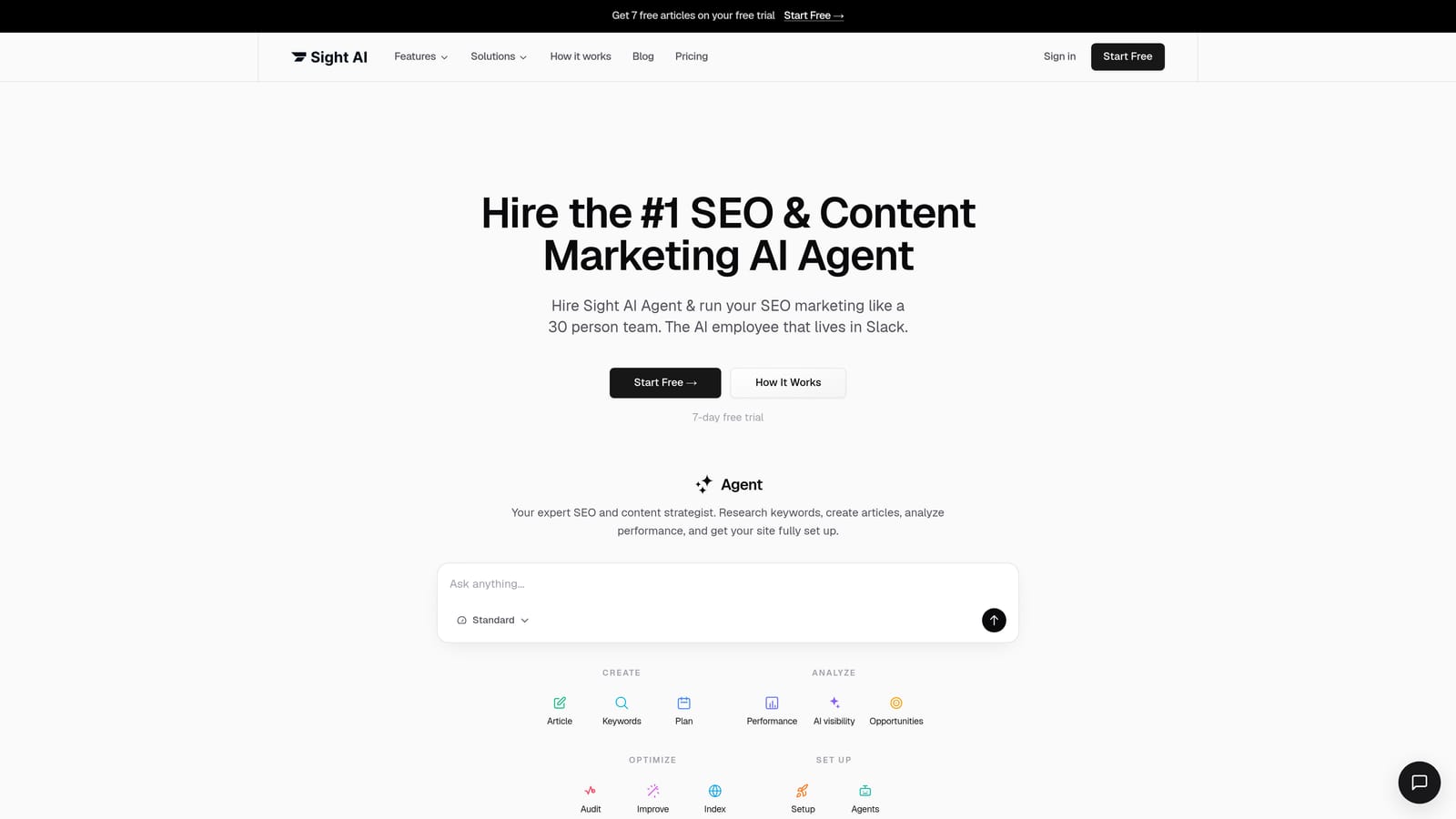
Sight AI is an all-in-one platform combining AI-powered content generation, AI visibility tracking across major LLMs, and automated website indexing — purpose-built for teams that need SEO and GEO coverage without stitching together multiple tools.
Where This Tool Shines
Most content tools stop at the draft. Sight AI handles the full pipeline: generating the content, publishing it to your CMS, and then monitoring whether AI models like ChatGPT, Claude, and Perplexity are actually citing or mentioning your brand. That end-to-end coverage is rare, especially at a price point accessible to early-stage teams.
The Autopilot Mode is particularly valuable for lean teams. You configure your content schedule and topics, and the platform handles drafting, optimization, and publishing without requiring manual intervention at every step. For a startup trying to maintain content velocity without hiring a full content team, that kind of automation has real operational value.
Key Features
13+ Specialized AI Agents: Purpose-built agents handle different content formats including listicles, guides, explainers, and product pages, each optimized for its specific structure and intent.
Autopilot Mode: Hands-off content scheduling and CMS auto-publishing removes manual steps from your production pipeline entirely.
AI Visibility Score: Tracks brand mentions across ChatGPT, Claude, Perplexity, and three or more additional AI platforms, with sentiment analysis so you understand not just whether you're mentioned, but how.
Prompt Tracking for GEO Strategy: Monitors which prompts trigger mentions of your brand versus competitors, giving you actionable data for GEO content prioritization.
IndexNow Integration: Automated sitemap updates and IndexNow support accelerate content discovery, so new articles don't sit unindexed for weeks while you wait for Google to crawl them.
Best For
Startups that want a single platform covering content creation, AI search visibility, and technical indexing. Especially well-suited to founders and small marketing teams who need automation depth without the overhead of managing multiple specialized tools.
Pricing
Check trysight.ai for current plans and free trial availability. Pricing is structured to scale with team size and content volume.
2. Writesonic
Best for: High-volume content production across multiple formats with built-in SEO optimization.
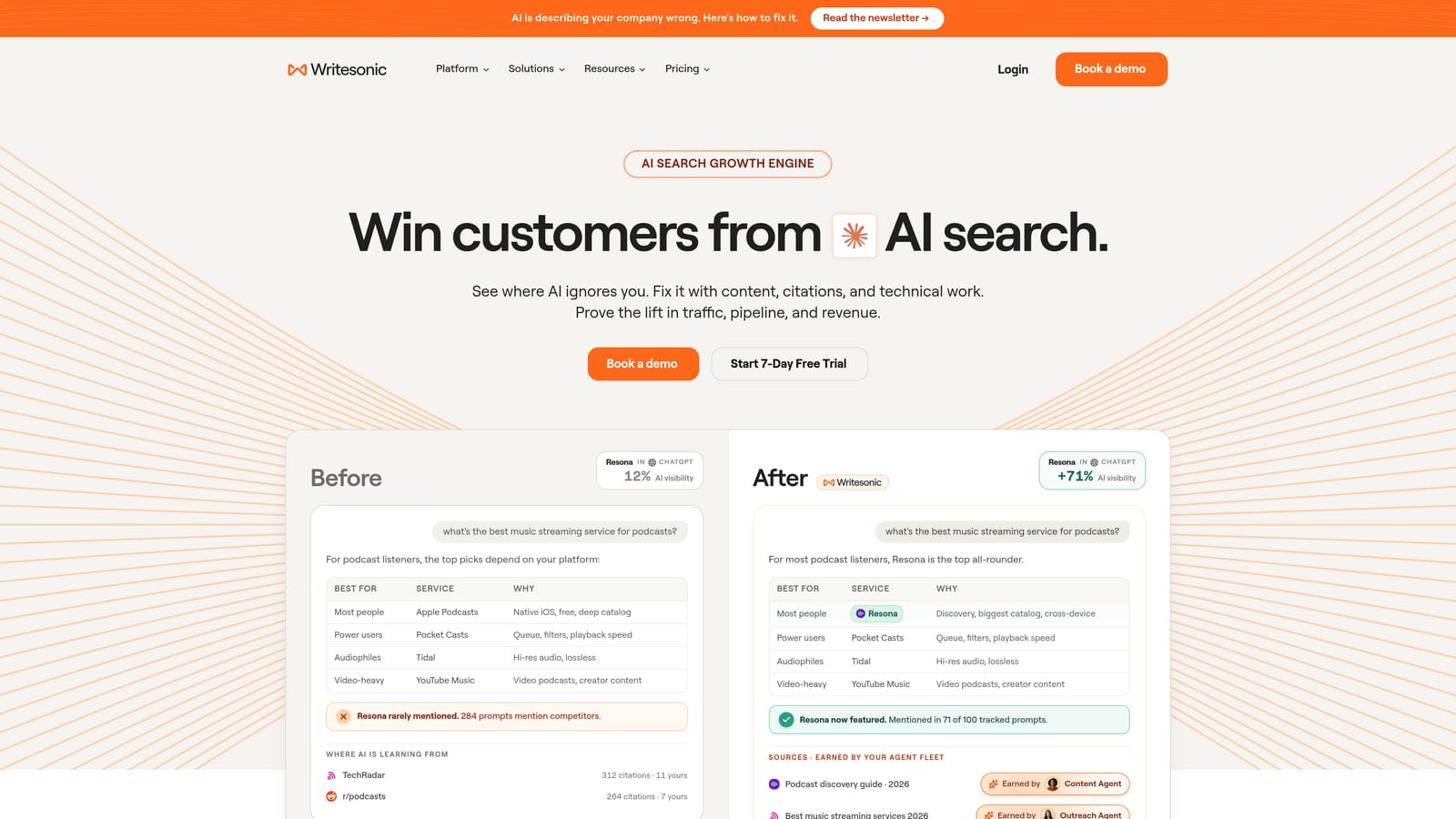
Writesonic is a broad-spectrum AI writing platform covering blog articles, landing pages, ad copy, and social content with brand voice training and SEO mode built in.
Where This Tool Shines
Writesonic's strength is format versatility. If your startup needs blog posts on Monday, ad copy on Wednesday, and product descriptions by Friday, the platform handles all of it without switching tools. The brand voice training feature is particularly useful for early-stage companies trying to establish a consistent tone before they have a full style guide.
The Surfer SEO integration adds a meaningful keyword optimization layer on top of the base AI writing. Rather than generating content and hoping it ranks, you can align drafts to specific keyword targets during the writing process. That's a practical advantage for startups running lean SEO operations without a dedicated specialist.
Key Features
AI Article Writer with SEO Mode: Generates long-form content with on-page optimization guidance built into the drafting workflow.
Brand Voice Customization: Train the platform on your tone and style to maintain consistency across content types and team members.
Multi-Format Output: Covers blog posts, ads, social content, and product descriptions from a single interface.
Surfer SEO Integration: Connects to Surfer for keyword-level optimization, helping content target specific search queries more precisely.
Chatsonic: A conversational AI layer for research, ideation, and quick content generation tasks.
Best For
Startups with high content volume needs across multiple formats and channels. Best suited to marketing teams that already have an SEO workflow and need a reliable AI writing layer to accelerate production. Note that Writesonic does not natively cover AI visibility tracking or automated indexing.
Pricing
Free trial available. Paid plans scale with usage and team size. Check writesonic.com for current pricing tiers.
3. AirOps
Best for: Startups building custom AI content pipelines connected to internal data sources at scale.
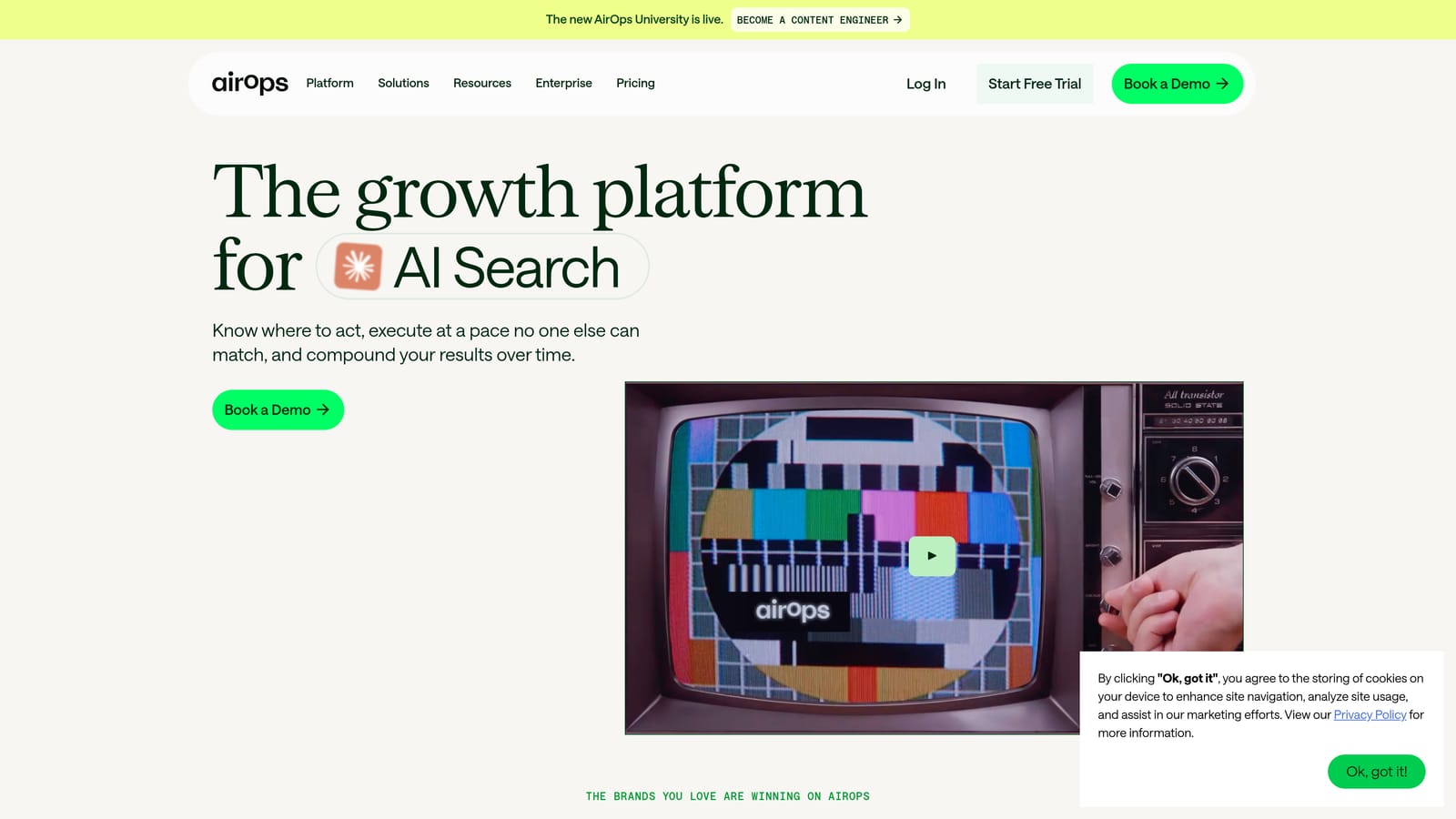
AirOps is a workflow automation platform that lets teams build multi-step AI content pipelines connected to CRM data, product catalogs, and brand guidelines, making it a strong fit for programmatic content operations.
Where This Tool Shines
AirOps sits in a different category from most AI writing tools. Rather than offering a click-and-write interface, it functions as an infrastructure layer for teams that have repeatable content patterns and want to systematize them. Think programmatic SEO pages, automated product descriptions, or location-based content generated from structured data.
The visual workflow builder lets non-engineers design multi-step pipelines: pull data from a source, pass it through an LLM, apply brand guidelines, and route the output for review or publishing. For startups with a clear content production pattern and the appetite to configure it properly, the efficiency gains compound over time.
Key Features
Visual Workflow Builder: Design multi-step AI content pipelines without writing code, connecting data inputs to LLM outputs and downstream publishing steps.
Internal Data Connectivity: Link LLMs to CRM records, product catalogs, and brand documentation to generate contextually accurate content at scale.
Programmatic SEO Support: Generate large volumes of structured content from data sources, well-suited to location pages, product variants, and category content.
Multi-Model Flexibility: Switch between GPT-4, Claude, and other models depending on task requirements.
Team Collaboration and Versioning: Manage workflow iterations and team access as your content operations mature.
Best For
Startups with structured data and repeatable content patterns, particularly those pursuing programmatic SEO strategies. Requires more setup investment than plug-and-play tools, but pays off for teams with high-volume, templated content needs. Less suited to one-off article production.
Pricing
Check airops.com for current plan tiers and enterprise options.
4. Promptwatch
Best for: Monitoring which AI prompts trigger brand mentions and identifying GEO visibility gaps.
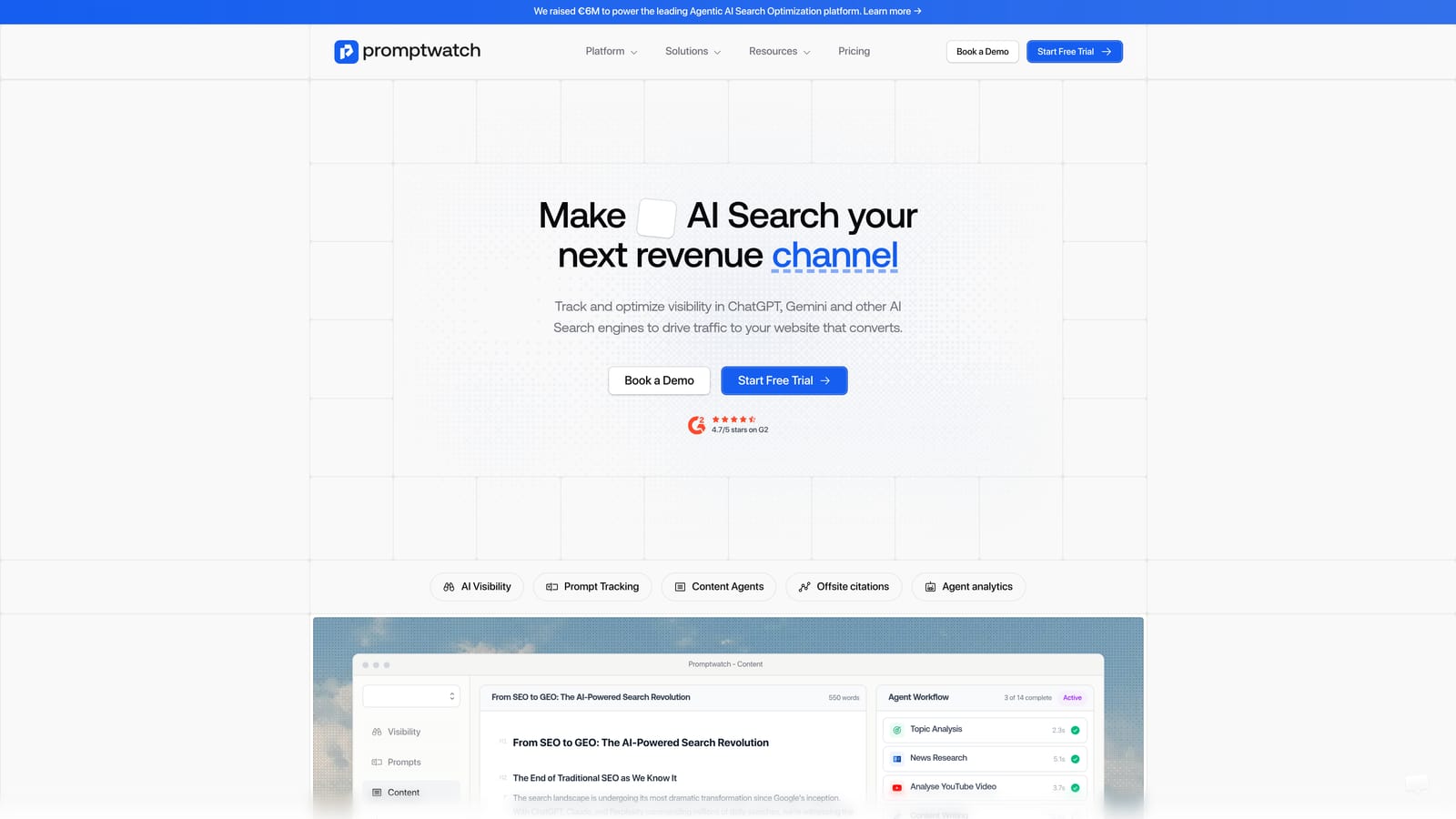
Promptwatch is an AI prompt monitoring tool that tracks how specific prompts trigger brand mentions in AI model responses, helping startups identify where competitors appear in AI answers and where they do not.
Where This Tool Shines
The core insight Promptwatch provides is prompt-level granularity. Rather than knowing vaguely that your brand appears in AI responses sometimes, you can see exactly which questions trigger mentions and which ones consistently surface your competitors instead. That specificity is what makes GEO strategy actionable rather than guesswork.
For startups investing in generative engine optimization for the first time, Promptwatch offers a structured way to audit the current state of AI visibility before committing to a content strategy. Understanding the gaps is the necessary first step before filling them.
Key Features
Prompt-Level Tracking: Monitor specific prompts across major AI models to see which triggers brand mentions and which do not.
Brand Mention Monitoring: Track where and how your brand appears in AI-generated answers over time.
Gap Analysis: Identify queries where competitors appear in AI responses but your brand is absent, revealing high-priority content opportunities.
Prompt Performance History: Track how prompt performance trends over time as AI models update and content landscapes shift.
GEO Strategy Support: Use prompt data to inform which content topics and angles to prioritize for AI visibility improvement.
Best For
Startups with a dedicated GEO analyst or a marketing lead focused on AI search visibility. Promptwatch is a monitoring and intelligence tool rather than a content generator, so it works best alongside a writing platform. Teams that want combined content generation and AI monitoring in one tool may find Sight AI's integrated approach more efficient.
Pricing
Check promptwatch.io for current pricing and plan options.
5. Profound
Best for: Teams running structured AI visibility audits with leadership-ready reporting.
Profound is an analytics platform focused on how AI models represent brands and categories, providing structured reporting for teams that need to track AI search performance over time and present findings to stakeholders.

Where This Tool Shines
Profound's differentiation is in the presentation layer. The platform is designed for teams that not only need to understand AI visibility data but also need to communicate it clearly to leadership or clients. Dashboard views and structured reports make it easier to turn AI visibility metrics into a regular reporting cadence rather than a one-time audit.
The historical tracking capability is particularly useful for understanding how AI model behavior changes over time. As models update their training data and response patterns, having a longitudinal view of how your brand representation shifts helps teams make smarter decisions about when and where to invest in GEO content.
Key Features
Structured AI Visibility Reporting: Organized dashboards and reports designed for regular review cycles and stakeholder presentations.
Brand Representation Analysis: Understand how AI models describe your brand, products, and category in their generated responses.
Category-Level Insights: See how your brand positions relative to the broader competitive landscape in AI-generated answers.
Historical Tracking: Monitor how AI model behavior and brand representation evolve over time as models update.
Leadership-Ready Dashboards: Visualizations suited to executive reporting rather than just analyst-level data exploration.
Best For
Growth-stage startups or agencies that need to report on AI visibility performance to leadership or clients on a recurring basis. Profound is analytics-first and does not generate content natively, so it pairs best with a separate content creation platform. Best suited to teams that have already established a GEO content program and need to measure its impact systematically.
Pricing
Check profound.co for current plan details and pricing tiers.
6. Peec
Best for: Competitive intelligence on AI search share of voice across target queries.
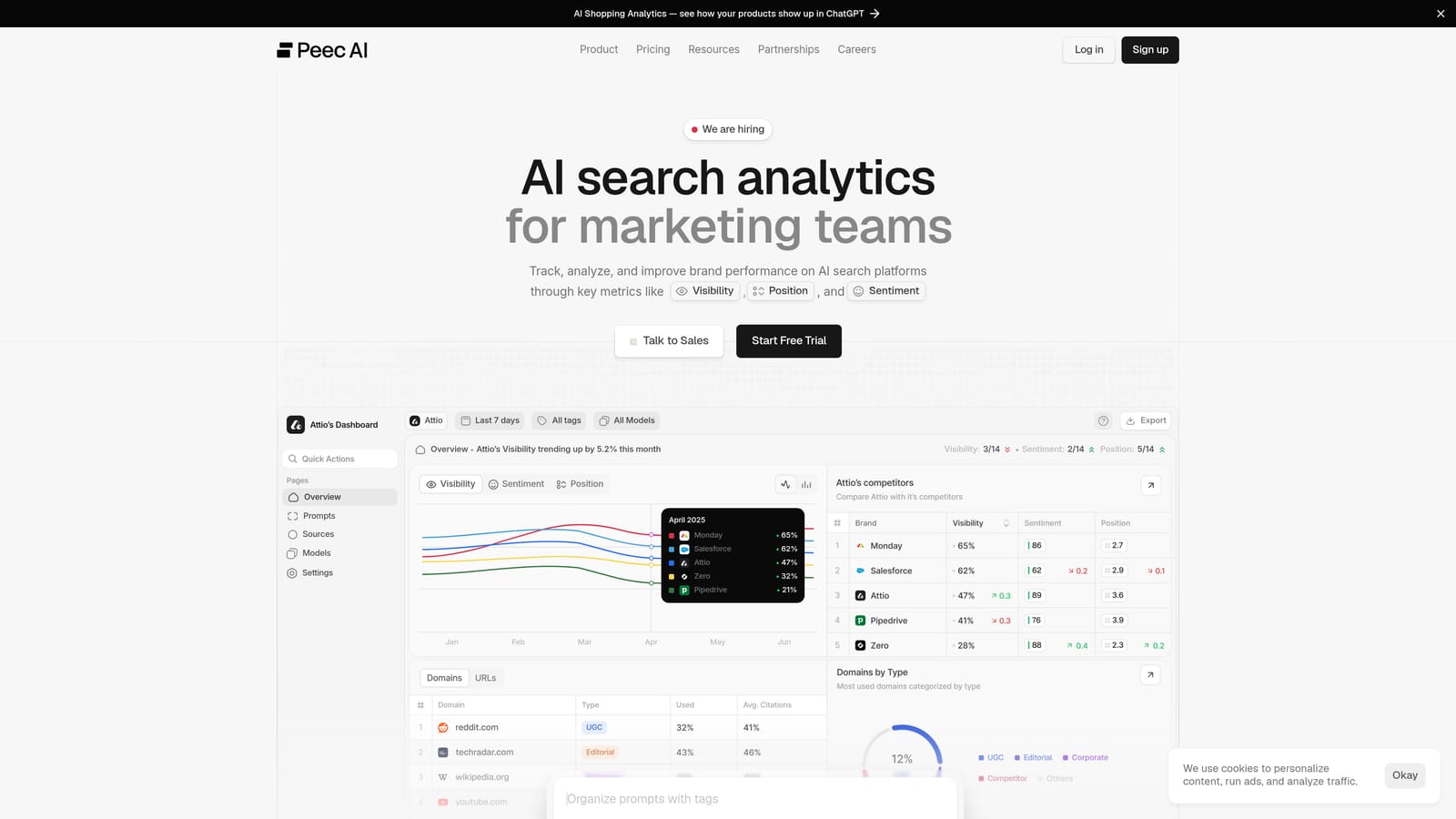
Peec is a competitive intelligence platform that tracks how often your brand versus rivals appear in AI-generated answers for your target queries, giving startups a clear picture of where they stand in the AI search landscape.
Where This Tool Shines
Peec answers a question that most AI visibility tools leave partially unanswered: not just whether you appear in AI responses, but how often you appear relative to your competitors for the same queries. That share-of-voice framing is familiar to anyone who has run paid media or traditional SEO, and it translates well to GEO strategy.
The query-level breakdown is where Peec provides the most tactical value. By seeing exactly which questions consistently surface competitors over your brand, you can prioritize content creation around the highest-impact topics rather than spreading effort across every possible angle.
Key Features
AI Share-of-Voice Tracking: Measure how frequently your brand appears versus competitors in AI-generated answers for your defined query set.
Competitor Benchmarking: Understand competitive positioning in generative search results across the queries that matter most to your business.
Query-Level Breakdown: Drill into individual queries to see brand versus competitor mention rates and identify the highest-priority gaps.
Content Topic Identification: Surface the specific topics and queries where improving AI visibility would have the greatest competitive impact.
GEO Content Prioritization: Use competitive share-of-voice data to make data-driven decisions about which content to create next.
Best For
Startups in competitive categories where understanding relative AI visibility matters as much as absolute visibility. Like Promptwatch and Profound, Peec is a monitoring and intelligence tool rather than a content generator. It informs your GEO strategy but doesn't execute it, so it works best as part of a broader stack that includes a content generation platform.
Pricing
Check peec.ai for current pricing and trial options.
Choosing the Right Platform for Your Stage and Team
The honest summary here is that these tools fall into two distinct categories: platforms that generate content, and platforms that monitor AI visibility. Most startups eventually need both, but where you start depends on your current situation.
Solo founders and early-stage teams benefit most from an integrated platform that handles content creation, publishing, and visibility tracking without requiring a dedicated analyst to interpret the data. Sight AI is the strongest fit here because it covers the full lifecycle in one place, from generating SEO and GEO-optimized articles to monitoring how AI models respond to your brand and indexing new content quickly through IndexNow integration.
Lean marketing teams with some content volume already in place might use Writesonic for high-throughput writing across multiple formats, while layering in a monitoring tool like Peec or Promptwatch to understand competitive AI visibility. AirOps becomes relevant when your team has identified repeatable content patterns worth systematizing into automated pipelines.
Agencies managing multiple startup clients will find the most leverage in tools with strong reporting and multi-account support. Profound's structured dashboards make it easier to communicate AI visibility performance to clients who aren't deep in the weeds. Sight AI's Autopilot Mode can also reduce the manual overhead of running content programs across multiple accounts simultaneously.
One genuine differentiator worth noting: Sight AI is the only platform on this list that combines content generation, AI visibility tracking, and automated indexing in a single tool. Every other option either writes content or monitors AI visibility, but not both. For startups that want to close the gap between creating content and confirming it's actually influencing how AI models represent their brand, that integrated approach removes a meaningful layer of operational complexity.
Stop guessing how AI models like ChatGPT and Claude talk about your brand. Start tracking your AI visibility today and see exactly where your brand appears across top AI platforms, alongside the content engine that helps you improve those rankings over time.