If you're searching for SEO content writer software, you already know the stakes. Publishing generic, unoptimized content no longer moves the needle, and the search landscape has shifted dramatically with AI-powered answer engines entering the picture. Modern buyers need tools that don't just generate words: they need platforms that align content with search intent, optimize for AI-powered search engines, and get pages indexed fast.
This guide covers the top platforms worth buying in 2026, evaluated on content quality, SEO and GEO optimization, AI visibility features, workflow automation, and real publishing capabilities. Whether you're a solo founder, in-house marketer, or agency scaling content production, these tools represent the strongest options available today.
One important note before diving in: this list intentionally includes tools beyond pure content writers. As AI search has matured, understanding where your brand appears in AI-generated answers has become just as important as the content you publish. Some tools here focus on generation, some on visibility tracking, and one combines both. That context matters when you're making a buying decision.
1. Sight AI
Best for: Teams that need content generation, AI visibility tracking, and fast indexing in one platform.
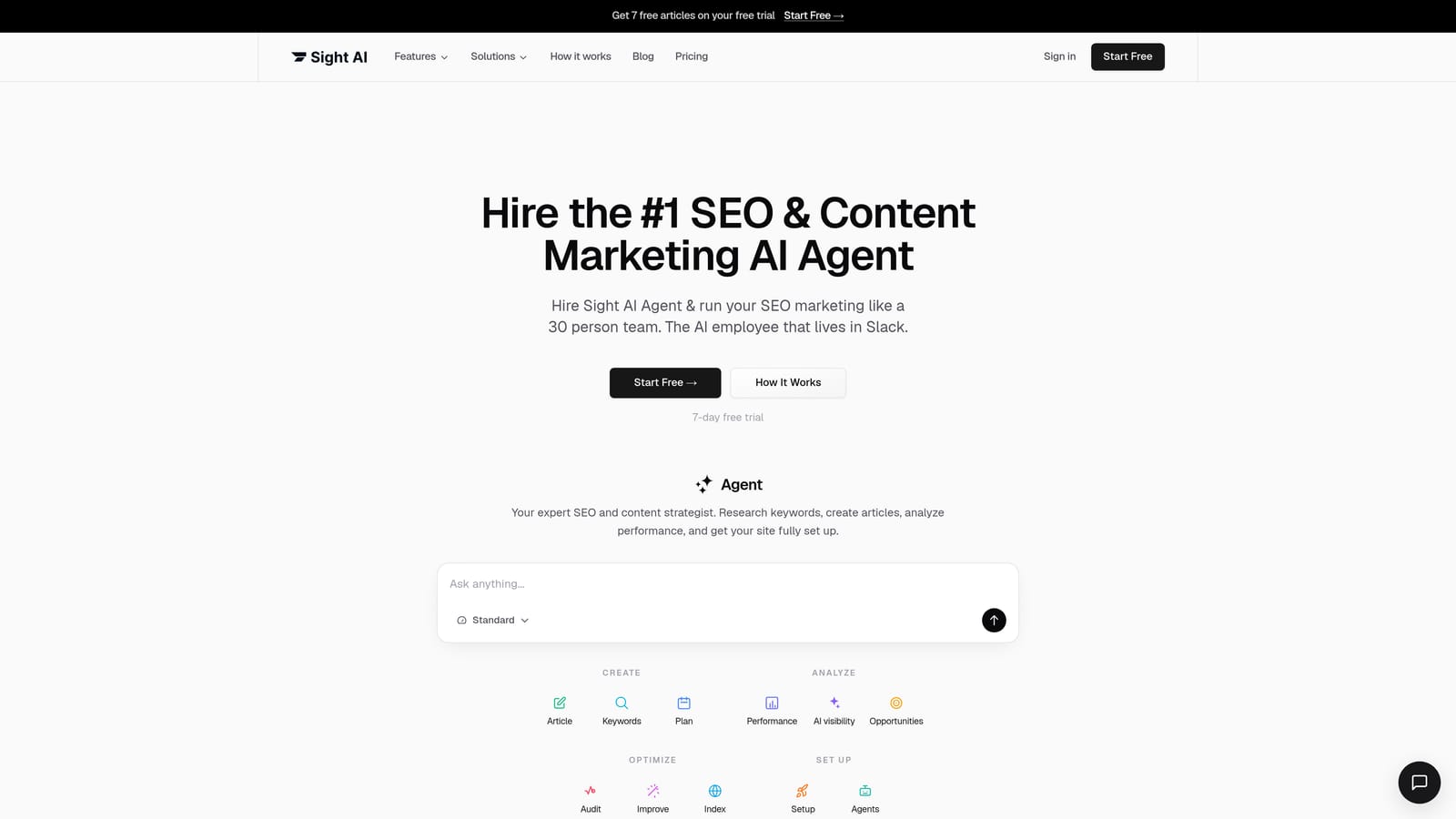
Sight AI is an all-in-one AI-powered platform combining SEO and GEO content generation, AI visibility tracking across 6+ AI models, and automated website indexing with IndexNow integration.
Where This Tool Shines
Sight AI's clearest differentiator is scope. Most tools on this list do one thing well: generate content, or track AI visibility, or handle indexing. Sight AI handles all three in a single platform, which matters enormously when you're trying to connect content output to measurable organic outcomes.
The AI visibility layer is particularly forward-thinking. While you're publishing content, Sight AI simultaneously monitors how your brand appears across ChatGPT, Claude, Perplexity, and other major AI platforms. That means you're not just creating content in the dark: you're watching how it shapes your brand's presence in AI-generated answers and adjusting your strategy accordingly.
Key Features
13+ Specialized AI Agents: Dedicated agents for listicles, guides, explainers, and other article formats, each tuned to produce content structured for both traditional search and AI answer engines.
Autopilot Mode: Automates content production at scale, allowing teams to set publishing cadences and let the platform handle execution without constant manual intervention.
AI Visibility Score: Tracks brand mentions across ChatGPT, Claude, Perplexity, and additional AI platforms, with sentiment analysis and prompt-level tracking built in.
IndexNow Integration: Automatically submits new content to search engines via IndexNow and keeps sitemaps updated, accelerating content discovery and reducing the lag between publishing and ranking.
CMS Auto-Publishing: Connects directly to your CMS so approved content moves from generation to live publishing without manual uploads or copy-paste workflows.
Best For
Sight AI is the strongest fit for marketers, founders, and agencies who want a unified workflow: write content, track how it influences AI visibility, and ensure it gets indexed fast. If you're tired of stitching together separate tools for writing, monitoring, and publishing, this platform eliminates that friction.
Pricing
Check trysight.ai for current pricing plans and available tiers.
2. Writesonic
Best for: High-volume content teams needing broad format support and SEO writing at scale.
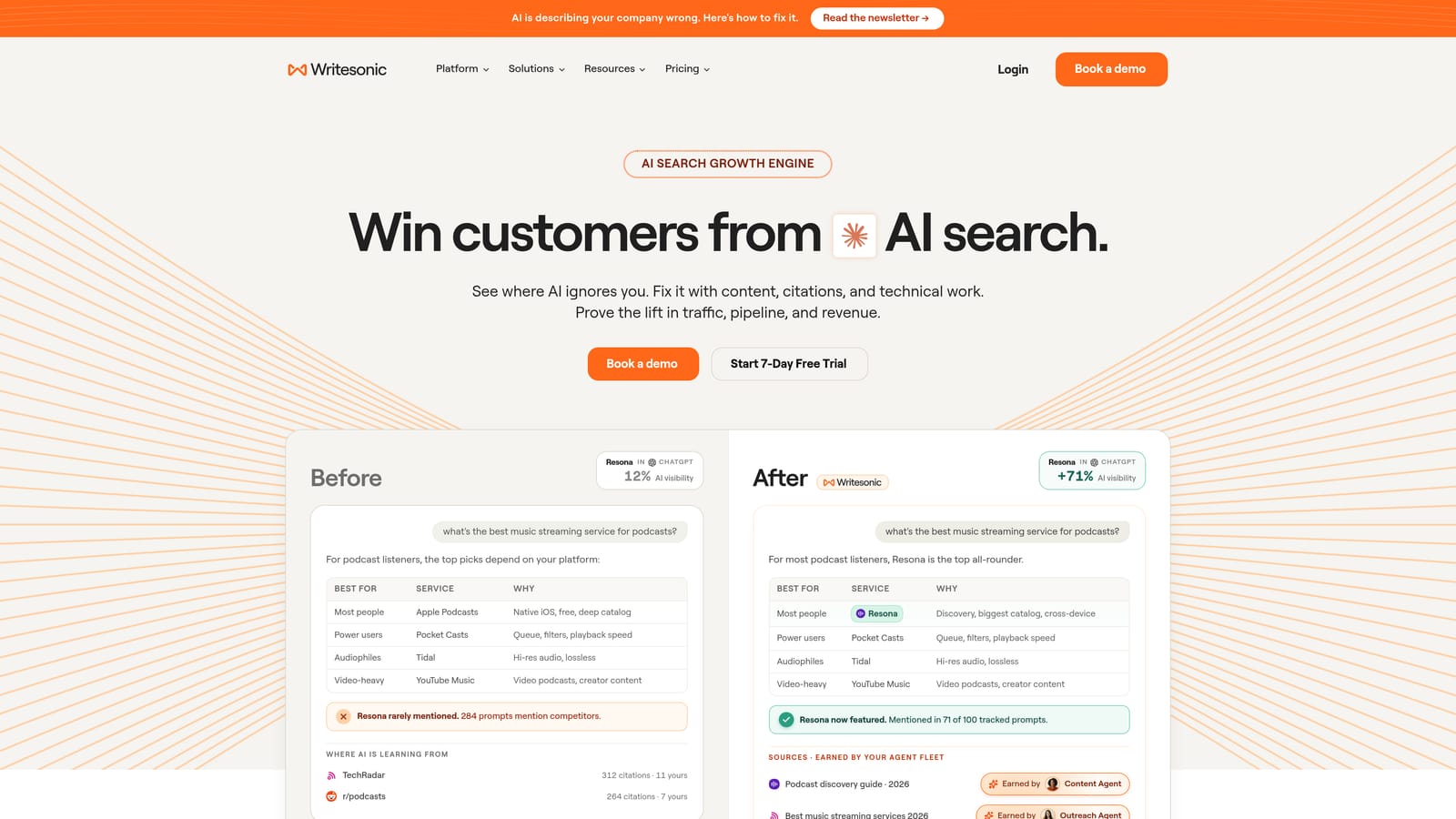
Writesonic is a widely-used AI content platform with extensive content type support, a real-time web-connected AI assistant, and SEO-focused article writing tools.
Where This Tool Shines
Writesonic has built a strong reputation for versatility. Its article writer includes an SEO optimization mode, and the platform supports a wide range of content formats beyond long-form articles: ads, social posts, product descriptions, and email copy all fall within its scope. For teams with diverse content needs, that breadth reduces tool sprawl.
Chatsonic, Writesonic's AI assistant, adds real-time web access to the mix. This is useful when you need content that reflects current events, recent data, or trending topics without manually feeding the AI context. It positions Writesonic well for teams publishing news-adjacent or rapidly evolving content categories.
Key Features
SEO Article Writer: Generates long-form content with keyword targeting and structural optimization built into the writing workflow.
Chatsonic: An AI assistant with real-time web data access, enabling content grounded in current information rather than static training data.
Multi-Format Support: Covers blog posts, ads, social content, product descriptions, and more from a single platform.
Third-Party SEO Integrations: Connects with external SEO tools to layer in keyword data and optimization signals during the writing process.
Brand Voice Customization: Allows teams to define tone and style guidelines so AI output stays consistent with existing content standards.
Best For
Writesonic suits content teams prioritizing volume and format variety. It's a practical choice for marketers managing multiple channels who need a reliable AI writing engine without building complex custom workflows. Note that it does not natively offer AI visibility or brand mention tracking.
Pricing
A free tier is available. Paid plans scale with usage and features. Check writesonic.com for current rates.
3. AirOps
Best for: Enterprise content teams building repeatable, data-driven LLM-powered content pipelines.
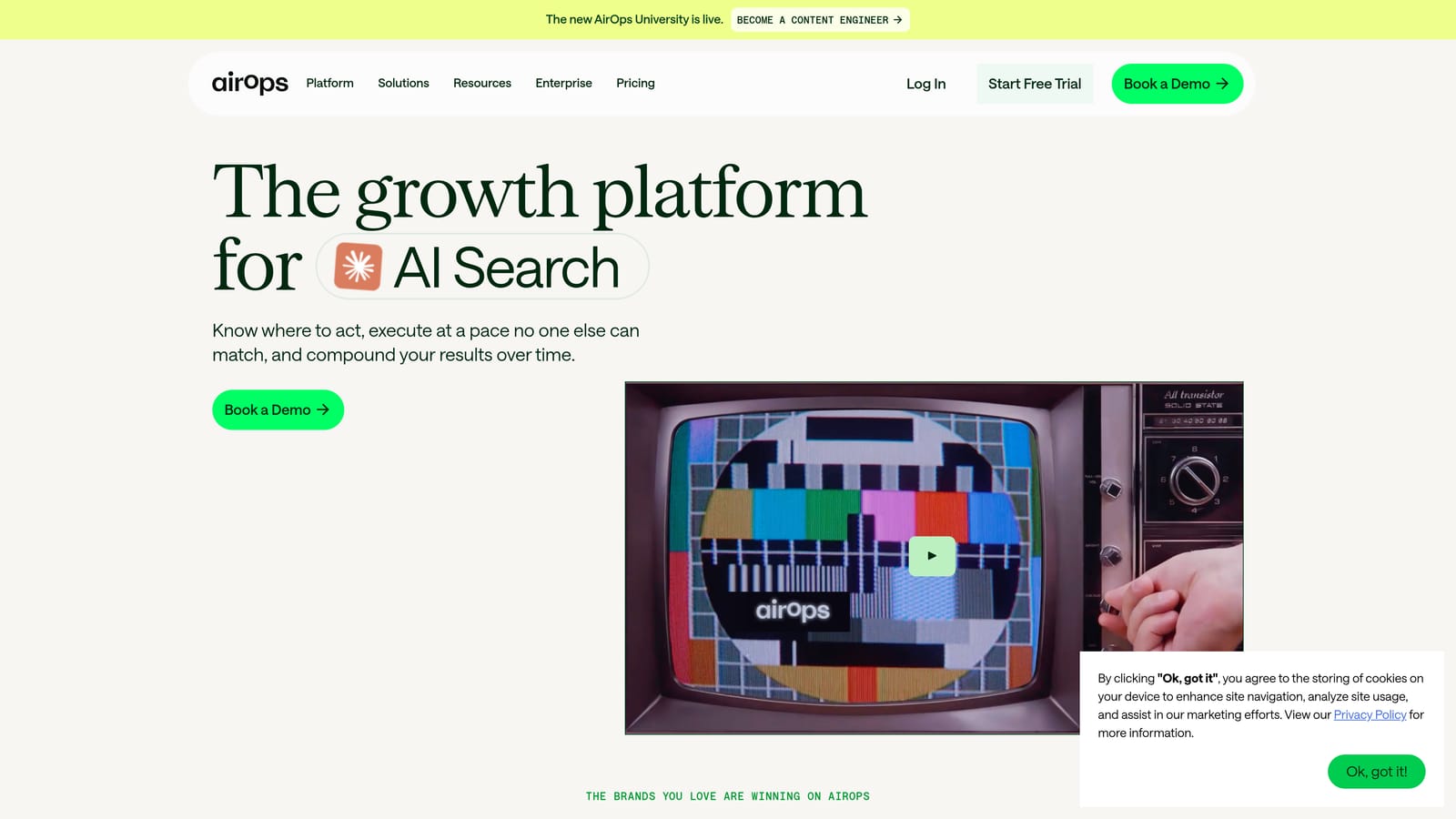
AirOps is an AI workflow orchestration platform that enables content teams to design and run structured, scalable LLM-powered content operations at enterprise scale.
Where This Tool Shines
AirOps approaches content differently than most writing tools. Rather than giving you a blank page and an AI assistant, it lets you build repeatable workflows: structured pipelines where data flows in, gets processed by one or more AI models, and outputs content consistently. Think programmatic SEO at scale, or product description generation across thousands of SKUs.
The multi-model orchestration capability is genuinely useful for teams that want to route different content tasks to different LLMs based on performance or cost. If your content operation resembles a manufacturing process more than a creative writing session, AirOps is designed with your workflow in mind.
Key Features
LLM Workflow Builder: A visual interface for constructing structured content production pipelines without requiring deep engineering resources.
Data-Driven Content Pipelines: Supports programmatic SEO, product content generation, and other data-input-driven content formats at scale.
Multi-Model AI Orchestration: Routes tasks across different AI models, allowing teams to optimize for quality, speed, or cost depending on content type.
Team Collaboration and Workflow Management: Built for teams, with role-based access and shared workflow management across content operations.
API and Integration Support: Connects with enterprise tech stacks via API, enabling content pipelines to pull from and push to existing systems.
Best For
AirOps is best suited for enterprise content teams and technical marketers who need operational scale over individual article quality. It's less focused on one-off article writing and does not include native AI visibility tracking, but for structured, high-volume content production, it offers serious infrastructure.
Pricing
Enterprise-oriented pricing. Contact AirOps directly through airops.com for current plans.
4. Profound
Best for: Brands that need intelligence on how they appear in AI-generated search answers across major LLMs.
Profound is an AI search visibility intelligence platform that monitors how brands appear in AI-generated answers and provides competitive benchmarking across major language models.

Where This Tool Shines
Profound is worth understanding clearly: it is not a content writer. It's an analytics and intelligence tool built specifically for the GEO era, helping brands understand their footprint in AI-generated search results. As ChatGPT, Perplexity, and similar platforms increasingly become the first stop for information queries, knowing whether your brand appears in those answers matters.
The competitive benchmarking layer is particularly valuable. Profound doesn't just tell you where you appear: it shows you how your AI visibility compares to competitors, helping you identify gaps and prioritize content investments. For brands serious about GEO strategy, that competitive context is hard to get elsewhere.
Key Features
AI Answer Engine Monitoring: Tracks brand appearances across major LLMs, giving you a consistent view of your AI search presence over time.
Brand Visibility Scoring: Quantifies how prominently your brand appears in AI-generated responses, making it easier to track progress.
Competitive Benchmarking: Compares your AI visibility against competitors, surfacing where you're winning and where you're losing ground in AI search.
GEO Optimization Insights: Provides actionable data to inform content strategy aimed at improving AI answer engine presence.
Trend Tracking: Monitors changes in brand mention frequency and context across AI outputs over time.
Best For
Profound is ideal for marketing and SEO teams that already have content production handled and want dedicated intelligence on their AI search visibility. It serves a complementary role to content generation tools rather than replacing them.
Pricing
Enterprise-focused pricing model. Check profound.co for current plans.
5. Peec
Best for: Brands monitoring how they're referenced across AI chat platforms with competitive context.
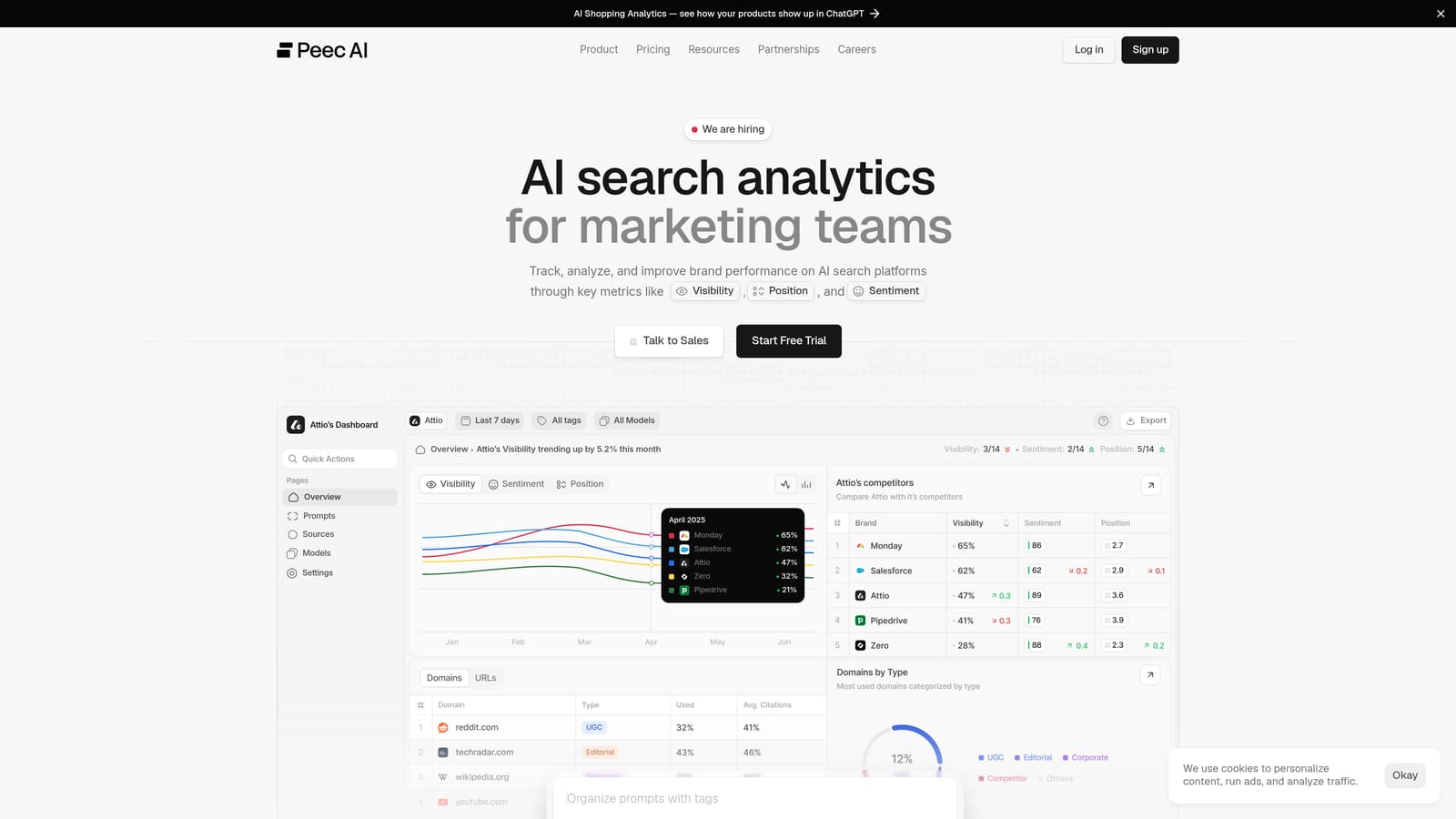
Peec is an AI brand mention monitoring tool that tracks how brands are referenced across AI chat platforms, with competitive benchmarking for AI visibility.
Where This Tool Shines
Peec occupies a focused niche: it watches AI chat platforms for your brand name and surfaces how those mentions are framed. Where Profound tends toward enterprise-scale intelligence, Peec offers a more accessible entry point into AI brand monitoring, making it relevant for smaller teams or brands taking their first steps into GEO tracking.
The alerting and reporting features make it practical for ongoing monitoring without requiring someone to manually check AI outputs. When your brand's mention frequency or sentiment shifts, Peec surfaces that change so your team can respond with updated content or messaging.
Key Features
AI Platform Brand Mention Tracking: Monitors how your brand is referenced across AI chat platforms on an ongoing basis.
Competitive AI Visibility Benchmarking: Compares your brand's AI mention frequency and context against competitors.
Brand Sentiment Monitoring: Analyzes the tone and framing of AI-generated mentions, not just their frequency.
Prompt-Based Visibility Analysis: Examines which types of prompts surface your brand in AI responses.
Reporting and Alerting: Notifies teams when brand mention patterns change, enabling faster strategic responses.
Best For
Peec suits marketing teams that want dedicated AI brand monitoring without the complexity of a full enterprise intelligence platform. Like Profound, it complements content generation tools rather than replacing them. It does not include content writing capabilities.
Pricing
Check peec.ai for current pricing plans.
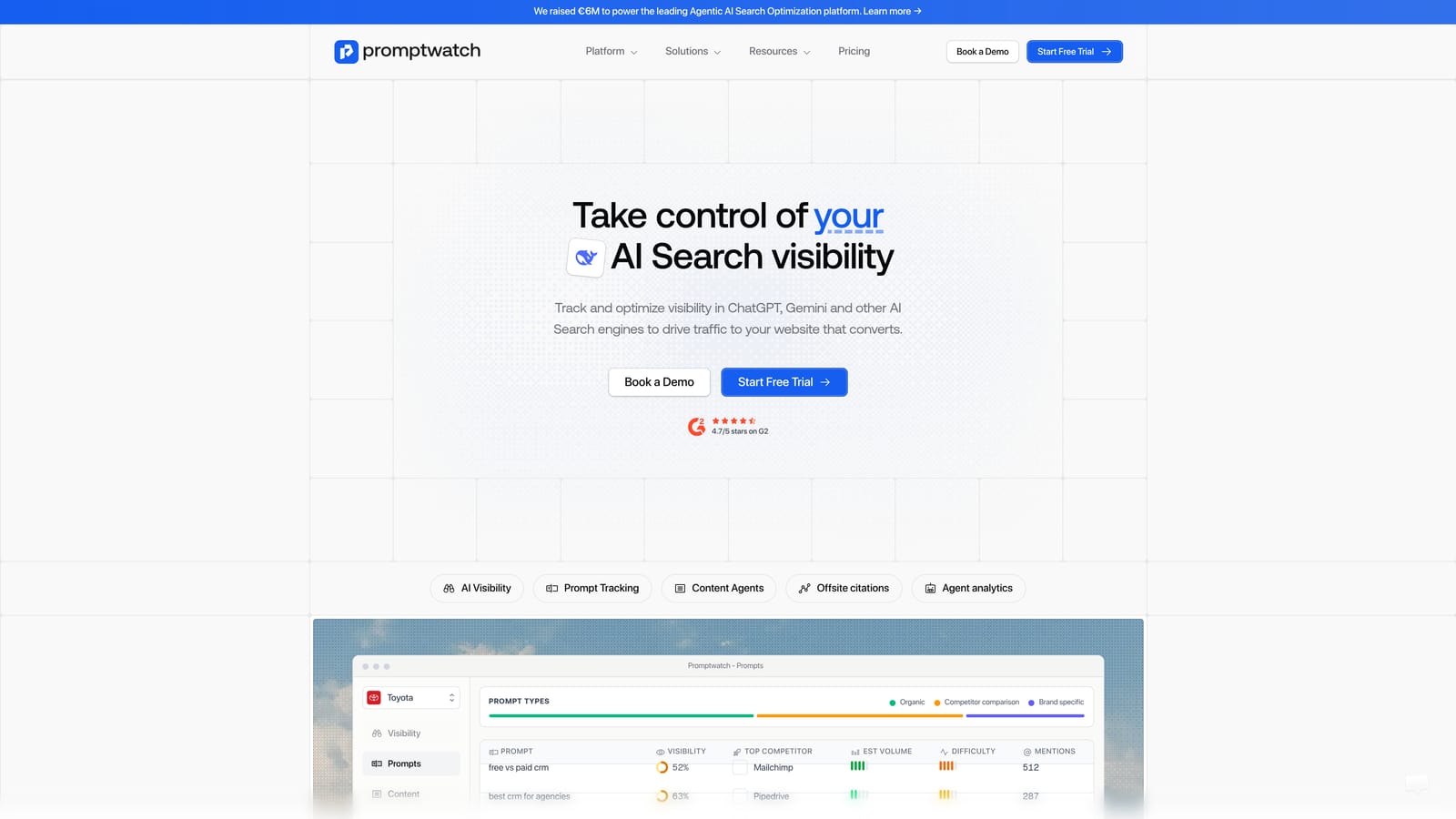
6. Promptwatch
Best for: GEO experimenters who need prompt-level visibility data to optimize AI search presence.
Promptwatch is a specialized prompt-level tracking tool that monitors which prompts surface your brand versus competitors across major AI models, enabling precise GEO experimentation.
Where This Tool Shines
Promptwatch takes AI visibility tracking to a more granular level than most tools. Rather than showing you aggregate brand mention data, it maps visibility at the prompt level: which specific questions or queries cause AI models to mention your brand, and which ones surface competitors instead. That specificity is genuinely useful for teams running structured GEO experiments.
If your team is actively testing content strategies to improve AI answer engine presence, Promptwatch gives you the feedback loop you need. You can identify which content angles are working, which prompts remain competitive gaps, and where to focus your next content investment.
Key Features
Prompt-Level Tracking: Maps brand visibility to specific prompts across major AI models, going deeper than aggregate monitoring.
Brand vs. Competitor Visibility Comparison: Shows which prompts surface your brand versus competitors, revealing precise competitive gaps.
GEO Optimization Experimentation Support: Provides the data infrastructure needed to run and measure GEO content experiments systematically.
AI Model Response Monitoring: Tracks how AI model responses to specific prompts evolve over time.
Actionable Insights for AI Search Presence: Translates prompt-level data into content and optimization recommendations.
Best For
Promptwatch is best for SEO and content teams with an active GEO strategy who need precise, prompt-level data to guide experimentation. It's a specialized tool that works best alongside a content generation platform rather than as a standalone solution.
Pricing
Check promptwatch.io for current pricing plans.
Which Tool Is Right for Your Situation
The tools on this list serve meaningfully different needs, and the right choice depends on where your biggest gap currently sits.
Sight AI is the clear choice if you want a single platform that handles content generation, AI visibility tracking, and fast indexing together. Its 13+ specialized AI agents, Autopilot Mode, and AI Visibility Score make it uniquely positioned for teams that want to produce GEO-optimized content and immediately see how it shapes their brand's presence across AI platforms like ChatGPT, Claude, and Perplexity.
Writesonic is the practical pick for teams focused on volume and format variety. If you need a reliable AI writing engine across multiple content types and don't require AI visibility tracking, it delivers consistent output at scale.
AirOps is the right fit when your content operation looks more like a pipeline than a writing desk. Enterprise teams running programmatic SEO or high-volume structured content will find its workflow orchestration capabilities genuinely powerful.
Profound and Peec both serve the AI visibility intelligence space, with Profound leaning toward enterprise-scale competitive benchmarking and Peec offering a more accessible monitoring entry point. Neither generates content, but both are valuable complements to any content production workflow.
Promptwatch is the specialist's tool: best for teams actively experimenting with GEO strategy who need prompt-level data to measure what's working.
If you're building a content operation designed for 2026's search landscape, the combination of strong content generation, GEO optimization, and AI visibility tracking is what separates tools that drive growth from tools that just produce output. Start tracking your AI visibility today and see exactly where your brand appears across top AI platforms, while generating the SEO and GEO-optimized content that gets you mentioned more often.