Agencies managing content at scale face a real challenge: producing high-quality, SEO-optimized output across multiple clients without burning out their teams. AI writing tools have matured significantly, moving well beyond generic text generation into specialized workflows that handle research, optimization, publishing, and even AI search visibility.
But not every tool is built for agency demands. Volume, client segmentation, brand consistency, and measurable results all matter. This guide covers the best AI writing tools specifically suited for agencies in 2026, evaluated on output quality, agency-specific features, SEO and GEO optimization capabilities, and scalability.
Whether you're running a boutique content shop or a full-service digital agency, this list will help you find the right fit. For context on related topics, see our guides on AI content creation tools and SEO reporting tools for agencies.
1. Sight AI
Best for: Agencies that want to generate SEO/GEO-optimized content and track AI brand visibility in one platform.
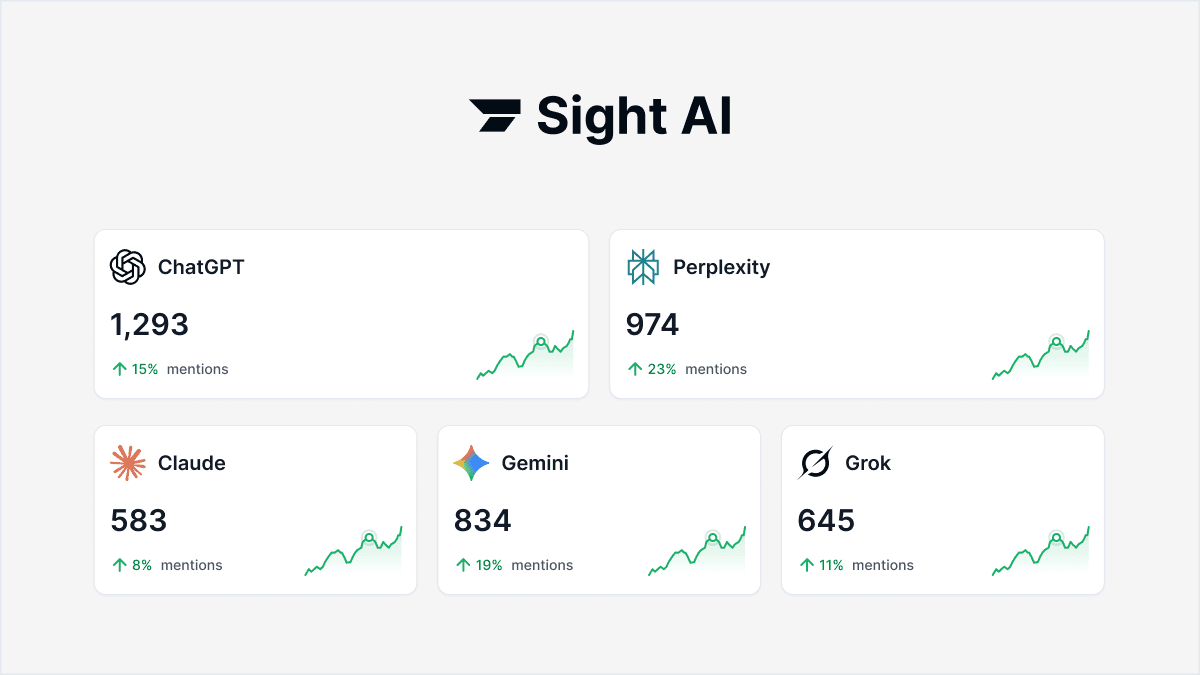
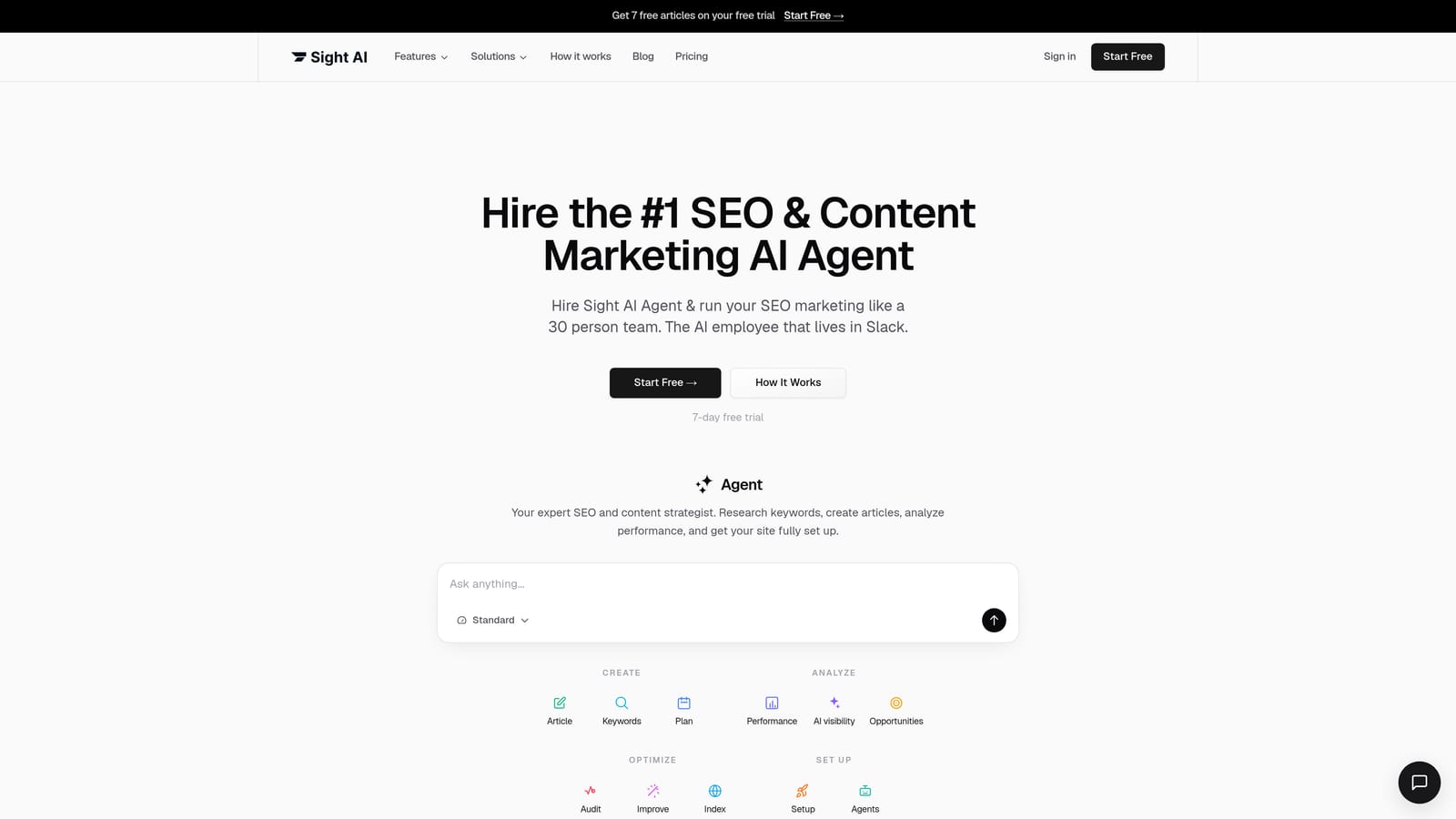
Sight AI is an all-in-one platform combining AI content writing, AI visibility tracking across 6+ AI models, website indexing, and CMS auto-publishing built for agencies that need to produce content and measure its impact on AI search.
Where This Tool Shines
What separates Sight AI from standard AI writing tools is the combination of content generation and AI visibility intelligence in a single workflow. Most agencies use separate tools to write content and then guess whether that content influences how AI models like ChatGPT or Claude respond to brand-relevant queries. Sight AI closes that loop.
The Autopilot Mode is particularly compelling for agencies managing multiple clients. It handles content production at scale without requiring a writer to babysit every output, and the IndexNow integration ensures new content gets discovered faster rather than waiting in a crawl queue.
Key Features
13+ Specialized AI Agents: Dedicated agents for listicles, guides, explainers, and more, each optimized for a specific content format rather than relying on a generic prompt interface.
AI Visibility Score: Tracks how and where a brand is mentioned across ChatGPT, Claude, Perplexity, and three or more additional AI platforms, giving agencies a concrete metric to report to clients.
Sentiment Analysis and Prompt Tracking: Monitors not just whether a brand appears in AI responses, but how it's framed, which is critical for agencies offering GEO services.
IndexNow Integration: Automatically pushes new content to search engines for faster indexing, paired with automated sitemap updates to keep crawl data current.
CMS Auto-Publishing: Streamlines agency content workflows by publishing directly to client CMS platforms, reducing the manual handoff steps between writing and going live.
Best For
Agencies that want a single platform covering content generation, AI visibility monitoring, and publishing automation. Particularly strong for teams positioning themselves as GEO specialists or looking to add AI search performance reporting to their client deliverables.
Pricing
Agency and team pricing is available. Check trysight.ai directly for current plan details, as pricing is updated regularly.
2. Writesonic
Best for: Agencies producing high-volume templated copy across blogs, ads, and landing pages for multiple clients.
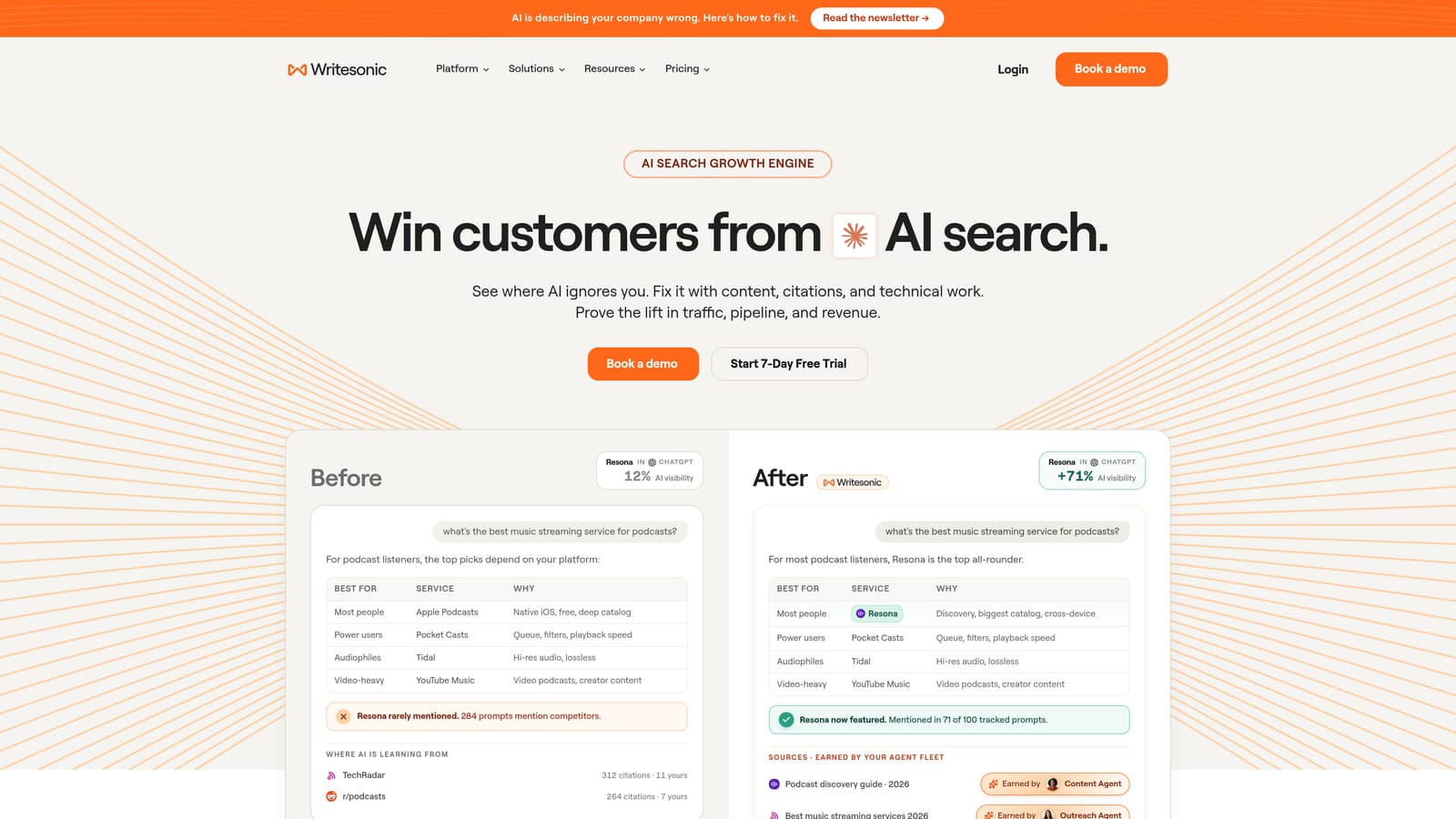
Writesonic is a versatile AI writing platform with broad template coverage, real-time web search grounding, and brand voice controls well-suited to multi-client agency work.
Where This Tool Shines
Writesonic's strength is its breadth. If your agency produces a wide variety of content types across many clients, the template library means your team isn't starting from a blank page for every format. The Brand Voice feature is genuinely useful for agencies that need to maintain distinct tones across client accounts without constantly re-briefing the AI.
The real-time web search integration, available through Chatsonic, helps ground outputs in current information. This matters for agencies writing about fast-moving topics where outdated content is a real risk.
Key Features
Large Template Library: Covers blog posts, landing pages, product descriptions, ad copy, and more, reducing setup time for recurring content types.
Brand Voice Controls: Allows agencies to define and save client-specific tone and style preferences, improving consistency across large content volumes.
Real-Time Web Search Grounding: Chatsonic connects to the web to pull current information, reducing factual drift in time-sensitive content.
Multi-Seat Team Plans: Agency and team plans support multiple users, making it practical for content teams working across client accounts simultaneously.
Chatsonic Conversational Interface: A conversational AI layer with web access for research-driven content tasks and quick copy iterations.
Best For
Agencies with high content volume needs across diverse formats. Works well for teams that want a familiar, template-driven workflow with enough flexibility to adapt to different client voices.
Pricing
Tiered plans are available, with agency and team pricing on request. Check writesonic.com for current plan details.
3. AirOps
Best for: Technically sophisticated agencies that want to build custom, repeatable AI content pipelines connected to their own data and CMS.
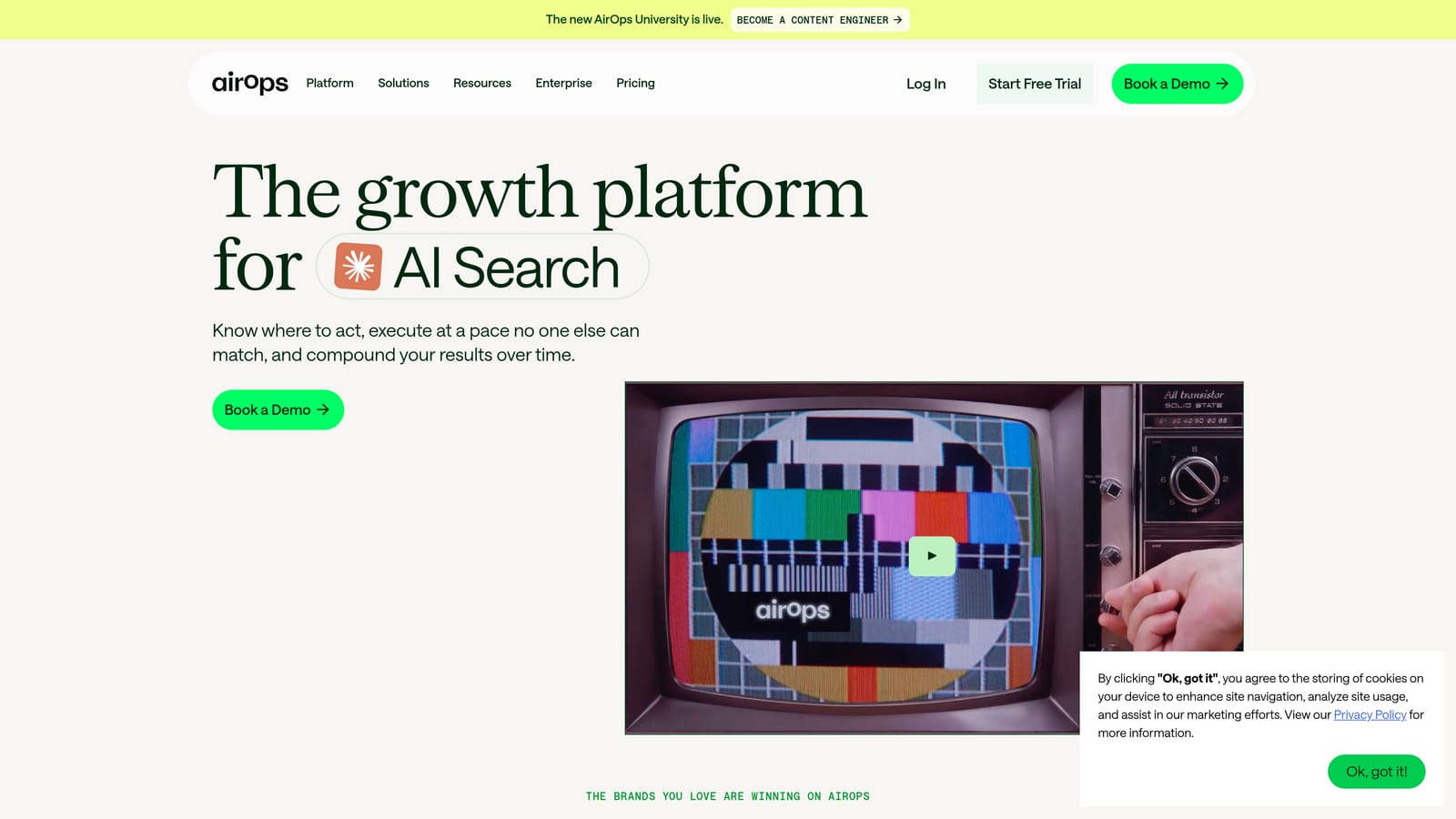
AirOps is a workflow automation platform that lets agencies build custom AI content pipelines, connecting large language models to internal data, CMS platforms, and existing tools for scalable, systematized content production.
Where This Tool Shines
AirOps is less of a "write this blog post for me" tool and more of a "build the system that writes blog posts for you" platform. If your agency has specific, repeatable content workflows, AirOps lets you encode those workflows into automated pipelines that run consistently at scale.
The multi-LLM support gives technically inclined teams the flexibility to route different content tasks to different models based on cost, quality, or speed requirements. This level of control is difficult to find in more consumer-facing AI writing tools.
Key Features
Visual Workflow Builder: Lets agencies design custom AI content automation pipelines without heavy engineering resources, using a visual interface to connect inputs, models, and outputs.
Multi-LLM Support: Connects to multiple large language models, allowing prompt engineering and model selection at scale depending on the task.
CMS and Data Source Integrations: Connects AI workflows to existing CMS platforms and internal data sources, enabling content that pulls from real client information rather than generic prompts.
Repeatable Pipeline Architecture: Designed for systematized production, so agencies can build a workflow once and run it across many clients or content types.
Full Pipeline Control: Suitable for teams that want to own every step of the content production process rather than relying on a black-box AI tool.
Best For
Agencies with technical capacity that want to build proprietary content systems rather than use off-the-shelf tools. Ideal for teams with specific, repeatable content workflows that justify the upfront pipeline investment.
Pricing
Contact AirOps directly for agency and enterprise pricing at airops.com.
4. Profound
Best for: Agencies positioning themselves as GEO specialists who need analytics on how brands appear in AI-generated answers.
Profound is an AI search analytics platform that tracks how brands appear in AI-generated responses, helping agencies understand which content strategies drive citations from models like ChatGPT and Perplexity.
Where This Tool Shines
Profound addresses a question that traditional SEO tools can't answer: when someone asks an AI model about your client's category, does your client get mentioned? And if so, how? This kind of visibility data is becoming a meaningful part of what agencies need to report as AI search grows.
The competitive benchmarking capability is particularly useful for client reporting. Being able to show a client how their AI search presence compares to competitors makes GEO a tangible, reportable service rather than a vague concept.
Key Features
AI Citation Tracking: Monitors when and how brands appear in AI model responses, giving agencies a clear picture of AI search presence.
Content Recommendations from AI Data: Surfaces content strategy recommendations informed by what AI models are actually citing, rather than guessing.
Competitive Benchmarking: Compares client AI search visibility against competitors, providing context for performance reporting.
GEO Service Support: Provides the analytics infrastructure agencies need to offer Generative Engine Optimization as a service.
Analytics Dashboard: Presents AI search performance data in a format suitable for client-facing reporting.
Best For
Agencies actively building GEO service offerings or those whose clients are asking about AI search presence. Most valuable for teams that need structured analytics rather than anecdotal AI visibility data.
Pricing
Typically enterprise and custom pricing. Verify current plans directly at profound.com before committing.
5. Peec
Best for: Agencies adding AI brand visibility monitoring to their service stack and benchmarking clients against competitors in AI search.
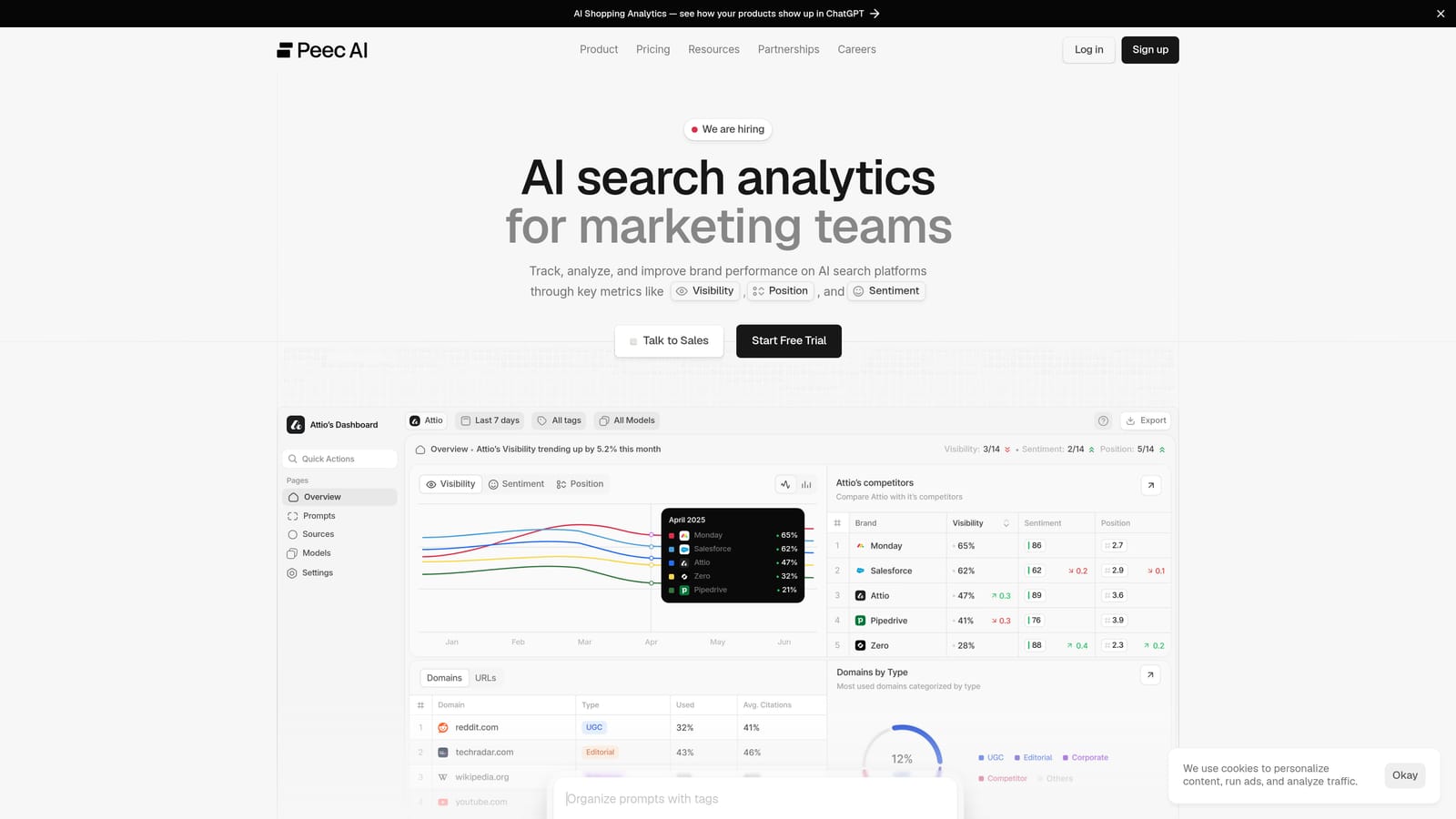
Peec is an AI brand visibility monitoring tool that tracks share of voice across AI-generated answers, helping agencies benchmark client presence and identify content gaps in AI model knowledge.
Where This Tool Shines
Peec focuses specifically on share of voice in AI search, which is a useful framing for agencies accustomed to presenting competitive positioning data to clients. Rather than abstract visibility scores, share-of-voice metrics translate naturally into client conversations about market presence.
The content gap identification feature is where Peec adds strategic value. Knowing that AI models have limited or inaccurate knowledge about a client brand points directly to content creation priorities, creating a clear feedback loop between monitoring and strategy.
Key Features
Brand Mention Tracking: Monitors brand appearances across AI search platforms to give agencies a consistent read on AI visibility over time.
Competitor Share-of-Voice Comparison: Benchmarks client AI search presence against named competitors, making competitive reporting straightforward.
Content Gap Identification: Surfaces areas where AI models lack knowledge about a brand, informing content strategy decisions.
GEO Monitoring for Agencies: Designed to support agencies adding AI visibility tracking as a client-facing service.
Client-Facing Reporting: Presents AI visibility data in formats suitable for sharing with clients as part of regular performance updates.
Best For
Agencies that want to add structured AI visibility monitoring to their existing SEO reporting without building a custom tracking solution from scratch. Works well alongside content generation tools as the measurement layer.
Pricing
Verify current pricing directly at peec.ai, as plans may have changed since this article was published.
6. Promptwatch
Best for: Agencies that want to monitor and test how AI models respond to brand-relevant queries over time before and after content campaigns.
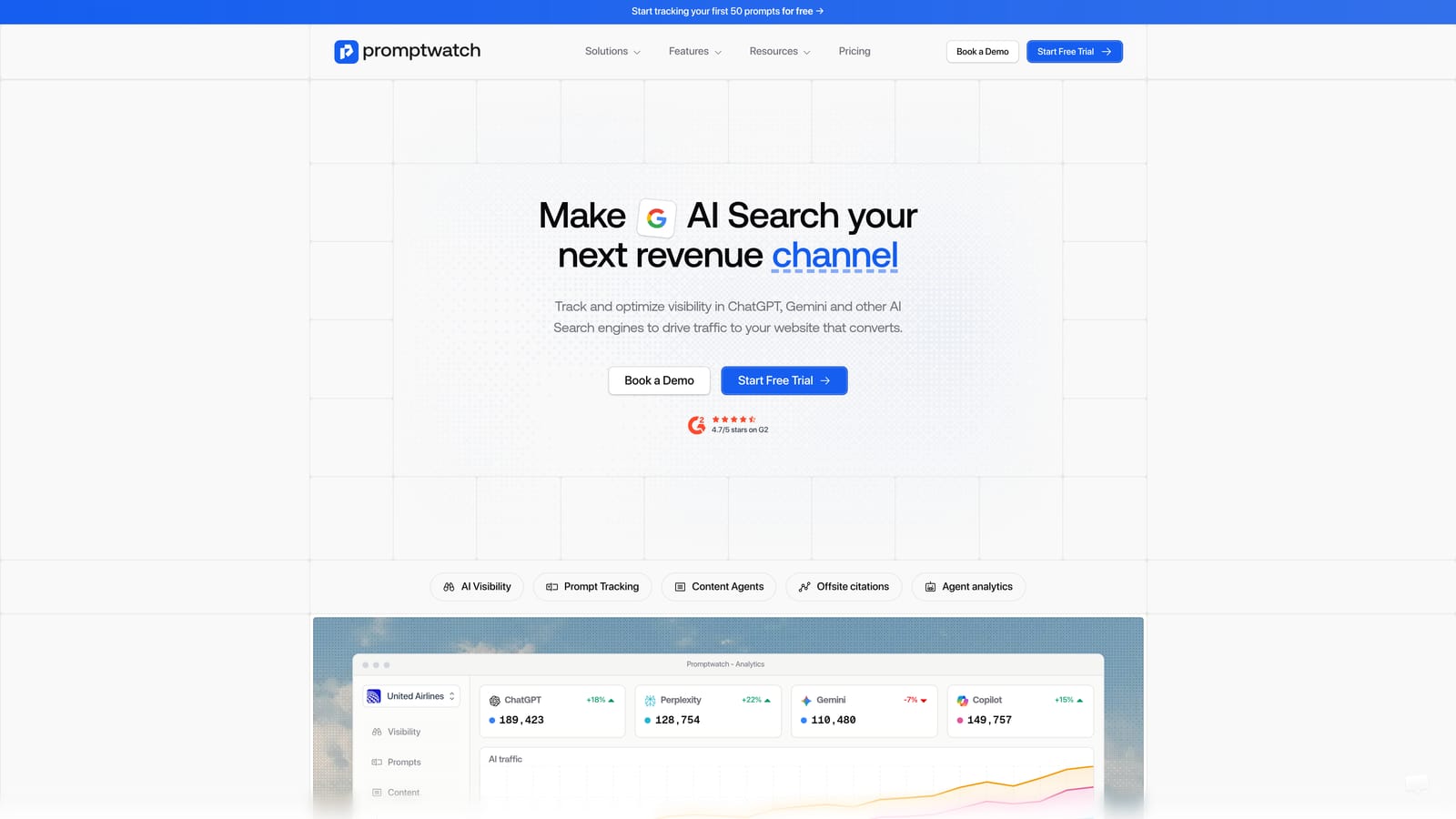
Promptwatch is a prompt monitoring and testing tool that tracks how AI models respond to specific queries over time, giving agencies intelligence on AI model behavior to inform content strategy.
Where This Tool Shines
Promptwatch is fundamentally an intelligence tool. Before an agency launches a content campaign intended to improve AI search presence, Promptwatch helps establish a baseline: how are AI models currently responding to relevant prompts? After the campaign, it detects whether model responses have shifted.
The prompt versioning capability is useful for agencies that want to systematically test different content approaches and understand which ones actually influence AI model outputs. This kind of before-and-after tracking is difficult to do manually and brings a level of rigor to GEO that most agencies currently lack.
Key Features
Prompt Response Monitoring: Tracks how AI models respond to specific brand or category queries over time, detecting shifts in AI behavior.
Pre-Campaign Baseline Research: Helps agencies understand the current AI search landscape for a client before investing in content production.
Post-Campaign Shift Detection: Identifies whether content changes have influenced how AI models represent a brand or category.
Prompt Versioning and Testing: Allows agencies to test variations and track which prompt framings surface the most relevant AI responses.
AI Landscape Intelligence: Gives agencies a research foundation for advising clients on where they stand in AI-generated answers relative to their category.
Best For
Agencies that want to bring measurement discipline to GEO campaigns, particularly those running content programs specifically designed to influence AI model responses. More of a research and monitoring tool than a content creation platform.
Pricing
Verify current pricing directly at promptwatch.io before committing to a plan.
Which Tool Is Right for Your Agency?
The right choice depends on where your agency's biggest gap is right now: content production, AI visibility measurement, or both.
Start with Sight AI if you want a single platform that handles content generation, AI visibility tracking, and publishing automation together. It's the strongest option for agencies that want to produce SEO and GEO-optimized content and then verify whether that content is actually influencing how AI models talk about their clients.
Evaluate Writesonic if your primary need is high-volume templated copy across diverse formats and client accounts. It's a mature, broad-coverage platform with solid brand voice controls for multi-client work.
Choose AirOps if your team has technical capacity and wants to build proprietary content automation pipelines rather than use off-the-shelf workflows. It's the most flexible option for agencies with specific, repeatable production processes.
Look at Profound, Peec, or Promptwatch if your focus is specifically on monitoring and measuring AI search presence. Each takes a slightly different angle: Profound emphasizes AI citation analytics and competitive benchmarking, Peec focuses on share-of-voice tracking and content gap identification, and Promptwatch specializes in prompt-level monitoring and shift detection over time.
AI writing for agencies in 2026 is no longer just about generating text faster. It's about generating the right content that gets indexed, ranks in traditional search, and gets cited by AI models when users ask relevant questions. Tools that combine content creation with AI visibility intelligence give agencies a compounding advantage: every piece of content becomes both a traffic asset and a signal toward better AI brand representation.
Stop guessing how AI models like ChatGPT and Claude talk about your brand. Start tracking your AI visibility today and see exactly where your brand appears across top AI platforms. Explore more on automating content creation and AI blog writing software to deepen your agency's content strategy.