Financial institutions are navigating an unprecedented paradox. On one side, AI systems promise to revolutionize everything from algorithmic trading to fraud detection, offering competitive advantages measured in milliseconds and basis points. On the other, regulators are tightening their grip with new disclosure requirements, supervision mandates, and liability frameworks that treat AI oversight failures as existential risks. The SEC's 2024 guidance on AI in investment advisory made it clear: institutions must demonstrate active monitoring and control over their AI systems, not just deploy them and hope for the best.
This creates a high-stakes balancing act. Deploy AI too cautiously, and you cede market share to more aggressive competitors. Deploy it without proper oversight, and you risk regulatory sanctions, market disruptions, or reputational damage that can take years to repair. The answer isn't to slow down AI adoption—it's to build monitoring frameworks robust enough to support aggressive innovation while maintaining the institutional accountability regulators demand.
What makes this challenge particularly acute for financial services is the convergence of operational risk and brand risk. Your internal AI systems make decisions that move markets and affect customer outcomes. Meanwhile, external AI platforms like ChatGPT and Claude are increasingly shaping how prospects research your products, compare your fees, and evaluate your reputation. You need visibility into both dimensions—what your AI is doing, and what AI is saying about you.
The Regulatory Landscape Creating Urgent Monitoring Requirements
Financial institutions operate under regulatory scrutiny that makes AI oversight fundamentally different from other industries. When a retail company's chatbot gives bad product advice, it's a customer service issue. When a bank's AI-driven lending system exhibits bias or a broker-dealer's algorithmic trading system malfunctions, it triggers regulatory examinations, potential enforcement actions, and systemic risk concerns.
The SEC's 2024 guidance on AI use by investment advisers established clear expectations: firms must have policies and procedures reasonably designed to address conflicts of interest arising from AI use. This includes monitoring for scenarios where AI systems might prioritize firm interests over client interests, or where predictive models drift from their validated parameters. FINRA has similarly tightened supervision requirements around algorithmic trading, requiring firms to demonstrate they understand how their AI systems make decisions and can intervene when those systems behave unexpectedly.
The EU AI Act adds another layer of complexity for institutions operating globally. It classifies AI systems used in credit scoring and insurance underwriting as "high-risk," triggering mandatory conformity assessments, technical documentation requirements, and ongoing monitoring obligations. Even if your primary operations are US-based, serving European clients or processing European data can bring you under this framework.
What regulators consistently emphasize across these frameworks is explainability. It's no longer acceptable to treat AI as a black box that produces outputs you can't fully explain. When an examiner asks why your credit model denied a particular application, or why your trading algorithm executed a specific sequence of trades, "the AI decided" isn't an answer that satisfies regulatory requirements. You need audit trails, decision logs, and AI model monitoring systems that let you reconstruct the logic behind AI outputs.
The challenge intensifies with what compliance teams call "shadow AI"—employees using external AI tools for client communications, research, or analysis without institutional oversight. An advisor using ChatGPT to draft client emails or research investment strategies creates compliance risks the firm may not even know exist. Monitoring needs to extend beyond officially deployed systems to capture how AI is actually being used across the organization.
Building Blocks of Operational AI Monitoring
Effective AI monitoring in financial services starts with understanding what can go wrong and building detection systems before problems escalate. Model drift—where an AI system's performance degrades over time as market conditions change—represents one of the most common failure modes. A fraud detection model trained on pre-pandemic transaction patterns may perform poorly when remote work fundamentally changes customer behavior. A credit scoring model validated during low interest rate environments may miscalibrate risk when rates rise sharply.
Drift detection requires continuous comparison of model outputs against expected performance benchmarks. This means tracking accuracy metrics, false positive rates, and decision distributions over time. If your trading algorithm suddenly starts executing trades with different size distributions or your lending model's approval rates shift significantly, you need alerts that flag these changes before they compound into larger problems.
Output consistency monitoring catches a different class of issues. AI systems should produce similar outputs for similar inputs—if they don't, it suggests instability or potential manipulation. A customer service chatbot that gives different answers to the same compliance question depending on how it's phrased creates regulatory risk. Implementing brand monitoring for AI chatbots helps identify these inconsistencies before they become compliance issues. A pricing model that generates inconsistent quotes for comparable customers raises fairness concerns. Monitoring should track output variance and flag cases where consistency breaks down.
Real-time alerting systems form the operational backbone of effective monitoring. Batch reviews conducted days or weeks after AI decisions are made can't prevent problems—they can only document them for post-mortem analysis. Financial institutions need monitoring infrastructure that evaluates AI outputs as they're generated, comparing them against predefined risk thresholds and escalation criteria.
This requires defining what constitutes an anomaly worth alerting on. Set thresholds too tight, and you overwhelm compliance teams with false positives. Set them too loose, and genuine problems slip through undetected. The most effective approaches use tiered alerting: minor deviations generate logs for periodic review, moderate anomalies trigger same-day compliance review, and severe outliers halt AI operations pending investigation.
Audit trail requirements deserve special attention. Regulators expect you to maintain comprehensive records of AI decisions, including the inputs that drove those decisions, the model version that processed them, and any human interventions that occurred. This means logging not just final outputs, but the decision pathway the AI followed. When a regulator examines a trading decision made six months ago, you need to reconstruct exactly what data the model saw, what calculations it performed, and what business rules it applied.
The technical challenge here is scale. High-frequency trading systems may generate millions of decisions daily. Storing and indexing this volume of decision data requires purpose-built infrastructure that balances completeness with practical retrievability. You need the ability to query historical decisions by customer, product, time period, or decision outcome—and produce those queries quickly enough to satisfy examination timelines.
Monitoring Your Brand Across AI Platforms
While internal AI monitoring focuses on systems you control, a parallel challenge is emerging around how external AI models represent your financial brand. When prospects ask ChatGPT "which bank has the lowest fees for international transfers" or query Claude about "best investment advisors for retirement planning," those AI systems generate responses that shape market perceptions—often without your knowledge or input.
This represents a fundamental shift in how financial brands are discovered and evaluated. Traditional search engine optimization focused on ranking for specific keywords. AI search operates differently: users ask conversational questions and receive synthesized answers that may mention your brand, your competitors, or neither. You could have excellent traditional SEO and still be invisible in AI-generated responses that increasingly drive customer research.
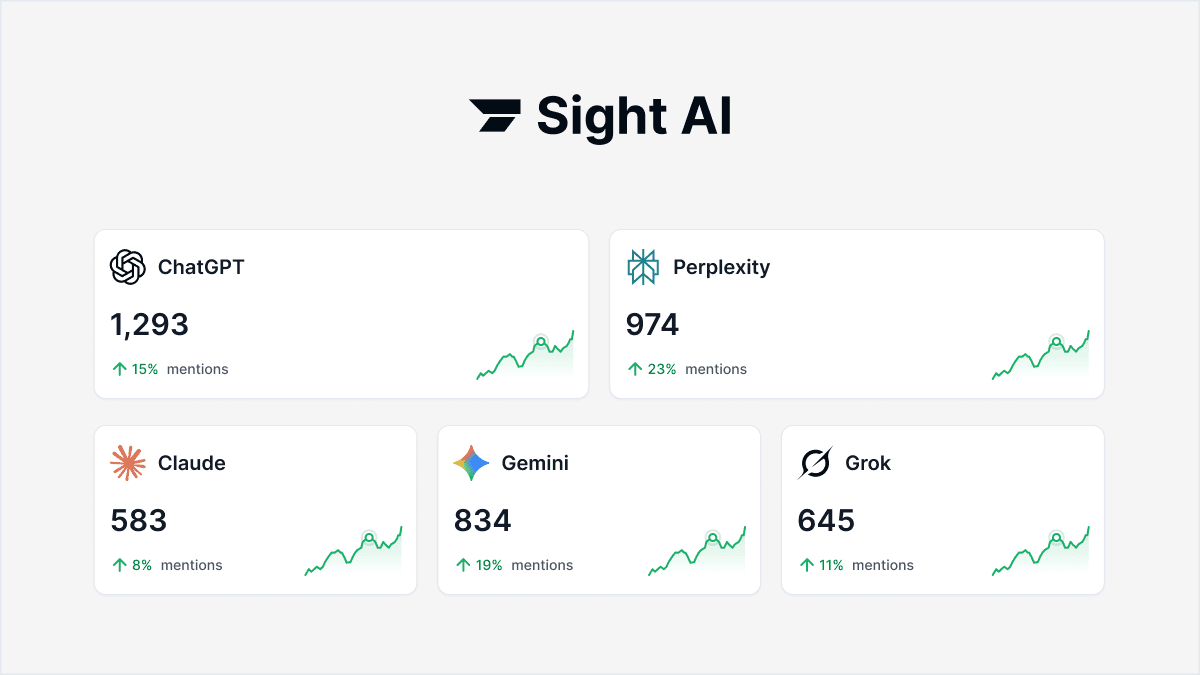
Tracking how AI platforms characterize your brand requires multi-AI platform monitoring across multiple dimensions. Mention frequency matters—are you being included in responses about your product categories? Sentiment analysis reveals whether AI models describe your services positively, neutrally, or negatively. Context tracking shows what questions trigger mentions of your brand and what competitors you're being compared against.
Financial institutions face unique reputational vulnerabilities here. AI models may inadvertently make claims about your products that aren't accurate or aren't compliant with advertising regulations. They might characterize fee structures incorrectly, oversimplify investment strategies in ways that create misleading impressions, or fail to include required disclosures. Unlike your own marketing materials, which go through compliance review, AI-generated content about your brand operates outside your control.
This creates a monitoring imperative that extends beyond traditional brand management. You need visibility into how AI platforms answer questions about your institution across different query types and user contexts. When AI models provide incorrect information about your products, you need mechanisms to identify those instances and, where possible, provide corrections through the channels these platforms accept.
The strategic dimension of AI brand monitoring involves identifying content opportunities. If AI models consistently fail to mention your brand in responses where you should be relevant, it signals gaps in your content strategy. If competitors dominate AI responses in categories where you compete, it indicates you need stronger signals about your offerings in the content AI models train on and reference.
Some institutions are discovering that their best customer acquisition content—detailed product comparisons, fee transparency disclosures, educational resources—isn't formatted in ways AI models can easily reference. This is driving a rethinking of content strategy: creating resources optimized not just for human readers but for AI comprehension and citation.
Documentation That Satisfies Examination Requirements
When regulators examine your AI governance, they're looking for evidence of institutional control: documented processes, clear accountability, and systematic oversight. This starts with a comprehensive model inventory that catalogs every AI system in use, its business purpose, its risk classification, and its approval status.
Model inventories should categorize AI systems by risk level using criteria that align with regulatory frameworks. Customer-facing systems that make lending decisions or provide investment advice typically qualify as high-risk, requiring enhanced validation and monitoring. Operational AI that optimizes internal processes may warrant lighter-touch oversight. The key is having a defensible classification methodology and applying it consistently.
Each model entry should document validation results, ongoing monitoring protocols, and any limitations or constraints on appropriate use. This creates the foundation for demonstrating you understand what your AI systems do and have appropriate controls in place. When an examiner asks about a specific model, you should be able to quickly pull up its documentation, show its validation history, and explain how ongoing monitoring ensures it continues performing as intended.
Governance workflows establish who has authority to approve AI deployments, who monitors ongoing performance, and who responds when monitoring detects problems. Many institutions struggle with this because AI development often happens in business units with limited compliance involvement. Effective governance requires clear escalation paths: when does a model drift issue require business unit response versus compliance review versus executive notification?
Incident response protocols deserve explicit documentation. When monitoring systems detect anomalies, what happens next? Who investigates? What criteria determine whether to halt AI operations versus allowing continued operation under enhanced monitoring? How quickly must incidents be reported to senior management or regulators? Having these protocols documented before incidents occur demonstrates institutional preparedness.
Benchmark tracking provides context for regulatory discussions. Knowing that your algorithmic trading system's error rate is 0.02% is less meaningful than knowing how that compares to industry peers. Implementing sentiment analysis for brand monitoring can help contextualize how your institution is perceived relative to competitors. Some institutions are forming peer groups to share anonymized monitoring metrics, creating industry benchmarks that help contextualize individual performance. This also helps identify when problems are firm-specific versus industry-wide responses to market changes.
Practical Implementation: Moving From Assessment to Active Monitoring
Building effective AI monitoring starts with understanding what you're monitoring. The first implementation phase involves inventorying existing AI systems across the organization. This often reveals surprises—business units deploying AI tools that technology or compliance teams didn't know existed, third-party vendors incorporating AI into services without explicit disclosure, or legacy systems that have evolved to include AI components over time.
Categorize inventoried systems by risk level using consistent criteria. Customer-facing AI that makes consequential decisions warrants the most rigorous monitoring. Decision-making AI that affects trading, lending, or pricing requires strong audit trails and drift detection. Operational AI that optimizes internal processes may need lighter monitoring focused on performance metrics rather than compliance requirements.
The second phase deploys monitoring infrastructure matched to each system's risk profile. High-risk systems need real-time monitoring with immediate alerting capabilities. Medium-risk systems may use daily batch reviews with weekly compliance summaries. Lower-risk systems might require only periodic audits confirming continued appropriate performance. An AI visibility monitoring platform can help coordinate oversight across these different risk tiers.
Alerting thresholds should reflect both statistical significance and business materiality. A trading algorithm that deviates 5% from expected performance might warrant immediate investigation, while a customer service chatbot with slightly elevated response times might only need attention if the pattern persists over days. The goal is catching meaningful problems early without overwhelming teams with noise.
Escalation paths need to be explicit and tested. When monitoring detects a threshold breach, who gets notified? What information do they need to make intervention decisions? How quickly must they respond? Testing these protocols during implementation—using simulated incidents—reveals gaps before real problems occur.
The third phase integrates monitoring data into existing governance, risk, and compliance platforms. AI monitoring shouldn't exist in isolation from other risk management processes. Compliance teams need dashboards that show AI performance alongside other operational metrics. Risk committees need reporting that contextualizes AI incidents within the broader risk landscape. Audit teams need access to historical monitoring data for their reviews.
This integration often requires technical work to connect monitoring systems with existing GRC platforms, but the operational benefit is significant. When AI monitoring data flows into the same reporting cycles as other compliance metrics, it becomes part of routine oversight rather than a separate initiative requiring special attention.
Continuous improvement closes the loop. Monitoring systems should themselves be monitored—are alerts triggering appropriately? Are escalation paths working? Are false positive rates acceptable? Regular reviews of monitoring effectiveness help refine thresholds, adjust categorizations, and identify gaps in coverage. Setting up brand mention alerts for AI platforms ensures you're notified when external AI systems reference your institution.
Building Institutional Confidence Through Comprehensive Visibility
AI monitoring in financial services ultimately serves a strategic purpose beyond regulatory compliance. It builds the institutional confidence needed to deploy AI more aggressively in areas where it creates genuine competitive advantage. When you have robust monitoring demonstrating your AI systems perform as intended, stay within defined parameters, and trigger appropriate interventions when problems emerge, you can greenlight AI initiatives that would otherwise feel too risky.
This shifts AI governance from a defensive posture—avoiding regulatory problems—to an enabling function that accelerates innovation. The institutions that will lead in AI adoption aren't necessarily those with the most sophisticated models. They're the ones with monitoring frameworks robust enough to support aggressive deployment while maintaining the accountability regulators and stakeholders demand.
The monitoring challenge extends beyond internal systems to encompass how AI platforms represent your brand in the broader market. As AI search becomes a primary research channel, visibility into how models like ChatGPT and Claude characterize your products, services, and reputation becomes a competitive necessity. You can't manage what you can't measure, and most institutions currently have no visibility into this dimension of their market presence.
Starting with brand visibility monitoring provides a practical entry point for broader AI oversight programs. Understanding how AI platforms currently represent your institution reveals content gaps, competitive positioning opportunities, and potential reputational risks. This foundation then expands into comprehensive operational monitoring as your AI deployment matures.
The regulatory environment will continue evolving, with new requirements emerging as regulators gain sophistication about AI risks. Institutions that build monitoring capabilities now position themselves to adapt to future requirements more easily than those scrambling to implement oversight after problems occur. Proactive monitoring demonstrates the kind of institutional seriousness about AI governance that regulators increasingly expect.
Start tracking your AI visibility today and see exactly where your brand appears across top AI platforms. Get the foundation you need for comprehensive AI monitoring—from understanding how AI represents your brand to building the operational oversight that supports confident AI deployment across your institution.