AI search engines have quietly changed the rules of brand discovery. When someone asks ChatGPT for the best project management tool or asks Perplexity to recommend a CRM, the brands that appear in those answers win the click, the trust, and often the sale. Traditional SEO tools track your Google rankings. They tell you nothing about whether Claude mentions your brand or whether Perplexity cites your content.
That's the gap AI citation tracking tools are built to close. These platforms systematically query AI models with brand-relevant prompts, record how your brand appears, and benchmark your visibility against competitors across the AI landscape.
This guide covers the best AI citation tracking tools available in 2026, evaluated on monitoring depth, platform coverage, insight quality, and how well each integrates with broader content and SEO workflows. Whether you're a marketer building AI share of voice, a founder benchmarking competitors, or an agency managing multiple client brands, here are the tools worth knowing.
1. Sight AI
Best for: Teams that want to track AI citations and act on the data without switching platforms.
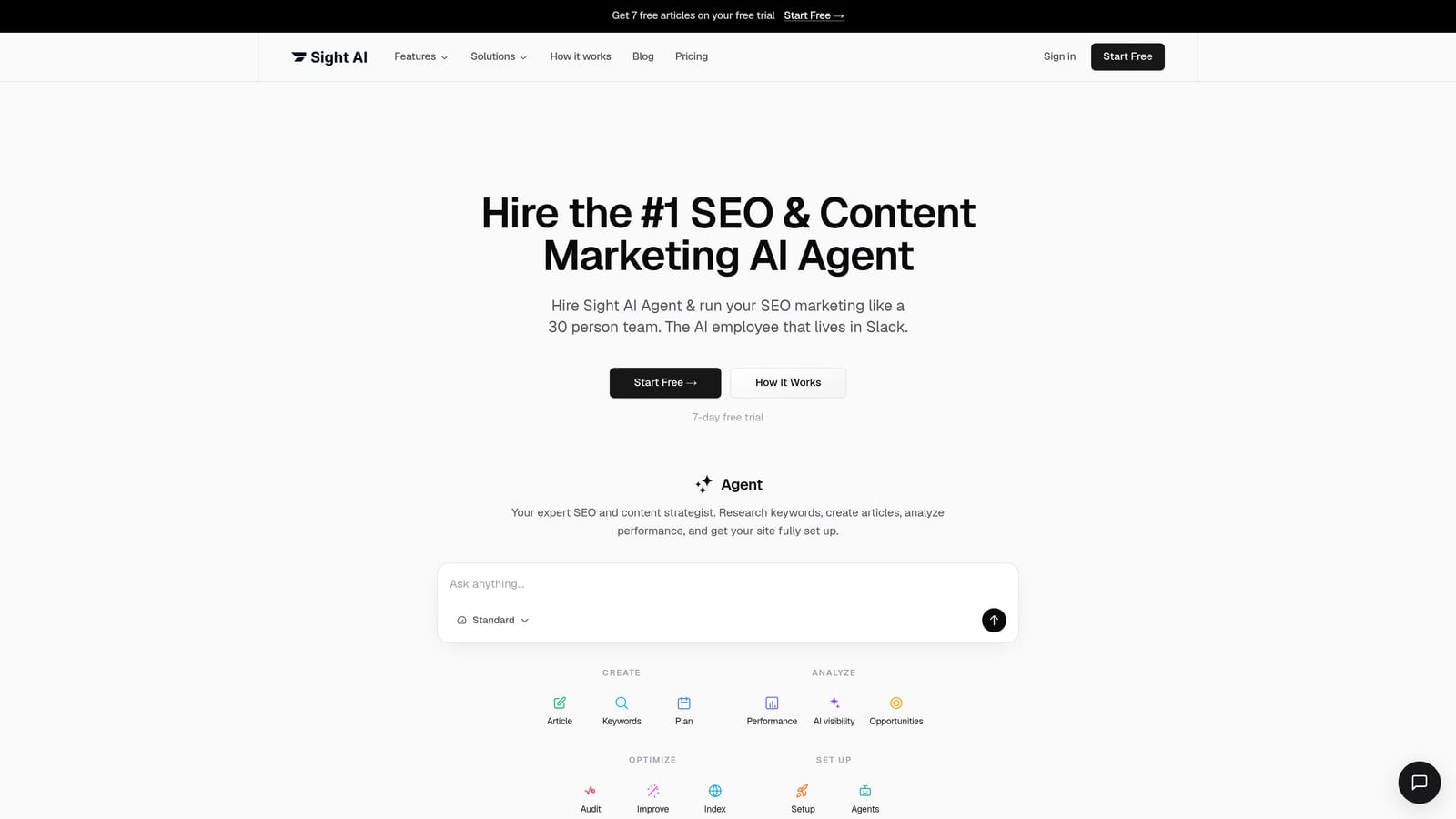
Sight AI is an all-in-one AI visibility platform that tracks brand mentions across 6+ AI models, generates SEO and GEO-optimized content with 13+ specialized AI agents, and automates indexing via IndexNow — connecting the full loop from tracking to publishing.
Where This Tool Shines
Most citation tracking tools stop at the data. Sight AI goes further by closing the gap between insight and execution. When you discover that your brand is underrepresented in a specific AI response category, you can immediately task one of the platform's 13+ AI content agents to generate an optimized article targeting that gap, publish it via CMS auto-publishing, and submit it for indexing through IndexNow — all within the same platform.
The AI Visibility Score gives you a single, trackable metric for how your brand performs across AI platforms, with sentiment analysis layered in so you can see not just whether you're mentioned, but how. Autopilot Mode takes this further by enabling ongoing, hands-free content production that keeps your AI presence growing without constant manual input.
Key Features
AI Visibility Score: A composite metric tracking brand mention frequency and sentiment across ChatGPT, Claude, Perplexity, and 3+ additional AI platforms.
Prompt Tracking: Monitor how AI models respond to brand-relevant and category-level queries over time, so you can detect shifts as they happen.
13+ Specialized AI Content Agents: Purpose-built agents for generating GEO-optimized listicles, guides, explainers, and more — designed specifically to improve AI citation potential.
Autopilot Mode: Hands-free content production at scale, keeping your content pipeline active without requiring constant manual intervention.
IndexNow Integration: Automated sitemap updates and IndexNow submission ensure new content is discovered and indexed faster, shortening the time between publishing and AI visibility.
CMS Auto-Publishing: Publish directly from the platform to your CMS, eliminating the manual handoff between content generation and going live.
Best For
Sight AI is best suited for marketers, founders, and agency teams who want more than a monitoring dashboard. If your goal is to track AI visibility and systematically improve it through content, this is the platform that connects those two activities in one workflow rather than requiring separate tools.
Pricing
See trysight.ai for current plans and pricing tiers.
2. Profound
Best for: Enterprise marketing teams that need structured AI answer monitoring at scale.
Profound is an enterprise-focused AI answer monitoring platform that tracks how brands appear in AI-generated responses and benchmarks performance against named competitors.
Where This Tool Shines
Profound is built for organizations that need systematic, large-scale monitoring of AI-generated answers. Its prompt library management system allows teams to define and organize hundreds of brand-relevant queries, then track how AI models respond to those queries over time. This makes it particularly useful for brands operating in competitive categories where AI share of voice is a meaningful business metric.
The competitive benchmarking features are a standout. Rather than just reporting on your own brand, Profound shows how your AI presence compares to named competitors across the same prompt sets, giving marketing teams a clearer picture of where they stand in the AI-generated conversation.
Key Features
Large-Scale LLM Monitoring: Tracks brand mentions across major AI language models at enterprise volume.
Competitive Share-of-Voice Reporting: Benchmarks your brand's AI presence against named competitors across shared prompt categories.
Prompt Library Management: Organize and manage structured prompt sets for systematic, repeatable monitoring.
Enterprise Reporting and Collaboration: Team-level reporting features designed for larger marketing organizations and agency workflows.
Best For
Profound is a strong fit for enterprise marketing teams and large agencies that need rigorous, structured AI monitoring with competitive intelligence built in. It's less suited to smaller teams or solo operators who don't need the overhead of an enterprise platform.
Pricing
Contact Profound directly for enterprise pricing. See profound.ai for details.
3. Promptwatch
Best for: SEO professionals and brand managers who want to track specific prompts over time.
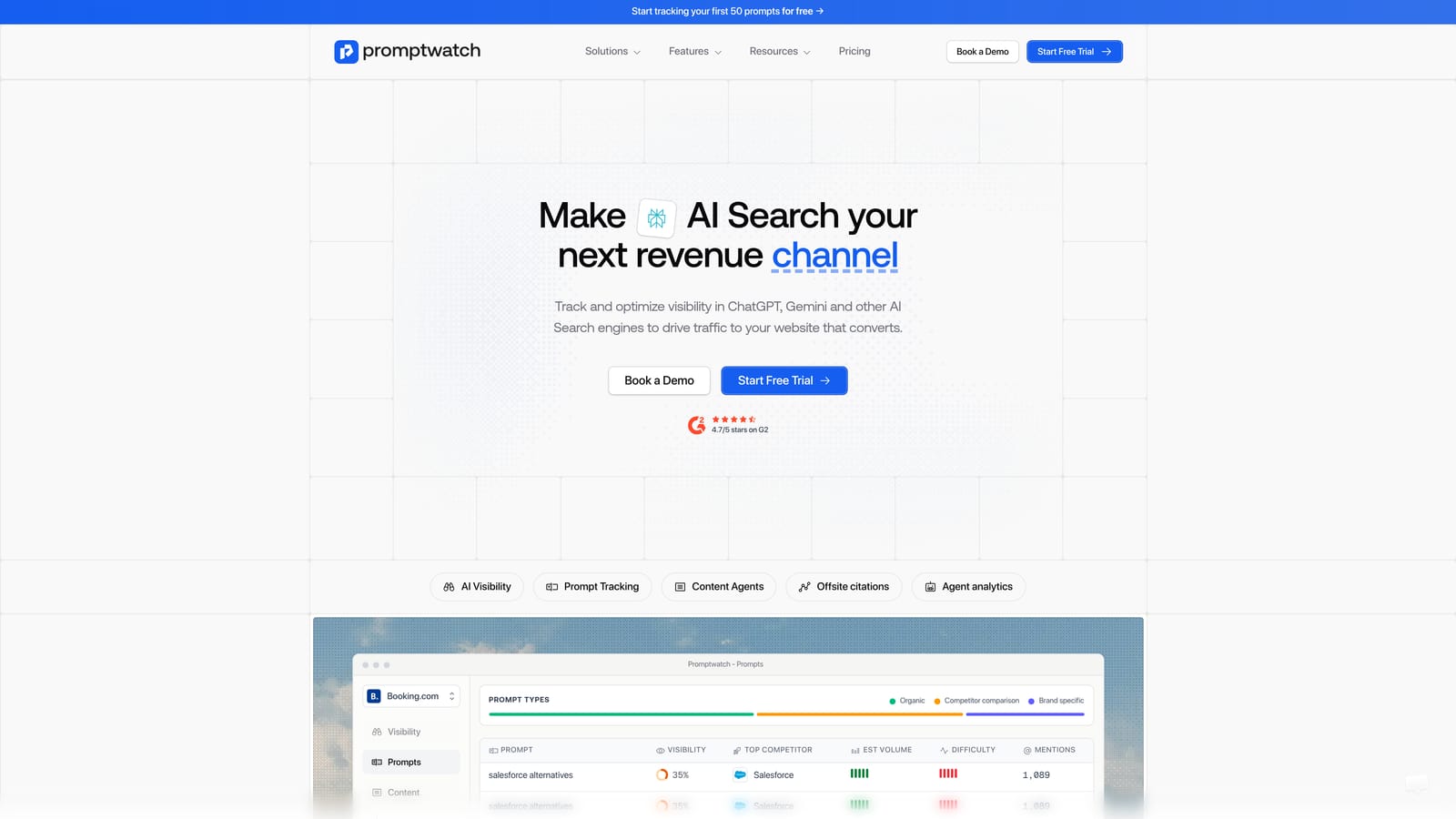
Promptwatch is a prompt-level AI monitoring tool that tracks how specific queries return brand mentions over time, alerting teams when AI model responses shift.
Where This Tool Shines
The core value of Promptwatch is longitudinal tracking. AI models update their training data and response patterns over time, which means a brand that appeared prominently in AI answers last quarter might not appear the same way today. Promptwatch is built to catch those changes early, so teams can respond before a drop in AI visibility compounds into a real traffic or awareness problem.
The custom prompt library creation is intuitive and designed with SEO and brand management workflows in mind. You define the queries that matter most to your brand, and Promptwatch monitors them consistently, surfacing alerts when the pattern of AI responses changes in a meaningful way.
Key Features
Custom Prompt Library: Build and manage brand-specific prompt sets tailored to your category and competitive landscape.
Historical Response Tracking: Detect when AI model responses change over time, so you can identify drops or gains in brand visibility.
Brand Mention Alerts: Notification workflows that flag shifts in how AI models reference your brand.
SEO-Oriented Interface: Designed with search and brand management teams in mind, making it accessible without a steep learning curve.
Best For
Promptwatch works well for SEO professionals and brand managers who want focused, prompt-level monitoring without the complexity of a full enterprise platform. It's a practical choice for teams that already have a content workflow and just need reliable citation tracking layered in.
Pricing
See promptwatch.io for current pricing.
4. Peec
Best for: Agencies and competitive brands that want AI share-of-voice benchmarking.
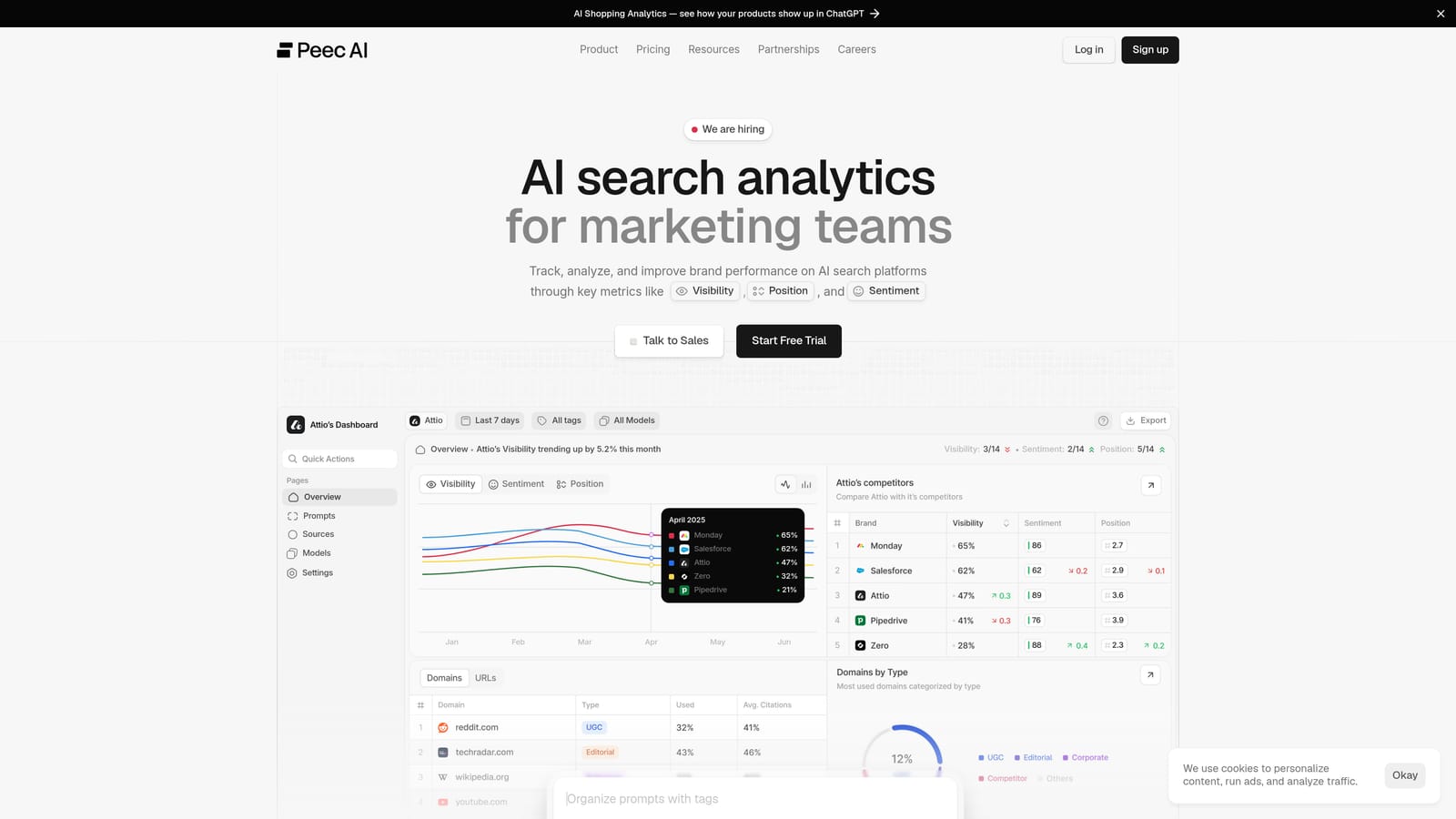
Peec is an AI visibility benchmarking tool focused on competitive share-of-voice analysis, showing where your brand stands relative to competitors in AI-generated answers.
Where This Tool Shines
Peec's strength is in competitive context. Rather than just telling you how often your brand appears in AI responses, it frames that data relative to your competitors. This is particularly useful in categories where multiple brands are vying for AI recommendation, and where knowing your relative position is as important as knowing your absolute mention count.
The category-level visibility scoring gives teams a clear view of which topic areas they're winning and which they're losing in AI-generated answers. For agencies managing multiple client brands across different competitive categories, this kind of structured benchmarking data is genuinely useful for prioritizing where to invest content and GEO efforts.
Key Features
Competitive AI Share-of-Voice Tracking: Measures your brand's AI mention rate against named competitors across prompt categories.
Brand vs. Competitor Dashboards: Side-by-side comparison views that make competitive positioning immediately clear.
Category-Level Visibility Scoring: Identifies which topic areas your brand is winning or losing in AI-generated answers.
Multi-Client Support: Designed to accommodate agencies managing visibility tracking across multiple brands simultaneously.
Best For
Peec is a natural fit for agencies running AI visibility programs for multiple clients, and for in-house teams in competitive categories where share-of-voice benchmarking is a key reporting metric. It's less of a content action tool and more of an intelligence and benchmarking platform.
Pricing
See peec.ai for current pricing information.
5. AirOps
Best for: Content teams building and testing AI-powered GEO content pipelines.
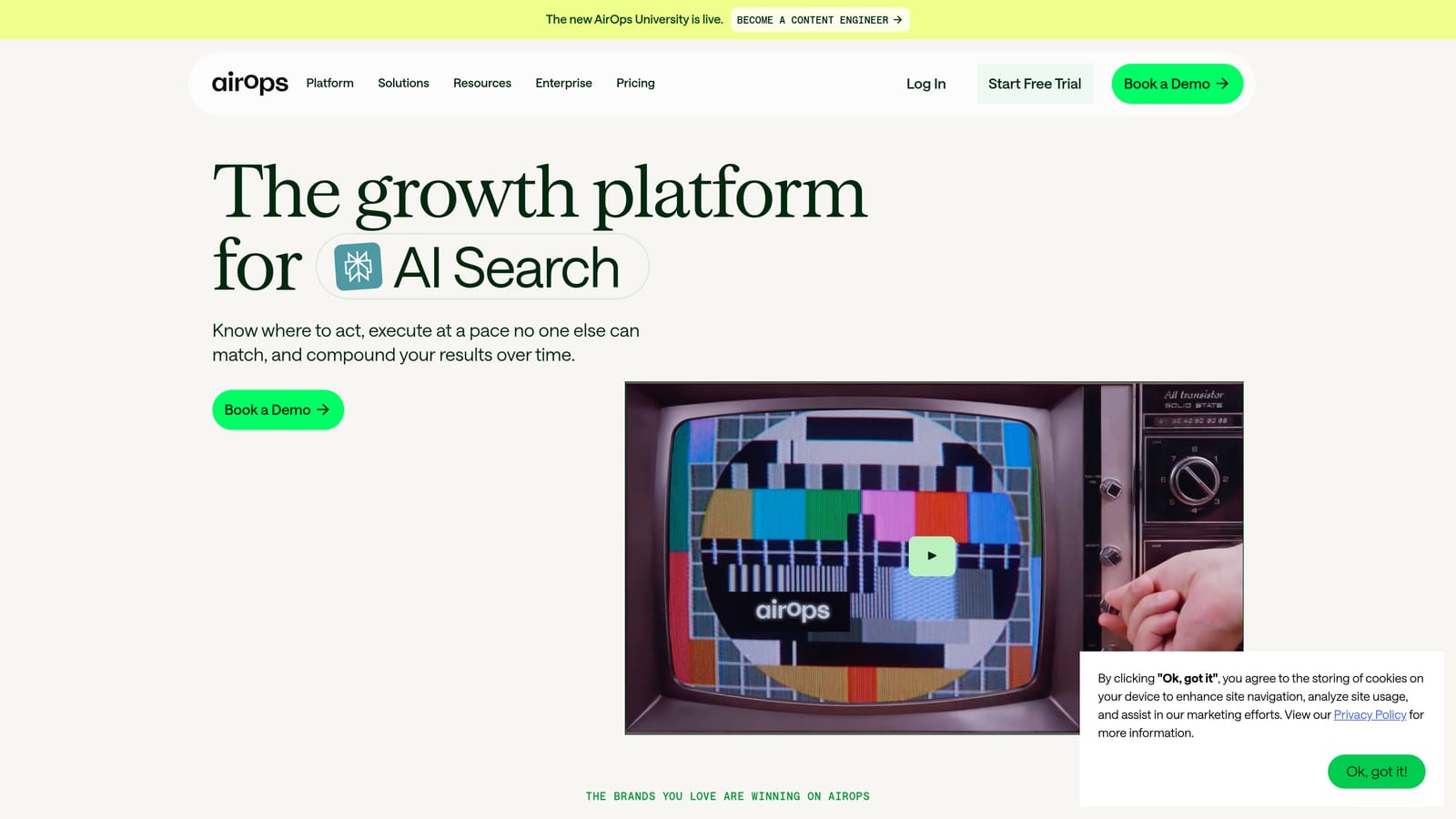
AirOps is an AI workflow automation platform that enables content teams to build, test, and scale AI-powered content pipelines, with prompt testing capabilities that are directly relevant to GEO strategy.
Where This Tool Shines
AirOps approaches the AI visibility problem from the content production side rather than the monitoring side. Its workflow builder lets teams design structured, repeatable content operations powered by AI, which is particularly useful for teams running systematic GEO experiments. You can build a workflow that generates a piece of content, tests how it performs in AI model responses, iterates on the prompt, and scales what works.
The integrations with popular CMS and data platforms make AirOps a practical choice for teams that already have an established tech stack. It fits into existing workflows rather than requiring you to rebuild around a new platform.
Key Features
AI Workflow Builder: Design and automate structured content operations using a visual workflow interface.
Prompt Testing: Evaluate how different content approaches perform in AI model responses, supporting iterative GEO experimentation.
CMS and Data Integrations: Connects with popular content management and data platforms to fit into existing team workflows.
Scalable Pipeline Design: Build content operations that scale without proportional increases in manual effort.
Best For
AirOps is best suited to content-heavy teams that want to systematize their GEO content production and test different approaches to AI citation optimization. It's more of an active experimentation and production tool than a passive monitoring platform, so it works best alongside a dedicated citation tracking solution.
Pricing
See airops.com for current plans.
6. Writesonic
Best for: Teams that need high-volume, GEO-oriented content production with built-in SEO scoring.
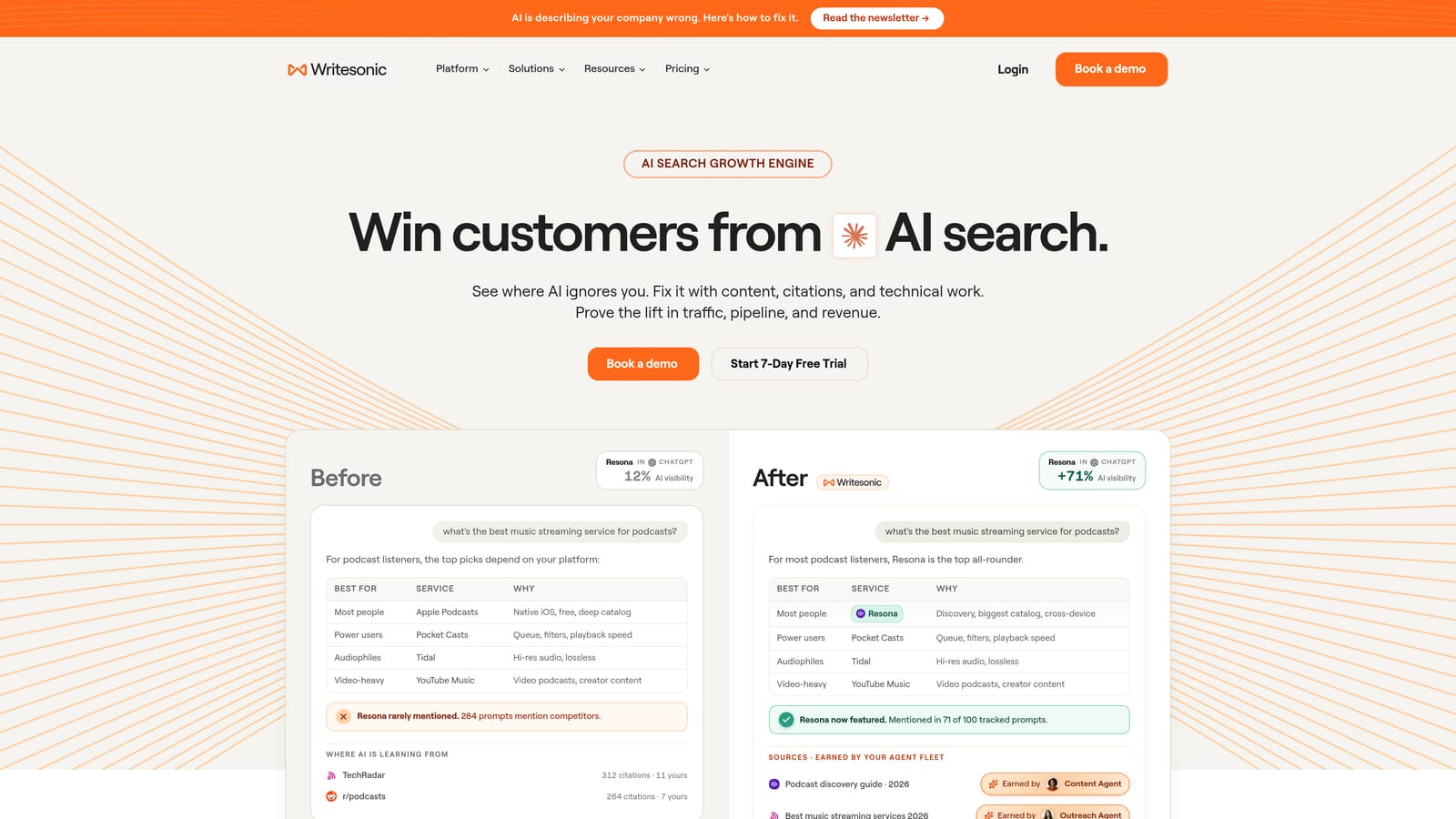
Writesonic is an AI content generation platform with SEO and GEO optimization features, brand voice controls, and high-volume publishing capabilities designed to support AI citation strategies.
Where This Tool Shines
Writesonic's relevance to AI citation tracking is indirect but real. The content you publish directly influences whether AI models cite your brand. Writesonic is built to produce large volumes of structured, SEO-scored content quickly, and its GEO-oriented templates are designed with AI answer inclusion in mind. For teams running content-heavy strategies to improve their AI visibility, it provides a capable production engine.
Brand voice customization is a practical feature for teams managing multiple clients or maintaining consistent tone across a high volume of output. The built-in SEO scoring gives writers immediate feedback on whether content is likely to perform well in both traditional search and AI-generated answers.
Key Features
AI Content Generation with SEO Scoring: Produces articles and other content formats with real-time SEO feedback built into the writing interface.
Brand Voice Customization: Maintains consistent tone and style across high-volume content production.
GEO-Oriented Templates: Content formats designed to improve the likelihood of inclusion in AI-generated answers.
High-Volume Production: Suited to content strategies that require consistent, large-scale output over time.
Best For
Writesonic is a good fit for content teams and agencies that need to produce large volumes of GEO-optimized content efficiently. It's worth noting that it's primarily a content generation tool rather than a citation tracking platform, so teams using it for AI visibility purposes will typically pair it with a dedicated monitoring solution.
Pricing
A free plan is available. Paid plans start from approximately $16 per month; verify current pricing at writesonic.com.
Which Tool Is Right for Your Team?
The right AI citation tracking tool depends on what you're trying to accomplish and where you are in building out your AI visibility strategy.
If you want a single platform that handles tracking, content generation, and publishing in one workflow, Sight AI is the most complete option. Its AI Visibility Score, prompt tracking, 13+ content agents, and IndexNow-powered indexing mean you can identify a gap in your AI presence and close it without leaving the platform. For teams that want to move from insight to action quickly, that integration matters.
For enterprise monitoring at scale: Profound's structured prompt library management and competitive benchmarking make it the strongest choice for large marketing teams that need rigorous, repeatable tracking.
For prompt-level change detection: Promptwatch is the focused option for SEO professionals who want to know exactly when and how AI responses to their key queries shift over time.
For competitive share-of-voice analysis: Peec is purpose-built for agencies and brands that need to benchmark their AI presence against named competitors across categories.
For content pipeline experimentation: AirOps is the tool for teams building and testing GEO content workflows at scale, while Writesonic suits teams that need high-volume, brand-consistent content production to fuel their AI citation strategy.
AI citation visibility is no longer a nice-to-have. It's becoming a core channel for brand discovery. The brands that understand where they appear in AI-generated answers, and systematically improve that presence through optimized content, will have a meaningful advantage as AI search continues to grow.
Stop guessing how AI models like ChatGPT and Claude talk about your brand. Start tracking your AI visibility today and see exactly where your brand appears across top AI platforms.