Managing indexing for websites with thousands or millions of pages presents unique challenges that manual approaches simply cannot address. When search engines struggle to discover and crawl your content efficiently, even the best pages remain invisible to potential visitors. For enterprise sites, e-commerce platforms, and content-heavy publishers, automated indexing isn't a luxury—it's a necessity for maintaining competitive organic visibility.
Think of it this way: if you publish 500 new product pages daily, waiting for search engines to naturally discover them could mean weeks of lost revenue. Your competitors aren't waiting, and neither should you.
This guide explores seven battle-tested automation strategies that help large sites ensure their most valuable content gets indexed quickly and efficiently, reducing crawl waste and maximizing the return on your content investment. Let's dive into the tactics that separate high-performing enterprise sites from those struggling to maintain visibility.
1. Implement IndexNow Protocol for Real-Time URL Submission
The Challenge It Solves
Traditional indexing relies on search engines discovering your content through crawling, which can take days or even weeks for large sites. When you publish time-sensitive content or make critical updates, this delay directly impacts your ability to capture traffic. For sites with hundreds of daily updates, the gap between publication and indexing becomes a significant competitive disadvantage.
The Strategy Explained
IndexNow is an open protocol supported by Microsoft Bing, Yandex, and other search engines that allows you to instantly notify them when content is published or updated. Instead of waiting for crawlers to discover changes, you proactively push URL notifications through a simple API call. The protocol uses a verification key system to confirm ownership, and a single submission can notify all participating search engines simultaneously.
What makes IndexNow particularly valuable for large sites is its simplicity and efficiency. Unlike traditional submission methods that require separate processes for each search engine, IndexNow uses a unified approach. When you submit a URL to one participating search engine, they share that information with others in the network.
Implementation Steps
1. Generate an IndexNow API key and host the verification file in your site's root directory to confirm ownership.
2. Integrate IndexNow API calls into your content management system's publishing workflow, triggering submissions automatically when content goes live or updates occur.
3. Set up batch submission processes for bulk updates, grouping URLs into arrays of up to 10,000 URLs per request to handle large-scale content changes efficiently.
4. Monitor submission logs and response codes to ensure successful delivery and troubleshoot any authentication or formatting issues.
Pro Tips
Submit only meaningful changes, not every minor edit. Search engines appreciate quality signals, and excessive submissions of trivial updates can dilute the impact of your important content changes. Focus IndexNow submissions on new pages, substantial content updates, and critical fixes rather than cosmetic tweaks. For more guidance on choosing the right tools, explore our guide to SEO indexing automation tools.
2. Deploy Dynamic XML Sitemap Generation and Auto-Submission
The Challenge It Solves
Static sitemaps become outdated the moment you publish new content, creating a disconnect between what search engines know about your site and what actually exists. For large sites with frequent updates, manually regenerating and submitting sitemaps is both time-consuming and error-prone. The result? Search engines work from incomplete maps, missing your newest and most valuable content.
The Strategy Explained
Dynamic sitemap generation automatically rebuilds your XML sitemaps whenever content changes occur, ensuring search engines always have an accurate roadmap of your site. This approach combines real-time sitemap updates with automated submission to Search Console, creating a continuous loop of content discovery. The system monitors your database for changes, regenerates affected sitemap segments, and notifies search engines without human intervention.
For sites with millions of URLs, the key is implementing sitemap index files that organize content into logical segments. Each segment updates independently, so publishing ten new blog posts doesn't require regenerating your entire product catalog sitemap.
Implementation Steps
1. Configure your CMS or build custom scripts to generate sitemaps dynamically from your database, pulling publication dates, modification timestamps, and priority signals directly from content metadata.
2. Implement sitemap index files that organize URLs into logical categories (blog posts, product pages, category pages) with each segment containing no more than 50,000 URLs as specified by the sitemaps.org protocol.
3. Set up automated sitemap submission to Google Search Console using their API, triggering submissions immediately after sitemap regeneration completes.
4. Include accurate lastmod dates, changefreq attributes, and priority values to help search engines understand which content changes most frequently and deserves priority crawling.
Pro Tips
Use conditional sitemap generation that only rebuilds segments affected by content changes. If you update a product page, regenerate only the product sitemap segment rather than your entire sitemap structure. Learn more about implementing sitemap automation for large sites to reduce server load and make the automation more sustainable at scale.
3. Establish Crawl Budget Optimization Through Strategic Internal Linking
The Challenge It Solves
Search engines allocate limited crawl resources to each site based on authority, server performance, and content quality. Large sites often waste this precious crawl budget on low-value pages while high-priority content sits buried and undiscovered. Without strategic internal linking, crawlers follow paths of least resistance rather than paths of greatest value, leaving your best content under-indexed.
The Strategy Explained
Automated internal linking systems distribute link equity strategically, ensuring crawlers encounter your most valuable content early and often. This approach uses algorithms to identify priority pages based on business value, traffic potential, or content freshness, then automatically creates linking pathways that guide crawlers to these targets. The system continuously adjusts link distribution as priorities shift, maintaining optimal crawl patterns without manual intervention.
Think of it like designing a highway system. You want direct routes to major destinations, not winding paths through every small town. Automated linking creates these express lanes for search engine crawlers, directing them efficiently to content that matters most to your business.
Implementation Steps
1. Define priority tiers for your content based on business value metrics such as conversion potential, traffic history, or revenue attribution, creating clear rules for what deserves prominent internal linking.
2. Implement automated contextual linking that analyzes content semantics and automatically inserts relevant internal links from existing pages to new high-priority content as it publishes.
3. Build breadcrumb and navigation systems that programmatically surface priority content in site-wide elements, ensuring every page provides pathways to your most important URLs.
4. Create monitoring dashboards that track internal link distribution and identify orphan pages or under-linked priority content requiring intervention.
Pro Tips
Combine link depth analysis with priority scoring. Pages that require more than four clicks from your homepage often get crawled less frequently. Automate the creation of shortcut links that bring high-value deep content closer to your site's surface, improving both crawl efficiency and user experience simultaneously. This is especially critical for content indexing for large websites where page depth can significantly impact discovery.
4. Configure Automated Robots.txt and Meta Tag Management
The Challenge It Solves
Large sites accumulate low-value pages that consume crawl budget without contributing to organic visibility. Duplicate content, filter pages, search result pages, and administrative sections all compete for crawler attention with your money pages. Manually managing robots.txt directives and noindex tags across thousands of page templates becomes impossible, leading to crawl budget waste and indexing bloat.
The Strategy Explained
Automated robots.txt and meta tag management applies consistent indexing rules across your entire site based on content classification logic. The system evaluates each page against predefined quality criteria, automatically applying appropriate directives to control crawler access and indexing. This creates a self-regulating system where low-value pages automatically exclude themselves from indexes while priority content remains fully accessible.
The key is building classification rules that adapt to content characteristics. A product page with inventory becomes indexable, but when stock depletes, the system automatically adds noindex tags. Filter combinations that create near-duplicate content get blocked in robots.txt, while unique filter combinations remain crawlable.
Implementation Steps
1. Develop content quality scoring algorithms that evaluate pages based on criteria like content length, uniqueness, user engagement metrics, and business value to determine indexability.
2. Implement dynamic robots.txt generation that blocks low-value URL patterns such as infinite scroll pagination, redundant filter combinations, and internal search result pages.
3. Configure automated meta robots tag insertion that applies noindex directives to pages falling below quality thresholds while preserving crawlability for link equity distribution.
4. Build exception handling for temporary states, ensuring pages blocked due to low inventory or incomplete content automatically become indexable when conditions improve.
Pro Tips
Use the crawl-delay directive sparingly and strategically. While it can protect server resources during traffic spikes, overly aggressive delays slow down indexing of your entire site. Instead, focus on blocking low-value sections entirely rather than just slowing crawler access to them. Understanding the difference between SEO automation vs manual optimization helps you decide which tasks to automate.
5. Integrate Google Search Console API for Bulk URL Inspection
The Challenge It Solves
Understanding which pages are indexed, which are blocked, and why requires constant monitoring that becomes overwhelming at scale. Manually checking indexing status through Search Console's interface works for small sites but fails completely when managing thousands of URLs. Without systematic monitoring, critical indexing issues can persist for weeks before discovery, silently eroding your organic visibility.
The Strategy Explained
The Google Search Console API provides programmatic access to URL inspection data, allowing you to check indexing status and request re-indexing for hundreds of URLs daily. By integrating this API into automated workflows, you can systematically monitor your most important pages, identify indexing problems early, and trigger re-indexing requests when issues arise. The system creates a continuous feedback loop between your content management system and Google's index.
This approach is particularly powerful when combined with priority scoring. Instead of randomly sampling URLs, you systematically inspect pages that matter most to your business, ensuring critical content receives immediate attention when indexing problems occur.
Implementation Steps
1. Set up Google Search Console API authentication using service accounts to enable programmatic access to indexing data without manual intervention.
2. Build automated inspection workflows that systematically check priority URLs on a rotating schedule, respecting API quotas while maximizing coverage of critical content.
3. Create alert systems that notify technical teams when inspection reveals indexing errors, coverage issues, or unexpected noindex directives on priority pages.
4. Implement automated re-indexing request submission for pages that show as not indexed but should be, using the URL inspection API's request indexing endpoint within daily quota limits.
Pro Tips
Prioritize your inspection queue based on page freshness and business value. Newly published high-priority content deserves daily inspection, while stable evergreen pages can be checked weekly. This strategic allocation of your daily API quota ensures you catch critical issues quickly while maintaining comprehensive monitoring coverage. Consider exploring automated indexing services for SEO to streamline this process.
6. Build Automated Log File Analysis Pipelines
The Challenge It Solves
Search engine crawler behavior reveals crucial insights about indexing efficiency, but server logs generate massive data volumes that make manual analysis impractical. Without systematic log analysis, you miss patterns like crawler traps, redirect chains, and crawl budget waste on low-value sections. Large sites need automated systems to process millions of log entries and surface actionable insights about crawler behavior.
The Strategy Explained
Automated log file analysis pipelines continuously process server logs to track search engine crawler activity, identifying patterns and anomalies that impact indexing efficiency. These systems parse log files in real-time or near-real-time, extracting crawler requests, response codes, and timing data to build comprehensive pictures of how search engines interact with your site. The analysis reveals which sections consume disproportionate crawl budget, which important pages get ignored, and where technical issues block crawler access.
By automating this analysis, you transform raw log data into actionable intelligence without dedicating team members to manual log review. The system runs continuously in the background, alerting you only when it detects significant changes or problems.
Implementation Steps
1. Configure log aggregation systems that collect server logs from all web servers into a centralized data warehouse for comprehensive analysis.
2. Build parsing scripts that extract crawler user agents, requested URLs, response codes, and response times, filtering out non-search-engine traffic to focus analysis on indexing-relevant activity.
3. Create automated reports that calculate key metrics like crawl frequency by section, response code distribution, and crawl budget allocation across different content types.
4. Implement anomaly detection algorithms that flag unusual patterns such as sudden crawl rate changes, increased error rates, or crawlers getting trapped in infinite loops.
Pro Tips
Segment your analysis by crawler type. Googlebot, Bingbot, and other crawlers behave differently and have different priorities. Understanding how each crawler interacts with your site allows you to optimize for multiple search engines simultaneously rather than assuming one-size-fits-all solutions. Publishers with time-sensitive content should also review strategies for automated indexing for news sites.
7. Create Content Publication Workflows with Built-In Indexing Triggers
The Challenge It Solves
When indexing automation exists as a separate system from content creation, gaps emerge where content publishes but indexing signals never fire. Manual coordination between content teams and technical teams creates delays and inconsistencies. For organizations publishing hundreds of pieces daily, these disconnected workflows result in content sitting unindexed while teams assume automation is handling everything.
The Strategy Explained
Embedding indexing automation directly into your CMS publishing workflow ensures every content action automatically triggers appropriate indexing signals. When an editor clicks publish, the system doesn't just make content live—it simultaneously updates sitemaps, sends IndexNow notifications, and logs the URL for Search Console inspection. This integrated approach eliminates the possibility of content falling through automation gaps because indexing becomes an inseparable part of the publishing process itself.
The beauty of this strategy is its reliability. You're not depending on separate cron jobs or external systems to notice content changes. The publishing action itself initiates the indexing cascade, creating a deterministic system where every publication guarantees indexing attention.
Implementation Steps
1. Map your content lifecycle stages (draft, review, published, updated, unpublished) and define specific indexing actions that should trigger at each transition point.
2. Integrate IndexNow API calls, sitemap update triggers, and Search Console notifications directly into your CMS's publishing hooks or event listeners.
3. Build rollback mechanisms that handle indexing actions when content is unpublished or deleted, submitting removal requests and updating sitemaps to reflect the change.
4. Create publishing dashboards that confirm successful indexing trigger execution, giving content teams visibility into whether their published content successfully initiated all required indexing actions. Teams looking for comprehensive solutions should explore enterprise SEO automation platforms that integrate these capabilities.
Pro Tips
Implement staging environment safeguards that prevent indexing triggers from firing during preview or testing. The last thing you want is your automation submitting draft content or test pages to search engines. Use environment detection to ensure indexing actions only execute in production, protecting your index from pollution while maintaining seamless automation for live content.
Putting It All Together
Effective indexing automation for large sites requires a multi-layered approach that addresses discovery, crawl efficiency, and continuous monitoring simultaneously. These seven strategies work together to create a comprehensive system where content moves from publication to indexing with minimal friction and maximum efficiency.
Start by implementing IndexNow for immediate URL submission—it's the quickest win with minimal setup. A few hours of development work can dramatically reduce your time-to-index for new content. Next, ensure your sitemap infrastructure updates dynamically, providing search engines with an always-current roadmap of your content landscape.
Then layer in crawl budget optimization through strategic internal linking and robots.txt management. These strategies ensure that when crawlers arrive, they spend their limited time on pages that actually matter to your business rather than wandering through low-value sections.
Finally, build monitoring systems using Search Console API and log analysis to continuously refine your approach. Automation without monitoring is just crossing your fingers and hoping. These feedback mechanisms transform your indexing system from a set-it-and-forget-it tool into an adaptive engine that improves over time.
The goal isn't just faster indexing—it's ensuring search engines spend their limited crawl budget on your most valuable content. When you publish a high-priority page, it should be discovered within hours, not weeks. When you update important content, search engines should know immediately. When low-value pages consume crawl budget, your systems should automatically block or deprioritize them.
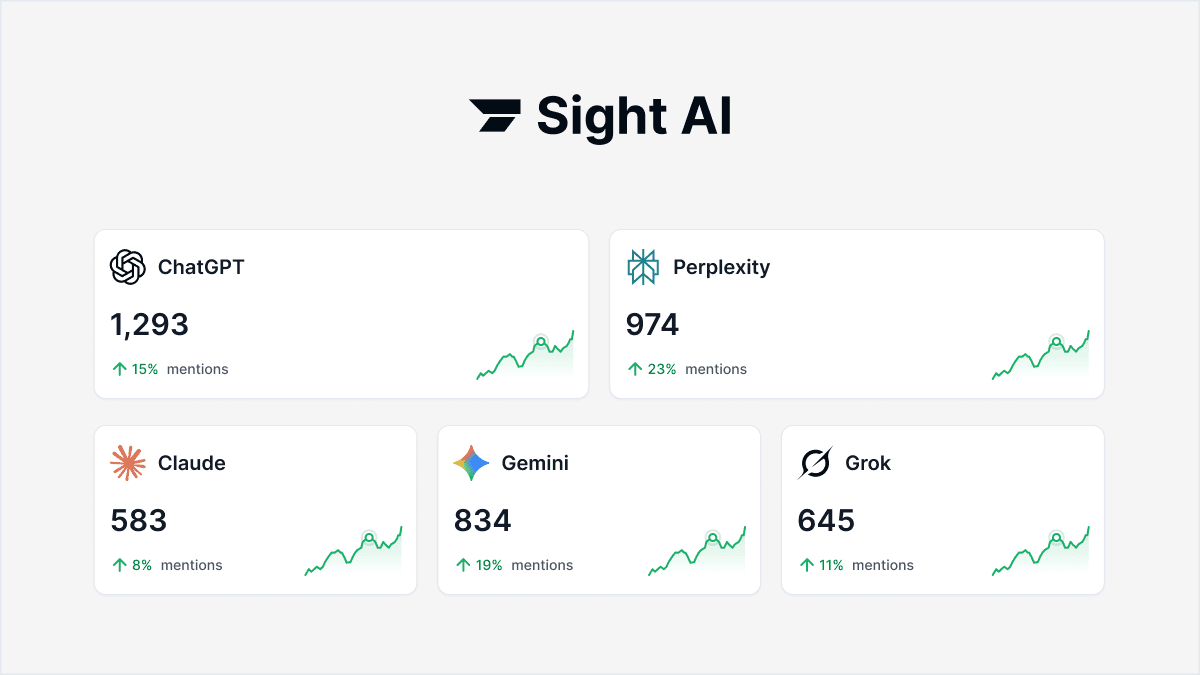
With these seven strategies working together, large sites can dramatically improve content discovery and maintain competitive organic visibility. But here's the thing: indexing automation is just one piece of the visibility puzzle. As AI-powered search continues to evolve, understanding how models like ChatGPT and Claude reference your brand becomes equally critical to traditional search visibility.
Start tracking your AI visibility today and see exactly where your brand appears across top AI platforms. Stop guessing how AI models talk about your brand—get visibility into every mention, track content opportunities, and automate your path to organic traffic growth. The future of search is here, and it's time to optimize for both traditional crawlers and AI models simultaneously.