Long form content remains one of the most powerful drivers of organic traffic and AI visibility, but producing it consistently is a resource bottleneck for most marketing teams. A single 2,500-word article can take eight or more hours to research, draft, edit, and publish manually. Multiply that across a content calendar of 10 to 20 pieces per month, and you're looking at a full-time role dedicated solely to writing.
Long form content automation solves this by using AI agents, workflow orchestration, and smart publishing pipelines to produce comprehensive, SEO/GEO-optimized articles at scale without sacrificing depth or quality. But automation done poorly creates a different problem: generic, repetitive content that neither search engines nor AI models want to surface.
The strategies in this guide focus on building automation systems that maintain editorial rigor while dramatically reducing production time. Whether you're a founder publishing your first 50 articles, an agency managing content for multiple clients, or a marketing team scaling from 5 to 50 posts per month, these seven strategies will help you automate long form content the right way. The goal is to produce pieces that rank in traditional search and get your brand mentioned across AI platforms like ChatGPT, Claude, and Perplexity.
1. Architect a Modular Content Pipeline Before You Automate Anything
The Challenge It Solves
Most teams make the mistake of reaching for AI tools before they understand their own workflow. The result is a fragmented process where automation patches over chaos rather than eliminating it. Without a clear map of how content moves from idea to publication, every automated step becomes unpredictable and difficult to improve.
The Strategy Explained
Think of your content pipeline like an assembly line. Each station has a specific input, a defined transformation, and a measurable output. Before you automate anything, document every stage of your current process: topic ideation, keyword research, brief creation, drafting, editing, optimization, internal linking, publishing, and indexing.
Once each stage is clearly defined, you can identify which steps are high-value and require human judgment and which are repetitive and rule-based. The repetitive ones are your automation candidates. The high-value ones are where your team's expertise belongs. This modular approach also makes it easy to swap tools or agents in and out without rebuilding your entire workflow from scratch. Teams looking to formalize this structure can benefit from dedicated content pipeline automation software that enforces these handoffs systematically.
Implementation Steps
1. Map your current content workflow in a simple flowchart, capturing every handoff, decision point, and tool involved.
2. Categorize each stage as either "automatable" (rule-based, repetitive) or "human-essential" (strategic, editorial, brand-sensitive).
3. Define the input and output for each stage so that automated tools have clear instructions and quality gates prevent low-quality content from advancing.
4. Build a staging environment where you can test your automation pipeline on a small batch of articles before deploying it at full scale.
Pro Tips
Don't try to automate everything at once. Start with one or two stages, validate the output quality, and then expand. Teams that try to automate the entire pipeline simultaneously often find themselves debugging multiple failure points at the same time, which slows progress significantly. Modular pipelines also make it much easier to onboard new team members because each stage is self-contained and documented.
2. Use Specialized AI Agents Instead of One-Size-Fits-All Prompts
The Challenge It Solves
Asking a single general-purpose prompt to produce a research-backed, SEO-optimized, 2,500-word listicle is like asking one person to be your researcher, writer, editor, and SEO strategist simultaneously. The output tends to be mediocre at everything. Generic prompts produce generic content, and generic content doesn't rank or get cited by AI models.
The Strategy Explained
The shift happening in 2025 and 2026 is from single-prompt generation to multi-agent orchestration. Instead of one prompt doing everything, you deploy specialized AI agents for each content type and each stage of production. A research agent focuses exclusively on competitive analysis and topic depth. A drafting agent works from a structured brief with specific tone parameters and structural templates. An optimization agent reviews the draft for keyword placement, heading structure, and GEO readiness.
Platforms like Sight AI's content writer use this approach with 13+ specialized AI agents, each configured for a distinct content format such as listicles, guides, and explainers. The result is content that reflects genuine specialization at every stage rather than a generic average across all requirements. For a deeper look at how AI-powered long form article writing leverages this multi-agent approach, the differences in output quality are significant.
Implementation Steps
1. Identify the content formats you produce most frequently and create a dedicated agent configuration for each one, including tone parameters, structural templates, and word count targets.
2. Build agent-specific system prompts that reflect the purpose of each stage: research agents should prioritize comprehensiveness, drafting agents should prioritize clarity and flow, and optimization agents should prioritize technical SEO and GEO structure.
3. Create handoff documents between agents so the output of one becomes the structured input for the next, maintaining continuity throughout the pipeline.
Pro Tips
Test each agent independently before chaining them together. If your research agent is producing shallow briefs, your drafting agent will produce shallow articles regardless of how well it's configured. The quality ceiling of your pipeline is determined by its weakest agent, not its strongest.
3. Front-Load Research Automation to Fuel Depth, Not Fluff
The Challenge It Solves
One of the most common criticisms of automated content is that it reads as surface-level. The reason is almost always the same: the research phase was skipped or rushed. When AI agents write without substantive research inputs, they default to broadly known information that adds little value for readers or search engines.
The Strategy Explained
The solution is to treat research automation as the foundation of your pipeline, not an optional step. Before any drafting begins, your automated workflow should produce a structured research brief that includes competitive content gaps, related questions your audience is asking, topic clusters to cover, and semantic keywords to incorporate.
Automated competitive analysis tools can scan top-ranking content for a given keyword and identify what those pieces cover and, more importantly, what they miss. Those gaps become the differentiating angles your automated articles address. Understanding how AI generated content SEO performance is measured can help you benchmark whether your research depth is translating into actual ranking improvements.
Implementation Steps
1. Automate SERP analysis for each target keyword to identify what the top-ranking articles cover, their average depth, and their structural patterns.
2. Pull related questions and semantic variations from sources like "People Also Ask" data and keyword clustering tools to ensure your brief covers the full topic surface area.
3. Compile all research outputs into a structured brief template that your drafting agent receives as its primary input, ensuring depth is built in from the start rather than added as an afterthought.
Pro Tips
The research brief is the most important document in your pipeline. A well-structured brief can compensate for a moderately capable drafting agent. A weak brief will undermine even the most sophisticated AI writer. Invest disproportionate attention in the research automation stage and your content quality will reflect it across every piece you produce.
4. Build Dynamic Internal Linking Into Your Automation Workflow
The Challenge It Solves
Internal linking is one of the most consistently neglected elements of content production, especially at scale. When teams are focused on hitting volume targets, internal links are often added manually as a final step or skipped entirely. The result is a content library full of isolated articles that don't pass authority to each other or guide readers deeper into your site.
The Strategy Explained
Rather than treating internal linking as a post-publication task, wire it directly into your content generation pipeline. This means building a system that maintains an index of your published content, maps the semantic relationships between articles, and automatically suggests or inserts contextually relevant internal links as each new piece is drafted.
The most effective implementations use a content graph where each article is tagged with its primary topics, target keywords, and content type. When a new article is generated, the pipeline queries this graph to find the most relevant existing pieces and inserts links at contextually appropriate points in the draft. Every article you publish strengthens the ones that came before it. Combining this with a broader SEO content workflow automation strategy ensures linking isn't siloed from the rest of your production process.
Implementation Steps
1. Build or maintain a structured index of your published content that includes each article's URL, primary keyword, topic tags, and content type.
2. Configure your drafting agent to query this index during generation and flag opportunities for internal links based on semantic relevance, not just keyword matching.
3. Establish a review step where a human editor or an optimization agent validates that suggested links are contextually natural and add genuine value for the reader.
4. Update your content index automatically every time a new article is published so the pipeline always has access to your full content library.
Pro Tips
Prioritize linking to your highest-value pages, including product pages, cornerstone content, and articles targeting high-intent keywords. Automated internal linking that distributes authority strategically is far more valuable than linking that simply connects related topics without considering the commercial or SEO priority of the destination page.
5. Optimize for AI Visibility During Generation, Not After
The Challenge It Solves
Most content teams think about SEO during or after the writing process, but they rarely think about GEO, which stands for Generative Engine Optimization. As AI-assisted search becomes a primary discovery channel, content needs to be structured not just for crawlers but for AI models that decide which sources to cite when answering user queries. Retrofitting GEO principles onto existing content is time-consuming and often incomplete.
The Strategy Explained
The more efficient approach is to embed GEO principles directly into your content templates so every automated article is structured for AI model citation from the moment it's generated. This means writing with clear, direct answers to specific questions, using structured headings that map to common query patterns, including factual statements that AI models can extract and attribute, and maintaining a consistent authoritative voice that signals expertise.
AI models like ChatGPT, Claude, and Perplexity tend to cite content that is well-organized, specific, and clearly sourced. When your automation templates are built around these characteristics, every article you produce has a stronger baseline for AI visibility without requiring additional optimization work after publication. Pairing this with a robust SEO content writing automation framework ensures both traditional search and AI discoverability are addressed simultaneously.
Implementation Steps
1. Audit your highest-performing content for GEO characteristics: direct question-answer structures, clear definitions, specific examples, and logical heading hierarchies. Use these as the basis for your content templates.
2. Configure your drafting agents to include at least one direct answer to the target query in the opening paragraphs, as AI models frequently pull from introductory content when generating responses.
3. Build heading structures into your templates that mirror common query patterns, such as "What is X," "How to do X," and "Why X matters," so your content naturally aligns with the questions AI models are answering.
Pro Tips
Track which of your articles are being cited by AI platforms using an AI visibility monitoring tool. Understanding which content structures and formats earn AI citations gives you data to refine your templates over time, creating a feedback loop where your automation system continuously improves its GEO performance.
6. Automate Publishing and Indexing for Immediate Discovery
The Challenge It Solves
There's a frustrating gap that exists in most content workflows: the time between when an article is ready and when search engines actually discover and index it. Without automated publishing and indexing, a piece can sit in a queue for hours or days, and then wait additional time for search engine crawlers to find it. At scale, this delay compounds into a significant drag on your content's time-to-traffic.
The Strategy Explained
Closing this gap requires connecting your content pipeline directly to two systems: your CMS for automated publishing and IndexNow for instant search engine notification. CMS auto-publishing eliminates the manual step of moving content from your pipeline to your website. IndexNow is a protocol supported by multiple search engines that allows you to notify them of new or updated content immediately rather than waiting for periodic crawl cycles. Understanding why content takes long to index helps clarify why this automation step is so critical for time-sensitive publishing strategies.
When these two systems are wired into your pipeline, the sequence becomes: content is approved, published automatically to your CMS, and simultaneously submitted to search engines via IndexNow. Sight AI's website indexing tools integrate both capabilities, including automatic sitemap updates, so every piece you publish is discoverable as quickly as technically possible.
Implementation Steps
1. Connect your content pipeline to your CMS via API so approved articles can be published automatically without manual intervention, including metadata, categories, and featured images.
2. Implement IndexNow integration so that every new publication triggers an immediate ping to supported search engines, notifying them of the new URL.
3. Automate sitemap updates so your sitemap always reflects your current content library, making it easier for search engines to discover and crawl new pages efficiently.
Pro Tips
Build a quality gate before the auto-publish step. Automated publishing is only as valuable as the content being published, so ensure your pipeline includes a final review checkpoint, whether human or AI-assisted, that validates content quality, metadata completeness, and internal linking before the publish trigger fires. Exploring dedicated content indexing automation tools can help you implement this notification layer without custom development.
7. Close the Loop With Performance-Driven Iteration
The Challenge It Solves
Most content automation systems are built to produce content but not to learn from it. Once an article is published, it's treated as finished. This is a missed opportunity. Content that doesn't rank, doesn't earn AI citations, or doesn't convert represents a signal that your pipeline needs refinement, and that signal is only valuable if your system is designed to receive and act on it.
The Strategy Explained
A truly intelligent content pipeline is a closed loop. Performance data flows back into the system and triggers specific actions: articles that are ranking on page two get flagged for expansion or optimization, topics that are generating strong traffic become the basis for related content clusters, and formats that earn consistent AI citations get promoted as templates for future pieces.
This performance-driven iteration is what separates a content factory from a content engine. The factory produces at a consistent rate but doesn't improve. The engine gets smarter over time because every piece of content it produces generates data that refines the next batch. Connecting your pipeline to AI visibility tracking, organic ranking data, and engagement metrics creates the feedback loop that makes this possible. Leveraging predictive content performance analytics takes this a step further by helping you anticipate which topics and formats will perform before you invest production resources.
Implementation Steps
1. Define the performance metrics that matter most for your pipeline: organic ranking position, organic traffic, AI citation frequency, time on page, and conversion rate are strong starting points.
2. Set automated alerts for articles that cross specific performance thresholds in either direction, such as articles that drop in ranking or articles that spike in traffic and could anchor a content cluster.
3. Build a refresh workflow that automatically generates an updated brief for underperforming articles, incorporating new competitive data, updated keyword targets, and any GEO improvements identified since the original publication.
4. Use AI visibility data to identify which content structures and formats are earning citations from models like ChatGPT and Claude, and feed those patterns back into your content templates.
Pro Tips
Schedule a monthly pipeline review where you analyze performance trends across your entire content library rather than individual articles. Patterns that emerge at the library level, such as a particular content format consistently outperforming others, are far more actionable than optimizing one article at a time and will have a compounding impact on your overall content strategy.
Putting Your Long Form Content Engine Into Motion
Building a long form content automation system that actually scales is a sequenced process, not a single implementation. The order in which you build matters as much as the components themselves.
Start by mapping and modularizing your existing workflow using Strategy 1. You cannot automate chaos, and trying to do so will produce inconsistent results that are difficult to diagnose. Once your pipeline is clearly defined, deploy specialized AI agents and research automation from Strategies 2 and 3 to immediately improve content quality and reduce production time. These two strategies together form the core of your content engine.
From there, wire up automated internal linking, GEO optimization, and instant publishing and indexing from Strategies 4, 5, and 6. These layers maximize the reach and discoverability of every piece you produce, ensuring that your content earns traffic from both traditional search and AI-powered platforms. Finally, close the loop with performance tracking from Strategy 7 so your system compounds in intelligence over time rather than simply producing at a fixed rate.
The teams seeing the strongest results from long form content automation aren't the ones producing the most content. They're the ones who've built intelligent pipelines where every stage is purposeful, measurable, and continuously improving. With the right automation stack, you can scale from a handful of articles per month to a content engine that drives organic traffic growth and earns your brand consistent visibility across both traditional search and AI platforms.
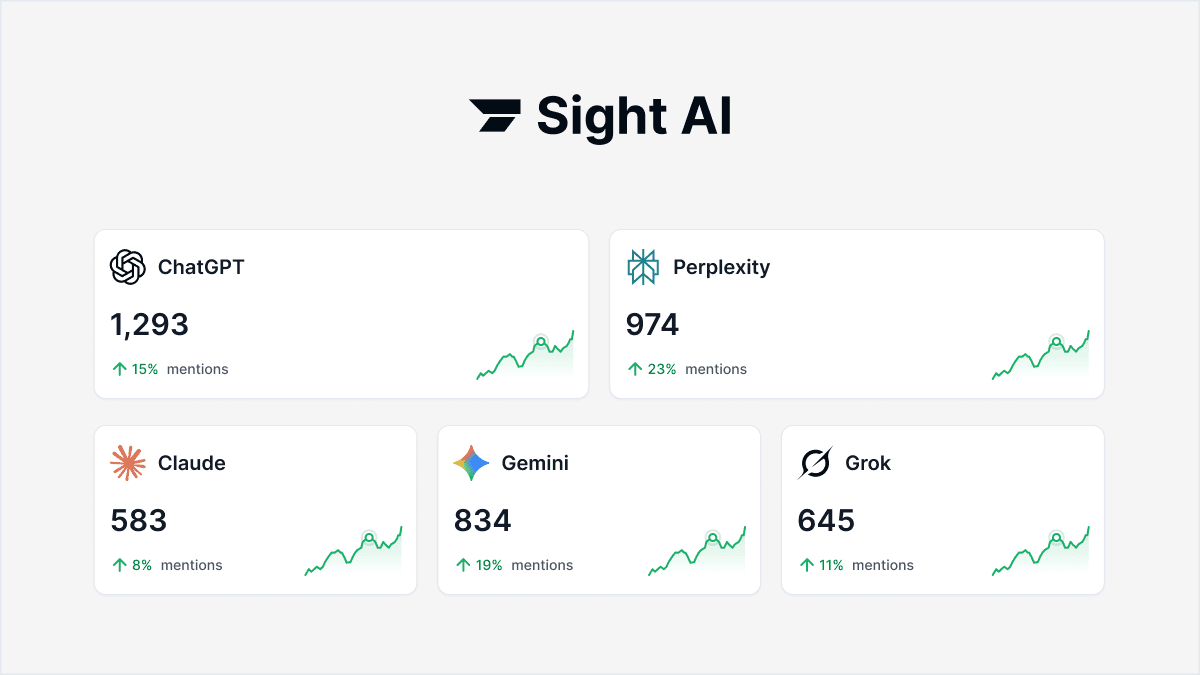
The first step is understanding where your brand stands in AI-powered search right now. Start tracking your AI visibility today and see exactly where your brand appears across top AI platforms, so you can build your content automation strategy around real data rather than assumptions.