B2B websites are a different beast. Between JavaScript-heavy product catalogs, gated resources behind forms, parameterized URLs, and staging environments that occasionally bleed into production, the indexing challenges facing B2B teams are nothing like what consumer sites deal with. And the stakes are higher: every page that isn't indexed is a page that can't rank, can't surface in AI-powered search, and can't drive pipeline.
Choosing the right indexing software means looking beyond basic sitemap submission. For B2B teams, the criteria that matter include IndexNow and API support for proactive URL notification, automation capabilities for bulk operations, crawl monitoring that handles complex architectures, and integrations with the martech stack you already use. Increasingly, it also means thinking about how well-indexed content gets ingested by AI models like ChatGPT, Claude, and Perplexity, since AI-driven discovery is becoming a meaningful source of B2B brand visibility.
Here are the top B2B website indexing tools worth evaluating in 2026, covering everything from free essentials to enterprise-grade platforms.
1. Sight AI
Best for: B2B teams that want indexing, content generation, and AI visibility tracking in one platform.
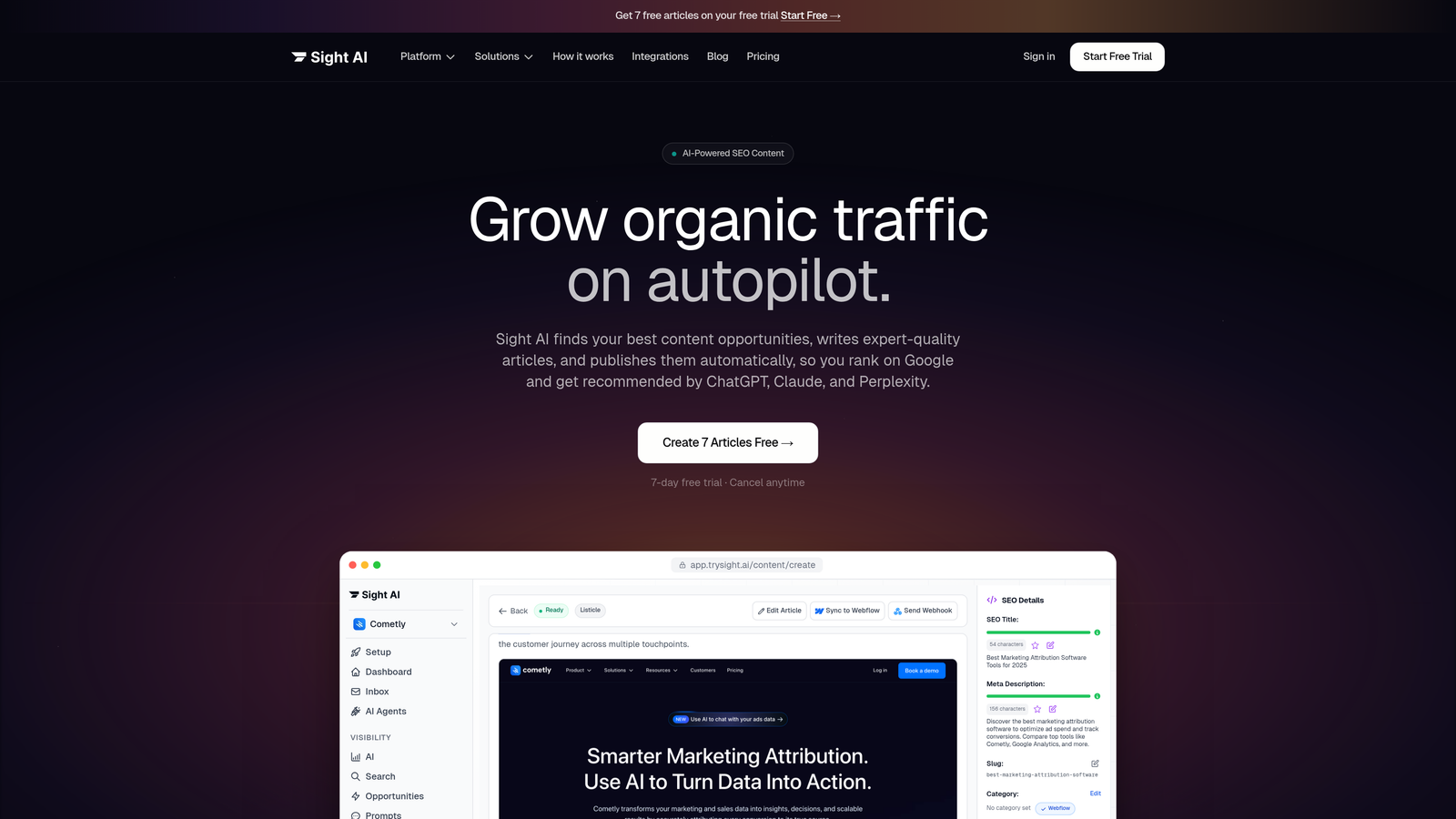
Sight AI is an all-in-one platform that connects automated website indexing with AI-powered content creation and brand visibility tracking across major language models.
Where This Tool Shines
Most indexing tools stop at getting your pages into Google. Sight AI goes further by connecting the indexing layer to what happens after discovery: whether your content is being surfaced by AI models, how your brand is mentioned across platforms like ChatGPT, Claude, and Perplexity, and whether your content strategy is filling the gaps that matter.
For B2B marketers managing both organic search and AI visibility, this unified approach removes the need to stitch together separate tools for crawling, content, and AI monitoring. The CMS auto-publishing feature is particularly useful for teams running high-volume content programs, since it bridges creation and indexation in a single workflow.
Key Features
IndexNow Integration with Automated Sitemap Updates: Proactively notifies participating search engines the moment content changes, cutting the lag between publishing and indexing.
CMS Auto-Publishing: Connects content generation directly to your CMS and indexing pipeline, so new articles are published and submitted without manual steps.
AI Visibility Score: Tracks how your brand is mentioned across ChatGPT, Claude, Perplexity, and other major AI platforms, with sentiment analysis and prompt-level tracking.
13+ Specialized AI Agents: Generates SEO and GEO-optimized content across formats including listicles, guides, and explainers, with an Autopilot Mode for hands-off content scaling.
Unified Dashboard: Consolidates indexing status, content performance, and AI visibility data in one place, reducing context-switching for SEO and content teams.
Best For
B2B marketers, founders, and agencies who want to accelerate organic traffic growth while simultaneously building AI model visibility. Particularly strong for teams that are publishing content at scale and need indexing and AI tracking to work together rather than as separate workstreams.
Pricing
Visit trysight.ai for current plans and pricing. Options are available for teams at different growth stages.
2. Google Search Console
Best for: Monitoring Google index coverage and diagnosing crawl errors at no cost.
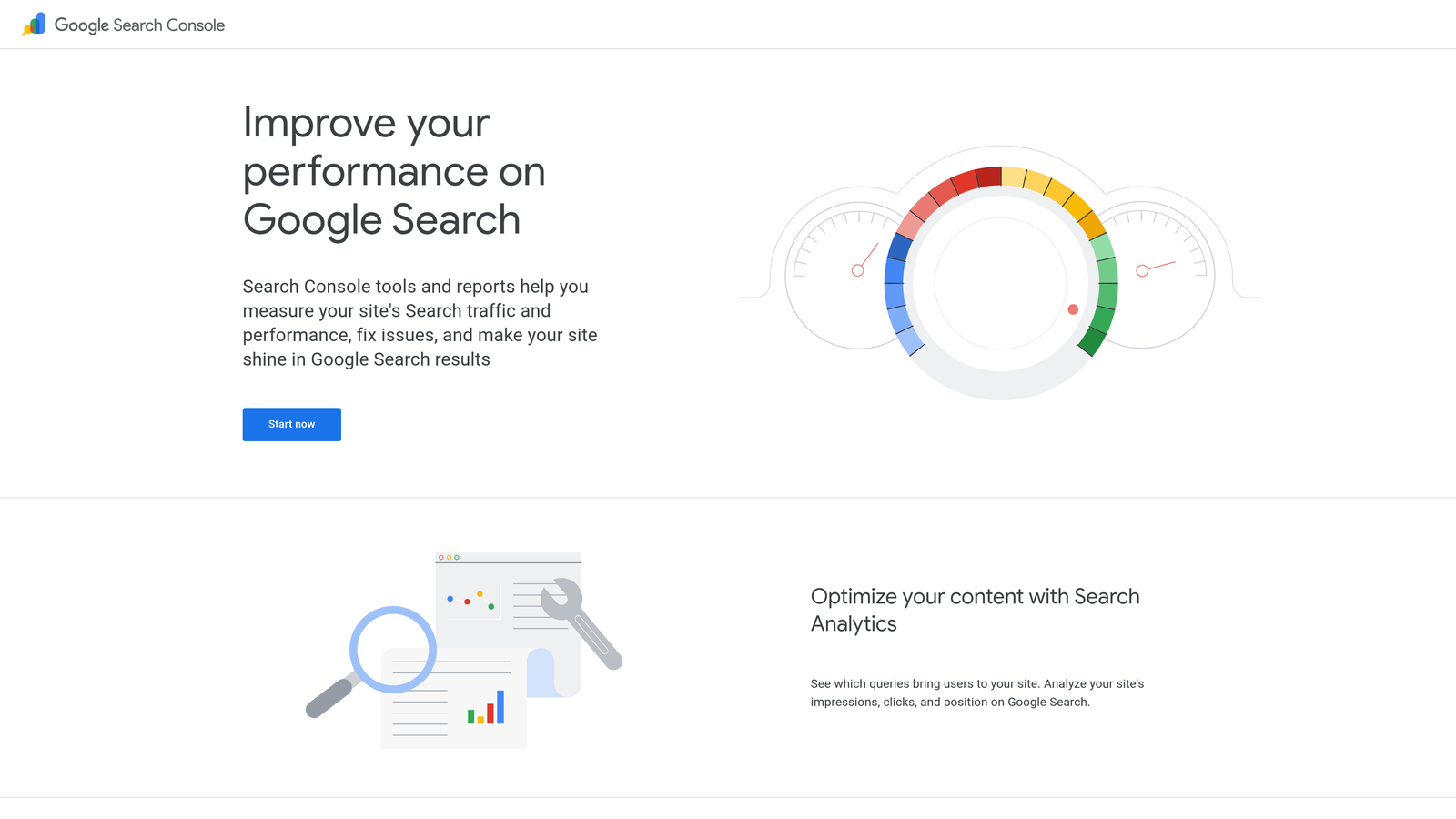
Google Search Console is Google's free webmaster platform for tracking how Googlebot sees and indexes your site, with direct access to coverage data and manual indexing requests.
Where This Tool Shines
There's no substitute for data that comes directly from Google. Search Console's Index Coverage report categorizes pages by indexed, excluded, and error states, giving B2B teams a clear picture of what Google actually sees versus what they think is being crawled. For diagnosing why a gated resource or product page isn't appearing in results, the URL Inspection tool is the fastest starting point.
The limitation for B2B teams is scale. Manual indexing requests are capped, and there's no bulk automation for large sites with hundreds of thousands of URLs. It's an essential diagnostic layer, but it needs to be paired with other tools for proactive indexing work.
Key Features
URL Inspection Tool: Shows the exact indexing status of any page, including last crawl date, canonical URL, and any blocking issues.
Index Coverage Report: Categorizes all discovered URLs by status, making it straightforward to identify and prioritize crawl errors.
Sitemap Submission and Monitoring: Submit XML sitemaps directly and track how many URLs from each sitemap are indexed.
Manual Indexing Requests: Request Google to recrawl specific URLs after updates, useful for high-priority pages like new product launches or updated case studies.
Core Web Vitals Data: Page experience signals that directly influence crawl prioritization and ranking.
Best For
Every B2B site, regardless of size. Search Console is a non-negotiable baseline tool. It's most effective when paired with a proactive indexing solution like IndexNow or an enterprise crawler for bulk operations.
Pricing
Free. No paid tiers or seat limits.
3. IndexNow
Best for: Instantly notifying search engines about URL changes without waiting for crawlers.
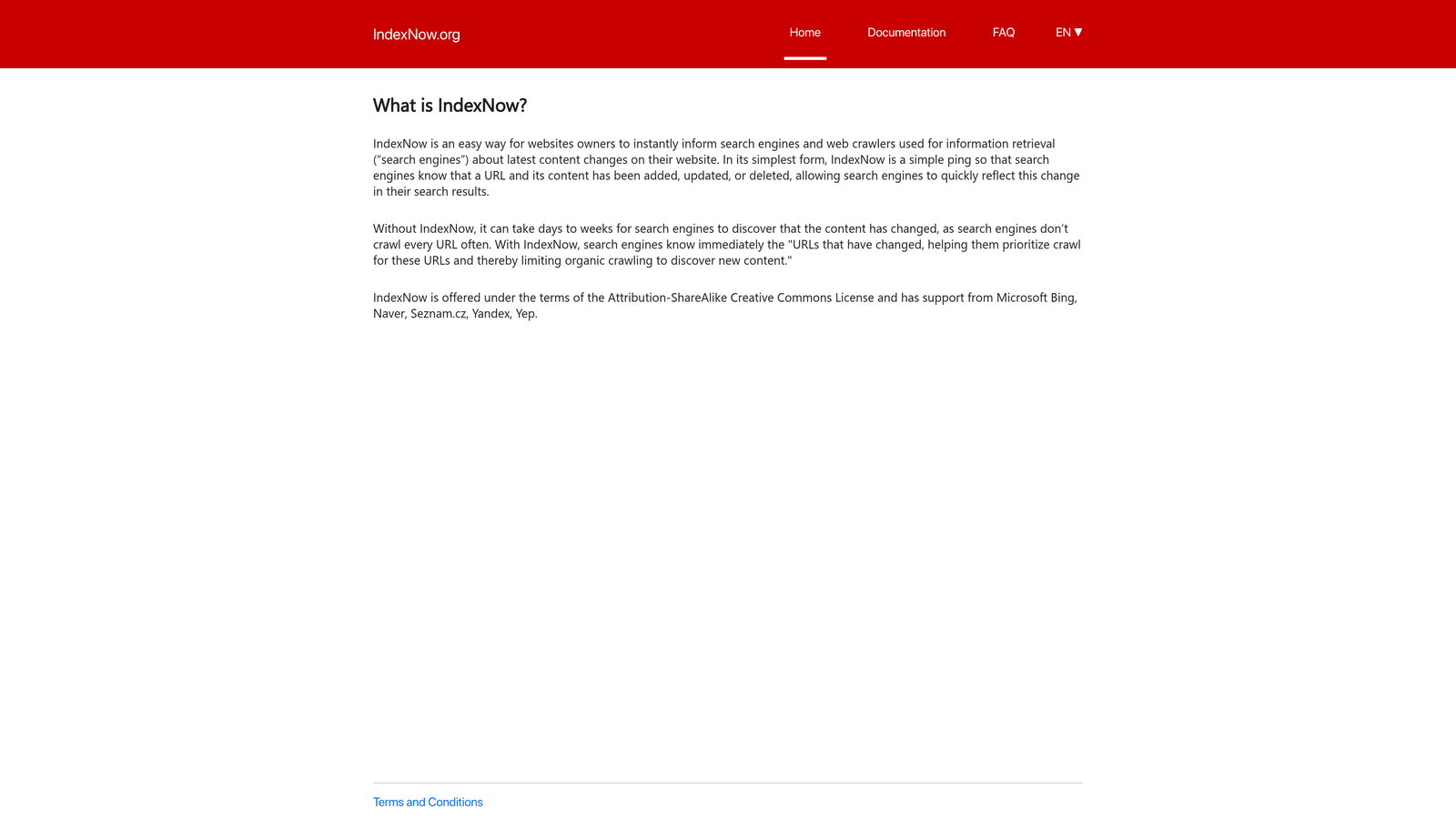
IndexNow is an open protocol developed by Microsoft and Yandex that enables websites to push URL change notifications directly to participating search engines the moment content is updated or published.
Where This Tool Shines
Traditional crawling is reactive: search engines discover content changes on their own schedule, which can mean days or weeks of lag for large B2B sites. IndexNow flips this model. When you publish a new whitepaper, update a product page, or remove outdated content, IndexNow notifies participating engines immediately, so they can prioritize those URLs in their crawl queue.
For B2B teams publishing frequently or running time-sensitive campaigns, this crawl-on-demand approach is a meaningful upgrade over waiting for Googlebot to stumble across changes. It also reduces unnecessary crawl load on your server by signaling only the URLs that actually changed.
Key Features
Push-Based Indexing: Notify search engines in real time when URLs are created, updated, or deleted, rather than waiting for passive discovery.
Broad Search Engine Support: Currently supported by Bing, Yandex, Seznam, Naver, and other participating engines.
Simple API Integration: Implement via a lightweight API call or through CMS plugins available for WordPress, Wix, and other platforms.
Reduced Server Load: Because engines only crawl URLs you flag, unnecessary bot traffic on unchanged pages decreases.
Open Protocol: No vendor lock-in, no licensing fees, and community-maintained documentation.
Best For
B2B sites with active publishing schedules, frequent product or pricing updates, or time-sensitive content. Best used alongside Google Search Console since Google is not yet a formal IndexNow participant but benefits indirectly through Bing's data sharing arrangements.
Pricing
Free and open protocol. Implementation costs are limited to developer time for API integration or a CMS plugin setup.
4. Screaming Frog SEO Spider
Best for: Deep technical crawl audits on complex B2B sites with large URL volumes.
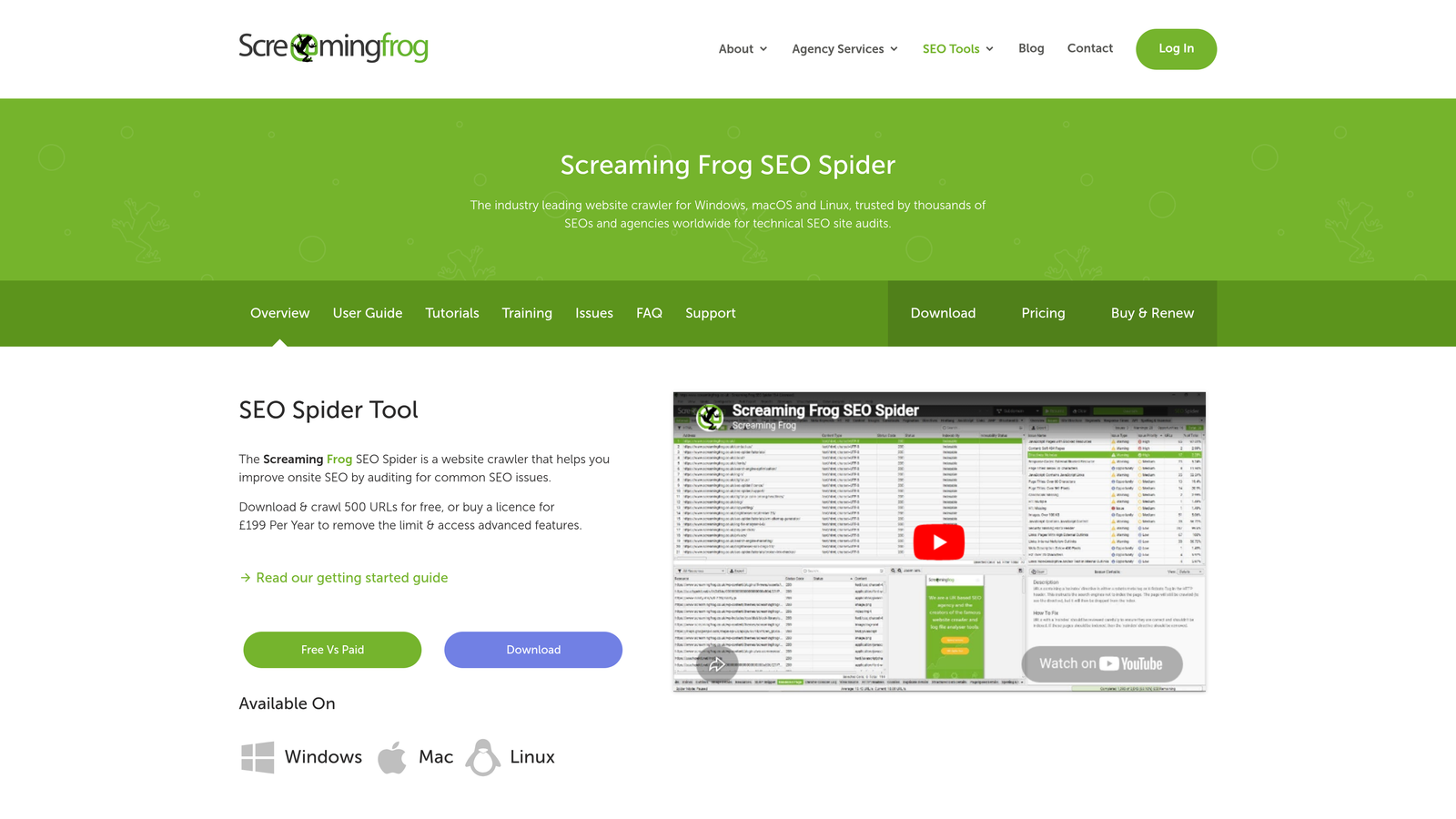
Screaming Frog SEO Spider is the industry-standard desktop crawler for technical SEO teams, capable of identifying indexing blockers, structural issues, and crawl inefficiencies across sites of any size.
Where This Tool Shines
Screaming Frog is the tool SEO professionals reach for when they need to understand exactly what a crawler sees on a site. For B2B teams dealing with JavaScript-rendered product pages, complex internal linking structures, or staging environments that need to be compared against production, the configurability here is hard to match at this price point.
The crawl comparison feature is particularly useful for B2B teams managing staging and production environments simultaneously, allowing direct side-by-side analysis to catch accidental noindex tags or robots.txt misconfigurations before they affect live rankings.
Key Features
JavaScript Rendering: Crawls single-page applications and JS-heavy B2B sites by rendering pages as a browser would, surfacing content that standard crawlers miss.
Custom Extraction and Regex Filtering: Extract specific data points from pages and filter crawls to focus on priority URL patterns.
Crawl Comparison: Compare two crawls side by side, ideal for staging versus production audits before major site changes.
Third-Party Integrations: Connects with Google Analytics, Search Console, and PageSpeed Insights to enrich crawl data with performance metrics.
Configurable Crawl Limits: Handle sites with millions of URLs by setting crawl depth, speed, and scope parameters.
Best For
In-house SEO teams and agencies managing complex B2B sites who need a powerful, affordable auditing tool. Less suited to teams that need real-time monitoring or cloud-based collaboration, since it's a desktop application.
Pricing
Free for up to 500 URLs. Paid license is approximately $259 per year for unlimited crawling.
5. Botify
Best for: Enterprise B2B sites with millions of URLs and complex crawl budget challenges.
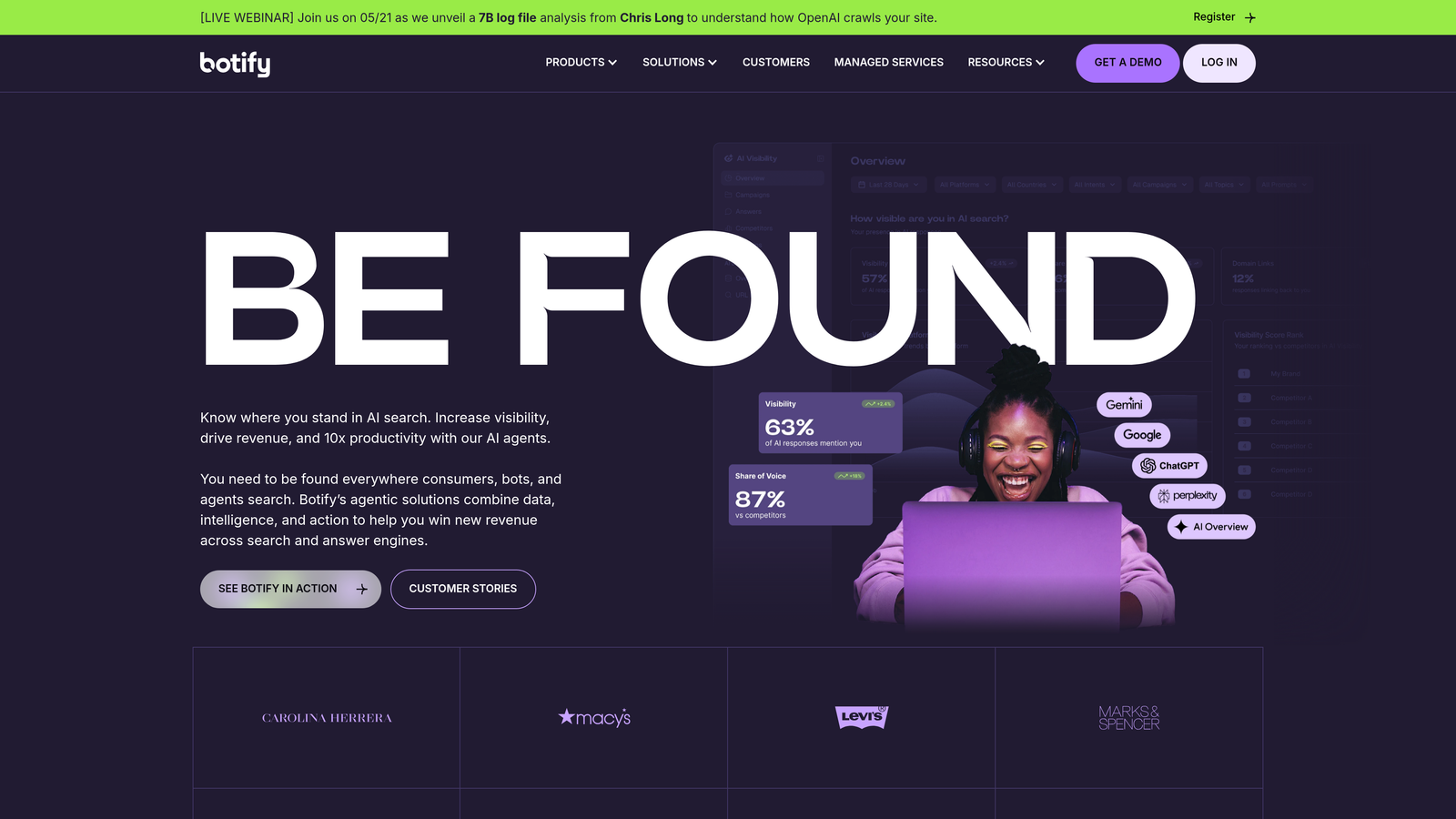
Botify is an enterprise SEO platform built around crawl budget optimization, log file analysis, and automated indexing workflows for organizations operating at significant scale.
Where This Tool Shines
Botify's core strength is connecting what search engines actually crawl with what they ultimately index and rank. By combining log file analysis (showing real Googlebot behavior) with its own crawler and search analytics data, Botify gives enterprise B2B teams a complete picture of where crawl budget is being wasted and which pages are being systematically ignored.
The SpeedWorkers feature addresses a specific pain point for JavaScript-heavy B2B sites: server-side rendering for Googlebot, which can dramatically improve how much dynamic content gets crawled and indexed without requiring a full site rebuild.
Key Features
SpeedWorkers: Renders JavaScript server-side for crawlers, making dynamic content accessible to Googlebot without client-side rendering delays.
Log File Analysis: Reveals exactly which URLs Googlebot is crawling, how frequently, and which pages are being skipped entirely.
Automated Indexing Workflows: Prioritizes URL indexing based on performance data and business rules rather than manual decisions.
Advanced Segmentation: Breaks down crawl and indexing data by page type, depth, template, and custom segments for granular analysis.
Enterprise API and Integrations: Connects with existing martech and data infrastructure for custom reporting and workflow automation.
Best For
Enterprise B2B organizations with large, complex sites where crawl budget is a genuine constraint and technical SEO decisions require data at scale. The investment is significant, so it's best suited to teams where organic search is a primary revenue channel.
Pricing
Custom enterprise pricing. Contact Botify's sales team for a quote based on site size and feature requirements.
6. ContentKing (by Conductor)
Best for: Real-time monitoring and instant alerts for indexability changes on live B2B sites.
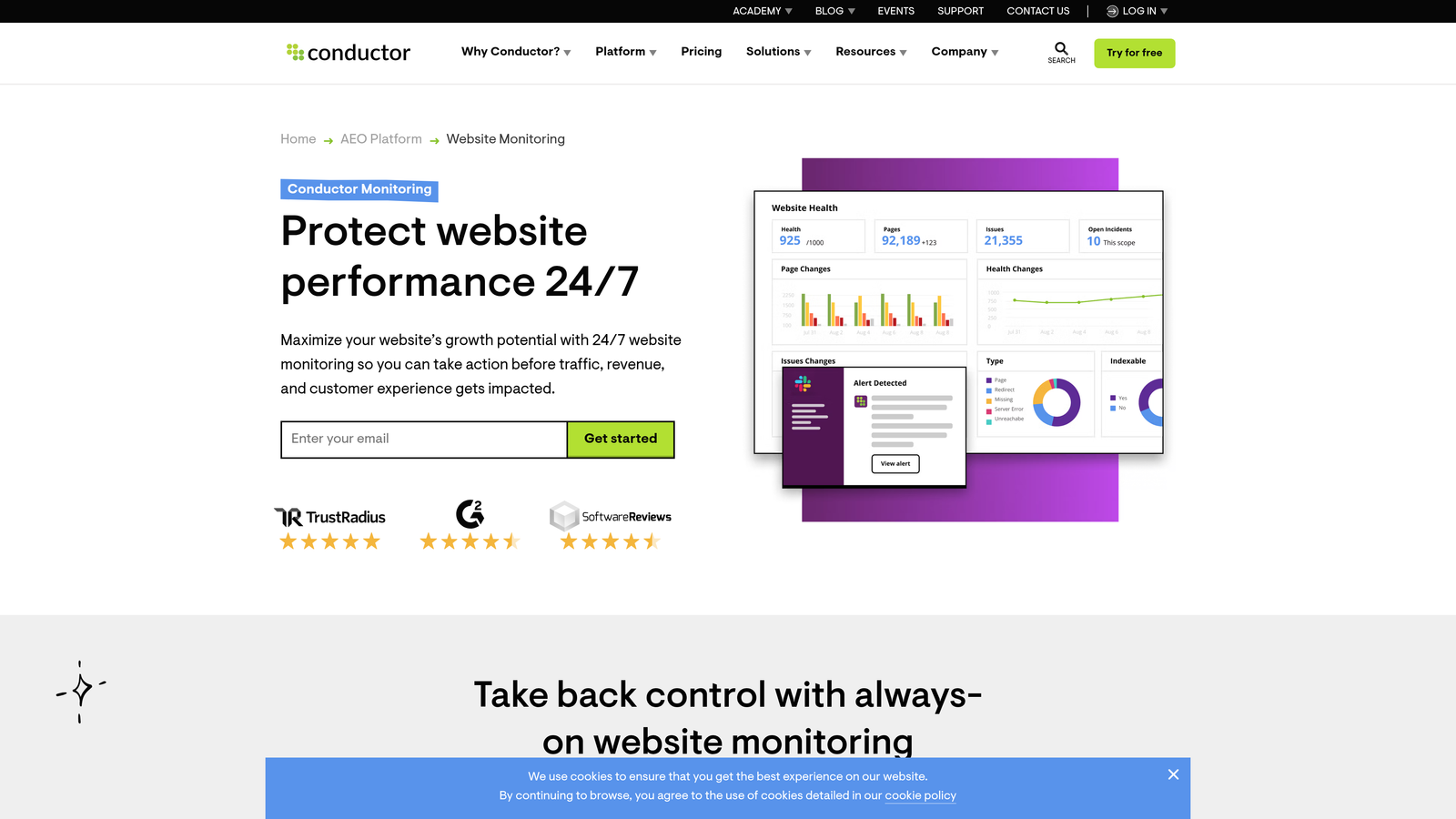
ContentKing is a real-time SEO auditing platform that continuously monitors your site around the clock, alerting teams the moment an indexability issue appears rather than waiting for a scheduled crawl.
Where This Tool Shines
Most crawlers give you a snapshot. ContentKing gives you a live feed. For B2B sites where a CMS update, developer push, or CDN configuration change can accidentally add noindex tags to high-value pages, the difference between finding out in real time versus during the next weekly crawl can mean days of lost organic visibility.
The change tracking feature builds a historical record of every modification to your site's indexability signals, making it straightforward to pinpoint exactly when a problem was introduced and what changed. This is particularly valuable for B2B teams working across marketing, development, and IT where coordination gaps create technical SEO risks.
Key Features
24/7 Real-Time Monitoring: Continuously crawls your site so issues are detected as they occur, not hours or days later.
Instant Alerts: Notifies teams immediately when noindex tags appear, redirects change, or pages return error status codes.
Change Tracking with Historical Snapshots: Maintains a complete audit trail of site changes, making root cause analysis fast and accurate.
Conductor Integration: Connects with Conductor's broader SEO platform for teams already in that ecosystem.
Role-Based Access and Collaboration: Supports multiple team members with different permission levels, useful for cross-functional B2B teams.
Best For
B2B marketing teams that publish and update content frequently, work alongside active development teams, or have experienced unexpected indexing regressions caused by site changes. Strong fit for mid-market and enterprise organizations.
Pricing
Starts around $49 per month for smaller sites; pricing scales with the number of pages being monitored. Contact ContentKing for enterprise plans.
7. Oncrawl
Best for: Combining crawl data, log files, and search analytics for deep indexation analysis on complex sites.
Oncrawl is a cloud-based technical SEO platform that merges crawl analysis, server log monitoring, and search performance data to deliver a comprehensive view of how complex B2B sites are being indexed and ranked.
Where This Tool Shines
Where many crawlers analyze pages in isolation, Oncrawl's strength is correlation: connecting crawl frequency from log files with actual search performance data to identify which pages deserve more crawl budget and which are consuming resources without producing results. For B2B sites with large resource libraries, documentation sections, or product catalogs, this kind of prioritization is operationally valuable.
Being cloud-based removes the hardware constraints that desktop crawlers face on very large sites, and the API access enables teams to build custom indexing workflows that integrate with their existing data pipelines.
Key Features
Combined Data Analysis: Merges crawl data, log file analysis, and Google Search Console data into a unified view for richer indexation insights.
Advanced Segmentation: Supports complex URL taxonomies and site architectures common in B2B environments, including parameterized URLs and multi-section sites.
Custom Dashboards and Data Visualization: Build tailored reporting views for different stakeholders, from technical SEO teams to executive leadership.
API Access: Enables custom workflow integration and data export for teams with specific reporting or automation needs.
Cloud-Based Architecture: No local installation or hardware limitations, making it practical for very large site crawls.
Best For
Mid-market to enterprise B2B teams that need to combine crawl, log, and search data in one place and have the technical capacity to act on detailed indexation insights. Well-suited to SEO specialists and data-driven marketing teams.
Pricing
Plans start around $69 per month. Enterprise plans with higher crawl limits and additional features are available on request.
8. Sitebulb
Best for: SEO teams that need prioritized, visually clear audit reports for stakeholder communication.
Sitebulb is a desktop website crawler that distinguishes itself through its prioritized "Hints" system and visual crawl maps, making indexing issues easier to understand and act on for teams of all technical levels.
Where This Tool Shines
Sitebulb's design philosophy centers on clarity. Rather than surfacing hundreds of raw data points and leaving interpretation to the analyst, it ranks issues by SEO impact and presents them with clear explanations of why each problem matters. For B2B SEO teams that regularly communicate technical findings to non-technical stakeholders, this approach saves significant time in translating audit results into action items.
The internal link visualization and crawl map features are particularly useful for understanding how crawl depth and link equity flow through complex B2B site architectures, where deep product pages or documentation sections often get insufficient internal link support.
Key Features
Prioritized Hints System: Ranks every identified issue by its likely SEO impact, so teams focus effort on the changes that matter most.
Per-URL Indexability Scoring: Evaluates each page's indexability and surfaces the specific signals contributing to any issues.
Internal Link Visualization and Crawl Maps: Graphically displays how pages connect and how deep crawlers must go to reach key content.
JavaScript Rendering Support: Handles modern B2B sites built on React, Vue, or Angular frameworks.
PDF Report Export: Generates polished reports for sharing with clients, leadership, or cross-functional teams.
Best For
Agency SEOs managing B2B client sites, and in-house teams that need to present technical findings clearly to marketing leadership or developers. The accessible price point makes it a strong choice for growing teams that need professional-grade auditing without an enterprise budget.
Pricing
Lite plan starts at approximately $13.50 per month; Pro plan at approximately $35 per month. Both include unlimited crawling on a single machine.
9. Yext
Best for: B2B brands managing structured data, business listings, and knowledge graph optimization at scale.
Yext is a digital presence platform that manages how business information is structured, distributed, and indexed across search engines, AI models, and third-party directories through a centralized Knowledge Graph.
Where This Tool Shines
Yext approaches indexing from a structured data angle rather than a crawl-and-submit model. For B2B organizations with multiple locations, product lines, or partner networks, maintaining consistent and machine-readable business information across the web directly affects how search engines and AI models understand and surface the brand. Inconsistent data creates fragmented entity signals that can suppress organic visibility.
As AI-powered search becomes a more significant discovery channel for B2B buyers, having well-structured entity data becomes increasingly important. Content that is clearly organized with proper schema markup is more likely to be accurately ingested and referenced by large language models.
Key Features
Knowledge Graph: Centralizes all business data in a structured format that feeds search engines, AI platforms, and third-party directories consistently.
Structured Data and Schema Markup Automation: Automates schema implementation across pages, reducing the manual overhead of keeping markup accurate and up to date.
Multi-Location and Partner Network Management: Manages listing data across dozens or hundreds of locations and partner channels from a single interface.
Search Appearance Analytics: Tracks how and where the brand surfaces across search and AI-driven platforms based on its entity data.
CMS Integrations: Connects with major content management systems to keep structured data synchronized with content updates.
Best For
B2B enterprises with complex organizational structures, multiple locations or product lines, and a need to maintain consistent brand data across search engines, AI platforms, and third-party directories. Less relevant for single-site B2B teams with straightforward URL structures.
Pricing
Custom pricing based on the number of locations, features, and integrations required. Contact Yext's sales team for a tailored quote.
Choosing the Right Indexing Stack for Your B2B Site
No single tool covers every dimension of B2B website indexing, and the best setups typically layer two or three complementary solutions rather than relying on one platform to do everything.
For most B2B teams, a practical starting point looks like this:
Foundation layer: Google Search Console is non-negotiable. It's free, it's direct from Google, and it tells you what's actually indexed versus what you think is indexed.
Proactive indexing: Add IndexNow for push-based URL notifications, ideally through a platform like Sight AI that automates the submission process alongside content creation and AI visibility tracking.
Audit and monitoring: Screaming Frog or Sitebulb for periodic deep audits, and ContentKing if real-time monitoring is a priority for a high-velocity publishing environment.
Enterprise scale: If you're managing hundreds of thousands of URLs, Botify or Oncrawl's log file analysis capabilities become worth the investment, particularly for understanding where crawl budget is being consumed without producing indexed pages.
Structured data and AI visibility: Yext for organizations with complex entity structures, and Sight AI for tracking how your brand is being referenced across AI models as that channel grows in importance for B2B discovery.
The indexing landscape is evolving quickly. As AI-powered search becomes a more common starting point for B2B buyers researching solutions, getting content indexed is only half the challenge. The other half is ensuring that indexed content is structured and authoritative enough to be surfaced by AI models in the answers that matter to your buyers.
Start tracking your AI visibility today and see exactly where your brand appears across top AI platforms. Stop guessing how AI models like ChatGPT and Claude talk about your brand. Get visibility into every mention, uncover content opportunities, and automate your path to organic traffic growth.