Publishing consistently is one of the hardest problems in content marketing. It's not that teams lack ideas or talent. It's that the pipeline between "we should write about this" and "this article is live and indexed" has too many manual steps, too many handoffs, and too many places where momentum dies.
Think about what a single article actually requires: keyword research, topic validation, drafting, editing, SEO optimization, GEO optimization so AI models will cite it, CMS formatting, publishing, and indexing. Each step adds time. Each handoff creates delay. And if you're trying to publish at any real scale, those delays compound fast.
An automated content creation workflow solves this by connecting every stage of the pipeline into a system that runs with minimal friction. Instead of manually shepherding each article through each step, you build the process once and let it run. Your team stops being the bottleneck and starts being the strategist.
This guide walks you through building that system from scratch. You'll learn how to audit your current pipeline, set up a topic discovery system powered by AI visibility data, configure AI agents to produce publish-ready drafts, automate CMS publishing, trigger instant indexing with IndexNow, and monitor performance across both traditional SEO and AI search.
One important framing note before we dive in: this isn't about removing humans from content. It's about removing friction. The strategic decisions, the brand voice, the editorial judgment — those stay with your team. The repeatable, rules-based work gets automated. That's the distinction that makes the difference between a workflow that produces generic content at scale and one that produces high-quality, strategically aligned content at scale.
Whether you're a solo founder publishing weekly or an agency managing content for multiple clients, this framework is designed to adapt to your resources and grow with you. Start with one content type, validate the system end-to-end, then expand. Let's build it.
Step 1: Audit Your Current Content Pipeline and Identify Bottlenecks
Before you automate anything, you need a clear picture of what you're actually working with. Jumping straight to tools and AI agents without understanding your existing workflow is how you end up automating broken processes instead of fixing them.
Start by mapping every stage of your current pipeline. A typical content workflow moves through these stages: ideation, keyword research, topic approval, drafting, editing, SEO optimization, CMS formatting, publishing, indexing, and performance tracking. Write each stage down. Then, for each one, note who does it, how long it typically takes, and what tools are involved.
Now look for where things stall. In most content operations, the same culprits show up repeatedly. Topic selection often lacks a consistent process, so articles get chosen based on gut feel or whoever spoke up in a meeting. First-draft creation is slow because writers start from scratch every time. CMS formatting eats time because content has to be manually reformatted from Google Docs or Notion. Indexing is an afterthought, meaning new articles sit undiscovered for days or weeks after publishing.
The next step is to separate tasks by type. Some tasks are repeatable and rules-based: formatting a draft to match your CMS template, adding meta descriptions, generating article outlines, updating sitemaps. These are prime candidates for automation. Other tasks require genuine human judgment: deciding whether a topic aligns with your brand strategy, evaluating whether a draft captures your voice, assessing whether a comparison article treats competitors fairly. These stay with your team. For a deeper look at building a content creation workflow that scales, start with the fundamentals before layering in automation.
Set baseline metrics now so you can measure improvement later. Track your current publishing frequency (articles per week or month), average time-per-article from brief to live, and organic traffic generated per published piece over a 90-day window. These numbers become your benchmark.
Finally, assess your AI visibility. Are your existing articles being referenced by AI models like ChatGPT, Claude, or Perplexity when users ask questions in your category? If you don't know the answer to that question, that's a gap in itself. Your new workflow should be designed not just to rank in traditional search but to generate the kind of structured, authoritative content that AI models cite in their responses. If your current content isn't showing up there, that's one of the most important problems your automated workflow should solve.
Step 2: Define Your Content Strategy and Topic Discovery System
Automation amplifies whatever strategy you feed it. A well-defined content strategy produces great results at scale. A vague one produces a lot of mediocre content quickly. Before you configure a single AI agent, get your strategy locked in.
Start with content pillars. These are the core topic areas where you want to build authority — typically aligned with your product's use cases, your audience's most pressing pain points, and the keywords you want to own in both traditional and AI search. For a SaaS company focused on content marketing, pillars might include SEO strategy, AI search optimization, content operations, and organic growth frameworks. Everything you publish should connect to one of these pillars. Teams looking to formalize this process can benefit from an automated blog content strategy that ties pillars directly to publishing cadence.
Here's where AI visibility data changes the game. Traditional keyword research tells you what people type into Google. AI visibility tracking tells you what topics trigger mentions of your brand (or your competitors' brands) when people ask questions to AI models. These are not always the same topics, and the gap between them is where your biggest content opportunities often live.
Use AI visibility tracking to identify which prompts and questions cause AI models to mention your competitors but not you. Those are your priority targets. You're not just trying to rank for a keyword; you're trying to become the answer to a question that AI systems are already fielding at scale.
Build a topic backlog by combining keyword research with this AI mention gap analysis. A simple scoring framework helps prioritize what to tackle first. Score each topic candidate across four dimensions: search volume potential, AI mention opportunity (how often this topic triggers AI responses in your category), content gap severity (how well your existing content covers this topic), and business relevance (how directly this topic connects to your product or service). Topics that score high across all four dimensions go to the top of the queue.
Finally, set a sustainable publishing cadence. Automation makes it tempting to publish as much as possible, but pace should be determined by strategy and quality standards, not by what the system can technically produce. A realistic starting point for most teams is two to four articles per week per content type. You can always scale up once you've confirmed quality holds at your current volume.
Step 3: Configure AI Agents for Drafting SEO and GEO-Optimized Content
This is where your automated content creation workflow starts generating real output. Configuring AI agents well is the difference between drafts that need extensive rework and drafts that are 80% or more publish-ready on the first pass. That threshold matters because it's what makes the workflow actually faster, not just theoretically automated.
Start by matching agent types to content formats. Listicles, how-to guides, explainers, and comparison articles each have different structural requirements. A listicle agent needs to generate tight, scannable items with consistent formatting. A how-to guide agent needs to produce logical step progressions with clear action instructions. Using a general-purpose agent for every content type typically produces generic output; specialized agents configured for specific formats produce much stronger first drafts. Explore the landscape of AI agent content creation tools to find the right fit for each format.
Feed each agent the inputs it needs to produce brand-aligned content. This includes your brand voice guidelines (tone, vocabulary, what to avoid), your target keyword and related terms, your internal linking rules (which cornerstone pages should be linked from new articles), and your GEO optimization instructions. GEO optimization is the layer that most content teams are still missing. It means structuring content to directly answer the types of questions users ask AI assistants: clear definitions, concise answers early in the content, authoritative sourcing, and well-organized heading hierarchies that make it easy for AI models to extract and cite your content.
Structure your agent prompts with GEO in mind. Questions like "What is X?", "How does X work?", "What's the difference between X and Y?", and "What are the best tools for X?" are common AI search patterns. Your content should answer these directly and completely. When AI models process your articles, they're looking for clear, well-structured answers they can surface in their responses. Content that buries the answer three paragraphs in gets skipped.
Set up quality guardrails within your agent configuration. Define acceptable keyword density ranges, required heading hierarchy (H2s and H3s used correctly), factual accuracy requirements (no fabricated statistics), and tone consistency standards. Following AI content creation best practices for these guardrails reduces the variance in output and makes your editorial review faster because you're catching fewer fundamental issues.
Test agent configurations against your editorial standards before scaling. Run ten to fifteen articles through the system, review them against your checklist, and identify the most common failure patterns. Then iterate on your agent configuration to address those patterns. The goal is to keep refining until first drafts consistently meet your quality threshold.
Step 4: Build Your Editing and Quality Assurance Layer
The editing layer is where many automated workflows fail. Teams either skip it entirely (and publish content that damages brand credibility) or build such an intensive review process that the automation gains disappear (and you're back to the same bottleneck you started with). The goal is a lightweight, structured review that catches real problems without recreating the delays you just eliminated.
Design your review process around a single pass. One reviewer, one checklist, a defined maximum turnaround time. If an article requires multiple rounds of revision, that's a signal your AI agent configuration needs adjustment, not a reason to add more review cycles to the workflow. Fix the upstream problem rather than compensating for it downstream. This principle is central to any automated content optimization workflow that actually saves time.
Build a clear editorial checklist that covers the essentials. A practical checklist includes: factual accuracy (no invented statistics, claims are supportable), brand voice alignment (tone matches your guidelines), internal link placement (links to relevant cornerstone pages are present and correct), meta title and description quality (keyword-inclusive, accurate, within character limits), and GEO optimization signals (content directly answers AI-style questions, headings are well-structured, definitions and key concepts are clearly stated).
Assign clear ownership. Every article in the queue should have a named reviewer, an approval status, and a maximum turnaround time. Ambiguous ownership is one of the most common reasons review queues stall. When everyone is responsible, no one is.
Use Autopilot Mode strategically. For high-confidence content types where your AI agent consistently produces output that meets quality thresholds, like standardized listicles or weekly roundups with predictable formats, full automation with minimal human review is reasonable once you've validated the pattern. Reserve deeper human editing for strategic pieces: thought leadership articles, competitive comparisons, and any content where nuance, positioning, or brand sensitivity is at stake.
Step 5: Automate CMS Publishing and Content Formatting
Manual CMS publishing is one of the most time-consuming and error-prone steps in any content pipeline. Copy-pasting from a document into a CMS introduces formatting errors, breaks internal links, strips metadata, and adds anywhere from fifteen minutes to an hour per article depending on complexity. At scale, that adds up to a significant drag on your operation.
Connect your content generation platform directly to your CMS so approved articles move from the workflow into the CMS automatically, correctly formatted and ready to publish. This integration eliminates the copy-paste step entirely. When an article passes editorial review, it should land in your CMS with the right formatting, the right metadata, and the right structural elements already in place. A dedicated automated content publishing workflow makes this seamless across every article you produce.
Configure your auto-publishing rules carefully. These rules define how the system handles each article on its way to publication: scheduling (publish immediately or queue for a specific time), category and tag assignment, featured image placement, URL slug formatting, and schema markup. Schema markup is worth particular attention because it helps both search engines and AI models understand the structure and context of your content, which supports both SEO and GEO performance.
Set up internal linking automation as part of the publishing pipeline. Each new article should automatically link to relevant existing content based on topic relationships, and existing related articles should be updated to link back to the new piece. Internal linking is one of the highest-leverage SEO activities, and it's also one of the most commonly neglected because it requires touching multiple pages simultaneously. Automation makes this practical at scale.
Before enabling full automation, test the publishing pipeline end-to-end with a small batch of articles. Verify that formatting transfers correctly, metadata populates accurately, internal links resolve properly, and scheduled publishing fires at the right times. Catching integration issues at low volume is much easier than troubleshooting them after you've queued fifty articles.
Maintain a publishing calendar dashboard with visibility into what's queued, what's live, what's pending review, and what's scheduled. This keeps your team aligned and makes it easy to spot gaps or bottlenecks before they become problems.
Step 6: Trigger Instant Indexing for Every New Page
Here's a step that most content teams skip entirely, and it's costing them days or weeks of organic traffic on every article they publish. When you publish a new page, search engines don't know it exists until their crawlers find it. Depending on your site's crawl frequency, that can take anywhere from a few days to several weeks. During that window, your content is generating zero organic traffic regardless of how well-optimized it is.
IndexNow solves this. It's an open-source protocol supported by Microsoft Bing and adopted by other search engines that allows your website to notify search engines the instant new content goes live. Instead of waiting for a crawler to discover your page on its next scheduled visit, you push a notification that says "this URL is new, come index it now." The result is dramatically faster indexing, which means faster ranking signals and faster traffic.
Implement IndexNow as part of your publishing automation. Every time an article publishes, the system should automatically fire an IndexNow notification for that URL. This should require no manual action from your team. It's a trigger that fires as part of the publishing pipeline, not a separate task someone has to remember. Teams running an automated SEO content workflow should treat instant indexing as a non-negotiable step in the pipeline.
Pair IndexNow with automated sitemap updates. Your sitemap should regenerate automatically each time new content is published, and that updated sitemap should be pinged to search engines as part of the same publishing event. This ensures search engines always have an accurate, up-to-date map of your content inventory.
Verify indexing status within 24 to 48 hours of each publication. Set up monitoring or alerts for pages that fail to index within that window so you can troubleshoot quickly. Common causes of indexing failures include canonicalization issues, noindex tags applied accidentally, or server errors that prevented the page from loading when the crawler visited. Catching these early prevents content from sitting invisible for extended periods.
This step is often treated as optional infrastructure work. It isn't. Unindexed content generates zero organic traffic regardless of its quality, keyword optimization, or GEO signals. Fast indexing is the foundation that makes every other optimization in your workflow actually matter.
Step 7: Monitor Performance and Optimize the Workflow Continuously
An automated content creation workflow isn't a set-it-and-forget-it system. It's a system that gets better over time as you feed it performance data and refine your configurations. The teams that get the most out of content automation are the ones that treat monitoring and optimization as an ongoing practice, not an occasional audit.
Track performance across three distinct layers. The first is workflow efficiency: how long does it take to move from topic selection to live article? How many articles per week is the system producing? How often does content fail editorial review and require rework? These operational metrics tell you whether the workflow itself is functioning as designed.
The second layer is SEO performance: rankings for target keywords, organic traffic to published articles, click-through rates from search results, and time-to-first-ranking for new content. Monitor these at both the individual article level and the aggregate level to spot patterns. If articles covering a particular content pillar consistently outperform others, that's a signal to weight your topic backlog toward that area. Reviewing automated content workflow tools periodically ensures your tech stack keeps pace with your performance goals.
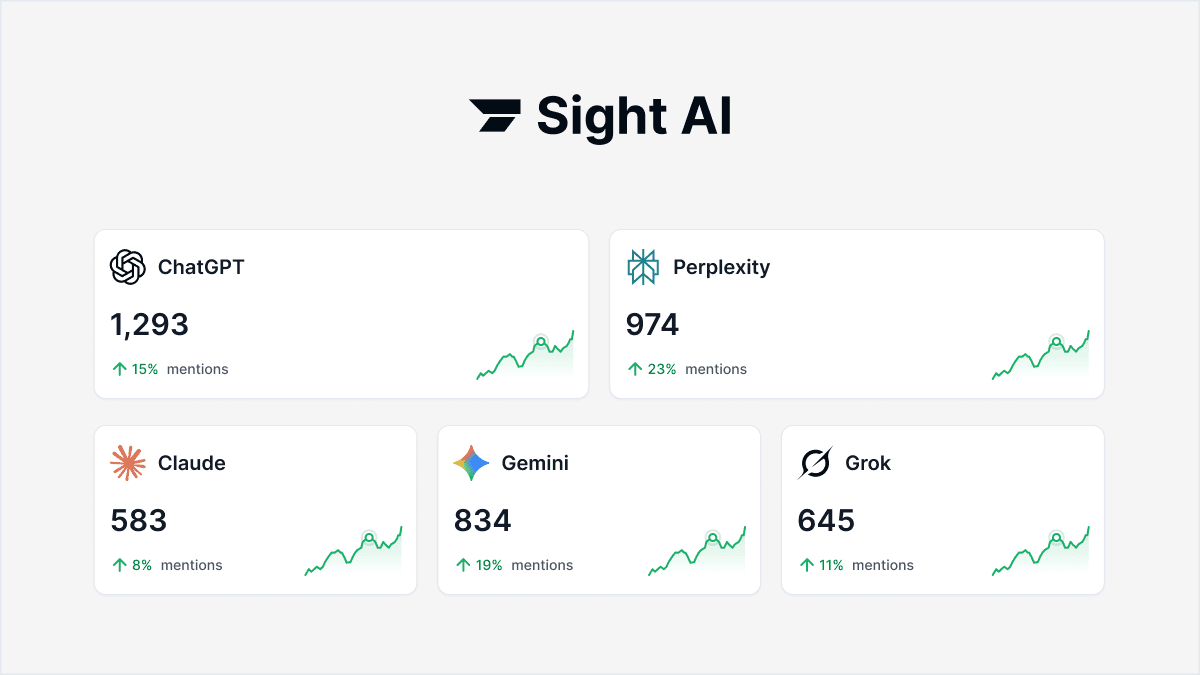
The third layer is AI visibility. This is where most content teams have a blind spot. Track how often your brand is mentioned across AI platforms when users ask questions in your category. Monitor sentiment in those mentions: is your brand being described accurately and positively? Track which of your articles appear to be driving AI citations and which topics trigger competitor mentions without mentioning you. This data directly informs your content strategy and helps you close the gaps that matter most for AI search visibility.
Use AI visibility scores and sentiment analysis to measure whether your content is actually shifting how AI models talk about your brand over time. This is a longer feedback loop than traditional SEO, but it's increasingly important as more search activity moves to AI-assisted interfaces.
Review and refine your AI agent configurations on a monthly basis. Content that ranks well and generates AI citations should inform how you configure future agent prompts. If a particular article structure, heading approach, or answer format consistently performs, build that pattern into your agent templates. Studying AI content workflow best practices can accelerate this refinement cycle significantly.
Scale gradually. Increase your publishing cadence only after confirming that quality and performance metrics hold at your current volume. Scaling a workflow that's producing strong results is straightforward. Scaling a workflow with unresolved quality issues just creates more of the same problem at higher volume.
Putting It All Together: Your Workflow Launch Checklist
Building an automated content creation workflow isn't about removing humans from the process. It's about removing friction so your team can focus on the work that actually requires human judgment: strategy, brand voice, editorial quality, and growth decisions. The repeatable, rules-based work runs on autopilot. The strategic work gets the attention it deserves.
Before you go live, run through this checklist to confirm your workflow is operational:
Pipeline audit complete: Every stage mapped, bottlenecks identified, baseline metrics documented.
Topic discovery system active: Content pillars defined, keyword research combined with AI visibility gap analysis, topic backlog scored and prioritized.
AI agents configured: Specialized agents set up for each content type, brand voice and GEO optimization instructions fed in, quality guardrails defined and tested.
Editorial review streamlined: Single-pass review process with a clear checklist, named ownership, and defined turnaround times.
CMS auto-publishing connected: Integration tested end-to-end, auto-publishing rules configured, internal linking automation active.
IndexNow and sitemap automation live: Instant indexing notifications firing on every publish event, sitemap updates automated.
Performance monitoring in place: Tracking workflow efficiency, SEO results, and AI brand mentions across all major AI platforms.
Start with one content type, validate the entire workflow end-to-end at low volume, then expand. The compounding effect of consistent, optimized publishing is significant, especially when your content is designed to surface in both traditional search results and AI-generated responses. The brands building these systems now are positioning themselves to own visibility as AI search continues to grow.
Start tracking your AI visibility today and see exactly where your brand appears across top AI platforms. Stop guessing how ChatGPT, Claude, and Perplexity talk about you, and start using that data to build a content workflow that puts you in the conversation.