Your content calendar shows 24 blog posts this quarter. Your team can realistically produce eight. The gap between what your strategy demands and what you can deliver isn't just frustrating—it's costing you traffic, rankings, and competitive positioning. Every week without fresh content is a week your competitors pull ahead in search results and AI-powered discovery platforms.
This is where automated blog content strategy changes the game. Not by replacing human creativity, but by systematically handling the heavy lifting of research, optimization, and production. The result? Content teams that once struggled to publish twice a week now ship daily. Marketers who spent hours on keyword research now generate data-driven topics in minutes. Brands that worried about consistency now maintain publishing velocity without burning out their writers.
Here's what makes this shift critical: AI-powered search is fundamentally changing content discovery. When someone asks ChatGPT or Perplexity about solutions in your space, your brand either gets mentioned or it doesn't. Traditional SEO alone won't cut it anymore—you need content optimized for both search engines and AI models, published at a pace that keeps you visible across platforms. Automation makes that possible without sacrificing quality or exhausting your team.
The Mechanics Behind Content Automation
An automated blog content strategy is the systematic use of AI and software to plan, create, optimize, and publish blog content at scale. Think of it as your content production line—each stage handles specific tasks that traditionally consumed hours of manual work, from identifying trending topics to ensuring every article hits SEO benchmarks before it goes live.
The architecture breaks down into four core components. First, content ideation engines analyze search trends, competitor gaps, and audience questions to generate article concepts aligned with your strategy. These systems don't just suggest random topics—they identify opportunities where your expertise intersects with actual search demand and AI query patterns. Understanding where to find blog content ideas becomes systematic rather than sporadic.
Second, AI writing assistants transform those concepts into complete drafts. Modern systems go far beyond basic text generation. They incorporate your brand voice parameters, industry terminology, and structural preferences. Some platforms deploy multiple specialized AI agents—one for research, another for outlining, a third for optimization—each handling what it does best before passing work to the next stage.
Third, SEO optimization layers ensure every article meets technical requirements before publication. This includes keyword integration, meta descriptions, internal linking suggestions, and readability scoring. The goal isn't just to produce content—it's to produce content that performs from day one. Modern automated SEO content writing tools handle these technical requirements automatically.
Fourth, publishing workflows handle distribution and indexing. Advanced systems integrate with your CMS for direct publishing, trigger IndexNow protocols for immediate search engine notification, and update sitemaps automatically. What used to require manual coordination across multiple tools now happens in sequence without human intervention.
The critical distinction is between full automation and human-in-the-loop approaches. Full automation handles everything from ideation to publishing with minimal human involvement—ideal for high-volume, data-driven content like product descriptions or news aggregation. Human-in-the-loop maintains editorial checkpoints where writers review, refine, and approve AI-generated drafts before they go live. Most successful implementations use this hybrid model, letting automation handle the grunt work while humans ensure quality and strategic alignment.
What makes this work is the feedback loop. Performance data flows back into the system, teaching it which topics drive traffic, which structures engage readers, and which optimization patterns lead to AI citations. Your automated strategy gets smarter with every article it produces.
Why Traditional Content Workflows Hit a Ceiling
Manual content creation has an unavoidable bottleneck: human capacity. A skilled writer might produce one high-quality blog post per day if everything goes perfectly. Reality involves research rabbit holes, revision cycles, approval delays, and the mental fatigue of staring at blank screens. Even the most productive teams struggle to scale beyond a certain output threshold without sacrificing quality or burning out.
The research phase alone consumes massive time. Finding relevant statistics, verifying sources, analyzing competitor content, and identifying keyword opportunities can take three to four hours per article. Then comes the actual writing, which demands focus and creativity that can't be rushed. Add optimization, formatting, and publishing logistics, and you understand why most content teams operate at a fraction of their strategic ambition.
This creates content debt—the growing gap between the content your strategy requires and what you've actually published. Your content calendar shows holes. Topic clusters remain incomplete. Seasonal opportunities pass before you can capitalize on them. Competitors who publish more consistently start outranking you not because their content is better, but because they simply have more of it indexed and working for them.
The inconsistency problem compounds over time. When production depends entirely on human availability, publishing schedules become unpredictable. Your audience stops expecting regular content. Search engines notice the irregular publishing patterns. The momentum you need for sustained organic growth never materializes because you can't maintain the velocity that algorithms reward.
Here's where automation fundamentally changes the equation. It doesn't eliminate the need for strategy, creativity, or editorial judgment. Instead, it removes the mechanical constraints that limit how fast you can execute. Research that took hours happens in minutes. First drafts that required staring at blank screens arrive ready for refinement. Optimization that demanded manual checklist work occurs automatically in the background.
The quality concern is legitimate but misplaced. Early AI writing tools produced generic, obvious content that any experienced marketer could spot. Modern automated blog writing software generates sophisticated drafts that incorporate specific research, maintain consistent brand voice, and structure information in ways that engage readers. The key is configuration—systems trained on your best content and guided by clear parameters produce work that reflects your standards, not generic AI output.
Scalability becomes predictable. Instead of hoping your team can handle the workload, you know exactly how many articles your automated system can process per week. Planning becomes realistic. Strategic opportunities become actionable. The content your business needs to grow stops being aspirational and starts being achievable.
Building Your Automated Content Engine
The foundation of any automated content strategy starts with content pillars and topic clusters. These aren't just organizational tools—they're the framework that guides your automation. Define three to five core themes that represent your expertise and align with what your audience searches for. Under each pillar, map out specific topic clusters that cover different aspects, questions, and use cases within that theme.
This structure serves two purposes. First, it ensures your automated ideation stays strategically focused rather than generating random topics. Second, it creates the internal linking architecture that search engines reward and AI models reference when understanding your authority. When your automation suggests new articles, it's pulling from this strategic framework, not just chasing trending keywords. A solid blog writing content strategy makes automation far more effective.
Next comes configuring your AI writing tools with the parameters that maintain quality and consistency. Start by feeding the system examples of your best-performing content. These samples teach the AI your brand voice, structural preferences, and depth expectations. Don't just upload one or two articles—provide a representative sample across different content types so the system understands how you adapt tone and approach based on topic and audience.
Set explicit guidelines for tone, technical depth, and formatting. If you write for technical audiences, specify the level of jargon that's appropriate. If your brand voice is conversational, define what that means in practice with specific do's and don'ts. The more precise your parameters, the less editing you'll need on the backend. Think of this as training a new writer—the clearer your expectations, the faster they'll produce work that meets your standards.
Configure SEO requirements directly into your automation workflow. Define target keyword usage patterns, meta description formats, and internal linking rules. Modern platforms can automatically identify relevant keywords based on search volume and competition, suggest semantic variations, and ensure proper keyword placement without over-optimization. This removes the manual keyword research phase that traditionally consumed hours per article.
Now set up your automated publishing pipeline. Connect your content generation system to your CMS so approved articles flow directly to your website without manual upload steps. Implementing automated content publishing to CMS eliminates the manual upload bottleneck entirely. Configure publishing schedules that maintain consistent output—whether that's daily, three times per week, or whatever cadence your strategy requires. Consistency matters more than volume for building algorithmic trust.
Integrate IndexNow protocol to notify search engines immediately when new content goes live. Traditional indexing could take days or weeks. IndexNow reduces this to hours, meaning your content starts working for you almost immediately. This is particularly crucial for time-sensitive topics or competitive keywords where early indexing provides first-mover advantage.
Build in quality checkpoints appropriate for your risk tolerance. High-stakes content like thought leadership or technical documentation might require full human review before publishing. Informational content with lower sensitivity might need only spot-checking. Define which content types go through which approval gates, and automate the routing so articles queue for review at the right stage.
The final piece is feedback integration. Connect your analytics so performance data flows back into your automation system. Track which topics drive traffic, which structures keep readers engaged, and which optimization patterns lead to rankings. Let this data inform future content suggestions and optimization decisions. Your automated engine should get smarter with every article it produces, learning what works for your specific audience and niche.
Optimizing for AI Search Visibility
Traditional SEO optimizes for search engine crawlers and ranking algorithms. GEO—Generative Engine Optimization—optimizes for how AI models understand, interpret, and cite your content when responding to user queries. The distinction matters because AI-powered search platforms like ChatGPT, Claude, and Perplexity don't just index your content—they synthesize it, reference it, and sometimes quote it directly in responses to millions of users.
Think about the difference. When someone Googles "automated content strategy," they see a list of links. When they ask ChatGPT the same question, they get a synthesized answer that might mention specific brands, tools, or approaches—or might not mention you at all. Your visibility depends on whether the AI model considers your content authoritative and relevant enough to include in its response. That's the GEO challenge.
Structuring automated content for AI visibility requires specific techniques. First, use clear, declarative statements that AI models can extract and cite. Instead of burying key insights in complex paragraphs, lead with the conclusion and then explain. AI models favor content that answers questions directly and provides context that validates the answer. This structure benefits human readers too—everyone appreciates clarity over mystery.
Second, include explicit attribution and sourcing. When you reference data, name the source and year. When you describe approaches, cite who uses them successfully. AI models are more likely to reference content that demonstrates credibility through proper attribution. This isn't just about avoiding fabricated statistics—it's about building the trust signals that make AI systems comfortable citing your work.
Third, optimize for semantic relationships and entity recognition. AI models understand topics through connected concepts, not just keywords. When you write about content automation, naturally incorporate related entities: specific tools, methodologies, use cases, and industry terms. This contextual richness helps AI models understand your content's place in the broader knowledge landscape and increases the likelihood they'll reference it when those concepts come up in queries.
Fourth, structure content in ways AI models can parse and extract. Use clear headings that signal topic shifts. Break complex ideas into digestible sections. Include definitions for specialized terms. Format lists and processes in ways that make information extraction straightforward. The easier you make it for AI to understand and reference your content, the more likely it will.
The monitoring piece is equally critical. You need visibility into how AI models actually reference your brand and content. Are you getting mentioned when users ask about your core topics? What context surrounds those mentions? Which competitors appear alongside you, and what differentiates how you're described versus how they're positioned?
This requires systematic tracking across multiple AI platforms. Each model has different training data, different biases, and different patterns for what it considers authoritative. Your brand might appear frequently in ChatGPT responses but rarely in Claude's. Understanding these platform-specific patterns lets you optimize content strategy for maximum AI visibility across the ecosystem.
Adaptation based on AI visibility data creates a feedback loop. If AI models consistently cite your competitor's framework but not yours, analyze what makes their content more referenceable. If certain topic angles generate mentions while others don't, double down on what works. If specific content structures lead to direct quotes in AI responses, replicate that approach across your content library.
The competitive advantage here is significant. Most brands still optimize exclusively for traditional search, unaware that AI-powered discovery is already influencing how millions of users find solutions. The brands that master GEO now—while it's still early—will own mindshare as AI search becomes the default way people get answers.
Measuring Success: Metrics That Matter
Content velocity is the first metric to track when implementing automation. How many articles are you publishing per week compared to your manual baseline? What's your time-to-publish from concept to live content? These operational metrics reveal whether your automation actually solves the production bottleneck or just adds complexity without meaningful output gains.
Production efficiency tells you how automation affects team capacity. If your writers previously produced two articles per week manually and now oversee ten automated articles in the same timeframe, that's a 5x efficiency multiplier. Track the hours saved on research, drafting, and optimization—this quantifies the ROI of your automation investment in concrete terms your leadership will understand.
Organic traffic growth shows whether increased content volume translates to actual business results. Monitor overall organic sessions, but segment by content published pre-automation versus post-automation. New automated content should start driving measurable traffic within 30-60 days if it's properly optimized. If traffic doesn't increase proportionally to content volume, your automation might be producing quantity without quality.
Keyword rankings reveal how well your automated content competes. Track rankings for target keywords in articles published through automation. Are they reaching page one? How do they compare to manually created content? If automated articles consistently underperform in rankings, your optimization parameters need refinement. If they perform comparably or better, you've validated that automation maintains quality while increasing output.
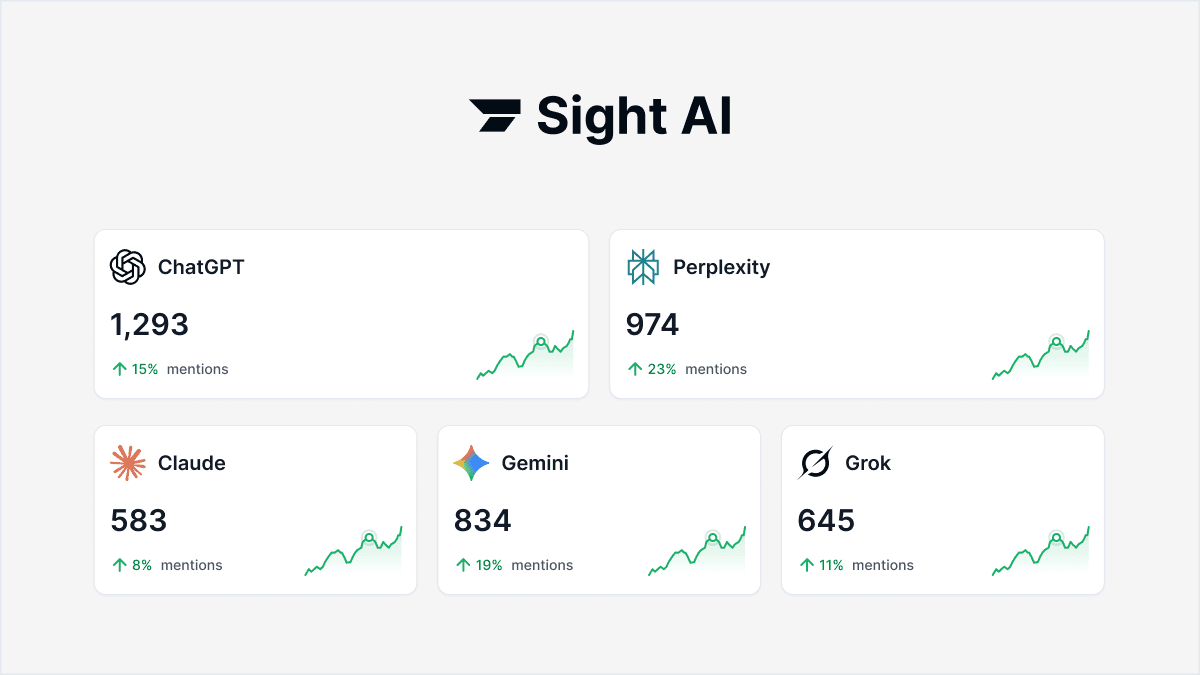
AI citation frequency is the new frontier metric. How often do AI models like ChatGPT, Claude, and Perplexity mention your brand when users ask questions in your domain? This requires specialized tracking tools that monitor AI responses across platforms and identify brand mentions, sentiment, and context. Think of it as share of voice, but for AI-powered search instead of traditional search results.
AI visibility scores aggregate multiple signals into a single metric that shows your brand's presence across AI platforms. These scores typically factor in mention frequency, sentiment analysis, context quality, and competitive positioning. A rising AI visibility score indicates your content strategy is successfully optimizing for generative engine discovery, not just traditional search.
Prompt tracking reveals which user queries trigger mentions of your brand. Are you appearing in responses about your core topics? Are there adjacent topics where you should be mentioned but aren't? This intelligence guides content strategy by showing exactly what questions and contexts generate AI citations, letting you optimize specifically for high-value prompts.
Engagement metrics matter even in automated workflows. Track time on page, scroll depth, and bounce rates for automated content. If readers engage with automated articles as much as manual content, your quality bar is solid. If engagement drops, your automation needs recalibration—either the content isn't meeting reader expectations or your topic selection isn't aligned with what your audience actually wants.
The synthesis of these metrics tells the complete story. High content velocity with strong organic growth and positive AI visibility means your automation is working. High velocity with flat traffic and low AI citations means you're producing content that doesn't perform. Low velocity despite automation means implementation issues are blocking the efficiency gains you expected. Track all dimensions to understand where optimization efforts will have the biggest impact.
Putting Your Automated Strategy Into Action
Start with a pilot focused on one specific content type before scaling across your entire blog. Choose something with clear success metrics and manageable scope—perhaps how-to guides, product comparisons, or industry news roundups. This contained approach lets you test your automation configuration, identify issues, and refine processes without risking your entire content operation.
Define explicit quality benchmarks before you begin. What does acceptable content look like? What are the non-negotiables for brand voice, accuracy, and depth? Create a rubric that anyone on your team can use to evaluate automated output consistently. This removes subjective judgment and creates a clear standard for when content is ready to publish versus when it needs additional refinement.
Establish review workflows that match your risk tolerance and content types. High-stakes content gets full editorial review. Lower-risk informational content might need only spot-checking for accuracy and tone. Define who reviews what, how long review cycles should take, and what triggers content to be sent back for revision. Automation speeds up production, but thoughtful review ensures quality stays high.
Monitor performance weekly during your pilot phase. Are automated articles driving traffic? How do rankings compare to manually created content? What's the team feedback on efficiency gains? This frequent check-in rhythm lets you catch problems early and make adjustments before they compound. Once your pilot proves successful, you can extend review intervals as confidence grows.
Scale gradually based on pilot results. If your initial content type performs well, expand to a second type while maintaining the first. Add team members to the workflow as you grow comfortable with processes. Increase publishing frequency incrementally rather than jumping from two articles per week to ten overnight. Controlled scaling prevents quality drops and keeps your team from getting overwhelmed by sudden workflow changes.
Continuously refine based on both performance data and evolving AI search behaviors. AI models update regularly, changing how they interpret and cite content. Search algorithms adjust ranking factors. User query patterns shift as AI-powered search becomes more prevalent. Your automated strategy needs to evolve with these changes, incorporating new optimization techniques and adapting to emerging best practices. Exploring the future of automated content management helps you stay ahead of these shifts.
The key is treating automation as an ongoing optimization project, not a set-it-and-forget-it solution. The brands that succeed with automated content strategy are the ones that stay actively engaged with their systems, teaching them what works, correcting what doesn't, and constantly pushing for better performance across all metrics that matter.
Your Path to Scalable Content Success
Automated blog content strategy doesn't replace human creativity, strategic thinking, or editorial judgment. It amplifies them. By systematically handling the mechanical work of research, drafting, and optimization, automation frees your team to focus on what humans do best: strategic direction, creative differentiation, and quality oversight. The result is content operations that scale without sacrificing the standards that make your brand distinctive.
The competitive advantage goes beyond just publishing more content. It's about executing your complete content strategy instead of the fraction your team capacity allows. It's about maintaining consistency that builds algorithmic trust and audience expectations. Most importantly, it's about positioning your brand for visibility in both traditional search and the emerging world of AI-powered discovery.
This matters because the landscape is shifting faster than most marketers realize. AI-powered search platforms are already influencing how millions of users discover brands and solutions. The companies that optimize for both traditional SEO and generative engine visibility now will own mindshare as this transition accelerates. Automation makes it possible to create the volume and variety of content needed to compete across both dimensions simultaneously.
The brands winning with automated content strategy share common traits. They maintain clear strategic frameworks that guide their automation. They configure systems with precise quality parameters rather than accepting generic output. They monitor performance across traditional and AI-powered search metrics. They treat automation as an ongoing optimization project, continuously refining based on what the data reveals.
Stop guessing how AI models like ChatGPT and Claude talk about your brand—get visibility into every mention, track content opportunities, and automate your path to organic traffic growth. Start tracking your AI visibility today and see exactly where your brand appears across top AI platforms while building the automated content engine that keeps you visible as search continues to evolve.