When a potential customer opens ChatGPT and types "What's the best project management tool for remote teams?" your brand's fate is being decided in real time. Not by Google's algorithm. Not by your ad spend. But by whether an AI model considers your product worth mentioning in its response.
This is the new reality of digital marketing. Consumers are increasingly bypassing traditional search engines entirely, asking AI assistants for product recommendations, comparing solutions, and making purchase decisions based on what ChatGPT, Claude, or Perplexity tell them. If your brand isn't part of that conversation, you're invisible to a rapidly growing segment of your target market.
The question isn't whether this shift matters. It's whether you're tracking it. Do you know if your brand appears when someone asks an AI for CRM recommendations? Can you measure whether the sentiment is positive or negative? Do you understand which competitor gets mentioned instead of you, and why?
Brand presence in generative AI represents a fundamental shift in how consumers discover and evaluate products. This article breaks down what AI visibility actually means, why traditional SEO metrics miss the picture entirely, and how to systematically track and improve your brand's presence across AI platforms. You'll learn the anatomy of AI brand mentions, the metrics that matter, and a practical framework for moving from invisible to recommended.
The New Discovery Layer: How AI Models Shape Buying Decisions
Generative AI has created an entirely new layer between your brand and potential customers. Think of it as a highly opinionated intermediary that synthesizes information, evaluates options, and presents curated recommendations before a user ever clicks through to your website.
This represents a fundamental departure from how traditional search works. In the Google era, you optimize content to rank highly, users see your listing in search results, and they decide whether to click. You control your title tag, meta description, and how you present yourself. The user makes the final choice about which result to explore.
With AI search, that dynamic flips entirely. When someone asks "Which email marketing platform should I use for e-commerce?" they receive a synthesized answer that might mention three or four specific brands with brief explanations of each. The AI model has already done the filtering, evaluation, and presentation. Your brand either made the cut or it didn't.
The types of queries where AI brand presence matters most fall into three categories. First, comparison queries: "Compare Asana vs Monday vs ClickUp" or "What's better, HubSpot or Salesforce?" These queries explicitly ask the AI to evaluate competing options, and being included in that evaluation is critical.
Second, recommendation requests: "What's the best accounting software for freelancers?" or "Which CRM should a small business use?" These open-ended questions give AI models significant discretion in which brands to mention. The model synthesizes its training data and recent information to present what it considers the most relevant options. Understanding why AI models recommend certain brands is essential for positioning your product effectively.
Third, problem-solution questions: "I need to automate my social media posting, what should I use?" or "How do I track website analytics without Google Analytics?" Users describe a problem or need, and the AI recommends specific solutions. If your product solves that problem but the AI doesn't know to recommend it, you've lost the opportunity entirely.
Here's what makes this particularly challenging: AI models don't just pull from top-ranking Google results. They synthesize information from their training data, which includes countless websites, articles, reviews, and discussions. A brand might rank poorly in traditional search but appear frequently in AI recommendations because it's mentioned consistently across authoritative sources the AI was trained on.
The inverse is equally true. You could hold the number one position for a valuable keyword in Google, but if your brand lacks consistent mentions across the broader web ecosystem, AI models might overlook you entirely when synthesizing recommendations.
Anatomy of an AI Brand Mention: What Gets Tracked and Why It Matters
Not all AI brand mentions are created equal. Understanding what actually gets tracked—and why each component matters—helps you move beyond simply hoping your brand appears to strategically improving how it's presented.
The first component is mention frequency: how often does your brand appear when users ask relevant queries? This isn't just about volume. It's about understanding the specific contexts and query types that trigger mentions. Your brand might appear frequently for technical comparison queries but rarely for beginner-focused recommendation requests, revealing gaps in how AI models perceive your positioning.
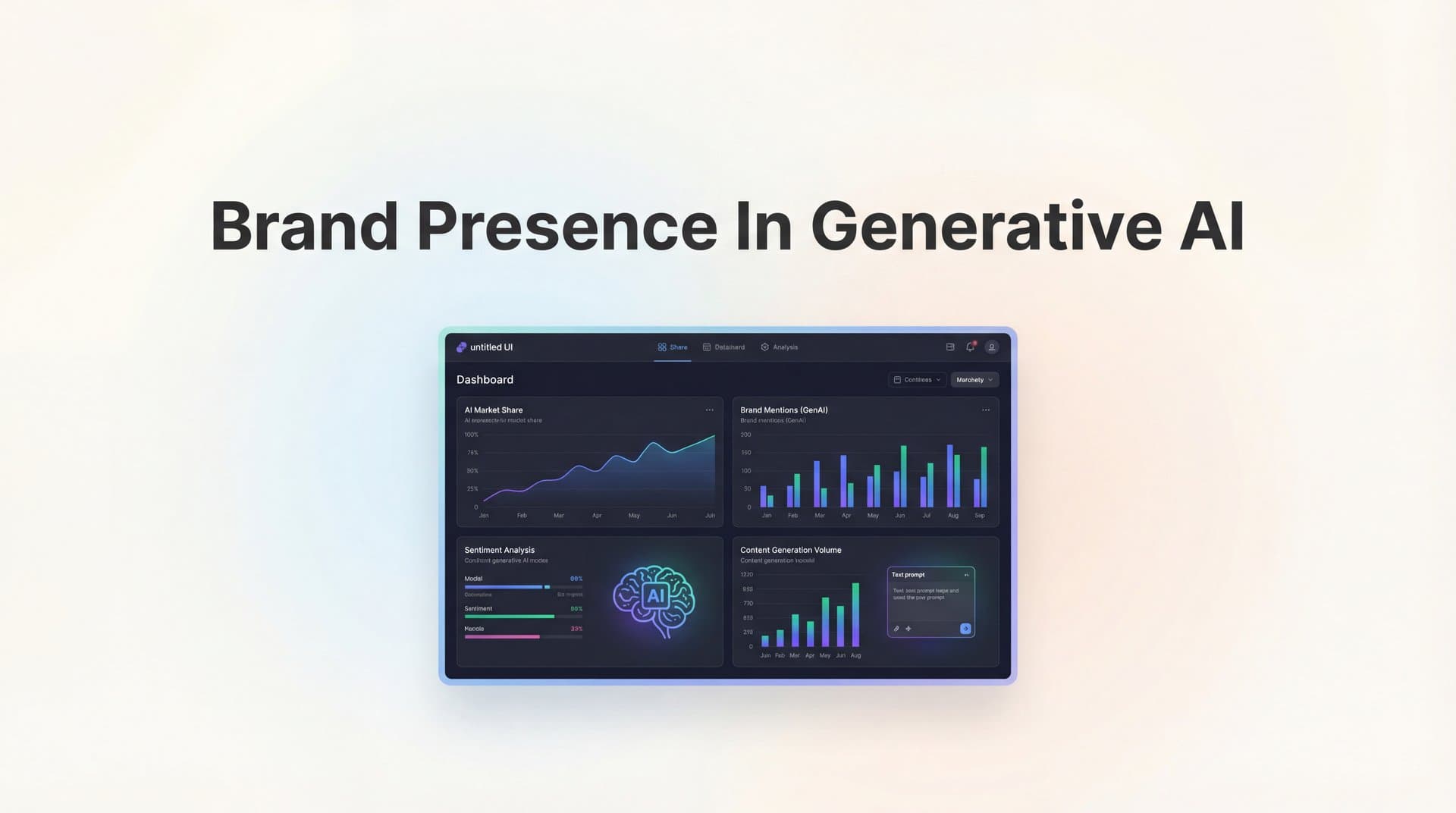
Sentiment represents the second critical component. A brand can be mentioned frequently but predominantly in negative contexts. Imagine an AI consistently citing your product as an example of expensive software or mentioning it alongside complaints about customer service. High mention frequency with negative sentiment actively damages your brand rather than helping it. Implementing brand sentiment tracking software helps you catch these issues before they impact revenue.
Sentiment in AI responses typically falls into three categories: positive (recommended with favorable language), neutral (mentioned factually without endorsement), and negative (cited as a cautionary example or with criticism). The distribution across these categories reveals how AI models actually perceive your brand based on their training data.
Context accuracy matters more than many companies realize. AI models sometimes mention brands with outdated information, incorrect feature descriptions, or inaccurate pricing. If ChatGPT consistently describes your product with features you deprecated two years ago, or Claude mentions a pricing tier that no longer exists, these inaccuracies directly impact purchase decisions.
Competitive positioning represents the fourth component. When your brand is mentioned, which competitors appear alongside it? Are you consistently grouped with premium enterprise solutions or budget-friendly alternatives? This positioning reveals how AI models categorize your product and which alternatives they consider comparable.
Different AI models present your brand differently based on their underlying architecture and data sources. ChatGPT relies primarily on its training data, with a knowledge cutoff date that limits its awareness of recent developments. Claude has different training data and may emphasize different aspects of your product. Perplexity actively searches the web in real-time, potentially incorporating more recent information but also more variable in its responses.
Gemini draws from Google's vast index and Knowledge Graph, which means traditional SEO signals may influence its recommendations more than other models. Each platform's unique approach means your brand might be well-represented in one AI assistant but virtually invisible in another. This is why multi-model AI presence monitoring has become essential for comprehensive visibility tracking.
This brings us to prompt tracking: understanding which specific user queries trigger mentions of your brand. This goes beyond keyword tracking in traditional SEO. It's about mapping the actual questions and conversation patterns that lead AI models to recommend your product.
For example, you might discover that your project management tool gets mentioned frequently when users ask about "remote team collaboration" but rarely appears for queries about "agile project management" despite supporting those workflows. This insight reveals content gaps and positioning opportunities that traditional analytics would miss entirely.
Why Traditional SEO Metrics Miss the AI Visibility Picture
Your Google Analytics dashboard shows strong organic traffic. Your keyword rankings are climbing. Your content consistently appears in the top three results for target queries. By every traditional SEO metric, you're winning. Yet when potential customers ask AI assistants for recommendations in your category, your brand doesn't appear.
This disconnect reveals the fundamental gap between traditional SEO and AI visibility. Google search operates on a relatively straightforward principle: create high-quality content, earn authoritative backlinks, optimize technical elements, and you'll rank well. Users see your listing, click through to your site, and you can measure that traffic.
AI models operate differently. They don't just identify the top-ranking page for a query and present it. They synthesize information from across their training data—which includes countless websites, articles, reviews, forum discussions, and other sources—to formulate a response that directly answers the user's question.
A brand might rank number one for "best CRM software" in Google but be completely absent from ChatGPT's response to "What CRM should I use?" because the AI's training data doesn't include strong signals about that brand. The model might have encountered limited mentions of the company, found inconsistent messaging across sources, or simply weighted other brands more heavily based on the patterns it learned.
Traditional SEO tools measure rankings, backlinks, domain authority, and organic traffic. These metrics tell you how visible you are in traditional search engines. They don't tell you whether AI models consider your brand worth mentioning when synthesizing recommendations.
This is where Generative Engine Optimization emerges as a complement to traditional SEO. GEO focuses specifically on optimizing your brand's presence in AI-generated responses. It's not about ranking for keywords—it's about being included in synthesized answers, presented with accurate information, and positioned favorably against competitors.
The challenge is that AI models synthesize information from multiple sources, not just top-ranking pages. Your brand might be mentioned in a mid-tier blog post, discussed in a Reddit thread, reviewed on a niche comparison site, and referenced in an industry report. The cumulative weight of these mentions—their consistency, sentiment, and authority—influences whether an AI model includes your brand in its recommendations.
Traditional SEO focuses on driving traffic to your website. GEO focuses on ensuring your brand is part of the conversation before users ever visit a website. Both matter, but they require different strategies and different measurement approaches. You can't optimize what you don't measure, and traditional analytics tools weren't built to track AI brand mentions.
Building Blocks of Strong AI Brand Presence
Creating strong brand presence in generative AI isn't about gaming algorithms or finding shortcuts. It's about making your brand genuinely easy for AI models to understand, reference accurately, and recommend confidently. This requires attention to how you structure content, establish authority, and ensure timely discovery.
Content structure plays a crucial role in how AI models parse and reference your brand. AI assistants excel at processing clearly structured information with explicit definitions, straightforward explanations, and logical organization. When your content uses ambiguous language, assumes context, or buries key information in dense paragraphs, AI models struggle to extract and synthesize it accurately.
Think about how you describe your product. If your homepage says "We revolutionize how teams collaborate" without explicitly stating what your product actually does, AI models may struggle to categorize and recommend it appropriately. Compare that to "Project management software for remote teams that combines task tracking, time management, and video collaboration in one platform." The second version gives AI models clear, referenceable information.
Structured data helps but isn't sufficient on its own. AI models need content written for comprehension, not just marked up for machines. This means using clear headings, defining terms explicitly, and organizing information logically. When you explain a feature, describe what it does, why it matters, and how it compares to alternatives. Give AI models the context they need to accurately represent your product.
Authority signals influence how confidently AI models recommend your brand. This goes beyond traditional backlinks and domain authority. Building brand authority in AI ecosystems requires consistent brand messaging across the web ecosystem. When AI models encounter your brand mentioned in multiple authoritative sources with consistent positioning and messaging, they develop a clearer understanding of what you offer and when to recommend you.
Expert content strengthens authority signals. Publishing detailed guides, research, case studies, and thought leadership establishes your brand as a knowledgeable voice in your space. When AI models synthesize information about your industry, they're more likely to reference and recommend brands that demonstrate genuine expertise rather than just marketing claims.
Third-party mentions carry significant weight. Reviews, comparisons, industry analyses, and media coverage from sources outside your direct control help AI models validate your brand's credibility. A brand mentioned consistently across reputable third-party sources signals to AI models that it's worth including in recommendations.
Freshness and indexing matter more for AI visibility than many companies realize. Some AI models, particularly those that incorporate real-time web search like Perplexity, actively look for recent information. If your latest product updates, feature releases, or company news aren't quickly discoverable, AI models may present outdated information about your brand.
Getting content discovered quickly requires proactive indexing strategies. Search engines don't instantly discover new content—there's typically a lag between publishing and indexing. For AI models that pull from recently indexed content, this lag means your newest information might not be available when users ask for recommendations.
Automated indexing through protocols like IndexNow helps address this challenge. Instead of waiting for search engines to crawl your site and discover updates, you actively notify them the moment content is published or updated. This accelerates the discovery process, ensuring your latest information becomes available to AI models that incorporate recent web data.
Maintaining always-updated sitemaps reinforces this discovery process. When AI models or the search engines that feed them check your sitemap, they should find a current, accurate map of your content. Outdated sitemaps that reference deleted pages or miss new content create gaps in how AI models understand your site structure and offerings.
Measuring What Matters: Key Metrics for AI Visibility
You can't improve what you don't measure. Tracking brand presence in generative AI requires specific metrics that capture not just whether you're mentioned, but how you're presented, in what contexts, and compared to whom. Learning how to measure AI visibility metrics is the foundation of any successful optimization strategy.
Share of voice in AI responses represents your foundational metric. When users ask questions relevant to your product category, what percentage of responses include your brand? This isn't just about raw mention frequency—it's about understanding your presence relative to the total conversation.
For example, if there are ten major competitors in your space and AI models mention three brands on average when answering recommendation queries, what's your inclusion rate? Are you in that top three consistently, occasionally, or rarely? Share of voice reveals your baseline visibility and provides a benchmark for improvement.
Sentiment distribution shows how AI models talk about your brand when they do mention it. Track the percentage of mentions that are positive, neutral, and negative. A brand with 70% positive mentions, 25% neutral, and 5% negative has a fundamentally different AI presence than one with 30% positive, 40% neutral, and 30% negative.
Changes in sentiment distribution over time reveal the impact of your content strategy, product updates, and market perception. If negative mentions increase after a product change or customer service issue, you'll see it reflected in AI responses before it might appear in traditional analytics.
Mention accuracy measures how correctly AI models represent your brand. Do they describe your features accurately? Is your pricing information current? Are they using your correct brand positioning? Inaccurate mentions can be worse than no mentions at all—they actively misinform potential customers.
Tracking accuracy requires comparing AI-generated descriptions against your actual product, pricing, and positioning. When you find inaccuracies, they point to either outdated information in the AI's training data or inconsistent messaging across your web presence that confuses the model.
Competitive comparison frequency shows which brands AI models consider your direct alternatives. When your brand is mentioned, which competitors appear alongside it? Are you consistently grouped with premium enterprise solutions, mid-market tools, or budget alternatives? This positioning reveals how AI models categorize your product.
Understanding competitive positioning helps you identify perception gaps. If AI models consistently compare you to enterprise solutions but your target market is small businesses, there's a messaging problem. If they group you with outdated legacy tools despite your modern platform, you need to strengthen signals about your current positioning.
Tracking across multiple AI models is essential because each platform has different data sources, knowledge cutoffs, and recommendation patterns. Your brand might perform well in ChatGPT but poorly in Claude, or appear frequently in Perplexity but rarely in Gemini. Each platform reaches different users and influences different purchase decisions.
Platform-specific tracking reveals where to focus optimization efforts. If you're strong in ChatGPT but weak in Perplexity, which actively searches the web, you might need to improve your real-time indexing and recent content freshness. Dedicated Perplexity AI brand tracking helps you understand how this increasingly popular platform presents your brand. If you're mentioned in Gemini but not Claude, the issue might relate to differences in training data rather than recent content.
Establishing baselines before implementing changes is critical. Track your current AI visibility across key metrics for at least a few weeks to understand your starting point. This baseline lets you measure the actual impact of optimization efforts rather than guessing whether changes helped.
Setting realistic improvement targets depends on your current position and competitive landscape. A brand with zero AI mentions won't jump to 50% share of voice overnight. A more realistic target might be appearing in 10% of relevant queries within three months, then building from there. Incremental, measurable progress beats unrealistic goals that lead to frustration.
From Invisible to Recommended: A Strategic Framework
Moving from invisible to recommended in AI responses requires a systematic approach. Random content creation and hoping for mentions won't cut it. You need a framework that identifies gaps, implements targeted improvements, and measures results.
Start with an audit of your current AI presence. Query multiple AI models with questions your target customers would actually ask. "What's the best [product category] for [use case]?" or "Compare [your brand] vs [competitor]" or "How do I solve [problem your product addresses]?" Document which queries trigger mentions of your brand, how you're described, what sentiment appears, and which competitors are referenced.
This audit reveals your baseline and identifies immediate opportunities. You might discover you're never mentioned for certain query types despite being relevant, or that AI models consistently describe your product with outdated information, or that you're always compared to competitors in a different market segment than your target. If you find your brand missing from AI searches, you've identified a critical gap that needs immediate attention.
Identify content gaps based on your audit findings. If AI models never mention your brand for beginner-focused queries but you have strong presence in technical comparisons, you need content that addresses entry-level users. If you're absent from queries about specific use cases your product supports, create detailed content explaining those applications.
Content gap analysis should map to actual user queries, not just keywords. Think about the questions your target customers ask and the contexts where your product is relevant. Create content that directly addresses those questions with clear, structured information that AI models can easily parse and reference.
Optimize for AI comprehension throughout your content. Use clear headings that explicitly state what each section covers. Define your product and its key features in straightforward language. Explain use cases, benefits, and differentiators without marketing fluff that obscures actual information. Make it easy for AI models to extract accurate facts about your brand.
This optimization extends beyond your website. Encourage satisfied customers to mention your brand in reviews, forums, and social media using clear, accurate descriptions. Pursue media coverage and third-party mentions that reinforce your positioning. The more consistent signals AI models encounter about your brand across diverse sources, the more confidently they'll recommend you.
Monitor results through continuous tracking. Don't implement changes and wait months to check impact. Regular monitoring shows which optimizations move the needle and which need adjustment. Using AI brand monitoring tools helps you track your key metrics weekly or biweekly to identify trends early and iterate quickly.
The feedback loop is critical: track mentions, analyze which content and signals drive positive recommendations, and iterate based on what works. If you notice AI models start mentioning your brand more frequently after publishing detailed use case content, double down on that approach. If certain messaging consistently appears in positive mentions, reinforce it across your web presence.
Common challenges will emerge as you implement this framework. Dealing with inaccurate AI mentions requires updating content across your web presence and ensuring search engines index the corrections quickly. You can't control what AI models say, but you can influence it by making accurate information more discoverable and consistent.
Competing with established brands in AI recommendations is harder than in traditional search. AI models tend to reference brands they've encountered frequently in their training data, which favors established players. Newer brands need to be strategic: focus on specific niches or use cases where you can establish strong presence, then expand from there.
Maintaining consistency across AI platforms requires understanding each platform's unique characteristics. Perplexity's real-time web search means fresh content matters more. ChatGPT's reliance on training data means building long-term authority signals is critical. Gemini's connection to Google means traditional SEO signals still influence recommendations. Tailor your approach to address each platform's specific patterns.
Your Next Move in the AI Visibility Game
Brand presence in generative AI isn't a future consideration—it's a current reality shaping how your target customers discover and evaluate products right now. While you've been optimizing for Google, a parallel discovery channel has emerged where AI models act as trusted advisors, recommending specific brands to users who never click through to a search results page.
The companies that recognize this shift early and implement systematic tracking and optimization will build sustainable advantages. Those that ignore AI visibility will find themselves increasingly invisible to a growing segment of their market, watching potential customers receive recommendations that never include their brand.
The key takeaways are clear: AI models are actively influencing buying decisions across every industry. Traditional SEO metrics and tools don't capture this new visibility layer. Success requires understanding how AI models present your brand, measuring the metrics that matter, and systematically optimizing your content and authority signals for AI comprehension.
This isn't about abandoning traditional SEO—it's about expanding your visibility strategy to include the channels that increasingly matter. The same content quality, authority building, and strategic thinking that drive SEO success apply to AI visibility. You're not learning an entirely new discipline; you're extending proven approaches to a new platform.
The difference is measurement. You can't improve AI visibility without tracking it. You need to know where you stand today, which queries trigger mentions of your brand, how AI models describe you, and which competitors they consider your alternatives. That visibility into the AI conversation is the foundation for everything else.
Stop guessing how AI models like ChatGPT and Claude talk about your brand—get visibility into every mention, track content opportunities, and automate your path to organic traffic growth. Start tracking your AI visibility today and see exactly where your brand appears across top AI platforms.