You've been there before. It's Monday morning, and you're staring at a blank editorial calendar—or worse, no calendar at all. Your team is scrambling to figure out what to publish this week. Someone suggests repurposing an old post. Another person volunteers to write something "quick" about a trending topic they saw on Twitter. Meanwhile, your carefully researched keyword strategy sits untouched in a spreadsheet from three months ago.
This is what reactive content creation looks like, and it's exhausting. Every publishing cycle becomes a firefight. Quality suffers because there's no time for proper research or editing. SEO opportunities slip through the cracks. Your team burns out trying to maintain consistency while juggling last-minute assignments.
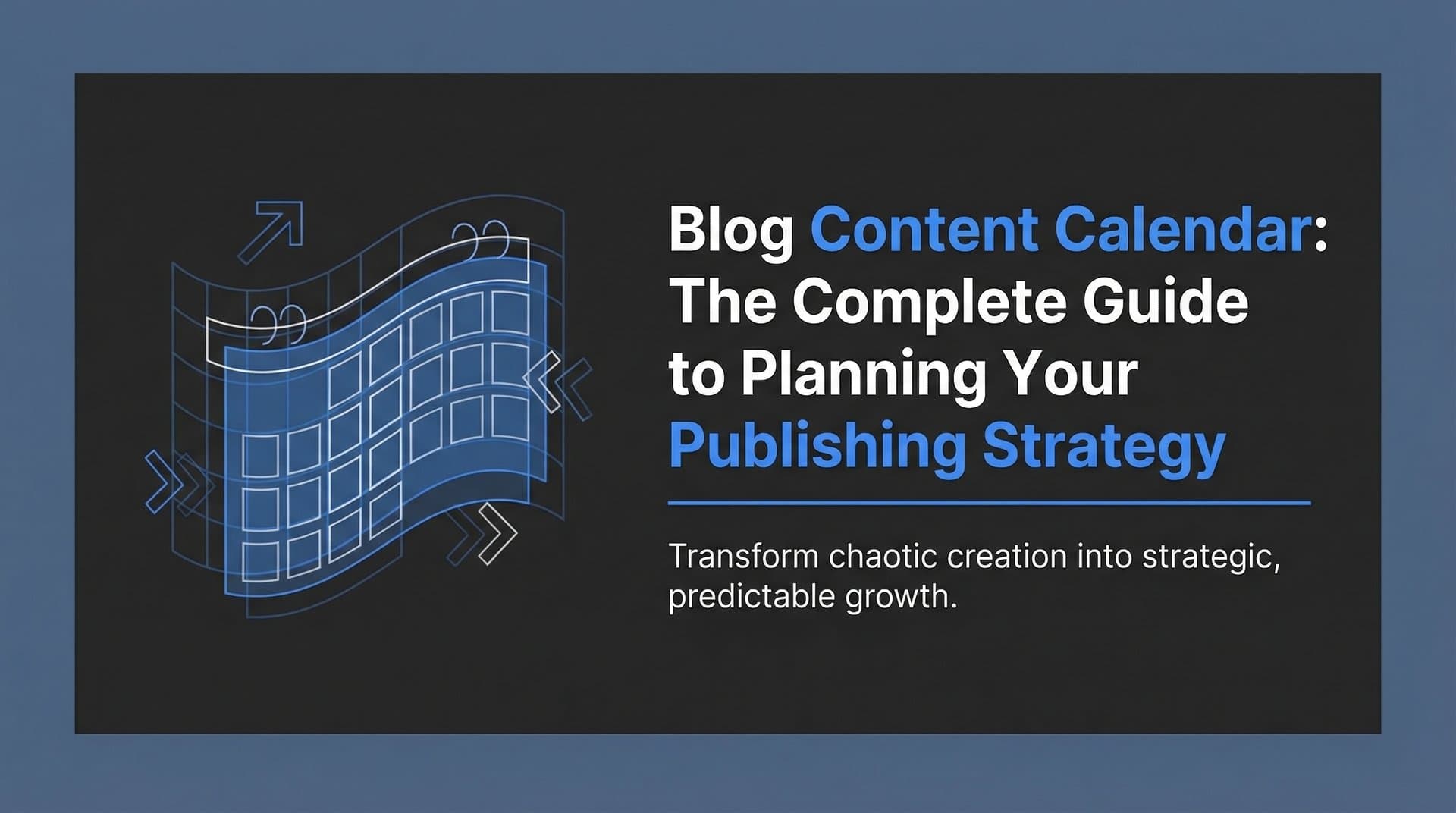
A blog content calendar changes everything. It transforms content creation from chaotic scrambling into strategic, predictable growth. Instead of asking "what should we write this week?" you're executing a plan that aligns with business goals, captures seasonal opportunities, and builds topical authority over time. For marketers and founders looking to scale content output without destroying team morale, the calendar isn't just helpful—it's the operational backbone that makes sustainable growth possible.
Why Strategic Planning Beats Reactive Publishing Every Time
Let's clear up what a blog content calendar actually is. It's not just a list of publication dates and article titles. A real content calendar is a comprehensive planning system that encompasses target keywords, content formats, distribution channels, author assignments, status tracking, and promotional strategies. Think of it as mission control for your entire content operation.
The power comes from alignment. When your calendar connects content to specific business objectives—product launches, seasonal campaigns, customer education initiatives—every article serves a strategic purpose. You're not publishing for the sake of publishing. You're building a content ecosystem where each piece supports broader goals.
Consider how this plays out over time. Ad-hoc publishing might produce ten solid articles in a quarter, but they're scattered across random topics with no connecting thread. Strategic calendar planning produces ten articles that build on each other—establishing topical clusters, linking internally to reinforce authority, and systematically addressing customer questions at every stage of their journey.
The compounding benefits of consistency cannot be overstated. Search engines reward regular publishing patterns with more frequent crawling. Your audience learns to expect new content on predictable schedules. Internal teams develop smoother workflows because they know what's coming and when. Most importantly, you create space for quality—writers have adequate research time, editors can review thoroughly, and designers can create supporting visuals without rushing.
This systematic approach also reveals gaps that reactive publishing masks. When you map out a quarter of content, you immediately see if you're neglecting bottom-of-funnel topics, ignoring an important product feature, or missing seasonal opportunities. These insights are invisible when you're only thinking one week ahead.
The Building Blocks of an Effective Content Calendar
Every functional content calendar needs certain core elements. Publication dates are obvious, but they're just the starting point. Each calendar entry should include the target keyword you're optimizing for—not just the primary term, but related variations and semantic keywords that support the topic.
Content format matters more than many teams realize. Is this a how-to guide? A listicle? An in-depth explainer? A quick news update? Different formats serve different purposes and require different production timelines. Your calendar should specify format upfront so writers know what they're creating and how much depth to pursue.
Assignment and ownership prevent the "I thought you were handling that" disasters. Every piece needs a designated writer, editor, and approver. Status tracking shows where each article sits in your workflow—idea stage, outline approved, first draft, in review, scheduled, published. This visibility keeps projects moving and prevents bottlenecks.
Here's where it gets strategic: categorizing content by funnel stage transforms your calendar from a publishing schedule into a conversion tool. Awareness content attracts new visitors through broad, educational topics. Consideration content helps prospects evaluate solutions and understand your approach. Decision content addresses specific objections and demonstrates value. Your calendar should balance all three stages.
Topic clusters deserve their own column in your calendar. Modern SEO favors content that demonstrates topical authority—multiple related articles linking to a central pillar page. When you plan clusters in advance, you can ensure proper internal linking, avoid cannibalization, and build comprehensive coverage of important themes.
Don't overlook metadata planning. Your calendar should include fields for meta descriptions, target internal links, and CTA alignment. Deciding these elements during planning—rather than during last-minute publishing—improves consistency and ensures every article supports your conversion goals.
Distribution planning belongs in the calendar too. Where will you promote this content? Which email segments should receive it? What social channels make sense? Which Slack communities or forums might find it valuable? Planning distribution alongside creation ensures your content actually reaches its intended audience.
How to Build Your Content Calendar From the Ground Up
Start with a content audit. Before planning what's next, understand what you already have. List every published article, note its target keyword, identify its funnel stage, and assess its current performance. This audit reveals patterns—topics you've covered well, gaps in your content library, and opportunities for updates or expansion.
Gap analysis follows naturally from your audit. Compare your existing content against customer questions, product features, and competitive topics. Where are the holes? What questions do your sales team hear repeatedly that you haven't addressed? Which features lack educational content? These gaps become calendar priorities.
Now integrate keyword research. Use tools to identify search volume, competition levels, and search intent for topics in your gap list. Prioritize keywords that balance opportunity (decent search volume, achievable competition) with strategic value (supports business goals, addresses customer needs). Map these keywords to specific calendar slots.
Search intent alignment is critical here. A keyword might have high volume, but if searchers want something different than what you can provide, it's a waste of effort. Examine the current top-ranking pages for each target keyword. What format do they use? What depth do they provide? What questions do they answer? Your calendar entry should specify how your content will match or exceed this intent.
Establish your publishing cadence based on realistic team capacity. Many teams over-commit, planning daily posts when they can barely maintain weekly quality. Better to publish one excellent article per week than five mediocre ones. Consider your production pipeline—how long does research take? Writing? Review? Design? Build buffer time into your calendar for unexpected delays or trending opportunities.
Seasonal planning gives your calendar strategic depth. Map out annual events relevant to your industry—conferences, holidays, product launches, industry trends that peak at specific times. Schedule content to publish weeks before these events, giving it time to rank and accumulate authority before demand spikes.
Theme your calendar by month or quarter to build momentum. If Q2 focuses on customer retention strategies, cluster related articles that reinforce this theme. This creates natural internal linking opportunities and helps your team develop deeper expertise in specific areas.
Tools That Make Calendar Management Actually Manageable
The simplest content calendar is a spreadsheet. Google Sheets or Excel can handle basic planning—dates, titles, keywords, assignments, status. Many small teams find this sufficient, especially when starting out. Spreadsheets are free, familiar, and infinitely customizable. The downside? They require manual updates, offer limited collaboration features, and become unwieldy as your content operation scales.
Dedicated content management platforms offer significant advantages for growing teams. Tools like CoSchedule, Airtable, or Monday.com provide visual calendar views, automated status updates, and built-in collaboration features. Team members can comment on entries, attach files, and track changes without endless email threads or Slack messages. Exploring content calendar automation tools can help you identify the right platform for your workflow.
Integration capabilities matter more as your content operation matures. Can your calendar tool connect to your CMS for one-click publishing? Does it sync with your project management system? Can it pull keyword data from your SEO tools? These connections eliminate manual data entry and reduce the friction that makes calendar maintenance feel like a chore.
Automation opportunities are expanding rapidly. Some platforms can automatically schedule social media promotion when articles publish. Others integrate with content generation tools to streamline the writing process. The most advanced systems can even analyze performance data and suggest calendar adjustments based on what's working. Understanding content calendar automation fundamentals helps you leverage these capabilities effectively.
Collaboration features become essential for teams larger than three people. Look for approval workflows that route content through editors and stakeholders without leaving the platform. Version control prevents the nightmare of multiple people editing simultaneously. Comment threads keep feedback organized and attached to specific calendar entries rather than scattered across email and chat.
Consider how your calendar tool handles recurring content. Do you publish weekly roundups? Monthly reports? Quarterly guides? The ability to duplicate entries or set recurring templates saves significant time and ensures consistency in your regular content series.
Planning Content for AI Visibility and Modern Search
Your content calendar now needs to account for a new reality: AI search optimization. Large language models like ChatGPT, Claude, and Perplexity are becoming primary research tools for your audience. Traditional SEO focused on ranking in Google's top ten results. Modern content strategy must also consider how AI models surface and reference your brand.
This shift changes calendar planning in practical ways. When selecting topics, ask not just "will this rank?" but "will AI models cite this when answering related questions?" Content that demonstrates expertise, provides unique data, and offers clear, authoritative answers performs well in both traditional and AI search contexts.
Plan content that establishes your brand as a definitive source. AI models favor content that shows depth of knowledge and original perspective. Generic listicles that rehash common advice are less likely to get mentioned than articles that break new ground, share proprietary research, or offer frameworks other sources don't provide.
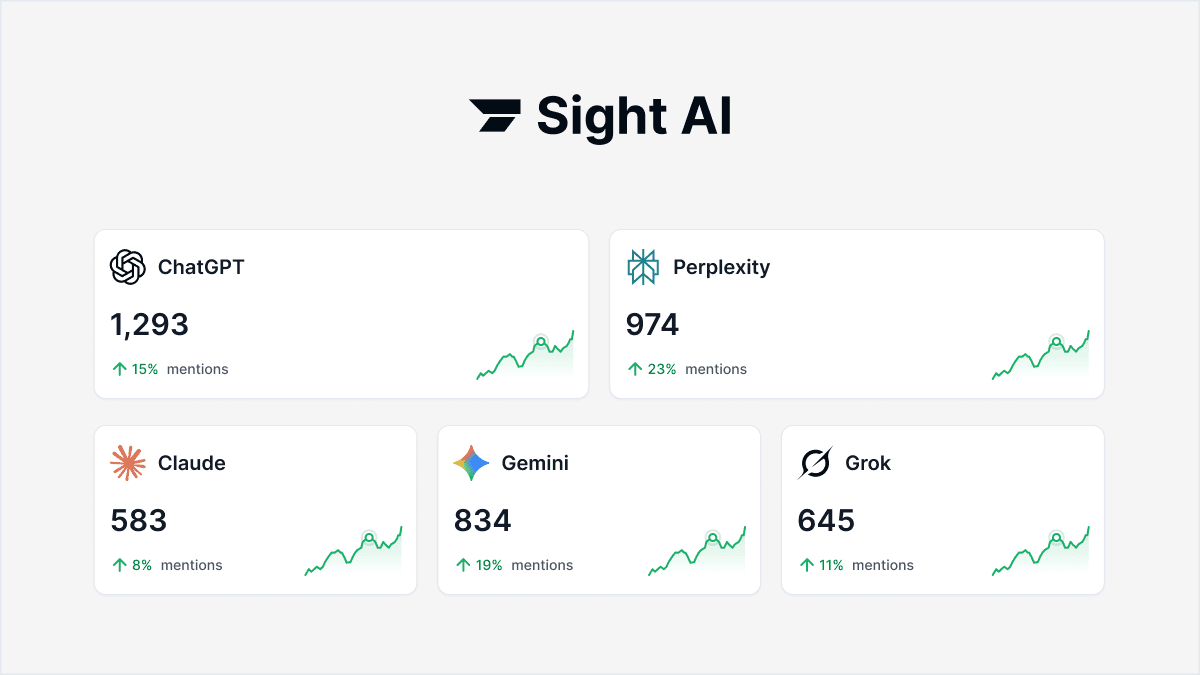
Your calendar should include a tracking component for AI visibility. After publishing, monitor how AI models reference your content. Do they mention your brand when answering related queries? Do they cite your articles as sources? This feedback loop informs future calendar planning—doubling down on topics where you're gaining AI visibility and adjusting approaches where you're being overlooked.
Content structure affects AI visibility too. Models often pull information from clearly organized content with descriptive headings, logical flow, and explicit answers to common questions. When planning articles in your calendar, specify structural requirements that optimize for both human readers and AI parsing.
The integration of AI-powered content calendar automation into your workflow can dramatically accelerate production without sacrificing quality. Modern content generation systems use specialized agents to handle research, outlining, writing, and optimization—transforming your calendar from a planning tool into an execution engine that helps your team publish consistently at scale.
Calendar Pitfalls That Derail Even Experienced Teams
The biggest mistake? Over-planning without flexibility. Teams create rigid quarterly calendars with every slot filled, then struggle when breaking news demands immediate response or trending topics offer timely opportunities. Your calendar should allocate slots for reactive content—maybe 20% of your publishing capacity remains unscheduled for timely pieces.
Quantity over quality destroys more content strategies than any other factor. It's tempting to fill every day with a new post, especially when competitors publish frequently. But search engines and readers both reward depth and value over volume. A calendar packed with shallow articles will underperform one with fewer, more comprehensive pieces.
Balance publishing frequency with your team's capacity to produce excellent work. If daily publishing means rushed research and minimal editing, scale back. Better to publish three outstanding articles per week than seven mediocre ones. Your calendar should reflect sustainable production standards, not aspirational ones that burn out your team.
Neglecting calendar maintenance leads to stale strategies. Markets shift. Customer needs evolve. Competitors change tactics. A calendar created six months ago needs regular review and adjustment. Schedule monthly calendar audits where you assess what's working, remove outdated topics, and add new opportunities based on recent performance data. Learning best practices for maintaining your SEO content calendar ensures your strategy stays current.
Another common trap: ignoring the relationship between content creation and promotion. Teams meticulously plan what to write but treat distribution as an afterthought. Your calendar should allocate resources for promotion—time for social media, budget for paid amplification, coordination with sales teams. Publishing without promotion wastes the effort invested in creation.
Failing to connect calendar planning to business metrics creates a disconnect between content and results. Your calendar should tie directly to KPIs—traffic goals, conversion targets, pipeline contribution. Regular reviews should ask: is this calendar driving the outcomes we need? If not, what needs to change?
Building Your Content Engine for Long-Term Growth
A blog content calendar is far more than an organizational tool. It's a strategic asset that compounds value over time. Each quarter of consistent, planned publishing builds topical authority. Each cluster of related articles strengthens your position in search results. Each systematic approach to content creation makes your team more efficient and your output more effective.
The best calendar is one your team will actually use. Start simple—even a basic spreadsheet beats no planning at all. Focus on the core elements: dates, topics, keywords, assignments, status. Add complexity only as your needs grow and your team's comfort with the system increases. If you're just getting started, our guide on how to create a content calendar walks through the foundational steps.
Think of your calendar as a living document that evolves with your strategy. The topics you prioritize in month one might shift by month six based on performance data. The publishing cadence you start with might accelerate as your team develops faster workflows. The tools you use might change as your operation scales. This evolution is healthy—it means you're learning and adapting.
Looking forward, AI-powered tools are making calendar planning smarter and more efficient. Systems that analyze your existing content, identify gaps, suggest topics based on search trends, and even generate optimized articles are transforming how teams approach content strategy. Implementing blog content automation can help you scale production while maintaining quality standards. The calendar of the future isn't just a planning document—it's an intelligent system that helps you identify opportunities, execute faster, and measure results more precisely.
Stop guessing how AI models like ChatGPT and Claude talk about your brand—get visibility into every mention, track content opportunities, and automate your path to organic traffic growth. Start tracking your AI visibility today and see exactly where your brand appears across top AI platforms.