In an era of AI-driven search and constantly shifting SERP features, tracking your keyword rankings is more than just a vanity metric; it's a critical diagnostic tool for your entire SEO strategy. Manual checks are impossible at scale and often inaccurate due to personalization and location bias. The right SERP tracking tool provides the clear, objective data you need to measure performance, spot competitor movements, identify threats, and capitalize on new opportunities.
This guide moves beyond marketing hype to offer a detailed breakdown of the 12 best SERP tracking tools available today. We're here to help you choose the right platform for your specific needs, whether you're a solo consultant, a growing agency, or an enterprise-level team. To fully appreciate the importance of SERP tracking, it helps to first understand the broader concept of What Is Search Engine Optimization and how rank monitoring fits into the bigger picture of driving organic growth.
Our goal is to provide an honest, practical resource that cuts through the noise. For each tool listed, you will find:
- A detailed analysis of its core features and unique differentiators.
- An assessment of its practical strengths and potential limitations.
- Specific use cases and ideal user profiles (e.g., SMBs, agencies).
- Screenshots and direct links to help your evaluation process.
We'll analyze everything from daily rank tracking accuracy and local GEO-targeting capabilities to advanced SERP feature monitoring and API access. This comprehensive review will ensure you invest in a tool that delivers real strategic value and a clear return on your investment.
1. Semrush – Position Tracking (SEO Toolkit)
Semrush is far more than just a keyword rank checker; it's a comprehensive SEO suite where its Position Tracking tool serves as a core component. This tool is a powerhouse for agencies and in-house teams that need a single, integrated platform for all their SEO activities, making it one of the best SERP tracking tools available. Its primary strength lies in connecting rank data to a vast ecosystem of other SEO metrics, from site audits to backlink analysis.
The platform excels at providing detailed, daily tracking across multiple devices and geographic locations, including hyper-local results down to the zip code level. A key differentiator is its robust competitor analysis, allowing you to benchmark your visibility, traffic share, and SERP feature ownership against key rivals. The reporting capabilities are particularly strong, with Looker Studio integration and white-label options perfect for agency client updates.
Key Details & Use Cases
- Ideal User: SEO managers, marketing agencies, and enterprise teams needing an all-in-one solution.
- Standout Feature: The "Share of Voice" metric, which calculates your visibility based on keyword rankings and search volumes, offers a more holistic performance view than simple rank positions.
- Implementation Tip: Use the "Cannibalization" report to quickly identify pages competing for the same keywords, a common issue that can dilute SEO efforts. Understanding the fundamentals of this process can significantly improve your outcomes. For a deeper dive, you can explore the basics of what rank tracking is and why it matters.
| Pros | Cons |
|---|---|
| Comprehensive all-in-one SEO toolkit | Can become expensive as keyword needs grow |
| Excellent competitor and visibility data | The interface can be overwhelming for new users |
| Scales from small business to enterprise | Add-ons for local SEO/reporting increase total cost |
Website: https://www.semrush.com
2. Ahrefs – Rank Tracker
Ahrefs is an industry-leading SEO platform, and its Rank Tracker is a cornerstone of its toolkit, deeply integrated with its powerful backlink and site exploration data. While many know Ahrefs for its link-building prowess, its SERP tracking is robust, offering a clear view of your keyword performance alongside crucial traffic and SERP feature metrics. It is one of the best SERP tracking tools for those who prioritize a holistic view, connecting ranking positions to organic traffic estimates and overall keyword difficulty.
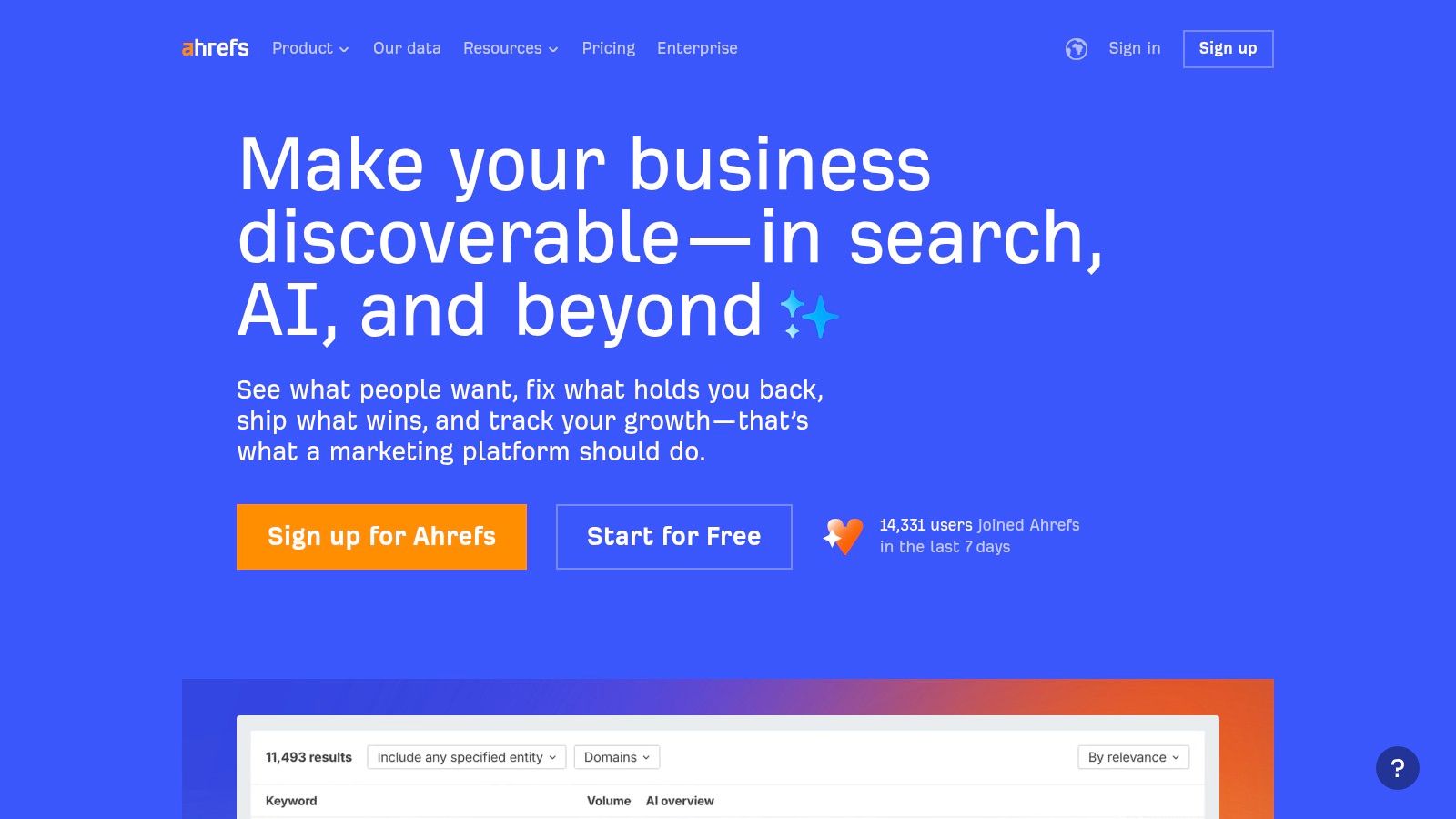
The platform's strength is providing context; you don't just see a rank, you see the traffic it drives and the competitive landscape surrounding it. Ahrefs excels at tracking SERP feature ownership, such as featured snippets, "People Also Ask," and top stories, which is critical for modern SEO strategy. While its default update frequency is weekly, daily tracking is available as an add-on, making it adaptable for more demanding projects. The user interface is widely praised for being intuitive and data-rich without feeling cluttered.
Key Details & Use Cases
- Ideal User: SEO professionals and content marketers who need rank data integrated with top-tier keyword and backlink research tools.
- Standout Feature: The "SERP Features" report provides an unparalleled view of which rich snippets you own, are competing for, or have lost, allowing for targeted optimization efforts.
- Implementation Tip: Use the competitor tracking feature to monitor not just rank changes but also their SERP feature acquisitions. This helps in understanding their content strategy on a deeper level. For more advanced strategies, you can learn how to do a comprehensive SEO competitor analysis.
| Pros | Cons |
|---|---|
| Integrates with a world-class SEO data suite | Default weekly updates; daily tracking requires an add-on |
| Excellent UI and data visualization | Pricing and credit system can be complex for new users |
| Powerful SERP feature and competitor analysis | Can be more expensive than dedicated rank tracking tools |
Website: https://ahrefs.com
3. Moz Pro – Rank Tracking (Moz)
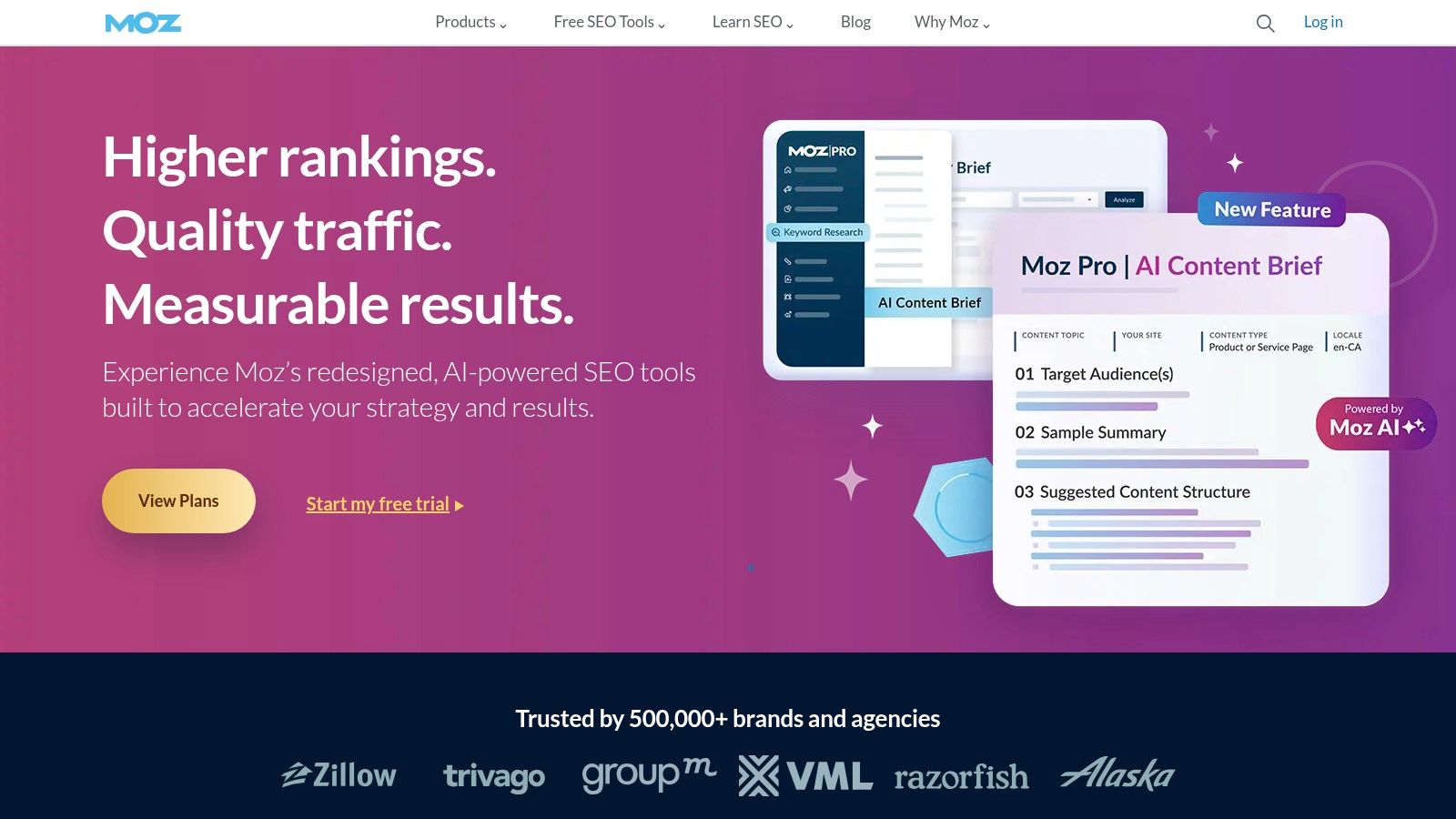
Moz Pro is a foundational SEO platform, and its Rank Tracking tool is a core part of its offering. It operates on a campaign-based model, allowing users to monitor a set of keywords for a specific site across major search engines and devices. Moz is often considered a great entry point for those needing more than just a rank checker, as it integrates tracking with other essential SEO data like link metrics and on-page optimization scores.
Its strength lies in providing a clear, holistic view of a campaign's health without overwhelming the user. The platform connects keyword performance to site crawl data and link-building efforts, helping teams understand how different SEO activities influence their rankings. While it may not have the hyper-granular, real-time data of more specialized tools, its reporting features and clean interface make it a solid choice for teams that need reliable, scheduled insights.
Key Details & Use Cases
- Ideal User: Small to medium-sized businesses, in-house marketers, and agencies looking for an integrated SEO toolkit with solid rank-tracking fundamentals.
- Standout Feature: The integration with Moz's proprietary metrics like "Domain Authority" and "Page Authority" directly within the rank tracking reports provides valuable context for performance.
- Implementation Tip: Set up scheduled, branded reports (available on Medium plans and higher) to automate client or internal stakeholder updates. This saves time and ensures consistent communication of your SERP performance.
| Pros | Cons |
|---|---|
| Integrates well with other core SEO fundamentals | Data freshness can lag compared to specialized daily trackers |
| Clear plans and straightforward add-on options | The user interface feels less modern than some competitors |
| Strong educational resources and community support | Large-scale tracking is better suited to its STAT product |
Website: https://moz.com
4. STAT Search Analytics (by Moz)
STAT Search Analytics is an enterprise-grade SERP tracking platform designed specifically for large-scale, big-data SEO programs. Acquired by Moz, it operates as a specialized tool for organizations that need to monitor millions of keywords daily across countless locations. Its core strength is not just tracking rank but providing deep, raw SERP analytics, making it a go-to for technical SEOs and data scientists who need granular insights for complex strategies.
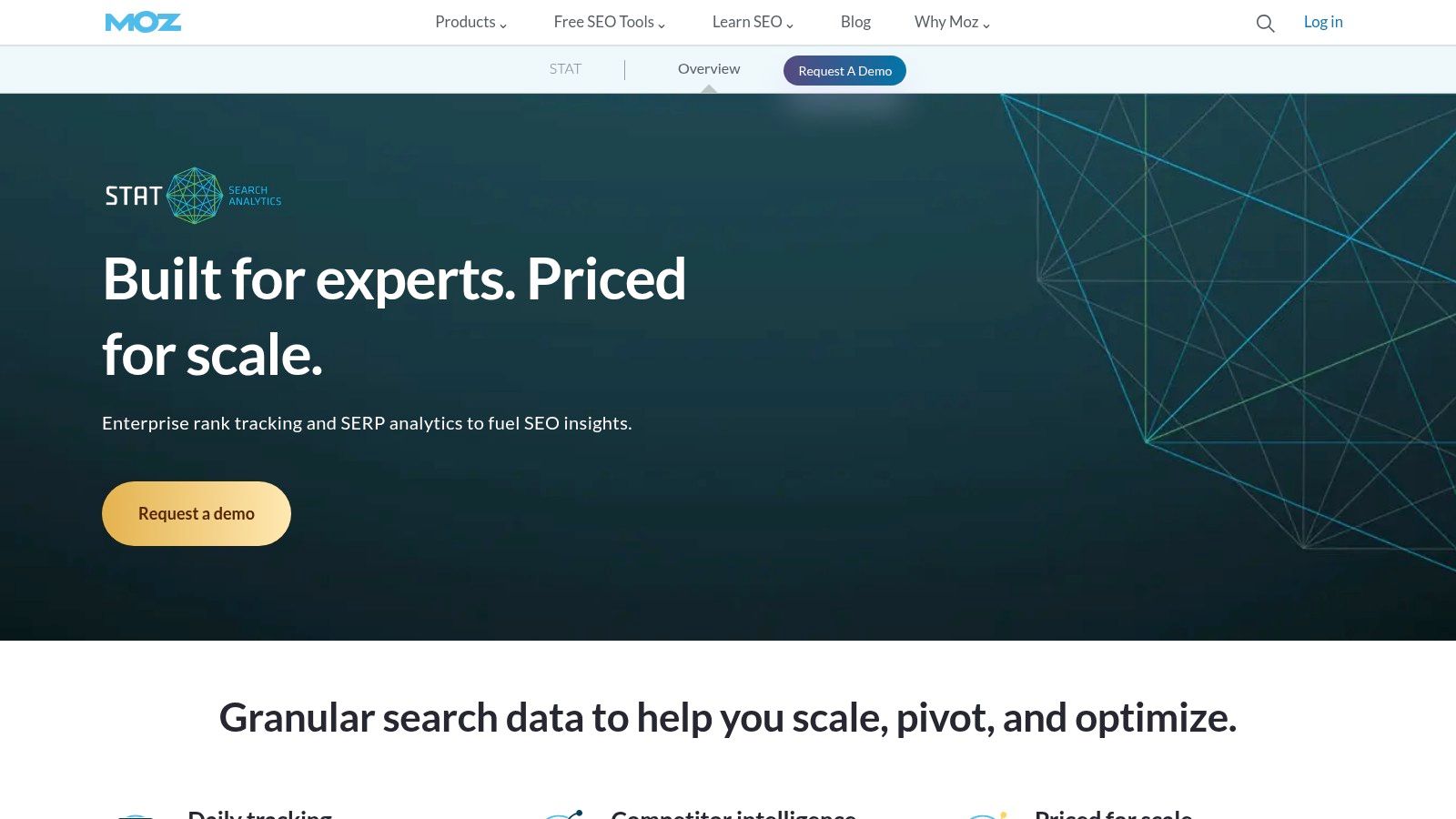
The platform is purpose-built for high-frequency, high-volume daily tracking on both desktop and mobile. A key differentiator is its historical SERP archives, allowing teams to analyze how search results have evolved over time for critical keyword sets. With powerful APIs and direct connectors to tools like Looker Studio, STAT is less of an all-in-one suite and more of a precision instrument for large-scale rank intelligence, positioning it as one of the best SERP tracking tools for enterprise needs.
Key Details & Use Cases
- Ideal User: Large enterprises, multi-location brands, and SEO agencies managing massive keyword portfolios.
- Standout Feature: The ability to segment and tag keywords extensively, allowing for hyper-focused analysis of different product lines, business units, or strategic initiatives.
- Implementation Tip: Leverage STAT’s API to pull raw SERP data directly into your internal business intelligence dashboards. This allows you to correlate ranking performance with other key business metrics like sales, leads, or foot traffic for a more integrated view of SEO's impact.
| Pros | Cons |
|---|---|
| Purpose-built for massive keyword sets and multi-site programs | High entry price with a sales-driven pricing model |
| Powerful API for data integration and custom reporting | Overkill and too complex for small sites or simple needs |
| Deep SERP feature data and historical archives | Focus is purely on rank tracking, not a full SEO suite |
Website: https://moz.com/products/stat
5. SE Ranking – Keyword Rank Tracker
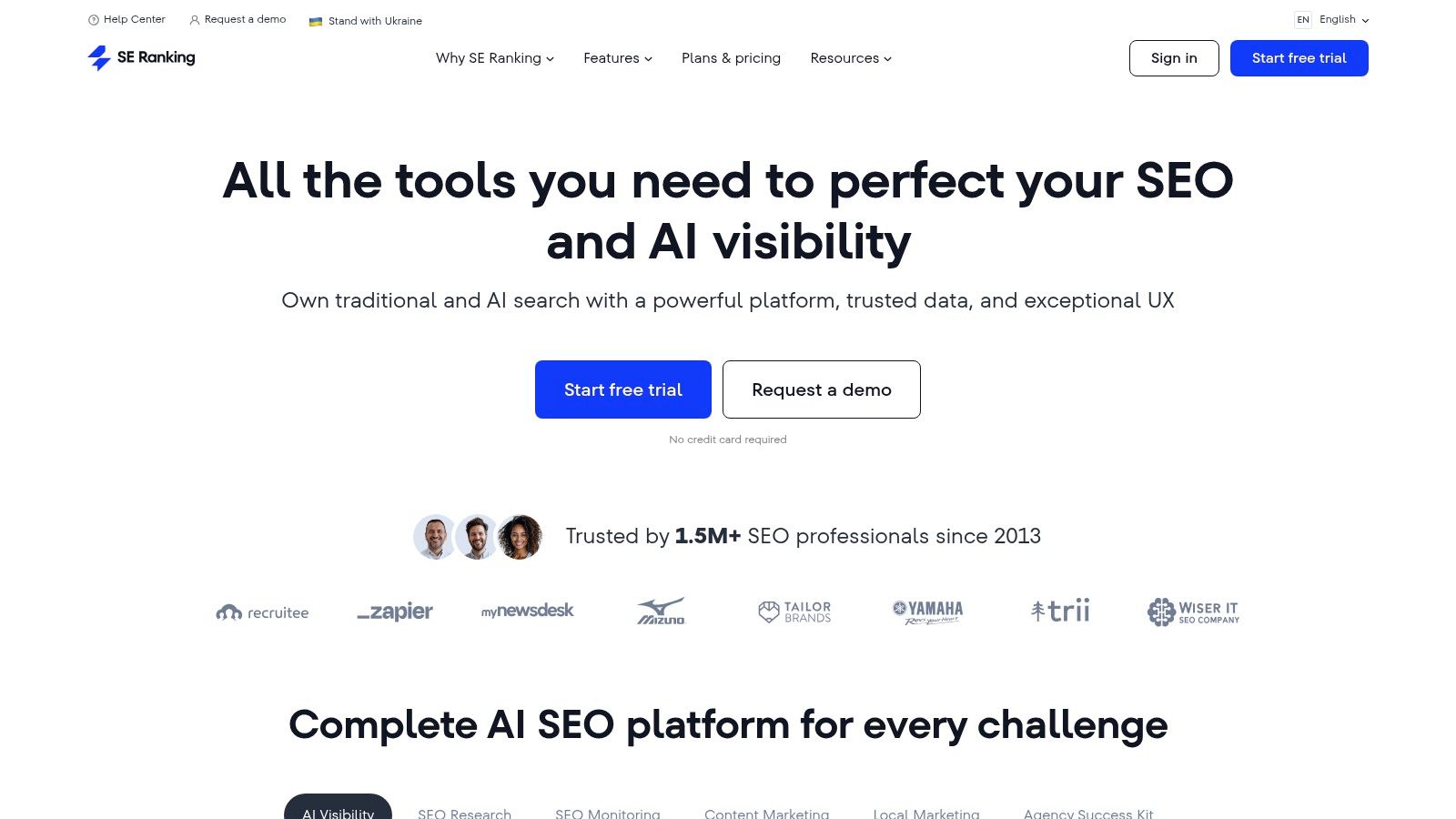
SE Ranking has established itself as a versatile and accessible SEO platform, with its Keyword Rank Tracker tool being a standout feature. It strikes an impressive balance between comprehensive functionality and cost-effectiveness, making it a go-to choice for small businesses, agencies, and freelancers. The tool delivers reliable, daily rank updates across all major search engines, including Google, Bing, and YouTube, with a strong emphasis on precise local tracking.
Its strength lies in providing a robust feature set, often found in more expensive suites, at a very competitive price point. SE Ranking provides detailed SERP analysis, tracking not just organic positions but also a wide array of SERP features. This granular view helps users understand their real visibility on the search results page, moving beyond simple blue-link rankings and making it one of the best SERP tracking tools for those needing deep insights without an enterprise-level budget.
Key Details & Use Cases
- Ideal User: SMBs, SEO freelancers, and marketing agencies looking for a powerful, budget-friendly toolkit.
- Standout Feature: The platform’s flexible pricing model allows users to choose their rank check frequency (daily, every 3 days, or weekly) to match their budget and needs, a customization not always offered by competitors.
- Implementation Tip: Use the competitor tracking feature to monitor up to 20 rivals per project. This provides critical insights into their keyword strategies and helps you identify opportunities where they are weak. Effective competitor analysis starts with solid keyword research for organic SEO.
| Pros | Cons |
|---|---|
| Excellent price-to-features ratio | Database depth can be smaller than top-tier suites for some queries |
| Highly accurate local and mobile tracking | Plan limits on keywords and users require careful selection |
| Comprehensive reporting with API/Looker Studio | Interface can feel cluttered with all features enabled |
Website: https://seranking.com
6. AccuRanker
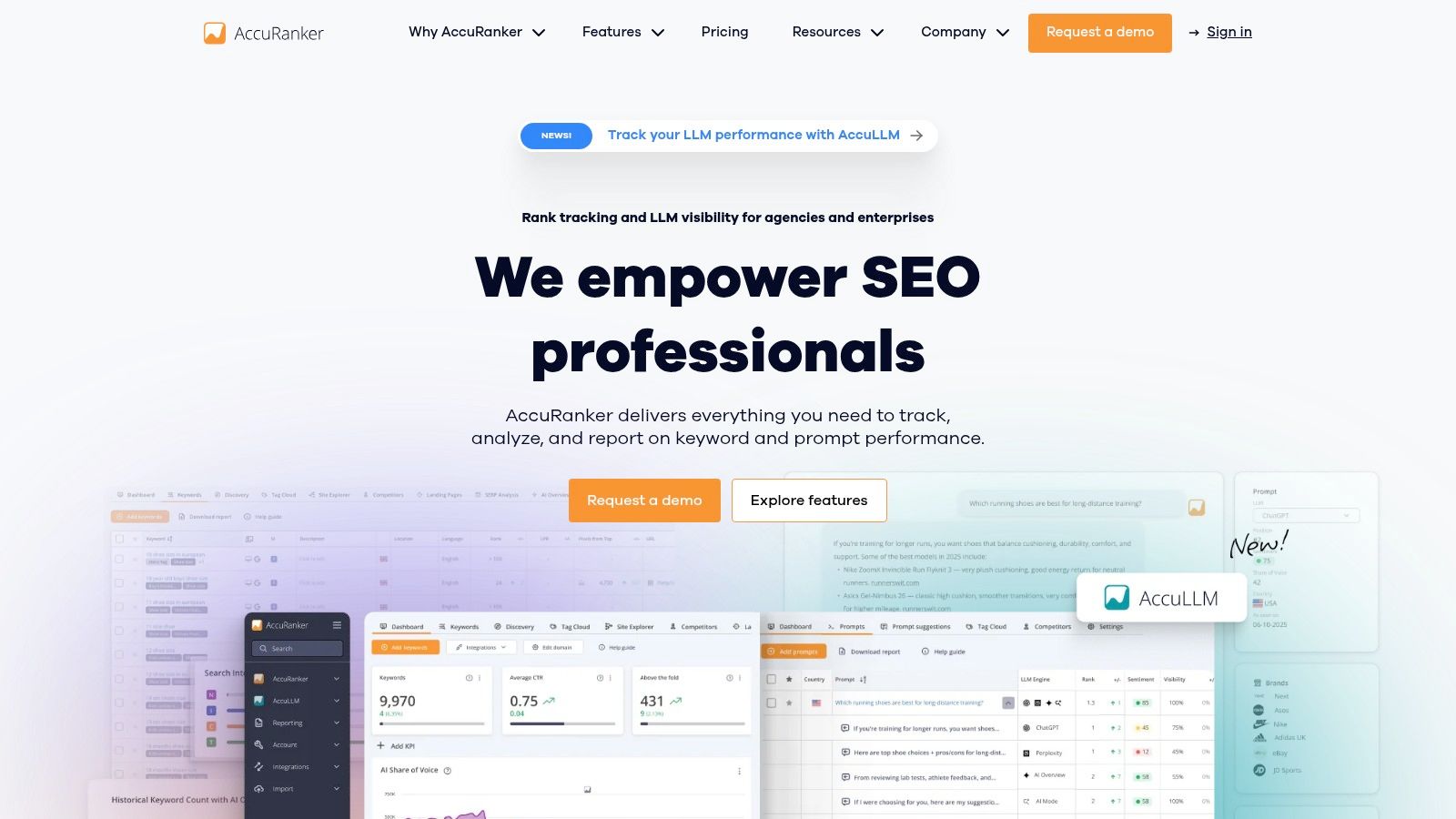
AccuRanker is a specialist rank tracking tool renowned for its speed and precision, delivering on-demand and daily updates with exceptional accuracy. Unlike all-in-one suites, its focus is singular: to be the fastest and most reliable SERP tracker on the market. This makes it a favorite among performance-driven agencies and in-house SEOs who need immediate, trustworthy data to make quick decisions and report on progress.
The platform's strength lies in its robust infrastructure, capable of tracking massive keyword lists across global and local markets, including Google, Bing, and YouTube. Its dynamic tagging and segmentation features allow for sophisticated data analysis, making it easy to filter rankings by SERP features, landing pages, or custom tags. The powerful API and native integrations with tools like Looker Studio (formerly Google Data Studio) and BigQuery enable seamless data workflows for advanced reporting.
Key Details & Use Cases
- Ideal User: SEO agencies, large e-commerce sites, and data-centric in-house teams who prioritize speed and data integration.
- Standout Feature: The on-demand ranking updates, which allow you to refresh keyword data instantly instead of waiting for the next daily crawl, are invaluable for verifying changes after site updates or algorithm shifts.
- Implementation Tip: Use the dynamic tagging system to automatically group keywords based on URL, SERP features, or performance. This streamlines monitoring for core brand terms, non-brand terms, and specific product categories, which is fundamental to tracking your efforts to drive more organic traffic to your site.
| Pros | Cons |
|---|---|
| Extremely fast and accurate daily tracking | Starting price is higher than some all-in-one tools |
| Transparent pricing based on keyword volume | Standalone tool requires other platforms for full SEO suite |
| Excellent integrations (API, Looker Studio) | Interface is data-heavy and less guided for beginners |
Website: https://www.accuranker.com
7. Mangools – SERPWatcher
Mangools offers a suite of five SEO tools, and its SERPWatcher is a refreshingly simple yet effective rank tracker. Designed with user experience as a top priority, it strips away the complexity often found in enterprise-level platforms. This makes it an ideal choice for freelancers, bloggers, and small businesses who need reliable, daily SERP tracking without a steep learning curve or overwhelming interface. Its strength lies in its simplicity and the value it provides as part of a bundle.
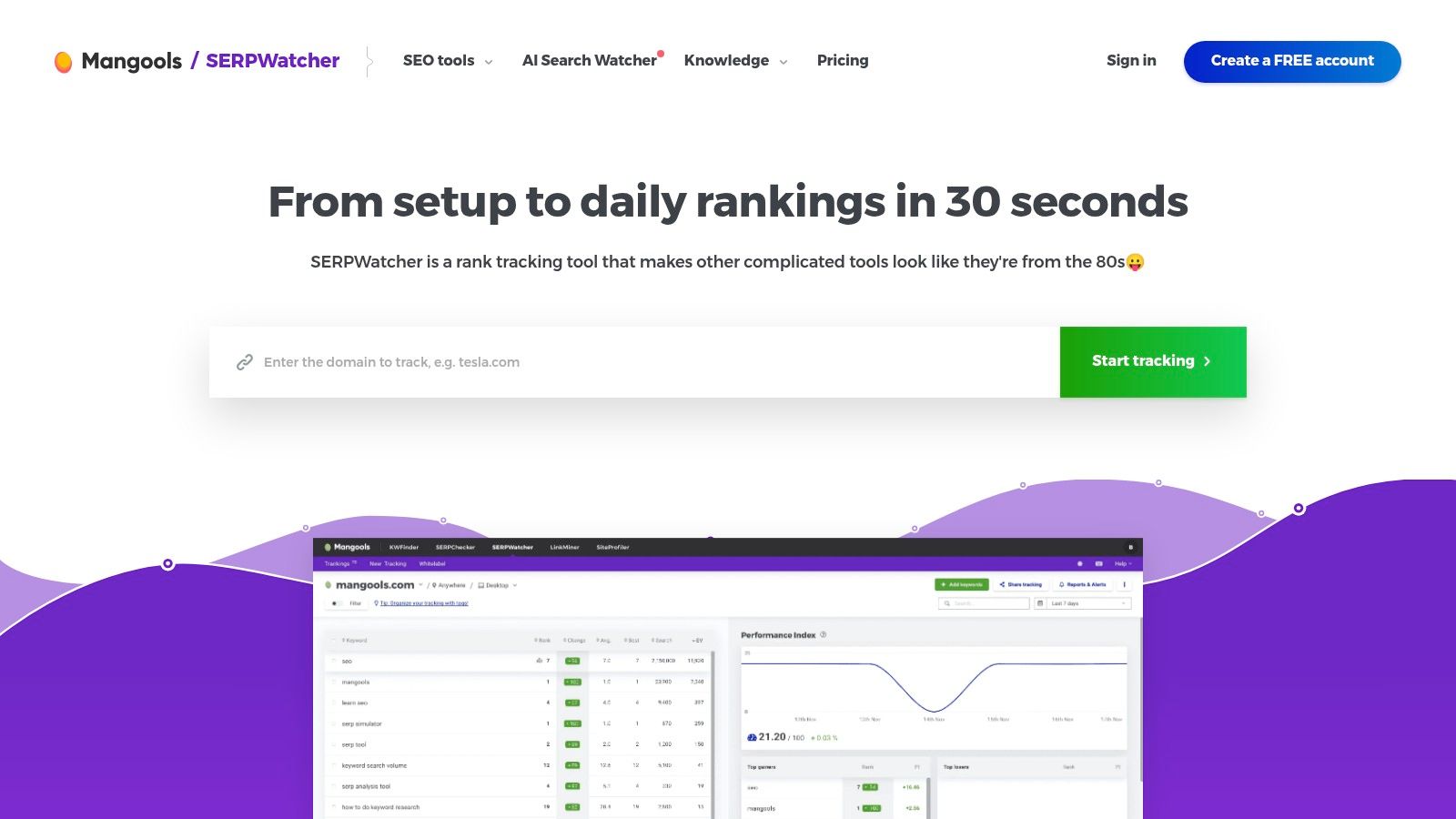
The platform presents rank tracking data in a clean, digestible format, focusing on a primary "Performance Index" score that gives you a quick overview of your progress. You can easily track keywords across any location and device, and the tool is seamlessly integrated with the other Mangools apps like KWFinder and SERPChecker. This integration allows you to find new keywords and immediately add them to your tracking project, creating a smooth workflow for content strategy and performance monitoring. While it may lack some of the advanced features of its larger competitors, it is one of the best SERP tracking tools for those prioritizing value and ease of use.
Key Details & Use Cases
- Ideal User: Solopreneurs, bloggers, and small to medium-sized businesses looking for a budget-friendly and user-friendly solution.
- Standout Feature: The "Performance Index" metric, which provides a single, aggregate score of your overall keyword ranking performance, making progress easy to gauge at a glance.
- Implementation Tip: Use the SERPWatcher integration with KWFinder. When you discover promising low-difficulty keywords in KWFinder, you can add them directly to your tracking project with a single click to monitor your content's performance over time.
| Pros | Cons |
|---|---|
| Extremely easy to learn and use with a clean UI | Lower keyword tracking limits compared to enterprise-tier tools |
| Great value for money with five tools included in one sub | Fewer advanced integrations and limited API on lower plans |
| Seamless integration between tools in the Mangools suite | Reporting is less customizable than more advanced platforms |
Website: https://mangools.com/serpwatcher/
8. ProRankTracker (PRT)
ProRankTracker (PRT) is a cloud-based SERP tracker that has built its reputation on accuracy and extensive reporting features, particularly for agencies and SEOs managing multiple clients. It provides reliable daily updates across major search engines, including Google and YouTube, with detailed local and mobile rank tracking capabilities. The platform is designed for scalability, supporting unlimited URLs and projects even on its entry-level plans.
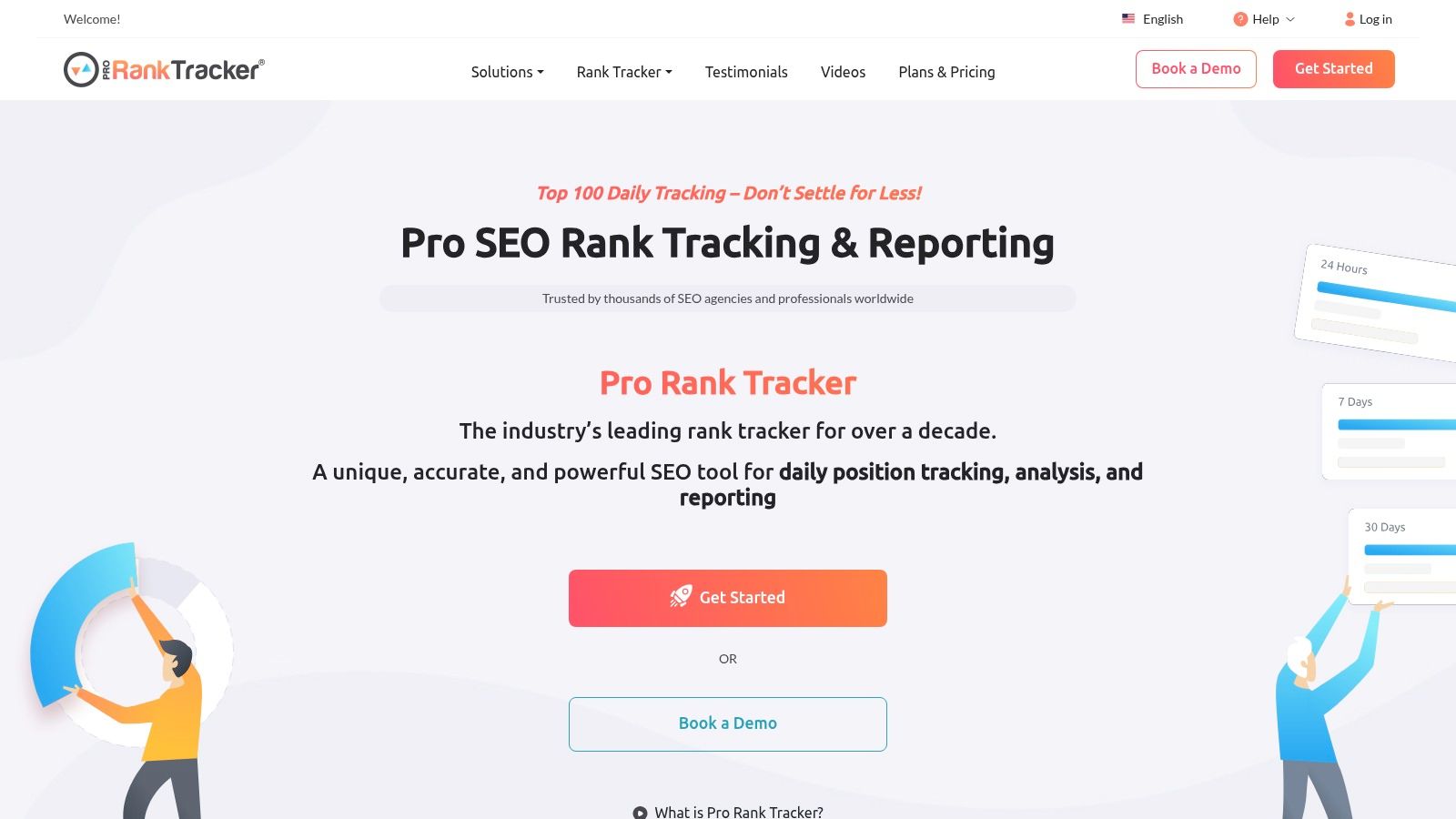
What sets PRT apart are its client-focused tools, making it one of the best SERP tracking tools for agencies needing to deliver value. It offers comprehensive white-label reporting, a dedicated "MyRanks" client app for transparent progress sharing, and a Looker Studio connector for building custom dashboards. This agency-centric approach, combined with its multilingual interface and competitive pricing for high keyword volumes, makes it a powerful choice for client management. The interface is more functional than flashy, prioritizing data delivery over modern aesthetics.
Key Details & Use Cases
- Ideal User: SEO freelancers, digital marketing agencies, and businesses managing a large portfolio of client websites.
- Standout Feature: The "MyRanks" client app, a white-labeled mobile and desktop application that gives clients direct, read-only access to their ranking data and reports, enhancing transparency and reducing manual reporting time.
- Implementation Tip: Leverage the on-demand "Insta-Check" credits to get immediate, real-time rank updates for crucial keywords before a client meeting or after a major algorithm update, instead of waiting for the next scheduled daily refresh.
| Pros | Cons |
|---|---|
| Excellent client reporting and white-label options | Interface is more utilitarian than modern UI-first tools |
| Competitive pricing for larger keyword volumes | Pricing jumps significantly as term quotas scale higher |
| Unlimited URLs and projects supported | On-demand updates require purchasing extra credits |
Website: https://proranktracker.com
9. Nightwatch
Nightwatch positions itself as a modern rank tracker designed for precision, making it an excellent choice for teams that need highly accurate, localized data. Its primary strength is providing daily, high-resolution tracking across Google, Bing, and YouTube, with extensive location-specific options. The platform is built for agencies and data-driven marketers who require robust reporting and integration capabilities without the complexity of a massive all-in-one suite.
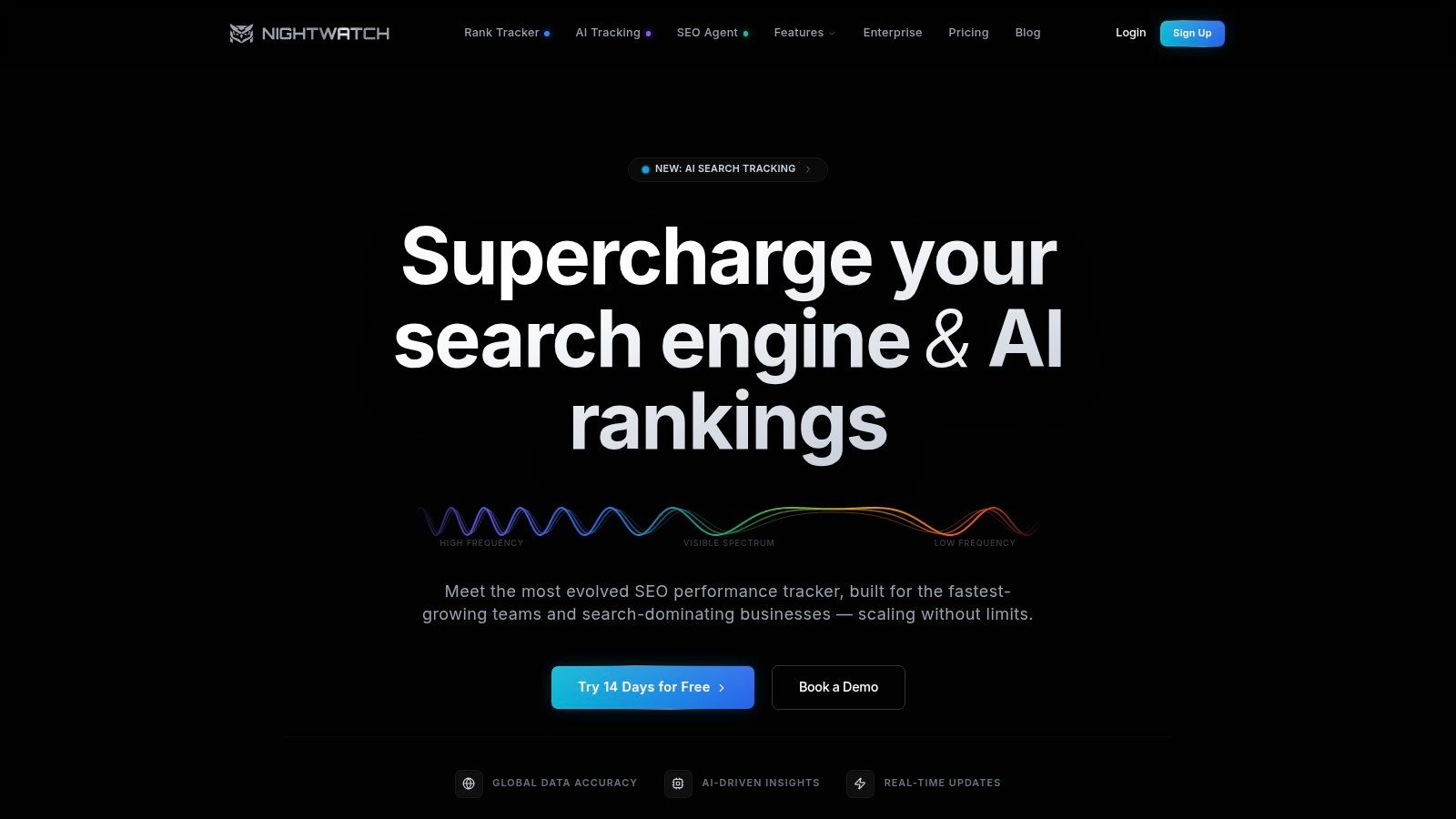
A key differentiator is its new AI Tracking add-on, which monitors visibility and citations within generative engines like ChatGPT and Gemini. This forward-looking feature allows users to get ahead of the curve by tracking brand mentions in AI-powered search results. Combined with its clean interface, Looker Studio integration, and unlimited user seats on all plans, Nightwatch offers a compelling and scalable solution among the best SERP tracking tools. While it has some great features, there are other great options available; some are listed in this guide to the best free SEO tools.
Key Details & Use Cases
- Ideal User: SEO agencies, local businesses, and marketing teams needing granular location tracking and early adoption of AI visibility metrics.
- Standout Feature: The optional AI Tracking module for monitoring brand presence and source citations in generative AI responses is a unique, future-focused tool.
- Implementation Tip: Connect your Google Analytics and Search Console accounts immediately to enrich rank data with actual traffic and click-through-rate metrics, providing a fuller picture of keyword performance.
| Pros | Cons |
|---|---|
| Strong local and mobile rank tracking | AI Tracking functionality is a paid add-on |
| Competitive entry pricing & unlimited users | Smaller feature ecosystem compared to larger SEO suites |
| Clean interface with powerful API access | Reporting is powerful but may require setup |
Website: https://nightwatch.io
10. Nozzle
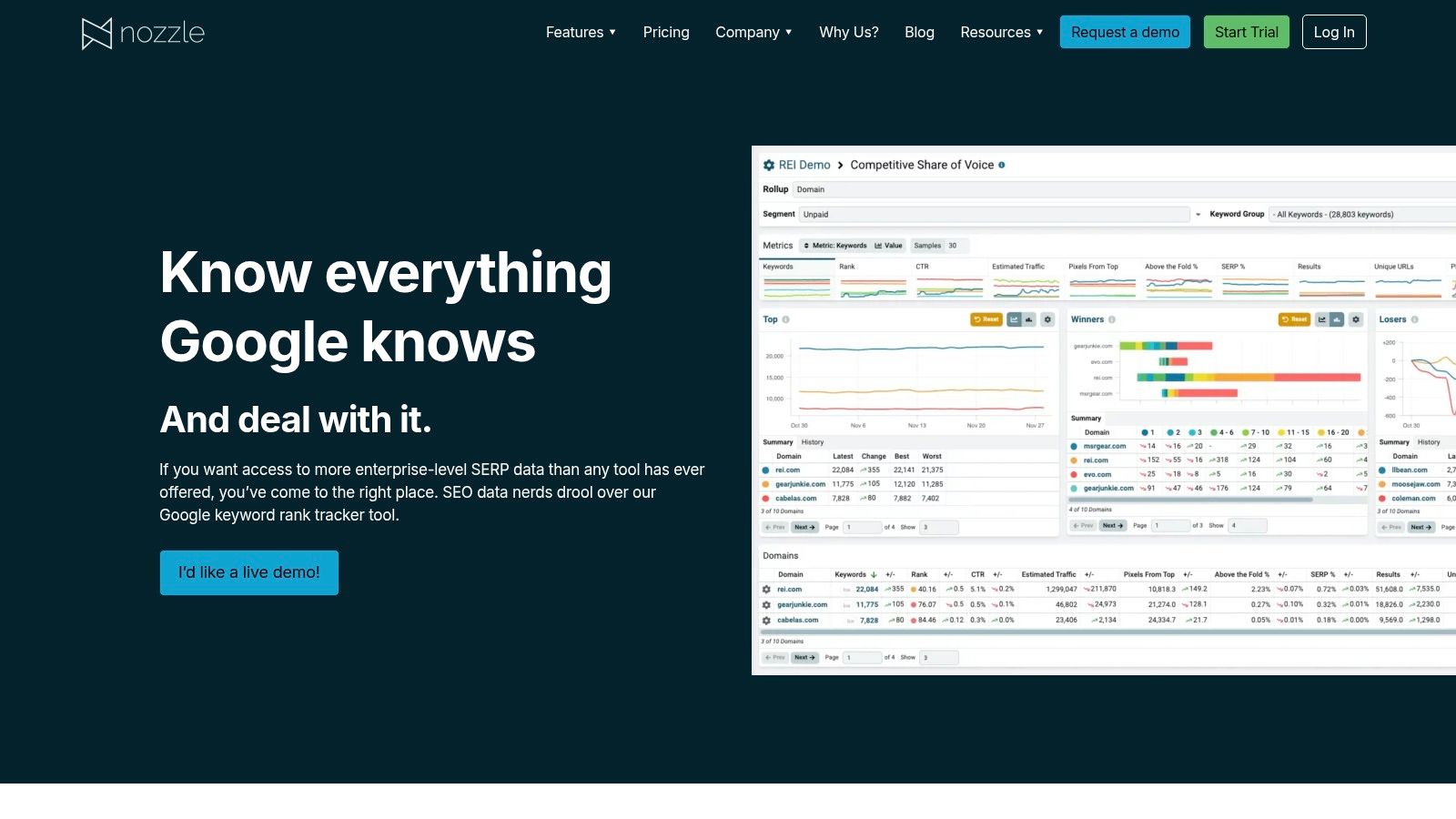
Nozzle offers a fundamentally different approach to SERP tracking, shifting the focus from monitoring a single domain's rank to analyzing the entire search engine results page. It's built for SEO professionals who need to understand their total brand visibility, not just their primary website’s position. Instead of simply telling you where you rank, Nozzle captures every URL, SERP feature, and brand mention, providing an unparalleled view of your "share of SERP."
This granular, SERP-element-level data collection makes it one of the best SERP tracking tools for advanced brand monitoring and competitive intelligence. Nozzle pulls data for your brand, your social profiles, your subdomains, and even your executives, showing you exactly how much digital real estate you occupy for your target keywords. It also retains historical data indefinitely, allowing for powerful long-term trend analysis.
Key Details & Use Cases
- Ideal User: Brand managers, enterprise SEOs, and competitive analysts who need to measure total brand visibility across all owned digital assets.
- Standout Feature: Its ability to track every single result on the SERP, not just a predefined list of URLs. This allows for true competitor discovery and a comprehensive understanding of who controls the conversation for a given keyword.
- Implementation Tip: Use Nozzle to monitor your brand's presence in SERP features like "People Also Ask," video carousels, and knowledge panels. This helps you identify opportunities to expand your visibility beyond traditional organic blue links.
| Pros | Cons |
|---|---|
| Exceptional SERP detail for share-of-SERP analysis | Higher learning curve compared to simpler trackers |
| Monitors brand/entity coverage across all digital assets | Pricing model based on SERP volume can be unfamiliar |
| Retains historical data indefinitely for long-term trend study | Data can be overwhelming without a clear analysis objective |
Website: https://nozzle.io
11. Advanced Web Ranking (AWR)
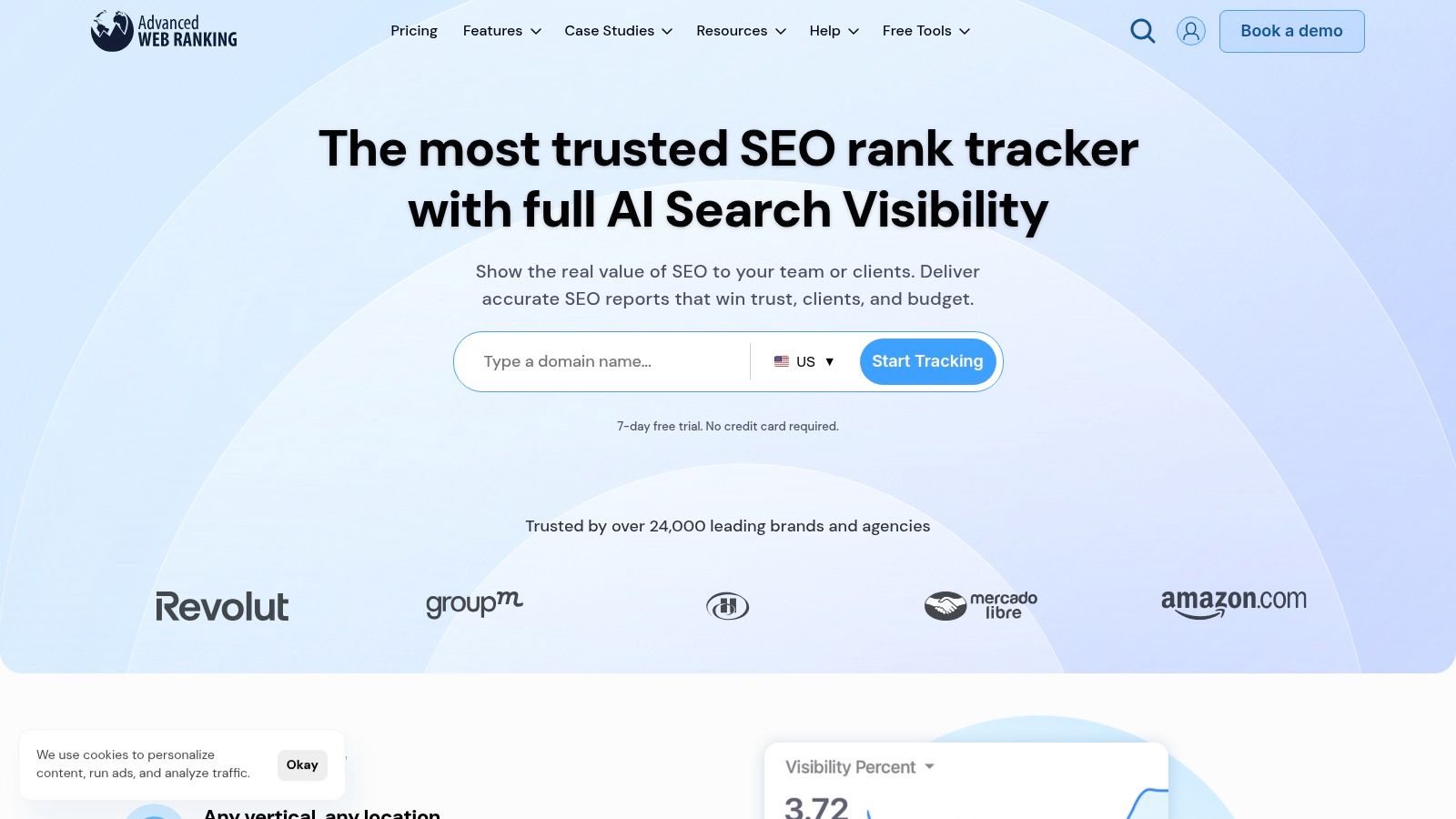
Advanced Web Ranking (AWR) is a long-standing and respected name in the SEO industry, offering a dedicated SERP tracking tool that prioritizes accuracy, flexibility, and agency-focused features. It’s not an all-in-one suite; instead, it perfects the art of rank tracking with precision. This focus makes it a reliable choice for agencies and in-house teams who need a robust, scalable tracking solution without the overhead of a full SEO platform.
Its primary strength is its reporting flexibility and user management. AWR provides unlimited user accounts and projects, which is a significant cost-saver for large teams and agencies managing numerous clients. The platform offers scheduled updates (daily, weekly, on-demand) and deep localization options for mobile and desktop, ensuring the data reflects what real users see. Its white-label capabilities and direct Looker Studio connector make it seamless to integrate AWR data into client-facing reports.
Key Details & Use Cases
- Ideal User: SEO agencies, large in-house marketing teams, and consultants who need scalable, white-labeled reporting.
- Standout Feature: The "keyword units" pricing model, which provides clear, predictable scaling. Unlike per-keyword pricing, a weekly-tracked keyword might use one unit while a daily-tracked keyword uses seven, giving you granular control over your budget.
- Implementation Tip: Use the historical data import feature to bring in ranking data from other tools or Google Search Console. This allows you to maintain a continuous performance history when migrating to AWR without losing valuable insights.
| Pros | Cons |
|---|---|
| Agency-friendly with unlimited users and projects | Pricing model requires a short learning curve |
| Flexible update scheduling (daily to weekly) | A dedicated tracker, not a comprehensive SEO suite |
| Scales well with a transparent unit-based system | Interface is more functional than modern compared to rivals |
Website: https://www.advancedwebranking.com
12. SEOmonitor – Rank Tracker
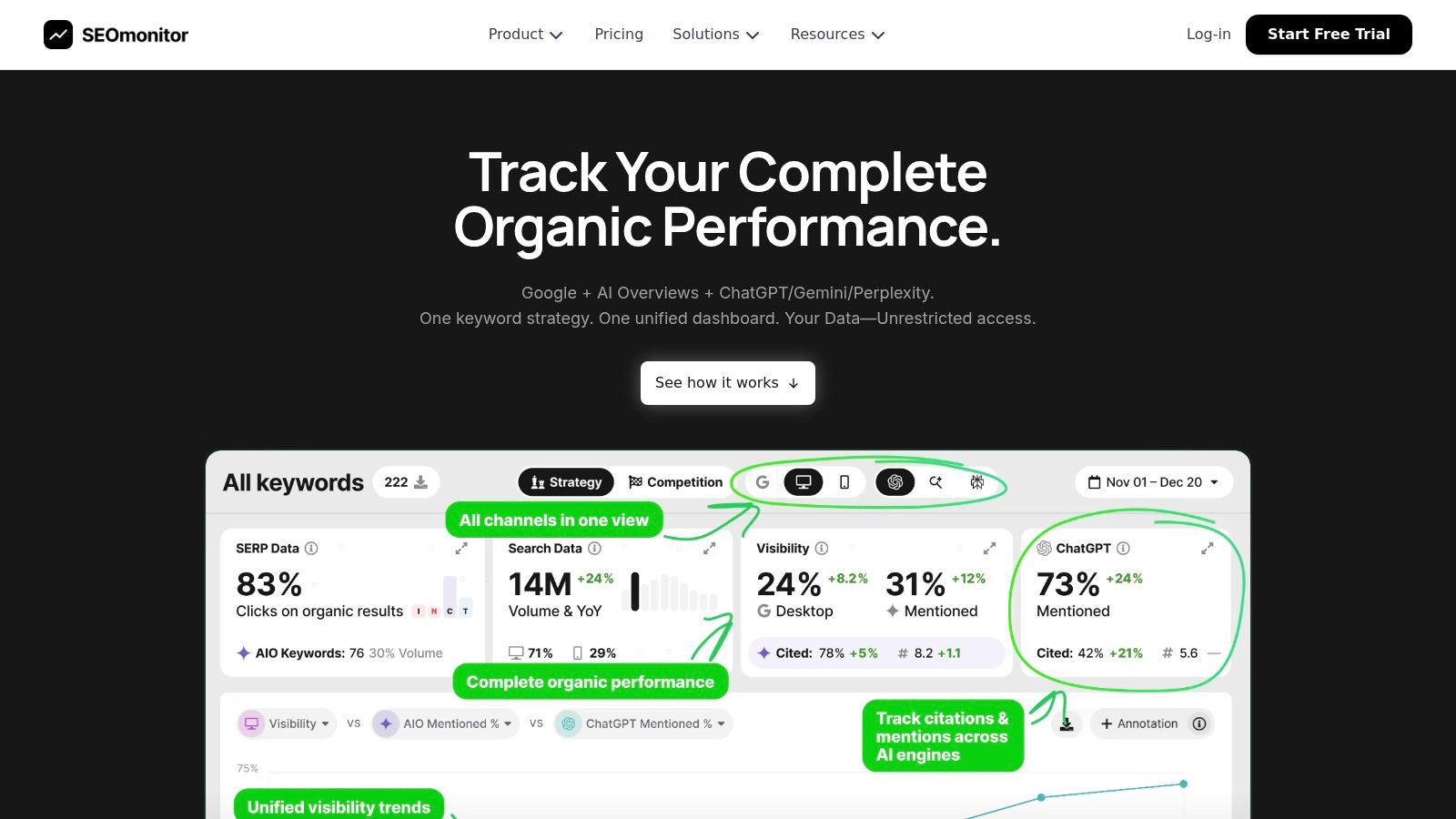
SEOmonitor is an agency-centric platform where the Rank Tracker is engineered not just for reporting data, but for framing that data within business outcomes. It is built from the ground up to help agencies acquire, manage, and retain clients by connecting SEO performance directly to forecasting and campaign goals. This makes it one of the best SERP tracking tools for teams that need to justify their work with tangible, forward-looking metrics.
The tool provides a smart blend of daily tracking for top-20 keywords and weekly refreshes for the full top 100, balancing data granularity with cost-effectiveness. Its core differentiator is the integration of a forecasting module that uses your rank data to project organic traffic and conversions. SEOmonitor has also adapted to the changing search landscape by offering tracking for Google's AI Overview and optional AI Search results, ensuring agencies are prepared for the future of SERPs.
Key Details & Use Cases
- Ideal User: SEO agencies and consultants who need to build compelling proposals and performance reports for clients.
- Standout Feature: The built-in forecasting tool, which uses current rankings and keyword data to create realistic traffic and goal-based projections for client pitches and reports.
- Implementation Tip: Leverage the unlimited seats to give your entire team and even key clients access to customized dashboards. This transparency builds trust and keeps everyone aligned on campaign progress and objectives.
| Pros | Cons |
|---|---|
| Transparent per-1,000 keyword pricing | Euro-based billing can be a minor hurdle for some US-based firms |
| Strong built-in forecasting and agency dashboards | Positioned primarily for agencies, not ideal for solo users |
| AI Overview and optional AI Search tracking included | Modular pricing for add-ons can be confusing at first |
Website: https://www.seomonitor.com
Top 12 SERP Tracking Tools Comparison
| Tool | Core features | AI / LLM visibility | UX & reporting | Best for | Pricing / USP |
|---|---|---|---|---|---|
| Semrush – Position Tracking (SEO Toolkit) | Daily desktop/mobile tracking, local packs, competitor visibility, full SEO suite | Limited native LLM monitoring; focuses on SERP & AI-signal proxies | Robust branded reports, Looker Studio integration, mature UI | Agencies & teams wanting an integrated SEO toolkit | Scales with keywords/users; costs rise with add-ons |
| Ahrefs – Rank Tracker | Rank tracking + deep SERP/traffic context, keyword research tools | No native LLM monitoring (SERP-focused) | Deep data and strong UX; weekly default (daily via add-on) | Holistic SEO teams who need research + rank data | Large data breadth; add-ons for daily updates |
| Moz Pro – Rank Tracking (Moz) | Campaign-based tracking, keyword & link research, scheduled reports | No native LLM monitoring | Straightforward UI, branded reports (Medium+ plans) | Teams wanting integrated SEO fundamentals | Clear plans, add-ons to increase limits |
| STAT Search Analytics (Moz) | Enterprise daily tracking at scale, SERP feature insights, APIs | Not LLM-specific but offers deep SERP archives for analysis | Enterprise reporting, custom connectors, historical archives | Enterprises tracking millions of keywords | Sales-driven pricing; built for big-data programs |
| SE Ranking – Keyword Rank Tracker | Daily tracking (Google/Bing/YouTube), local precision, API | Includes AI search visibility metrics | Looker Studio connector, comprehensive reporting | Cost-conscious teams wanting daily tracking + AI metrics | Competitive pricing, clear scaling options |
| AccuRanker | Fast daily updates, segmentation, tagging, Looker/BigQuery integrations | No native LLM monitoring | Very fast, accurate tracking; transparent pricing model | Agencies requiring speed and accuracy at scale | Higher starting price vs budget tools; standalone tracker |
| Mangools – SERPWatcher | Daily updates, integrated KWFinder & SERP tools, easy setup | No native LLM monitoring | Simple, clean UI and reporting; easy learning curve | Small teams and beginners on a budget | Budget-friendly, lower keyword caps |
| ProRankTracker (PRT) | Daily Google & YouTube tracking, white-label reports, Insta-Check | No native LLM monitoring | White-label client reports, utilitarian interface | Agencies needing white-label & client apps | Competitive for large volumes; term-based plans |
| Nightwatch | Daily local tracking, GA/GSC integrations, white-label | AI Tracking add-on for LLM visibility & citations | Strong local reporting, unlimited seats, good dashboards | Teams wanting LLM visibility alongside SERP tracking | AI functionality is paid add-on; competitive entry price |
| Nozzle | SERP-element/pixel-level tracking, indefinite data retention, exports | Tracks full SERP elements (brand/social/subdomains); not LLM-native | Exceptional SERP detail, steeper learning curve | Advanced visibility & brand monitoring projects | Pricing based on SERP volume; powerful SERP analytics |
| Advanced Web Ranking (AWR) | Daily/weekly scheduling, unlimited users/projects, connectors | No native LLM monitoring | Agency-friendly reporting, white-label, scalable units | Agencies needing flexible reporting & unlimited users | Tracker-first product; unit-based pricing model |
| SEOmonitor – Rank Tracker | Daily top-20 + weekly top-100, forecasting, campaign tools, API | AI Overview + optional AI Search tracking add-on | Transparent per‑1,000 keyword pricing, agency dashboards | Agencies focused on forecasting & client reporting | Clear scaling, euro-based billing (USD toggle) |
Choosing Your Tool: From Data Doints to Strategic Insights
We've explored a comprehensive lineup of the best SERP tracking tools, from enterprise-grade powerhouses like STAT and Advanced Web Ranking to nimble, user-friendly options like Mangools' SERPWatcher. Each platform offers a unique blend of features, accuracy, and pricing designed to serve different needs. The core takeaway is clear: modern SERP tracking is no longer about vanity metrics or simply knowing your position for a handful of keywords. It's about gaining a strategic, multidimensional view of your digital visibility.
The right tool transforms raw ranking data into actionable intelligence. It reveals not just where you rank but how you appear, tracking your presence across critical SERP features like Featured Snippets, People Also Ask boxes, and Local Packs. This granular insight is the key to identifying opportunities, defending your turf against competitors, and demonstrating the tangible business value of your SEO efforts.
How to Choose the Right Tool for You
Making the final decision requires a thoughtful evaluation of your specific context. Don't be swayed by the tool with the most features; focus on the one that best aligns with your operational reality.
- For Agencies and Large Teams: Your primary needs are likely scale, accuracy, and robust reporting. Look for tools like STAT, AWR, or SE Ranking that offer white-labeling, comprehensive API access for custom dashboards, and the ability to manage hundreds of client projects without sacrificing data integrity. The ability to segment data by tags and generate automated, client-ready reports is non-negotiable.
- For In-House SEO Managers and SMBs: You need a balance of power and usability. Tools like Semrush, Ahrefs, and Moz Pro provide excellent all-in-one SEO toolkits where rank tracking is just one component. This integrated approach allows you to connect ranking fluctuations directly to on-page issues, backlink profiles, and content strategies within a single interface, maximizing efficiency for smaller teams.
- For Solopreneurs and Startups on a Budget: If every dollar counts, efficiency is your main driver. Platforms like Mangools and Nightwatch offer exceptional value, delivering reliable and accurate rank tracking with clean, intuitive user interfaces. They provide the essential data you need to make informed decisions without the complexity or cost of a full enterprise suite.
Beyond Traditional SERP Tracking: The Next Frontier
As you finalize your choice, it is crucial to look beyond today's search results page. The digital landscape is undergoing a monumental shift driven by generative AI. Traditional search is no longer the only way users discover brands and find answers. Millions are now turning to AI models like ChatGPT, Gemini, and Perplexity for information.
The best SERP tracking tools of tomorrow will not just monitor Google; they will provide a holistic view of your brand’s visibility across all discovery channels, including these emerging AI-powered platforms. This is where the next evolution of tracking lies. While many tools on this list excel at classical SERP analysis, the future belongs to platforms that can bridge the gap between search and AI.
Ultimately, selecting one of the best SERP tracking tools is an investment in your brand's future. The right platform will empower you to move from being a reactive observer of ranking changes to a proactive strategist who shapes brand discovery. Choose the tool that not only fits your workflow today but also equips you to navigate the exciting, evolving world of search and AI tomorrow.
Ready to move beyond traditional rank tracking and measure your visibility in the AI-driven future of search? Sight AI is the first platform that monitors your brand's mentions and visibility within AI models like ChatGPT and Gemini, connecting those insights directly to your content strategy. See where you stand in the new age of discovery and start optimizing for the channels that matter most. Learn more about Sight AI.
Frequently asked questions
What is SERP tracking?
SERP tracking (search engine results page tracking) monitors your rankings and the features around them — organic results, local packs, AI Overviews, and more. A SERP tracker tool shows not only position, but whether you own the SERP features that actually get clicks.
What is local SERP tracking?
Local SERP tracking measures rankings by city, zip, or radius. National averages hide local winners and losers. If you serve multiple markets, local SERP rank tracking is more actionable than a single country-level rank.
Do I need SERP feature rank tracking?
Yes, if your niche has featured snippets, People Also Ask, or AI Overviews. Classic position-only trackers miss SERP features tracking — and those features often steal clicks from the #1 organic result.
What is the best SERP tracking software for SEO teams?
The best SERP tracking software combines accurate crawl locations, historical charts, competitor SERP overlays, and alerts. SEO SERP tracking should answer: who gained, who lost, and which pages to refresh next.